The OSS—Office of Strategic Services—created under the command of William Donovan, has been celebrated for its cloak-and-dagger operations during World War II and as the precursor of the CIA. As the "Oh So Social," it has also been portrayed as a club for the well-connected before, during, and after the war. Donovan's Devils tells the story of a different OSS, that of ordinary soldiers, recruited from among first- and second-generation immigrants, who volunteered for dangerous duty behind enemy lines and risked their lives in Italy, France, the Balkans, and elsewhere in Europe. Organized into Operational Groups, they infiltrated into enemy territory by air or sea and operated for days, weeks, or months hundreds of miles from the closest Allied troops. They performed sabotage, organized native resistance, and rescued downed airmen, nurses, and prisoners of war. Their enemy showed them no mercy, and sometimes their closest friends betrayed them. They were the precursors to today's Special Forces operators.
Based on declassified OSS records, personal collections, and oral histories of participants from both sides of the conflict, Donovan's Devils provides the most comprehensive account to date of the Operational Group activities, including a detailed narrative of the ill-fated Ginny mission, which resulted in the one of the OSS's gravest losses of the war.
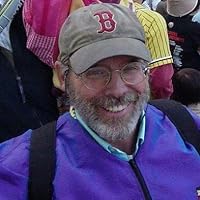
My writing focuses on narrating stories based on actual events and historical figures. My favorite subjects are military, intelligence, World War II, and Cold War history.
My next book, Donovan's Devils, about OSS commando operations in Europe during World War II, comes out in February 2016.
(Note: I received a free copy of this book through Goodreads First Reads.)
The OSS is primarily known as a spy organization- the precursor to the CIA- that operated during World War II; but they also operated commando units which operated behind enemy lines during the war, in places like Italy, Yugoslavia, and occupied France. Those units- filled with immigrants to America from the countries involved, or descendants of immigrants, who still spoke their native tongue- did things like coordinate Allied forces with local resistance movements, arrange supply drops, rescue downed Allied pilots, and perform sabotage raids. This book is a history of those commando units.
Many of the stories here are interesting, and shed light on aspects of the War which are often ignored. Some of the stories of German brutality towards resistance fighters and civilians who aided the Allies are horrifying.
However, to find these stories, the reader has to wade through a thick, confusing soup of names, dates, places, and various minutiae. Virtually every significant OSS commando, and resistance figures they meet, is given a little capsule biography; if you then encounter the same name 3 pages later, you don't remember who it is, because you've been introduced to 10 more names in the interim.
There's certainly nothing wrong with that level of detail. But it results in a book which I wouldn't recommend to readers with a casual interest in history. If you have a deep interest in World War II, though, this book will reward you; and most likely fill in some gaps in your knowledge.
Interesting look at the sort of OSS operations, concentrating mostly on the French and Italian theatres, that I hadn't previously read about. Lulushi provides a lot of detail, a habit he occasionally goes a little overboard with. The section at the end dealing with the murder of an officer, while an intriguing case, didn't really fit in with the rest of the book - it seemed to be there largely because for some reason the author decided to throw in some true crime with all the wartime action.
The focus of this book is the OSS Operational Groups (OGs), colloqially called "Donovan's Devils". The OGs played the role best associated with Green Berets today - they were bands of soldiers with knowledge of guerilla tactics and strong laungauage skills in the language of their target country. They deployed in uniform into enemy occupied territory with the goal of organizing, training, and equipping resistance fighters. They did quite a bit of resistance fighting themselves, also. This book is a small piece of their story, and their story is often tragic.
In October of 1942, Hitler issued the "Commando Order" fuhrer befehl - an order that required any captured commando be immediately handed over to the security services for execution. "Commando" came to mean any soldier operating behind lines in a small group - uniformed or not. Every OG fell into this category, and many were executed. This book recounts the stories of many OGs who were captured and executed in accordance with the order, along with the stories of the German officers who refused (Koch, Rommel) or complied (Dostler, others) with the order. It also dives into the post-war investigation of the order and the executions and the war crimes tribunals that followed.
Overall, I felt like this was a good history of the small slice that it covered - the author obviously did meticulous research and there was no attempt to dramatize things. Unfortunately, the story telling wasn't as impressive as the history. These are amazing stories, but the book was nonetheless dry at times and overladen with minute details. Additionally, the OSS OGs operated in Burma, China, France, Greece, Italy, Norway, and Yugoslavia, yet the book spends almost all of its time in Italy with only a brief forray to France. Worse, within the Mediterranean theatre, the book spends an inordinate amount of time focusing only on the Ginmny I and Ginny II missions, along with the Major Holohan murder. There is so much more to explore in the actions of the OGs - I wish the author had cut some of the dry details and told more of the missions in Norway, China, and France. I don't regret spending the time to read this book, but calling this book a history of the OGs is almost misleading since it focused on such a narrow slice of their activities.
William Donovan created the idea of a special forces/spy agency, similar to ones used by the British, and sold the idea to the Roosevelt administration just prior to WWII. This organization became the OSS (office of strategic services) which later became the CIA. The group had conflicts with Army and Navy intelligence and what would become special units, like the Rangers. Even so it played a role in the war. This book limits itself to a brief history of the OSS founding and then to a lot of details about operations in the Mediterranean theater, in Italy, France, and the Balkans. It is fairly interesting; I know little of these operations, but the book has way more detail than I needed. What is surprising is how often these special ops failed, especially early in the war when they were learning the ropes. I guess it shouldn't be surprising given the problems of landing agents behind enemy lines, linking up with untrained people of questionable loyalty and avoiding being massacred by battle hardened Nazis. There were successes though. For example, an OSS team landed in partisan controlled territory in Yugoslavia, made contact with local fighters, organized work to convert a field to a landing strip, brought in 4 C47s land flew out over 200 downed and rescued American and allied fliers. How’s that for guts. Still, for me, there was just too much detail about day to day behavior and preparation of these groups, and not enough clear analysis of what they wanted to achieve and how close they came to their goals.
I thought the author did a admirable job with the research and story telling about some of the OGs during world war II with the before an as well as after on a couple of the OGs that involved a massacre and a murder with one resolved and the other not.
Waaaaaaaaaaaaaaaaaay too much detail. The last third of the book could be removed and you wouldn’t be missing anything. Disappointing because I really wanted to like this book.
A somewhat interesting account of the action by the OSS commandos. It's a bit of a slog to read, and the last two chapters needed to be greatly condensed. I suspect there are much better accounts of the OSS for those interested.
The publisher, Arcade Publishing, did Mr. Lulushi no favors in their editing, failing to spot a number of errors in phrasing, words, and techniques, things that should have been caught and fixed before a second printing (my library copy was a second printing of the book)
For example, several times it was stated that the task of the OGs was to secure an objective, and wait until they were overrun. Being overrun generally means your opponent has reached your position and is beating you. Waiting until relieved by regular Army would have been a better choice.
In one mission, Mr. Lulushi describes C-47s landing in a very short, primitive, airfield, and the pilots doing ground loops in order to stop. Ground loops are very bad things, usually resulting in a damaged aircraft. Perhaps, as he said in the next phrase, the pilots were weaving the planes side to side to slow down more rapidly, but I'll defer the veracity of that to someone qualified to fly a C-47.
Finally, just plain wrong word choices. The Lend-Lease program did not give equipment to the British in exchange for access to 'basis', but rather 'bases'. Villagers in Italy were not 'waiving' at US soldiers, they would have been 'waving'. And two columns of soldiers would not have been standing row by raw, they'd have been row by row. Of course, in pointing out these errors, I almost certainly have made some myself
This is an interesting read and in many ways a sad one. Although the OSS had success and eventually transitioned into the CIA, many of the missions resulted in the death of agents and in one case, Major William Holohan, the death appears to have been a murder by member of his own team for profit. The author provides excellent descriptions of the missions and the reader can get anxious about the trials and tribulations of the teams dropped behind enemy lines. For those interested in this aspect of World War II or the origins of the Central Intelligence Agency, this is a good read.
This was a good solid book about the OSS in WWII. It focused primarily on the exploits in Italy and delved heavily into the massacre of a captured OSS team who had surrendered to the Nazis.
Donovan’s Devils: OSS Commandos Behind Enemy Lines―Europe, World War II by Albert Lulushi tells of the Office of Strategic Services activities from their inception to the end of the war. The book is a collection of oral histories, and OSS records.
The best thing about this book, as far as I could tell, is that it’s historically accurate. The problem is that there so much irrelevant background information, that the narrative becomes disjointed.
I very much enjoy reading personalized accounts of intelligence or military operations, and this was my expectation from Donovan’s Devils by Albert Lulushi. The first part was a dry recounting of William Donovan’s forming of the OSS. Some of the operations were, again, presented in a very military like, sanitized, manner deprived of any personalization.
The author does manage to bring to the forefront the unquestioned bravery of the operatives. The help they provided behind the lines was, as many already know, priceless and help win the war. The narrative doesn’t only focus on the agents on the ground, but also the analysts and civilian fighters who bravely did their parts to defeat the Nazis.
The latter parts of the book are interesting, and I’ve gotten several insights from it. I felt, however, that there were too many “filler” sections in the book. While important, many of them simply could have been referenced at the end of the book as appendices.
I was disappointed reading this book. The OSS did a lot of incredible things during the war but I was saddened by how many mission failures they had and how many agents were captured. The most significant success I think was the rescue of over 500 downed aircrew from Yugoslavia a story covered thoroughly in the book, The Forgotten 500. In this work it is covered in about six pages and key OSS agents were not named. The most depressing mission is the story of Major William V. Holohan and mission Mangosteen-Chrysler. The conclusion is that Major Holohan was murdered by members of his OSS team at the urging of an Italian Communist Partisan leader because Holohan was an anti-Communist and was not requesting enough weapons and supplies for the Communist Partisans. It is also suggested that he was murdered for the money he was carrying, about $16,000. Although evidence strongly indicated that two members of the team conspired and killed Holohan, no one was ever sent to prison and the two Americans were never convicted in US courts. Another team of fifteen from the Ginny mission were captured and executed as spies and saboteurs although they were all in military uniform. The German General who ordered the execution was convicted and executed. Some may find this book interesting and informative.
The author gives a good history of the Office of Strategic Services (OSS), with focus on the European Theater of WWII. Created by former Wall Street lawyer, Gen. William "Wild Bill" Donovan, The OSS is generally regarded as the precursor to the postwar CIA and Special Operations forces, with a number of key personal having cut their teeth in the OSS.
The author details the OG's (Operating Groups), and their commando activities in occupied France, Italy and Balkans, and spends a great deal of time on the ill-fated Ginny Mission in Italy (15 U.S. commandos executed by the Germans), in France with the Jedburgh Teams, and in the Balkans, with Operation Halyard, an airlift operation that rescued 417 downed Allied Airmen.
The last chapters deal with the war crimes trials of the Nazis behind the execution of the Ginny team, as well as a bizarre event, where OG members in Italy were accused of murdering their commanding officer. The author also details the "afterlife" of key OSS members. I wasn't impressed with the narrator of this particular book, who obviously didn't take the time to review wording beforehand, as there were a number of mispronunciations, which were distracting. All-in-all a good listen however.
From the title, you would expect that this volume would cover the work of OSS agents in Italy, the Balkans, Greece, France, Holland, Belgium, etc. You might also expect that it would deal with all of the various types of OSS "commandos" - the OGs, the Jedburgs, etc.
It doesn't. This book is almost entirely focused on the actions of OGs in the Italian theater of action (one discussion of an operation in Yugoslavia). It primarily (and repetitiously) focused heavily on two groups - one, a team of 15 that was executed by the Germans and the warcrime trial that resulted, and two, a team in which the team commander was murdered, and the multiple trials regarding that murder.
There are a lot of mistakes in the early section of the book which lays out how the OSS came into being, how it was trained, and initial combat exposure. Some are clearly just confusion, others are probably typos, but the work needs a good edit.
The latter part of the book, which is focused on the trials, doesn't seem to have as many errors.
The title is misleading - this book is really about those trials, not about OSS operations.
This is the first book I’ve read on this particular subject. I found it very interesting and appreciated the authors efforts to cover operations and various different theaters separately to make the overall role of the OSS easier to understand. I’m keenly interested in war trials and appreciatedthe final chapters of the book that dealt with repercussions of actions taken against commando troops. This book makes a nice companion piece to the many excellent books written about the British commandos operating in Africa and later Europe.
A very good book about OSS Special Operations Groups in the European Theater of combat during WW 2. It’s not like a novel by Jack Higgins, but it tells the true stories of Special Ops soldiers behind enemy lines and also tells about the intelligence officers behind the desks and the civilian guerilla fighters who fought against Hitler and the Nazis, and Mussolini and the Fascists.
I had to abandon this book at 46%. I am apparently not a member of its target readership. Although I have often read and enjoyed books about military history and memoirs of military personnel, this is not well written. It is a chore to read. I began to dread picking it up. Boring, boring, boring in its excessive detail. More personal vignettes might have salvaged it. Don’t know. Don’t care.
Parts of it were interesting but it wasn’t comprehensive, which is fine, but it also wasn’t clear how/why he chose the anecdotes he did. He spent more time talking about the investigation into a single death than he did on just about any one operation. Again, not a terrible book. But the author’s choices were questionable and the sum total left something to be desired.
Starts off slow and winds down forever. Feel like some editing work could have been useful. Interesting topic but the focus is narrow and really looks at a specific theater and goes deep into a handful of cases. Still enjoyable enough.
A good book on the operations of the OSS during World War II. Although a history it reads like a novel in places. That is what made it an enjoyable read. These men put their lives on the line by operating behind enemy lines.
I stopped reading it after 150 pages. It is a good fact filled history but not not an enjoyable read. It fulfilled it's purpose to me and I have moved on to other books.
This book looks at the evolution and operations of the Office of Strategic Services (OSS), which proved to be the precursor to the CIA, during the Second World War.
The opening detailing the foundation of the OSS by Donovan supported by FDR, and against the will of the US Military it must be said, and how they recruited and trained their men I found particularly fascinating. Donovan knew that the OSS needed to hit the ground running and learned from the already existing Allied (primarily British) forces such as the Commandos quickly, with great effort placed in training future trainers. The OSS was able to quickly bootstrap itself into being operationally ready in a surprisingly short time.
The section detail some of the actual missions in France and Italy are briskly written and engaging, as the subject themselves are so filled with danger and risk it would be difficult to do them justice with such a style.
Lulushi spends a lot of time (about 50 pages, almost a sixth of the book) on the Ginny team that was captured and executed by the Germans, its fate, the investigation that revealed its fate and the questioning and trail of the Germans involved. While it is a tragic episode and justice is partly wrung from it, it seems an excessive focus on one incident to this reviewer.
While it is mostly an engaging read, the missions to the Balkans seem to get a short shift (though their most heroic mission is well told), and there is a lack of placing the actions of the OSS in the context of the war as a whole as the individual missions are detailed. The analysis of the success of the OSS is mostly left to recounting the medals awarded and commendation given rather than a rigorous assessment of the costs and successes of the organization.
While a valuable look at the OSS's missions in Europe it just strikes me as something is missing in placing the operations of the OSS in the context of the war effort as a whole.
Note: I was fortunate enough to receive a copy of this book through a Goodread giveaway.
Albert Lulushi's book is filled with fascinating historical information, but what makes it very difficult to put down is the human detail he provides. I'm stunned by the amount of research he must have done and how he weaves the strands together. Whether your interest is primarily World War II in Europe or the creation of CIA and US Special Forces or if you just enjoy a highly engaging war history, you won't be disappointed with Donovan's Devils.