overflows through my eyes when I feel misunderstood.
No, what are you?
Mostly Water is a poetry collection born from years of navigating social norms that fail to capture what it means to be Mixed. Drawing on her lived experiences as a Black and Japanese person growing up between the U.S. and Japan, Aisha Fukushima explores what it means to live from mixed roots.
Moving through her grandmother’s kitchen, hair salons, and post-WWII Afro-Japanese histories, Fukushima challenges narrow frameworks around racial belonging. Here, abundance replaces the racialized math of halves and quarters. From microaggressions to quiet prayers, each stanza is a lyric within a larger freedom song.
These poems are an opening — an offering for anyone who has ever searched for language spacious enough to hold who they truly are. We are, after all, mostly water — fluid, uncontainable, beyond measure.
Some books are read. Others recognize you. *Mostly Water* is one of those rare collections that looked directly into my soul.
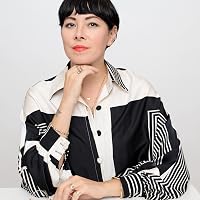
As a mixed-race, multicultural author, I've spent much of my life trying to articulate the spaces between identities—the liminal places where so many of us live but rarely see reflected back. Aisha Fukushima, who self-identifies as "mixed rooted," offers language for those spaces with breathtaking precision, tenderness, and fierce clarity.
Her poetry doesn't ask us to choose a side. It refuses the premise altogether.
One of the first lines that stopped me in my tracks was: "I went out hoping to be seen but being looked at is not the same as being seen." As someone who has written and spoken extensively about identity, visibility, and belonging, I felt that distinction in my bones. So many of us have been observed, categorized, exoticized, or admired without ever truly being witnessed.
Again and again, Aisha transforms complexity into simple truths that linger long after you've turned the page. "Even if I am illuminated, it doesn't mean there is less light for anyone else."
"I am Black. I am Japanese. I am ___. I am."
"Chasing belonging is like chasing a rainbow—every step closer dissolves it."
"Perhaps I don't belong anywhere because I belong everywhere."
As the author of Sun Shining on Morning Snow, these words resonated deeply. I have spent years exploring the paradox of being "too much" and "not enough" at the same time—too Asian for some spaces, not Asian enough for others; queer, multicultural, always translating myself. Aisha doesn't merely describe this experience. She liberates it.
One of my favorite passages asks:
"Ask a tree to choose sun or water, earth or air. Pick a side."
What an extraordinary metaphor for the absurdity of asking multiracial people to divide themselves into digestible pieces. Nature has never demanded such fragmentation. Neither should we.
Throughout the collection, Aisha gently dismantles scarcity, hierarchy, and the myths that keep us separated.
"Ladders lean according to who holds them... there is no view at the top—only ruins."
"The racism that tells me I can't be more than one thing is the racism that tells me I can't be anything."
And perhaps the line that will stay with me forever: "I'm not half of anything. There are no perforated edges on my identity. Not meant to be torn apart. Seamless."
I've never encountered a more elegant rejection of the language that has been imposed on so many mixed-race people. We are not fractions. We are not contradictions. We are whole. Yet Mostly Water is not simply about identity. It is about healing, resistance, compassion, and imagination--and the amazing human that makes Aisha Fukushima.
"My wounds are sites of miracles. I want to sow seeds of splendor in my stitches. Let a thousand dandelions bloom." That single passage captures Aisha's gift: transforming pain without diminishing it; honoring suffering while insisting on beauty.
And in a world increasingly divided by fear and dehumanization, she leaves us with a prayer that feels both urgent and timeless: "I pray for a table where no one is the feast."
There are poetry collections that impress with cleverness. There are collections that provoke. Mostly Water does something far more difficult—it invites us to become more fully ourselves.
For anyone who has ever lived between cultures, between labels, between expectations, or simply longed to be seen in their fullness, this book is a companion. Aisha Fukushima reminds us that belonging isn't something we earn by shrinking ourselves. It begins the moment we stop apologizing for the fullness of who we are. This is, without question, one of my favorite poetry collections I've ever read.