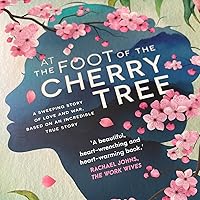
The Secret Society of Librarians is a heartbreaking yet heartwarming wartime library-set novel, inspired by real people, real stories, and extensive research.
Meeting through real-life Secret Society of Librarians in London, two women form a close bond. When WW2 hits, they take their libraries underground, creating create a roaming underground library.
But when one of them is taken to Poland and a concentration camp, they think there is no chance of ever being reunited again...
This is an inspirational, true and compelling story about friendship, everyday bravery and the power of books, with a dual narrative set between London and Poland in the 1940s.
Kate Thompson was born in London and worked as a journalist for twenty years on women's magazines and national newspapers. She now lives in Sunbury with her husband, two sons and two rescue dogs. After ghost writing five memoirs, Kate moved into fiction.
Kate's first non-fiction social history documenting the forgotten histories of East End matriarchy, The Stepney Doorstep Society, was published in 2018 by Penguin. She is passionate about capturing lost voices and untold social histories.
Today Kate works as a journalist, author and library campaigner. Her most recent books, The Little Wartime Library (2022) and The Wartime Book Club (2023) by Hodder & Stoughton focus on two remarkable libraries in wartime. Her 100 libraries project, celebrates the richness and complexity of librarians work and the vital role of libraries in our communities.
Kate is also proud to have worked in collaboration with one of Britain's oldest Holocaust survivors, Renee Salt, to research and write, A mother's Promise (UK) Do Not Cry When I Die (US and Canada) to be published on the 80th anniversary of the liberation of Auschwitz-Birkenau.
Podcast host - From the Library With Love. Interviews with librarians, best-sellling authors and our remarkable wartime generation. https://podcasts.apple.com/gb/podcast...
The Secret Society of Librarians by Kate Thompson Historical fiction. WWII. London 1939. Joyce Kindred knows the comfort and escape of a good book. As a librarian, she is proud to be able to meet the community and provide them with a book to read, even in the middle of war. It can be dangerous. A mobile Library is the goal to be able to continue her job. Seeing so much suffering and destruction, she does what she can to help. Poland 1942. Dorotha left London a few years back for Poland, worried about family. She is now stuck behind a barbed wire fence in a ghetto, forced to live there as the war destruction leaves devastation behind. She begins lending books to others knowing the written stories can be an escape for the realities crushing the spirit.
Similar to the prior two wartime books by this author, this story is a homage to librarians while imparting historical facts and a really sad time in our history. Impressive research and storytelling of librarians helping others unselfishly during wartime. I can’t help weeping for the loss of so many lives and personal histories. The loss of freedom, dignity, respect and in the end, life of thousands. Devastating stories. A bit of hope in the form of a book or story.
The Secret Society of Librarians refers to a group of women, all friends, who brought their passion for reading and books to their different communities during World War II, some of which had to be kept hidden from the German occupation. A dual narrative, the story focuses on Joyce in London and Dorotha in Poland.
Kate Thompson's research on this period wove nicely into a narrative that made me feel as if I were in London during the Blitz with Joyce and in the Lodz ghetto with Dorotha. I appreciated the fact that when it came to certain aspects of great turmoil or fright for one of the women, the next chapter was oftentimes still from their perspective. I liked that more than just leaving a character in limbo. There were many hopeful moments in this story, and even though each woman is given a male romantic partner, the storyline keeps with its purpose and is never overshadowed.
Recommended for readers who aim for wartime stories about lesser-known ways in which the war was fought.
#TheSecretSocietyofLibrarians #NetGalley Publication Date 21/07/26 Goodreads Review 24/08/26
Thanks to NetGalley and Forever (Grand Central Publishing) | Forever for access to this title. All opinions expressed are my own.
I loved the premise of taking books to the people when they couldn’t get to the libraries. Wartime caused many people to rise to the challenges of war, to pivot and create new ways of doing things. I liked the idea of reading as being an act of defiance and a means to strengthen for the ‘battle’ on the home front.
My highlighter was working overtime with wonderful quotes and facts.
I would have loved more connection with the characters. I felt this was sacrificed for the sake of a fact-rich plot. With so many 'librarians at war' books out there, a memorable character or two would have helped this plot.
I was gifted this copy and was under no obligation to provide a review.
⭐️5 Stars⭐️ The Secret Society of Librarians by Kate Thompson is an incredibly beautifully written historical fiction story and it opened my eyes to events in London during the blitz, it also shed light on what happened before the holocaust in occupied Poland. The story is moving and extremely atmospheric creating the unimaginable trauma war brings.
We follow two incredibly courageous women, librarians living in different countries, both friends and facing the breakout of World War II. Both women prior to the war were part of a group of fellow librarians that studied together and created The Secret Society of Librarians, meeting up together once a year.
London 1939 - The war breaks out and London is being bombed yet Joyce is determined as an act of resistance to set up a mobile library scheme to bring books into peoples hands so they can read as a form of escapism when libraries were no longer an option or accessible for some.
Poland 1942 - Doretha a Jewish woman is imprisoned in the overcrowded and inhumane Lodz ghetto and creates a secret library, hidden from the Nazis.
I loved the way these women stood up to their beliefs and their love of books and reading, the characters and their stories are incredible. The new world created underground in the London tube stations blew my mind!
The author devotes a section at the end of the book detailing the extensive research which was also very interesting and includes photos, historical notes and stories coming from women of the Blitz in their own words. A truly beautiful and inspirational read every librarian and book lover should read.
Publication Date 10 March 2026 Publisher Hodder Paperbacks
Thank you so much Hachette Australia for a copy of the book.
The Secret Society of Librarians is a heartbreaking yet heartwarming wartime novel, inspired by real people, real stories and extensive research. With a dual narrative the story is set between London and Poland in the 1940's. Meeting through real-life Secret Society of Librarians in London, two women form a close bond. When WWII hits they take their libraries underground creating a roaming underground library. But when one of them is taken to a concentration camp in Poland they think there is no chance of ever being reunited again. This is an inspirational, true and compelling story about friendship, constant bravery and the power of books. I have read many novels set during WWII and this novel is by far a unique and fascinating read!
Thank you to NetGalley and Forever (Grand Central Publishing) for an arc of this novel in exchange for my honest review.
I found a few frustrating things about this book. The point of view of the two main characters was fine, but the fact that they were on different time lines was weird. The story lines were a little saccharine at times, and the sudden jump from 1945 to 1975, without anything in between left me with a few questions. Finally - Virginia Woolf AND The Secret Garden - overkill, in my opinion. I gave points for the historical research at the end, though. But I’ve had enough of World War II fiction, with plucky women.
Look, I wanted to love this book, I really did. I do appreciate a good historical fiction that is based on well researched fact. That is about all this book has going for it and for that I give it an extra star.
Sadly, there were many moments where I wanted to give up and walk away. What kept me going is that in desperation, I eventually came here to read the reviews and saw one that said the ending was worth persisting for. But honestly, I just don’t get these 4+ star reviews????!
What made me want to give up on it? The Mills and Boon soap opera script and most of the key characters (or perhaps I should say “charicatures”) were simperingly irritating or typecast. Without giving away spoilers, the final scenes were aggravating and very difficult to believe thus undermining the storyline even further. The narration was clear but annoyingly cloy.
The best part of the book was the final section (“Historical Notes) where the author, Kate Thompson, explained her inspiration, motivation and facts she’d utilized to tell her story. If you have the patience to persist, this will be your reward.
I really enjoyed this book. World War two historical fiction is my favorite genre, outside of memoirs. This book was a little more "soapy" than others in the genre but still very compelling and heart breaking. I gravitated toward Dorotha's story line but overall, this was a great read. Heavy subjects.
The author gives us another great librarians in WWII story. This one unfolds on two fronts: London and Lodz, Poland. Joyce and Dorothea are two members of a tight circle of friends, all librarians, who first met at in a training program for librarians. Joyce, our main POV in England, and Dorothea, our POV character in Poland, alternate sections of the book. Dorothea's sections are particularly grim; Joyce's not so much. But both are punctuated with touches of joy, friendship, and the love of books. Fear not, while this book is grim some sections, there is a very feel good ending. The author's historical notes are as fascinating as the fictional story.
Oh man, what a read. It was heartbreaking, heartbreaking, heartbreaking. I knew it was going to be sad (I mean its set in WWII, in London and in a ghetto in Poland). I knew our characters were going to experience loss, but boy howdy.
Joyce and Dorotha met with a group of other librarians and became fast friends. When war breaks out the two of them don't stop being librarians. Joyce sets up a mobile library, protects Dorothas sister Adela, and works hard to bring books to people who are displaced because of the bombs.
Dorotha collects books from empty homes to create a library that trades under the occupations noses. The people there are killed, sent off and slowly starving, but even the lending is slowly taken away.
It took me awhile to realize these are two different timelines (it tells us in the blurb!). And the hits kept hitting our heroines. I kept thinking to myself how much more can these two lose? It didnt stop! But it felt so close to atrocities that we are seeing right now. Didn't feel so far away.
But there was still small hopes and kindnesses throughout. The bravery of these two.
In the authors note we find out its based on true events! Read the authors note.
Thanks to NetGalley and Grand Central Publishing for an advanced reader copy of this book in exchange for my honest review. All thoughts and opinions expressed are my own.
"Libertatem per Lectio, Freedom through Reading"
Joyce and Dorotha, two librarians united through their love of books and their membership in the Secret Society of Librarians, find themselves separated when WWII begins. Joyce remains in London during the Blitz, wondering what has become of her dear friend Dorotha, who is suffering in a Jewish ghetto in occupied Poland. Both women take the words of Virginia Woolf to heart: "Lock up your libraries if you like; but there is no gate, no lock, no bolt that you can set upon the freedom of my mind."
While London is being bombed and libraries are being destroyed, Joyce takes it upon herself to start a mobile, underground library to allow the people to escape into books while taking refuge in the subway tunnels during the air raids. Meanwhile, as Dorotha is suffering under Nazi rule in a ghetto in Occupied Poland, she has a similar idea, starting a small, secret library in their prison itself.
This was a beautiful story of hope in the midst of profound suffering. I particularly appreciated the way the author didn't gloss over the intense despair experienced by Jewish people under Nazi oppression, however, she also expertly wove in threads of hope in a place where there seemed to be none. I also enjoyed learning about the makeshift shelters created in the subway tunnels during the Blitz in London. The camaraderie between people, forced to live side by side in the underground bomb shelters, was inspiring.
I would never compare what I have experienced with the unimaginable suffering of those who lived during World War II, but I can still relate to the freedom through reading described in this story. In books, we are able to escape into another world, and while I can't fully comprehend what these people endured, I can imagine how books could transport them to another place, even if only for a moment.
Content considerations: -Wartime peril, described in some detail but not graphic -Spice: none; just a couple of kisses -Moderate occasional language -Rape/sexual abuse referenced, but not described
Kate Thompson’s novel centres on a group of librarians separated by the Second World War who form a secret society, united by a shared commitment to getting books into the hands of civilians. At its heart, the novel is about the power of books, but also about friendship, courage, and quiet determination in the face of overwhelming circumstances.
Thompson mentions how she used her interviews of many people, and thorough research to give the novel added weight and authenticity, and this really makes some of the most emotionally heavy sections particularly effective.
The narrative moves between London and a ghetto in Poland, gradually revealing the experiences of the main characters as the war unfolds and echoes the very different, yet interconnected realities faced by people at that time.
I wasn’t always fully engaged while reading, though this may say more about my own reading history than the novel itself. Having read many books set during the Second World War, I found parts of it more familiar than surprising, and I suspect readers newer to the subject may connect with it more strongly. That said, there are moments of real emotional impact, and the author handles these really well.
Overall, I appreciated the concept of books as a form of resistance and hope and the emphasis on collective action rather than individual heroics. I received an advance review copy from NetGalley, and this is my honest review.
I was gripped by this true story, set in Poland and London during the 1940s, that reveals how books sustain and support life during the most tragic times. Highly recommended!
Yes, we all feel as if we've read (too) many WW II Historical fiction books. But this one has not only a great author's note, but also several pages of first person accounts of surviving the Blitz in London. That raised it a notch in my list.
Beautiful but harrowing in the way only these stories can be. So incredibly researched, I really loved the afterword and detailed information about the true stories inspiring this book. One that will definitely stay with me
What a fantastic read! I was completely captivated by this wartime story which segued between London during the Blitz and the ghettos of Poland. The central characters, indomitable women, librarians with a passion to share their love of reading within their disparate communities held me entranced. I was so impressed by the author’s extensive research which was demonstrated throughout the book, with such historical accuracy. I would have given this lovely book five stars but the occasional incongruous use of modern terminology held me back. For example, a female character’s younger man was referred to as a ‘toy boy’ , a term which came into usage in the 80s, not the 40s. I can thoroughly recommend this book to lovers of reading, of libraries and wartime fiction.
4.25 stars!! ♥️ as a book lover, hearing the impact and importance of books during the war was so special. The woman in this story are so brave!!! I loved this
I went back and forth between 4 and 5 stars on this one.
This book had everything I love: World War II, strong female characters, books, libraries, and a story inspired by real events. I expected it to be an easy five-star read.
The only thing holding it back was the pacing. There were definitely sections that dragged, but then there were stretches where I couldn’t put it down. The ending pulled everything together and reminded me how powerful books, courage, and ordinary people can be in extraordinary times.
I’m giving it 4 stars…for now. I reserve the right to change my mind after it sits with me for a few days. 📚🕊️🔐🌍
I received an advance copy of this book from NetGalley in exchange for an honest review.
I read to about 25% (around page 82) before deciding to DNF. I was really interested in the premise and I typically love historical fiction, especially stories set during WWII, but this one didn’t fully work for me.
I found it difficult to connect with the characters early on. The introduction felt a bit too brief, and I wanted more time with the characters before the war began to better understand who they were. Because of that, I had trouble forming a strong emotional connection, and even basic details about them didn’t fully stick.
The pacing also felt rushed, particularly at the beginning. Major events and shifts seemed to happen very quickly, which made the story feel compressed rather than immersive. I also found some of the transitions jarring… for example, moving quickly from intense wartime scenes into everyday library moments made it harder for me to stay grounded in the story.
One of the things I love most about historical fiction is feeling deeply connected to the characters and their experiences. In this case, everything moved so quickly that I didn’t feel like I had the chance to fully settle into those moments.
That said, readers who prefer faster-paced historical fiction or stories that move quickly through major events may enjoy this more.
Thank you to NetGalley and the publisher for the opportunity to read and review.
Well, this is surely not the book I’d like to read again. In fact when I started reading it I was thoroughly disappointed… Checking the reviews prior to it I expected a great read. Quite contrary - it was slow, disengaging, very repetitive and I had to force myself to continue. I wouldn’t given it more than just 1 star. Till nearly the very end where it finally became something that left me in tears. Surely a great ending! The Notes afterwards - too much for me. Way too much. So… if you’re planning to read this book - don’t expect much till the last few chapters.
I enjoyed reading this novel but was disappointed in the inconsistent writing and weird anachronisms. For example, people didn’t “buckle up” in the early 1940s as seatbelts were not installed in cars, trucks or busses until the 1950s at the earliest—so the mobile library certainly would not have had one. The story also sort of just ended with a 30 year break and then a discovery that did not feel realistic. Ww2 and Holocaust novels are myriad and this is not among the best.
The Secret Society of Librarians is a historical novel set during World War II. In London, Joyce Kindred is a librarian who finds her library has been bombed. It is during the Blitz, and she starts a mobile library with the help of a young Jewish refugee named Adela. In Poland, Dorotha (older sister of Adela) can no longer work as a librarian in the Polish Ghetto due to the oppression of the Nazi party. She creates a small secret library. Dorotha and Joyce are part of a group of friends from library school, and the story involves their network of friends.
I wanted to read this book because I have enjoyed Kate Thompson's other WWII novels (especially The Little Wartime Library). I read a lot of historical fiction, and am interested in the 1940's time period.
This novel is told in alternating viewpoints by Joyce and Dorotha. They face struggles both personally and as librarians, but they were very committed to the motto of their group of librarian friends:
"And thanks to Virginia Woolf, it came to her. “What about ‘Libertatem per Lectio’?” Joyce asked, her eyes shining. “It stands for ‘freedom through reading.’” (eBook location 191).
Joyce shelters in the London underground along with Adela and an older friend they look out for. The book depicts the frightening bombing that happened during the Blitz. In one dramatic scene, Joyce and her beau are visiting St. Paul's Cathedral with its huge and winding library passages and they leave just to find the city being bombed.
The hardships that Dorotha faces are unimaginable, and heartbreaking to read. She loses family, work, and lives with hunger and deprivation beyond imagination.
These women hold on to their ideals - the importance of books and reading, kindness and compassion for others, and a long lasting friendship. They are truly heroic figures.
I recommend The Secret Society of Librarians for historical fiction readers, and especially for anyone with an interest in World War II fiction.
Sometimes the dual-timeline technique works really well for historical fiction, and sometimes it doesn’t. I wouldn’t go so far to say this one didn’t work; more that I thought it was a little strange. The two timelines take place during WWII, with one character in London and the other in occupied Poland, but it was odd to have one character moving ahead timewise, and the other lagging significantly. I’m not sure what the purpose of that was.
Otherwise, this was a good read about the impact of the war (particularly during the Blitz) in London, and what life was like in the Jewish ghettos in occupied Poland. The two main characters were both librarians, and the focus was on how libraries/books/reading can not only forge friendships, but also maintain some sanity and civilization during dire times.
The author has extensive research notes in the back which are definitely worth reading.
3.75 rounded up for goodreads. I really applaud Thompson’s research in the topics of the Lodz ghetto, mobile libraries, the blitz; it really grounded the novel and the different viewpoints. However, the timeline changing with each chapter got to be pretty confusing and made it really hard for me to really engage with Dorotha and Joyce. I also found a lot of the language to be quite modern and this also took me out of the story. A lot of the romance was predictable and rushed. I do wish she spent a little more time growing those relationships, but in war time it is probably believable. The messaging of reading being resistance is still true today and was powerfully clear.
This was a very interesting historical fiction novel set in the beginning of World War II in London during the Blitz.the central characters are two librarian friends who form secret society of librarians, who wish to bring books and knowledge to everyone through mobile units throughout their cities. The two central characters divide the chapters one in London during the Blitz; the other in a Nazi getto in Lodz Poland. The horror of war, the resilience of the people, the tragedy and destruction of the Nazi regime are quite compelling. Strong character development and excellent research make this a marvelous read!
Another incredibly well written and heavily researched historical novel by Kate Thompson. This story follows our librarians again as they form The Secret Society of Librarians. This time we have Joyce during the blitz in London and Dorotha in the Lødz ghetto in Poland. Both of their stories are so rich in detail and I was rooting for a happy ending for both. Both women view reading as an escapism and come up with plans to get books into the hands of people no matter the circumstances. The society's motto is Libertatem per Lectio - Freedom through Reading and both women embody this statement in the book. The end of the book is so moving! Keep your tissues handy. The historical note in this book is incredibly detailed with pictures included. Definitely a must read for librarians and book lovers!
Thank you to Netgalley and Forever (Grand Central Publishing) for the ARC of this book.
What an amazing book! As someone who loves reading about WWII history, this book completely reignited my fascination with the time period. I truly loved the multiple character perspectives and all the unexpected twists and turns throughout the story. There were so many heartwarming and happy moments, but also plenty of heartbreaking ones that really stayed with me. I was completely invested in the characters and their journeys from beginning to end. A beautiful, emotional, and unforgettable read!
My heart was in my throat for what felt like the entire book.
The Secret Society of Librarians follows Joyce, a librarian who is part of a secret society of librarians, as she takes in Adila, Rosa’s Jewish sister, who arrives from Poland during World War II. Through the stories of these women, we’re given two different perspectives across different periods of history, and we see the devastating realities of persecution, fear, loss and survival.
This book was heartbreaking. Truly heartbreaking.
It shines such a painful light on just how brutal and difficult this period in history was, and I found myself going through such an emotional journey while reading it. There were moments where I just had to stop and take a breath because of the weight of what these characters were experiencing.
One of the things I loved most was seeing how the librarians used what they had to help others during such an unimaginably terrible time. Their courage, compassion and determination made this story feel incredibly meaningful. There was something so powerful about people quietly choosing to help others when the world around them was falling apart.
I will say that, despite being completely engrossed in the story, I didn’t connect with the characters quite as deeply as I wanted to. I think that kept me from becoming completely emotionally attached to them on a personal level. But the story itself still pulled me in and stayed with me.
I also really appreciated the notes and the insight into Kate Thompson’s research. Learning about the people she spoke to, the history she uncovered, and the process of bringing this story to life made the book feel even more poignant. You can feel the care and respect that went into telling this story.
This was a heartbreaking, emotional and deeply moving read. It reminded me that even in some of the darkest periods of history, there were people who chose compassion, courage and humanity.
And honestly? The secret society of librarians might just have broken my heart.