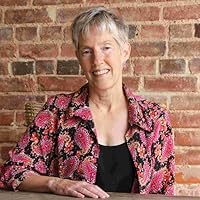
Joy Neal Kidney, the oldest granddaughter of the heroine of the "Leora Stories," is the author of "Leora’s Letters: The Story of Love and Loss For an Iowa Family During World War II," "Leora's Dexter Stories: The Scarcity Years of the Great Depression," "Leora's Early Years: Guthrie County Roots," and "What Leora Never Knew: A Granddaughter's Quest for Answers."
A graduate of the University of Northern Iowa and married to a Vietnam Air Force veteran, Joy lives in central Iowa.
This collection of stories and poetry represent a life time of observation, memories passed on by previous generations, shared with the reader by a wonderful storyteller and guardian of the past.
In the first section of the stories titled Celestial, we are invited to join into rituals, such as the long cherished rite since childhood of watching the annual firework display of the Perseids, lighting up the sky for a tantalising few hours. And a glimpse of Halley’s Comet, the complexities associated with the moon and its phases and weather and how rain on the roof can be “good sleeping weather.
Next we move into the childhood years on the homestead…beginning with the glorious decades of an old upright piano. For a child growing up on the farm there is also the special atmosphere to be found in a barn including ‘a horse’s nicker’ and ‘grunt of a sow with baby pigs’.
There are wonderful stories on the flora and fauna and you can almost smell the fragrance of the lilacs as they brightened the garden each May and filled their home with their aroma. There is also the delight of watching squirrels cleverly circumnavigating deterrents to sample the bird seed on a snowy day and a persistent spiders intruding into a Sunday service
We are introduced to ancestors from the past including those from Denmark in the 1830s who moved to America leading to the birth of dynasty, and a connection to a well-known outlaw. In the town’s cemetery the lives of many others over six generations are remembered with each stone a brief reminder of their lives and accomplishments and links within the family tree. There were terrible tragedies associated with deadly diseases which ran rampant through the community, but also resilience and courage. There are wonderful times shared too, such family celebrations for mother’s day, tooth fairies and refrigerator art.
The author’s family history of service to the country is shared in a wonderful chapter on Veterans including a poignant poem of remembrance. And those honoured include her father who flew as a pilot in the iconic B-17 Flying Fortress during WWII before donning the mantle of farmer. Also her Uncle Don who was on The Yorktown during the battle of the Midway but has also had to abandon ship twice and went on to earn a great many commendation and service medals. Memorial days were particularly poignant with Leora Wilson’s loss of three sons during the conflict. There is also the fascinating story about the origins of the Iowa’s Freedom Rocks where the author’s five uncles are honoured for their service.
The stories are not only about the family and their close friends but also the newcomers such as the Bosnian immigrants who arrive in search of safety and a new life in Iowa which fostered a pro-immigration policy. The author found her life enriched as they did the whole community where they still live today with their extended families.
When you have finished reading the stories, and if you should feel peckish, you can enjoy Doris Neal’s Potato Salad… definitely a comfort food.
This collection is poignant, inspiring and a reminder of how a close knit community offers a level of support which sadly is lacking for so many living in cities today. I thoroughly enjoyed my time reading new stories and a reminder of the other books I have read by Joy Neal Kidney. They are to be treasured.
The Immigrant and the Outlaw: A Collection of Stories from America’s Heartland by Joy Neal Kidney is a moving collection of true stories rooted in Iowa but echoing far beyond its borders. Every family has a story. These are worth remembering. I loved them all!
Drawn from decades of preserving memories of war, family, immigrants, ancestors, and everyday life, Kidney’s essays celebrate the quiet heroism, resilience, and enduring humanity woven through ordinary American lives.
The Immigrant and the Outlaw accomplishes something far more difficult: it reminds us that ordinary lives are never truly ordinary.
Joy Neal Kidney has spent decades preserving the stories of people who might otherwise have disappeared into family albums, fading newspapers, and forgotten cemeteries. This collection feels less like reading history than sitting across the kitchen table from someone who remembers—not merely the events, but the sounds, smells, seasons, and emotions that made them worth preserving.
The essays are rooted firmly in Iowa, yet their reach is universal. Whether writing about immigrants rebuilding their lives after the Bosnian War, childhood on a Midwestern farm, family ancestors, or the quiet dignity of an unremarkable maple tree, Kidney finds the extraordinary within the familiar. She possesses the rare ability to take something seemingly insignificant—a meteor shower, a cemetery, a morning glory vine, Sunday dinner—and reveal why it matters.
Her prose is deceptively simple. There are no unnecessary flourishes or attempts to impress. Instead, she relies on careful observation and genuine affection for her subjects. Reading The Meteors of August transported me back to childhood evenings spent looking at the night sky, while Comets of a Lifetime beautifully captures how celestial events become markers of our own lives, intertwining astronomy with family memory.
One of the most memorable essays, Blessings of an Ordinary Tree, perfectly demonstrates Kidney’s gift. What begins as a reflection on a plain silver maple gradually becomes a meditation on family, resilience, parenthood, and the unnoticed blessings that quietly shape our lives over decades. By the final paragraphs, that ordinary tree has become unforgettable.
Several stories lingered long after I finished the collection. Bosnian Refugees is compassionate without becoming sentimental, reminding us that every generation has known displacement and hope. Sunday Dinner captures the quiet rituals that bind families together. Stonehenge and the Summer Solstice reflects the author’s enduring curiosity about history and humanity’s place within it. The Tooth Fairy and Grandma’s Crocheted Roses evoke childhood and family traditions with warmth and authenticity, never drifting into nostalgia for its own sake.
What impressed me most is Kidney’s generosity toward her subjects.
She writes without cynicism or sensationalism. Even when recounting hardship, loss, or war, she focuses on endurance, kindness, and the small acts that define a life. That perspective feels increasingly rare.
The foreword notes that preserving memory is both an obligation and a gift. This collection embodies that philosophy. These are stories about immigrants and farmers, grandparents and children, neighbors and forgotten ancestors, but they ultimately become stories about all of us. They remind us that history is not only made by famous names—it is built from ordinary people whose lives deserve to be remembered.
Readers who enjoy American history, memoir, family stories, or reflective essays in the tradition of Garrison Keillor, Willa Cather, or the best features from Our American Stories will find much to treasure here.
The Immigrant and the Outlaw is a heartfelt celebration of memory, heritage, and everyday grace. It is a book that encourages readers to preserve the stories within their own families before they, too, are lost.
I thoroughly enjoyed this collection of family memories. I read it slowly, savouring each vignette of rural and family life. I could relate to many of these stories, as I come from a rural background as well. I can't pick a favourite, but in Rollerskating in the House, I resonated with the phrase: "I decided then and there that I'd never marry a farmer." Yes, I recall that decision too. The story, Barns, is wonderful and sad at the same time. I love old barns, and the author's description took me right back. Unfortunately, they are disappearing. Joy Kidney uses all the senses in her writing. We Brake For Lilacs evoked the scent of lilac bushes on our farm. Writing about the taste of her mother's potato salad, recipe included, raises the age-old question, "Why does mine never taste quite as good as Mom's?"
I've visited a War Memorial Cemetery in Europe, and although our family has never had to endure the pain of losing a loved one in a war, it still affected me deeply. The author lost not one but three uncles in WWII. My heart broke reading about that. But by writing about them, she has ensured their memory lives on.
This is a book I'll read again as there is so much to it. Whether reflecting on the past, the relationship of sisters, or her favourite tree, the author has shown her writing prowess. Well done, Joy!
This is a fantastic collection of family historical short stories and a few poems that were published and shared in the past. I’m glad I was able to read these heartfelt short reads from the past, and I found it so easy to relate to the stories. I connected to many of the author’s personal narratives, including one about lilacs, which I can’t wait for them to bloom every year, too. Sky gazing is something I do, and I appreciate those meteor showers. One story caught my eye about Jesse James and a horse. My family was from Missouri, and my great-grandmother had tales of the outlaw as well. There is not only an understanding of time periods, from the depression to more recent times, but it is also beautifully written. It is a reminder of how our relatives survived hardship and how the little things in life bring so much joy. I can highly recommend this nonfiction peek into our past.
This is a collection of Joy Neal Kidney’s micro-memoirs and mini-biographies of generations of her family and those who surround(ed) them.
Kidney is an accomplished freelance writer, so these pieces are tightly written and polished. Any tears that I shed (and I did cry a few times) weren’t from sappy shallow stories but palpable, real-life, gritty and loving experiences.
I enjoyed her descriptions of farming life, ways of living during the Depression, and life during the mid-20th century. I enjoyed her admiration for our military veterans (that and her work with Bosnian immigrants are what made me cry, and the quilt story, too; I shed tears over the quilt).
Kidney is a sky watcher and no doubt qualifies as an “amateur astronomer.” I learned things about comets that I wouldn’t have even known to ask. And she loves rainy days, which had me yearning for a nice drizzle.
There’s a nostalgic vibe running through the pieces, a result of her own memories and those of her family … crank telephones (“our ring was four shorts”), treadle sewing machines, a cob-burning stove, and barns when they were active and sturdy.
The Immigrant and the Outlaw is nonfiction done right. It’s a thoroughly enjoyable book!