A bestseller in South Korea in 1991, where it was serialized in that country's largest newspaper, Little Pilgrim is a tale of adventure and self-discovery in the tradition of Hermann Hesse's Siddhartha. Based on the Gandavyuha, Buddhism's deepest and most challenging scripture, Ko Un's Little Pilgrim relates the heroic journey of Sudhana, who sets out to discover what truth is. Throughout 20 years of fantastic travels, Sudhana encounters teachers that are human, animal, and spirit as he navigates mountain vistas, lush valleys, and remote villages.
Drawing from his own 20-year journey, as well as first-hand experiences with wars and monastic life, Un infuses his book with reflections and memories, creating fascinating characters and a vibrant story. The pinnacle of Un's career as a writer and as a man in search of truth, Little Pilgrim is a poignant voyage that resonates on many levels.
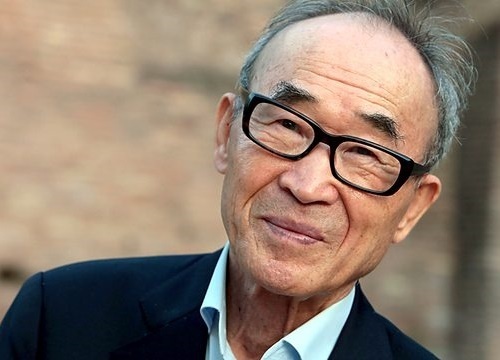
Ko was born Ko Untae in Gunsan, North Jeolla Province in 1933. He was at Gunsan Middle School when war broke out. The Korean War emotionally and physically traumatized Ko and caused the death of many of his relatives and friends. Ko's hearing suffered from acid that he poured into his ears during an acute crisis in this time and it was further harmed by a police beating in 1979. In 1952, before the war had ended, Ko became a Buddhist monk. After a decade of monastic life, he chose to return to the active, secular world in 1962 to become a devoted poet. From 1963 to 1966 he lived on Jejudo, where he set up a charity school, and then moved back to Seoul. His life was not calm in the outer world, and he wound up attempting suicide (a second time) in 1970. Around the time the South Korean government attempted to curb democracy by putting forward the Yusin Constitution in late 1972, Ko became very active in the democracy movement and led efforts to improve the political situation in South Korea, while still writing prolifically and being sent to prison four times (1974, 1979, 1980 and 1989). In May 1980, during the coup d'etat led by Chun Doo-hwan, Ko was accused of treason and sentenced to 20 years' imprisonment. He was released in August 1982 as part of a general pardon. After his release, his life became calmer; however, he startled his large following by revising many of his previously published poems. Ko married Sang-Wha Lee on May 5, 1983, and moved to Anseong, Gyeonggi-do, where he still lives. He resumed writing and began to travel, his many visits providing fabric for the tapestry of his poems. Since 2007, he is a visiting scholar in Seoul National University, and teaches poetics and literature.
Sudhana took his morning meal of fruit and water, then ran out in search of freedom in the marvelous beauty of the high pure mountain.
When the Korean poet Ko Un was born in 1933, he drew his first breath in a Japanese colony, a colony in which it was forbidden to teach the Korean language in school as part of a campaign by the Japanese imperialists and their Korean quislings to replace the inferior Korean culture by the infinitely superior accomplishments of the Japanese. Too malnourished to be drafted into the army during the Korean War, he nonetheless witnessed much of it (the war swept over essentially the entire peninsula) and lost many family members and friends. In 1952 he entered a Son (Zen) monastery but left a decade later dissatisfied with the "self-centeredness" he encountered in the order. After a period of inner torment and self-destructive behavior during which he twice attempted suicide, he found a purpose in the pro-Democracy movement in the early 70's. This earned him prison and torture.
Despite these experiences, Ko's poetry is generously life-affirming without a hint of bleakness. I've read three collections of his poetry so far and particularly recommend Ten Thousand Lives, which is written with a direct clarity and remarkable empathy. But Ko also wrote a novel, and this is the focus of my discussion today.
Ko may have been disappointed with his monastic life, but he was not lastingly disappointed in Buddhism, which clearly informs most of his work. Little Pilgrim - which began to be published serially in 1969, was published as a book in 1974 and then re-published in expanded form in 1991 - is a very Buddhist text. In fact, it is based on the character Sudhana from the final chapter of the enormous Avatamsaka Sutra, which is reputed to be one of the most complex holy texts of Mahayana Buddhism. This is not necessarily very appealing to most Western readers, which is why the publisher of this translation claims in the liner notes that Little Pilgrim is a "spiritual adventure tale in the tradition of Siddartha and Lord of the Rings,"(!!) and supplies the book with prefaces and postfaces that try to convince Western readers there is something in the text for them, drawing analogies with the Divine Comedy and Pilgrim's Progress.
Instead of trying to bend this text into a familiar form, I preferred to try to understand it on its own terms.
Let it be clear that I have not read the Avatamsaka Sutra, nor is it likely that I ever shall. But because of its length and complexity, neither have almost all the Korean readers for whom Ko wrote this book. It is not specialized knowledge one needs to appreciate this text. And one should definitely avoid the expectations suggested by the above-cited texts going into this tale. In fact, one should avoid the expectations usually suggested by the word "novel" in the West. Realism? Forget about it.
Set in India at the time of the historical Buddha (who never directly appears in the novel), Little Pilgrim consists of a series of short episodes in which a little boy, Sudhana, who has lost his family in a war, moves about the country and meets wise men and monks, but also men and women in ordinary professions as well as wondrous animals gifted with speech and insight. In the original sutra, each of these imparts a long, abstract philosophical teaching to the boy, and he moves on to the next. Many fantastic events occur and marvelous sights are seen. Ko keeps the fantastic events and marvelous sights but suppresses most of the explicit philosophizing, preferring instead to suggest what he saw as the core ideas of the sutra.
One of these is that enlightenment does not require going through an accumulative process and certainly not piling up knowledge, but rather having an openness of spirit to the omnipresent possibility of enlightenment.(*) Another is that because this Buddha spirit is everywhere and in everything, all things in the universe interpenetrate: the all is in the one, and the one is in the all. So one can be stimulated to enlightenment by anyone and anything, not only by wise men. One just needs an openness to the possibility. (Evidently, this is not as simple as it sounds.) Yet a third is that enlightenment is the release from deterministic necessity, from the interminable revolutions of the Wheel of Life; the Enlightened who remain because of their compassion for the living - the Bodhisattva's - seem to be central to this sutra.
So, though there is much apparent motion in the boy's travels, there is a strange immobility in the text due to the repetitive structure that is necessitated by Sudhana travelling to and briefly interacting with 53 interlocutors; and though at times it appears that many, many years pass, the boy does not age.(**) It is no spoiler to reveal that the boy does experience a sudden enlightenment and that he then meets another little boy who has lost his family. The wheel has made one cycle and begins another...
Of all the modern novels written in Asia I have read to this point, Little Pilgrim is certainly the most traditionally Asian. Moreover, it is clear that Ko wrote this text over a twenty-two year period: the beginning sections are more lyrical, the middle sections are more engaged with social issues, and the last are more philosophical. This all makes Little Pilgrim a very unusual read. Some of you know by now that I relish that.
(*) This is a central tenet in Ch'an/Son/Zen Buddhism. It stands in direct conflict with the fact that the Indian Buddhist philosophers loved to systematize and classify, and so the original Sanskrit and Pali texts that were translated into Chinese and then Japanese and Korean contain lists of stages and qualities that seem to contradict this central tenet. At one point Ko stands back and speaks of stages through which Sudhana has passed, but this seems to be a formal gesture to the sutra and not an expression of his own view.
(**) Sudhana ages only in dreams, but in Buddhism life itself is but an illusion, a dream.
I've found, over the years, that poets often make good novelists, but not always. I'm afraid Ko Un falls into the latter category. My reason for liking poets as novelists is their beautiful descriptive prose and Ko Un used almost none that I noticed in this book. This is the tale of a young boy, Sudhana, who is found, near death, adrift on a river in a plank raft. He is rescued by Manjushri and, as soon as he recovers, Manjushri tells him he will show him the way and is sent back adrift. He then sets out on a journey seeking enlightenment. The book then goes into a series of short chapters, each two or three pages long, some a few pages more, all telling about his meeting with some person, usually a teacher of some mystical "truth". There is virtually no elaboration or descriptive prose in the encounters and, as far as I could tell, no actual usable truth told. Most of it is overly embellished but meaningless jargon. An example of the amount of information told in these short chapters is one in which Sudhana finds he has leprosy and as the disease progresses he is thinking of cutting off his fingers but then the disease miraculously goes away and he meets up with the girl he loves, who was introduced at the first of the book but who he abandoned to go on his quest. She then becomes pregnant but he sets off on his next quest anyway and is gone for several months with some guru on a mountain top and when he finally returns he finds that the baby has died and his girl left, never to be heard of again in the book. All of this was told in a single three page chapter but this was typical of each of the chapters in which barely a paragraph or two were used to explain any occurrence that happened. It was a very disappointing read for me because I went into it with high expectations, thinking it was going to be similar to Hermann Hesse's extraordinary book Siddhartha but it fell far short.
This book would probably be really good if I knew more Buddhist mythology. As it is, it was well written, but I didn't get the significance of, well, any of it.
Detta är en lågmäld vandring genom det forntida Indien. Sökaren pojken Sudhana träffar 53 vishetslärere och får nya insikter om tillvarons beskaffenhet. Inspirationen är hämtad från klassisk Garland Sutra och poesin pyr under ytan. Jag gillar den mestadels och det finns en tröst att tänka att nästan alla vi möter kan ge oss nya insikter. Men är verkligen allt förgängligt och kan vi utvecklas av förluster. Allt hänger samman och karma är tätt sammankopplat med tillvarons beskaffenhet och alla levande varelser.
Một cuốn sách đồ sộ và khó hiểu, mình chỉ hiểu được khoảng 70% và luôn trong trạng thái sợ đọc chưa kĩ, sợ không hiểu hết :(( Mặt cốt truyện thì cực kỳ đơn giản nhưng về mặt từ ngữ thì phức tạp đến khó tin. Mình nghĩ sách về tôn giáo sẽ chia ra làm 2 kiểu chính, một kiểu mang đạo gần đời hơn, kiểu còn lại mang đạo xa đời hơn. Thật tiếc là cuốn sách này thuộc kiểu số 2 😞
A mystical tale of a travelling bodhisattva who goes from teacher to teacher constantly. The book portrays the bodhisattva as a kind of class hero who is concerned about the poverty and hunger of the poor and seeks to alleviate it through providing dharma and good deeds. The text is cryptic yet down-to-earth in many ways as well.