Pattie and her family are among the last refuees to flee a dying Earth in an old spaceship. And when the group finally lands on the distant planet which is to be their new home, it seems that the four-year journey has been success. But as they begin to settle this shining world, they discover that the colony is in serious jeopardy. With supplies dwindling, Pattie and her sister decide to take the one chance that might make life possible on Shine.
Jill Paton Walsh was born Gillian Bliss in London on April 29th, 1937. She was educated at St. Michael's Convent, North Finchley, and at St. Anne's College, Oxford. From 1959 to 1962 she taught English at Enfield Girls' Grammar School.
Jill Paton Walsh has won the Book World Festival Award, 1970, for Fireweed; the Whitbread Prize, 1974 (for a Children's novel) for The Emperor's Winding Sheet; The Boston Globe-Horn Book Award 1976 for Unleaving; The Universe Prize, 1984 for A Parcel of Patterns; and the Smarties Grand Prix, 1984, for Gaffer Samson's Luck.
I had such vivid memories of reading this as a child, and I couldn't remember what it was called or who it was by. Luckily, /r/whatsthatbook came to my rescue, and I order myself a copy the same day. It's a lot shorter than I remember it, but I must have read it when I was only 7 or 8 (maybe younger?). Anyway, this is the book that started my fascination with scifi. It's a lovely little book. Definitely aimed at children - don't pick it up expecting some deep and complex scifi. But full of incredibly vivid imagery; it was the memory of the glass grass that really stuck with me, and helped someone else to recognize which book I was talking about.
Really, I want more of it. I want more time on the spaceship, I want more about the new village on Shine, I want more about their new lives, and I want more about the books they brought, the ones they left behind and half-remember, and the new ones they write.
I vividly remember reading this book in the fifth grade. I found it unscientific, wildly implausible, vague, and artistically undistinguished. The book takes place at an unspecified date in the future when the sun is dying for an unspecified reason. The main characters--like many people on the planet--are leaving the earth--however, the nation that they belong to is poor, and cannot afford to take much with them. They can therefore only take a few crops and animals with them, and each person can only take a single book. The main character-- a young girl--chooses to take a green notebook with her, in which she records the events that take place on the new world. This, however, does not excuse the book's numerous scientific flaws, which for me made the book a laughable read.
*Stars, when they die, do not shrink and turn blue as the book depicts--they instead turn red, and even a sun-sized star would grow in size.
*Though the ship has a computer that is advanced enough to play games with the passengers, it never occurs to the designers to place a library of books in the computer. Additionally, it seems that the author never anticipated the cheapness of computing technology which would eventually arise.
*An interstellar journey would never take four years unless one had been using some currently unknown method of superluminal travel. The book makes no mention of this.
*The planet is too Earthlike--one cannot expect that there would be anything resembling a tree, a blade of grass, or other feature of terrestrial biology on that planet.
*Life cannot become crystalline either from living in a soil or from a diet. This is simply, utterly absurd--such a thing is effectively equivalent to completely restructuting the elementary composition and molecular processes of an organism without killing it--and the simplest way by which one could legitimately explain this concept in a serious work would require the use of extremely advanced nanotechnology.
The scientific errors are potentially ignorable, but, as I am very knowledgeable as to science, I found that these books--as well as the poor presentation of the story by my fifth grade teachers--were not at all of any interest to me.* The writing style is only barely distinguished with respect to other authors, and it is funny that a child would even be able to use the word "treacle", as the main character does in the first chapter.
*Footnote: I have a grudge against the school, in part for how they taught this book. For example, when we as a class arrived at the scene where the children discover a sweet substance, the whole class did a science essay on sugar, never once mentioning that not all sweet substances are sugars. It was only a fifth-grade class, of course--but I was highly annoyed even then, especially when a kid told me that "sugar was made of carbon dioxide"--a conclusion made from our experiments with using yeast to measure sugar. I could go on to discuss the other crap they taught us, but I will discuss that in a different review.
I first picked up this short little novel because I had heard of several teachers using it to teach about sustainability. However, I was somewhat disappointed in their classroom plans when I found that the earth in the story is "dying" due to what seems a natural aging of the sun rather than over-extension of earth's resources or pollution, making the main "green" thing about the book its title, which refers to the color of a journal. In any case, it is a sweet little story and worth the time to read, particularly because it provides a gentle step into science fiction for young readers. The morals regarding story and the importance of community, history, and culture are appropriate and interesting. While there's nothing that actually ends up being scary in the story, there is concern about starvation and discussion of suicide that readers should probably be aware of before sharing this title.
I was pretty surprised to read such mixed reviews of this book. I loved it! It was sweet. Narrated by a child and with such a lovely perspective that you were totally transported. Short book, but a total delight.
Perhaps if I'd read this when I was 8. Before I'd ever read any other science fiction. But I would still have been bugged by the internal inconsistencies of the story, not to mention the huge gaping holes in it. So all they are going to eat is wheat flour and moth wing soup? ForEVER? And how could they not know how long the day was on a planet they had approached for months? And who was the mysterious Guide? And why didn't they talk among themselves about who was bringing which book before boarding the ship? Why did Pattie continue to misuse the word 'choose' after 4 years had passed? So much improbability, it's a wonder Arthur Dent didn't come through looking for a spot of tea.
And it really bugged me that the illustrator hadn't read carefully. All the roof shingles in his illustrations were SQUARE. And the moths were entirely fairy-like, as opposed to the descriptions in the text.
It seems that this little book has attracted a lot of heated opinions, which is odd. It's not a classic of junior sci-fi literature by any stretch, but it's not that bad.
It's kind of fun to read old sci-fi's envisioning of the 21st century (and beyond). I do find it funny that in the pre-Internet era, so many authors had trouble conceiving of computers as little more than clunky, tape-eating data-logging machines--even far into the future. Also, those fuel-burning Earth machines could have benefited from solar cell technology. Finally, carrying live chickens and rabbits on a spaceship to a new planet many light-years from home is ridiculously inefficient--even small farmed animals consume precious food and water supplies, and their consumption isn't necessary for human survival.
This is a charming book about resettlement on another planet after the destruction of Earth. Rather than being a typical sci-fi book, this is written from the point of view of the children, with a child-like joy in exploring the flora and fauna of the new world.
2,5/5. Not much in it. Maybe children would have a different view, but as an adult I definitely saw a lot of flaws and holes in the story and the universe. It might still be an alright read for young reader making their debut into the science-fiction genre but again... not so sure how children would react to it. I like the little «twist» at the end. Not entirely bad but I was expecting and hoping for more...
I don't see many SF books aimed at this age group.
ADULT-ISH VERDICT: 2.85 stars, bumped to 3. Pretty good. If I'd read this as a 10-year-old, I'd probably have given it 4 stars.
Or 2 stars if you are an adult who nitpicks science and logic in books for 10-year olds.
An adult teacher-friend who never reads SciFi actually read my copy (I'd given it to her to pass on to a student), and she said it was surprisingly good. She'd recommend it to younger readers as an imaginative tale, and she liked the young protagonist
A deceptively simple book that packs its thin pages with equal parts hope and worry. The story follows a family on last ditch journey away from a dying Earth. With only enough fuel to reach the unknown distant planet designated for them by richer, more connected refugees that left Earth long before, the passengers on the old ship are allowed only the bare minimum of supplies and only one personal item, along with a book. When they arrive, they have no idea whether the planet will support them or not. It had only be briefly scouted to determine there was a high likelihood that it could support human life.
The trip takes several years, in which time the main character Pattie, grows from a small child into an inquisitive girl. Upon arriving, there is a moment before the passengers will find out if the planet is livable, whether there is water, if their seeds will grow, and are there any potential dangers. Like every moment in this novel, it handled excellently. Will a careful use of words, Jill Paton Walsh is able to capture all the tension without ever embellishing or resorting to melodrama.
Life on this new planet is seen through Pattie's eyes, and so while the difficulties are visible, what the reader truly feels is the sense of discovery that the strange world exhibits. It is the gift of a child to see joy even in the midst of struggle.
A surprise twist at the end only works to strengthen this book and make it even more endearing than it already had been.
A wonderful introduction to science fiction. It's a classic story - colonising a new planet - told from the point of view of a very young girl. The style is simple, but the descriptions soar into glorious imaginative visions - so easy to imagine, and so beautiful to read. The planet is just the right blend of familiar and utterly alien, and the struggles and discoveries make perfect intuitive sense. There's a depth to the social relationships - and a LOVE of books within the story - that lifts this to a whole other level.
It's only 66 pages long, but I felt like I'd read a proper classic of the genre. Jill Paton Walsh's writing is so vivid, rich and immediate - I swear she writes as though the printed word was a song.
I loved the concept and the descriptive writing is, as always from JPW, wonderfully evocative. I wanted it to be longer and a little less simple, although, as it is written from a child’s point of view, it is as it is. The moth creatures were amazing and the scene where they are playing with the children is beautiful. Lack of communication between the group, both before departing Earth and during their troubles, causes all sorts of problems, including multiple copies of the same book in a library of few.
I heard about this book on Reading Rainbow many years ago, and I've loved it ever since. The story is short, simple, and haunting. I still think it would make a wonderful movie…
A short and sweet children's sci-fi story. There's certainly scientific inaccuracies but from a child's eyes, even if they notice them, they will likely be able to suspend disbelief for the story and the imagery. The translucent wood from the trees forming huts full of shadowy grey light in the day, and at night allowing them to glow the warm flickering red of the fire and points of green from the jellyfish oil lamps, making the houses look like bits of fire opal is a lovely idea!
I would be more concerned that it's sci-fi that reflects the technology of the time it was written, and that could confuse younger readers. They mention using tapes in the computer and its talks of playing Monopoly or Mastermind against a computer, and it being strange to play against a person. Of course, now the idea of playing these board games against a computer on 'video screens' is just normal! Children are good at accepting details they don't fully understand and still enjoying a story, and even if they don't understand the references to this they would hopefully take it as interesting quirks about the technology of the future.
I believe one of my teachers read this to us in school. I couldn't remember the title or much about it so I googled the following: "childrens science fiction book where they travel to another planet with clear trees." Success.
The only other thing I remember is the journey to another planet took a couple years and each person could choose one book to bring. As an accompanying activity we thought of what book we would bring. I chose the soon-to-be released Harry Potter and the Prisoner of Azkaban; which, looking back, is a terrible choice under the circumstances.
A curious little book that needs to be judged as a children's fable rather than as hard science fiction. And as a children's book, it's a corker -- and in the hands of a good teacher, it could be a gateway to all sorts of interesting insights and discussions with the 8+ age range, as well as the whole genre of Science Fiction. I was reading it for the first time at my ripe old age because it was recommended by a friend of mine -- who IS an excellent teacher -- for my 6-year-old granddaughter. My friend suggested that GD might be ready for it. I think it might be better for her to wait a while -- for reasons that I will explain later. So 8-12 is a good range, I think.
As science fiction, it makes no sense. The destruction of the Earth, the trip to the alien planet, the resources that colonists might be expected to have -- all are either vague, or really puzzling. But I don't think this would bother a child of the right age -- that's a time when wolves can assume the shape of Grandma, and ponies talk and fly, and unhappy princesses can turn anything they look at to ice. And it's a well know fact that adults do & say the darndest things -- the wise child just nods and smiles, and goes along with it. And that's another thing that will ingratiate this book to the average 8+ year old-- the children are the smartest people in the book. The adults don't allow for the most basic necessities for the colonization of an alien planet. they organize themselves in a way that is almost guaranteed to cause hard feelings and dissent. They say that each person can only bring ONE BOOK and then don't coordinate the choices, so that there are six copies of Robinson Caruso and no Shakespeare, or Milton, or Agatha Christie. No real spoiler, but everything good and interesting that happens to the colonists on this alien planet is the result of the children's explorations, curiosity and bravery. Kids will love that.
So this isn't hard SF, and I'm sure it wasn't meant to be, but more like a fable about leaving everything behind, adapting to a new life, and encountering strange new phenomena. And, perhaps, learning that your parents aren't quite as smart as they like to think they are.
The only thing that makes me feel that I should wait at least a couple of years to introduce my granddaughter to this book is
Very strange narration. It slips from an unknow first person narration to third person. At the end the strange narration is explained.
As I was reading the book I thought it came from the sixties and was surprise it came from the eighties. It has the cold war attiude that Earth is doomed. It made me also think of The Little Prince which also wasn't my cup of tea.
The science of the book also seems to belong more to the sixties than the eighties. For example it skips over how a group of people could possibly survive for four years in a small spaceship with chickens and rabbits. The aliens they encouter make no scientific sense. A planet of glass?
It not a horrible book but, it is not a great one either.
My son’s 3rd grade class read this book, and I picked it up and started reading it. I found the first chapter very interesting, so I actually went to the library and checked it out so he could take his copy back to class. It is an interesting little story about a group of people who go to colonize another planet after something devastating has happened on Earth.
Very thought-provoking for kids that age, who might not have ever considered a concept like colonizing a new land or a new world. Especially suburban and city kids who have always had everything they need, and most things they want. Kids who have never considered where things actually come from, besides "the store" that is.
This is an extremely short sci-fi (children’s sci-fi) book that Tessa chose for family book club after reading it at school. It follows the journey of a group of people sent to colonize another planet after earth becomes uninhabitable. They deal with the boredom of the long voyage, meeting new life forms and some the peculiarities and difficulties of starting over on an unknown planet.
There is a hilarious review here on Goodreads just reaming the inaccurate science of the book. This is definitely not Andy Weirs “The Martian.” The target audience is 10 year olds and it was written in 1982 (so I happen to know it’s 43 years old). It is superficial, cute, possibly more fantasy than science fiction. I liked it and so did all my kids when they read it on 4th grade!
Okay, i could never remember what book this was and it BUGGED ME FOR YEARS. I read it in third grade (I’m now in college) and asked former friends if they remembered this book. No avail. Tried describing it (thankfully, this book has INCREDIBLY memorable scenery, which helped me eventually find it) and only finally found it on the Discord for r/TipOfMyTongue. I liked it, I dunno. It reminds me of Tuck Everlasting a little bit.
Re-reading books from my childhood collection. Book #8. Rating based on my past affection for the book and warm fuzziness of memory. Really not as readable at my age, but that's okay. Re-homing this book.
This works as an imaginative adventure story, but for children who are interested in scientific facts or have a pedantic nature the book might be frustrating.
I remembered this book being one of my favorites as a kid. I found it on my shelf and decided to reread it. It's much shorter than I remembered, but I enjoyed it. I think it was a lot of nostalgia, though, as a lot of the story and writing is... not very good, lol. But I hope that somewhere out there kids are enjoying it as much as I did. It definitely started me on track to liking weird/liminal pieces of media.
I first read The Green Book in the second grade, and it's almost exactly as I remember it. Possibly because there's not all that much to remember.
The Green Book is short and sweet. It doesn't even feel worth quoting, really, because in the time that you could read the quotes, you could nearly read the entire book. That's not a bad thing. The Green Book is a vivid and meaningful vignette into a scifi world.
I enjoyed the book's message that while it's important to preserve the past, it's also incredibly important to look toward the future, as my recent entree into prospective psychology confirms. In a community where everyone else was bemoaning the lost history of Earth, Pattie was ready to (literally and figuratively) write the history of Shine. Emphasizing this gap in thought between Pattie and the older members of the community does make for good storytelling, hitting the point home, and I think it's a very important message.
The future, or at least what we perceive the future to be, has an immense impact on our happiness. We must look for great things ahead of us.
We read this as a class in fifth grade and I thought this book dragged on, even though it only has 80 pages. I only gave this book one star because while we were reading, I was thinking, "What on EARTH? (or should I say, "What on Shine?")" I mean, who's gonna build LOG CABINS on a distant planet?! Another thing: all the scientific flaws; a star does not shrink and turn blue when it dies. There are many other flaws that barely deserve to be overlooked, but I absolutely did not enjoy this book at all. In a nutshell: awful.
I read this when I was ten. I didn't know what the title was because the cover was ripped off. But I still found a way to look it up :D.
This made my childhood fun and memorable. I love it. these are the kinds of books you won't easily forget because the story is really good and mysterious.
this book made me a sci-fi loving reader!! I love scifi! THUMBS UP!!!


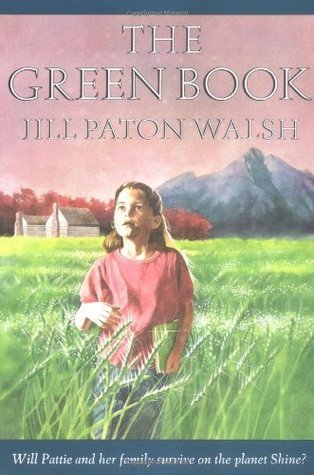
 The Keeper of the Isis Light
 Enchantress from The Stars