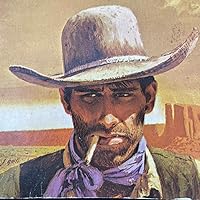
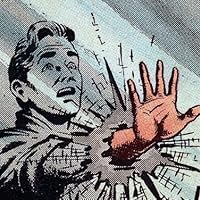
"In a few generations they have sapped the manhood from American men. My ancestors fought at Bunker Hill, at Gettysburg, at San Juan, at Chateau Thierry. And I? I bend the knee to every degraded creature that wears the authority of the beasts at Washington—and not one of them is an American—scarce one of them an Earth man." - Julian 8th
In 2100 Julian 9th is born. The world has been in a horrific state for a hundred years following the invasion of a war-weary and peace-clinging Earth by an army of moon-bred aliens under the leadership of an evil human genius named Orthis. The monsters slaughtered millions, destroyed art, architecture, libraries, churches, schools, and industry, and removed the rights of women so that these monstrous aliens, the Kalkers (this tale's "moon men") can scavenge and pillage at will, reducing the world to its current dystopian state.
This story is the second in Burroughs' "Moon Trilogy" and is very different from the opening entry, which was more of an HG Wells-styled fantasy depiction of a new world on the moon with a classic hero and an ending I don't want to spoil. By way of a contrast, I was greatly surprised at the opening to this second entry of the series, "The Moon Men," in which, after a fakeout cold opening by a narrator, it is just a straight and terrifying dystopian nightmare. The Kalkars have conquered the Earth under Orthis' dastardly leadership and for a hundred years things have only gone from bad to worse.
Now we find the ninth of the Julian name living a substandard existence with his mother and father (Julian 8th) on the ruined streets of Chicago, doing their best to barter and trade for their livelihood while always at risk of being assessed an unfair tax by their Kalker overlords. When the dastardly Or-tis takes personal charge of the region's ruling, he sets his eyes on Julian's love interest. The outlawing of religion, marriage, education, literacy, and the ownership of women play a large part in fomenting a rebellion among the remaining humans, claiming an American or Yank heritage they don't really understand but feel in their past. Finally, enough is enough.
Burroughs must have had some terrifying thoughts about the future when he wrote "The Moon Men" in 1925 and you can feel a lot of George Orwell, HG Wells, Aldous Huxley, and Ayn Rand here but with a pulp adventure tenor that actually serves to make it more terrifying and safe at the same time. He's issuing a warning and an entertaining adventure love story simultaneously; which of those he wanted us to take from the read most likely lies in its ending, which I don't want to spoil.
Verdict: A great example of 1920's dystopian fiction, "The Moon Men" is a wonderful read with a smart protagonist, young and in love, who decides that women are to be treated with respect and that real men don't bend the knee to anyone.
Jeff's Rating: 5 / 5 (Great)
movie rating if made into a movie: PG-13