Parigi, cimitero del Père-Lachaise. Una coppia di turisti, tra cui il figlio di un senatore degli Stati Uniti, viene trovata morta davanti alla tomba di Jim Morrison. Le indagini sono affidate a Hugo Marston, capo della sicurezza dell’ambasciata americana. L’identità dell’altra vittima, una donna legata a un estremista islamico, indurrebbe a seguire la pista terroristica. Ma la notte successiva, nonostante la stretta sorveglianza, nello stesso cimitero vengono trafugati i resti di una celebre ex ballerina del Moulin Rouge. C’è un collegamento fra i due misfatti? Marston ne è convinto e si mette sulle tracce di quello che sembra un fantasma, un killer che agisce indisturbato protetto dall’oscurità e reso ancora più inquietante da una macabra ossessione. Poco tempo dopo, in un altro cimitero, saranno trafugate le ossa di un’altra nota ballerina. Sullo sfondo di una città fascinosa e inquietante inizia una spietata caccia all’uomo, che porterà Marston a rischiare la vita per scoprire i segreti terribili che si celano dietro questa oscura rete di delitti.
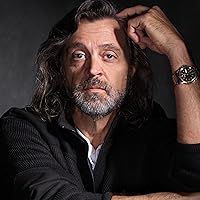
Mark Pryor is a former newspaper reporter from England. He moved to the US in 1995 and subsequently spent 16 years working as a prosecutor with the Travis County District Attorney's Office, in Austin, Texas. He is now a partner at the law firm of Cofer & Connelly, in Austin.
His upcoming book DIE AROUND SUNDOWN is the first in a new series of historical mysteries set in Paris during WW2. It will be published August 16, 2022, by St. Martin's/Minotaur.
Mark is also the author of the Hugo Marston mystery series, set in Paris, London, and Barcelona. The first in the series, THE BOOKSELLER, was a Library Journal Debut of the Month, and called "unputdownable" by Oprah.com, and the series has been featured in the New York Times. Mark also wrote the psychological thrillers, HOLLOW MAN, and its sequel, DOMINIC. As a prosecutor, he has appeared on CBS News's 48 Hours and Discovery Channel's Discovery ID: Cold Blood.
Of his books, reviewers said:
"[G]ood character development, increasing levels of action and suspense, a complex and deranged antagonist, and--once again--appealing Paris settings. The Hugo Marston series now belongs on every espionage fan's watch list." --Booklist
"Haunting imagery in Père La Chaise cemetery sets the stage for Pryor's chilling sophomore entry, and the City of Light becomes a backdrop for Marston's adventures. The clever antagonist leads him on a merry chase that will keep the reader entertained throughout." --RT Book Reviews
"Two young lovers make the fatal mistake of sneaking into Paris's Père Lachaise Cemetery the same night as a bone-stealing psychopath in Pryor's propulsive second novel starring affable former FBI profiler Hugo Marston.... The engaging characters sweep readers into a suspenseful chase from Pigalle to the Pyrenées." --Publishers Weekly
The third Hugo Marston novel, THE BLOOD PROMISE, was released in January 2014. It may be his best yet...
"Mark Pryor is one of the smartest new writers on the block. His new novel is a doozy." --Philip Kerr, author of A Man Without Breath, a Bernie Gunther novel
"Pryor seems to have hit his stride in this series, as he adroitly juxtaposes the light banter between Marston and Green with some scenes of intense emotion.... And, all the while, the suspense ramps up. Top-notch mystery in a skillfully delineated Parisian setting." --Booklist
Mark is also the author of the true crime book, AS SHE LAY SLEEPING, which is the account of a "cold" murder case he prosecuted. Published in January 2013, Publisher's Weekly gave it a starred review and called it "compelling" and "riveting."
Author Pryor's series hero Hugo Marston, chief of security for the American Embassy in Paris, makes his second appearance in this novel. If you read the first one (The Bookseller), you know what's in store. I didn't. Some of the author's stylistic decisions left me cold. Add to this a genre that's never been my favorite and you'll understand my rating. As they say, your mileage may vary.
The setup: near Jim Morrison's grave in Pere Lachaise cemetery, someone kills the son of an American senator and a young Egyptian woman who's not what she initially seems. This someone also makes off with half the bones of Jane Avril, one of Toulouse-Lautrec's favorite dancers at the Moulin Rouge. Our Hero is sucked into the investigation. Needless to say, it becomes far more complicated than anyone at first imagines.
The prose is clean and reasonably unfussy. Pryor's descriptions set the scenes nicely and show a practical knowledge of and affection for the byways of Paris. He drizzles in enough observed detail to make us feel like the characters are in some reasonably authentic version of the City of Lights without beating us over the head with the Eiffel Tower. The story's pace is brisk and the plot points fall efficiently (if a bit conveniently); I finished this in two shortish sessions.
Hugo is one of those honorable, upright, square-jawed heroes who'd be played by the young Gregory Peck or Van Johnson in the 1940s movie. He's a bit of a throwback, in other words. This also implies that, like in some of those 1940s crime flicks, the supporting characters are rather more interesting than the hero, though not necessarily less typey. There's the Plucky Girl Reporter (Myrna Loy, playing French), the Stalwart Local Cop (Claude Rains), the Roguish Secret Agent Sidekick (Joseph Cotton, or Fred MacMurray in his bad-boy phase), and the Avuncular Worldly Boss (Leo G. Carroll, perhaps?).
Why all the 1940s references? Perhaps because I kept seeing this play out in black-and-white on my mental movie screen. While ostensibly set in the present day, it has a lost-in-time quality, especially in the first half. The dialog is heavy with the kind of snappy banter that doesn't happen in the real world (and most all the protagonists are equally quick with a bon mot) but was common in 1930s and 1940s films. The characters exist in a world in which Hugo having to pay for his buddy's prostitute is an amusing episode and not the immediate precursor of him losing his security clearance and undergoing an IG investigation; one in which smart men in smart suits can settle the affairs of man and state over a pastis in a café in the middle of the day. I kept waiting for Hugo to slip on his snap-brim fedora and to carry a Luger instead of a Glock. Incidental talk about terrorism and rendition ends up sounding anachronistic.
Did I mention this is also a serial-killer yarn? Yes, it is, which I was only dimly aware of going into this. Serial-killer stories are not among my faves; I've never found complete nutters to be especially interesting. The villain in this story is definitely a complete nutter and has some rather unpleasant hobbies. If you like this sort of tale, you'll likely find much to like in The Scarab (Our Villain), and if not, you may share my reaction. You may also be a bit put off by the juxtaposition of Our Heroes' witty banter and Our Villain's slicing-and-dicing; in places it seemed like a marriage of The Thin Man and The Silence of the Lambs.
Don't get me wrong; The Crypt Thief isn't a bad book. I think what we have here is a mismatch between story and reader; I got something other than what I thought was on offer, and as such couldn't forgive it ills I might otherwise let pass in something more to my liking. If you like serial-killer stories served up with less blood and set in places other than Los Angeles and New York City, you could do worse than this one. This might even be a four-star read for you. For me, however, it's a strong three stars, and I think I'll wait for the film adaptation to show up on TCM.
I quite liked Pryor’s first Hugo Marston novel, The Bookseller. A biblio-mystery set in Paris? My favorite things together in one novel! Pryor’s evocation of Paris continues strong in the second novel of the series, The Crypt Thief, but he loses, alas, the rare book focus and has Marston tracking a psychopathic tomb robber. Pryor offers a well-paced, action-filled novel with strong characters – the problem is, I just don’t enjoy those thrillers whose point of view switches back and forth between the crazy serial killer and the cop who’s chasing him/her. If you like that sort of thing, upgrade my rating to four stars. As for the rest of us, let’s hope Mr. Pryor brings back the rare book angle.
Did not enjoy the plot but continued to like the main characters of Hugo, Tom, Claudia. This book would appeal to lovers of Paris cemetery lore and dark arts as central to the unpleasant plot is a creep who believes he is going to bring his mother back to life by robbing graves and killing people for tattoos and many other gory acts. Gasp. And I had to read it all night to get it done with. You also start off very worried about Tom and his over consumption of all things bad, but the book ends with his sobriety allowing reader to believe things won't be so hairy next book? Let's hope.
A good mystery at least for the first half of the book, it lost a lot of steam after they figured out the who and why of the killer and just sort of fizzled out at the finish. More language than I care for and a decidedly sad side plot, but a really decent leading man with courage, and a great deal of kindness if not always the most common sense.
Popsugar 2017 advanced: a book with an eccentric character
The Crypt Thief is the second Hugo Marston book by Mark Pryor and my first attempt at one of his books. Marston is the Head of Security at the American embassy in Paris and obviously gets involved in situations that happen to American citizens.
In this story, an American man and an Egyptian lady are murdered in Pere Lachaise cemetary at night as the go to see the tomb of rock singer Jim Morrison. Marston, along with French police officer, Serge Garcia, investigate the murder. A ex-CIA agent and Hugo's friend, Tom Green, is also brought in at the request of the boy's father, an American senator. For various reasons, they think the two were murdered by an Arab terrorist in the country. We meet the murderer, nicknamed the Scarab, at the very beginning.
Hugo and Tom work at times at cross purposes, Tom searching for Al Zakiri, and Hugo looking at other options. These investigations result in lots of action. The Scarab does not hesitate to kill anyone who gets in his way as he searches through certain crypts. You'll find out why when you read the story.
It's not a perfect story by any means but it's nicely paced, lots of action, interesting characters and a slightly weird criminal. There were things that irritated med, especially the somewhat cavalier manner in which one of the suspects is retired, without any real thought about it. But other than that I did enjoy the story. It didn't require lots of thought on my part. It as just a nice enjoyable story. (3.5 stars)
The Crypt Thief is the second book in crime series with Hugo Marston set in Paris. In this book murder of two tourists occurs in Pere-Lachaise cemetery. And then bones of two former dancers disappear from graves in this cemetery and in one other. What is hidden behind this? The investigation leads not only French police under the guidance of capitaine Garcia, but also the chief of security of American embassy in Paris - Hugo Marston and CIA agent Tom Green. The book is interesting but by its topic and plot quite dark. I must say that I like the first book more but anyway I will continue to read this series. The book is written from two POV, one of investigators and second of the perpetrator. It is gripping and when these two POV intersects, the story gathered momentum. I am glad I could read this book.
Creepy and gory mystery in this second installment of Hugo Marston by Mark Pryor. I envisioned a 1940's hazy, gray Paris rather than modern day. It's a spy thriller the audiobook narrator kept me engaged in. Disclosure: There were too many F bombs for my liking by a B character. Sadistic, gory psychosis of the antagonist. If you don't like those movies, this might not be for you.
A friend recommended this author (thanks Matt!) and I picked up a copy of this in a used bookstore. I haven't read the first one in this series but felt that like Dan Brown's novels about Robert Langdon, each one is intended to stand on its own.
I very much enjoyed the time I spent over a cold President's Day weekend running around the cemeteries of Paris during the heat and sun of summertime with Hugo Marston, an employee of the US embassy in the City of Lights and former FBI profiler. The plot revolves around a creepy little man who is stealing bones from cemeteries and murdering some other folks along the way, Marston is trying to find out why. It was delightful and I look forward to reading others by him.
While I enjoyed the first volume of this series just fine, I'm finding the genre a little silly in #2. The sexual repartee seems clumsier, and the plot borrows heavily from The Silence of the Lambs and the life of Toulouse Lautrec in a way I doubt the family would appreciate. Well, it didn't get much better. High body count, and it's one of those books indulging heavily in sexualized violence against women in the guise of a rescue fantasy. Not really my thing.
In this book, the second in the Hugh Marston series, Marston encounters a villain with a warped plan that compels him to kill. The book opens when a young couple surprises this killer and he shoots them. One of the couple is the son of a US Senator, hence Marston's involvement.
While the Senator pursues a terrorist angle, Marston is convinced that the killer is something different. The robbery of the bones of a long dead dancer indicates he is correct.
This was a fast read and like all of the books in this series so far, protagonists are realistic and likable, dialog flows well, and the story line moves quickly even when it stretches credibility. A well written crime thriller.
This is a fast moving book with a terrific Protagonist. This well-crafted mystery takes the reader across France as a methodical killer moves through the shadows staying just ahead of the hunters. A great read.
I'm glad I finished it, but not all that enthusiastic about the plot. I enjoyed Hugh, Tom and Claudia enough to keep reading. Hoping Mark Pryor's next book is more like his excellent THE BOOKSELLER.
This second mystery in the Hugo Marston series was just average and way too creepy for me, in comparison with the stellar first book, The Bookseller. The villain’s technique and M.O. in this one were truly horrifying - way beyond entertaining.
Paris, a late summer evening when two unsuspecting tourists in search of Jim Morrison’s grave site in the Pere Lachaise cemetery are murdered. So begins Mark Pryor’s second installment of his Hugo Marston series, THE CRYPT THIEF. Marston, a former FBI profiler and chief of security at the American embassy in Paris is called into the ambassador’s office and told that one of the murder victims is Maxwell Holmes, the son of a US senator who was about to begin an internship at the embassy; the other is an Egyptian woman named Hanna Elserdi. Later the action shifts to another cemetery, nine hours from Paris in the small town of Castet where the night watchman, named Duguay is murdered. It seems that all three murders were committed by the same man.
It turns out that the Egyptian girl is Pakistani, from Karachi and her real name is Abida Kiam. She had traveled to Paris with Mohammad Al-Zakiri, the son of a prominent mullah in Pakistan whose views were pro-al-Qaeda and Taliban. His alias was Pierre Labor, an Egyptian-Frenchman. Marston argues that the murders might all be a coincidence and not acts of terrorism, something that Senator Norris Holmes cannot accept.
The author does a nice job reintegrating characters from his first novel, THE BOOKSELLER. We become reacquainted with Tom Green, Marston’ wisecracking and unpredictable former CIA operative who still consults for the American intelligence agency. Capitale Raul Garcia of the Paris Police Department returns to renew his relationship with Marston when they worked on solving the murder of Max, a poor bookseller who sold books from his kiosk along the Siene River. Marston’s former lover/girlfriend, Claudia, a newspaper reporter reenters his life as she covers the cemetery murders. Soon, Marston will learn that in addition to the murders, a crypt has been robbed of the skeletal remains of the famous dancer, Jane Avril who had been buried over seventy years ago.
Early in the novel a number of questions confront Marston. First, what is the relationship between the murdered American and the woman who accompanied him and the crypt robber? Second, what role does international terrorism play in his investigation, if any. Further, when a number of crypts are broken into to steal the bones of dead can-can girls, is it related to the overall investigation or is it something even more bizarre occurring, particularly when the killer is leaving an Egyptian scarab beetle at each murder scene. It becomes a race to the next cemetery to prevent what seems to be a serial killer from taking more lives, and “bones.”
As one reads on one gets the sense of Pryor’s views of terrorist threats and how they germinate. The treatment of Al-Zakiri by CIA operatives, who act first, then investigate thoroughly is important as it provides evidence as to why the United States is seen so negatively in the Islamic world. Marston’s measured approach is one that the author believes the US should take when dealing with a possible terrorist threat. Pryor also raises the issue of a free press during an investigation that could lead to a terrorist attack. What role should journalists play, particularly when their actions could endanger people? It is a tough call, but common sense should prevail, but at times that is not the case.
Pryor provides a well-crafted story, though his character development is weaker than his first Marston novel. But the intrigue created by the grave robber/murderer will keep the reader’s attention. The story is complex and eerie at times and should not be read right before you go to sleep, however despite what seems to be a predictable ending, the book is worth the read.
Before I started this one , my wife told me that she didn't like it, had nearly ditched it because it was too dark and gory. This surprised me because she seemed to go for more blood thirsty books than I, and also because I thought the author had handled that (minor) aspect in the Bookseller with sufficient care and tact.
I found the same to be the case here. Although as the story progresses you become aware that gruesome acts are taking place the description is minimal.
This is book two of the series and we now know a bit more about the central characters. Hugh Marston as head of Security at the American embassy in Paris is the one we know most about. His on/off girlfriend and reporter is a close second although she might have secrets. Tom is the other member of the trio and is the dark horse. His drunken behaviour at the end of the first book is continued into this one making him particularly obnoxious. All is not lost, however, as he decides to give up the drink and so we may discover in the next what position he holds that gives him such power.
The story itself wasnt without excitement and surprises but it seemed to lack something that was there in the first. Also, I may have missed something but I thought that the big ending fell a bit flat even though I could see it appealing on the big screen.
Overall , I didnt enjoy it as much as The Bookseller but it was enough to keep the next in the series on my shelf to read although, I have a few other books on the list first.
I listened as an audio book. The story itself was a little too horrific for my taste. And this was a different reader than the first Marston book I listened to. Having been a French major, there were some annoying aspects to the reading. Some pronunciations were totally fine. Some were erratic (ex. Why pronounce Rue Jacob correctly (Ru Zha-KOBB) most of the time but incorrectly (Roo JAY-kub) another time?) And every time Salut (Hi!) was said, it sounded like Salaud (bastard). Anyhow, that may not annoy others. I may give a third in the series a chance.
Here is a murderer of some seemingly random tourists and a robber of graves. Hugo works with the French police to try to determine if the tourists are more than they seem; one connected to an American political figure, the other possibly connected to terrorism. And why is the killer/grave robber stealing only a few bones from each grave? Is it coincidence that the graves are those of professional dancers? Some unusual twists and macabre features in this book make it an intriguing, if sometimes gruesome, read.
I love Hugo Marston but I detest serial killers and this one was brutal. This surprised me as I have read several of his books and don't remember this level of unpleasantness. I skipped pages that went into too much graphic detail. The story was interesting although I wasn't entirely convinced about the killer's motive. But I like Hugo and his friends and colleagues so 3 stars.
I need to stop reading these. Boring formula. Not compelling. Grotesque American chauvinism. Forced Mossad reference by a CIA agent -- get a life, you weasel.
A quick read. The premise seemed good, but despite the action it didn't grip me. I liked this less than the first book, so I won't be continuing this series. 2,5 stars maybe.
a thrilling man hunt, after a serial killer who is a man with purpose - chilling, and a page turner - the friends from the first in the series are back, and it's nice to have them back
Am enjoying this series a lot. Engaging ancillary characters who actually evolve as you read the books. Smart and fast-paced, definitely like the Paris setting. This second one in the series is a bit gruesome in terms of the crime, but I can read this type of crime better than watch it on TV. The plot was complex but I did not feel overwhelmed with any of it. All the plot lines were interesting. I like Hugo a lot as a lead character. Recommend this series.
Very enjoyable book. I think all the main characters are pretty likeable, which is a nice twist, haha. Not a heavy mystery, but also not wildly predictable. A few "obviously..." moments, but enough surprise moves to keep it fresh.
The narrator of this book is way better than the first narrator. Sometimes he sounds like Barak Obama with his speach patterns. His ability to do women's voices is ok.
In this book, Hugo works to find a killer of a couple walking through the famous Père-Lachaise cemetery. The killer shoots the young man (who turns out to be the son of a senator who was going to be an intern at the Embassy), but in addition, to shooting the young woman, he also mutilates her body in removing the tattoo from her body. Hugo gets involved because the Senator comes to town wanting to find his son's murderer, but the senator believes the murderer is a terrorist because the young woman who was killed is from the middle east and came to France with a militant from the Middle East as well.
After the middle eastern man is found and killed, and the killings continue, Hugo continues to look for the "Scarab"-the name of the killer. His mother called him scarab and he leaves little scarab figures behind. The scarab has some kind of physical deformity that is referred to in the book, he's short, has a large head, is very strong, and I can't remember what else. Hugo begins to figure out which graveyards he will go to and realizes that the scarab is using the old underground tunnels in Paris. The scarab is looking for bones of former exotic dancers as well as tattoos from women who are still living. He's trying to resurrect his mother with the bones and tattoos of dancers. His mother was (wait for it) a dancer who also had tattoos. Hugo is working with Captain Raul Garcia of the French police. His character was introduced in the last book. They end up finding clues at the Moulin Rouge.
They find the scarab hiding in his family's home in rural France. His plan is to burn the house to the ground. Anyway, he shoots Garcia and handcuffs Hugo to Garcia's body. Then he sets the house on fire and throws the key to the handcuffs at Hugo. Long story short - Hugo gets himself out through a bathroom window, and finds some farmers who help him by demolishing the wall of the cottage and getting Garcia's body out. Well, knock me over with a feather - Garcia was wearing a bullet proof vest and was only unconscious. Hugo thought Garcia was dead because he wasn't bleeding, so Hugo thought his heart had stopped pumping. Anyway, Garcia survives!
The book ends when Hugo needs to rescue, Mimi, one of the most famous dancers at the Moulin Rouge, because the scarab plans to kill her. He has loaded the house with explosives which are wired to him. He believes that he needs fire to be with his mother. Hugo brought his (kind of) girlfriend with him, and she end up disarming the explosives! In the meantime, Hugo shot the scarab, and he does end up dying in a fire. phew.
Tom also turns over a new leaf and resolves to drink less.
This entire review has been hidden because of spoilers.
When a debut book is as strong as the first Hugo Marston mystery, THE BOOKSELLER, one always wonders whether the sophomore attempt will live up to that high mark. In this case, with THE CRYPT THIEF, Pryor has proven that his first success was not a fluke. He brings both the seedier side and the diplomatic halls of Paris to life every bit as successfully as he did in the first Hugo Marston book.
The story of the eponymous crypt thief, the Scarab, drives the narrative this time around. He scuttles through the tunnels under the streets (and cemeteries) of Paris, collecting bones and more for a mad project. As Hugo builds his knowledge of the scarab, the scarab builds his of Hugo, and they work their way toward their suspenseful final meeting. It all begins with a murder of a young American and his Palestinian girlfriend, a dancer at the Moulin Rouge. The American’s father is a high-powered politician, Senator Norris Holmes, who is anxious to believe his son was killed by a terrorist rather than as senseless “in the wrong place at the wrong time” collateral damage. While Holmes wages a war against terrorism, Hugo works with Garcia from the local police to track down the Scarab.
Hugo, an ex-FBI agent and now chief of security at the American embassy in Paris, combines forces with his old friend and CIA agent, Tom, and with his sometimes reporter girlfriend, Claire, as he tracks the Scarab through the streets and tunnels of Paris. As he digs into the Scarab’s background, he finds himself traveling to rural France to understand the poor and remote existence the killer lived as a child. Throughout the book, regardless of where the action is taking place, Pryor does an amazing job of dropping the reader right into the locale. His descriptive language is beautiful. Equally fine is the manner in which each character emerges as a fully realized individual.
Although I had read the first book and had thus acquired the background to this one, I don’t think it would be hard to jump right into the series with book two, THE CRYPT THIEF. Pryor weaves the backstory into the present seamlessly, making it possible for a new reader to appreciate the series while not annoying a continuing reader by rehashing old events.
I have only one problem with this book, and that is that it is newly published and I know I have a wait before Pryor can write another one. I’ll be first in line to get that next one, though.
4 stars but knocking it down to three stars because of the f-bombs and other language that Tom uses (good heavens! the man has a foul mouth). Language is a tricky thing for me; honestly, I find the words stuck in my head and the next thing I know they are coming out of my mouth *sigh* NOT a good thing for a children's librarian or who is a believer.
Debating about keeping on with the series because of this. *double sigh* This is why adult books are so tricky; I would rather read kids' books and ya books. Don't run into this issue as much (though with ya books, it's still a factor), and kids/ya books are usually better written than most adult books!
Anyway, The Crypt Thief is full of action and twists and danger and bad people and favorite returning characters and ooh la la Paris. I don't know though if this is enough of a lure to bring me back.
Aww I'm so disappointed! Pryor's first Hugo Marston was excellent and I was excited to find this author and the great character, Hugo.(see my review of The Bookseller, if desired) His books are short and are quick reads. The first one was so well done that It seemed the perfect length! This one seemed too short because the characters were not fleshed out. However It also seemed too long. It was tedious and reminded me of almost every twisted serial killer plot EVER! Adding another hundred pages of background and characterization might have made this book better. Something to make this overdone plot line stand out from the rest. Silence of the Lambs will suffice. A lunatic collecting skin for some crazy purpose. I purchased the Pryor books as a three pack special. After book one, I was glad. After book two, umm wondering if another Pryor - as short as they are- is worth my time.
I found this book less engaging than the first in the series; in this installment Hugo is drawn into the investigation of several seemingly pointless murders, again set in Paris. A deranged psychopath is at work, and the body count goes up while the investigators desperately try to work out whatever motive and pattern there may be in the crimes. Hugo's cast of supporting characters is basically the same, and not much else is new. The criminal is scary indeed, although so brutal as to be a bit unbelievable. With regard to this series, I think I'm going to heed the old police instruction: "Move along, nothing (more) to see here."
I hate when I run out of books and it's too late at night or I am too lazy to make a book run. Weak plot, weak character motivation, little character development, unedited (and poor) writing. At one point toward the end, the verb "wound" was used three times within the space of four sentences. I felt like throwing the book across the room, but I just speed-scanned to the end (why not; it was speed written) Author should have been encouraged to completely rework. Did he not have an edit group...or competent editor??