Sumptuous, glorious evocation of Jacobean London and Renaissance Italy from the acclaimed author of The Firemaster's Mistress. Robert Cecil, Secretary of State to James I, has a problem. He owes a vast and secret debt to the Prince of La Spada, who is dying and has called in the loan - and Cecil cannot pay. Even worse, he has staked as security, without royal authority, the King's Great Pearl. To Cecil's surprise, the Prince will agree to a hostage but he wants Cecil's Francis Quoynt, the best in his dangerous business. Cecil immediately seizes the chance, for Quoynt also serves as his spy. La Spada is a wealthy, beautiful Italian city-state - the gateway of Europe. Whoever controls the mountain passes of La Spada also controls the flow of intelligence and much of the trade from the Middle East. As his mind disintegrates into fantastic obsessions, the Prince makes his treacherous illegitimate son his heir. Which thwarts the deadly ambition of his daughter, Sofia - the Principessa. Sofia is young, seductive, wily and recently widowed. Already a blooded player of politics, she could outdo Lucretia Borgia in the lethal game of survival. Which she must now play to save herself and her beloved state. As unpredictable as gunpowder, will she choose to seek Francis's heart, or his life? Or both?
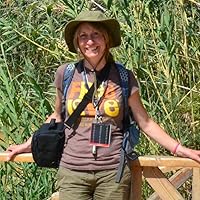
I started to write at the age of three, long before I could spell. Understandably, I hid my poems and (very) short stories from my English professor father, who could spell words like ‘desiccate’ and also insisted on correct grammar. All the same, he passed on to me his delight in books and words as well as his joy in pursuing intellectual curiosity. Under his influence, I learned to relish research and value accuracy. (He also kick-started my interest in mountain climbing by putting his uncensored edition of Lady Chatterley’s Lover on the highest shelf of his study.)
While living abroad with my family for most of my teens, in Thailand, Mexico and Switzerland, I studied anywhere I could, from the International Children’s Centre in Bangkok, through home-tutoring, to an old-fasioned Swiss convent school. I went on to read English at Harvard University (BA, Magna Cum Laude and Phi Beta Kappa), then earned an MFA in Theatre at the Yale University Drama School (winning a Woodrow Wilson Fellowship and the Shubert Memorial Fellowship for Best Director).
From the age of eleven, I also studied dance (and performed): ballet at the Lichine School in Lausanne, modern dance with a former member of Martha Graham’s company, Robert Cohan, and Thai classical dance with a retired member of the King of Thailand’s troupe. At the age of fifteen, I once found myself teaching Thai folk dance to the Thai Women’s Culture club in Bangkok. At the age of 23, I thought writing was far too much fun to be a serious way to earn a living, so I became a director and choreographer.
After fourteen years in the theatre (with the Royal Shakespeare Company, The Rocky Horror Show, Oh! Calcutta!, and at Ronnie Scott’s, among others) illness forced me to stop . While convalescing, I read a particularly dire paperback and decided in exasperation to see if I could do any better. Bed-bound and with L-plates on, I returned to my secret passion for writing and hand-wrote my first novel. This book was never published, but it brought me a commission for my ‘official’ first novel (THE DRAGON RIDERS, published by Century), which astonished me by reaching number twelve on the best-seller list. What had seemed at first like a health disaster led me ‘home’ into a new career that not only allows time to eat and sleep but also lets me do what I love most. (My illness also, when I was ready to deal with it, fuelled my historical novel, QUICKSILVER, about a supposed 17th c. 'werewolf'.)
As well as seven internationally-published novels (most recently THE PRINCIPESSA, I also write poetry, short stories, newspaper articles and works for the theatre. I particularly enjoy collaborating with the award-winning composer Cecilia McDowall on musical works ranging from conventional songs and cantatas to the huge and indescribable, all of which have been performed.
Our most recent project was a 'green cantata', FIVE SEASONS, commissioned ‘to celebrate the organic landscape in the 21st century’ by the Bournemouth Sinfonietta Choir. And we are currently (2007) setting up a follow-on community music project in Cumbria.
As a change from my computer, I enjoy extreme trekking and scrambling in Bolivia and the Western Highlands of Scotland, organic gardening, cooking, eating and recreational talking with friends and family. I don’t think writers take holidays.
I thought that Christie Dickason's novel 'The Firemaster's Mistress' sounded very interesting and I picked it up earlier this year only to give up reading it because it wasn't very good. It's characters seemed very stereotypical and the writing was of the caliber of a romance novel rather than historical fiction.
I was willing to give Dickason another try and I thought that this novel sounded interesting. It starts with a bang when the Principessa's brother Ettore commits a horrible crime that changes her life and her plans for survival. It continues with a likeable protagonist faced with an interesting problem to solve. Frances Quoynt, firemaster and spy, is on a mission to serve his patron Robert Cecil, Secretary of State to James I. Cecil needs Quoynt to negotiate the issue of repayment of a loan from the Prince of La Spada, the Principessa's father. The Prince is mad and dying and has an impossible demand of his own.
There are references to relationships, plans and emotions that are never fully described. There are many abrupt revelations with no logical flow to the ideas themselves. There is very little forward motion to the story and around half way through the book I knew little more than I did at the start.
The events that unfold are somewhat beyond the realm of likelihood. Overall the novel has a very sophomoric feel and seems better suited to a young adult audience, though I think it would be hard to keep the attention of the younger readers as it was barely able to keep mine.
I had previously read Dickason's The Firemaster's Mistress and while I enjoyed that I wasn't blown away by it. But the character of Francis Quoynt was an attractive one and in this book I think Dickason has fulfilled some of the potential that was shown but not quite achieved in the first book.
Set in an imaginary Italian city-state in northern Italy bordering the Balkans, it takes a different view of the Renaissance than the usual English-Tudor or classical Italian one. I wonder whether the fact that this isn't based around an historical incident (like the Gunpowder plot in her last book) allowed the author's imagination a freer reign? In any case it works magnificently.
Sent to retrieve a fraudulent loan bond by Robert Cecil, Francis Quoynt finds himself caught between the mad dreams of the dying Prince and the lethal duel for power of his daughter and illegitimate son.
Unlike the first novel, the sexual tension between the main characters in palpable in this book. But this isn't a girlie romance: it's a robust historical thriller that also touches on issues of power, politics and the background to the recent conflict in the Blakans.
I think this is a much maturer and more confident read than Dickason's last book, and eagerly await her next installment.
This absorbing historical novel has the firemaster of James I of England as its hero, and is a follow-on from the novel The Firemaster's Mistress, which I read and enjoyed a few years ago. In this story, the firemaster – who is called Francis Quoynt – is sent as a spy to a small Italian state where he has to find a secret document that compromises the safety of King James's secretary of state, Robert Cecil. The task is complicated, however, by the madness of the prince of La Spada and the beauty and cunning of his daughter, Sofia, the Principessa of the title. A wonderful mix of history, suspense, adventure and romance, I really enjoyed this book and would recommend both of them.
I don't know why everyone compares Dickason unfavourably to Philippa Gregory. Let's face it, Gregory (though I love her, too) has banged out some real dull reads in recent years, with all the hallmarks of having been written hastily to meet a publisher's deadline - as such, Gregory is the victim of her own success. I find Dickason's novels engaging, entertaining and compulsive reading - I literally devour them. Yes, I was a bit cross with the hero for not being able to keep it in his pants but I couldn't put this novel down nonetheless.
This book is the second in a series, the first being "The Firemaster's Daughter". It is a great historical read and for anyone with an interest in Elizabethian/Jacobean England it gives great insite. Christie Dickenson has thoroughly researched the period and brings her characters to life with every word. Although this is a novel it feels like living history. The reader has the pleasure of gaining knowledge of the period while still enjoying a good read.
The follow on story from the Firemaster's Mistress was a disappointment. I felt bogged down in certaini parts of the story - so much that I skipped whole chapters. Francis is asked to go to Italy by Cecil to obtain a Bond that was given by the English Government to the Count in La Spada. Cecil wants this bond back. The Count is dying of the Pox and wants Francis to send him to the Heavens on a rocket!!
I had to get this one finished, if only so I could get "Nessun dorma" out of my head, which I found myself humming every time I picked the book up. Sofia's rules for living remind me of Turandot. She yearns to rule an Italian princedom, but is hampered by a father who is dying of syphilis, who has infected large numbers of his people, a half-brother who aspires to the throne simply because he's male and she's not, and there are also lots of mysterious characters who we don't know if we can trust or not. Enter from England, Francis Quoynt, pyrotechnician. His job is ostensibly to send the prince to heaven in a vehicle which does not rely on fire to propel it, so the prince can bargain with God and try to save his soul. {spoiler alert} His real reason for going is to find and destroy a bond which Robert Cecil, the Secretary of State, has entered into with the prince in an uncharacteristic lapse of wisdom. Needless to say, when Francis meets the princess Sofia, all her rules are blown out of the window. I found this book a bit repetitive, but it did keep me wondering till the last page how Sofia's problems could be solved.
I read the Firemaster's Mistress & enjoyed it so looked forward to this one, however I found this book hard going but finished it and was underwhelmed.
I really enjoyed the first book in this series but this one just seemed to waffle on, angst, angst, threats, fears, little more waffle. I skipped to the end to see how if was finally resolved.
An interesting storyline, completely different from other historical novels I've read. The characters were interesting, all very different and each had their own personality. However I found this book a little dull, nothing really very interesting happened till nearing the end. And then the excitement sort of fizzled out without coming to a climax. I didn't feel very satisfied after finishing it. I wouldn't call it a page turner, too dragged out go to be that grabbing. A good book, but not brilliant.
This is the sequel to "The Firemaster's Mistress" and it's just as fantastic as the first story! I loved that the action took place in Italy! Francis gets sent to La Spada in the Italian mountains by Robert Cecil to spy on the slightly insane Prince who reigns there, under the guise of helping him create an out-of-this-world firework display. Whilst there he's seduced by the Principessa Sofia. I didn't like Sofia as much as I did Kate in the prequel - she was a little bit too cunning for my liking, but I did like how brave and determined she was. And Francis was captivating as ever! ; )
This is the story of the Principessa from the town of La Spada, and the adversity she overcomes as she tries to avoid her father from killing her, and her brother seizing the throne. It is also about Francis Quoynt. Who travels from England as a firemaster, on a secret mission to help the reigning Prince, a mission he is told nothing about until he gets there. This was an alright book. Quite good historical fiction in the time of James I.
Entertaining read full of political shenanigans and a mad old prince with an impossible request. Loved all the firemaster bits.
Sofia was a hard character to like, although you had to admire her gumption, and I could take or leave the official 'romance' (although I'd be interested in knowing more about Richard Seaborn and a certain Count - send any fan fiction my way asap).
This is the first book I've read by this author. I'd definitely pick up more.
I have read a few other of this authors books and have to say this is probably the best one so far. But why two stars? Well, I found it only an "okay" novel. I was interested enough to find out what happened which is why I carried on reading. However, it wouldn't have been too much of a loss if I hadn't.
Nowhere near as good as a Phillipa Gregory book. The story interested me a bit, but it was too far-fetched and not easy to connect to or visualize. I love books from this era, but this particular one was pretty lacking compared to others.