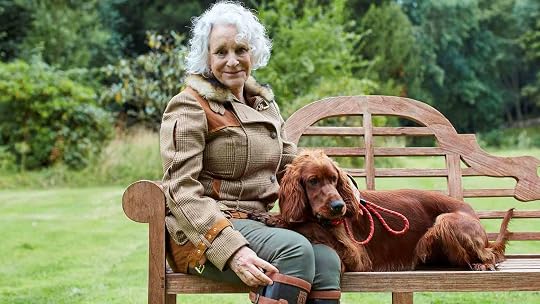
DR PHILIPPA GREGORY studied history at the University of Sussex and was awarded a PhD by the University of Edinburgh where she is a Regent and was made Alumna of the Year in 2009. She holds an honorary degree from Teesside University, and is a fellow of the Universities of Sussex and Cardiff. Philippa is a member of the Society of Authors and in 2016, was presented with the Outstanding Contribution to Historical Fiction Award by the Historical Writers’ Association. In 2018, she was awarded an Honorary Platinum Award by Neilsen for achieving significant lifetime sales across her entire book output. In 2021, she was awarded a CBE for services to literature and to her charity Gardens for the Gambia. and was elected as a Fellow of the Royal Historical Society.
Eleanor Cobham was an English noblewoman, first the mistress, and then the second wife of Humphrey, Duke of Gloucester.
She arrived at court with nothing - it was either the court or the nunnery, and she was determined she wasn’t going to any nunnery. Eleanor was extremely ambitious but devious to boot!
It is said that she made a pact with the devil in order to secure her future, a future that she hoped would one day see her reign as Queen of England, alongside her husband as King. She also plotted to murder a king to further secure that future.
Little is really known of Eleanor’s life, therefore poetic license is used to embroider a well written tale. And what an extraordinary tale this is, a historical novel of ambition, sorcery, betrayal, and survival. Eleanor wasn’t a character that I liked, but nevertheless the eponymous “Royal Witch “ was absolutely fascinating, and made for a terrific read.
*Thank you to Netgalley and HarperCollins UK, HarperFiction for my ARC in exchange for an honest unbiased review*
It's Philippa Gregory for the win! She has hit it out of the ballpark with Royal Witch. I love books that are inspired/based on real life people. Eleanor Cobham was an English noblewoman and the second wife of Humphrey, Duke of Gloucester. In Royal Witch, Philippa Gregory shows her pursuit of power, money, a husband, and to rule England. She is depicted as beautiful, clever, smart, power hungry, ambitious, conniving, and politically motivated. She lived in a time where few women had any power, but she dared to dream, she dared to go after what she wanted, she dared to rule! She is not the only strong female character in this book. But like other female characters in this book, she needed the backing of a man, was reminded of her place, was punished for her deeds.
Eleanor lived in a time where women and those in the royal court consulted with "sorcerers" and "healers" to get information and treatment for various issues. She also lived during a time of war, of Kings and Queens, during the time of superstition, and during the time of power moves by both those in the monarchy but also the church, and during the time where people were accused of being witches.
It has been a long time since I have read a book written by Philippa Gregory and Royal Witch reminded me of her wonderful writing, her attention to detail, her research, and her carefully and well thought out plots. I was glued to the pages wanting to know what would happen next. I loved the focus on strong women, on ambition, on pride, on revenge, on plotting, and on power.
Thank you to William Morrow and NetGalley who provided me with a copy of this book in exchange for an honest review. All the thoughts and opinions are my own.
‘I had thought I was the penniless heroine of a love story. But now I know the stories are fairy tales...’
Few authors bring the politics, personalities and power struggles of medieval England to life as convincingly as Philippa Gregory. Inspired by the lives of three real fifteenth-century women, Royal Witch is another impeccably researched and richly immersive novel.
‘This is a novel about women who were extraordinarily famous or notorious in their own time.’
Through three very different women - a wise woman, an heiress who commands armies, and an ambitious courtier - Gregory explores the many forms female power could take, and how each, in its own way, was feared and, all too often, punished. Against the backdrop of England and France's shifting political landscape, the novel vividly recreates the machinations of court, where wealth, ambition, the Church, and the Crown are inextricably intertwined.
Although the title suggests a story about witchcraft, Royal Witch is ultimately about the ways women who possessed knowledge, influence or independence could be manipulated, persecuted, and silenced.
At the heart of the novel, however, lies Eleanor's deeply personal humiliation. Raised on the ideals of courtly love and chivalry, she believes herself destined for both great love and great influence. Instead, betrayal transforms love into resentment, and resentment into an all-consuming desire for revenge and power.
‘This chivalry game that they play among themselves. It's not real. It's all poetry and masquing. It's no more than the choreography of dance. There's nothing underneath.’
For me, Eleanor's descent into hatred and revenge circled the same emotional ground for a little longer than necessary. Even so, her story becomes a cautionary tale of how pride, ambition, and wounded love can slowly eclipse the very person we once were.
Rich in historical detail, Royal Witch is an absorbing read that once again demonstrates why Philippa Gregory remains one of the foremost writers of historical fiction.
A tense and dramatic piece of medieval historical fiction that takes place during the 1400s and the courts of Kings and Queens. This author's novels never fail to captivate me with their rich details, brilliantly crafted portraits of fascinating historical people, and spell binding plots.
During this period in France and England, it was marriages and wars that decided the ownership of lands and titles, which also brought wealth. Women and children were used liked chess pieces on a game board. As well as actions at court often being guided by astronomy, astrological charts, tarot cards, and herbs.
Eleanor Cobham secures a position in Queen Catherine's court as a lady in waiting for a Countess hoping to catch a man of position and wealth to become her husband and bring her good fortune. She is a self-described beauty, a devoted attendant, and a naive dreamer. But when she is forsaken by her lover, she secretly plans her revenge. Thus begins a downward spiral of treachery, manipulation, and betrayal. Eleanor will stop at nothing to get what she wants.
Not as much about witches as the title might lead one to believe, this story is a perfect example of how greed, jealousy, and hatred can ruin people's lives. Historical fiction readers and fans of Philippa Gregory will definitely want to grab a copy of this book.
My sincere thanks to NetGalley and William Morrow for giving me the opportunity to read an ARC of this wonderful book in exchange for an honest review.
Title/Author: ROYAL WITCH by Philippa Gregory Format Read: Audio-thank you Libro.FM Pub date: October 20th, 2026 Publisher: William Morrow Page Count: 432 Affiliate Link: https://bookshop.org/a/7576/978006343... Recommended for readers who enjoy: - Historical Fiction (based on detailed, extensive research) - Ambition. Sorcery. Treason. How far will one woman dare to go? - Golden age of England (1420) the rise of the Tudor line - Dark Arts - The POV of an unscrupulous woman - History from women POVs __ Minor complaints: - ZERO-Philippa Gregory is the GOAT
Final recommendation: This audiobook is SO GOOD. Ridiculously good. Gemma Whelan did an incredible job with all the voices and accents. This book is loosely based on the real lives of three important women in history. According to the author's note (Philippa Gregory went on location to visit some of the historical landmarks mentioned in the story) there is not much detail given to the lives of these influential women who changed the course of history. Jacqueline d’Hainaut (left court after a failed uprising and challenge to secure her own lands), Margery Jourdemayne (a midwife and healer accused of witchcraft), and Eleanor Cobham (this book is from her POV as she starts from a low status and manipulates her way into a lofty position of Duchess). Aside from some of the lengthy sections about war and land titles and courtly things, the pace moves along quickly and the chapters are short; never a dull moment. I was fully engaged and never wanted to stop listening. I am a longtime fan of Gregory's books--I am especially interested in the The Plantagenet and Tudor Novels Series. The Boleyn novels are favorites of mine and I also loved The White Queen, The Other Queen, The Queen's Fool, and The Virgin's Lover.
Comps: The Secret History of Witches and all the Louisa Morgan books--very similar storytelling style and quality audiobooks
Available Now 4.25 Plantagenet and Tudor Novels #1 Thank you to NetGalley and William Morrow for this advanced readers copy This is a historical fiction tale of a strong woman in the 15 century. Little is known about Eleanor Cobham. Her father had no dowry for Eleanor. Her only choice was to be a nun like her sister. That was not Eleanor‘s plan. She wanted to rule her own destiny and become queen. Eleanor is not a very likable person. She is very ambitious and conniving. She will do anything to get what she wants. Eleanor becomes a ladies maid to Jacqueline d’Hainaut A powerful woman but little is known about her. She learns a lot from Jacqueline, but she wants more. When she meets Margery Jourdemayne, a wise woman and herbalist, trouble begins. A beautifully written story. Philippa Gregory does a wonderful job in bringing the 15th Century Royal Court to life. This was a captivating story, filled with rich historical details.
This interesting novel follows Eleanor Cobham, a historical figure from a minor Surrey family, through English court life from 1420 to 1448. England and France have been at war for generations, and the English throne belongs to Henry V, the winner of the battle of Agincourt. Eleanor is young and pretty, with a dowry too small to tempt a nobleman. She becomes lady-in-waiting, a noblewoman's attendant, to Jacqueline of Hainault, a countess from the Low Countries seeking English soldiers to recover her lost lands. Around them the men make history: Henry's brother Humphrey, Duke of Gloucester, the rival Beaufort family, a Welsh courtier named Owen Tudor, and an astrologer named Roger Bolingbroke. A fortune-telling herbalist named Margery Jourdemayne and title of the book hint at where Eleanor's ambition eventually leads. Gregory hands the narration to a liar that charms us first. At her mother's deathbed in the opening pages, Eleanor sobs loudly enough to drown out a final wish to see her shut in a convent, then takes the unlocked treasure box. At court she tells Jacqueline her fiancé died in the wars, and the narration confirms the invention in the next clause, "I lie easily." Her dialogue tags tell on her too. Eleanor "rules", "stipulates" and "specifies" where other narrators would use "says". She hears her own sentences as decrees. Eleanor narrates in the present tense, under chapter headings giving castle, season and year, a courtesy to readers like me who are new to the century. She reaches court convinced she is “destined for greatness” and reports the forecast as settled fact. We see more than Eleanor does. A heroine spelling out her destiny so cheerfully invites a check of the spelling. Joan of Arc reaches the English court as news in 1430, when a courtyard cheers "Death to la Pucelle!" (the Maid, as the French girl-soldier was nicknamed). Eleanor, a client of the very craft Joan stands accused of, feels sickness rise and struggles to fake delight. Duke John of Bedford, Henry V's brother and regent of France, buys Joan from her captor, and Cardinal Beaufort, a bishop and royal uncle, wrestles with her soul. Soon after, the cardinal faces accusations of smuggling treasure out of England and defends his conduct by reminding the council he burned Joan at Rouen. One scandal shows how crown and church handled a woman with unauthorized power, a rehearsal we recognize before Eleanor does. The court politics are a feast for a newcomer like me. Humphrey, the cardinal's nephew and chief rival, blusters in the cardinal's absence, and the council loses its nerve and clears him once he appears. Years later the teenage Henry VI wants peace with France and the release of the Duke of Orléans, a prisoner since Agincourt, held so long Eleanor's own father once guarded him at Sterborough Castle. Humphrey rages, poses as the lone patriot, and the court splits into a war party and a peace party, both convinced they alone love England. History adds thrills too. Bolingbroke's chart places Bedford's death at Rouen at dawn in 1435. Eleanor sees only a frail boy standing between her husband and the throne, and her imagination starts measuring crowns. A love story between Henry V's widow and a Welsh courtier turns out to be the root of the Tudor dynasty, the family of Henry VIII and Elizabeth I. London's women even petition parliament in 1428, naming Eleanor as the duke's mistress. Gregory introduces events through Eleanor's gut reaction, so history reaches you as one woman's pulse before it becomes a date. I side with the second act. The opening third flirts, a fair tactic, since the book proves it was courtship from the start and ends in court. Eleanor climbs as a lady-in-waiting turned lady-in-wanting, and Gregory lets us enjoy the ascent before the fall begins. [image error] Rank shelters a woman only while men find the shelter convenient. Eleanor recites the law of her age early, "Only fathers and husbands and sons have rights." She quotes the sentence, then receives one. I came to the book for royal gossip and stayed for the family feud. Once Cardinal Beaufort and Duke Humphrey began pulling the boy king in opposite directions, the plot found its purpose. An uncle, a great-uncle, one boy, one crown. Plenty is at stake, and one literal stake at Smithfield settles matters for a herbalist. Gregory says she likes “a woman who can look into her own darkness and be neither afraid nor apologetic.” The novel adds a sourer corollary. Dukes and cardinals plot in public, keeping their reputations, while a woman with the same appetite earns a witch trial. Eleanor's sex appeal gives way to hex appeal. The court prefers the second headline. Rumor aimed at a politician's adviser or spouse is a familiar manoeuvre, and gendered labels travel fast. Accusation costs little to launch and plenty to answer.
"Ambition. Sorcery. Treason. How far will one woman dare to go?
1420. Eleanor Cobham arrives at the court of Henry V. Pretty but not highborn, she hopes for nothing more than to marry well."
England's royalty is spread across Europe. As Eleanor works for a countess, she sees the power a woman can have to control her destiny. She decides to set her sights higher and become the Queen of England through marriage. In order to do so, she turns to the dark arts.
Once again, Philippa Gregory has done impeccable research to write about a woman forgotten by history. It's an interesting story, incredibly detailed about a woman whose ambition and lust for power is so high, she becomes a very unlikable and unsympathetic character. Ultimately, I didn't feel invested in her story although it is one that is told well.
The audiobook performance by Gemma Whelan is flawless and brings Eleanor to life - especially her ambition and desires.
Many thanks to NetGalley, William Morrow, LibroFM and Philippa Gregory for the gifted advance reader's copy and advance listening copy. All opinions are my own. 📚🎧
Thank you, NetGalley, for providing me with a free digital copy of this book in exchange for an honest review.
After penning more than a dozen books about the Tudors and the Wars of the Roses, Philippa Gregory is breaking the mold with Royal Witch, bringing us all the way back to height of the Hundred Years' War, when the great warrior king, Henry V, ruled England and an exiled duchess, Jacqueline of Hainault, was building an army to retake her lost kingdom. Chief among her ladies was young Eleanor Cobham, a relatively unknown noblewoman who quickly rose to become the mistress of Jacqueline's new husband--Henry's younger brother, Duke Humphrey of Gloucester--before ousting Jacqueline altogether, ensconcing herself as duchess and setting her sights on the Crown of England itself.
Or so the story would have gone, had Gregory stuck to history. Despite writing Eleanor as almost cartoonishly wicked at times, with frequent declarations like "I don't want common people spoiling my beautiful views," and "I want everyone to know that everything is mine," Gregory appears to not have wanted to write Eleanor as disloyal to Jacqueline, and so instead invented a love story between Eleanor and Owen ap Maredudd, AKA Owen Tudor, the grandfather of the future King Henry VII. Gregory admits this is an invention on her part, writing, "Eleanor's love affair with Owen Tudor in this novel was inspired by the extraordinary persecution that Owen suffers from Duke Humphrey of Gloucester. . . I thought I would make the reason for this persecution a frustrated love affair between Eleanor and Owen, inspired by Owen's historical secret love affair with Queen Catherine." Why she didn't just write a book about Owen and Katherine's love affair then is unclear. If Humphrey was really the treacherous, craven blowhard he's portrayed as in Royal Witch, then his reasons for persecuting Owen are fairly straightforward. Humphrey loathed Owen for being an upstart who thought he could marry a queen, the same way British aristocrats still loathe upstarts today. Instead, Owen carries on an elicit affair with Eleanor while secretly romancing Queen Katherine behind her back (something Katherine knows about but is apparently unbothered by), and enrages both Humphrey and Eleanor by turning down Humphrey's proposal that Owen and Eleanor wed. Eleanor rebounds by manipulating Humphrey into marrying her instead (something that also seems highly implausible unless they were already in a relationship, given their difference in rank, but alas) and begins a monomaniacal quest to destroy Owen's life thereafter.
From there, certain hallmarks of Gregory's work start to bubble up. Like most of Gregory's protagonists, Eleanor is the most beautiful woman on the planet, and as soon as she is wed to Humphrey, she transforms into a political chess master, secretly responsible for Humphrey's every triumph but overlooked by historians because of her womanhood. (Side-note: personal pet peeve, but that's really not how sexism in the history field traditionally worked. Women were overlooked by historians and left out of the histories, but this idea that's so popular right now about how all of men's achievements having secretly been the work of women, who then had the credit stolen out from under them has very little historical basis. Historians have been guilty of omission and distortion; very few were deliberate liars.) There's witchcraft and fortune-telling and demon-babies. Like Jane in last year's Boleyn Traitor, Eleanor spends several chapters waiting for the king to die so that she can finally seize power in a triumph we know will never come. Unlike the real Eleanor Cobham, who is believed to have borne two children while Humphrey's mistress, Gregory's Eleanor struggles to conceive a child because she feels no desire for her husband and "God is not going to put a warm baby into a cold cave."
. . . which is a genuinely odd sentiment from an outspokenly feminist author. The book never challenges Eleanor's claim, affirming the unsettling belief that children can only be conceived out of acts of love. Given some of Gregory's other work, this was likely unintentional, but there a few head-scratching moments embedded in this story. Owen and Katherine are able to live out their married life in secret, all with Eleanor's bitter knowledge, yet she fails to mention this to anyone until they've already had three children together. Eleanor's obsession with destroying Owen is both pathetic and depressing, and it drags down the story. That is until, suddenly, it stops being important and all but disappears from the story altogether. This isn't the first vanishing act in Royal Witch either: Jacqueline disappears about a third of the way through the story, which is especially surprising given Gregory's clear admiration for her. Overall, there are at least three stories hidden inside this book that are more interesting than the one we got: Jacqueline's complete story, Owen and Katherine, and the real story of Humphrey and Eleanor Cobham, who rose from mistress to duchess to accused witch.
It would be a mistake to describe this as a "bad" book, however, because it isn't. Philippa Gregory is still a phenomenal storyteller who crafted an enjoyable bit of fiction focused on one a group of overlooked historical figures. I applaud her for going outside of her comfort zone (and I'm also still hoping she decides to write about Marie of Guise one day). It was just a bit of a come-down from some of Gregory's other, more memorable work.
Philippa Gregory has done it again, with her meticulously researched historical fiction that brings what could be nonfiction to life. As usual, she shines a light on the marginalized women whose true stories were lost to history or they were named witches and burned.
Eleanor Cobham was promised by her dying mother to a life in the cloisters, but she refuses to be trapped in a nunnery. She has far greater ambitions than that despite her humble beginnings. She finds work as a lady's maid to Jacqueline, a noble woman with lands in France who is trying to muster an army to restore her title. But life at court is not the easy pick of rich suitors that Eleanor dreamed of, nor her fantasies of chivalry. She has a flirtation with a groom who's served an English duke and the queen, but theirs is an unrequited love affair and hell hath no fury like a woman scorned.
When women are elevated in historical retellings, I often find them annoying, power-hungry and unlikable, and Eleanor was no exception. But those same qualities in a male character and we don't say the same things, we call him morally grey or sexy. I found Eleanor to be a bitter, vain social climber who was also a terribly unlikable Pick-Me girl, but it is a testament to Ms. Gregory's writing that I found her compelling anyway. I saw in her a relentless, determined woman full of sauciness, who at first wanted nothing more than to use her looks to ensnare a hapless noble to marry her, then she wanted courtly love like in the stories, and when she realized that neither of those were in her destiny, she coldly and calculatingly used everyone around her to rise on her own accord to second-in-line to the queen herself.
But ambition and greed was her Achilles heel, and you can guess how all that turned out. The higher an impertinent woman who doesn't know her place rises, the lower she must fall. Eleanor didn't really redeem herself, though she did finally take responsibility for her actions. As she aimed for the role of Queen it became extremely hard to like or respect her, but I was impressed by her cleverness and resourcefulness. This was a woman determined to rise on her own terms, even if she had to steal her lady's husband, be the woman behind him who told him what to do, and use witchcraft to achieve her own ends. She threw everyone under the bus. Even though Owen, the groom, found true love with her rival and they had four children, when she remained unloved and without a family, and that was a compelling reason for her revenge tour, I had to keep wondering, you're expending all this energy over a situationship with a man who was mostly honest with you from the beginning?
In the end I felt sorry for her and her pursuit of power above all else, even friendship. She was never innocent, but she's a case study in that saying about power corrupting. But that also made her intriguing even as I was often annoyed by her. All the side characters were fully fleshed out as well.
This is a book that will stay with me for a long time. What an incredible look at a period of history that was difficult for women, no matter their station in life.
Thank you to Netgalley and the publisher for the advance review copy. I am leaving this review voluntarily.
I love how Philippa Gregory can transport me back in time. Her world building is incredible, as is her research. The heroine of this story is not like any other I've encountered from her. She is very difficult to like. At first, I was a fan of Eleanor's ambition, but as the book progressed, her lust for power and her envy twisted her into an unlikable character. I appreciated how Ms. Gregory gave this woman a story and in doing so, gave many women from that time period a voice. Eleanor was not the witch of this novel. In fact, the character who was the witch was so fascinating that I wish she'd had more scenes. Thanks to libro.fm for the gifted ALC. The narration was excellent.
It’s been years since I last read anything by Philippa Gregory, so I decided to try her latest novel, Royal Witch. It’s the story of Eleanor Cobham, Duchess of Gloucester, a woman who has appeared as a secondary character in other books I’ve read (including Gregory’s own The Lady of the Rivers), although this is the first one I’ve read that focuses on her specifically.
We first meet Eleanor in 1421 as a young woman of twenty arriving at Westminster Palace to become a lady-in-waiting to Jacqueline, Countess of Hainault. Jacqueline has taken refuge at the English court after being betrayed by members of her own family who have seized her lands. She is looking for help to regain them and marries Humphrey, Duke of Gloucester, in the hope that he can provide the military support she needs in Hainault. Humphrey, however, is having problems in his own country – although he has been named Protector of England until his baby nephew, Henry VI, is old enough to rule, he faces opposition in government from his Beaufort rivals.
As the daughter of a minor nobleman, Eleanor arrives at court wanting nothing more than to marry well, but once she grows close to the strong and determined Jacqueline and sees what it’s possible for a woman to do, she starts to believe she should be aiming higher. She turns for help to Margery Jourdemayne, known as the Witch of Eye, but if it becomes known that Eleanor has been meddling in the dark arts, it could lead to her downfall rather than her glory.
I enjoyed Royal Witch; I love this period of history and it was good to see it through the eyes of a woman I haven’t read very much about. The events taking place in England are significant because they lead directly to the Wars of the Roses and the founding of the Tudor dynasty, but I also found Jacqueline interesting to read about – her campaign to reclaim her lands forms a big part of the first half of the novel and I kept thinking that maybe Gregory should have just written Jacqueline’s story instead of Eleanor’s! Eleanor’s own story doesn’t really start to gain momentum until halfway through the book when she sets her sights on the throne of England and begins to set her plans in motion.
Gregory often seems to enjoy making her heroines as unpleasant as possible (like Margaret Beaufort in The Red Queen); Eleanor is another example of this – she’s ambitious, vain, selfish and vindictive, with few, if any, redeeming qualities. Despite this, it’s impossible not to feel for her when she is rejected by the man she loves, Owen ap Maredudd, who chooses another woman over her, an incident which is the source of a lot of her anger and resentment in the second half of the novel. You may already know who Owen is and who he marries instead, but if not I’ll let you find out for yourself! As Eleanor plots revenge on Owen and his new lover, her outward actions become more cruel and her inner thoughts more bitter, which makes her both an entertaining narrator and quite a chilling one as well. Not even the young king is safe from her plots and machinations.
Margery Jourdemayne is another interesting character. She’s portrayed mainly as a herbalist and fortune teller who becomes caught up in Eleanor’s scheming, along with the astrologer Roger Bolingbroke, leading to accusations of witchcraft, treason and necromancy. This is the climax of the story which everything that comes before was building towards, but we have to wait a long time for it – and that’s my only real criticism of the novel; it often felt longer than it really needed to be and the earlier sections could probably have been condensed to improve the pacing. Otherwise I found this very enjoyable and I wish more authors would write about lesser known Plantagenet women rather than the Tudors!
I loved reading about these little known women in history and how they left their marks! I had the pleasure of interviewing Philippa Gregory on my podcast, History, Books, and Wine, to talk about Eleanor Cobham, Jacqueline, Countess of Hainault and Margery Jourdemayne, healer/sorceress. Check it out here: https://historybooksandwinepodcast.bu...
Eleanor Cobham is a worthy subject and her life and imagined machinations are the focus of this novel. I admire her introduction as a person—it's in the first few pages so no spoiler—as she manipulates avoiding the nunnery. There is plenty of excitement and twists and turns throughout. I saw several of those twists and turns coming from a long way off, but others might admire our villainous heroine.
I wish I'd liked her or even found her more interesting as a villain. Over 400 pages of a whiney unimaginative character I am not meant to admire is too much. She doesn't change, not for the better or worse. Aside from that, Gregory's characters are forever speaking "gently" and droning on about "chivalry." (Yeah, okay, chivalry was timely, but reading the word at least a hundred times?) When Eleanor puts her hair down to show off, though married, I just felt irritation. Maidens wore their hair down in the period, as best I can recall from Art History decades ago, married women covered their hair, and nothing at all was made of this. The novel dithers between hinting that the magic is real and that it's all imaginary. Perhaps the last lines are meant to come down on one side of that, or perhaps the author intends to maintain the question? I liked the herbalist Margery very much, but not the title character, or much of anyone else. I suppose it will make a good movie.
I thank Goodreads Giveaways for this advance copy in exchange for my honest opinion. It's not bad, but I would not have finished it if I'd had anything better to read.
I really enjoy reading her books.i have not read one for a while.a long read but worth it.Eleaner arrives to court looking for a husband who can look after her with not many suitors..she wants more than marriage she looking for power is she setting her sights to high...a brilliant read..im looking forward to reading more of her books.
Jacqueline d’Hainaut, Eleanor Cobham, and Margery Jourdemayne. All women neglected by history, all women unknown to me until now. Philippa Gregory has provided me and anyone who reads Royal Witch with a fascinating and well-researched book of historical fiction. These three women were unique for their time in daring to defy the roles typically expected of them by men.
Jacqueline d’Hainaut, in her bravery and determination, reminded me of Joan of Arc. She insisted on leading armies herself in attempts to win back her lands. She fought for the release from her “marriage” to John IV, Duke of Brabant to marry Humphrey, Duke of Gloucester. The legitimacy of her marriages to John and Humphrey haunted her for the rest of her life.
Margery Jourdemayne, I found to be a very interesting character, and one I sympathized with. She seemed to always hold her own with Eleanor and her insistence on not engaging in the dark arts held true. Was she wise woman or witch? So many women met with her same fate. Her end was sad, but so typical of the time. Jacqueline and Eleanor were fortunate.
Eleanor, I leave to the end, not only because she’s the “royal witch,” but also because my feelings toward her aren’t as clear-cut. At some point during her transformation, for me, she became unlikable. Definitely ambitious, but as her life continued, this ambition turned to greed. She says, “I will have everything.” Her treatment of so-called commoners was really quite despicable (but perhaps typical of all of a certain class) and she had no qualms about planning the deaths of anyone who stood in her way, no matter the age, think King Henry VI. During imprisonment she never doubts that she will be released and will still sit on the throne as Queen of England. It’s only at the very end that she allows the black dog into her chamber. I sometimes wondered if she was delusional.
I must add that the difference between these women and Queen Catherine is quite remarkable. Where Catherine does show incredible strength is in her love and devotion to her son, Henry, almost to the point of obsession. But then, truly, what else did she have?
I learned not only about these women, but also Humphrey, Duke of Gloucester, his brothers, King Henry V of England and John, Duke of Bedford. The future King Henry VI and the triangle of Eleanor, Catherine, and Owen Tudor (the beginning of the Tudor line) in itself made for a fascinating story.
Thanks to Net Gallery for the opportunity to read this incredible book.
Eleanor didn’t know the meaning of the word “enough.” Wanting more than what she is given was always her priority. That’s why in the England of the 1400’s, the young woman who had been promised to a nunnery since birth, tricked her father on her mother’s deathbed to secure a place at court as a lady-in-waiting. There she knew her destiny would be fulfilled when she caught the eye of a noble lord, married well, and lacked for nothing-wasn’t she more beautiful than any of the other ladies, bested only by Queen Catherine of France, herself? She found that she was not in service to the Queen, but instead to Lady Jacqueline who had petitioned the king to send an army to aid her in recovering her lands stolen from her by her French husband and uncles. Eleanor was despondent. She had no choice but to follow her Lady as Jacqueline negotiated with the King of England for troops to help accomplish her mission. Luckily for Eleanor, Lady Jacqueline was an extremely unusual woman who treated her almost as a friend, rather than as a servant, and taught her how to be self-sufficient and fight for what she wanted. She was able to consult with the palace’s wise woman Mistress Jourdemayne, midwife and dispenser of herbal cures, who assured her that she would eventually possess a well -born husband and riches beyond her wildest dreams. She also found a tantalizing Welsh lover at Queen Catherine’s court.
When the English king died on a French battlefield, Henry, the baby Catherine had while he was away, was next in line to the English throne. His brothers became Protectors of the Crown, and one of them became Lady Jacqueline’s second husband. When Lady Jacqueline and Humphrey, her new husband, rode out with the troops to claim her lands, she found that the inhabitants did not want to switch allegiances to her or have a prolonged fight to win back her rights. Caught between the French and English, Lady Jacqueline stayed with the English army at her ancestral palace while her new husband came back to court in England to prepare for a joust that would settle the land dispute, and Eleanor went with him. She was tired of the gossip and ill feelings of the Queen’s other attendants, and manipulated Humphrey into finding her a husband. After the Welshman begged off, she persuaded Humphrey to denounce Jacqueline and marry her instead. With Henry prepared to assume the throne as he got older, Humphrey had no chance of wearing the crown, but their son might achieve it if Henry died. Eleanor seemed unable to conceive and the son she craved was not materializing-but there were other, darker ways to fulfill her heart’s desire…even if it involved necromancy and witchcraft to achieve it.
Gregory is known for her historical novels about women of the English courts. She poses herself a real challenge on this one-create a story featuring three historic women of the fifteenth century who were lightly mentioned in various manuscripts, but had almost no reliable information on which to base their characters. While the British and French history is indisputable and Lady Jacqueline, Eleanor Cobham, and Mistress Jourdemayne did exist, it was up to the author to flesh out their stories. Through most of the book their tale was told in an unhurried way, but as the noose got tighter, the story picked up the pace towards a harrowing ending. For those who enjoy English history or just want to read about strong women of a different age who wanted more than what was expected of them, this is a fascinating novel.
Thank you to William Morrow Books and Philippa Gregory for the ARC of Royal Witch.
Royal Witch was my first Philippa Gregory novel, despite having her Tudor series sitting in my TBR for some time now, and I’m so glad this ended up being my introduction to her work. Set before the rise of the Tudors, this story shines a light on three fascinating women from history whose stories were completely new to me.
Eleanor Cobham, Jacqueline of Hainaut, and Margery Jourdemayne each navigate a world where women have very little control over their own lives. I especially loved how different their personalities and approaches to power were, with each woman showing her own version of determination, ambition, and resilience. Margery’s story in particular was heartbreaking and fascinating.
Gregory’s writing brings medieval England to life beautifully, from the royal court and political maneuvering to the realities of war and the complicated relationships that shaped the future of the monarchy. I especially enjoyed seeing the early foundations of the Tudor dynasty woven into the story.
While the pacing occasionally felt repetitive, this was still a fantastic historical read and a wonderful introduction to Gregory’s writing. I’m officially invested in diving into her Tudor novels now!
My obsession with Philippa Gregory books continues 🫶🏻
Thank you to HarperFiction and Net Galley for sending me a copy of this book in exchange for an honest review!
The premise was really interesting, and it’s set very early on in the Tudor and Plantagenet series. Eleanor Cobham arrives at the royal court with nothing, aside from a desire - no, ambition - to marry well after Henry V’s victory at Agincourt.
But her ambition may take her too far, as she becomes embroiled with sorcery and dark magic, dark enough to try and overthrow a king.
I didn’t know much about Eleanor Cobham before this story, but her rise at court was incredible. I didn’t always understand her character - at times, she was naive and hopeful, yet for most of the story she was selfish and even ruthless in her motivations. The two parts conflicted unnecessarily.
The beginning of the story also dragged on a tiny bit too much, but once Eleanor had clung onto power, I was gripped.
I personally didn’t find her likeable, but that didn’t detract from the story in any way - she was a woman, fiercely determined to control her own destiny at a time where women couldn’t.
This is my first Philippa Gregory book and I enjoyed it so much!
The story is based in the early 1400s during the Hundred Years War between England and France. Marriages and relationships were forged based on political strategies and efforts to gain power. This particular story focuses on Eleanor Cobham who starts as a lady-in-waiting to Jacqueline, a strong and ambitious countess who is determined to have her own army so she regain power of the lands she feels to be rightly hers, admonishing reliance on any man or marriage to accomplish this. Over time, Eleanor consults with Margery, a known healer and fortune teller, and as Eleanor's status escalates, her drive to get revenge on those that have wronged her and to seek more power become an obsession.
This was splendidly written. In the author's notes at the end of the book, she shares that these three women existed during this time, but there is little written about them, and even less written about them that can be trusted to be based on fact. The politics of the time were motivated by greed and power, even potential future power to the extent that lies were told, unexplained events were highly suspicious, and actions were crudely malicious even towards children not yet born. The characters were wonderfully developed and watching them each change in different ways and shift with time made their stories feel authentic and kept the accounting engaging and interesting.
I enjoyed this book via audio; the narration was superbly done with the narrator's voice, pace, and tones all being top-tier creating a pleasant and enjoyable listening experience.
Much thanks to #NetGalley and Harper Audio Adult for providing me access to the ALC. All thoughts provided in this review are my own.
The first 3/4 of the book was absolutely insane. It read like a medieval Bravo show. Relationship triangles, ambition, and rich people behaving badly. It had all the drama you could ever want. I literally kept thinking: if these people had a reality show in 2026, it would be the most popular show on television.
That comparison being made, the writing is smart and sharp, as Gregory consistently delivers. She writes the main character, Eleanor, in such a perfect way. You feel like you’re right inside her head, but she is one of the most horrible, ruthlessly ambitious people I have ever met on the page. That did not at all detract from the book. When done well and for a purpose, unlikable characters are fantastic. You will absolutely abhor Eleanor.
The only thing I didn’t love about the book was the last 1/4. Whereas the rest of the book was fast-paced and literally jaw-dropping at points, the last bit of the book dragged a bit. There was still ongoing “drama,” but it was far less gripping. For this reason, I knocked off a star.
Note: I enjoyed this book as an immersion read. Gemma Whelan does a fantastic job narrating. Her performance really makes it feel like you’re living in Eleanor’s head, which is quite the place to be.
Thank you to NetGalley, Harper Audio, and William Morrow for an advance copy of this book in exchange for an honest review.
Another captivating and absorbing book from the author, who does a wonderful job of bringing history alive! And this time she's focused on women whose stories aren't that well known and have no official biography - Jacqueline of Hainault, Margery Jordemayne and Eleanor Cobham. Their story is told from the perspective of Eleanor who is the epitomy of social climber and will do what it takes to have power and wealth at her fingertips!
Eleanor finds herself in the royal court at the time of Jacqueline, Countess of hainault, at a very turbulent time and she's so inspired by this fiercely independant woman and her whole life then starts to center around meeting the right people to give her the lifestyle she thinks she deserves!
We also see the role that Margery plays at court at the time, as she deals with healing and medical roles, but is seen as a 'witch' for her powers. And also the struggles that Jacqueline has to endure, a woman in a mans' world. ~And although women are there supporting one another, there's also still that rivalry between some as they try to get ahead and secure their own legacy so it was fascinating to read about the politics and game playing that was going on at the time.
it's a fabulous story of betrayals, bethrothels and scandals and it was wonderful to be transported back in time!
Whew, I did struggle a little bit getting into this one. I love 15th and 16th European history, but I will admit, I’ve never heard of Eleanor Cobham until this.
With that being said once I started getting into this story I could not stop. In the year 1420 Eleanor has a choice to join a nunnery or serve in court. Eleanor refuses to serve in a nunnery. She wants power in her life and will do anything to achieve it.
At first I kind of liked her, as the story progressed though I began to LOATHE HER. And honestly, I love when an author can make me feel where I simultaneously hate someone, but also cannot look away.
I honestly think this is one of Philippa’s best works in a while.
It isn’t super “witchy” so I wouldn’t consider this a super spooky read if that’s what you’re seeking. This is a historical fiction where some liberties were taken, because there isn’t a whole lot of information about our FMC Eleanor.
Eleanor Cobham might be one of the greatest FMC’s I’ve ever read. She’s conniving, she’s greedy, she’s jealous and she’s extremely likable. This is based in 15th century England and is full of scandal, corruption, witchcraft and royal intrigue. I listened on audio and the narration by Gemma Whelan is superb. Highly recommend!
There is something wonderfully tempting about the idea of Royal Witch. Eleanor Cobham is precisely the sort of historical woman I want to read about: ambitious, complicated, politically entangled and ultimately remembered by history for the accusations of witchcraft that brought about her spectacular fall from grace. On paper, this is an absolutely fascinating subject. A woman who rises from relatively modest beginnings to become Duchess of Gloucester, who finds herself within touching distance of the English crown, only to be brought down by accusations of treason, sorcery and an alleged attempt to murder a king. There is so much to work with here. So much possibility. And perhaps that is why I came away feeling a little disappointed.
My knowledge of Eleanor has always been coloured by Shakespeare. Much of what I knew about her came from Henry VI, Part 2, where she is presented as an ambitious, rather formidable woman whose desire for power helps propel her husband towards political disaster. She has always been one of those peripheral historical figures who seems to exist in the shadows of much larger stories, and I was genuinely excited to see Philippa Gregory bring her into the foreground. What was the woman behind the accusations? What did she want? What made her tick? And how did a woman who had seemingly climbed so high find herself condemned as a witch?
Gregory takes us back to 1420, where we first meet Eleanor Cobham, a young woman with little fortune or standing but an enormous appetite for something more. After refusing the religious life her mother intends for her, Eleanor makes her way to court, where she becomes a lady-in-waiting to Jacqueline of Hainault. Jacqueline is an especially interesting figure, an exiled countess with political ambitions of her own, and through her Eleanor begins to understand the possibilities available to women who are willing to be clever, strategic and occasionally ruthless.
It is here that Eleanor's education in power begins. She witnesses the machinations of the royal court, the fragile arrangements of marriage and inheritance, and the ways in which women must manoeuvre within a world largely controlled by men. Jacqueline becomes something of a model for her, demonstrating that a woman need not simply wait for a man to determine her future. Eleanor learns quickly, perhaps too quickly, that ambition can be just as powerful as birthright.
But Eleanor's ambitions are not entirely political. Enter Owen Tudor, and the relationship that becomes one of the novel's central emotional engines. Eleanor falls for Owen, and their romance gives the story an entirely different dimension. There is the promise of love, the possibility of a future together, and then the devastating discovery that Owen has married Katherine of Valois, the widowed queen. For Eleanor, this is an enormous betrayal. The rejection becomes a defining moment, hardening her and redirecting her ambitions towards a far more dangerous path.
She eventually marries Humphrey, Duke of Gloucester, and finds herself in a position of extraordinary influence. Yet the marriage and the power it brings do little to settle the resentments she carries. Eleanor becomes increasingly preoccupied with what she has lost, what she believes she deserves and the people who stand in her way. Her association with Margery Jourdemayne, a woman known for her healing and prophetic abilities, draws her further into the world of astrology, divination and forbidden practices. As Eleanor's ambitions grow, so does the danger surrounding her. Eventually, the accusations of witchcraft and treason that have followed her through history come crashing down around her.
There is no shortage of interesting women in this story. Jacqueline, in particular, was someone I wanted to spend more time with. She possesses a certain authority and independence that Eleanor admires, and I found the dynamic between the two women one of the more compelling aspects of the novel. Margery Jourdemayne also brings an appealingly mysterious quality to the narrative. She represents a world of knowledge and power that exists outside the traditional structures of the court, and I would happily have explored more of her story.
Unfortunately, I struggled to find the same depth in Eleanor herself. She is prickly, frequently difficult to like, and so much of her characterisation seems to revolve around jealousy. I don't necessarily need a protagonist to be sympathetic. In fact, some of my favourite historical novels are populated by thoroughly unpleasant people. I enjoy a villain. I enjoy ambition, vanity, cruelty and the occasional spectacular lapse in judgement. But I do need to understand the person beneath those qualities. I need to understand what drives them beyond the immediate emotion of the moment.
And this is where the relationship with Owen became particularly frustrating for me.
If love and hate are opposite sides of the same coin, then perhaps jealousy and detachment are similarly connected. Both require an emotional investment, even if one is expressed through resentment and the other through withdrawal. Eleanor's jealousy is all-consuming, and the novel asks us to understand the enormous influence Owen's betrayal has over the rest of her life. But I never quite understood what made the relationship so profound in the first place.
We are told that Owen has always loved Katherine, and yet he embarks on an affair with Eleanor. I wanted to understand his motivations. What was he looking for in Eleanor? What did he promise her? What was the nature of his affection, and how much of it was genuine? Was Eleanor simply a convenient romance, or was there something deeper between them? I needed to feel the foundation of this relationship before I could fully appreciate the devastation of its collapse.
Instead, I found myself being told how betrayed Eleanor felt without having been given enough reason to feel that betrayal alongside her. The emotional consequences are enormous, but the emotional groundwork never quite convinced me. And because so much of Eleanor's subsequent characterisation rests upon this wound, the lack of depth becomes increasingly noticeable.
This is particularly frustrating because Gregory is more than capable of creating complicated, fascinating women. I have read dozens of her novels, and I was so excited to see her return to the world of The White Queen and The Lady of the Rivers, two of my absolute favourites. Those novels have a particular richness to them. There is a sense of women existing within history rather than simply being carried along by it. They have ambitions, contradictions, relationships and inner lives that extend beyond the men they love or the crowns they hope to secure.
I missed some of that here.
I also found myself thinking about Wideacre, which I still consider Gregory's best villain story. Beatrice Lacey is an extraordinary creation, a character whose appetites and moral deficiencies are as fascinating as they are horrifying. What makes her work so brilliantly is that we are allowed to inhabit her particular brand of madness. We understand the machinery of her mind, even when we recoil from what she does. Eleanor, by comparison, often feels more difficult to penetrate. She is certainly thorny, but thorniness alone does not necessarily make a character complex.
I did appreciate the larger historical canvas Gregory creates. The political instability, the competing ambitions of the court and the precarious position of women within royal power structures all provide a wonderful backdrop. Eleanor's eventual downfall is inherently compelling, particularly when considering how easily a woman could be transformed from a powerful duchess into a public spectacle and a cautionary tale. There is something deeply fascinating about the intersection of female ambition, superstition and political convenience in this period.
Ultimately, I wanted more from Royal Witch. I wanted more psychological complexity, more emotional nuance and, above all, a more convincing exploration of the relationships that shape Eleanor's life. The premise is excellent, the historical figure is fascinating, and Gregory has chosen a woman whose story absolutely deserves to be told. But I never quite felt that I got beneath Eleanor's skin.
I will always be interested in what Philippa Gregory writes next. She has given me some of my favourite historical fiction, and I still think she is at her best when exploring the complicated, dangerous and occasionally monstrous women who populate English history. Royal Witch has all the ingredients of a wonderful Gregory novel, but for me, they never quite come together. An intriguing woman, a fascinating period and a tantalising story, but one that ultimately left me wishing for considerably more depth.
The first lie comes at a deathbed. Eleanor Cobham kneels beside her mother, holding a cold hand, and asks in a trembling voice whether it is her dying wish that Eleanor go to court. Her mother, who has always meant her for the convent, struggles to say no. Eleanor sobs louder and louder until nobody in the room can hear the protest, then hides her face so that her brother will not see her triumph. Royal Witch by Philippa Gregory starts with that scene in 1420 and never asks you to like the woman who plays it. Out now from William Morrow in the US and HarperCollins in the UK, it is the story of how a minor knight's daughter from Sterborough rose to become Duchess of Gloucester, and what she was prepared to call up to rise further.
The Girl Who Wanted More Than Sterborough
The first thread is Eleanor's education, and her teacher is the woman she serves. Jacqueline of Hainault, an exiled countess with a stolen inheritance and a square jaw, takes Eleanor on as a maid-of-honour, teases her about her fake fear of horses and tells her flatly that a woman can hold land and lead an army without a husband. Eleanor thinks this is madness. The novel is about the gap between them.
Gregory follows them to the Low Countries, and the campaign is the best stretch of the book. Jacqueline weds Duke Humphrey, brother of Henry V, for his army, and he weds her for her lands. On the march, the burghers of Valenciennes keep their gate shut and politely explain their charter through the portcullis. At Calais, Jacqueline tells her husband to be quiet in front of a Flemish delegation, and he never forgives the single word. Then the English troops are loosed on Brabant in a burning, looting raid, and every pretence of a chivalric quest goes up with the haystacks.
Eleanor watches all of it and learns the wrong lesson. Where Jacqueline sees lordship, Eleanor sees a stage. Her narration is vain, funny and acid: she resents the queen's prettiness, notes every slipper in the room, and counts her own beauty as capital that loses value every year. Royal Witch by Philippa Gregory is at its sharpest when it lets you see her more clearly than she sees herself, and in this first half Gregory never misses.
A Royal Witch in the Making
The counter-thread is power of a darker kind. Under a carved dog's head at Westminster, in a room whose door is propped open by a stone shaped like a great snail, works Margery Jourdemayne, a herbalist and midwife who sells ink to scholars and fortunes to ladies. She is no hag. She is a cheerful countrywoman who admits that half of foreseeing is simply watching people repeat themselves, and she is the closest thing the book has to a conscience. When she lays out painted Italian cards for Eleanor, only Eleanor notices the black dog walking into the burning tower.
Around Humphrey gathers a circle of Oxford men: the physician, the chaplain and Roger Bolingbroke, an astrologer gentle enough to explain the seasons with a frosted apple and a rose hip. In other hands they would be villains. Here they are curious and flattering, and the slide from horoscopes to something forbidden is gradual enough to be believable. The Church's line between licensed study and necromancy is spelled out early, which makes every later step across it count.
Whether any of the magic works is left open, and that ambiguity is the cleverest choice in Royal Witch by Philippa Gregory. The real Eleanor Cobham was convicted in 1441; the novel cares less about the verdict than about the appetite that led there.
The Last Word
The flaws are structural, not fatal. The middle drags, the politics is often second-hand, and Humphrey deserved more. But Royal Witch by Philippa Gregory gives a forgotten, notorious woman a voice that is vicious, funny and frighteningly reasonable from the inside, and it never pretends she was wronged when she was not.
She started by drowning out her mother. Gregory makes sure you hear everything she says after that.
Eleanor Cobham was the aunt of King Henry VI. She was the second wife of Humphrey, Duke of Gloucester, who was the son of King Henry IV and the brother of King Henry V. She has been famous for being found guilty of witchcraft. This historical novel chronicles her rise from a commoner to a royal duchess. In order to get revenge on the man who rejected her, Eleanor makes a deal with the devil to become queen of England. However, her plan backfires and Eleanor experiences a sudden downfall.
Eleanor Cobham has always been a compelling royal figure! She was a woman who was first a mistress to Humphrey, Duke of Gloucester, and then eventually became his wife. She was later accused and found guilty of witchcraft. She spent the rest of her life in prison. Therefore, I was eager to see how the queen of historical fiction would portray her!
Eleanor Cobham is not a likable character. Even though the story is told from her perspective, she is an anti-heroine. Nevertheless, she was still a compelling figure. Eleanor Cobham was selfish and vain. She used her beauty for her own ends. She did not care about the people around her. She was vengeful and thought about ruining the lives of others. She was ambitious and power-hungry. She was willing to commit murder to be queen. I was appalled by her ruthless actions. Nevertheless, there were times I pitied her because she yearned to be loved, but she remained unloved.
Overall, this book is about ambition, betrayal, and power. I found all of the characters to be flawed but realistic. I liked how Philippa Gregory depicted the early reign of King Henry VI before the War of the Roses. It showed who were the powerful men that reigned behind a young King Henry VI. I found Royal Witch to be an enthralling page turner! I was hooked from the very first page! I did not want it to end, and it lingered with me after I finished the last page! It was a novel I did not know I craved! Royal Witch was a feast for fans of royalty and is one of the best anticipated reads of 2026! I recommend this book for fans of The Queen of Last Hopes, Katherine, and The Goldsmith’s Wife! (Note: I read an ARC copy of this book in courtesy of Netgalley.)