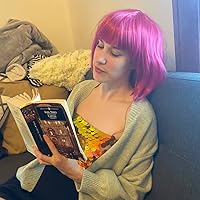
Discover Argentina's award-winning, revolutionary poet Juan Gelman
'One of the greatest poets the world has today.' ―José Saramago, Winner of the 1998 Nobel Prize in Literature
This bilingual edition makes Juan Gelman's hauntingly beautiful poetry collection, Notes / Notas, available to English-speaking audiences in its entirety for the first time.
Originally published in 1979, Notas / Notes was composed in exile, following the 1976 military coup d'etat in Argentina. This period of state terrorism resulted in the disappearance of writers, comrades, and Gelman's own son.
With a deep appreciation for Gelman's masterful linguistic play, translators Afsari and Tandeciarz channel the force of his poetic testimony against the real violence of dictatorship.
Interweaving reflections on revolution, loss and memory, Argentina's poet laureate conjures forth a sense of hope in the wake of inconceivable suffering.
Sample
Note VII
I no longer want you/fury/ I don't want you anymore/rage you devastate my heart/ you turn my heart blind
and I need clarity to kiss me like love where I love my ending like beginning/come sorrow/
kill the dead for me that I carry with all my soul/ or finish killing them
since people go on/like a landscape or voice that doesn't quiet/ people with no end
Juan Gelman is one of the most read and influential poets in the Spanish language. He has published more than twenty books of poetry since 1956 and has been translated into fourteen languages. A political activist and critical journalist since his youth, Gelman has not only been a literary paradigm but also a moral one, within and outside of Argentina. Among his most recent awards are the National Poetry Prize (Argentina, 1997), the Juan Rulfo Prize in Latin American and Caribbean Literature (Mexico, 2000), the Pablo Neruda Prize (Chile, 2005), the Queen Sofia Prize in Ibero-American Poetry (Spain, 2005), and the Cervantes Prize (the most important award given to a Hispanic writer, Spain, 2007).
Long biographical note
Juan Gelman is the most significant, contemporary Argentine intellectual figure and one of the most read and influential poets in the Spanish language. Son of a family of Jewish immigrants from the Ukraine, he grew up like any other porteño, among soccer and tango, in the populous neighborhood of Villa Crespo. At 11, he published his first poem in the magazine Rojo y negro, and in the 1950s formed part of the group of rebel writers, El Pan Duro. He was discovered by Raúl González Túñón, among the most relevant voices of the southern country’s poetic avant-garde, who saw in the young man’s verses “a rich and vivacious lyricism and a principally social content […] that does not elude the richness of fantasy.”
Gelman has published, from his initial Violín y otras cuestiones (1956) to his most recent Mundar (2008), more than twenty books of poetry. These works, as Mario Benedetti asserted early on, constitute “the most coherent, and also the most daring, participatory repertoire (in spite of its inevitable wells of solitude), and ultimately the one most suited to its environment, that Argentine poetry has today”, and Hispanic poetry in general, as the profusion of re-editions of his books and numerous anthologies proves. Gelman’s poetry has achieved international recognition, with translations into fourteen languages, including English. Among his awards are the National Poetry Prize (Argentina, 1997), the Juan Rulfo Prize in Latin American and Caribbean Literature (Mexico, 2000), the Pablo Neruda Prize (Chile, 2005), the Queen Sofia Prize in Ibero-American Poetry (Spain, 2005), and the Cervantes Prize (Spain, 2007), the most important award in Hispanic Letters. No one should be surprised to see him the winner of the Nobel Prize in Literature one day.
It would be relevant to note that Juan Gelman has not only been a literary paradigm but also a moral one, within and outside of Argentina. A political activist and critical journalist since his youth, he was forced into an exile of thirteen years because of the military dictatorship that ravaged his country from 1976 to 1983, and the weak governments that followed. In 1976 the ultra-right kidnapped his children, Nora Eva, 19, and Marcelo Ariel, 20, along with his son’s wife, María Claudia Iruretagoyena, 19, who was 7 months pregnant. Nora Eva would later return, unlike his son and daughter-in-law, who were killed; their child born in a concentration camp. The vehement search for the truth about the fate of these family members, which culminated in finding his granddaughter in Uruguay in 2000, has made the poet a symbol of the struggle for respect for human rights.
Like other poets from his time and space, Juan Gelman creates his work starting from a critique of the so-called post-avante-garde poetry, which surges in the Hispanic world in the 1940s and breaks with the powerful avante-garde. He is a poet who denies the labors of the Mexican Octavio Paz, the Cuban José Lezama Lima, the Argentine Alberto Girri, among others, to reaffirm it in his own way. It is a poetry that goes against the current, transgresses the established social and cultural order, challenges the individualism intrinsic to modernity and the neo-colonial condition. A poetry that renounc