What do you think?
Rate this book


7 pages, Audiobook
First published August 25, 2026
It was as if I was acting, while M came across as authentic and real. It was as if she was the only one good enough at acting to attain reality.

The author is an author insofar as he enters into a role the way an actor does and identifies himself with that projection of himself at the moment of writing.
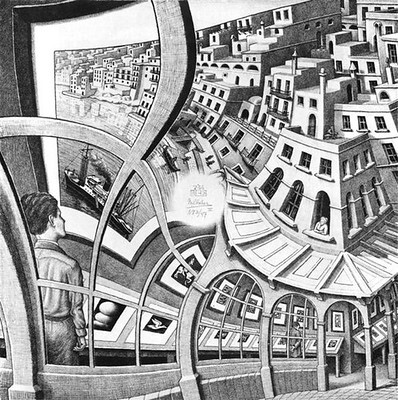
It is about a famous actor who bears more than a little resemblance to M herself. Her repertoire, her history, her mannerisms and style are all recognisable as M’s own, with the horrifying difference that this actor is a sort of emotionless automaton, eviscerated by the globe-wide possession of her image. The being who lives in or behind this image is a vagrant soul struggling to gain purchase on the frictionless surfaces through which she moves, never encountering a boundary or border that would signify the limit of her identity. Severed from her own nature, she enacts her character as though it were a part she were playing whose lines, as soon as she has mastered them, invoke ever greater terrains of emptiness and silence. M does not know how to tell her friend that she is offended by his screenplay, which he has explained to her as a kind of game or conceit that would interrogate the notion of celebrity – and thus of self – in a new way. Without her participation, this conceit would fall flat. He evidently believes her to be capable of intellectualising her situation, and in a way she is, but something in the friend’s manner of transforming her into an object of artistic enquiry arouses in M a violent and almost inarticulate instinct of self-protection.
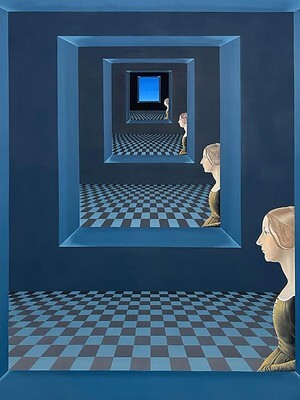
As a child actor, M was woken into consciousness of herself so early that she has no memory of being unnoticeable. The awakening was the product of being observed, but it also made her into an observer. Perhaps this is what the desire for anonymity actually is: a wish or a need not to stop being observed but to stop observing. Nearly everyone, walking down the street, can see someone less fortunate or more powerless than themselves. Wouldn’t it be a relief not to see them.
The process had felt like a surrender to my own ugliness. It was the same ugliness in proximity to M that I had noted at the beginning, the ugliness of experience. I had dealt with that ugliness in the past by trying to pay attention to myself. But it seemed that the project had caused me to lose the ability to do that. It was this abandonment of myself that had helped me. It had enabled me to leave and go and live in someone else. Using an actor had enabled me to relinquish my experience. One day I had happened to see a tennis match playing on a television screen. While I was watching the camera cut away from the players and showed the people sitting in the crowd. There was M, smiling and laughing in a straw hat in the VIP section. I wasn’t sure I could explain to her the unbearable strain this sight had imposed on me. It was as though my most private interior world had suddenly been cast out into the light. It was as though the being in which I was attempting to live was refusing to host me any more.
It is about a famous actor who bears more than a little resemblance to M herself. Her repertoire, her history, her mannerisms and style are all recognisable as M’s own, with the horrifying difference that this actor is a sort of emotionless automaton, eviscerated by the globe-wide possession of her image. …. M does not know how to tell her friend that she is offended by his screenplay, which he has explained to her as a kind of game or conceit that would interrogate the notion of celebrity – and thus of self – in a new way. Without her participation, this conceit would fall flat. He evidently believes her to be capable of intellectualising her situation, and in a way she is, but something in the friend’s manner of transforming her into an object of artistic enquiry arouses in M a violent and almost inarticulate instinct of self-protection. He would doubtless be astonished to know this, given all the things from which, in his imagination, she has had to protect herself. He evidently sees her life as a chain of coercions that have loosened her hold on her own existence. He thinks he is dignifying her fundamental powerlessness. But in fact it is to this empty and passionless alter ego that she will never surrender.
My thanks to Farrar, Strauss and Giroux for an ARC via NetGalley

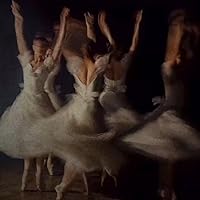
M watches an old film, featuring a legendary star. The star plays a theater actor, who breaks down in the middle of a public performance. The actor is suddenly paralyzed by the horror of her pretence in the midst of the real world and its evil. She sees that she has no identity and hence no morality of her own. She enters a state of delirium, in which, like a bodiless soul, she tries to find another person in whom she could live.