

What do you think?

Lord Valentine #2
Majipoor Chronicles
Come to Majipoor, the magnificently exotic planet of Lord Valentine's Castle. Come to Hissune, favorite of Valentine, as he probes the deepest secrets of Majipoor's long past in the depths of the great Labyrinth. Join him as he becomes one with its many peoples--dukes & generals, thieves & murderers, Ghayrogs & Metamorphs--& discovers wonder, terror, longing & love, learning wisdom that will shape his destiny.
2nd book in the series begun with Lord Valentine's Castle, this is a collection of stories set on Majipoor connected by short interludes with Hissune. As the copyright page says: "Portions of this book have appeared in somewhat different form in Omni, Fantasy & Science Fiction & Isaac Asimov's Science Fiction Magazine." It adds some interesting details to the history & geography of the big planet, but does not really further the story of Valentine.
Prologue
Thesme & the Ghayrog
The Time of the Burning
In the Fifth Year of the Voyage
Calintane Explains
The Desert of Stolen Dreams
The Soul Painter & the Shapeshifter
Crime & Punishment
Among the Dream Speakers
A Thief in Ni-Moya
Voriax & Valentine
(Chapter 11 untitled)
2nd book in the series begun with Lord Valentine's Castle, this is a collection of stories set on Majipoor connected by short interludes with Hissune. As the copyright page says: "Portions of this book have appeared in somewhat different form in Omni, Fantasy & Science Fiction & Isaac Asimov's Science Fiction Magazine." It adds some interesting details to the history & geography of the big planet, but does not really further the story of Valentine.
Prologue
Thesme & the Ghayrog
The Time of the Burning
In the Fifth Year of the Voyage
Calintane Explains
The Desert of Stolen Dreams
The Soul Painter & the Shapeshifter
Crime & Punishment
Among the Dream Speakers
A Thief in Ni-Moya
Voriax & Valentine
(Chapter 11 untitled)
400 pages, Mass Market Paperback
First published January 1, 1981
About the author
Robert Silverberg
2,418 books1,673 followersThere are many authors in the database with this name.
Robert Silverberg is a highly celebrated American science fiction author and editor known for his prolific output and literary range. Over a career spanning decades, he has won multiple Hugo and Nebula Awards and was named a Grand Master by the Science Fiction and Fantasy Writers of America in 2004. Inducted into the Science Fiction and Fantasy Hall of Fame in 1999, Silverberg is recognized for both his immense productivity and his contributions to the genre's evolution.
Born in Brooklyn, he began writing in his teens and won his first Hugo Award in 1956 as the best new writer. Throughout the 1950s, he produced vast amounts of fiction, often under pseudonyms, and was known for writing up to a million words a year. When the market declined, he diversified into other genres, including historical nonfiction and erotica.
Silverberg’s return to science fiction in the 1960s marked a shift toward deeper psychological and literary themes, contributing significantly to the New Wave movement. Acclaimed works from this period include Downward to the Earth, Dying Inside, Nightwings, and The World Inside. In the 1980s, he launched the Majipoor series with Lord Valentine’s Castle, creating one of the most imaginative planetary settings in science fiction.
Though he announced his retirement from writing in the mid-1970s, Silverberg returned with renewed vigor and continued to publish acclaimed fiction into the 1990s. He received further recognition with the Nebula-winning Sailing to Byzantium and the Hugo-winning Gilgamesh in the Outback.
Silverberg has also played a significant role as an editor and anthologist, shaping science fiction literature through both his own work and his influence on others. He lives in the San Francisco Bay Area with his wife, author Karen Haber.
Robert Silverberg is a highly celebrated American science fiction author and editor known for his prolific output and literary range. Over a career spanning decades, he has won multiple Hugo and Nebula Awards and was named a Grand Master by the Science Fiction and Fantasy Writers of America in 2004. Inducted into the Science Fiction and Fantasy Hall of Fame in 1999, Silverberg is recognized for both his immense productivity and his contributions to the genre's evolution.
Born in Brooklyn, he began writing in his teens and won his first Hugo Award in 1956 as the best new writer. Throughout the 1950s, he produced vast amounts of fiction, often under pseudonyms, and was known for writing up to a million words a year. When the market declined, he diversified into other genres, including historical nonfiction and erotica.
Silverberg’s return to science fiction in the 1960s marked a shift toward deeper psychological and literary themes, contributing significantly to the New Wave movement. Acclaimed works from this period include Downward to the Earth, Dying Inside, Nightwings, and The World Inside. In the 1980s, he launched the Majipoor series with Lord Valentine’s Castle, creating one of the most imaginative planetary settings in science fiction.
Though he announced his retirement from writing in the mid-1970s, Silverberg returned with renewed vigor and continued to publish acclaimed fiction into the 1990s. He received further recognition with the Nebula-winning Sailing to Byzantium and the Hugo-winning Gilgamesh in the Outback.
Silverberg has also played a significant role as an editor and anthologist, shaping science fiction literature through both his own work and his influence on others. He lives in the San Francisco Bay Area with his wife, author Karen Haber.
Ratings & Reviews
Friends & Following
Create a free account to discover what your friends think of this book!
Community Reviews
Displaying 1 - 30 of 156 reviews

July 6, 2015
Robert Silverberg returned to his magnificent creation Majipoor in his 1982 collection of loosely connected short stories Majipoor Chronicles.
Using as a connecting instrument archived research done by Hisune, a minor character in Silverberg’s 1980 introduction to Majipoor Lord Valentine's Castle, the author has collected a series of vignettes that further expand and illustrate the great detail and scope of Majipoor.
From human-alien relations (and this is a Robert Silverberg novel so there is sex – that’s all I’m saying) to sea dragons to a study of Majipoor history, Silverberg takes his time and leads his readers on an informative and entertaining journey through the annals and culture of the enormous planet.
One aspect of the world building that he spends some time with is the political aristocracy of the planet. Essentially this is a bifurcated monarchy: a king, called a Coronal, is appointed from a group of qualified prince class. This is the junior executive who is seen by the populace and is the face of the government. The Coronal leads from atop the high Castle Mount. The senior executive, the Pontifex, rules from a bureaucratic underground hive called the Labyrinth. When the Pontifex dies, the Coronal becomes the new Pontifex, moves to the Labyrinth and appoints his successor Coronal.
Other global officials are the Lady of the Isle (Sleep) and the King of Dreams. The Lady gives peace and rest to her citizens through their dreams while the King of Dreams punishes crime through nightmares. Active dreams and telepathy are common themes in Silverberg’s canon.
Silverberg also spends more time with the aborigine race of the planet, the Metamorphs or Shapeshifters (who call themselves the Piurivar). The author describes this lost race in a way reminiscent of Ray Bradbury’s Martians, an ancient remnant little understood and without respect.
This is not really a sequel to Lord Valentine’s Castle (though a reader of the 1980 novel would be somewhat familiar with Hisune and the connecting story) and could be read first. This is an excellent source of further knowledge of Majipoor and is all woven together by Silverberg’s mastery of language and art of storytelling.
Using as a connecting instrument archived research done by Hisune, a minor character in Silverberg’s 1980 introduction to Majipoor Lord Valentine's Castle, the author has collected a series of vignettes that further expand and illustrate the great detail and scope of Majipoor.
From human-alien relations (and this is a Robert Silverberg novel so there is sex – that’s all I’m saying) to sea dragons to a study of Majipoor history, Silverberg takes his time and leads his readers on an informative and entertaining journey through the annals and culture of the enormous planet.
One aspect of the world building that he spends some time with is the political aristocracy of the planet. Essentially this is a bifurcated monarchy: a king, called a Coronal, is appointed from a group of qualified prince class. This is the junior executive who is seen by the populace and is the face of the government. The Coronal leads from atop the high Castle Mount. The senior executive, the Pontifex, rules from a bureaucratic underground hive called the Labyrinth. When the Pontifex dies, the Coronal becomes the new Pontifex, moves to the Labyrinth and appoints his successor Coronal.
Other global officials are the Lady of the Isle (Sleep) and the King of Dreams. The Lady gives peace and rest to her citizens through their dreams while the King of Dreams punishes crime through nightmares. Active dreams and telepathy are common themes in Silverberg’s canon.
Silverberg also spends more time with the aborigine race of the planet, the Metamorphs or Shapeshifters (who call themselves the Piurivar). The author describes this lost race in a way reminiscent of Ray Bradbury’s Martians, an ancient remnant little understood and without respect.
This is not really a sequel to Lord Valentine’s Castle (though a reader of the 1980 novel would be somewhat familiar with Hisune and the connecting story) and could be read first. This is an excellent source of further knowledge of Majipoor and is all woven together by Silverberg’s mastery of language and art of storytelling.

January 1, 2019
Majipoor Chronicles is a collection of stories experienced by young Hissune from age 14 to 18. "Experienced" in that they are not really stories being told to him; he lives in these stories via their various protagonists' minds and memories. Science fiction!
The book is an excellent encapsulation of Majipoor. From the changes of mind and heart within "Thesme and the Ghayrog" and "The Soul-Painter and the Shapeshifter" to the detailing of dream life in "Crime and Punishment" and "Among the Dream-Speakers" to a journey from river to fabulous city and poverty to riches in "A Thief in Ni-Moya", Majipoor Chronicles lays out everything that is so appealing about this world: its wonderful diversity; its horror at violence (one character witnesses a murder and is astounded - it is something he has only read about in history books); its strangeness and mystery; the author's empathy; the lovely writing style that reminded me of a warmer, more humane Jack Vance. But as this is Silverberg and not Vance, there is also an embrace of sexuality (which I'm sure I was particularly absorbed by when first reading this at age 14); although here it is of a more outré nature - two that are alien/human, a third a menage with two brothers and a witch - it is so like later period Silverberg to make these scenes entirely sweet and friendly. I also appreciated the book's deeper exploration of the planet's aboriginals, their guerilla warfare against colonists and subsequent violent displacement, their understandably remote and vaguely threatening stance towards the people who have placed them within reservations.
Silverberg as a young man was a rebel with crazy ideas and a provocative way about him. He pushed boundaries and crossed borders and challenged norms with zeal and élan. Silverberg in his middle-late years has transformed into sensitive, well-traveled Uncle Robert, telling adult stories to younger folk that are full of both wonder and the life lessons needed to transition into adulthood. A kinder, gentler author but a no less enjoyable one. The prose has moved from challenging new wave to elegant old school. The novels remain just as absorbing and resonant. This is one of those books that really impacted me as a kid and helped to shape my own world view.
The book is an excellent encapsulation of Majipoor. From the changes of mind and heart within "Thesme and the Ghayrog" and "The Soul-Painter and the Shapeshifter" to the detailing of dream life in "Crime and Punishment" and "Among the Dream-Speakers" to a journey from river to fabulous city and poverty to riches in "A Thief in Ni-Moya", Majipoor Chronicles lays out everything that is so appealing about this world: its wonderful diversity; its horror at violence (one character witnesses a murder and is astounded - it is something he has only read about in history books); its strangeness and mystery; the author's empathy; the lovely writing style that reminded me of a warmer, more humane Jack Vance. But as this is Silverberg and not Vance, there is also an embrace of sexuality (which I'm sure I was particularly absorbed by when first reading this at age 14); although here it is of a more outré nature - two that are alien/human, a third a menage with two brothers and a witch - it is so like later period Silverberg to make these scenes entirely sweet and friendly. I also appreciated the book's deeper exploration of the planet's aboriginals, their guerilla warfare against colonists and subsequent violent displacement, their understandably remote and vaguely threatening stance towards the people who have placed them within reservations.
Silverberg as a young man was a rebel with crazy ideas and a provocative way about him. He pushed boundaries and crossed borders and challenged norms with zeal and élan. Silverberg in his middle-late years has transformed into sensitive, well-traveled Uncle Robert, telling adult stories to younger folk that are full of both wonder and the life lessons needed to transition into adulthood. A kinder, gentler author but a no less enjoyable one. The prose has moved from challenging new wave to elegant old school. The novels remain just as absorbing and resonant. This is one of those books that really impacted me as a kid and helped to shape my own world view.
"Fourteen, were you? I think that's what they told me. I've had you watched, you know. It was three or four years ago that they sent word to me that you had bluffed your way into the Register. Fourteen, pretending to be a scholar. I imagine you saw a great many things that boys of fourteen don't ordinarily see."

November 26, 2022
„Но сега той не търси развлеченията и удоволствието от забранения плод, а иска да разбере еволюцията на политическите институции на планетата.“
„Маджипурски хроники“ представлява майсторски поднесена съвкупност от фрагменти от различни исторически епохи на тази планета! Книгата определено дава по-задълбочен поглед към начина на живот и управлението на Маджипур, както и съдържа силни морални поуки.
Основнен персонаж в нея не е Валънтайн, който има епизодична роля, а младият Хисун. Докато продължава обучението му в Лабиринта, той открива съществуването на Регистър на душите и тайно се промъква в него. Впоследствие Хисун се потапя чрез загадъчния регистър в любопитни моменти от миналото, изучавайки вълнуващи събития от гледните точки на личностите, които са ги преживели...
„Тези хора, тези ужасни дребни хора с техните дребни страхове и дребни амбиции, с дребните им предразсъдъци, които се въртяха в дребната спирала на дните си… Те просто я вбесяваха! Бяла плъзнали навсякъде из Маджипур като напаст, гризеха девствените гори, кокореха се към безкрайния океан, създаваха грозните си кални градове насред изумителната красота и никога не си задаваха въпроса какъв е смисълът от това… Ето кое бе най-лошото — спокойната им, безкритична природа.“
„И все пак, той е научил много за чувството за отговорност, за конфликтите, които могат да възникнат между противопоставящи се една на друга сили, за никоя от които не може да се каже, че греши, за значението на истинското спокойствие на духа.“
„Истинската заплаха — мислеше Лавон — не са водораслите, а скуката.“ Месеци наред не се беше случвало нищо и дните се бяха превърнали в празнини, които трябваше да се запълват с с каквото и да е.“
„Лавон се стремеше да скрие тази нова опасност от екипажа. Това, разбира се, беше невъзможно — никаква тайна не можеше да бъде запазена за дълго в ограниченото пространство на кораба. Настояването му да се пази тайна поне щеше да сведе откритите разговори за проблемите до минимум, а те биха могли да доведат до масова паника. Така всички знаеха, но всеки си мислеше, че само той знае колко голяма е реалната заплаха.“
„Убеден съм, че бъдещите поколения ще го считат за олицетворение на абсурда и безумието, но аз съм сигурен, че е напълно нормален — човек, за когото короната се бе превърнала в непоносима тежест, но същевременно достатъчно почтен, за да не може просто да се оттегли и да заживее свой собствен живот.“
„Едва по-късно, когато всичко отново се успокои и се върне назад, той ще започне да съжалява за сляпата ловна страст, която му е попречила да обърне внимание на ранената, само и само за да не изпусне жертвата си.“
„Не говореха много — времето за въпроси бе минало и повече нямаше нужда от думи.“
„Знае, че това влиза в противоречие с основната духовна традиция на Маджипур, но много от нещата, които мисли и прави, също и противоречат. Той е това, което е — момче от улиците на Лабиринта, внимателен наблюдател на този свят, но не и негов безкритичен почитател.“
„Тогава Валънтайн все още не беше роден, но бе чувал от Вориакс, че баща им не е казал и дума на разочарование, което беше най-сигурният признак, че е имал нужните качества, за да бъде избран.“
„Маджипурски хроники“ представлява майсторски поднесена съвкупност от фрагменти от различни исторически епохи на тази планета! Книгата определено дава по-задълбочен поглед към начина на живот и управлението на Маджипур, както и съдържа силни морални поуки.
Основнен персонаж в нея не е Валънтайн, който има епизодична роля, а младият Хисун. Докато продължава обучението му в Лабиринта, той открива съществуването на Регистър на душите и тайно се промъква в него. Впоследствие Хисун се потапя чрез загадъчния регистър в любопитни моменти от миналото, изучавайки вълнуващи събития от гледните точки на личностите, които са ги преживели...
„Тези хора, тези ужасни дребни хора с техните дребни страхове и дребни амбиции, с дребните им предразсъдъци, които се въртяха в дребната спирала на дните си… Те просто я вбесяваха! Бяла плъзнали навсякъде из Маджипур като напаст, гризеха девствените гори, кокореха се към безкрайния океан, създаваха грозните си кални градове насред изумителната красота и никога не си задаваха въпроса какъв е смисълът от това… Ето кое бе най-лошото — спокойната им, безкритична природа.“
„И все пак, той е научил много за чувството за отговорност, за конфликтите, които могат да възникнат между противопоставящи се една на друга сили, за никоя от които не може да се каже, че греши, за значението на истинското спокойствие на духа.“
„Истинската заплаха — мислеше Лавон — не са водораслите, а скуката.“ Месеци наред не се беше случвало нищо и дните се бяха превърнали в празнини, които трябваше да се запълват с с каквото и да е.“
„Лавон се стремеше да скрие тази нова опасност от екипажа. Това, разбира се, беше невъзможно — никаква тайна не можеше да бъде запазена за дълго в ограниченото пространство на кораба. Настояването му да се пази тайна поне щеше да сведе откритите разговори за проблемите до минимум, а те биха могли да доведат до масова паника. Така всички знаеха, но всеки си мислеше, че само той знае колко голяма е реалната заплаха.“
„Убеден съм, че бъдещите поколения ще го считат за олицетворение на абсурда и безумието, но аз съм сигурен, че е напълно нормален — човек, за когото короната се бе превърнала в непоносима тежест, но същевременно достатъчно почтен, за да не може просто да се оттегли и да заживее свой собствен живот.“
„Едва по-късно, когато всичко отново се успокои и се върне назад, той ще започне да съжалява за сляпата ловна страст, която му е попречила да обърне внимание на ранената, само и само за да не изпусне жертвата си.“
„Не говореха много — времето за въпроси бе минало и повече нямаше нужда от думи.“
„Знае, че това влиза в противоречие с основната духовна традиция на Маджипур, но много от нещата, които мисли и прави, също и противоречат. Той е това, което е — момче от улиците на Лабиринта, внимателен наблюдател на този свят, но не и негов безкритичен почитател.“
„Тогава Валънтайн все още не беше роден, но бе чувал от Вориакс, че баща им не е казал и дума на разочарование, което беше най-сигурният признак, че е имал нужните качества, за да бъде избран.“

May 29, 2021
This was unexpected. After reading Lord Valentine's Castle, which I was a big fan of, I bought the rest of the series and jumped into this book, the second volume. It is a collection of unconnected stories, with a flimsy framing device, set on Majipoor, exploring locales, eccentric inhabitants, races, creatures, politics, and various adventures. A few of the stories were entertaining, a few of them were silly, and several were inconclusive.
The first story, about a woman living with an alien in the jungle, was an unconventional love story. Not terribly moving, but contains excellent descriptions of the rough wilderness.
Then we get a clear commentary of war politics (Vietnam?) in a war tale about the Metamorph conflict.
The third story was an impressive story about a ten-year voyage halted by sinister dragon-grass. I loved this story. It was unexpected, and reinforced the Medieval quality of many of the societies of Majipoor. The technology levels can be confusing in Silverberg's most expansive world building creation, but if you come into the Majipoor stories ready to accept magic, science, sex, and adventure, a lot of these iterations will satisfy your curiosity.
The fifth story was also quite good, about a desert journey, and dream manipulation. It conveyed the immense landscapes on the planet with brilliant imagery.
Then comes a tale about a soul-painter - another romance about finding one's muse.
Several more lackadaisical stories followed those.
I am getting the sense after reading several Silverberg titles, that he was interested in depicting the far-flung experiences of extraordinary individuals. He is no different than most pulp writers, but his work is very easy to read, fairly engaging, and when it is good, it can hold its own against Heinlein, Asimov, and other big shots of science fiction. While the first book in the series is clearly better, this second installment gives us a mixed bag of story elements, churned out rapidly for sheer entertainment. I read this lazily, over a couple weeks, picking away at it. It was not nearly as immersive, yet I can't say it was poorly written. Though I fail to remember several bland stories, there was a pleasant and undeniable sense of the grandeur and psychedelic tinge of this colossal and beautiful world of Majipoor. I think that was the whole point. If you just want to revisit the enchanting setting, give it a go.
Silverberg's work - the more I read of it, the more I want to read of it - contains an exuberance for life. His characters are always trying to get the most out of it, pursuing every pleasure and opportunity for gain. This is epitomized by the frame-story's character Hissune's search for another life in the archives in the labyrinth. It reminded me of the kids from Book of Skulls, seeking after an ideal existence, and gaining unexpected knowledge and maturity along the way. They selfishly consume life, and its offerings, wisdom, and hardship, taking into possession the stories these things congeal into. It represents a vicious and unending battle against boredom and mortality.
The first story, about a woman living with an alien in the jungle, was an unconventional love story. Not terribly moving, but contains excellent descriptions of the rough wilderness.
Then we get a clear commentary of war politics (Vietnam?) in a war tale about the Metamorph conflict.
The third story was an impressive story about a ten-year voyage halted by sinister dragon-grass. I loved this story. It was unexpected, and reinforced the Medieval quality of many of the societies of Majipoor. The technology levels can be confusing in Silverberg's most expansive world building creation, but if you come into the Majipoor stories ready to accept magic, science, sex, and adventure, a lot of these iterations will satisfy your curiosity.
The fifth story was also quite good, about a desert journey, and dream manipulation. It conveyed the immense landscapes on the planet with brilliant imagery.
Then comes a tale about a soul-painter - another romance about finding one's muse.
Several more lackadaisical stories followed those.
I am getting the sense after reading several Silverberg titles, that he was interested in depicting the far-flung experiences of extraordinary individuals. He is no different than most pulp writers, but his work is very easy to read, fairly engaging, and when it is good, it can hold its own against Heinlein, Asimov, and other big shots of science fiction. While the first book in the series is clearly better, this second installment gives us a mixed bag of story elements, churned out rapidly for sheer entertainment. I read this lazily, over a couple weeks, picking away at it. It was not nearly as immersive, yet I can't say it was poorly written. Though I fail to remember several bland stories, there was a pleasant and undeniable sense of the grandeur and psychedelic tinge of this colossal and beautiful world of Majipoor. I think that was the whole point. If you just want to revisit the enchanting setting, give it a go.
Silverberg's work - the more I read of it, the more I want to read of it - contains an exuberance for life. His characters are always trying to get the most out of it, pursuing every pleasure and opportunity for gain. This is epitomized by the frame-story's character Hissune's search for another life in the archives in the labyrinth. It reminded me of the kids from Book of Skulls, seeking after an ideal existence, and gaining unexpected knowledge and maturity along the way. They selfishly consume life, and its offerings, wisdom, and hardship, taking into possession the stories these things congeal into. It represents a vicious and unending battle against boredom and mortality.

March 29, 2011
3.5 stars
ORIGINALLY POSTED AT Fantasy Literature.
In the first novel of the Majipoor series, Lord Valentine’s Castle, Valentine was aided in the labyrinth by Hissune, a clever and hard-working young street urchin. When Valentine was restored to his position as coronal, he elevated Hissune to a government job in the labyrinth. This was certainly a big step up for Hissune, but he soon discovers that government work is pretty dull. To alleviate the boredom, he talks his way into the Registry of Souls, the place where Majipoor’s residents have been placing some of their memories for thousands of years. Pretending that he’s doing some research for his archiving job, Hissune is able to call up and re-live the memories of ten Majipooreans. At first he starts off small, living as a young woman in a remote but developing area of the planet. When he doesn’t get caught, he gets bolder and bolder and eventually spends time living in the memory of Lord Valentine himself.
Thus, Majipoor Chronicles is a collection of short stories set in the world of Majipoor. The book is meant to be read after Lord Valentine’s Castle (which introduces Hissune), but it could also be read as a prequel or at any other place in the series. Each of these ten stories fills in some gaps in the story of Lord Valentine’s Castle, or gives us more details and insights about the imaginative world of Majipoor and its citizens and culture. But most importantly, they each have a life lesson for Hissune who, though he doesn’t know it yet, will succeed Valentine as coronal:
1. “Thesme and the Ghayrog” — a young woman who feels ostracized because of her eccentric behaviors moves into the jungle and befriends an alien. A story about the Freudian defense mechanism of projection.
2. “The Time of the Burning” — an army officer meets the legendary Lord Stiamot at a time when humans are taking the planet away from the native metamorphs. Explains how humans got control of the planet.
3. “In the Fifth Year of the Voyage” — a chilling tale of adventure and failure. Gives us an appreciation for the immensity of the planet and the problems with its exploration.
4. “Calintane Explains” — Calintane, a future coronal, explains to his girlfriend why he’s been too busy to see her lately. The amusing story (alluded to in Lord Valentine’s Castle) about the coronal who declared himself a woman and became the Lady of the Isle.
5. “The Desert of Stolen Dreams” — as a way of punishing himself for a crime, Lord Dekkeret takes on an unpleasant job which involves crossing a desert and dealing with horrible dreams. Emphasizes the importance of dreams and gives us some background on a future coronal.
6. “The Soul-Painter and the Shapeshifter” — an artist who’s tired of structured and sculpted beauty moves to the forest and meets a metamorph woman. Shows the interracial conflict between humans and metamorphs.
7. “Crime and Punishment” — a businessman who has committed murder tries to evade the King of Dreams. Explains how secret crimes are punished through dreams and why murder rates are low on Majipoor.
8. “Among the Dream Speakers” — Tisana (who helped Lord Valentine) faces her final test to become a dreamspeaker. Shows the training and practices of the dreamspeakers.
9. “A Thief in Ni-moya” — a shopkeeper is told that she has inherited a mansion in Ni-moya. Explores the exciting city of Ni-moya, illustrates some of the practices of its nobility, and deals with the concepts of justice and balance.
10. “Voriax and Valentine” — brothers Voriax and Valentine meet a witch who gives them the disturbing prophecy that they will both be coronal. Fills in details of this event, which was alluded to in Lord Valentine’s Castle, and gives us a glimpse of Valentine’s early manhood.
I listened to Blackstone Audio’s production of Majipoor Chronicles, which was read by an excellent cast of narrators (several who were new to me): J. Paul Boehmer, Cassandra Campbell, Emily Janice Card, Gabrielle de Cuir, Arte Johnson, Don Leslie, Scott Peterson, Stefan Rudnicki, and Mirron Willis. I can highly recommend this version. As with any collection, the stories vary in quality. My favorite stories were “In the Fifth Year of the Voyage” (intense), “Calintane Explains” (funny), and “A Thief in Ni-Moya” (satisfying). The only story that I didn’t like was “Among the Dream Speakers” — I thought it was dull.
Majipoor Chronicles gives even more texture to the beautiful and fascinating world of Majipoor while filling in a lot of details about characters and events alluded to in other Majipoor novels. For Majipoor fans, Majipoor Chronicles is a must-read. If you haven’t read Lord Valentine’s Castle, this is a good way to get your feet wet and to see if you want to explore more of Majipoor.
ORIGINALLY POSTED AT Fantasy Literature.
In the first novel of the Majipoor series, Lord Valentine’s Castle, Valentine was aided in the labyrinth by Hissune, a clever and hard-working young street urchin. When Valentine was restored to his position as coronal, he elevated Hissune to a government job in the labyrinth. This was certainly a big step up for Hissune, but he soon discovers that government work is pretty dull. To alleviate the boredom, he talks his way into the Registry of Souls, the place where Majipoor’s residents have been placing some of their memories for thousands of years. Pretending that he’s doing some research for his archiving job, Hissune is able to call up and re-live the memories of ten Majipooreans. At first he starts off small, living as a young woman in a remote but developing area of the planet. When he doesn’t get caught, he gets bolder and bolder and eventually spends time living in the memory of Lord Valentine himself.
Thus, Majipoor Chronicles is a collection of short stories set in the world of Majipoor. The book is meant to be read after Lord Valentine’s Castle (which introduces Hissune), but it could also be read as a prequel or at any other place in the series. Each of these ten stories fills in some gaps in the story of Lord Valentine’s Castle, or gives us more details and insights about the imaginative world of Majipoor and its citizens and culture. But most importantly, they each have a life lesson for Hissune who, though he doesn’t know it yet, will succeed Valentine as coronal:
1. “Thesme and the Ghayrog” — a young woman who feels ostracized because of her eccentric behaviors moves into the jungle and befriends an alien. A story about the Freudian defense mechanism of projection.
2. “The Time of the Burning” — an army officer meets the legendary Lord Stiamot at a time when humans are taking the planet away from the native metamorphs. Explains how humans got control of the planet.
3. “In the Fifth Year of the Voyage” — a chilling tale of adventure and failure. Gives us an appreciation for the immensity of the planet and the problems with its exploration.
4. “Calintane Explains” — Calintane, a future coronal, explains to his girlfriend why he’s been too busy to see her lately. The amusing story (alluded to in Lord Valentine’s Castle) about the coronal who declared himself a woman and became the Lady of the Isle.
5. “The Desert of Stolen Dreams” — as a way of punishing himself for a crime, Lord Dekkeret takes on an unpleasant job which involves crossing a desert and dealing with horrible dreams. Emphasizes the importance of dreams and gives us some background on a future coronal.
6. “The Soul-Painter and the Shapeshifter” — an artist who’s tired of structured and sculpted beauty moves to the forest and meets a metamorph woman. Shows the interracial conflict between humans and metamorphs.
7. “Crime and Punishment” — a businessman who has committed murder tries to evade the King of Dreams. Explains how secret crimes are punished through dreams and why murder rates are low on Majipoor.
8. “Among the Dream Speakers” — Tisana (who helped Lord Valentine) faces her final test to become a dreamspeaker. Shows the training and practices of the dreamspeakers.
9. “A Thief in Ni-moya” — a shopkeeper is told that she has inherited a mansion in Ni-moya. Explores the exciting city of Ni-moya, illustrates some of the practices of its nobility, and deals with the concepts of justice and balance.
10. “Voriax and Valentine” — brothers Voriax and Valentine meet a witch who gives them the disturbing prophecy that they will both be coronal. Fills in details of this event, which was alluded to in Lord Valentine’s Castle, and gives us a glimpse of Valentine’s early manhood.
I listened to Blackstone Audio’s production of Majipoor Chronicles, which was read by an excellent cast of narrators (several who were new to me): J. Paul Boehmer, Cassandra Campbell, Emily Janice Card, Gabrielle de Cuir, Arte Johnson, Don Leslie, Scott Peterson, Stefan Rudnicki, and Mirron Willis. I can highly recommend this version. As with any collection, the stories vary in quality. My favorite stories were “In the Fifth Year of the Voyage” (intense), “Calintane Explains” (funny), and “A Thief in Ni-Moya” (satisfying). The only story that I didn’t like was “Among the Dream Speakers” — I thought it was dull.
Majipoor Chronicles gives even more texture to the beautiful and fascinating world of Majipoor while filling in a lot of details about characters and events alluded to in other Majipoor novels. For Majipoor fans, Majipoor Chronicles is a must-read. If you haven’t read Lord Valentine’s Castle, this is a good way to get your feet wet and to see if you want to explore more of Majipoor.

June 7, 2025
Majipoor Chronicles is a fix-up novel that collects eleven short stories, novelettes, and novellas with a framing device of having a character live the various experiences of different aliens and humans from past-eras of the world through memory-tapes. It presents an interesting depth to the history and development of Silverberg's huge and complex world of Majipoor. About half of the stories were printed in Omni, F & SF, and Asimov's magazines in 1981-'82 and the rest were original to this volume. They all fit together surprisingly well, and though it's actually the second Majipoor book, it would serve as a better introduction to the world than does Lord Valentine's Castle. Silverberg presents his sometimes-satiric views of religion and politics and sex but doesn't lose sight of the story and his huge setting. Recommended.

July 20, 2020
Ten stories -- five new to this volume and five previously published -- set on the world or Majipoor, Robert Silverberg's majestic creation of human and aliens living on planet of vast proportions. The bookend story continues the tale begun in Lord Valentine's Castle, with the POV shifted to the young street-rat Hisune as his horizons expand with a self-education in the mind-tapes of the culture's archives.

October 19, 2025
It was great to get back to the world of Majipoor. I read Lord Valentine’s Castle last year and considered it one of my favorites from the past year, so I was eager to continue on, but with somewhat lofty expectations. I am glad to say that those expectations were met with the second book in the series, as this book was as imaginative and stellar as book one.
Silverberg frames this novel as a collection of stories where a young man, Hissune, goes into an archives of sorts called the Register of Souls, and here he “experiences” various stories of individuals from Majipoor from various time periods. As with Lord Valentine’s Castle, Silverberg brings in a unique, imaginative world with interesting characters, compelling themes, and fascinating plots.
The stories themselves offer a lot of food for thought, and serve as a sort of “moral education” for young Hissune.
Here is a quick snapshot of some of the stories in the collection:
“Thesme and the Ghayrog”: This one focuses on Thesme, who leads a secluded existence, cut off from the residents of the community. One day she sees an injured Ghayrog (a type of species on the planet), and she helps him mend his wound, and they form a bond. I like how the story digs into the diverging cultures between humans and the aliens who inhibit the area. This story digs into the inner turmoil in Thesme’s soul, and her trying to find her own identity.
“The Time of the Burning” : This story examines the tensions, intricacies, and dynamics that exist in war, and the motives from the perspectives of the two sides. Fascinating look at the inevitability of war, and the responsibilities it carries.
“In the Fifth Year of the Voyage”: In this tale, we follow Captain Sinnabor Lavon as he explores the sea with his crew, looking for adventure. A mysterious seaweed begins forming in the ocean, and it becomes a concern. One of the predominant themes is how Lavon must deal with internal conflict, as well as external conflict, as leader aboard and make weighty decisions that could affect the entire crew as there are life-threatening situations at hand.
“Calentine Explains” : This one examines the roles of leadership, and there is a story within a story about wanting to break free from the restraints of the responsibilities that come with being a leader.
“The Desert of Stolen Dreams” : Should we keep the status quo, and be safe all the time in life, or take risks, and explore at the expense of some possible uncomfortable outcomes? This is the very question that this story explores through its main character, Dekkeret, a dreamer of sorts with romanticized ideals, who sojourns on a pilgrimage to experience the unfamiliar. This tale delves into "the quest” both literally and figuratively and how dreams have great import to what possibly lay ahead.
“The Soul-Painter and the Shapeshifter” : Interesting story about how our need for companionship/ relationships goes beyond our physical form. Delves into the nature of identity.
“Crime and Punishment” : Much like Dostoevsky’s novel of the same name, this one explores the ramifications of having committed murder and the consequences afterwards.
“Among the Dream Speakers” : This one looks at the role of sendings (dreams) and their dynamics.
“A Thief in Ni-moya” : Inyanna Forlana gets scammed by some con artists over an estate, and then finds herself immersed into a world of petty thieves. Interesting novella about how fate plays a role in outcomes.
“Voriax and Valentine”: In the final tale in the collection, we see Valentine make an appearance with his older brother Voriax. This story examines nature of becoming Coronel (the leader), and the nature of leadership and responsibility.
It’s a great collection of stories with a lot of food for thought about important themes. I felt myself drawn to this world and the inner workings and dynamics of this planet. A fun novel for sure, and I look forward to book three, Valentine Pontifex.
Silverberg frames this novel as a collection of stories where a young man, Hissune, goes into an archives of sorts called the Register of Souls, and here he “experiences” various stories of individuals from Majipoor from various time periods. As with Lord Valentine’s Castle, Silverberg brings in a unique, imaginative world with interesting characters, compelling themes, and fascinating plots.
The stories themselves offer a lot of food for thought, and serve as a sort of “moral education” for young Hissune.
Here is a quick snapshot of some of the stories in the collection:
“Thesme and the Ghayrog”: This one focuses on Thesme, who leads a secluded existence, cut off from the residents of the community. One day she sees an injured Ghayrog (a type of species on the planet), and she helps him mend his wound, and they form a bond. I like how the story digs into the diverging cultures between humans and the aliens who inhibit the area. This story digs into the inner turmoil in Thesme’s soul, and her trying to find her own identity.
“The Time of the Burning” : This story examines the tensions, intricacies, and dynamics that exist in war, and the motives from the perspectives of the two sides. Fascinating look at the inevitability of war, and the responsibilities it carries.
“In the Fifth Year of the Voyage”: In this tale, we follow Captain Sinnabor Lavon as he explores the sea with his crew, looking for adventure. A mysterious seaweed begins forming in the ocean, and it becomes a concern. One of the predominant themes is how Lavon must deal with internal conflict, as well as external conflict, as leader aboard and make weighty decisions that could affect the entire crew as there are life-threatening situations at hand.
“Calentine Explains” : This one examines the roles of leadership, and there is a story within a story about wanting to break free from the restraints of the responsibilities that come with being a leader.
“The Desert of Stolen Dreams” : Should we keep the status quo, and be safe all the time in life, or take risks, and explore at the expense of some possible uncomfortable outcomes? This is the very question that this story explores through its main character, Dekkeret, a dreamer of sorts with romanticized ideals, who sojourns on a pilgrimage to experience the unfamiliar. This tale delves into "the quest” both literally and figuratively and how dreams have great import to what possibly lay ahead.
“The Soul-Painter and the Shapeshifter” : Interesting story about how our need for companionship/ relationships goes beyond our physical form. Delves into the nature of identity.
“Crime and Punishment” : Much like Dostoevsky’s novel of the same name, this one explores the ramifications of having committed murder and the consequences afterwards.
“Among the Dream Speakers” : This one looks at the role of sendings (dreams) and their dynamics.
“A Thief in Ni-moya” : Inyanna Forlana gets scammed by some con artists over an estate, and then finds herself immersed into a world of petty thieves. Interesting novella about how fate plays a role in outcomes.
“Voriax and Valentine”: In the final tale in the collection, we see Valentine make an appearance with his older brother Voriax. This story examines nature of becoming Coronel (the leader), and the nature of leadership and responsibility.
It’s a great collection of stories with a lot of food for thought about important themes. I felt myself drawn to this world and the inner workings and dynamics of this planet. A fun novel for sure, and I look forward to book three, Valentine Pontifex.

June 25, 2016
This is a collection of ten stories and novelettes that take place in the nine thousand year history of the planet Majipoor, since it was settled by humans from Earth. Before reading this I had read Lord Valentine's Castle. Majipoor Chronicles would be a good precursor to that novel, though I think it is listed as the second in the series. It helps us understand the culture of Majipoor. The final story is about Valentine, before his great adventure in Lord Valentine's Castle. I believe that all of these stories were written over a long period of time and then collected in this volume with an intertwining story that actually takes place after the events of Lord Valentine's Castle. Even though it has it roots in science fiction, this really isn't science fiction as much as it is fantasy; fantasy well written.
I noticed an interesting thing in at least three of these stories. A person is wronged and yet there is no grudge, no wish for revenge, and the story ends with the wrongdoer having been forgiven.
Robert Silverberg has become a favored science fiction author of mine, although this volume is not my favorite of his. His writing, especially about Majipoor, puts me in mind of Ursula K Le Guin.
I noticed an interesting thing in at least three of these stories. A person is wronged and yet there is no grudge, no wish for revenge, and the story ends with the wrongdoer having been forgiven.
Robert Silverberg has become a favored science fiction author of mine, although this volume is not my favorite of his. His writing, especially about Majipoor, puts me in mind of Ursula K Le Guin.

June 8, 2011
It's not usual for me to give a sci-fi book a 4-star rating but this is a good one for sure. By one of the all-time masters of the genre of course. My only question: Why no flying machines? Also, the final twist at the end was very predictable.

August 18, 2024
I enjoyed this collection of short (and long) stories about Silverberg's wonderful Majipoor universe. I also appreciated the Scheherezade form of narration with the stories inside a story. I thought that there were stronger stories and slightly weaker ones, but if you enjoyed Lord Valentine's Castle, you will enjoy these stories a lot and it is NOT a long read.

July 4, 2021
Loved the structure of this.
It's a collection of short stories set in the world of Majipoor that we came to love in the first book. Throughout the stories of various people, we explore the world and their people a bit more, in ways that we never could have by seeing the story just through Valentine's eyes. It was the right decision: most people's favorite part of these books is the world of Majipoor, and this goes hard on giving us more of that.
The stories are connected in that they are basically memories being "re-played"/"re-experienced" by a character from the first book. Some of these were re-contextualisations of stories or deeply rooted myths from the world, seen through the eyes of people who were actually there, which I really liked as a plot device, to showcase how what's written is often very different from what happened, missing a lot of the real nuance of the situation.
But besides those, there's also some lovely slice-of-life stories which serve to enrich this world. Some of these would've worked perfectly fine as a stand-alone, others heavily relied on prior knowledge from the first book.
So far, two bangers. Can't wait to continue this series. Why have I been sleeping on Silverberg for so long?
It's a collection of short stories set in the world of Majipoor that we came to love in the first book. Throughout the stories of various people, we explore the world and their people a bit more, in ways that we never could have by seeing the story just through Valentine's eyes. It was the right decision: most people's favorite part of these books is the world of Majipoor, and this goes hard on giving us more of that.
The stories are connected in that they are basically memories being "re-played"/"re-experienced" by a character from the first book. Some of these were re-contextualisations of stories or deeply rooted myths from the world, seen through the eyes of people who were actually there, which I really liked as a plot device, to showcase how what's written is often very different from what happened, missing a lot of the real nuance of the situation.
But besides those, there's also some lovely slice-of-life stories which serve to enrich this world. Some of these would've worked perfectly fine as a stand-alone, others heavily relied on prior knowledge from the first book.
So far, two bangers. Can't wait to continue this series. Why have I been sleeping on Silverberg for so long?

June 6, 2021
Price Thesme & Ghayrog, Soul painter su mi odlicne.
Zanimljive su i price o Lady of the Sea i King of Dreams.
Sve u svemu, poprilicno lijepo je osmisljen Majipoor.
Zanimljive su i price o Lady of the Sea i King of Dreams.
Sve u svemu, poprilicno lijepo je osmisljen Majipoor.

May 17, 2024
If I could I would give this a 4.5. I’ve never really read short story collections but this was fun. Silverberg really excelled in the world building here and it makes me enjoy the world of Majipoor much more. I can’t wait to read the next book in this series.

May 3, 2016
Majipoor Chronicles is essentially a grouping of short stories set on and during various time periods of the lush and large world Robert Silverberg created. Some of the stories were previously published. They are all loosely connected by the character of Hissune, who we first met in LVC as a sassy street urchin (are there any other kinds in literature?) who meets Lord Valentine in the Labyrinth. Silverberg has (conveniently) created a Register of Souls, that contains "memory readings" that one can access, essentially living someone's life, seeing events through their eyes. I think various other authors have used this literary device, albeit in various forms) including if I remember correctly J.K. Rowling. This conceit could be considering somewhat lame, although perhaps Silverberg was the first to apply it. The convenience of this device, however, is far overshadowed by the stories, some of them quite superior pieces of the science fiction / fantasy blend that Silverberg is really a master of writing. LVC is that kind of mash-up (Anne McCaffrey's Pern does this quite well too), and some of these stories are little gems. I listened to an audio version; each story was narrated by a different reader, which I really enjoyed.
August 7, 2017
I really like Majipoor Chronicles, although it is perhaps a bit disingenuous to call it a "novel". At it's heart, Majipoor Chronicles is a collection of short fiction--although it is loosely connected by the narration of Hissune's discovery of each tale told and the book can be thought of as telling the story of his education to governance. Each "chapter" is a separate tale that Hissune finds in the great Register of Souls, chronicling choice moments in the history of the planet.
I actually liked this better than Lord Valentine's Castle, since I tend to enjoy both short fiction and extensive world-building--and this book delivers both in abundance. I do wonder how it will lead into the third book in the series, since so little plot happens in Majipoor Chronicles but I appreciated the chance to look into the history of the world through these fun and unusual stories.
The best stories were "In the Fifth Year of the Voyage", "The Desert of Stolen Dreams", "Among the Dream-Speakers", and "A Thief in Ni-Moya", although I don't think that the collection would be complete without a single element of the work. It coalesces into a marvelous episodic painting of the world, making Majipoor come to life in a way that I am not sure any other, more typical, means (a Lord of the Rings style historical epic, for example) could accomplish. We are shown the humanity at the heart of things, given a sense for the feeling of this alien world as well as some of the important historical events of it. A clever collection that exploits connectivity to make each lovely piece gain in importance and pleasure by association with the others.
I actually liked this better than Lord Valentine's Castle, since I tend to enjoy both short fiction and extensive world-building--and this book delivers both in abundance. I do wonder how it will lead into the third book in the series, since so little plot happens in Majipoor Chronicles but I appreciated the chance to look into the history of the world through these fun and unusual stories.
The best stories were "In the Fifth Year of the Voyage", "The Desert of Stolen Dreams", "Among the Dream-Speakers", and "A Thief in Ni-Moya", although I don't think that the collection would be complete without a single element of the work. It coalesces into a marvelous episodic painting of the world, making Majipoor come to life in a way that I am not sure any other, more typical, means (a Lord of the Rings style historical epic, for example) could accomplish. We are shown the humanity at the heart of things, given a sense for the feeling of this alien world as well as some of the important historical events of it. A clever collection that exploits connectivity to make each lovely piece gain in importance and pleasure by association with the others.

October 10, 2022
This is pretty transparently a “fix up”, in this case a bunch of short stories, strung together with a framing device. It’s pretty good for what it is, but there’s no sweeping narrative arc, and a couple stories are over-long.
Silverberg does pretty good world building. It’s one of my favorite parts of Lord Valentine’s Castle.
I don’t know how quickly I’m going to read Valentine Pontifex. This is good, but it’s still mired in some early 80s white male sexism.
Silverberg does pretty good world building. It’s one of my favorite parts of Lord Valentine’s Castle.
I don’t know how quickly I’m going to read Valentine Pontifex. This is good, but it’s still mired in some early 80s white male sexism.
July 8, 2025
A very solid 4 for some delightful tales of Majipoor.

July 3, 2008
Le titre peut le laisser présager, les chroniques sont assez loin de la trame très linéaire du chateau de lord Valentin, et c'est tant mieux. En effet, les différentes expériences qui sont proposées permettent de mieux saisir la réalité de l'existence sur cette immense planète, où les continents ont la taille de mondes. Et dans ce roman, foisonnant et complexe, on se perd comme les habitants de Majipoor peuvent se perdre des années durant.
Et surtout, on rêve : que ce soit aux côtés du peintre d'âmes amoureux d'un métamorphe, de la voleuse de Ni-Moya ou des autres, un monde fascinant, et nettement plus intéressant que le décor du premier tome, nous est proposé. Il n'est pas une facette de Majipoor qui ne puisse se cacher de nos yeux : des pouvoirs du roi des rêves à la formidable diversité des environnements, nous survolons tout, et nous plongeons à chaque fois avec délice dans des vies plus diverses que tout ce qu'on pourrait supposer d'un premier abord.
En bref, et bien que le style soit facile, j'ai été tout à fait séduit par ce roman-mosaïque (il fallait bien le claquer quelque part, celui-là, d'autant plus que c'est très exactement l'effet produit).
Un seul reproche, cependant : l'absence marquante des non-humains. J'aurais adoré me plonger dans la tête d'un vroon, d'un skandar ou de quelque autre créature extraterrestre.
Et surtout, on rêve : que ce soit aux côtés du peintre d'âmes amoureux d'un métamorphe, de la voleuse de Ni-Moya ou des autres, un monde fascinant, et nettement plus intéressant que le décor du premier tome, nous est proposé. Il n'est pas une facette de Majipoor qui ne puisse se cacher de nos yeux : des pouvoirs du roi des rêves à la formidable diversité des environnements, nous survolons tout, et nous plongeons à chaque fois avec délice dans des vies plus diverses que tout ce qu'on pourrait supposer d'un premier abord.
En bref, et bien que le style soit facile, j'ai été tout à fait séduit par ce roman-mosaïque (il fallait bien le claquer quelque part, celui-là, d'autant plus que c'est très exactement l'effet produit).
Un seul reproche, cependant : l'absence marquante des non-humains. J'aurais adoré me plonger dans la tête d'un vroon, d'un skandar ou de quelque autre créature extraterrestre.

May 28, 2017
"The Geography of the Soul"
Robert Silverberg's big science fiction novel Lord Valentine's Castle (1980) depicts the attempts of the unlawfully deposed Valentine to regain his rightful position as Coronal of Majipoor, one of the four "powers" of the planet, journeying and juggling across the exotic landscapes and through the sprawling cities and among the 20-30 billion human and alien inhabitants of the huge world. The conceit of Silverberg's second Majipoor book, Majipoor Chronicles (1982), is that Hissune, the street boy who first recognized Valentine, has been working for four years in the vast bureaucratic Labyrinth doing things like preparing "an inventory of the archives of the tax-collectors" when, itching to experience new places and people, he bluffs his way into the Register of Souls, which stores millions of memory-readings made by millions of Majipoorans from millions of places and times. Each time Hissune experiences a memory, Silverberg writes a short story from the point of view of the person in question. The Hissune framing passages work with the stories to demonstrate how the various experiences (only a glimpse of a millionth millionth part of Majipooran life) give the bright and sensitive lad an education in human nature ("the geography of the soul") and hence help him to mature. Silverberg is also demonstrating the entertaining, transporting, mind and heart expanding nature of science fiction.
The ten stories in the collection come from different points in Majipoor's 14,000 year human history and represent different modes and moods: romance, war, exploration, bildungsroman, origin, crime, comedy, tragedy, etc.
"Thesme and the Ghayrog" is an affecting story about a self-absorbed young woman who falls awkwardly in love with a reptilian alien Ghayrog.
"The Time of the Burning" grimly channels US history (e.g., the Vietnam War and Native American genocide) as it demonstrates that heroes do not always match the images made by time and adoration.
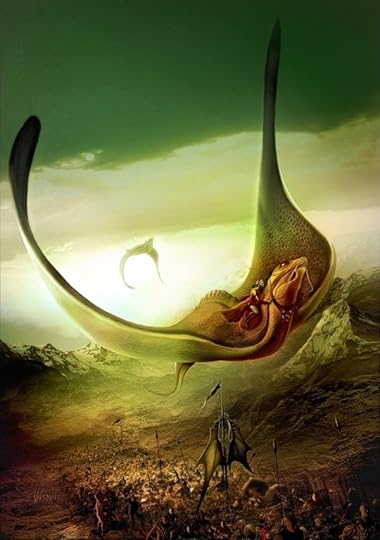
"In the Fifth Year of the Voyage" is an absorbing tale of a ship of adventurers trying to cross the great ocean of Majipoor when they encounter a colony of metal-eating algae.
"Calintane Explains" details the nature of three of the four powers of Majipoor (the Pontifex, the Coronal, and the Lady) and almost does something daring regarding gender, though Silverberg winks too much.
"The Desert of Stolen Dreams" recounts the origin of the fourth power of Majipoor, the King of Dreams, who flays the souls of criminals with nightmares.
In "The Soul Painter and the Shapeshifter" Silverberg again poignantly explores cross-species love, as a famous artist realizes that perfection is stagnation, heads for the jungle, and meets an indigenous Metamorph.
"Crime and Punishment" presents the attempts of an impromptu murderer to escape the punishments of the King of Dreams by changing locales and identities.
"Among the Dream-Speakers" features the self-doubt before the last test of a dream-speaker in training.
"A Thief in Ni-Moya" is an amusing Cinderella tale detailing the benefits of being conned out of your life savings and family shop.
"Voriax and Valentine," the last story and the closest in time to the events in Lord Valentine's Castle, explores a loving but fraught relationship between two brothers.
Silverberg writes vivid, often finely defamiliarizing SF:
-"Dulorn was far more beautiful and strange than she had been able to imagine. It seemed to shine with an inner light of its own, while the sunlight, refracted and shattered and deflected by the myriad angles and facets of the lofty baroque buildings, fell in gleaming showers to the streets."
-"He reached for her hand. It had six fingers, very long and narrow, without fingernails or visible joints."
-“Without warning the sun was in the sky like a trumpet blast, roasting the surrounding hills with shafts of hot light.”
-"Several moons were out."
He also writes many scenes revelatory of human nature:
-Thesme feeling upset when she fails to freak out her people with her alien lover;
-Eremoil briefly imagining telling the Coronal a different solution to the Metamorph problem;
-Captain Lavon realizing he's had enough exploration;
-Therion saying about his turbulent, strange paintings, "all my work is an attempt to recapture the happiest time in my life";
-Dekkeret questioning whether he needs to sear his guilt away in the desert sun;
-Haglione trying to understand that he's being forgiven;
-Inyanna laughing outside the estate of her "inheritance";
-Valentine trying to dismiss a disturbing prophecy.
The readers for the male protagonist stories are men, for the female ones women. All of them are fine. Stefan Rudneki reads two stories well with his deep, rich voice. Gabrielle de Cuir nearly over-reads her story, elongating long vowels for effect ("She became aWAAAARE of soft brEEEATHing beHIIIIND her"). But really the readers enhance the stories.
From here in 2017, some flaws or creaky points appear in the 1982 book. In none of the stories does Silverberg depict a homosexual or alien memory; it seems a little tame to depict the Other always from the point of view of heterosexual humans. And although the conceit of memory-readings is neat, the stories are so well-crafted that it beggars belief that messy human beings could record their memories so literately. And why are none of them narrated in the first person? Finally, considering its 14,000+ year history, a remarkably small number of figures recur.
Silverberg's story telling is almost free of the cinematic page-turning violent action scenes so common in sf/fantasy these days. Instead, he maps "the geography of the soul": psychology, relationships, dreams, insights, love, transformation, culture, and the like. If you'd like a detailed, well-written, slow-paced trek through a well-realized exotic world full of exotic denizens (who essentially resemble us here and now), you'd probably like this book, though it'd be best to start with Lord Valentine's Castle.
Robert Silverberg's big science fiction novel Lord Valentine's Castle (1980) depicts the attempts of the unlawfully deposed Valentine to regain his rightful position as Coronal of Majipoor, one of the four "powers" of the planet, journeying and juggling across the exotic landscapes and through the sprawling cities and among the 20-30 billion human and alien inhabitants of the huge world. The conceit of Silverberg's second Majipoor book, Majipoor Chronicles (1982), is that Hissune, the street boy who first recognized Valentine, has been working for four years in the vast bureaucratic Labyrinth doing things like preparing "an inventory of the archives of the tax-collectors" when, itching to experience new places and people, he bluffs his way into the Register of Souls, which stores millions of memory-readings made by millions of Majipoorans from millions of places and times. Each time Hissune experiences a memory, Silverberg writes a short story from the point of view of the person in question. The Hissune framing passages work with the stories to demonstrate how the various experiences (only a glimpse of a millionth millionth part of Majipooran life) give the bright and sensitive lad an education in human nature ("the geography of the soul") and hence help him to mature. Silverberg is also demonstrating the entertaining, transporting, mind and heart expanding nature of science fiction.
The ten stories in the collection come from different points in Majipoor's 14,000 year human history and represent different modes and moods: romance, war, exploration, bildungsroman, origin, crime, comedy, tragedy, etc.
"Thesme and the Ghayrog" is an affecting story about a self-absorbed young woman who falls awkwardly in love with a reptilian alien Ghayrog.
"The Time of the Burning" grimly channels US history (e.g., the Vietnam War and Native American genocide) as it demonstrates that heroes do not always match the images made by time and adoration.
"In the Fifth Year of the Voyage" is an absorbing tale of a ship of adventurers trying to cross the great ocean of Majipoor when they encounter a colony of metal-eating algae.
"Calintane Explains" details the nature of three of the four powers of Majipoor (the Pontifex, the Coronal, and the Lady) and almost does something daring regarding gender, though Silverberg winks too much.
"The Desert of Stolen Dreams" recounts the origin of the fourth power of Majipoor, the King of Dreams, who flays the souls of criminals with nightmares.
In "The Soul Painter and the Shapeshifter" Silverberg again poignantly explores cross-species love, as a famous artist realizes that perfection is stagnation, heads for the jungle, and meets an indigenous Metamorph.
"Crime and Punishment" presents the attempts of an impromptu murderer to escape the punishments of the King of Dreams by changing locales and identities.
"Among the Dream-Speakers" features the self-doubt before the last test of a dream-speaker in training.
"A Thief in Ni-Moya" is an amusing Cinderella tale detailing the benefits of being conned out of your life savings and family shop.
"Voriax and Valentine," the last story and the closest in time to the events in Lord Valentine's Castle, explores a loving but fraught relationship between two brothers.
Silverberg writes vivid, often finely defamiliarizing SF:
-"Dulorn was far more beautiful and strange than she had been able to imagine. It seemed to shine with an inner light of its own, while the sunlight, refracted and shattered and deflected by the myriad angles and facets of the lofty baroque buildings, fell in gleaming showers to the streets."
-"He reached for her hand. It had six fingers, very long and narrow, without fingernails or visible joints."
-“Without warning the sun was in the sky like a trumpet blast, roasting the surrounding hills with shafts of hot light.”
-"Several moons were out."
He also writes many scenes revelatory of human nature:
-Thesme feeling upset when she fails to freak out her people with her alien lover;
-Eremoil briefly imagining telling the Coronal a different solution to the Metamorph problem;
-Captain Lavon realizing he's had enough exploration;
-Therion saying about his turbulent, strange paintings, "all my work is an attempt to recapture the happiest time in my life";
-Dekkeret questioning whether he needs to sear his guilt away in the desert sun;
-Haglione trying to understand that he's being forgiven;
-Inyanna laughing outside the estate of her "inheritance";
-Valentine trying to dismiss a disturbing prophecy.
The readers for the male protagonist stories are men, for the female ones women. All of them are fine. Stefan Rudneki reads two stories well with his deep, rich voice. Gabrielle de Cuir nearly over-reads her story, elongating long vowels for effect ("She became aWAAAARE of soft brEEEATHing beHIIIIND her"). But really the readers enhance the stories.
From here in 2017, some flaws or creaky points appear in the 1982 book. In none of the stories does Silverberg depict a homosexual or alien memory; it seems a little tame to depict the Other always from the point of view of heterosexual humans. And although the conceit of memory-readings is neat, the stories are so well-crafted that it beggars belief that messy human beings could record their memories so literately. And why are none of them narrated in the first person? Finally, considering its 14,000+ year history, a remarkably small number of figures recur.
Silverberg's story telling is almost free of the cinematic page-turning violent action scenes so common in sf/fantasy these days. Instead, he maps "the geography of the soul": psychology, relationships, dreams, insights, love, transformation, culture, and the like. If you'd like a detailed, well-written, slow-paced trek through a well-realized exotic world full of exotic denizens (who essentially resemble us here and now), you'd probably like this book, though it'd be best to start with Lord Valentine's Castle.

February 8, 2015
How can anyone not like Science Fiction? The imaginings of sci-fi writers have provoked great thinkers to invent some of the most amazing things we now take for granted that, at one time, would have been thought to be magic. I've been a fan of the genre since forever, but somehow hadn't read anything by the master, Robert Silverberg. How wonderful to find this paperback in the resort library in Cozumel in Feb.
This book is the second in a 3 part series (I've not read the other two) that takes place in the far off plant of Majipoor. It is a collection of short stories that imagine this bizarre world from its earliest colonists and illustrate its evolution with great, bold ideas. The various characters, both male and female, human and alien, soldier, settler, explorer, thief, do what science fiction does best: explore the limits of humans capacity to overcome incredible odds. If I say anymore I'll spoil it for you. Have an open mind and enjoy the range of Silverberg's creative genius.
This book is the second in a 3 part series (I've not read the other two) that takes place in the far off plant of Majipoor. It is a collection of short stories that imagine this bizarre world from its earliest colonists and illustrate its evolution with great, bold ideas. The various characters, both male and female, human and alien, soldier, settler, explorer, thief, do what science fiction does best: explore the limits of humans capacity to overcome incredible odds. If I say anymore I'll spoil it for you. Have an open mind and enjoy the range of Silverberg's creative genius.
Read
October 24, 2017This book is essentially an anthology, caught together into a rough continuity as the education of Hissune, later Coronal in his own right.
The premise of an archive of experiences (memory recording?) in the Labyrinth is one of the oddities of Majipoor. In many ways the world is regressed from the (presumed) Galactic Federation with which it has intermittent contact (for more on this, consult Valentine Pontifex). The technologies used by the Majipooreans seem to be understood by few: there are some who can build, and others maintain, the technologies--but there seem to be few innovators, and few who travel beyond Majipoor and bring their stories back to share with their fellow citizens. One notable lacuna is that there seem to be no Puirivar contributors to this archive.
Dedication: "For Kirby[;] Who may not have been driven all the way to despair by this one, but certainly got as far as the outlying suburbs."
Frontispiece Maps: Zimroel; Alhanroel; Castle Mount And Glayge Valley; The Isle of Sleep (with the Rodamount Archipelago); Majipoor (including only the circle of the three major continents (including Suvrael, otherwise unmapped, and the isles between Alhanroel and Zimroel. There is some indication of 5 (?) uninhabited (?) moons). These maps and other maps in the series have no indications of time zones, at least that I've seen.
Contents
PROLOGUE--Explaining how Hissune got access to the Archives. He seems to think he was especially tricky about it--but the evidence is that he was authorized. But why should authorization be required? Shouldn't libraries be for everyone?
I Thesme and The Ghayrog--This is early in the history of Majipoor, when most communities were primarily Earth-humans. This contains sex between a human and a nonhuman.
II The Time of The Burning--This deals with a very disgraceful part of Majipoorean history. In the time of Lord Stiamot, large parts of Alhanroel are burned out to try to drive the Puirivar away. Many other living things also die, including members of the immigrant species. In McKillip's The Riddle of The Stars, a land-ruler loses the land-rule for exactly the same sort of thing. It's plain unjustifiable--and the attempt to do so falls flat.
III In The Fifth Year of The Voyage--An attempt to go the long way around Majipoor fails--at least partly because of bad planning, as far as I can tell. The proper way to mount such an expedition is in stages: travel for a distance, set up a supply depot, take the maps back, then travel to the next stage...
IV Calintane Explains--The story of Pontifex Arioc, who declared himself a woman and became Lady of The Isle of Sleep, is one that has always fascinated Majipooreans. I'd like to hear an inverse version, in which a woman declares herself a man, and takes on the role of (say) King of Dreams. Until the end of Valentine Pontifex, there is only ONE power that's traditionally female--why should that one be the only one ever to have been held by someone transgendered?
V The Desert of Stolen Dreams--A tale of the origin of the King of Dreams. Dekkeret is sent to Suvrael (before Dekkeret became Coronal) to investigate a blockage of supplies. He encounters a Barjazid, who has developed a dreamcaster to identify and chastise malefactors. This is not a very convincing reason for the position of King of Dreams to become dynastic. None of the other Powers are. Even the Lady of The Isle of Sleep, when her son(s) go on to become Pontifex, steps down in favor of the mother of the next Coronal.
VI The Soul-Painter And The Shapeshifter--The description of 'soul-painting' as an art form in interesting. But I'd rather have heard the tale from the point of view of the Puirivar. Especially, I'd like to hear what became of her afterward.
VII Crime And Punishment: One of the problems of maintenance and management of a society of billions of people on a massive world is that there's simply no way that individual Powers could possibly do it. There aren't enough hours in the day--or in the night. Even if one has a superefficient search strategy, and good algorithms, it's just not POSSIBLE to ferret out and deal with all of the people who need encouragement, chastisement, etc. In the case of the King of Dreams, there seems to be a standardized suite of dreams that are sent to everybody at fault. Which leaves room for doubts: What if the guilt is misplaced? What if people are resistant to the dreams? How sure can one be that the chosen recipients will be able to come up with some form of atonement? In the case in question, the murderer is almost certain not to reoffend anyway. And even when reprisals have had their affect--will it bring the dead back to life?
VIII Among The Dream-Speakers--This is getting too close to the period of the story. In Lord Valentine's Castle, Valentine is guided by a dream-speaker named Tisana. This story is set during the last part of her apprenticeship, during her preparations for her threshold ordeal.
IX A Thief in Ni-Moya--A shopkeeper is taken in by con artists, and ends up getting what she was promised, by a circuitous route.
X Voriax and Valentine--This one is definitely too close. While archives should be public, there should be limitations on access to the archives of people still living, at least potentially (some kind of 'don't share this until notified' command. This story is based on a memory Valentine himself has in Lord Valentine's Castle. This version is also from Valentine's perspective.
XI All through the book, new stories are introduced by explaining what affect the stories have had on Hissune, followed by Hissune's decision to try 'just one more'. This last (untitled) chapter deals with a visit by Lord Valentine to the Labyrinth, and what ensues therefrom.
The premise of an archive of experiences (memory recording?) in the Labyrinth is one of the oddities of Majipoor. In many ways the world is regressed from the (presumed) Galactic Federation with which it has intermittent contact (for more on this, consult Valentine Pontifex). The technologies used by the Majipooreans seem to be understood by few: there are some who can build, and others maintain, the technologies--but there seem to be few innovators, and few who travel beyond Majipoor and bring their stories back to share with their fellow citizens. One notable lacuna is that there seem to be no Puirivar contributors to this archive.
Dedication: "For Kirby[;] Who may not have been driven all the way to despair by this one, but certainly got as far as the outlying suburbs."
Frontispiece Maps: Zimroel; Alhanroel; Castle Mount And Glayge Valley; The Isle of Sleep (with the Rodamount Archipelago); Majipoor (including only the circle of the three major continents (including Suvrael, otherwise unmapped, and the isles between Alhanroel and Zimroel. There is some indication of 5 (?) uninhabited (?) moons). These maps and other maps in the series have no indications of time zones, at least that I've seen.
Contents
PROLOGUE--Explaining how Hissune got access to the Archives. He seems to think he was especially tricky about it--but the evidence is that he was authorized. But why should authorization be required? Shouldn't libraries be for everyone?
I Thesme and The Ghayrog--This is early in the history of Majipoor, when most communities were primarily Earth-humans. This contains sex between a human and a nonhuman.
II The Time of The Burning--This deals with a very disgraceful part of Majipoorean history. In the time of Lord Stiamot, large parts of Alhanroel are burned out to try to drive the Puirivar away. Many other living things also die, including members of the immigrant species. In McKillip's The Riddle of The Stars, a land-ruler loses the land-rule for exactly the same sort of thing. It's plain unjustifiable--and the attempt to do so falls flat.
III In The Fifth Year of The Voyage--An attempt to go the long way around Majipoor fails--at least partly because of bad planning, as far as I can tell. The proper way to mount such an expedition is in stages: travel for a distance, set up a supply depot, take the maps back, then travel to the next stage...
IV Calintane Explains--The story of Pontifex Arioc, who declared himself a woman and became Lady of The Isle of Sleep, is one that has always fascinated Majipooreans. I'd like to hear an inverse version, in which a woman declares herself a man, and takes on the role of (say) King of Dreams. Until the end of Valentine Pontifex, there is only ONE power that's traditionally female--why should that one be the only one ever to have been held by someone transgendered?
V The Desert of Stolen Dreams--A tale of the origin of the King of Dreams. Dekkeret is sent to Suvrael (before Dekkeret became Coronal) to investigate a blockage of supplies. He encounters a Barjazid, who has developed a dreamcaster to identify and chastise malefactors. This is not a very convincing reason for the position of King of Dreams to become dynastic. None of the other Powers are. Even the Lady of The Isle of Sleep, when her son(s) go on to become Pontifex, steps down in favor of the mother of the next Coronal.
VI The Soul-Painter And The Shapeshifter--The description of 'soul-painting' as an art form in interesting. But I'd rather have heard the tale from the point of view of the Puirivar. Especially, I'd like to hear what became of her afterward.
VII Crime And Punishment: One of the problems of maintenance and management of a society of billions of people on a massive world is that there's simply no way that individual Powers could possibly do it. There aren't enough hours in the day--or in the night. Even if one has a superefficient search strategy, and good algorithms, it's just not POSSIBLE to ferret out and deal with all of the people who need encouragement, chastisement, etc. In the case of the King of Dreams, there seems to be a standardized suite of dreams that are sent to everybody at fault. Which leaves room for doubts: What if the guilt is misplaced? What if people are resistant to the dreams? How sure can one be that the chosen recipients will be able to come up with some form of atonement? In the case in question, the murderer is almost certain not to reoffend anyway. And even when reprisals have had their affect--will it bring the dead back to life?
VIII Among The Dream-Speakers--This is getting too close to the period of the story. In Lord Valentine's Castle, Valentine is guided by a dream-speaker named Tisana. This story is set during the last part of her apprenticeship, during her preparations for her threshold ordeal.
IX A Thief in Ni-Moya--A shopkeeper is taken in by con artists, and ends up getting what she was promised, by a circuitous route.
X Voriax and Valentine--This one is definitely too close. While archives should be public, there should be limitations on access to the archives of people still living, at least potentially (some kind of 'don't share this until notified' command. This story is based on a memory Valentine himself has in Lord Valentine's Castle. This version is also from Valentine's perspective.
XI All through the book, new stories are introduced by explaining what affect the stories have had on Hissune, followed by Hissune's decision to try 'just one more'. This last (untitled) chapter deals with a visit by Lord Valentine to the Labyrinth, and what ensues therefrom.

November 15, 2017
Отново съм задал координати към планетата Маджипур – плод на безграничното въображение на майстора Робърт Силвърбърг. Свят на екзотика и приключения, където високотехнологичните изобретения все още не са ежедневие, а хората съжителстват с множество различни раси под управлението на сложен триумвират. Днес ще завършим цикъла за Лорд Валънтайн с „Маджипурски хроники” и „Валънтайн Понтифекс”, събрани в том 2 на „Маджипур” от изд. „Бард”. Прочетете ревюто на "Книжни Криле":
https://knijnikrile.wordpress.com/201...
https://knijnikrile.wordpress.com/201...

September 21, 2008
I've liked a lot of Silverberg's work. I thought this was very lovely in the writing and told a pretty good story. My 4 stars is probalby really 3 and 1/2. I actually read this before reading the first in the series, "Lord Valentine's Castle," so maybe I would have enjoyed it more had I done so.

November 20, 2023
10 stories:
Thesme and the Ghayrog (1982)
The Time of the Burning (1982)
In the Fifth Year of the Voyage (1981)
Calintane Explains (1982)
The Desert of Stolen Dreams (1981)
The Soul-Painter and the Shapeshifter (1981)
Crime and Punishment (1982)
Among the Dream Speakers (1982)
A Thief in Ni-moya (1981)
Voriax and Valentine (1982)
Thesme and the Ghayrog (1982)
The Time of the Burning (1982)
In the Fifth Year of the Voyage (1981)
Calintane Explains (1982)
The Desert of Stolen Dreams (1981)
The Soul-Painter and the Shapeshifter (1981)
Crime and Punishment (1982)
Among the Dream Speakers (1982)
A Thief in Ni-moya (1981)
Voriax and Valentine (1982)

February 21, 2012
This collection of short stories is set in the same world as Lord Valentine's Castle, which had appeared previously. I didn't much like either book, but this one had the advantage of being a collection of individual pieces, not a single narrative.

April 14, 2020
Beaucoup plus apprécié que le premier tome, suite de nouvelles habilement liées par un fil rouge. Convaincu suffisamment pour lire la suite !

February 9, 2026
Majipoor Chronicles, published in 1982, is Robert Silverberg’s sequel to Lord Valentine's Castle. I read the 1996 Harper edition with cover art by Jim Burns. In Majipoor Chronicles, Silverberg further develops his fabulous, sprawling world through a series of stories, each highlighting an aspect of Majipoor’s immense history and geography. The world-building in Lord Valentine's Castle was already impressive; the depth and detail here are astonishing.
We met Hissune in the first book—the urchin from the Labyrinth of the Pontifex who helped Valentine reclaim the throne. Now a young man still living in the Labyrinth, Hissune sneaks into the Registry of Souls to experience recorded lives of Majipoor’s people, often from ages long past. His story in the Labyrinth serves as a frame for the tales that make up the book.
In the first story, “Thesme and the Ghayrog,” and later in “The Soul-Painter and the Shapeshifter,” Silverberg portrays human–alien love affairs. These stories depict genuine romance with no hint of prurience. It’s a testament to Silverberg’s skill and sensitivity that he handles both with such gentleness and tenderness.
“The Time of the Burning” recounts the final defeat of the indigenous Shapeshifters by human settlers. Afterward, the Shapeshifters are driven from the main continent of Alhanroel and relocated to reserves on Majipoor’s second continent, Zimroel.
“In the Fifth Year of the Voyage” tells the story of an ill‑fated attempt to sail around Majipoor across the immense Great Sea—something never attempted before or since. I think the cover depicts a scene from this story.
“Calintane Explains” recounts the tale of the cross‑dressing Arioc, who abdicated the high throne of Pontifex to become the Lady of the Isle. The story is also notable for its structure: Hissune narrates the tale of Calintane, who is in turn recounting the story of Arioc, a story within a story within a story.
“The Desert of Stolen Dreams” takes us to Majipoor’s sun‑baked third continent, Suvrael. Here we learn the origin of the King of Dreams, the fourth ruling Power of Majipoor after the Coronal, the Pontifex, and the Lady of the Isle. Dekkeret muses, “To be denied the solace of healthy dreams is a kind of death‑in‑life … far worse than perishing in a desert, for dying occupies only a single moment but dreaming affects all of one’s life to come” (p. 192).
“Crime and Punishment” further explains the role of the King of Dreams in sending visions of retribution to the few criminals in Majipoor’s gentle, peaceful society. However, I think it’s appropriate to view these sendings as transformative rather than punitive.
Majipoor has dream‑speakers whose role is to interpret the sendings of the Lady of the Isle and the King of Dreams. In “Dream‑Speakers,” we meet Tisana again, who aided Valentine in Lord Valentine's Castle. The dream‑world constitutes Majipoor’s spirituality, and the dream‑speakers function somewhat like priests. Tisana reflects, “The Lady of the Isle and the King of Dreams, when in their various ways they visited the minds of sleepers, often spoke cryptically and mystifyingly; it was the speaker’s task to serve as an interlocutor between those awesome Powers and the billions of people of the world, deciphering and interpreting and guiding” (pp. 272–273).
“A Thief in Ni‑moya” tells a tale of fraud on Majipoor, in which the impoverished victim becomes a member of the thieves' guild of the vast Zimroel city of Ni‑moya. It’s interesting to note that the King of Dreams does not seem to trouble the sleep of relatively minor criminals such as thieves.
Lastly, “Voriax and Valentine” takes up the story of the two brothers before Voriax becomes Coronal—clearly some years before Valentine himself ascends to the Confalume Throne.
Taken together, the stories span the period from soon after the settling of Majipoor by humans and the various alien races, in “Thesme and the Ghayrog,” almost up to the events of Lord Valentine's Castle, with “Voriax and Valentine.” Many of the unique features of Majipoor mentioned only in passing in Lord Valentine's Castle are further explained and richly expanded upon in Majipoor Chronicles.
These two books are fantastically inventive. Beyond that, Silverberg’s characters are finely drawn—even the alien ones—in a way that is sometimes lacking in science fiction and fantasy. Majipoor Chronicles is tremendous science fiction (or perhaps more accurately, fantasy). I’m heading straight to the third in the series, Valentine Pontifex.
We met Hissune in the first book—the urchin from the Labyrinth of the Pontifex who helped Valentine reclaim the throne. Now a young man still living in the Labyrinth, Hissune sneaks into the Registry of Souls to experience recorded lives of Majipoor’s people, often from ages long past. His story in the Labyrinth serves as a frame for the tales that make up the book.
In the first story, “Thesme and the Ghayrog,” and later in “The Soul-Painter and the Shapeshifter,” Silverberg portrays human–alien love affairs. These stories depict genuine romance with no hint of prurience. It’s a testament to Silverberg’s skill and sensitivity that he handles both with such gentleness and tenderness.
“The Time of the Burning” recounts the final defeat of the indigenous Shapeshifters by human settlers. Afterward, the Shapeshifters are driven from the main continent of Alhanroel and relocated to reserves on Majipoor’s second continent, Zimroel.
“In the Fifth Year of the Voyage” tells the story of an ill‑fated attempt to sail around Majipoor across the immense Great Sea—something never attempted before or since. I think the cover depicts a scene from this story.
“Calintane Explains” recounts the tale of the cross‑dressing Arioc, who abdicated the high throne of Pontifex to become the Lady of the Isle. The story is also notable for its structure: Hissune narrates the tale of Calintane, who is in turn recounting the story of Arioc, a story within a story within a story.
“The Desert of Stolen Dreams” takes us to Majipoor’s sun‑baked third continent, Suvrael. Here we learn the origin of the King of Dreams, the fourth ruling Power of Majipoor after the Coronal, the Pontifex, and the Lady of the Isle. Dekkeret muses, “To be denied the solace of healthy dreams is a kind of death‑in‑life … far worse than perishing in a desert, for dying occupies only a single moment but dreaming affects all of one’s life to come” (p. 192).
“Crime and Punishment” further explains the role of the King of Dreams in sending visions of retribution to the few criminals in Majipoor’s gentle, peaceful society. However, I think it’s appropriate to view these sendings as transformative rather than punitive.
Majipoor has dream‑speakers whose role is to interpret the sendings of the Lady of the Isle and the King of Dreams. In “Dream‑Speakers,” we meet Tisana again, who aided Valentine in Lord Valentine's Castle. The dream‑world constitutes Majipoor’s spirituality, and the dream‑speakers function somewhat like priests. Tisana reflects, “The Lady of the Isle and the King of Dreams, when in their various ways they visited the minds of sleepers, often spoke cryptically and mystifyingly; it was the speaker’s task to serve as an interlocutor between those awesome Powers and the billions of people of the world, deciphering and interpreting and guiding” (pp. 272–273).
“A Thief in Ni‑moya” tells a tale of fraud on Majipoor, in which the impoverished victim becomes a member of the thieves' guild of the vast Zimroel city of Ni‑moya. It’s interesting to note that the King of Dreams does not seem to trouble the sleep of relatively minor criminals such as thieves.
Lastly, “Voriax and Valentine” takes up the story of the two brothers before Voriax becomes Coronal—clearly some years before Valentine himself ascends to the Confalume Throne.
Taken together, the stories span the period from soon after the settling of Majipoor by humans and the various alien races, in “Thesme and the Ghayrog,” almost up to the events of Lord Valentine's Castle, with “Voriax and Valentine.” Many of the unique features of Majipoor mentioned only in passing in Lord Valentine's Castle are further explained and richly expanded upon in Majipoor Chronicles.
These two books are fantastically inventive. Beyond that, Silverberg’s characters are finely drawn—even the alien ones—in a way that is sometimes lacking in science fiction and fantasy. Majipoor Chronicles is tremendous science fiction (or perhaps more accurately, fantasy). I’m heading straight to the third in the series, Valentine Pontifex.

November 24, 2021
This review is for all three primary books in the Lord Valentine series. Reading the Valentine trilogy was a trip down nostalgia lane. I read the series in early high school and remembered it being one of my favorites. And honestly, i wasn’t disappointed.
Book one, Lord Valentine’s Castle is easily the best. It has such a delightful vibrant aura to it. The tone is just right for discovering a strange new world with new species. It’s also one of the earliest blends of fantasy with science fiction, although lighter on the sci fi side. Books two and three are solid outings, but they take a hit in the tone/mood zone getting progressively darker and gloomier. Even so, this classic story, published in 1980, manages to hit on contemporary issues that are still relevant and in fact did not feel dated to me.
I’ve recently found myself irritated by fantasy books that focus on characters who are members of royalty but then learn the lesson that they ought to care about the peasants. Typically, in these cliche stories, their lives are save by a commoner or they find themselves forced to spend time with the poor people and then whoop look at that, I oughta be a nicer king/queen instead of such a selfish dick because lo-and-behold poor people are people too. It also grates on me by indirectly promoting the “kind dictator” philosophy of governance. This scenario has been done to death in fantasy, but this series is the original of that genre while yet going much further than most and critiqueing the foundation of that premise. Lord Valentine was not only deposed but the enemy drained him of all his memories before setting him out into the world as a commoner. So he didn’t learn from them, he became one of them. The rest of the series follows Valentine’s as he recovers his memories and attempts to overthrow the tyrannical forces that have taken control of Majipoor. And yet Valentine himself questions and challenges the right of kings and rule by birth as his adventure goes.
Thematically, the series deals with gender roles, royalty and proper governance, reparations for colonialism, noblesse oblige and social manipulation of society. It’s not a huge stretch to see parallels between contemporary political issues and the series. In one book of the trilogy, we find the primary foes create a disaster and then offer themselves up as the solution. It felt so much in line with how the rich and corporations manipulate the economy to their benefit, then manipulate the media to blame people of color and immigrants so that whites target their anger at being cheated against the wrong people. Only Trump, Repugs, etc can stand against the tide of the subhumans and Make Majipoor Great Again. As long as the working classes and poor are stuck in a culture war, they can’t dismantle the actual system holding them down.
Although Valentine himself is well crafted and a handful of other characters get their day, for the most part this is not a series about characters so much as the tone and feeling of discovering and adventuring in an imagined universe. And at that, it succeeds marvelously.
Book one, Lord Valentine’s Castle is easily the best. It has such a delightful vibrant aura to it. The tone is just right for discovering a strange new world with new species. It’s also one of the earliest blends of fantasy with science fiction, although lighter on the sci fi side. Books two and three are solid outings, but they take a hit in the tone/mood zone getting progressively darker and gloomier. Even so, this classic story, published in 1980, manages to hit on contemporary issues that are still relevant and in fact did not feel dated to me.
I’ve recently found myself irritated by fantasy books that focus on characters who are members of royalty but then learn the lesson that they ought to care about the peasants. Typically, in these cliche stories, their lives are save by a commoner or they find themselves forced to spend time with the poor people and then whoop look at that, I oughta be a nicer king/queen instead of such a selfish dick because lo-and-behold poor people are people too. It also grates on me by indirectly promoting the “kind dictator” philosophy of governance. This scenario has been done to death in fantasy, but this series is the original of that genre while yet going much further than most and critiqueing the foundation of that premise. Lord Valentine was not only deposed but the enemy drained him of all his memories before setting him out into the world as a commoner. So he didn’t learn from them, he became one of them. The rest of the series follows Valentine’s as he recovers his memories and attempts to overthrow the tyrannical forces that have taken control of Majipoor. And yet Valentine himself questions and challenges the right of kings and rule by birth as his adventure goes.
Thematically, the series deals with gender roles, royalty and proper governance, reparations for colonialism, noblesse oblige and social manipulation of society. It’s not a huge stretch to see parallels between contemporary political issues and the series. In one book of the trilogy, we find the primary foes create a disaster and then offer themselves up as the solution. It felt so much in line with how the rich and corporations manipulate the economy to their benefit, then manipulate the media to blame people of color and immigrants so that whites target their anger at being cheated against the wrong people. Only Trump, Repugs, etc can stand against the tide of the subhumans and Make Majipoor Great Again. As long as the working classes and poor are stuck in a culture war, they can’t dismantle the actual system holding them down.
Although Valentine himself is well crafted and a handful of other characters get their day, for the most part this is not a series about characters so much as the tone and feeling of discovering and adventuring in an imagined universe. And at that, it succeeds marvelously.
February 24, 2024
Las Crónicas de Majipur es el mejor aditivo al género de Majipur; un planeta muy extraño.
El libro cuenta con diez relatos inéditos que amplian el contexto social, étnico y cultural del planeta. Presenta varias romances, varias dolencias y consecuencias. Hay historias lindas con un final amargo, hay historias amargas con finales lindos. Hay de todo.
Hissune, personaje que en el libro anterior hace de guía para Valentine, es el protagonista de esta pequeña historia, en la que él espía el Registro de Almas y revive vivencias de personas del remoto pasado o de la época reciente.
Destacaré unas cuantas historias que me han dado qué pensar o que me han conmovido y que, por tanto, son dignas de ser mencionadas.
1. El Pintor Espiritual: Esta historia puede describirse como genuino y auténtico amor, en su expresión más pura. Nismile, un pintor que plasma su arte con el alma, se recluye en la selva para rehallar su inspiración y conseguir un estilo renovado. Ahí conoce a Sarise que, tal como él pospecha, es una cambiaspectos. Pero a él no le importa; la ama así. Lamentablemente, Sarise es alejada de él, y jamás vuelve a verla. Su arte, entonces, revive, con un tono triste y melancólico que le ayuda a revivir la época en la que fue felíz.
2. Thesme y el Gayrog: Es una tierna historia de una relación que inicia por un interés y una actividad rebelde, pero que de a poco se vuelve algo auténtico que, tristemente, no es mutuo. La historia nos da más información sobre una de las razas de Majipur, de la cual poco se habla en el anterior libro (y en el resto de este). Fue muy triste lo que pasó con Thesme, pero al menos eso le hizo cambiar para bien.
3. Crímen y Castigo: Sentí una pena indecible por Haligome, quien en un momento de fugaz furia, acaba con la vida de Gleim. Este acontecimiento lo lleva a tener pesadillas indecibles en la que mil y un tormentos lo esperan. Cuando ya no soporta más, abandona a su familia, se cambia el nombre y erra por el mundo. Esto funciono durante un tiempo, pero los sueños volvieron, y tuvo que volve a huir y cambiar su nombre. Y así cada vez, hasta que dejó de surtir efecto. Al final, con varios años encima, Haligome es perdonado.
4. Las Explicaciones de Calintane: Esta historia prometía desde el primer momento, pues se trataba de la exuberante narración del Pontífice que se declaró mujer porque ansiaba la libertad. El final es muy gracioso, porque todos están tan confusos que ignoran las consecuencias de lo ocurrido y cuando se dan cuenta quedan atónitos.
5. El Desierto de los Sueños Robados: Fue muy interesante ver a Dominin Barjazid en sus días previos a ser el Rey de los Sueños. ¿Quién diría que el mismo Lord Dekkeret haya sido el impulsor de este milenario ser que invade los sueños de los malhechores?
6. Una Ladrona de Ni-Moya: Esta historia se me hizo curiosa por la vuelta de tuerca del tramo final, pero amarga porque al final Inyanna, quien se había ganado la vida como ladrona, olvida aquél amante al que decía no deberle nada. Fue muy triste, porque parecía amarle, y él sin duda le amaba, pero ella lo cambió por un duque. Estaba esperando que en cualquier momento invitara al pobre Sidoun, pero eso nunca ocurrió, y ella jamás volvió a verlo...
El resto de historias son interesantes, pero no tengo mucho que decir sobre ellas. Y lo que sí tengo que decir morirá en mi memoria, y revivirá, quizás, si algún día vuelvo a leer esta antología.
Lo último que añadiré es que Hissune parece que será muy importante, pued Lord Valentine, tras ocho años desde su último encuentro, lo ha convocado para felicitarlo por haber espiado el Registro de Almas. Creo que sé qué me espera en el siguiente libro... Me resulta interesante que, entre libro y libro, haya una antología que sirve de vehículo para lo que, probablemente, será una trama más grande, si no me equivoco.
¡Antologías! No soy muy fan de este tipo de lecturas, pero esta, sin duda, me ha gustado y ha demostrado se mejor que su antecesor.
Lord Valentine's Castle: 2,5/10 (⭐⭐✴️✴️✴️)
Majipoor Chronicles: 5,5/10 (⭐⭐⭐✴️✴️)
El libro cuenta con diez relatos inéditos que amplian el contexto social, étnico y cultural del planeta. Presenta varias romances, varias dolencias y consecuencias. Hay historias lindas con un final amargo, hay historias amargas con finales lindos. Hay de todo.
Hissune, personaje que en el libro anterior hace de guía para Valentine, es el protagonista de esta pequeña historia, en la que él espía el Registro de Almas y revive vivencias de personas del remoto pasado o de la época reciente.
Destacaré unas cuantas historias que me han dado qué pensar o que me han conmovido y que, por tanto, son dignas de ser mencionadas.
1. El Pintor Espiritual: Esta historia puede describirse como genuino y auténtico amor, en su expresión más pura. Nismile, un pintor que plasma su arte con el alma, se recluye en la selva para rehallar su inspiración y conseguir un estilo renovado. Ahí conoce a Sarise que, tal como él pospecha, es una cambiaspectos. Pero a él no le importa; la ama así. Lamentablemente, Sarise es alejada de él, y jamás vuelve a verla. Su arte, entonces, revive, con un tono triste y melancólico que le ayuda a revivir la época en la que fue felíz.
2. Thesme y el Gayrog: Es una tierna historia de una relación que inicia por un interés y una actividad rebelde, pero que de a poco se vuelve algo auténtico que, tristemente, no es mutuo. La historia nos da más información sobre una de las razas de Majipur, de la cual poco se habla en el anterior libro (y en el resto de este). Fue muy triste lo que pasó con Thesme, pero al menos eso le hizo cambiar para bien.
3. Crímen y Castigo: Sentí una pena indecible por Haligome, quien en un momento de fugaz furia, acaba con la vida de Gleim. Este acontecimiento lo lleva a tener pesadillas indecibles en la que mil y un tormentos lo esperan. Cuando ya no soporta más, abandona a su familia, se cambia el nombre y erra por el mundo. Esto funciono durante un tiempo, pero los sueños volvieron, y tuvo que volve a huir y cambiar su nombre. Y así cada vez, hasta que dejó de surtir efecto. Al final, con varios años encima, Haligome es perdonado.
4. Las Explicaciones de Calintane: Esta historia prometía desde el primer momento, pues se trataba de la exuberante narración del Pontífice que se declaró mujer porque ansiaba la libertad. El final es muy gracioso, porque todos están tan confusos que ignoran las consecuencias de lo ocurrido y cuando se dan cuenta quedan atónitos.
5. El Desierto de los Sueños Robados: Fue muy interesante ver a Dominin Barjazid en sus días previos a ser el Rey de los Sueños. ¿Quién diría que el mismo Lord Dekkeret haya sido el impulsor de este milenario ser que invade los sueños de los malhechores?
6. Una Ladrona de Ni-Moya: Esta historia se me hizo curiosa por la vuelta de tuerca del tramo final, pero amarga porque al final Inyanna, quien se había ganado la vida como ladrona, olvida aquél amante al que decía no deberle nada. Fue muy triste, porque parecía amarle, y él sin duda le amaba, pero ella lo cambió por un duque. Estaba esperando que en cualquier momento invitara al pobre Sidoun, pero eso nunca ocurrió, y ella jamás volvió a verlo...
El resto de historias son interesantes, pero no tengo mucho que decir sobre ellas. Y lo que sí tengo que decir morirá en mi memoria, y revivirá, quizás, si algún día vuelvo a leer esta antología.
Lo último que añadiré es que Hissune parece que será muy importante, pued Lord Valentine, tras ocho años desde su último encuentro, lo ha convocado para felicitarlo por haber espiado el Registro de Almas. Creo que sé qué me espera en el siguiente libro... Me resulta interesante que, entre libro y libro, haya una antología que sirve de vehículo para lo que, probablemente, será una trama más grande, si no me equivoco.
¡Antologías! No soy muy fan de este tipo de lecturas, pero esta, sin duda, me ha gustado y ha demostrado se mejor que su antecesor.
Lord Valentine's Castle: 2,5/10 (⭐⭐✴️✴️✴️)
Majipoor Chronicles: 5,5/10 (⭐⭐⭐✴️✴️)
Displaying 1 - 30 of 156 reviews