What do you think?
Rate this book


194 pages, Kindle Edition
First published April 16, 2026
Spanish to ‘dar vueltas’ to a situation means to turn it over in your mind. The same thing occurs when I turn the silver in my hand. I am holding a thought, seeking the best angle from which to approach it, just long enough to give it the right amount of shine. That’s when I do my best thinking, while polishing the silver, especially when hardly anyone is talking and the air is filled with hammering, sanding and soldering, sounds that ease the passage between thoughts.
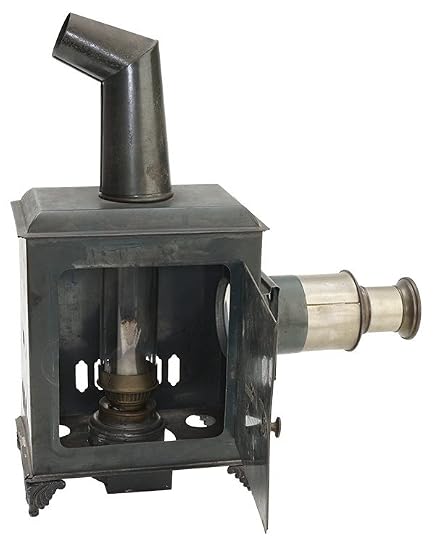
And then in an instant the first image burst forth in the darkness, its black background suggestive of a funerary announcement, and yet this image quivered with life as it was cast across the room, from tabletop to wall, tin box to smooth plaster, seventeenth-century technology erupting into twenty-first-century space as an old vision bypassed the eras. At first it didn't matter which image it was that emerged from the lantern, most modern gadgetry vexed us to the point of despair, and it was captivating and entertaining and even transgressive to hand ourselves over to something less complicated and possibly more innocent in intention, and we sat back to watch pictures travel from source to site, few of us aware of the intricacies of illusion.
Magic. Lantern. Whenever I look back and ask myself how my life intersected with this seemingly archaic device, how an instrument I knew nothing about appeared one day to flaunt its bygone power, I'm still surprised by the circuitous trajectory, particularly of an object so steady in aim. And what if a person can be like that lantern, casting images, illuminating corners, still very present long after they’ve gone?
I began to feel I was witnessing all the structure and order that held the place together come undone, corridors unzipped, walls torn apart at the seams. The clowns made everything elastic, so elastic, the architecture expanding and contracting on the spot. I felt grateful for this moment of liberation. And then a little annoyed.
That night, once his parents had gone to bed, he peered into the lantern sitting on the kitchen table. Inside was nothing more than four tin walls and an oval bulb. Where was the inner life? There must be something his eyes failed to take in.
And in that tiny room, surrounded by cloth puppets and mannequins, his diminishing faith became palpable. The solitude of the old toymaker. Widowed and bereft, this old man spoke to them of how every night he would wander the icy, inanimate streets of The Hague and upon returning home from his walks he would look at the toys and tell himself that these objects were nothing more than a coloured material dream. And in the inertia of objects the old toymaker confronted his own solitude, which bit more deeply than ever.