

What do you think?

Φασισμός και κοινωνική επανάσταση
"Ποιοι είναι οι γενικοί όροι που ευνοούν την άνοδο του φασισμού; Μπορούμε να τους απαριθμήσουμε εν συντομία: 1) η ένταση της οικονομικής κρίσης και της ταξικής πάλης, 2) η εντεινόμενη απογοήτευση από τον κοινοβουλευτισμό, 3) η ύπαρξη ευρέων μικροαστικών, μεσαίων στρωμάτων, του εξαθλιωμένου προλεταριάτου και των τμημάτων των εργατών υπό καπιταλιστική επιρροή, 4) η απουσία αυτοτελούς ταξικά συνειδητής ηγεσίας του κύριου όγκου της εργατικής τάξης."
Οι παραπάνω εκτιμήσεις του συγγραφέα, διατυπωμένες πριν από 80 χρόνια, το 1934, θα μπορούσαν να έχουν διατυπωθεί σήμερα. Σε αυτό συνίσταται η επικαιρότητα και η δύναμη του έργου του Ρ. Ντατ Φασισμός και Κοινωνική Επανάσταση που πρωτοδημοσιεύεται στα ελληνικά με την παρούσα έκδοση της Σύγχρονης Εποχής.
Η αδυναμία της σοσιαλδημοκρατικής πολιτικής σε σχέση με όσα υπόσχεται, όταν δεν μπορεί στέρεα να επανέλθει η φιλελεύθερη διαχείριση, φέρνει πιο κοντά το φασισμό στη διακυβέρνηση. Κι αυτό γιατί η σοσιαλδημοκρατία προκαλεί πιο έντονη απογοήτευση σε εργατικές και λαϊκές μάζες απ' ό,τι η αστική φιλελεύθερη διαχείριση, αφού έχει πιο βαθιές ρίζες στο εργατικό συνδικαλιστικό κίνημα. Φέρνει μεγαλύτερη σύγχυση και απογοήτευση αφού υπόσχεται ακόμα και "δημοκρατικό" σοσιαλισμό (μέσω μεταρρυθμίσεων, κοινοβουλευτικών αποφάσεων).
Στο βιβλίο Φασισμός και Κοινωνική Επανάσταση αναδεικνύεται όλη η παραπάνω κίνηση, με πιο χαρακτηριστική την εξέλιξή της στη Γερμανία από το 1918 έως το 1933, αλλά και στην Ιταλία. Δεν είναι τυχαίο ότι και στις δύο χώρες είχε προηγηθεί επαναστατική κατάσταση περίπου πριν δέκα χρόνια.
Το βιβλίο προσφέρει μια γνώση για την ανάγκη πάλης του κομμουνιστικού κινήματος, τόσο με το φασισμό όσο και με το ρεφορμισμό-οπορτουνισμό, που σε τελευταία ανάλυση εξίσου υπηρετούν τη διατήρηση της καπιταλιστικής εκμετάλλευσης, του συστήματος.
Οι παραπάνω εκτιμήσεις του συγγραφέα, διατυπωμένες πριν από 80 χρόνια, το 1934, θα μπορούσαν να έχουν διατυπωθεί σήμερα. Σε αυτό συνίσταται η επικαιρότητα και η δύναμη του έργου του Ρ. Ντατ Φασισμός και Κοινωνική Επανάσταση που πρωτοδημοσιεύεται στα ελληνικά με την παρούσα έκδοση της Σύγχρονης Εποχής.
Η αδυναμία της σοσιαλδημοκρατικής πολιτικής σε σχέση με όσα υπόσχεται, όταν δεν μπορεί στέρεα να επανέλθει η φιλελεύθερη διαχείριση, φέρνει πιο κοντά το φασισμό στη διακυβέρνηση. Κι αυτό γιατί η σοσιαλδημοκρατία προκαλεί πιο έντονη απογοήτευση σε εργατικές και λαϊκές μάζες απ' ό,τι η αστική φιλελεύθερη διαχείριση, αφού έχει πιο βαθιές ρίζες στο εργατικό συνδικαλιστικό κίνημα. Φέρνει μεγαλύτερη σύγχυση και απογοήτευση αφού υπόσχεται ακόμα και "δημοκρατικό" σοσιαλισμό (μέσω μεταρρυθμίσεων, κοινοβουλευτικών αποφάσεων).
Στο βιβλίο Φασισμός και Κοινωνική Επανάσταση αναδεικνύεται όλη η παραπάνω κίνηση, με πιο χαρακτηριστική την εξέλιξή της στη Γερμανία από το 1918 έως το 1933, αλλά και στην Ιταλία. Δεν είναι τυχαίο ότι και στις δύο χώρες είχε προηγηθεί επαναστατική κατάσταση περίπου πριν δέκα χρόνια.
Το βιβλίο προσφέρει μια γνώση για την ανάγκη πάλης του κομμουνιστικού κινήματος, τόσο με το φασισμό όσο και με το ρεφορμισμό-οπορτουνισμό, που σε τελευταία ανάλυση εξίσου υπηρετούν τη διατήρηση της καπιταλιστικής εκμετάλλευσης, του συστήματος.
392 pages, Paperback
First published September 1, 1934
About the author
R. Palme Dutt
57 books15 followersRajani Palme Dutt, best known as R. Palme Dutt, was a leading journalist and theoretician in the Communist Party of Great Britain.
Ratings & Reviews
Friends & Following
Create a free account to discover what your friends think of this book!
Community Reviews
Displaying 1 - 22 of 22 reviews
September 5, 2014
The author rejects from the beginning any attempt to deal with the phaenomenon of fascism as something seperate from other political parties, namely liberal, conservative and socialdemocrat. In fact, he claims that any thorough reseach into the so called "fascist ideology" will be misleading. Using financial data, laws and edicts and public statements from all over Europe and North America during the era 1920-1934, the author tries to indicate the similarities between fascist government programs with the ones of the parliamentary states of G. Britain and USA, and tries to build up the theory that fascism is in fact the most violent capitalist tool in times of financial crisis and social turmoil. Fascists never gain total power by landsliding popular vote: they are always appointed by the capitalist state.
A great deal of the book is dedicated to the role of socialdemocracy. The author claims that socialdemocratic parties are much to be blamed for the rise of fascism because they pledge their alliegience to capitalism, seeking only to transform it, and parliamentarism, so that eventually the working class loses its revolutionary momentum. Dutt goes even far to acuse socialdemocrats as "social-fascist" because they advocate similar economic and diplomatic meassures with fascists, and in some cases they even ask for mild cooperation with them against communism (to their doom of course). The quelling of the German Revolution thanks to the German Socialdemokrats and the Freikorps was in 1918 and memories were fresh.
Finally, the author's predictions "socialism or fascism" in the whole capitalist world were not to come true, because of World War II. However, Dutt managed to predict very clearly that a Great War will eventually start with fascism at the vanguard and the primary target will be the Soviet Union.
Overall, if one overlooks the failed future predictions of the author and his sometimes total association of socialdemocrats with fascists (clearly, socialdemocrats are much to be blaimed but you cant accept that are the same thing with fascists), it is a valuable book because it goes straight to the point: apart from what it says to gain power, what does fascism actually does before and when in power? What are its ultimate goals and why it always appears in times of economic crisis?
A great deal of the book is dedicated to the role of socialdemocracy. The author claims that socialdemocratic parties are much to be blamed for the rise of fascism because they pledge their alliegience to capitalism, seeking only to transform it, and parliamentarism, so that eventually the working class loses its revolutionary momentum. Dutt goes even far to acuse socialdemocrats as "social-fascist" because they advocate similar economic and diplomatic meassures with fascists, and in some cases they even ask for mild cooperation with them against communism (to their doom of course). The quelling of the German Revolution thanks to the German Socialdemokrats and the Freikorps was in 1918 and memories were fresh.
Finally, the author's predictions "socialism or fascism" in the whole capitalist world were not to come true, because of World War II. However, Dutt managed to predict very clearly that a Great War will eventually start with fascism at the vanguard and the primary target will be the Soviet Union.
Overall, if one overlooks the failed future predictions of the author and his sometimes total association of socialdemocrats with fascists (clearly, socialdemocrats are much to be blaimed but you cant accept that are the same thing with fascists), it is a valuable book because it goes straight to the point: apart from what it says to gain power, what does fascism actually does before and when in power? What are its ultimate goals and why it always appears in times of economic crisis?

October 30, 2022
An exceptionally important book; overall probably the best historical overview of fascism as a political phenomenon. It was written in 1934, a few months before the Comintern started shifting away from a more militant 'class against class' position in favour of a united front against fascism. As such, there are quite a few strategic formulations in Palme Dutt's book that quite quickly became outdated, but there's nothing unusual about that - there are no magic wands in the struggle against oppression. However, in terms of developing an understanding of the genuine nature of fascism - its utility (in certain circumstances) to the capitalist class, its methods, and its relationship to the capitulation and collaborationism of social democracy - Fascism and Social Revolution is essential reading.
Lucky me, I've got a first edition hardback (Martin Lawrence, London). But it's been reprinted a couple of times, and the PDF can be found easily enough.
Lucky me, I've got a first edition hardback (Martin Lawrence, London). But it's been reprinted a couple of times, and the PDF can be found easily enough.

June 11, 2011
"The more obvious and glaring expressions of this process, the burning of foodstuffs, the dismantling of machinery that is still in good condition, strike the imagination of all. But all do not yet see the full significance of these symptoms: first, the expression through these symptoms of the extreme stage of decay of the whole capitalist order; second, the inseparable connection of this process of decay with the social and political phenomena of decay which find their complete expression in Fascism; and third, the necessary completion and final working out of this process in war. For war is only the complete and most systematic working out of the process of destruction. To-day they are burning wheat and grain, the means of human life. To-morrow they will be burning living human bodies."

January 6, 2023
By far one of the most comprehensive Marxist analyses of fascism I've ever read.
I found this book in the sources for Michael Parenti's "Blackshirts and Reds", and I must say this book is fascinatingly in-depth. He really tried to combat what is fascism in theory and practice and the relations of fascism to a collapsing capitalist system. He also disproves and dismantles liberal and conservative narratives on Fascism of this period.
By far the most valuable is how fascism exists in material, his analysis on this has inspired my thought on the development of modern proto-fascistic movements and how they develop within societies.
A must read for anyone interested in learning about fascism.
I found this book in the sources for Michael Parenti's "Blackshirts and Reds", and I must say this book is fascinatingly in-depth. He really tried to combat what is fascism in theory and practice and the relations of fascism to a collapsing capitalist system. He also disproves and dismantles liberal and conservative narratives on Fascism of this period.
By far the most valuable is how fascism exists in material, his analysis on this has inspired my thought on the development of modern proto-fascistic movements and how they develop within societies.
A must read for anyone interested in learning about fascism.

December 29, 2025
Writing in the midst of Fascist victories across Europe, on the brink of a calamitous war in which it would only temporarily retreat to lick its wounds, it is truly astonishing just how clearly Dutt sees the nature and character of Fascism. Beyond the warmongering, the haughty rhetoric, the demagoguery and scare tactics, Dutt reveals Fascism for what it truly is:
“The essence of Fascism is the endeavour violently to suppress and overcome the ever-growing contradictions of capitalist society”
We are presented with a thoroughly, relentlessly materialist investigation into Fascism as a socio-political expression of capitalist crisis. Perhaps surprising to readers less familiar with the complicated internecine conflicts taking place within early-mid 20th century socialist thought and organisation is the intensive focus placed on the role of so-called social democracy in the rise of fascism and the failure of working class resistance. Dutt is so caustic, so vitriolic in his contempt for social democracy—which he charges with the ultimate responsibility for fascism’s success, if not for its very existence—that you would be forgiven for second guessing whether you had indeed not mistakenly picked up a book titled “Social Democracy and Social Revolution”.
Dutt contention is that, from the 20s to the time of writing in the 30s, working class power had time and again dug its own grave by refusing to associate with communism, in favour of the gradualist social democratic option. He has no shortage of examples portraying Social Democracy in what he would consider its true, sinister form. Beyond the obvious instance of the SDP’s betrayal in the German Revolution, we also have the appointment of a reformist leader in Spain’s Primo de Rivera Dictatorship, and the Austrian Social Democracy’s backing for the Dollfuss emergency dictatorship (abandoning Soviet Hungary to the White Terror in the meantime), just to name a few.
“Fascism is not inevitable… But if the social revolution is delayed, then Fascism becomes inevitable”
The SDP’s betrayal was also hardly confined to the revolution, given that they deployed the still pervasive logic of the “lesser evil” to justify supporting the Bruning dictatorship over allying with Communism later down the line. The Communist Party called for a general strike and united front numerous times in the shadow of the Nazi threat, but the Soc-dem leadership rejected them at each and every turn. Even once Hitler had assumed the chancellorship, they still managed to justify their inaction with appeal to a flimsy and shameless legalism, constrained by an idealistic pretence that they could only operate expressly within the configuration of power set before them – the structure of the “lesser evil”.
“the policy of Social Democracy was to “tolerate” Hitler, and even… to seek to reach an accommodation with him”
As the Reichstag burned, they proved to be not only impotent but cowardly, pleading for rapprochement with the Nazis. Indeed, Social Democratic politician Carl Severing declared in April 1932 that “The Social Democratic Party, no less than the Catholic Party, is strongly inclined to see Herr Hitler’s Nazis share the Governmental responsibility”. And yet, their indignity and betrayal (backed by the trade unions) was still ultimately rewarded when all their property was confiscated and the organisation was formally dissolved. Good riddance...
Dutt’s withering critique of Social Democracy goes deeper than just chastising its practical manifestations, taking time to derive its particular failures from its fundamental ideological and theoretical deficiencies. He points out that social democracy (or reformism more broadly) mistakenly believes that “socialism” can be achieved by retooling the mode of distribution whilst leaving the capitalist mode of production relatively untouched. It sees no reason to take recourse beyond the confines of the given capitalist political system, and as such has historically been utilised all too effectively by the ruling classes it claims to oppose.
“The Leipzig Congress of the German Social Democratic Party in 1931 gave out the watchword: “We must be the physicians of ailing capitalism””
As far as Dutt is concerned, the masses are either bribed (by social democracy) or beaten (by fascism). Both means resist the only “real” route towards universal emancipation—communism, of course!—and both ultimately serve the long-term interests of the status-quo. For Dutt, when all is said and done, the only real difference between social democracy and fascism is methodology – alternative means towards the equivalent end result of crippling working class organisation and maintaining class domination in the face of crisis. It’s an uncomfortable and perhaps rather hyperbolic argument, but it certainly brings the historical role of social democracy into sharp relief.
When 500,000 workers occupied the factories in a general strike in Italy on September 3rd 1920, “The classic conditions of revolution were present… reformist leaders ordered the workers to leave the factories. What neither the employers, nor the police, nor the armed forces could effect, this was effected by the reformist leadership”
Once severe financial crisis toppled the flimsy economic foundations underpinning Social Democracy, the ruling classes found themselves desperate for a new avenue for fracturing and defanging the working class, threatened as they were by the sustained and formidable communist presence in the political arena. In National Socialism, the German bourgeoisie found their solution. More generally, Dutt’s analysis of Fascism and Social Democracy is of course, given his time of writing, inextricably bound up with the question of communism. This, however, does not mean that Fascism is a mere reaction to the spectre of communism – our contemporary moment proves as much.
Going by Dutt’s work, we could say that it is instead precisely the nonexistence of this threat that explains the rise of Fascism. In times of crisis, Social Democracy only ever really rose to power because the working class was organised and conscious enough to willingly fight for it and satisfied enough with its gains to be placated and swayed from more radical options; without such a factor, Fascism proves to be the most efficient and feasible route for the ruling class to dominate. In our current, awfully precarious contemporary, with an internationally fractured and historically weak working class, not only is the popular and political will for social democracy relatively lacking, but the ruling class does not need to (nor frankly can it afford to) redistribute profits in order to maintain its power.
So we know how to stop fascism—or rather, how to inevitably repeat the sordid history of betrayal and impotence in the face of its looming threat—but how exactly do we know how to identify it when we see it? Is a typology of fascist politics possible, and if so, what does it tell us about its characteristics with relation not only to its structure but the society it emerges from and strives to dominate? What makes Dutt’s answer such a breath of fresh air, even so many years after its publication, is that it adheres to a historical materialist approach with such one-minded determination that it is, ironically enough, almost suffocating! He rejects out of hand any attempt to simply explain away the complicity of capitalism in fascism by ahistorically dismissing the latter as an irrational paroxysm concretely opposed to the structure of modern class society. Dutt recognises that fascism is, to the contrary, the product of capitalist society, not an aberrant incursion into its totality from without.
“Fascism carries forward the contradictions of existing class society to their most extreme point”
For Dutt, as we had teased at earlier, fascism operates as a sort of emergency management strategy for the ruling classes, faced with crises of such magnitude (in the condition of general decay) as to be no longer fit for the standard tools within the given norms. Fascism is the path, in short, “to force back society to a more primitive stage in order to maintain the existing class domination”. More than others, perhaps, this formulation testifies to the reified social forces which appear in all their monstrous, unassailable opacity, estranged from human activity.
The fascist, like the capitalist, cannot think beyond the limits of capitalism, and so the only line of flight left to take in the face of a moribund system is to return to the past in which things appeared to just “work”. When the crisis of capitalism hurtles towards its apogee, the capitalist subject is, therefore, liable to think more fascistically, more romantically, hoping that they might forcibly crush both present and future decay into submission under the weight of a hallucinatory, archaic glory and halcyon simplicity. Of course, even the most flaccid pursuit in this direction would threaten all the (admittedly deeply flawed) current means of class rule, such as, for instance, the hallowed Enlightenment institution of parliamentary democracy. A more regressive, perhaps even feudally keyed, absolutist mode of governance, tends to be preferable.
This represents only one dimension of fascism’s conceited hurry “to strangle the powers of production, to arrest development… to destroy material and human forces”. This is, perhaps, one of the less immediately evident characteristics of fascism, but it is absolutely essential to grasp this tendency in order to recognise it as the violent suppression of capitalist crisis. Intentionally restraining and even eliminating forces of production is hardly unique to Fascism over and above status-quo liberal capitalism—as early as 1799, we are told that Fourier’s distraught reaction to this phenomenon provoked his turn towards utopian socialistic designs, whereby man would no longer be subject to an economy that rewarded such unconscionable, irrational waste—but Fascism differentiates itself by crushing productive forces with a brutality and indiscrimination that liberal capitalism could only (and, I suspect, regularly does) dream of.
Dutt derives from this insight a really quite thought-provoking materialist explanation for fascism’s misogyny, beyond its obvious position within the reactionary dream of a return to unfettered patriarchy. He reckons that, in its drive to forcefully limit the productive forces, fascism gets plenty of mileage out of ideologically “motivating” (if you’ll forgive the crude expression) half the population to decouple their labour-power from the formal economy. If you’re eager for a neat and perfectly apparent global indicator for the rise in fascist attitudes and our general proximity to fascist domination, look no further than the rise of the so-called “trad-wife”.
“To-day they are burning wheat and grain, the means of human life. To-morrow they will be burning living human bodies”
In this same vein, and in a way much more readily evident to those of us with an eye pitched towards the obscene horror that is Trump’s Eighteenth Brumaire, Fascism can also be distinguished by its marked hostility towards science. I could not possibly put it better than Dutt, who observes how “at the same time as for technical and for strategical purposes science has to be more and more widely employed in practice, a basically reactionary and even anti-scientific outlook is endeavoured to be pumped into all the capitalist-controlled forms of “popular culture””. Is this not precisely what we’re seeing today? The surveillance state (see Palantir deals) has acquired total hegemony, biopolitical injustice is being steadily ramped up and shedding even the semblance of relation to law or even convention — and yet, what administration in American hostility has ever done more to undermine the people’s confidence in science, its practitioners, and its products? This process must, naturally, find itself allied to a perhaps even more pernicious suppression of thought itself and its development, whether at home, on the street, or in the university. The assault on the humanities is no doubt a long-ongoing result of the neo-liberalisation of the academy, but we must also be sensitive towards its capacity to act as a bellwether for fascist influence in society and governance.
Speaking of Trump, Dutt includes this truly incredible remark from British colonial administrator Alfred Milner who, in 1905, once said that ”a great Charlatan – political scallywag, buffoon, liar, stump orator, and in other respects popular favourite – may some day arise who is nevertheless a statesman – and who, having attained power by popular acts may use it for national ends”. Well, prophecy fulfilled! Whilst we’re on the subject of parallels, Dutt also says the following: “The sense of the decline of civilisation, the overpowering atmosphere of pessimism, even though accompanied by formal expressions of hope of revival through Fascism, overwhelmingly dominates all Fascist expression, and betrays its innermost essence… The basic tone and outlook remains that of a dying civilisation fighting against odds to continue defiantly in the face of all the evidence of the doom of history proclaimed against it”
Turning away from domestic effects, fascism also supports an increasingly isolationist, “self-sufficient” orientation on the world stage, especially in the domain of international exchange. Dutt notes how fascism “seeks to suppress… the contradictions between the single unified world market and international specialisation of production, on the one hand, and the competing monopolist groups and state complexes, on the other.” Again, not to beat a dead horse, but what could be more characteristic of MAGA?
All in all, Fascism intends to “concentrate on the Organisation of limited, self-sufficient, non-progressive hierarchic societies in a state of mutual war.”
Whilst Dutt is, wherever the relation between capitalism and fascism is concerned, far more preoccupied with grounding the analysis in political economy, his perspicacity nonetheless manages to hit upon the very same more “philosophical” or “theoretical” observations later made by those such as Adorno, Horkheimer, and Zygmunt Bauman (to name only a few) — that is, the continuity between the rational, reified thinking of what the former two Frankfurt school associates called the “unreflective” Enlightenment, and the procrustean domination carried out by and through Fascist bureaucracy. In Dutt’s own words, which are all the more harrowing for just how close he was at the time of writing to witnessing this very process unfolding on his doorstep, “It is no far step from condemning millions of human beings to the death-in-life of unemployment as “superfluous,” to the final solution of disposing of their lives and bodies by bomb and gas and chemical, for the greater profit of whatever group of capitalists can gain most in the redivision of the world by holocaust”
For all this talk about fascism as merely strategy, or expediency of capitalist business-as-usual, one cannot help but notice that, at least in its presentation, fascism seems to oppose not only the status-quo, but the rational foundations of modernity as such. Dutt has a perfectly valid and convincing explanation for this too – one which, again, has become far more familiar since this text was published almost a century ago, but is no less essential to recall. His thesis on fascist “ideology” (if it even deserves this label which bestows it with a rather spurious unity) can perhaps be summarised as such: far from being anything resembling a coherent system or history of thought (whether philosophical, political, or even theological), fascism is merely the formal expression of reaction's most radical contradictions, and is for this reason not only capable of admitting the most unashamedly irrational, and variable propositions, but expressly requires such content, for its rational purpose cannot possibly be sold to the populace it directly intends to repress without awesome obfuscation and the mobilisation of irrational fear (often harnessing a militaristic fantasy of perpetual war against the Other – a fungible category we see deployed daily everywhere.)
We need not to go back to Mussolini to realise that fascism only looks for whatever ideological garbage—or sometimes even valuable ideas it then debases and perverts—happens to suit its purposes. In this way, the “ideology” of fascism is little more than a post-festum self-justification. There is no need to necessarily ascribe explicitly conscious intentions in this department; there are certainly no shortage of true believers in the ideas professed by fascism, as I surely don't need to tell you.
At the same time however, it’s not like there are also not—primarily in the case of the leading cadres—also those within the “movement” who are to varying degrees aware of Fascism’s true purpose, particularly if they are themselves members of the ruling classes.
Here we return to the more concretely empirical arguments Dutt draws upon, necessary to demonstrate—to what I presume was, at the time, a rather sceptical audience even on the radical left—the direct economic relationships between fascist movements and capitalism’s beneficiaries. He observes what has proven to be a rather lasting characteristic of fascist populism, that is, the tendency to go to great lengths to convince the masses that they represent a vulgar anti-capitalism (or, in today’s moment, the “deep state” or “crony capitalism”), only to—surprise!—prove to be nothing less than the defenders of precisely the same powers as soon as they have taken office. What should by all accounts poke mortal holes in this scheme—that they are “from the outset fostered, nourished, maintained and subsidised by the big bourgeoisie, by the big landlords, financiers and industrialists”—rarely seems to bother their supporters.
“It is reported that two earnest students and devotees of National Socialism having approached Goebbels for an explanation how the famous Eleventh Point on the “Breaking of Interest-Slavery” would be accomplished received the reply that the only “breaking” likely to take place would be of the heads of those who tried to understand it”
“The essence of Fascism is the endeavour violently to suppress and overcome the ever-growing contradictions of capitalist society”
We are presented with a thoroughly, relentlessly materialist investigation into Fascism as a socio-political expression of capitalist crisis. Perhaps surprising to readers less familiar with the complicated internecine conflicts taking place within early-mid 20th century socialist thought and organisation is the intensive focus placed on the role of so-called social democracy in the rise of fascism and the failure of working class resistance. Dutt is so caustic, so vitriolic in his contempt for social democracy—which he charges with the ultimate responsibility for fascism’s success, if not for its very existence—that you would be forgiven for second guessing whether you had indeed not mistakenly picked up a book titled “Social Democracy and Social Revolution”.
Dutt contention is that, from the 20s to the time of writing in the 30s, working class power had time and again dug its own grave by refusing to associate with communism, in favour of the gradualist social democratic option. He has no shortage of examples portraying Social Democracy in what he would consider its true, sinister form. Beyond the obvious instance of the SDP’s betrayal in the German Revolution, we also have the appointment of a reformist leader in Spain’s Primo de Rivera Dictatorship, and the Austrian Social Democracy’s backing for the Dollfuss emergency dictatorship (abandoning Soviet Hungary to the White Terror in the meantime), just to name a few.
“Fascism is not inevitable… But if the social revolution is delayed, then Fascism becomes inevitable”
The SDP’s betrayal was also hardly confined to the revolution, given that they deployed the still pervasive logic of the “lesser evil” to justify supporting the Bruning dictatorship over allying with Communism later down the line. The Communist Party called for a general strike and united front numerous times in the shadow of the Nazi threat, but the Soc-dem leadership rejected them at each and every turn. Even once Hitler had assumed the chancellorship, they still managed to justify their inaction with appeal to a flimsy and shameless legalism, constrained by an idealistic pretence that they could only operate expressly within the configuration of power set before them – the structure of the “lesser evil”.
“the policy of Social Democracy was to “tolerate” Hitler, and even… to seek to reach an accommodation with him”
As the Reichstag burned, they proved to be not only impotent but cowardly, pleading for rapprochement with the Nazis. Indeed, Social Democratic politician Carl Severing declared in April 1932 that “The Social Democratic Party, no less than the Catholic Party, is strongly inclined to see Herr Hitler’s Nazis share the Governmental responsibility”. And yet, their indignity and betrayal (backed by the trade unions) was still ultimately rewarded when all their property was confiscated and the organisation was formally dissolved. Good riddance...
Dutt’s withering critique of Social Democracy goes deeper than just chastising its practical manifestations, taking time to derive its particular failures from its fundamental ideological and theoretical deficiencies. He points out that social democracy (or reformism more broadly) mistakenly believes that “socialism” can be achieved by retooling the mode of distribution whilst leaving the capitalist mode of production relatively untouched. It sees no reason to take recourse beyond the confines of the given capitalist political system, and as such has historically been utilised all too effectively by the ruling classes it claims to oppose.
“The Leipzig Congress of the German Social Democratic Party in 1931 gave out the watchword: “We must be the physicians of ailing capitalism””
As far as Dutt is concerned, the masses are either bribed (by social democracy) or beaten (by fascism). Both means resist the only “real” route towards universal emancipation—communism, of course!—and both ultimately serve the long-term interests of the status-quo. For Dutt, when all is said and done, the only real difference between social democracy and fascism is methodology – alternative means towards the equivalent end result of crippling working class organisation and maintaining class domination in the face of crisis. It’s an uncomfortable and perhaps rather hyperbolic argument, but it certainly brings the historical role of social democracy into sharp relief.
When 500,000 workers occupied the factories in a general strike in Italy on September 3rd 1920, “The classic conditions of revolution were present… reformist leaders ordered the workers to leave the factories. What neither the employers, nor the police, nor the armed forces could effect, this was effected by the reformist leadership”
Once severe financial crisis toppled the flimsy economic foundations underpinning Social Democracy, the ruling classes found themselves desperate for a new avenue for fracturing and defanging the working class, threatened as they were by the sustained and formidable communist presence in the political arena. In National Socialism, the German bourgeoisie found their solution. More generally, Dutt’s analysis of Fascism and Social Democracy is of course, given his time of writing, inextricably bound up with the question of communism. This, however, does not mean that Fascism is a mere reaction to the spectre of communism – our contemporary moment proves as much.
Going by Dutt’s work, we could say that it is instead precisely the nonexistence of this threat that explains the rise of Fascism. In times of crisis, Social Democracy only ever really rose to power because the working class was organised and conscious enough to willingly fight for it and satisfied enough with its gains to be placated and swayed from more radical options; without such a factor, Fascism proves to be the most efficient and feasible route for the ruling class to dominate. In our current, awfully precarious contemporary, with an internationally fractured and historically weak working class, not only is the popular and political will for social democracy relatively lacking, but the ruling class does not need to (nor frankly can it afford to) redistribute profits in order to maintain its power.
So we know how to stop fascism—or rather, how to inevitably repeat the sordid history of betrayal and impotence in the face of its looming threat—but how exactly do we know how to identify it when we see it? Is a typology of fascist politics possible, and if so, what does it tell us about its characteristics with relation not only to its structure but the society it emerges from and strives to dominate? What makes Dutt’s answer such a breath of fresh air, even so many years after its publication, is that it adheres to a historical materialist approach with such one-minded determination that it is, ironically enough, almost suffocating! He rejects out of hand any attempt to simply explain away the complicity of capitalism in fascism by ahistorically dismissing the latter as an irrational paroxysm concretely opposed to the structure of modern class society. Dutt recognises that fascism is, to the contrary, the product of capitalist society, not an aberrant incursion into its totality from without.
“Fascism carries forward the contradictions of existing class society to their most extreme point”
For Dutt, as we had teased at earlier, fascism operates as a sort of emergency management strategy for the ruling classes, faced with crises of such magnitude (in the condition of general decay) as to be no longer fit for the standard tools within the given norms. Fascism is the path, in short, “to force back society to a more primitive stage in order to maintain the existing class domination”. More than others, perhaps, this formulation testifies to the reified social forces which appear in all their monstrous, unassailable opacity, estranged from human activity.
The fascist, like the capitalist, cannot think beyond the limits of capitalism, and so the only line of flight left to take in the face of a moribund system is to return to the past in which things appeared to just “work”. When the crisis of capitalism hurtles towards its apogee, the capitalist subject is, therefore, liable to think more fascistically, more romantically, hoping that they might forcibly crush both present and future decay into submission under the weight of a hallucinatory, archaic glory and halcyon simplicity. Of course, even the most flaccid pursuit in this direction would threaten all the (admittedly deeply flawed) current means of class rule, such as, for instance, the hallowed Enlightenment institution of parliamentary democracy. A more regressive, perhaps even feudally keyed, absolutist mode of governance, tends to be preferable.
This represents only one dimension of fascism’s conceited hurry “to strangle the powers of production, to arrest development… to destroy material and human forces”. This is, perhaps, one of the less immediately evident characteristics of fascism, but it is absolutely essential to grasp this tendency in order to recognise it as the violent suppression of capitalist crisis. Intentionally restraining and even eliminating forces of production is hardly unique to Fascism over and above status-quo liberal capitalism—as early as 1799, we are told that Fourier’s distraught reaction to this phenomenon provoked his turn towards utopian socialistic designs, whereby man would no longer be subject to an economy that rewarded such unconscionable, irrational waste—but Fascism differentiates itself by crushing productive forces with a brutality and indiscrimination that liberal capitalism could only (and, I suspect, regularly does) dream of.
Dutt derives from this insight a really quite thought-provoking materialist explanation for fascism’s misogyny, beyond its obvious position within the reactionary dream of a return to unfettered patriarchy. He reckons that, in its drive to forcefully limit the productive forces, fascism gets plenty of mileage out of ideologically “motivating” (if you’ll forgive the crude expression) half the population to decouple their labour-power from the formal economy. If you’re eager for a neat and perfectly apparent global indicator for the rise in fascist attitudes and our general proximity to fascist domination, look no further than the rise of the so-called “trad-wife”.
“To-day they are burning wheat and grain, the means of human life. To-morrow they will be burning living human bodies”
In this same vein, and in a way much more readily evident to those of us with an eye pitched towards the obscene horror that is Trump’s Eighteenth Brumaire, Fascism can also be distinguished by its marked hostility towards science. I could not possibly put it better than Dutt, who observes how “at the same time as for technical and for strategical purposes science has to be more and more widely employed in practice, a basically reactionary and even anti-scientific outlook is endeavoured to be pumped into all the capitalist-controlled forms of “popular culture””. Is this not precisely what we’re seeing today? The surveillance state (see Palantir deals) has acquired total hegemony, biopolitical injustice is being steadily ramped up and shedding even the semblance of relation to law or even convention — and yet, what administration in American hostility has ever done more to undermine the people’s confidence in science, its practitioners, and its products? This process must, naturally, find itself allied to a perhaps even more pernicious suppression of thought itself and its development, whether at home, on the street, or in the university. The assault on the humanities is no doubt a long-ongoing result of the neo-liberalisation of the academy, but we must also be sensitive towards its capacity to act as a bellwether for fascist influence in society and governance.
Speaking of Trump, Dutt includes this truly incredible remark from British colonial administrator Alfred Milner who, in 1905, once said that ”a great Charlatan – political scallywag, buffoon, liar, stump orator, and in other respects popular favourite – may some day arise who is nevertheless a statesman – and who, having attained power by popular acts may use it for national ends”. Well, prophecy fulfilled! Whilst we’re on the subject of parallels, Dutt also says the following: “The sense of the decline of civilisation, the overpowering atmosphere of pessimism, even though accompanied by formal expressions of hope of revival through Fascism, overwhelmingly dominates all Fascist expression, and betrays its innermost essence… The basic tone and outlook remains that of a dying civilisation fighting against odds to continue defiantly in the face of all the evidence of the doom of history proclaimed against it”
Turning away from domestic effects, fascism also supports an increasingly isolationist, “self-sufficient” orientation on the world stage, especially in the domain of international exchange. Dutt notes how fascism “seeks to suppress… the contradictions between the single unified world market and international specialisation of production, on the one hand, and the competing monopolist groups and state complexes, on the other.” Again, not to beat a dead horse, but what could be more characteristic of MAGA?
All in all, Fascism intends to “concentrate on the Organisation of limited, self-sufficient, non-progressive hierarchic societies in a state of mutual war.”
Whilst Dutt is, wherever the relation between capitalism and fascism is concerned, far more preoccupied with grounding the analysis in political economy, his perspicacity nonetheless manages to hit upon the very same more “philosophical” or “theoretical” observations later made by those such as Adorno, Horkheimer, and Zygmunt Bauman (to name only a few) — that is, the continuity between the rational, reified thinking of what the former two Frankfurt school associates called the “unreflective” Enlightenment, and the procrustean domination carried out by and through Fascist bureaucracy. In Dutt’s own words, which are all the more harrowing for just how close he was at the time of writing to witnessing this very process unfolding on his doorstep, “It is no far step from condemning millions of human beings to the death-in-life of unemployment as “superfluous,” to the final solution of disposing of their lives and bodies by bomb and gas and chemical, for the greater profit of whatever group of capitalists can gain most in the redivision of the world by holocaust”
For all this talk about fascism as merely strategy, or expediency of capitalist business-as-usual, one cannot help but notice that, at least in its presentation, fascism seems to oppose not only the status-quo, but the rational foundations of modernity as such. Dutt has a perfectly valid and convincing explanation for this too – one which, again, has become far more familiar since this text was published almost a century ago, but is no less essential to recall. His thesis on fascist “ideology” (if it even deserves this label which bestows it with a rather spurious unity) can perhaps be summarised as such: far from being anything resembling a coherent system or history of thought (whether philosophical, political, or even theological), fascism is merely the formal expression of reaction's most radical contradictions, and is for this reason not only capable of admitting the most unashamedly irrational, and variable propositions, but expressly requires such content, for its rational purpose cannot possibly be sold to the populace it directly intends to repress without awesome obfuscation and the mobilisation of irrational fear (often harnessing a militaristic fantasy of perpetual war against the Other – a fungible category we see deployed daily everywhere.)
We need not to go back to Mussolini to realise that fascism only looks for whatever ideological garbage—or sometimes even valuable ideas it then debases and perverts—happens to suit its purposes. In this way, the “ideology” of fascism is little more than a post-festum self-justification. There is no need to necessarily ascribe explicitly conscious intentions in this department; there are certainly no shortage of true believers in the ideas professed by fascism, as I surely don't need to tell you.
At the same time however, it’s not like there are also not—primarily in the case of the leading cadres—also those within the “movement” who are to varying degrees aware of Fascism’s true purpose, particularly if they are themselves members of the ruling classes.
Here we return to the more concretely empirical arguments Dutt draws upon, necessary to demonstrate—to what I presume was, at the time, a rather sceptical audience even on the radical left—the direct economic relationships between fascist movements and capitalism’s beneficiaries. He observes what has proven to be a rather lasting characteristic of fascist populism, that is, the tendency to go to great lengths to convince the masses that they represent a vulgar anti-capitalism (or, in today’s moment, the “deep state” or “crony capitalism”), only to—surprise!—prove to be nothing less than the defenders of precisely the same powers as soon as they have taken office. What should by all accounts poke mortal holes in this scheme—that they are “from the outset fostered, nourished, maintained and subsidised by the big bourgeoisie, by the big landlords, financiers and industrialists”—rarely seems to bother their supporters.
“It is reported that two earnest students and devotees of National Socialism having approached Goebbels for an explanation how the famous Eleventh Point on the “Breaking of Interest-Slavery” would be accomplished received the reply that the only “breaking” likely to take place would be of the heads of those who tried to understand it”
July 3, 2023
one of the best analysis on the social and economic nature of fascism, and so precisely hits home how fascism and liberalism are intrinsically linked, rather than political and economic contrasts.
November 5, 2024
Tengo sensaciones encontradas con este libro. Es un análisis del fascismo desde las premisas de la III Internacional durante el tercer período, de modo que repite una serie de ideas erróneas y simplistas como que el capitalismo estaba a punto de derrumbarse de forma definitiva, que el fascismo era la fase final del capitalismo, que la revolución proletaria estaba más cerca con el triunfo del fascismo, etc. Por otro lado, presenta un estudio bastante serio de los regímenes fascistas, de su ideología y de su posición en la lucha de clases, acudiendo a diversas fuentes.
La mayor virtud del libro es que intenta ofrecer un análisis científico del fenómeno, a pesar de los errores. En este sentido, es lo más parecido a una fundamentación científica de la teoría del socialfascismo, generalmente alejándose de la burda identificación entre socialdemocracia y fascismo (aunque, en algún momento tiende a caer en ella).
A pesar de todo, la falta de autocrítica a la Internacional Comunista sobre sus políticas y la falta de matización sobre las posiciones de la Internacional Obrera y Socialista le llevan a que su análisis sobre el ascenso del nazismo sea especialmente reduccionista: prácticamente podría resumirse, de acuerdo a las tesis de Palme Dutt, en una conjunción de errores y traiciones del SPD.
Igualmente, su análisis del proceso de fascistización en Estados Unidos, Reino Unido y Francia está lleno de luces y sombras. Es una línea que se ha denostado bastante tras el giro frentepopulista de la Internacional, pero que creo que sería interesante explorar críticamente (sin caer en reduccionismos), en tanto podría explicar tendencias del capitalismo en crisis.
La mayor virtud del libro es que intenta ofrecer un análisis científico del fenómeno, a pesar de los errores. En este sentido, es lo más parecido a una fundamentación científica de la teoría del socialfascismo, generalmente alejándose de la burda identificación entre socialdemocracia y fascismo (aunque, en algún momento tiende a caer en ella).
A pesar de todo, la falta de autocrítica a la Internacional Comunista sobre sus políticas y la falta de matización sobre las posiciones de la Internacional Obrera y Socialista le llevan a que su análisis sobre el ascenso del nazismo sea especialmente reduccionista: prácticamente podría resumirse, de acuerdo a las tesis de Palme Dutt, en una conjunción de errores y traiciones del SPD.
Igualmente, su análisis del proceso de fascistización en Estados Unidos, Reino Unido y Francia está lleno de luces y sombras. Es una línea que se ha denostado bastante tras el giro frentepopulista de la Internacional, pero que creo que sería interesante explorar críticamente (sin caer en reduccionismos), en tanto podría explicar tendencias del capitalismo en crisis.
March 19, 2025
“ Social Democracy controls the workers most favourably and successfully in the liberal-parliamentary class-State, utilising its own "internal" methods of discipline, and occasional State-coercion, for the suppression of all militant struggle.
Fascism operates primarily by coercion alongside of decep-
tion.
Social Democracy operates primarily by deception, alongside of coercion.
It is this combined relationship of difference in method and parallelism in basic aim and role that underlies Stalin's definition, given already in 1924 ("Main Factors of the Present International Situation," Communist International, English edition 1924, No. 6), that "Social Democracy objectively represents the moderate wing of Fascism." It should be borne in mind that this definition was directed to a specific phase in the history of Social Democracy, most sharply shown in a specific period of post-war capitalism.”
Fascism operates primarily by coercion alongside of decep-
tion.
Social Democracy operates primarily by deception, alongside of coercion.
It is this combined relationship of difference in method and parallelism in basic aim and role that underlies Stalin's definition, given already in 1924 ("Main Factors of the Present International Situation," Communist International, English edition 1924, No. 6), that "Social Democracy objectively represents the moderate wing of Fascism." It should be borne in mind that this definition was directed to a specific phase in the history of Social Democracy, most sharply shown in a specific period of post-war capitalism.”
This entire review has been hidden because of spoilers.
May 23, 2026
The definite account of a materialist explanation of fascism. It is both bizarre and sort of logical that it would be a Zeitzeuge who ends up composing the most sharp assessment of which societal forces truly brought us both Nazism and WW2. It's genuinely hard to put into words how much this book blew my mind at every single page. For the most part it is less theory and more a historian reviewing primary sources, elegantly linking them with current economic developments.
The true insanity at the heart of the 20th century is revealed when Dutt confronts us with the fact that every year, millions of sacks of perfectly delicious coffee are willingly destroyed in order to save profitability. No one has better shown this bizarre dynamic of something we are told is rational twisting and mutating into its very opposite.
Additionally, Dutt to this day has captured the essence of fascist ideology like no other, using not just historical documents but beautiful and apt metaphors. Considering the time and topic, his style us surprisingly easy to get a hold of, and almost impossible to tire of. He is occasionally funny, whimsical, sarcastic, snarky or ponderous. Never is he boring or repetitive or trite. Considering this is basically Marxist theory, it genuinely doesn't get much better in terms of writing.
The true insanity at the heart of the 20th century is revealed when Dutt confronts us with the fact that every year, millions of sacks of perfectly delicious coffee are willingly destroyed in order to save profitability. No one has better shown this bizarre dynamic of something we are told is rational twisting and mutating into its very opposite.
Additionally, Dutt to this day has captured the essence of fascist ideology like no other, using not just historical documents but beautiful and apt metaphors. Considering the time and topic, his style us surprisingly easy to get a hold of, and almost impossible to tire of. He is occasionally funny, whimsical, sarcastic, snarky or ponderous. Never is he boring or repetitive or trite. Considering this is basically Marxist theory, it genuinely doesn't get much better in terms of writing.

April 10, 2026
Crucial reading for leftists and anyone with a (good faith) interest in political economy. Dutt’s treatment of fascism is as comprehensive and compelling as Parenti’s but has the potential to be more important in this political moment because while explicitly ML in analysis and prescriptions, his thesis is framed in a way that is likely more accessible to people with conscious or unconscious anticommunist bias.
In a nutshell, modern societies have two choices regarding mode of production: capitalism or socialism. In this book Dutt explores in great detail how fascism is not a third direction but a characteristic feature of capitalism deployed to stifle socialist revolution, and how it has historically been aided by social democratic forces that function as pressure release valves for revolutionary momentum.
Worth highlighting is Dutt’s treatment of the petit bourgeois within the context of his analysis and the glaring parallels with the MAGA movement.
Rich in theory and history, well composed, and frighteningly relevant to 2026. Read this one and annoy your socdem/radlib friends until they do too.
In a nutshell, modern societies have two choices regarding mode of production: capitalism or socialism. In this book Dutt explores in great detail how fascism is not a third direction but a characteristic feature of capitalism deployed to stifle socialist revolution, and how it has historically been aided by social democratic forces that function as pressure release valves for revolutionary momentum.
Worth highlighting is Dutt’s treatment of the petit bourgeois within the context of his analysis and the glaring parallels with the MAGA movement.
Rich in theory and history, well composed, and frighteningly relevant to 2026. Read this one and annoy your socdem/radlib friends until they do too.

June 24, 2024
Perhaps one of the most important works for understanding fascism alongside Georgi Dimitrov's famous report to the Seventh World Congress of the Communist International, this excellent piece explains in great detail exactly how and when fascism comes to power, citing the historic examples of Italy, Germany, and Austria, while demonstrating the differences in how fascism manifests in different countries. In addition to its expounding of the history of the rise of fascism in the three mentioned countries, the author gives an analysis of what fascism as the rule of finance capital itself means and how it "solves" the economic crises inherent to capitalism. An all-round excellent book on fascism still relevant today.
August 26, 2024
For sure a go to recommendation for those looking to learn the social and political contexts for the material rise of fascism from a communist perspective.
i think that dutt fails to capture the nuance in his analysis of the populations and political climates that thus breed fascism but, his point is more than rhetorical to this end, empirically proven with the information given. ill be re-reading this soon because there's lots more to unpack.
five stars whoopiee :O
i think that dutt fails to capture the nuance in his analysis of the populations and political climates that thus breed fascism but, his point is more than rhetorical to this end, empirically proven with the information given. ill be re-reading this soon because there's lots more to unpack.
five stars whoopiee :O

March 31, 2023
"Whatever the black hells of suffering and destruction that have still be passed through, we face the future with the certainty and confidence of approaching power, with contempt for the barbarous antics of the doomed and decaying parasite-class enemy and its final misshapen progeny of Fascism, with singing hearts and glowing confidence in the future. 'The last fight let us face. The Internationale unites the human race'."
June 13, 2025
Definitely the most eye-opening work on Fascism I have ever read. No other text, either of its time or ours has yet come close to the lengths that Dutt has in his concise, yet significant expose of fascism as a "philosophy". R. Palme Dutt wrote a masterpiece (and I do not use that term lightly). I have never read a book that has hit me the way Dutt's has.

December 5, 2025
Este es el mejor libro anti fascismo que he leido. Muy bueno.
February 25, 2026
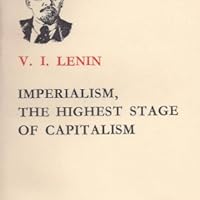
One of the best books for anyone who wants to be an anti-fascist
March 1, 2026
Great book about the conditions that lead to fascism taking root and how to fight it. It is very eye opening for the current conditions
March 20, 2026
EVERYTHING IS FALLING RATE OF PROFIT
June 5, 2026
Mandatory reading, for any working class person. Fascism will advance every bit as far as we allow it to.
September 10, 2025
Wow, the most clear and concise take down of capitalism and its evolution to fascism caused by finance-capital and the reformist policies they peddle to the masses.
December 3, 2023
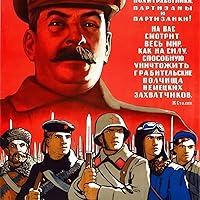
One can not help but notice that with the rise of "woke" identity politics, the word "Fascism" has begun to be thrown around willy-nilly to an alarming degree. Much like what has happened with words like "Bigot" and "Racist" in the era of the sanctimonious SJW, the word "Fascist" has begun to lose all meaning and thus effectiveness. After reading R. Palme Dutt's 'Fascism and Social Revolution,' it has become all the more obvious that the Western "definition" of Fascism is incredibly skewed—even purposely skewed by the powers that be.
This book is truly indispensable, and it's quite obvious that it's criminally under-read.
This book is truly indispensable, and it's quite obvious that it's criminally under-read.
May 18, 2026
Very good explaination the rise of facism. We should use it to like prevent its rise
Displaying 1 - 22 of 22 reviews