

What do you think?

The Meursault Investigation
He was the brother of “the Arab” killed by the infamous Meursault, the antihero of Camus’s classic novel. Seventy years after that event, Harun, who has lived since childhood in the shadow of his sibling’s memory, refuses to let him remain anonymous: he gives his brother a story and a name—Musa—and describes the events that led to Musa’s casual murder on a dazzlingly sunny beach.
In a bar in Oran, night after night, he ruminates on his solitude, on his broken heart, on his anger with men desperate for a god, and on his disarray when faced with a country that has so disappointed him. A stranger among his own people, he wants to be granted, finally, the right to die.
The Stranger is of course central to Daoud’s story, in which he both endorses and criticizes one of the most famous novels in the world. A worthy complement to its great predecessor, The Meursault Investigation is not only a profound meditation on Arab identity and the disastrous effects of colonialism in Algeria, but also a stunning work of literature in its own right, told in a unique and affecting voice.
In a bar in Oran, night after night, he ruminates on his solitude, on his broken heart, on his anger with men desperate for a god, and on his disarray when faced with a country that has so disappointed him. A stranger among his own people, he wants to be granted, finally, the right to die.
The Stranger is of course central to Daoud’s story, in which he both endorses and criticizes one of the most famous novels in the world. A worthy complement to its great predecessor, The Meursault Investigation is not only a profound meditation on Arab identity and the disastrous effects of colonialism in Algeria, but also a stunning work of literature in its own right, told in a unique and affecting voice.
161 pages, Kindle Edition
First published October 1, 2013
About the author
Kamel Daoud
32 books304 followersNé en 1970 à Mostaganem, Kamel Daoud est journaliste au Quotidien d’Oran où il tient une chronique à succès « Raïna raïkoum ». Il est l’auteur de plusieurs ouvrages dont le recueil de nouvelles La Préface du nègre ( barzakh, 2008 ) récompensé par le Prix Mohammed Dib et traduit en allemand ainsi qu’en italien.
__________________________
The Algerian writer and journalist, Kamel Daoud is the winner of the edition 2014 of the Five Continents Prize. This was the decision of the jury chaired by the Nobel Prize of literature, Jean-Marie Gustave Clézio on 26th September 2014 in Paris at the head office of the International Organization of the Francophonie. The novel “Meursault, The Counter-Inquiry” (Barzakh Editions in 2013) by the Algerian author sends readers back to the post-colonial realities.
The novel “Meursault, The Counter-Inquiry” by the writer, Kamel Daoud will unmistakably mark the African literature As “The Stranger” by Albert Camus that strongly inspired the author. Prize-winner of the François Mauriac Literature Prize 2014, the work just made its author win the famous of the Five Continents Prize. According to the official site of the International Organization of the Francophonie (OIF), the prize-winner will be honored on 28th November during the 15th OIF Summit that will be held in Dakar (Senegal).
For the Nobel Prize of Literature Jean-Marie Gustave Clézio, “Meursault, Meursault, TheCounter-Inquiry” is “a novel that questions our historic blindness still topical and raises the question of justice and consideration of otherness once colonial terror calmed down“.
Born on 17th June 1970, Kamel Daoud was a journalist then an editor-in-chief for “Quotidien d’ Oran” newspaper. Reputed for his freedom of writing, he is often obliged to share some of his opinions on social networks (Facebook particularly). On 14th November 2011, Kamel Daoud was nominated for the Wepler-Fondation La Poste Prize that finally went to Éric Laurrent.
(Original text by: Roger ADZAFO)
__________________________
The Algerian writer and journalist, Kamel Daoud is the winner of the edition 2014 of the Five Continents Prize. This was the decision of the jury chaired by the Nobel Prize of literature, Jean-Marie Gustave Clézio on 26th September 2014 in Paris at the head office of the International Organization of the Francophonie. The novel “Meursault, The Counter-Inquiry” (Barzakh Editions in 2013) by the Algerian author sends readers back to the post-colonial realities.
The novel “Meursault, The Counter-Inquiry” by the writer, Kamel Daoud will unmistakably mark the African literature As “The Stranger” by Albert Camus that strongly inspired the author. Prize-winner of the François Mauriac Literature Prize 2014, the work just made its author win the famous of the Five Continents Prize. According to the official site of the International Organization of the Francophonie (OIF), the prize-winner will be honored on 28th November during the 15th OIF Summit that will be held in Dakar (Senegal).
For the Nobel Prize of Literature Jean-Marie Gustave Clézio, “Meursault, Meursault, TheCounter-Inquiry” is “a novel that questions our historic blindness still topical and raises the question of justice and consideration of otherness once colonial terror calmed down“.
Born on 17th June 1970, Kamel Daoud was a journalist then an editor-in-chief for “Quotidien d’ Oran” newspaper. Reputed for his freedom of writing, he is often obliged to share some of his opinions on social networks (Facebook particularly). On 14th November 2011, Kamel Daoud was nominated for the Wepler-Fondation La Poste Prize that finally went to Éric Laurrent.
(Original text by: Roger ADZAFO)
Ratings & Reviews
Friends & Following
Create a free account to discover what your friends think of this book!
Community Reviews
Displaying 1 - 30 of 1,549 reviews
![Profile Image for s.penkevich [hiatus-will return-miss you all].](https://i.gr-assets.com/images/S/compressed.photo.goodreads.com/users/1735525095i/6431467._UX200_CR0,11,200,200_.jpg)
July 14, 2015
[T]he absurdity of my condition, which consisted in pushing a corpse to the top of a hill before it rolled down, endlessly.¹
The curtain opening lines of Algerian journalist Kamel Daoud’s The Meursault Investigation, ‘Mama’s still alive today,’ reveal a stage set for a pastiche of reproach and rapprochement towards Albert Camus’ The Stranger² which opens with ‘Maman died today.’ The Stranger, in which Camus’ anti-hero is tried for shooting a nameless Arab on an Algerian beach, is the soil from which Meursault Investigation sprouts, in which the focal character Harun elucidates a life as the younger brother to Meursault’s victim. The story is told over drinks to in conversation with a silent interlocutor (though responses are implied through Harun’s speech), akin to the style of Camus’ The Fall. Despite the bitter chastisements of Meursault, The Meursault Investigation and The Stranger become two sides of the same coin as Daoud crafts a ponderous and probing investigation into the absurdities of life and convictions, and elucidates on the history, strife and his opinions of the existential failure of the Algerian Independence.
That’s the best proof of our absurd existence, my friend: Nobody’s granted a final day, just an accidental interruption in his life.
Where Camus’ left us with a body bleeding under the sun, Daoud has delivered us a life with a name and legacy. While Meursault’s pistol discharge was ‘knocking four quick times on the door of unhappiness’, Harun’s retribution fires ‘two sharp raps on the door of deliverance.. Daoud creates an exciting antithesis of The Stranger, critiquing Meursault’s failure to name ‘his book’s sacrificial victim’ as a focused expression of the French’s view on Islamic people in colonialist French-occupied Algeria in the early 1900s. The Meursault Investigation exists in a unique universe where Meursault was a walking, flesh-and-blood reality, but also where The Stranger is—as in our reality—a novel studied by college students the world over. ‘It’s as important to give a dead man a name as it is to name a newborn infant,’ preaches Harun, Daoud’s own Meursault, ‘if he calls my brother ‘The Arab’ it’s so he can kill him the way one kills time, by strolling around aimlessly.’ Harun grew up ‘a child facing the immensity of both the crime and the horizon’ in a land full of Meursaults that occupied his homeland. He vents his disgust with French colonialism, but also his revulsion of his homeland’s weaknesses and failure to reach the glory promised by independence. ‘This is a city with it’s legs spread open towards the sea,³ he says, chastising Oran for spilling of French people and culture into it’s heart. The division between French and Arab trouble him (‘Arab-ness...only exists in the white man's eyes’) and he is forced into a life where one must take sides even if sides don’t really matter in the grand non-scheme of things. He watched his country destroy itself during independence, scouring the land into ruin much like their occupiers had, and exhumes antipathy for the Islamic religious movements sweeping the people into a blind furor of senseless belief.
The word Arab appears twenty-five times, but not a single name, not once.
Despite his revulsion for Meursault and all he has come to represent, Harun and his adversary are juxtaposed in a way that highlight their similarities by examining their differences. ‘I was practically the murderer’s double,’ he admits. The two share the experience of having killed a man in cold blood, one at 2pm oppressed by the sun, the other at 2am transfixed by the moon. Unlike Meursault’s victim, Harun provides his own with a name (Joseph, the name shared by the husband to Mary, the mother of Jesus in the Bible, which implicates Harun’s killing as an act of destroying God much as how Meursault’s was an expression of meaninglessness in a world with an absent God) and history, yet the effect is parallel in both. ‘When your hero is in his cell, that’s when he’s best at asking the big questions,’ points out Harun, whose cell is not made of stone but the living flesh of his own making. It is here when Harun attempts to answer the big questions and Daoud tightens the laces between what initially appeared as two dissimilar characters. Both are tried for the murder, but judged for their character and not the smiting act with Harun criticized for not joining the revolution underground—not loving his ‘motherland’ enough—and Meursault for not loving his mother enough. Daoud expresses their ‘brotherhood’, but is careful to represent them more as two sides to the same coin, both cooperative and competitive. Like brothers, the two will disagree , squabble and fight, but there is a shared blood fueling their respective hearts. The two novels practically serve as parables of the other and as the novel spirals into introspection, the lines of fiction blur and one cannot be sure what belongs to Meursault and what to Harun. Is it possible that the assertion of Meursault killing the brother is a stand-in for any Frenchman slaying the brother? Has Harun become so engrossed by The Stranger, which he admits to having read*, that he has merged the story with his own to better assess himself and his own beliefs? The closer Daoud ties the two characters, the more astounding and important the message becomes.
[R]eligion is public transportation I never use.
Harun expounds on his disillusionment with the Islamic religious beliefs, which coincide with the fall of the kingdom during the disappointment with independence, a second-coming of sorts that didn’t resurrect but merely left all in damnation. Like Meursault, Harun has an absent father (who is named and given a history unlike the never-mentioned father of Meursault, similarly to Daoud's’ treatment of both murder victims), a man who worked as a night watchman and fled his family. The absence of the father is the absence of The Father and the lack of a Watchman for all our souls.
Who could take life seriously afterwards?
Oddly enough, I read most of this novel while either sitting on a beach or in a bar. While Daoud’s version can be a bit heavy-handed and less subtle than Camus’, and also a touch metaphor-heavy (which seems to be a trait of present literature to bulk up on metaphors, beleaguering the reader with them in hopes they’ll not notice the bad ones when the book would be better served by cutting anything less than the best), The Meursault Investigation makes for a worthy companion-competitor to The Stranger. The homages to Camus’ body of work are done with impressive and tactful flair, and the two become nearly inseparable in the realm of literature. Readers that haven’t read The Stranger or are quite rusty on it needn’t worry about enjoying Daoud’s modern classic, which stands alone quite well. However, those well versed in Camus will find many subtle nods and jokes within and open a vast depth of understanding into both novels through their interrelated commentary. Having read them back-to-back was extraordinarily fulfilling, and I would recommend that as the most satisfying approach. The Meursault Investigation finds itself to be the more humanist of the two works (and one addressing Camus' blind-spots on colonialism) at hand through a brotherhood and union with Camus’ famous work from which this one springs, yet still maintains the brooding and uplifting-bleakness that makes it’s predecessor so unforgettable.
4.5/5
I think something immense, something infinite is required to balance out our human condition.
¹ An homage to Camus’ The Myth of Sisyphus, one of the many ways Daoud ties his philosophical investigations to Camus’ canon beyond The Stranger.
² The Stranger is sometimes translated as The Other, which Daoud toys with in passages such as:
³ This—along with the aforementioned quote ‘accidental interruption in his life where the pronoun assumes a male dominance over plurality for an experience that is neither distinctly male or female—is bound to raise an eyebrow among the socially conscious. There is feminine imagery everywhere in the book, often disturbing such as ‘the prostitute slash Algerian land and the settler who abuses her with repeated rapes and violence’ or the depiction of the liberated Oran becoming ‘the prostitute slash Algerian land and the settler who abuses her with repeated rapes and violence.’ One shouldn’t jump to quickly to denounce the novel or novelist as a blatant misogynist, or brush it off with an awkward neutralization assumption of cultural differences but take a look through a more deconstructionist vantage-point (one must also not make the Intentional Fallacy of presuming a character’s beliefs represent those of the author). Harun grew up under the stifling closeness and control of his mother, which led to a stunted emotional and sexual maturity and a love/hate relationship with his mother (the binaries both being another method collaboration by opposing and embodying the nature of Meursault). The sexually violent and degrading imagery of women is a repressed projection of Harun’s frustration forged in the relationship with his mother. As he felt disappointed, suffocated and betrayed by his mother, so too does he with his native land and the two associate and comment upon one another in his subconscious.
* Harun insists he learned to speak French to better understand and assault his adversary, and The Meursault Investigation is originally written in French. Language becomes a brief but important theme flowing within the novel.
The curtain opening lines of Algerian journalist Kamel Daoud’s The Meursault Investigation, ‘Mama’s still alive today,’ reveal a stage set for a pastiche of reproach and rapprochement towards Albert Camus’ The Stranger² which opens with ‘Maman died today.’ The Stranger, in which Camus’ anti-hero is tried for shooting a nameless Arab on an Algerian beach, is the soil from which Meursault Investigation sprouts, in which the focal character Harun elucidates a life as the younger brother to Meursault’s victim. The story is told over drinks to in conversation with a silent interlocutor (though responses are implied through Harun’s speech), akin to the style of Camus’ The Fall. Despite the bitter chastisements of Meursault, The Meursault Investigation and The Stranger become two sides of the same coin as Daoud crafts a ponderous and probing investigation into the absurdities of life and convictions, and elucidates on the history, strife and his opinions of the existential failure of the Algerian Independence.
That’s the best proof of our absurd existence, my friend: Nobody’s granted a final day, just an accidental interruption in his life.
Where Camus’ left us with a body bleeding under the sun, Daoud has delivered us a life with a name and legacy. While Meursault’s pistol discharge was ‘knocking four quick times on the door of unhappiness’, Harun’s retribution fires ‘two sharp raps on the door of deliverance.. Daoud creates an exciting antithesis of The Stranger, critiquing Meursault’s failure to name ‘his book’s sacrificial victim’ as a focused expression of the French’s view on Islamic people in colonialist French-occupied Algeria in the early 1900s. The Meursault Investigation exists in a unique universe where Meursault was a walking, flesh-and-blood reality, but also where The Stranger is—as in our reality—a novel studied by college students the world over. ‘It’s as important to give a dead man a name as it is to name a newborn infant,’ preaches Harun, Daoud’s own Meursault, ‘if he calls my brother ‘The Arab’ it’s so he can kill him the way one kills time, by strolling around aimlessly.’ Harun grew up ‘a child facing the immensity of both the crime and the horizon’ in a land full of Meursaults that occupied his homeland. He vents his disgust with French colonialism, but also his revulsion of his homeland’s weaknesses and failure to reach the glory promised by independence. ‘This is a city with it’s legs spread open towards the sea,³ he says, chastising Oran for spilling of French people and culture into it’s heart. The division between French and Arab trouble him (‘Arab-ness...only exists in the white man's eyes’) and he is forced into a life where one must take sides even if sides don’t really matter in the grand non-scheme of things. He watched his country destroy itself during independence, scouring the land into ruin much like their occupiers had, and exhumes antipathy for the Islamic religious movements sweeping the people into a blind furor of senseless belief.
The word Arab appears twenty-five times, but not a single name, not once.
Despite his revulsion for Meursault and all he has come to represent, Harun and his adversary are juxtaposed in a way that highlight their similarities by examining their differences. ‘I was practically the murderer’s double,’ he admits. The two share the experience of having killed a man in cold blood, one at 2pm oppressed by the sun, the other at 2am transfixed by the moon. Unlike Meursault’s victim, Harun provides his own with a name (Joseph, the name shared by the husband to Mary, the mother of Jesus in the Bible, which implicates Harun’s killing as an act of destroying God much as how Meursault’s was an expression of meaninglessness in a world with an absent God) and history, yet the effect is parallel in both. ‘When your hero is in his cell, that’s when he’s best at asking the big questions,’ points out Harun, whose cell is not made of stone but the living flesh of his own making. It is here when Harun attempts to answer the big questions and Daoud tightens the laces between what initially appeared as two dissimilar characters. Both are tried for the murder, but judged for their character and not the smiting act with Harun criticized for not joining the revolution underground—not loving his ‘motherland’ enough—and Meursault for not loving his mother enough. Daoud expresses their ‘brotherhood’, but is careful to represent them more as two sides to the same coin, both cooperative and competitive. Like brothers, the two will disagree , squabble and fight, but there is a shared blood fueling their respective hearts. The two novels practically serve as parables of the other and as the novel spirals into introspection, the lines of fiction blur and one cannot be sure what belongs to Meursault and what to Harun. Is it possible that the assertion of Meursault killing the brother is a stand-in for any Frenchman slaying the brother? Has Harun become so engrossed by The Stranger, which he admits to having read*, that he has merged the story with his own to better assess himself and his own beliefs? The closer Daoud ties the two characters, the more astounding and important the message becomes.
[R]eligion is public transportation I never use.
Harun expounds on his disillusionment with the Islamic religious beliefs, which coincide with the fall of the kingdom during the disappointment with independence, a second-coming of sorts that didn’t resurrect but merely left all in damnation. Like Meursault, Harun has an absent father (who is named and given a history unlike the never-mentioned father of Meursault, similarly to Daoud's’ treatment of both murder victims), a man who worked as a night watchman and fled his family. The absence of the father is the absence of The Father and the lack of a Watchman for all our souls.
...I feel like...yelling at him to quit sniveling prayers, accept the world, open his eyes to his own strength, his own dignity, and stop running after a father who has absconded to heaven and is never coming back.The two anti-heroes accept a world without a chiseled moral code to provide meaning and Harun believes that the acceptance and cultivation of self-hood and a push for equal human justice from oppression is enough to assuage the void left by God’s nonexistence.
These people need something bigger as a counterweight to the abyss….and I think it’ll lead us all to premature death, or to someplace on the edges of the earth where we can topple over into the void.Daoud’s depictions of the failures of Islamic belief, the meaninglessness in a world with an absent God, a world where ‘I alone pay the electric bill, I alone will be eaten by worms in the end’, has spawned some harsh criticism, such as a Facebook issued Fatwa by an Algerian imam and proclamations that he should be publically executed for his novel-expressed beliefs (read the article here while pondering the irony of condemning an author to death for commenting on a book in which the narrator is put to death for his own beliefs that God is a myth and life is absurd).
Who could take life seriously afterwards?
Oddly enough, I read most of this novel while either sitting on a beach or in a bar. While Daoud’s version can be a bit heavy-handed and less subtle than Camus’, and also a touch metaphor-heavy (which seems to be a trait of present literature to bulk up on metaphors, beleaguering the reader with them in hopes they’ll not notice the bad ones when the book would be better served by cutting anything less than the best), The Meursault Investigation makes for a worthy companion-competitor to The Stranger. The homages to Camus’ body of work are done with impressive and tactful flair, and the two become nearly inseparable in the realm of literature. Readers that haven’t read The Stranger or are quite rusty on it needn’t worry about enjoying Daoud’s modern classic, which stands alone quite well. However, those well versed in Camus will find many subtle nods and jokes within and open a vast depth of understanding into both novels through their interrelated commentary. Having read them back-to-back was extraordinarily fulfilling, and I would recommend that as the most satisfying approach. The Meursault Investigation finds itself to be the more humanist of the two works (and one addressing Camus' blind-spots on colonialism) at hand through a brotherhood and union with Camus’ famous work from which this one springs, yet still maintains the brooding and uplifting-bleakness that makes it’s predecessor so unforgettable.
4.5/5
I think something immense, something infinite is required to balance out our human condition.
¹ An homage to Camus’ The Myth of Sisyphus, one of the many ways Daoud ties his philosophical investigations to Camus’ canon beyond The Stranger.
² The Stranger is sometimes translated as The Other, which Daoud toys with in passages such as:
After I killed a man, it wasn’t my innocence I missed most, it was the border that had existed until then between my life and the crime...The Other is a unit of measurement you lose when you kill.The playfulness of the line is also it’s ingenuity; ‘The Other’ (note the capitalization) implies this border beyond oneself Harun bemoans the loss of, but also uses the emotional, moral and philosophical implications within Camus’s novel as a coined yardstick for existential (though Camus rejected the label of ‘existentialist’). The assertion of acknowledgement of connotation in the latter interpretation is comical as an ‘inside joke’ of sorts with readers deeply familiar with Camus’ novel and assumes the reader (who is an isn’t the student carrying around The Stranger in their backpack with whom Harun is conversing/dictating) already considers the weight of The Stranger as a measuring point in emotional and existential health.
³ This—along with the aforementioned quote ‘accidental interruption in his life where the pronoun assumes a male dominance over plurality for an experience that is neither distinctly male or female—is bound to raise an eyebrow among the socially conscious. There is feminine imagery everywhere in the book, often disturbing such as ‘the prostitute slash Algerian land and the settler who abuses her with repeated rapes and violence’ or the depiction of the liberated Oran becoming ‘the prostitute slash Algerian land and the settler who abuses her with repeated rapes and violence.’ One shouldn’t jump to quickly to denounce the novel or novelist as a blatant misogynist, or brush it off with an awkward neutralization assumption of cultural differences but take a look through a more deconstructionist vantage-point (one must also not make the Intentional Fallacy of presuming a character’s beliefs represent those of the author). Harun grew up under the stifling closeness and control of his mother, which led to a stunted emotional and sexual maturity and a love/hate relationship with his mother (the binaries both being another method collaboration by opposing and embodying the nature of Meursault). The sexually violent and degrading imagery of women is a repressed projection of Harun’s frustration forged in the relationship with his mother. As he felt disappointed, suffocated and betrayed by his mother, so too does he with his native land and the two associate and comment upon one another in his subconscious.
* Harun insists he learned to speak French to better understand and assault his adversary, and The Meursault Investigation is originally written in French. Language becomes a brief but important theme flowing within the novel.
I know your hero’s genius: the ability to tear open the common, everyday language and emerge on the other side, where a more devastating language is waiting to narrate the world in another way

March 3, 2020
This book is a take-off from Camus’s classic novel The Stranger. The story is told by the brother of “the Arab” – we never knew his name from Camus - killed by the infamous Meursault, the antihero of Camus’s novel.

The brother, now in his late 70’s, hangs out drinking wine in a bar night after night. He tells us his brother’s name was Musa and he tells us the things Camus never told us – How old was he? Was he married? Kids? What kind of job did he have? He describes the events that led to Musa’s senseless murder on the beach. The body was never recovered by the family so at the funeral, neighbors invented the myth that it was “washed out to sea.”
While he tells us about his brother (a lot of the story is told in the bar to a stranger who may be writing a book about the incident) the brother reflects on his own life. His solitude, his absent father; his unsuccessful relationships with women; his domineering, grief-stricken mother who wanted him to “replace” his lost brother; his disappointment at the chaos his country is in after independence from French rule.
The substitution of a man’s name with the words “the Arab” or “an Arab,” as in Camus’s novel, provokes thought. Who is “an Arab?” and who decided on that name? I’m reminded of another review I did recently, the “Book of Salt” about Gertrude Stein’s Vietnamese cook whom she called “Indochinese.” Well, her cook was neither Indo- nor Chinese; that was just a remnant of the French view of their colonial world. The author writes: “Arab. I never felt Arab, you know. Arab-ness is like Negro-ness which only exists in the white man’s eyes. In our neighborhood, in our world, we were Muslims, we had given names, faces, and habits. Period. The others were “the strangers…”
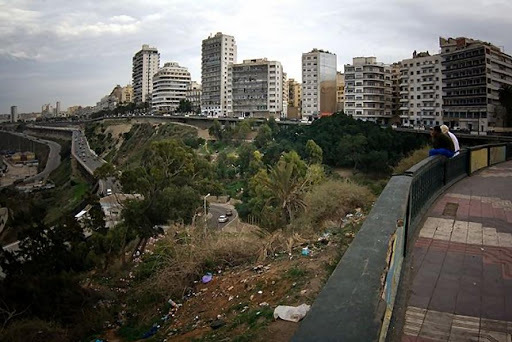
I thought it had strong, literary writing, starting with a counter to Camus’s opening words: “Maman died today.” Instead we read: “”Mama’s still alive today.” The brother’s angry outburst against God at the end of the story is a kind of counterpart to Meursault’s final days.
Here’s an extended sample of the writing:
“But you should be aware that even though I know the story - all too well - I know virtually nothing about its geography. Algiers is only a shadow in my mind. I almost never go there. Sometimes I see it on television, looking like an outdated actress left over from the days of revolutionary theatre. So there’s no geography in this story. Generally speaking, it takes place in three settings of national importance: the city, whether that one or another one; the mountains, where you take refuge when you’re attacked or you want to make war; and the village, which is for each and every one of us the ancestral home. Everybody wants a village wife and a big-city whore. Just be looking out the windows of this bar, I can sort the local humans for you according to one of those three addresses.”
Here are some other passages I liked:
“Once we reach a certain age, time gives us the features of all our ancestors, combined in the soft jumble of reincarnations. And maybe, in the end, that’s what the next world is, an endless corridor where all your ancestors are lined up, one after another. They turn toward the living descendant and simply wait, without words, without movements, their patient eyes fixed on a date.”
“Silence. I hate that word. Its multiple definitions make a lot of noise.”
“As far as I’m concerned, religion is public transportation I never use. This God – I like traveling in his direction, on foot if necessary, but I don’t want to take an organized trip.”
The blurbs give this summary: “The Stranger is of course central to Daoud’s story, in which he both endorses and criticizes one of the most famous novels in the world. A worthy complement to its great predecessor, The Meursault Investigation is not only a profound meditation on Arab identity and the disastrous effects of colonialism in Algeria, but also a stunning work of literature in its own right, told in a unique and affecting voice.”

The author (b. 1970) grew up in Algeria and currently is a journalist and editor of an Algerian newspaper in Paris. A fatwa was issued against him by an Algerian imam because of some of his writing about religion. This book won the Goncourt Prize for a First Novel in 2013 and was a finalist for the actual Goncourt Prize. A good read! The book was translated from the French.
Top photo: the beach at Algiers where Musa was shot from live.staticflickr.com
Oman, Algeria where the brother lives from lh3.googleusercontent.com
The author from cdn.britannica.com
The brother, now in his late 70’s, hangs out drinking wine in a bar night after night. He tells us his brother’s name was Musa and he tells us the things Camus never told us – How old was he? Was he married? Kids? What kind of job did he have? He describes the events that led to Musa’s senseless murder on the beach. The body was never recovered by the family so at the funeral, neighbors invented the myth that it was “washed out to sea.”
While he tells us about his brother (a lot of the story is told in the bar to a stranger who may be writing a book about the incident) the brother reflects on his own life. His solitude, his absent father; his unsuccessful relationships with women; his domineering, grief-stricken mother who wanted him to “replace” his lost brother; his disappointment at the chaos his country is in after independence from French rule.
The substitution of a man’s name with the words “the Arab” or “an Arab,” as in Camus’s novel, provokes thought. Who is “an Arab?” and who decided on that name? I’m reminded of another review I did recently, the “Book of Salt” about Gertrude Stein’s Vietnamese cook whom she called “Indochinese.” Well, her cook was neither Indo- nor Chinese; that was just a remnant of the French view of their colonial world. The author writes: “Arab. I never felt Arab, you know. Arab-ness is like Negro-ness which only exists in the white man’s eyes. In our neighborhood, in our world, we were Muslims, we had given names, faces, and habits. Period. The others were “the strangers…”
I thought it had strong, literary writing, starting with a counter to Camus’s opening words: “Maman died today.” Instead we read: “”Mama’s still alive today.” The brother’s angry outburst against God at the end of the story is a kind of counterpart to Meursault’s final days.
Here’s an extended sample of the writing:
“But you should be aware that even though I know the story - all too well - I know virtually nothing about its geography. Algiers is only a shadow in my mind. I almost never go there. Sometimes I see it on television, looking like an outdated actress left over from the days of revolutionary theatre. So there’s no geography in this story. Generally speaking, it takes place in three settings of national importance: the city, whether that one or another one; the mountains, where you take refuge when you’re attacked or you want to make war; and the village, which is for each and every one of us the ancestral home. Everybody wants a village wife and a big-city whore. Just be looking out the windows of this bar, I can sort the local humans for you according to one of those three addresses.”
Here are some other passages I liked:
“Once we reach a certain age, time gives us the features of all our ancestors, combined in the soft jumble of reincarnations. And maybe, in the end, that’s what the next world is, an endless corridor where all your ancestors are lined up, one after another. They turn toward the living descendant and simply wait, without words, without movements, their patient eyes fixed on a date.”
“Silence. I hate that word. Its multiple definitions make a lot of noise.”
“As far as I’m concerned, religion is public transportation I never use. This God – I like traveling in his direction, on foot if necessary, but I don’t want to take an organized trip.”
The blurbs give this summary: “The Stranger is of course central to Daoud’s story, in which he both endorses and criticizes one of the most famous novels in the world. A worthy complement to its great predecessor, The Meursault Investigation is not only a profound meditation on Arab identity and the disastrous effects of colonialism in Algeria, but also a stunning work of literature in its own right, told in a unique and affecting voice.”
The author (b. 1970) grew up in Algeria and currently is a journalist and editor of an Algerian newspaper in Paris. A fatwa was issued against him by an Algerian imam because of some of his writing about religion. This book won the Goncourt Prize for a First Novel in 2013 and was a finalist for the actual Goncourt Prize. A good read! The book was translated from the French.
Top photo: the beach at Algiers where Musa was shot from live.staticflickr.com
Oman, Algeria where the brother lives from lh3.googleusercontent.com
The author from cdn.britannica.com

June 22, 2022
SOLO MORTO SOLO
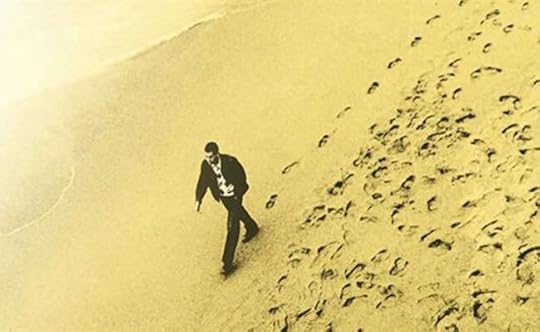
L’idea di partenza m’è parsa geniale: dare voce al morto di quel capolavoro di Albert Camus intitolato Lo straniero (1942). Per intenderci, la vittima di Meursault, l’arabo cui la voce narrante di Camus spara forse perché accecato dal sole del primo pomeriggio, o forse perché minacciato, o forse perché non si sa… Quel morto che rimane senza nome - per riferirsi a lui tutti usano solo il termine “l’arabo” – e che rimane anche senza voce. Rimane una funzione narrativa.
Un po’ come dire, raccontiamo la stessa storia ma da un punto di vista diverso.
Punto di vista che è facile intuire diventa non solo quello della vittima, del morto, ma della sua gente in genere, degli arabi, gli algerini che dovranno aspettare ancora vent’anni prima di liberarsi della dominazione francese (1962). Un risarcimento per tutte le vittime dimenticate.
E fin qui tutto bene.
Se non che – e forse anche questo è facile da intuire – è un tentativo che mostra presto il suo limite.
Non è solo che per leggere questo è basilare avere letto anche l’altro, altrimenti non si capisce nulla.
Non è solo perché la voce non è quella del morto, ma di suo fratello minore che sbrodola quello che lui stesso definisce un pomposo monologo, mezzo ubriaco, in una bettola, a un immaginario studente francese che non ha voce e forse neppure presenza.
È che le premesse di questo breve romanzo autorizzano una voce dolente, lamentosa e lamentante, oppressa e rabbiosa, in cerca di giustizia, un po’ piagnona, un po’ mesta, un po’ cupa. Una voce che parte subito su una nota alta: una nota che ricorda i versi delle lamentazioni funebri nella cultura araba. E che tale rimane per le intere centotrenta pagine. Finendo col risultare stordente, monotona, sgradevole. Noiosa.
Purtroppo di quella lingua perfetta che taglia l’aria come un diamante, che Daoud riconosce al romanzo di Camus, qui io non ho trovato traccia.
L’idea di partenza m’è parsa geniale: dare voce al morto di quel capolavoro di Albert Camus intitolato Lo straniero (1942). Per intenderci, la vittima di Meursault, l’arabo cui la voce narrante di Camus spara forse perché accecato dal sole del primo pomeriggio, o forse perché minacciato, o forse perché non si sa… Quel morto che rimane senza nome - per riferirsi a lui tutti usano solo il termine “l’arabo” – e che rimane anche senza voce. Rimane una funzione narrativa.
Un po’ come dire, raccontiamo la stessa storia ma da un punto di vista diverso.
Punto di vista che è facile intuire diventa non solo quello della vittima, del morto, ma della sua gente in genere, degli arabi, gli algerini che dovranno aspettare ancora vent’anni prima di liberarsi della dominazione francese (1962). Un risarcimento per tutte le vittime dimenticate.
E fin qui tutto bene.
Se non che – e forse anche questo è facile da intuire – è un tentativo che mostra presto il suo limite.
Non è solo che per leggere questo è basilare avere letto anche l’altro, altrimenti non si capisce nulla.
Non è solo perché la voce non è quella del morto, ma di suo fratello minore che sbrodola quello che lui stesso definisce un pomposo monologo, mezzo ubriaco, in una bettola, a un immaginario studente francese che non ha voce e forse neppure presenza.
È che le premesse di questo breve romanzo autorizzano una voce dolente, lamentosa e lamentante, oppressa e rabbiosa, in cerca di giustizia, un po’ piagnona, un po’ mesta, un po’ cupa. Una voce che parte subito su una nota alta: una nota che ricorda i versi delle lamentazioni funebri nella cultura araba. E che tale rimane per le intere centotrenta pagine. Finendo col risultare stordente, monotona, sgradevole. Noiosa.
Purtroppo di quella lingua perfetta che taglia l’aria come un diamante, che Daoud riconosce al romanzo di Camus, qui io non ho trovato traccia.
June 13, 2015
The short review: Some good writing, but ultimately a letdown.
The details: I got all excited when I read Musa, the snippet of Meursault that was excerpted in The New Yorker. Not only was it very well written, but I'd just reread The Stranger and this is a retelling of that story from the point of view of the brother of the man who was shot.
I thought this book would be a lot like Jean Rhys' Wide Sargasso Sea, which is a brilliant retelling of Jane Eyre from the madwoman's perspective. And the two novels do have a lot in common. Both of them address Western xenophobia, colonialism, the fear of "the other," and the significance of names.
The one place where they differ is, to me, a weakness in Meursault. Rhys' novel acts as if it's a story being told in the same universe as Jane Eyre. Meursault goes one step further: the action takes place in a universe in which The Stranger is a nonfiction work.
There are a lot of problems with this premise, at least the way Kamel Daoud handles it.
In The Stranger, the murdered man is never named. Daoud's narrator is incensed by this, and rightly so. Imagine: your brother is murdered, and the murderer cares so little about who he killed that he can't even be bothered to learn his name. Worse: your brother is murdered for no particular reason by a descendant of the French colonizers of your native land, and thanks to the fact that this murderer is a good writer, your brother is now known only as "the Arab."
A man who knows how to write kills an Arab who, on the day he dies, doesn't even have a name as if he'd hung it on a nail somewhere before stepping onto the stage.
This is good writing, and fine so far as it goes. The problem is, Daoud takes it too far. The narrator's brother isn't just killed: his body disappears and his name is never mentioned by anyone, even in accounts of the murder trial. Then why was Meursault put on trial? If there's no corpse and no name, who was he accused of killing? Maybe this works as symbolism, but Meursault is supposed to be the story of something that really happened, written by a grieving brother.
That's another problem with this novel: it can't make up its mind what it is. Sometimes it's grittily realistic. Sometimes it melts into metaphor.
Oh, and the first half of this novel is so repetitious and so completely empty of plot or action that on page 71, I put a Post-It in to mark where I shouted, "Could something please HAPPEN, already?"
Something does happen almost immediately after that. On page 75, to be exact. But by then it was too late, at least for me.
A novel this short shouldn't have time to get boring. This one managed to.
Here's how the first half of the book reads, in a nutshell:
My brother is dead.
He was murdered.
He was murdered by a guy who wrote a famous book.
So now everyone cares about the murderer instead of my brother.
Who is dead.
Because he was murdered.
Specifically, by a guy who wrote a book about it.
And now the book is famous and nobody cares about my brother.
You know, the dead guy.
Who was murdered.
I wish I were exaggerating. There's some lovely prose here, and some clever references to Camus and his work; but eventually that stops being enough to keep a tired reader going. (I did finish this book. I'm stubborn that way.)
Daoud's narrator also insists that the narrator of The Stranger was a sympathetic character:
Everyone was knocked out by the perfect prose, by language capable of giving air facets like diamonds, and everyone declared their empathy with the murderer's solitude and offered him their most learned condolences.
I know plenty of people who have read Camus, and I don't know a single person who thinks the narrator of The Stranger is anything but creepy. Maybe I'm hanging out with the wrong crowd.
I read Meursault because I liked what I saw in Musa and I was hoping for more. Unfortunately, more of the same was all I got.
Wide Sargasso Sea changed Jane Eyre for me profoundly. They're both brilliant novels, and one of them now haunts the other in my mind.
No such magic happened here.
Meursault, like WSS, is not a book to read without reading its parent first. A reader should also bone up a bit on Algeria and its war for independence.
But honestly, unless you're very curious and/or a completest, I'd stick to reading the excerpt.
The details: I got all excited when I read Musa, the snippet of Meursault that was excerpted in The New Yorker. Not only was it very well written, but I'd just reread The Stranger and this is a retelling of that story from the point of view of the brother of the man who was shot.
I thought this book would be a lot like Jean Rhys' Wide Sargasso Sea, which is a brilliant retelling of Jane Eyre from the madwoman's perspective. And the two novels do have a lot in common. Both of them address Western xenophobia, colonialism, the fear of "the other," and the significance of names.
The one place where they differ is, to me, a weakness in Meursault. Rhys' novel acts as if it's a story being told in the same universe as Jane Eyre. Meursault goes one step further: the action takes place in a universe in which The Stranger is a nonfiction work.
There are a lot of problems with this premise, at least the way Kamel Daoud handles it.
In The Stranger, the murdered man is never named. Daoud's narrator is incensed by this, and rightly so. Imagine: your brother is murdered, and the murderer cares so little about who he killed that he can't even be bothered to learn his name. Worse: your brother is murdered for no particular reason by a descendant of the French colonizers of your native land, and thanks to the fact that this murderer is a good writer, your brother is now known only as "the Arab."
A man who knows how to write kills an Arab who, on the day he dies, doesn't even have a name as if he'd hung it on a nail somewhere before stepping onto the stage.
This is good writing, and fine so far as it goes. The problem is, Daoud takes it too far. The narrator's brother isn't just killed: his body disappears and his name is never mentioned by anyone, even in accounts of the murder trial. Then why was Meursault put on trial? If there's no corpse and no name, who was he accused of killing? Maybe this works as symbolism, but Meursault is supposed to be the story of something that really happened, written by a grieving brother.
That's another problem with this novel: it can't make up its mind what it is. Sometimes it's grittily realistic. Sometimes it melts into metaphor.
Oh, and the first half of this novel is so repetitious and so completely empty of plot or action that on page 71, I put a Post-It in to mark where I shouted, "Could something please HAPPEN, already?"
Something does happen almost immediately after that. On page 75, to be exact. But by then it was too late, at least for me.
A novel this short shouldn't have time to get boring. This one managed to.
Here's how the first half of the book reads, in a nutshell:
My brother is dead.
He was murdered.
He was murdered by a guy who wrote a famous book.
So now everyone cares about the murderer instead of my brother.
Who is dead.
Because he was murdered.
Specifically, by a guy who wrote a book about it.
And now the book is famous and nobody cares about my brother.
You know, the dead guy.
Who was murdered.
I wish I were exaggerating. There's some lovely prose here, and some clever references to Camus and his work; but eventually that stops being enough to keep a tired reader going. (I did finish this book. I'm stubborn that way.)
Daoud's narrator also insists that the narrator of The Stranger was a sympathetic character:
Everyone was knocked out by the perfect prose, by language capable of giving air facets like diamonds, and everyone declared their empathy with the murderer's solitude and offered him their most learned condolences.
I know plenty of people who have read Camus, and I don't know a single person who thinks the narrator of The Stranger is anything but creepy. Maybe I'm hanging out with the wrong crowd.
I read Meursault because I liked what I saw in Musa and I was hoping for more. Unfortunately, more of the same was all I got.
Wide Sargasso Sea changed Jane Eyre for me profoundly. They're both brilliant novels, and one of them now haunts the other in my mind.
No such magic happened here.
Meursault, like WSS, is not a book to read without reading its parent first. A reader should also bone up a bit on Algeria and its war for independence.
But honestly, unless you're very curious and/or a completest, I'd stick to reading the excerpt.

June 5, 2015
"Mama's still alive today."
If you read this book, then I urge you to do so on the heels of reading, or re-reading, The Stranger. Otherwise, it would be like overhearing only the one side of a telephone conversation — you can then only guess at the meaning and significance of what you hear. The brilliance of this is how he simultaneously submerges and intertwines his story with Camus’, as if that fiction was a real-life documentary, and at the same time stands outside the narration, conversing with you the reader/Listener/drinking companion.
“I’m sure you’re like everyone else, you’ve read the tale as told by the man who wrote it. He writes so well that his words are like precious stones, jewels cut with the utmost precision. A man very strict about shades of meaning, your hero was; he practically required them to be mathematical. Endless calculations, based on gems and minerals. Have you seen the way he writes? He’s writing about a gunshot, and he makes it sound like poetry! His world is clean, clear, exact, honed by morning sunlight, enhanced with fragrances and horizons. The only shadow is cast by “the Arabs,” blurred, incongruous objects left over from “days gone by,” like ghosts, with no language except the sound of a flute”
Harun is the younger brother of the nameless Arab murdered by Meursault in The Stranger.
“I rejected the absurdity of his death, and I needed a story to give him a shroud.”
Harun rescues the dead man from anonymity — his name is Musa. The grief suffered by him and Maman is profound and only deepens with time, rather than abating. His story meanders back and forth across time, across the Algerian War and Independence. Harun’s story becomes Meursault’s story, and Daoud uses the same threads as Camus to produce a canvas that is similar yet quite different.
In an interview in the New Yorker, Daoud said, “I’m not responding to Camus — I’m finding my own path through Camus.”
If you read this book, then I urge you to do so on the heels of reading, or re-reading, The Stranger. Otherwise, it would be like overhearing only the one side of a telephone conversation — you can then only guess at the meaning and significance of what you hear. The brilliance of this is how he simultaneously submerges and intertwines his story with Camus’, as if that fiction was a real-life documentary, and at the same time stands outside the narration, conversing with you the reader/Listener/drinking companion.
“I’m sure you’re like everyone else, you’ve read the tale as told by the man who wrote it. He writes so well that his words are like precious stones, jewels cut with the utmost precision. A man very strict about shades of meaning, your hero was; he practically required them to be mathematical. Endless calculations, based on gems and minerals. Have you seen the way he writes? He’s writing about a gunshot, and he makes it sound like poetry! His world is clean, clear, exact, honed by morning sunlight, enhanced with fragrances and horizons. The only shadow is cast by “the Arabs,” blurred, incongruous objects left over from “days gone by,” like ghosts, with no language except the sound of a flute”
Harun is the younger brother of the nameless Arab murdered by Meursault in The Stranger.
“I rejected the absurdity of his death, and I needed a story to give him a shroud.”
Harun rescues the dead man from anonymity — his name is Musa. The grief suffered by him and Maman is profound and only deepens with time, rather than abating. His story meanders back and forth across time, across the Algerian War and Independence. Harun’s story becomes Meursault’s story, and Daoud uses the same threads as Camus to produce a canvas that is similar yet quite different.
In an interview in the New Yorker, Daoud said, “I’m not responding to Camus — I’m finding my own path through Camus.”

September 22, 2020
Everyone who read Camus' L'Étranger and just thought it "grand" and "wonderful" needs to read this fucking book. Get ready for a wake up call that will give you some serious whiplash because we'll be kicking you out of bed and throwing all dem pillows away! Kamel Daoud didn't come to play. He came to rectify an injustice. He came to call you out.
In my review, for L'Étranger, which I read in April 2018, I wrote the following: "I won't get into it but judging from the positive reception of this book in France and all around the Western world, I find the audience's indifference towards the death of "the Arab" note-worthy (unfortunately, I have to refer to this character in this way because he is not given a name throughout the entirety of novel and is only referred to as "the Arab" by our lovely lovely narrator). I don't think we would have gotten such a dispassionate shrug of the shoulders from (Western) readers had the victim been a white French(wo)man."
And even though, two years ago, I said that we wouldn't "get into it", getting into it we will, because Kamel Daoud finally provided me with a counter-text that I always knew I needed but, more importantly, also knew I deserved. Meursault, contre-enquête is the polemic pamphlet that I have been waiting for my entire life, and I'm glad that Kamel and I are choosing the same hill to die on because Meursault is a fucking murderer and everyone who stylised him into being this heroic type figure is complicit in the brutal murder of Moussa (the "Arab", who didn't even get a fucking name despite being shot in the chest multiple times by our beloved white French boy), and I'm still so fucking appalled at the audacity of L'Étranger and its readers (!) after all these years later. I genuinely think I'll never get over it. And I won't let ya'll off the hook either!
So, pull your panties up (that's totally the right saying, isn't it? lol) and pick up this fucking book
Everyone remembers Meursault. The Frenchman, the protagonist of L'Étranger, the man who shot a man on the beach against the glaring hot sun, just like that, or out of fear perhaps, or out of weariness or because of the heat (...or because of any of the 1000 other absurd reasons that readers maniacally obsessed over for the past decades without taking into consideration the actual victim and what his loss would have meant for his family, his community). Everyone has forgotten about the man who was shot. It was just a nameless Arab after all. A man so unimportant that he wasn't even mentioned in Meursault's trial by name.
Kamel Daoud, who was born in Mostaganem, Algeria, didn't forget about that man. He was appalled at the off-handed way in which readers and reviewers of L'Étranger were more than willing to completely dismiss him and his fate. Kamel Daoud decided to give him a name. Moussa. Because he knew that man. He saw him around every single day in the Algerian town that he lived. So many Moussas whose stories never got told. And doesn't just give him a name, he gives him a family, too, an entire backstory, an identity that is fleshed out. He makes him heard. He makes him understood.
Haroun’s life was marked by the death of his big brother and by his mother, who constantly stood behind him with the unspoken demand that he should avenge her lost son. So it's not just Moussa who got fucked over on that fateful day at the beach. His murder impacted his family in a substantial way. His mother never got over his loss. And also his brother loses his lightheartedness and innocence that day. And while their mother wants revenge, Haroun only wants for his brother's side of the story to finally be told, to finally show the horrible consequences of this absurd murder. And as he knows that apart from himself there is no one around to do the job, he pulls himself together, learns French and finally attempts to rewrite his brother's story. He wants to set the record straight and finally share the facts with the world. So it is our duty to listen.
At one point in the book, Haroun says that he is not angry, he is not sad, he just longs for justice. However, witnessing his bursts of emotion and seeing the cold-hard facts of his life (and how it turned out), it is hard to believe that. Of course, he is angry. And so should you. His brother was shot and not a single soul gave a fuck about that. Of course, he is sad. And so should you. It's a fucking sad story after all.
In my review, for L'Étranger, which I read in April 2018, I wrote the following: "I won't get into it but judging from the positive reception of this book in France and all around the Western world, I find the audience's indifference towards the death of "the Arab" note-worthy (unfortunately, I have to refer to this character in this way because he is not given a name throughout the entirety of novel and is only referred to as "the Arab" by our lovely lovely narrator). I don't think we would have gotten such a dispassionate shrug of the shoulders from (Western) readers had the victim been a white French(wo)man."
And even though, two years ago, I said that we wouldn't "get into it", getting into it we will, because Kamel Daoud finally provided me with a counter-text that I always knew I needed but, more importantly, also knew I deserved. Meursault, contre-enquête is the polemic pamphlet that I have been waiting for my entire life, and I'm glad that Kamel and I are choosing the same hill to die on because Meursault is a fucking murderer and everyone who stylised him into being this heroic type figure is complicit in the brutal murder of Moussa (the "Arab", who didn't even get a fucking name despite being shot in the chest multiple times by our beloved white French boy), and I'm still so fucking appalled at the audacity of L'Étranger and its readers (!) after all these years later. I genuinely think I'll never get over it. And I won't let ya'll off the hook either!
So, pull your panties up (that's totally the right saying, isn't it? lol) and pick up this fucking book
I mean it's a story that goes back more than half a century. It happened and it's been talked about a lot. People still talk about it, but they only talk about one dead person – shamelessly, you see, when there were two dead people. Yes, two. The reason for this omission? The first knew how to tell a story, to the point that he succeeded in making people forget his crime, while the second was a poor illiterate man whom God created only, it seems, so that he could receive a bullet and return to dust, an anonymous person who didn't even have time to have a name.There are materials in literature that are recounted again and again through the ages. They have a narrative core that is quasi timeless, they have narrative edges that can always be transformed into other times and spaces. L'Étranger seems to be one such material. And it's no surprise, as it comes with a huge gaping hole in it. A hole that basically begs to be filled.
Everyone remembers Meursault. The Frenchman, the protagonist of L'Étranger, the man who shot a man on the beach against the glaring hot sun, just like that, or out of fear perhaps, or out of weariness or because of the heat (...or because of any of the 1000 other absurd reasons that readers maniacally obsessed over for the past decades without taking into consideration the actual victim and what his loss would have meant for his family, his community). Everyone has forgotten about the man who was shot. It was just a nameless Arab after all. A man so unimportant that he wasn't even mentioned in Meursault's trial by name.
Kamel Daoud, who was born in Mostaganem, Algeria, didn't forget about that man. He was appalled at the off-handed way in which readers and reviewers of L'Étranger were more than willing to completely dismiss him and his fate. Kamel Daoud decided to give him a name. Moussa. Because he knew that man. He saw him around every single day in the Algerian town that he lived. So many Moussas whose stories never got told. And doesn't just give him a name, he gives him a family, too, an entire backstory, an identity that is fleshed out. He makes him heard. He makes him understood.
I'll summarize the story before I tell it to you: a man who knows how to write kills an Arab who doesn't even have a name that day - as if he had left him hanging on a nail as he enters the scene - and then starts to explain that it's the fault of a God who doesn't exist and because of what he has just understood under the sun and because the salt of the sea forces him to close his eyes. As a result, murder is an absolutely unpunished act and is already not a crime because there is no law between noon and two o'clock in the afternoon, between him and Zoudj, between Meursault and Moussa. And then, for seventy years, everyone got involved in making the victim's body disappear in a hurry and transforming the scene of the murder into an immaterial museum. What does Meursault mean? "Dies alone"? "Dying foolishly"? "Never die"? My brother, for his part, did not get a word in this story.As a narrator, Kamel Daoud chose Moussa's brother Haroun who was only seven years old when his family was torn apart by that fatal shooting. 70 years later, Haroun finally finds the voice to tell this story (to an unknown person– you, the reader) in a bar in Oran.
Haroun’s life was marked by the death of his big brother and by his mother, who constantly stood behind him with the unspoken demand that he should avenge her lost son. So it's not just Moussa who got fucked over on that fateful day at the beach. His murder impacted his family in a substantial way. His mother never got over his loss. And also his brother loses his lightheartedness and innocence that day. And while their mother wants revenge, Haroun only wants for his brother's side of the story to finally be told, to finally show the horrible consequences of this absurd murder. And as he knows that apart from himself there is no one around to do the job, he pulls himself together, learns French and finally attempts to rewrite his brother's story. He wants to set the record straight and finally share the facts with the world. So it is our duty to listen.
It has almost become a tradition here, when settlers flee, they often leave us three things: bones, roads and words - or dead people ... Except that I never found his mother's grave. Did your hero lie about his own origins? I believe he did. That would explain his legendary indifference and his impossible coldness in a country flooded with sun and fig trees.And Haroun spares no one – his story is not just a reckoning with Meursault, or Camus, or the countless of readers who couldn't have given less of a shit about him, it's also a reckoning with his unloving mother, Algerian politics, his own failures and crimes, religion and other belief systems.
At one point in the book, Haroun says that he is not angry, he is not sad, he just longs for justice. However, witnessing his bursts of emotion and seeing the cold-hard facts of his life (and how it turned out), it is hard to believe that. Of course, he is angry. And so should you. His brother was shot and not a single soul gave a fuck about that. Of course, he is sad. And so should you. It's a fucking sad story after all.
Did you get it right? My brother's name was Moussa. He had a name. But he will remain "the Arab", and that forever. The last one on the list, excluded from your Robinson's inventory. Strange, isn't it? For centuries, the settlers have been extending their fortunes by giving names to what they appropriate and taking them away from what bothers them. If he calls my brother "the Arab", it is to kill him as one kills time, walking around aimlessly.Meursault, contre-enquête really should be required reading for everyone who has read L'Étranger. It is no secret that I am in love with the postcolonial literary tradition of writing back, and this book is an essential part of that. Kamel Daoud put the silenced character of Moussa from the margin and placed him in the center of his own story, exploring his identity and the meaningfulness of his life (and absurd death). It's a voice that we should be listening to. And even though, Meursault, contre-enquête isn't always successful (personally, I loved the first half of the book a lot more than the second half, because towards the end we focus more on Haroun's life and Kamel Daoud goes on this tangent about Haroun's love life that I didn't find that effective but oh well!), it's still an incredibly important read that will sit with me for a long time. Highly recommend!

September 28, 2017
This is a clever reworking of Camus's L'Étranger from the perspective of an Algerian Arab post independence. It is many years since I read that book but I remember enough about it to see what Daoud is doing.
The somewhat unreliable narrator tells his story to a stranger in a bar (a technique Camus himself used in The Fall). He claims to be the brother of Musa, the unnamed Arab that Meursault killed in the original book. Although the narrator and Meursault have polar opposite perspectives on Algeria, it gradually becomes clear that their stories are parallel and their fates are very similar.
The somewhat unreliable narrator tells his story to a stranger in a bar (a technique Camus himself used in The Fall). He claims to be the brother of Musa, the unnamed Arab that Meursault killed in the original book. Although the narrator and Meursault have polar opposite perspectives on Algeria, it gradually becomes clear that their stories are parallel and their fates are very similar.

August 15, 2015
In the case of The Meursault Investigation, I found this sequel/response, of sorts, more satisfying and complete than the famed The Stranger. The premise of giving a name and identity to that unknown Arab killed on the beach is startlingly obvious and well done. The concepts of Arab identity and colonialism in Algeria are part of the fabric of this novel and become part of Musa's life and death, Musa being the now-named Arab, killed in Camus' book.
I must give tribute to The Stranger here, for without having read that book, this would not have the meaning, impact it does. But for me, Daoud's work outdid the original in readability, complexity, over all concept. I'm quite sure that Camus, however, would not be concerned with my view. He would likely be more interested in the fact that "we" are discussing his book and so many surrounding issues all these years later.
I must give tribute to The Stranger here, for without having read that book, this would not have the meaning, impact it does. But for me, Daoud's work outdid the original in readability, complexity, over all concept. I'm quite sure that Camus, however, would not be concerned with my view. He would likely be more interested in the fact that "we" are discussing his book and so many surrounding issues all these years later.

January 29, 2018
Un caso d'insolazione
"Un grande romanzo che riscrive 'Lo straniero' di Camus dal punto di vista delle vittime arabe" (The New Yorker).
Interessante esordio di uno scrittore arabo di lingua francese, recente vincitore del Premio Goncourt-opera prima.
Io narrante è il fratello dell'arabo ucciso da Meurssault nell'opera "Lo straniero" di Camus, che lui chiama, forse con una sfumatura polemica, "Il libro di Albert Meursault".
Già l'icipit si pone, con puntuta ironia in contrapposizione al romanzo "Lo straniero" : "Oggi la mamma è ancora viva. Non dice più niente, ma potrebbe raccontare molte cose" .
Nel libro di Camus non c'è una parola sul corpo dell'assassinato, dopo il tragico fatto. "E' un'omissione di una violenza scandalosa, non trovi?", domanda il nostro 'narratore', che s'indigna ulteriormente in quanto nel testo del noto scrittore francese la parola 'arabo' compare 25 volte, ma "senza nessun nome. Di nessuno di noi" : "non gli ha dato un nome perché altrimenti mio fratello avrebbe rappresentato per l'assassino un problema di coscienza : non è facile uccidere un uomo che ha un nome" .
Le accuse non si fermano qui, per "un delitto compiuto con suprema noncuranza" : quel Meursault "che si annoia, (...) gira a vuoto, e cerca il senso del mondo calpestando il corpo degli arabi"...
Il lettore si accorge però che il protagonista di questo romanzo algerino, reso così irruento, per certi aspetti non si scosta dallo stesso Meursault che tanto detesta. Anzi, scopre che i due libri, posti in antitesi, condividono fondamentalmente l'intimo strazio della disperazione.
Qui non c'è indifferenza, carenza di vita. Qui l'indignazione e la rabbia sono fortissime. Eppure colonizzatori ed ex colonizzati paiono spalancare un vuoto interiore paralizzante . Che a livello psico-esistenziale le pur gravissime vicissitudini storiche e sociali siano, in fondo, poco più che tettagli ? E' dunque vero che le origini delle nostre emozioni basilari, come diceva qualcuno, vanno ricercate nella culla ?
"Un grande romanzo che riscrive 'Lo straniero' di Camus dal punto di vista delle vittime arabe" (The New Yorker).
Interessante esordio di uno scrittore arabo di lingua francese, recente vincitore del Premio Goncourt-opera prima.
Io narrante è il fratello dell'arabo ucciso da Meurssault nell'opera "Lo straniero" di Camus, che lui chiama, forse con una sfumatura polemica, "Il libro di Albert Meursault".
Già l'icipit si pone, con puntuta ironia in contrapposizione al romanzo "Lo straniero" : "Oggi la mamma è ancora viva. Non dice più niente, ma potrebbe raccontare molte cose" .
Nel libro di Camus non c'è una parola sul corpo dell'assassinato, dopo il tragico fatto. "E' un'omissione di una violenza scandalosa, non trovi?", domanda il nostro 'narratore', che s'indigna ulteriormente in quanto nel testo del noto scrittore francese la parola 'arabo' compare 25 volte, ma "senza nessun nome. Di nessuno di noi" : "non gli ha dato un nome perché altrimenti mio fratello avrebbe rappresentato per l'assassino un problema di coscienza : non è facile uccidere un uomo che ha un nome" .
Le accuse non si fermano qui, per "un delitto compiuto con suprema noncuranza" : quel Meursault "che si annoia, (...) gira a vuoto, e cerca il senso del mondo calpestando il corpo degli arabi"...
Il lettore si accorge però che il protagonista di questo romanzo algerino, reso così irruento, per certi aspetti non si scosta dallo stesso Meursault che tanto detesta. Anzi, scopre che i due libri, posti in antitesi, condividono fondamentalmente l'intimo strazio della disperazione.
Qui non c'è indifferenza, carenza di vita. Qui l'indignazione e la rabbia sono fortissime. Eppure colonizzatori ed ex colonizzati paiono spalancare un vuoto interiore paralizzante . Che a livello psico-esistenziale le pur gravissime vicissitudini storiche e sociali siano, in fondo, poco più che tettagli ? E' dunque vero che le origini delle nostre emozioni basilari, come diceva qualcuno, vanno ricercate nella culla ?

December 30, 2015
This novel feels like less of an expository read and more of a monologue. Told in a tight, almost claustrophobic, first person, it is the story of Camus' The Stranger from the viewpoint of the murdered man’s younger brother. Here, the victim is no longer an anonymous “Arab,” but has a name, Musa, (Moses) and a family who mourned his loss.
I would highly recommend that anyone planning to read The Meursault Investigation (re)read The Stranger first, since this is both a retelling and examination of Camus' work. There are passages where Daoud repeats scenes, even exact wording, from The Stranger, yet rather than serving as a homage, it’s a mirror, almost a fraternal twin, to Camus' book.
Daoud has written an interesting and wholly original work. I also highly recommend a fascinating interview of him on Symphony Space. It’s available from audible and can be found by searching the book's title or author's name. Ironically, I liked the interview as much as the book itself. It explores some of the book's biblical themes which I had completely missed. Also, learning Daoud's views on writing, Islam, and why he attempted this audacious project is really interesting.
All that said, I did have one problem with this novel.
The Meursault Investigation was written in a month, according to Daoud, and it reads exactly that way. The writing in The Stranger is clean and bright and precise, while Daoud’s is often repetitive, careless even, especially in the earlier sections. For me, that lack of polish detracts from what otherwise could have been a masterpiece.
I would highly recommend that anyone planning to read The Meursault Investigation (re)read The Stranger first, since this is both a retelling and examination of Camus' work. There are passages where Daoud repeats scenes, even exact wording, from The Stranger, yet rather than serving as a homage, it’s a mirror, almost a fraternal twin, to Camus' book.
Daoud has written an interesting and wholly original work. I also highly recommend a fascinating interview of him on Symphony Space. It’s available from audible and can be found by searching the book's title or author's name. Ironically, I liked the interview as much as the book itself. It explores some of the book's biblical themes which I had completely missed. Also, learning Daoud's views on writing, Islam, and why he attempted this audacious project is really interesting.
All that said, I did have one problem with this novel.
The Meursault Investigation was written in a month, according to Daoud, and it reads exactly that way. The writing in The Stranger is clean and bright and precise, while Daoud’s is often repetitive, careless even, especially in the earlier sections. For me, that lack of polish detracts from what otherwise could have been a masterpiece.

October 16, 2016
I have a love-hate relationship with this book. Harun, the first person protagonist, is blunt in his anger with the world, with himself and his mother, with Albert Camus and the admirers of The Stranger. I decided to be just as blunt in my response. I am sure he will appreciate a little bit of honesty.
THE HATE CONNECTION
Robert, another reviewer of the book stated in a comment, ...all in all ... more successful as a political statement or literary riposte than a novel. That is how I experienced this book.
Daoud used The Stranger, written by Albert Camus, to kick-start his own writing career by attaching his book to this famous, controversial work of the Franco-Algerian author. He wrote an unauthorized sequel to The Stranger,sort of. Without this attachment to this famous work, his own work would never have caught the limelight, and soon movie exposure, it now enjoys.
Instead of trying to establish himself as an independent new voice, he instead borrowed another book's thunder. Try to emulate the original, but adding a stark, angry, political, as well as, historical-fiction element to his tale.
THE LOVE CONNECTION
There are moments of word magic, although not a linear tale, more like a jumping around of a mind who had a lot to say and not too much time to do so. Nevertheless, a heartfelt tale from Harun who needed to confess and tell his story and hope to share his anger with himself, his mother, and with the world. His brother did not even deserve a name in The Stranger, for that he blamed the world, colonialism, and the reader, but his family did not have, or deserved a last name in his own community, for which he blamed his parents, his neighborhood and his country.
In The Stranger of Albert Camus, an unknown Arab man is killed by a French man, a pied-noir, a settler in Algiers. In The Meursault Investigation the unknown Arab man gets a name, Musa, and becomes a martyr. At least a hero in his mother and brother's eyes. But the angry surviving brother, Harun, confronts the world for their inhumane negligence in failing to at least give his murdered brother a name in their apathetic indifference to the victims of violence.
For many years Harun waited for restitution to happen. His mother called it revenge, but he regarded it as a restitution, a liberation of his own battered soul. To be able to resurrect Musas's dignity and soul, Harun killed a French citizen.
What happened in the rest of Africa during the post-colonial era, also happened in Algeria. He is deliberately retelling this political part of history. By using this approach to his story, he lifts the tale out of a strictly literary philosophy into the historical fiction genre.
Even God had it coming in Harun's mind.
The plot: Well developed. His relationship with his mother, similar to Meusault's with his mother, throttles him to almost hermetic madness. His insight into his own destiny as a result, is so well expressed in the tale. However, the monologue-style of the tale, with its endless repetitions of statements, really had that chalk on a blackboard feeling to it.
I do not think the author emulated the work of Camus, but I do think he delivered a beautiful piece of work that could have been a masterpiece on its own if he told the story as an independent, strong tale. Is this a novel? I'm not sure. Perhaps a fictional memoir packaged as a political rant. And then of course, it is an elongated review, in book form, of The Stranger, written by Albert Camus. However, since we often share the impact of a book on our own lives in our reviews of the book, I can forgive the author for doing the same thing on this scale and in this form.
Reading both The Stranger, by Albert Camus and now The Meursault Investigation by Kamel Daoud, was an immensely enriching experience.
Sela.
THE HATE CONNECTION
Robert, another reviewer of the book stated in a comment, ...all in all ... more successful as a political statement or literary riposte than a novel. That is how I experienced this book.
Daoud used The Stranger, written by Albert Camus, to kick-start his own writing career by attaching his book to this famous, controversial work of the Franco-Algerian author. He wrote an unauthorized sequel to The Stranger,sort of. Without this attachment to this famous work, his own work would never have caught the limelight, and soon movie exposure, it now enjoys.
Instead of trying to establish himself as an independent new voice, he instead borrowed another book's thunder. Try to emulate the original, but adding a stark, angry, political, as well as, historical-fiction element to his tale.
THE LOVE CONNECTION
There are moments of word magic, although not a linear tale, more like a jumping around of a mind who had a lot to say and not too much time to do so. Nevertheless, a heartfelt tale from Harun who needed to confess and tell his story and hope to share his anger with himself, his mother, and with the world. His brother did not even deserve a name in The Stranger, for that he blamed the world, colonialism, and the reader, but his family did not have, or deserved a last name in his own community, for which he blamed his parents, his neighborhood and his country.
In The Stranger of Albert Camus, an unknown Arab man is killed by a French man, a pied-noir, a settler in Algiers. In The Meursault Investigation the unknown Arab man gets a name, Musa, and becomes a martyr. At least a hero in his mother and brother's eyes. But the angry surviving brother, Harun, confronts the world for their inhumane negligence in failing to at least give his murdered brother a name in their apathetic indifference to the victims of violence.
After Independence, the more I read of your hero’s work, the more I had the feeling I was pressing my face against the window of a big room where a party was going on that neither my mother nor I had been invited to. Everything happened without us. There’s not a trace of our loss or of what became of us afterward. Not a single trace, my friend! The whole world eternally witnesses the same murder in the blazing sun, but no one saw anything, and no one watched us recede into the distance. No one! There’s good reason to get a little angry, don’t you think?Almost incoherently, yet, with a well-designed undercurrent in the plot, the story is told of Harun who had to suffer the consequences of Musa's murder and Harun's own twin path to the same destiny as Meusault in The Stranger.
For many years Harun waited for restitution to happen. His mother called it revenge, but he regarded it as a restitution, a liberation of his own battered soul. To be able to resurrect Musas's dignity and soul, Harun killed a French citizen.
And from that moment on, Mama began to grow old naturally, she was no longer preserved by spite, wrinkles folded her face into a thousand pages, and her own ancestors at last seemed calm and capable of approaching her to open the lengthy debate that leads to the end. As for me, what shall I tell you? Life had been given back to me at last, even if I had a new cadaver to drag around. At least, I told myself, it’s not mine anymore, it’s an unknown person’s. Our weird family, composed of the dead and the disinterred, kept that night a secret. We buried the roumi’s body in a patch of ground near the courtyard. Ever since, Mama’s been watching for a possible resurrection. We did our digging by moonlight. Nobody seemed to have heard the two shots. As I’ve told you, there was a lot of killing going on back then, during the first days of Independence. It was a strange period, when you could kill without worrying about it; the war was over, but deaths were disguised as accidents or the result of ongoing feuds.The prose, which is also picturesque and excellent, differs vastly from the almost poetical prose of Camus. The unforgiving, newspaper starkness is the main ambiance flowing, consuming, smothering the tale. It is evident how different the two authors approach literary text.
What happened in the rest of Africa during the post-colonial era, also happened in Algeria. He is deliberately retelling this political part of history. By using this approach to his story, he lifts the tale out of a strictly literary philosophy into the historical fiction genre.
Even God had it coming in Harun's mind.
As far as I’m concerned, religion is public transportation I never use. This God — I like traveling in his direction, on foot if necessary, but I don’t want to take an organized trip;There are bright prose in this book - striking brilliance in writing:
oOo
I realized very young that among all those who nattered on about my condition, whether angels, gods, devils, or books, I was the only one who knew the sorrow and obligation of death, work, and sickness. I alone pay the electric bill, I alone will be eaten by worms in the end. So get lost;
oOo
Chapter VII
I’ll go so far as to say I abhor religions. All of them! Because they falsify the weight of the world. Sometimes I feel like busting through the wall that separates me from my neighbor, grabbing him by the throat, and yelling at him to quit reciting his sniveling prayers, accept the world, open his eyes to his own strength, his own dignity, and stop running after a father who has absconded to heaven and is never coming back.
And after that? Nothing happened. And whereas the night — its trees plunged into the stars for hours, its moon, the last pallid trace of the vanished sun, the door of our little house, which forbade time to enter it, and the blind darkness, our only witness — whereas the night was gently beginning to withdraw its confusion and give things back their angles, my body was able to recognize the arrival of the denouement at last. It made me shiver with an almost animal delight.Harun was an embittered, angry, sad old man. After releasing the cadaver of his brother around his neck, which his mother hanged there, he unexpectedly substituted it with the cadaver of the French man and ultimately trapped himself in a different mental war with himself, his mother, and the world.
The plot: Well developed. His relationship with his mother, similar to Meusault's with his mother, throttles him to almost hermetic madness. His insight into his own destiny as a result, is so well expressed in the tale. However, the monologue-style of the tale, with its endless repetitions of statements, really had that chalk on a blackboard feeling to it.
I do not think the author emulated the work of Camus, but I do think he delivered a beautiful piece of work that could have been a masterpiece on its own if he told the story as an independent, strong tale. Is this a novel? I'm not sure. Perhaps a fictional memoir packaged as a political rant. And then of course, it is an elongated review, in book form, of The Stranger, written by Albert Camus. However, since we often share the impact of a book on our own lives in our reviews of the book, I can forgive the author for doing the same thing on this scale and in this form.
Reading both The Stranger, by Albert Camus and now The Meursault Investigation by Kamel Daoud, was an immensely enriching experience.
Sela.

July 24, 2017
Πολύ ενδιαφέρον. Αναπόλησα τον ξένο και τον Καμύ.

October 10, 2015
Dit boek speelt zich af in een parallel universum van het verhaal van de moord op de anonieme Arabier door Meursault in 'De Vreemdeling' van Camus. In tegenstelling tot de nihilistische toon van Camus schrijft Daoud in een sobere, maar toch meeslepende stijl over wat de verteller, de jongere broer van de vermoorde Arabier, genaamd Haroen, in de loop van zijn leven op moeizame wijze te weten is gekomen over de moord op zijn veel oudere broer. Dat is bedroevend weinig, de vermoorde broer blijft een onbekend persoon, wiens nagedachtenis enkel in leven wordt gehouden door hun moeder. Door Haroen krijgt de vermoorde een naam en daardoor verandert hij van een abstractie in een persoon. Daoud laat Haroen zijn woede over de anonimiteit van de Arabier en de absurditeit van zijn dood briljant verwoorden. Ik vond het een meesterlijk boek. Daoud schrijft werkelijk subliem.

August 15, 2024
Night has fallen. Look at this incredible city, doesn’t it present a magnificent counterpoint? I think something immense, something infinite is required to balance out our human condition.
*
As far as I’m concerned, religion is public transportation I never use. This God — I like traveling in his direction, on foot if necessary, but I don’t want to take an organized trip.
*
Love. What a strange feeling, right? It’s like being drunk. You’ve lost your balance, your senses are dulled, but you’ve got this oddly precise and totally useless insight.
From the very beginning, because I was a wretch, I knew our romance would come to an end, knew I could never hope to keep her in my life. But for the time being, I wanted only one thing: to hear her breathing beside me. Meriem had guessed my state and found it amusing for a while before she realized the depth of my despair. Was that what scared her off? I believe so. Or else she just gradually got tired, I didn’t amuse her anymore, she’d exhausted the possibilities of the rather new and exotic path I represented, my “case” stopped being entertaining. I’m bitter, that’s wrong. She didn’t reject me, I swear to you. On the contrary, I even think she felt a kind of love for me. But she contented herself with loving my disappointment in love, so to speak, and with giving my sorrow the nobility of a precious object, and then, just as a kingdom was beginning to fall into place for me, she went away.
*
What followed was nothing but a long wrench of separation. Meriem wrote me letters that came to my office. I’d answer her with fury and anger. She’d describe her studies, the progress of her thesis, her tribulations as a rebellious student, but then everything gradually dwindled. Her letters became shorter and less frequent. Until one day they simply stopped altogether. All the same, I kept waiting for the Algiers bus at the train station, just to make myself suffer, for months and months.
*
I beg you to forgive this old man I’ve become. Which is itself a great mystery, by the way. These days, I’m so old that I often tell myself, on nights when multitudes of stars are sparkling in the sky, there must necessarily be something to be discovered from living so long. Living, what an effort! At the end, there must necessarily be, there has to be, some sort of essential revelation. It shocks me, this disproportion between my insignificance and the vastness of the cosmos. I often think there must be something all the same, something in the middle between my triviality and the universe!
*
As far as I’m concerned, religion is public transportation I never use. This God — I like traveling in his direction, on foot if necessary, but I don’t want to take an organized trip.
*
Love. What a strange feeling, right? It’s like being drunk. You’ve lost your balance, your senses are dulled, but you’ve got this oddly precise and totally useless insight.
From the very beginning, because I was a wretch, I knew our romance would come to an end, knew I could never hope to keep her in my life. But for the time being, I wanted only one thing: to hear her breathing beside me. Meriem had guessed my state and found it amusing for a while before she realized the depth of my despair. Was that what scared her off? I believe so. Or else she just gradually got tired, I didn’t amuse her anymore, she’d exhausted the possibilities of the rather new and exotic path I represented, my “case” stopped being entertaining. I’m bitter, that’s wrong. She didn’t reject me, I swear to you. On the contrary, I even think she felt a kind of love for me. But she contented herself with loving my disappointment in love, so to speak, and with giving my sorrow the nobility of a precious object, and then, just as a kingdom was beginning to fall into place for me, she went away.
*
What followed was nothing but a long wrench of separation. Meriem wrote me letters that came to my office. I’d answer her with fury and anger. She’d describe her studies, the progress of her thesis, her tribulations as a rebellious student, but then everything gradually dwindled. Her letters became shorter and less frequent. Until one day they simply stopped altogether. All the same, I kept waiting for the Algiers bus at the train station, just to make myself suffer, for months and months.
*
I beg you to forgive this old man I’ve become. Which is itself a great mystery, by the way. These days, I’m so old that I often tell myself, on nights when multitudes of stars are sparkling in the sky, there must necessarily be something to be discovered from living so long. Living, what an effort! At the end, there must necessarily be, there has to be, some sort of essential revelation. It shocks me, this disproportion between my insignificance and the vastness of the cosmos. I often think there must be something all the same, something in the middle between my triviality and the universe!

June 7, 2015
Sadly I found this rather disappointing. It felt kind of all over the place and sooo repetitive. Daoud's writing is very elegant, but I couldn't seem to get to the crux of the story. So in the end it just felt like a monologue of the main character's mourning(and whining) and unfortunately, it just never quite achieved lift-off in that sense.
Find more reviews and bookish fun at http://www.princessandpen.com
Find more reviews and bookish fun at http://www.princessandpen.com

June 4, 2015
As my childbearing years drew to a close, I had a recurrent dream. In it, I'd give birth to a tiny little baby only a few inches long that I could not remember to feed, or else I would forget it and remember later with a jolt of anxiety, or I would just lose it....
In The Meursault Investigation, the author builds on the Algerian conceit that The Stranger was not fiction at all, but rather a true story of a murder, a story written by the murderer, Meursault. Yes, as we have discussed before, people will believe all sorts of things, but when it's a cultural story, it's not considered a mental issue, or not in the same sense as an individual who's "out of touch with reality," anyway.
So, out of that conceit, the author, Kamel Daoud, spins the phantasmagoria through which his protagonist navigates in search of solid ground. As in my dream series, the sea is eating away at the solid ground. Unlike the case of my dream sequence, can our protagonist out-create the erosion process?
There was just the protagonist and his brother, never a sister who was a prostitute--no sister at all.
The body was never found.
Meursault's address cannot be located. And, by the way, since he was sentenced to death, how did he get out and live to write his estimable book?
The author seems to be writing about facts and history: about the protagonist's outrage over Meursault's no-name Arab murder victim, about the impact on his family of brother following father in disappearance, and about being left to his mother's not-so-tender mercies. Yet over and over the author takes us out onto ontological thin ice and into the eeriness of having to read on as though reality will support us. He makes us experience what it is like to have to walk on water, not in the typical Christian sense of being like God but in the sense of having to tread over uncertain and shifting territory, with or without faith.
Speaking of religion, when you read this, check out the characters' names: Harun, Musa, yes, even a Yusuf. A son who was the only one who could hear his father, but who then disappeared....
The author has written multiple layers into this book, and it can be read on many levels. I'm not saying that's going to make clear what the book means, at least not to me and not on one reading, since it moves and turns like a disco ball, but, nevertheless, some layers are more subtle than others. I doubt that the book would have generated as much controversy without the blatant anti-religious diatribe reflecting and refracting Meursault's confrontation with the priest in The Stranger, yet even without that, there would have been plenty of challenging material, what with the leap to Independence having so hopelessly overshot Utopia. Daoud, though, has not held back, broadcasting, not merely intimating, his message. Just as his characters conflate Camus with the character Meursault, some of Daoud's readers likely equate him with Harun Uld el-Assas.
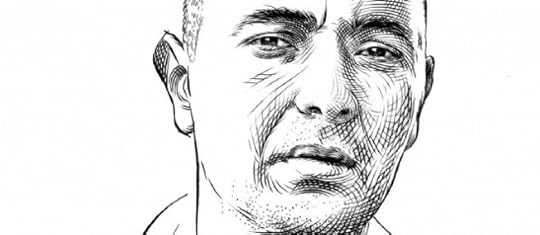
Daoud sketch by Dussault for a Nov. 24, 2014 article in le Point
Incidentally, this book has a passage that reminded me of the one concluding Saturday in which the protagonist sees the world in the nape of his beloved wife's neck. Here's the passage from The Meursault Investigation:
I'll always remember the Saturday passage as involving the one and only time I heard preaching against a book--circa 2009 in a big mainline downtown church I had visited to hear an earlier guest lecturer. So it's easy to imagine the uproar over The Meursault Investigation. Those looking for tinder for the fires of outrage will find it.
Like The Stranger, The Meursault Investigation was not fun to read, but it was compelling. Harun is more talkative and dramatic than Meursault. Harun's more inclined to voice his outrage. He's not going to go quietly into any dark fate.
Why is sure footing so difficult for the protagonist to find? Reality is slippery when one has been assigned a role within the story of a dominant society, and on top of that must conform to the stance designated by one's own group. Finally, adding insult to injury, the story one is trying to spin will not stay spun....
In the battle of the narratives, how deep into the symbolism must one delve before discovering one's foundation?
------------------------------------------------
This is the article from which I first learned of The Meursault Investigation and that inspired me to read it. GR friend Ian had posted it. http://www.tabletmag.com/jewish-arts-...
Ian also posted this article, which adds more background: http://nyti.ms/1Dt2Dzc
One of the several New York Times reviews: http://nyti.ms/1G6tLnD It included this quote, from another Algerian writer: “If you speak, you die. If you do not speak, you die. So, speak and die.”
2013 New Republic article on Camus, on the occasion of the translation of Algerian Chronicles into English--finally. It is by Paul Berman, the same author who wrote the Tablet article that provoked me to read The Meursault Investigation, and that attempts to explain Camus' position on
Algeria--which, it sounds like, was based on what we would today call pluralism. It also suggests that by basing our views only on our traditional ideas about colonialism and imperialism, we allow ourselves to make invisible mass expulsions based on ethnic cleansing. http://www.newrepublic.com/article/11...

Camus sketch by Kuin Heuff that accompanied the New Republic article. In the context of my Meursault review, I'll call it the "Camus/Meursault" sketch.
In The Meursault Investigation, the author builds on the Algerian conceit that The Stranger was not fiction at all, but rather a true story of a murder, a story written by the murderer, Meursault. Yes, as we have discussed before, people will believe all sorts of things, but when it's a cultural story, it's not considered a mental issue, or not in the same sense as an individual who's "out of touch with reality," anyway.
So, out of that conceit, the author, Kamel Daoud, spins the phantasmagoria through which his protagonist navigates in search of solid ground. As in my dream series, the sea is eating away at the solid ground. Unlike the case of my dream sequence, can our protagonist out-create the erosion process?
There was just the protagonist and his brother, never a sister who was a prostitute--no sister at all.
The body was never found.
Meursault's address cannot be located. And, by the way, since he was sentenced to death, how did he get out and live to write his estimable book?
The author seems to be writing about facts and history: about the protagonist's outrage over Meursault's no-name Arab murder victim, about the impact on his family of brother following father in disappearance, and about being left to his mother's not-so-tender mercies. Yet over and over the author takes us out onto ontological thin ice and into the eeriness of having to read on as though reality will support us. He makes us experience what it is like to have to walk on water, not in the typical Christian sense of being like God but in the sense of having to tread over uncertain and shifting territory, with or without faith.
Speaking of religion, when you read this, check out the characters' names: Harun, Musa, yes, even a Yusuf. A son who was the only one who could hear his father, but who then disappeared....
The author has written multiple layers into this book, and it can be read on many levels. I'm not saying that's going to make clear what the book means, at least not to me and not on one reading, since it moves and turns like a disco ball, but, nevertheless, some layers are more subtle than others. I doubt that the book would have generated as much controversy without the blatant anti-religious diatribe reflecting and refracting Meursault's confrontation with the priest in The Stranger, yet even without that, there would have been plenty of challenging material, what with the leap to Independence having so hopelessly overshot Utopia. Daoud, though, has not held back, broadcasting, not merely intimating, his message. Just as his characters conflate Camus with the character Meursault, some of Daoud's readers likely equate him with Harun Uld el-Assas.
Daoud sketch by Dussault for a Nov. 24, 2014 article in le Point
Incidentally, this book has a passage that reminded me of the one concluding Saturday in which the protagonist sees the world in the nape of his beloved wife's neck. Here's the passage from The Meursault Investigation:
...in my case there's a whole pack of religious fanatics hounding me, trying to convince me that the stones of this country don't only sweat with suffering, and that God is watching over us. I should shout to them, saying I've been looking at those unfinished walls for years, there isn't anything or anyone in the world I know better. Maybe at one time, way back, I was able to catch a glimpse of the divine order. The face I saw was as bright as the sun and the flame of desire--and it belonged to Meriem. (p. 140)
I'll always remember the Saturday passage as involving the one and only time I heard preaching against a book--circa 2009 in a big mainline downtown church I had visited to hear an earlier guest lecturer. So it's easy to imagine the uproar over The Meursault Investigation. Those looking for tinder for the fires of outrage will find it.
Like The Stranger, The Meursault Investigation was not fun to read, but it was compelling. Harun is more talkative and dramatic than Meursault. Harun's more inclined to voice his outrage. He's not going to go quietly into any dark fate.
Why is sure footing so difficult for the protagonist to find? Reality is slippery when one has been assigned a role within the story of a dominant society, and on top of that must conform to the stance designated by one's own group. Finally, adding insult to injury, the story one is trying to spin will not stay spun....
In the battle of the narratives, how deep into the symbolism must one delve before discovering one's foundation?
------------------------------------------------
This is the article from which I first learned of The Meursault Investigation and that inspired me to read it. GR friend Ian had posted it. http://www.tabletmag.com/jewish-arts-...
Ian also posted this article, which adds more background: http://nyti.ms/1Dt2Dzc
One of the several New York Times reviews: http://nyti.ms/1G6tLnD It included this quote, from another Algerian writer: “If you speak, you die. If you do not speak, you die. So, speak and die.”
2013 New Republic article on Camus, on the occasion of the translation of Algerian Chronicles into English--finally. It is by Paul Berman, the same author who wrote the Tablet article that provoked me to read The Meursault Investigation, and that attempts to explain Camus' position on
Algeria--which, it sounds like, was based on what we would today call pluralism. It also suggests that by basing our views only on our traditional ideas about colonialism and imperialism, we allow ourselves to make invisible mass expulsions based on ethnic cleansing. http://www.newrepublic.com/article/11...
Camus sketch by Kuin Heuff that accompanied the New Republic article. In the context of my Meursault review, I'll call it the "Camus/Meursault" sketch.

March 23, 2017
Love is a heavenly beast that scares hell out of me. I watch it devour people, two by two; it fascinates people with the lure of eternity, shuts them up in a sort of cocoon, lifts them up to heaven, and drops their carcasses back to earth like peels.
Why? Why? Why ?
Why this thing has been written? Why he used Albert Camus' brilliant novel 'The Stranger' as a crutch.
I didn't like it in fact it was one of the most irritating books I ever read. Musa, the Arab (who was killed in 'The Stranger') died and nobody was there, his reduced history, his unnamed name, his lost traces. Every ten pages author was cribbing on why Musa, my brother died.
Why should we bother ourselves with his death? Why such celebrity status given him?
There was literally nothing new in the book, a new insight or anything related with the 'The Stranger' except a very faint parallelism.
I didn't enjoy it. I mean I am very angry. May be the translation was troublesome for me. God knows.
I hated this book while reading.
Why? Why? Why ?
Why this thing has been written? Why he used Albert Camus' brilliant novel 'The Stranger' as a crutch.
I didn't like it in fact it was one of the most irritating books I ever read. Musa, the Arab (who was killed in 'The Stranger') died and nobody was there, his reduced history, his unnamed name, his lost traces. Every ten pages author was cribbing on why Musa, my brother died.
Why should we bother ourselves with his death? Why such celebrity status given him?
There was literally nothing new in the book, a new insight or anything related with the 'The Stranger' except a very faint parallelism.
I didn't enjoy it. I mean I am very angry. May be the translation was troublesome for me. God knows.
I hated this book while reading.

April 1, 2015
Hmmm. First thing to note is that to understand this book, you need to have Camus' L'Etranger in your recent memory. I started this book before rereading L'Etranger and although I liked it, I quickly realized that I needed to follow my advice above. So I did and fell in love with L'Etranger. Unfortunately, when I came back to Meursault, although I understood it better, I liked it less. I found the premise interesting (the unnamed "Arabe" in Camus' book, is given a name and a story here), I found the style exhaustingly repetitive and dull. L'Arabe, whose name is Moussa, has been killed and his brother, the narrator, suffers and acts in consequence. Daoud is a well known journalist in Algeria and nearly won the Goncourt for this book. From an intellectual and political stand point, his book is worth reading. Camus was writing from a colonialist perspective which Daoud rightly objects vehemently to. But from a literary perspective, although original, it cannot hold its own.

December 4, 2016
Ότι καλύτερο διάβασα φέτος.

August 21, 2015
Pride & Prejudice from the point of view of the servants? Blah. I'd rather read non-fiction on the subject, and anyway Austen and C19th history aren't my favourites. Classical mythology retellings narrated by the wives? Been sick of the very idea since at least 2000. And they all seem to be saying the same sodding thing. As with certain books on walking, imagining my own version during the course of an activity - even if I couldn't write it down as well as Robert Macfarlane - was at times more interesting than reading someone else's. Strange, then, that I was so interested in The Meursault Investigation, and stranger still to find myself giving it five stars. Pun intended. The initial interest was maybe because L'Etranger isn't the sort of book that usually attracts re-tellings. Despite the rant above, I'm usually very interested in hearing stories from different sides - it's just that the different-ness and interesting-ness is lost entirely when the concept becomes cliche, as it has for some fictional universes; see also fairytales.
This novella also appears to wear its identity politics on its sleeve - both sleeves and screen printed on front and back of its t-shirt - so again, not a book I'd expect to like this much. The excellent writing and its fascinating ambivalence about its own culture had a lot to do with my enthusiasm, but perhaps I also read it at the right time. Not just because of the news, but personally. I saw it as universal rather than particular. Most people have an underdog story to tell (or buried, untold) at some point in their lives - something they feel others won't want to hear, or won't take seriously. Perhaps, for, say, cabinet ministers, that hasn't happened much since childhood, but most people, to one extent or another, know the sort of thing. The Meursault Investigation is also a story of a person blighted by past events and substandard parenting, something that can happen anywhere. Publicity out of his control? Living in the shadow of celebrity? Could seem very internet-age. And a friend of mine has a brother with the same name as the narrator's brother / Meursault's victim: these people couldn't seem as other as they might to some white western readers.
It's been difficult to write further than this because I found so many quotable paragraphs in the book: thousands of words' worth, and whittling them down looked like a silly amount of work for just another voluntary unpaid internet post.
A few themes pop out from them.
- How Algeria has changed during the narrator's lifetime:
Before Independence, people did without exact dates; the rhythms of life were marked by births, epidemics, food shortages, et cetera. My grandmother died of typhus, an episode that served by itself to establish a calendar.
The resentments of the colonial era and how these boiled over during independence and its immediate aftermath.
Some of our people even decolonized the colonists’ cemeteries, and you’d often see street kids playing ball with disinterred skulls, I know. That’s practically become a tradition here when colonists run away. They often leave us three things: words, roads, and bones.
And most of all recent decades' increasing religious conservatism, meaning it's old men like him who are more liberal than average youngsters: he's an unbeliever or agnostic; he drinks, he likes wearing dapper suits not religious dress, he laments that intelligent free-thinking women, like a handful he met in his youth, seem to him to have entirely disappeared.
Her type of woman has disappeared in this country today: free, brash, disobedient, aware of their body as a gift, not as a sin or a shame. The only time I saw a cold shadow come over her was when she told me about her domineering, polygamous father, whose lecherous eyes stirred up doubt and panic in her. Books delivered her from her family and offered her a pretext for getting away from Constantine; as soon as she could, she’d enrolled in the University of Algiers.
Though he still thinks it could be worse: Centuries ago, I might have been burned alive for my convictions, and for the empty red wine bottles found in the neighborhood dumpsters. Nowadays, people just avoid me.
- Bits of the narrative are reminiscent of Camus's The Fall: a man focused on the difficulties of his own life directly addresses an imaginary interlocutor in a pub.
When you opened the door of this bar, you opened a grave, my young friend. Do you happen to have the book in your schoolbag there? Good. Play the disciple and read me the first page or so.
- Ways in which both the narrator and the plot are intricate responses to L'Etranger.
- A subset of those is about the narrator's relationship with his own mother - he can talk about her as Meursault could barely discuss his: smothering - overprotective because of one son's death, yet resentful also that this one is still here. The narrator endeavoured to escape through language:
Mama’s grief lasted so long that she needed a new idiom to express it in. In her language, she spoke like a prophetess, recruited extemporaneous mourners, and cried out against the double outrage that consumed her life: a husband swallowed up by air, a son by water. I had to learn a language other than that one. To survive. And it was the one I’m speaking at this moment. Starting with my presumed fifteenth birthday, when we withdrew to Hadjout, I became a stern and serious scholar. Books and your hero’s language gradually enabled me to name things differently and to organize the world with my own words.
- Another subset is about the neglect of Musa alongside Meursault's fame, and this as a symbol of Western attitudes. The narrator has been talked about as an unreliable narrator - but he doesn't seem as off the wall as many who bear that label. The issue here is whether Musa was definitely the man in the news story who reportedly inspired Camus: it's impossible to prove either way because of problems of record-keeping, as Mariam, a research student and the narrator's ex, found back in the 1960s. Then there is the narrator's conflation of Meursault with the real murderer and with Camus himself: he seems slyly aware of doing this at times (my brother, who died in a book), others, mid-drunken-rant perhaps not. Does The Meursault Investigation take place in a world where L'Etranger is basically true? Or in ours where it is fiction inspired loosely by something? But - and I like the idea of this, an 'unreliable' narrator whose essence is still true - as an examplar of wider cultural tendencies, what is said is accurate. It's an impressively tricksy high-wire act: Daoud surely can't be uncontroversial from a Mid-East perspective because he laments the growth of religious fervour, and especially because he makes his narrator unreliable when he is trying to make a point to The West. And to The West he is making a difficult point, but not without some ambiguity: is that ambiguity just a literary device to make a political rant more interesting? A perverse critique of common attitudes that would take an Arab's viewpoint as having less gravitas anyway? A challenge to the idea that in order to make a good argument, someone must have only acceptable, mainstream and unquestionably compos mentis views on everything?
It has at least as many layers and meanings as the word/title
L'Etranger: the stranger, the other, the foreigner... Meursault is all of these - and so is the Arab, but more profoundly and subconsciously so in the eyes of many [Western] readers - there wasn't enough about him for the reader to even consider identifying with him. It's also a plea, a more oblique one than the IMO overrated Horses of God , to communicate how alienated some in the Arab world feel from Western culture. (The narrator doesn't deal with this through religious fervour, though some do.) Daoud presents this Arab alienation as equal to an icon of European existentialism, which gives it an intellectual dignity that it perhaps does not have when presented as something necessitating aid and education programs, which may be useful, but are often talked about in a way that infantilises people. (Incidentally, Ziauddin Sardar's Balti Britain: A Journey Through the British Asian Experience first made me notice the tendency to talk about people of former colonies as if they were naughty children.)
- Finally, sometimes there are great quotes that work out of context, whilst evidently also coming from a particular view of the world and people: e.g. love is a heavenly beast that scares the hell out of me. I watch it devour people, two by two; it fascinates them with the lure of eternity, shuts them up in a sort of cocoon, lifts them up to heaven, and then drops their carcasses back to earth like peels. Have you seen what becomes of people when they split up? They’re scratches on a closed door.
Camus' original didn't mean as much to me as to many - it was only the difficult, barely articulated, relationship with the mother that interested me much. The Meursault< Investigation had much more to say to me - but it can't 'spoil' the original... I'd always been a bit embarrassed by the title of The Cure song 'Killing an Arab', marring the stunning bass-filled sound of the track, but despite always having had misgivings about it, I may not be able to hear it the same way again after reading this book.
This novella also appears to wear its identity politics on its sleeve - both sleeves and screen printed on front and back of its t-shirt - so again, not a book I'd expect to like this much. The excellent writing and its fascinating ambivalence about its own culture had a lot to do with my enthusiasm, but perhaps I also read it at the right time. Not just because of the news, but personally. I saw it as universal rather than particular. Most people have an underdog story to tell (or buried, untold) at some point in their lives - something they feel others won't want to hear, or won't take seriously. Perhaps, for, say, cabinet ministers, that hasn't happened much since childhood, but most people, to one extent or another, know the sort of thing. The Meursault Investigation is also a story of a person blighted by past events and substandard parenting, something that can happen anywhere. Publicity out of his control? Living in the shadow of celebrity? Could seem very internet-age. And a friend of mine has a brother with the same name as the narrator's brother / Meursault's victim: these people couldn't seem as other as they might to some white western readers.
It's been difficult to write further than this because I found so many quotable paragraphs in the book: thousands of words' worth, and whittling them down looked like a silly amount of work for just another voluntary unpaid internet post.
A few themes pop out from them.
- How Algeria has changed during the narrator's lifetime:
Before Independence, people did without exact dates; the rhythms of life were marked by births, epidemics, food shortages, et cetera. My grandmother died of typhus, an episode that served by itself to establish a calendar.
The resentments of the colonial era and how these boiled over during independence and its immediate aftermath.
Some of our people even decolonized the colonists’ cemeteries, and you’d often see street kids playing ball with disinterred skulls, I know. That’s practically become a tradition here when colonists run away. They often leave us three things: words, roads, and bones.
And most of all recent decades' increasing religious conservatism, meaning it's old men like him who are more liberal than average youngsters: he's an unbeliever or agnostic; he drinks, he likes wearing dapper suits not religious dress, he laments that intelligent free-thinking women, like a handful he met in his youth, seem to him to have entirely disappeared.
Her type of woman has disappeared in this country today: free, brash, disobedient, aware of their body as a gift, not as a sin or a shame. The only time I saw a cold shadow come over her was when she told me about her domineering, polygamous father, whose lecherous eyes stirred up doubt and panic in her. Books delivered her from her family and offered her a pretext for getting away from Constantine; as soon as she could, she’d enrolled in the University of Algiers.
Though he still thinks it could be worse: Centuries ago, I might have been burned alive for my convictions, and for the empty red wine bottles found in the neighborhood dumpsters. Nowadays, people just avoid me.
- Bits of the narrative are reminiscent of Camus's The Fall: a man focused on the difficulties of his own life directly addresses an imaginary interlocutor in a pub.
When you opened the door of this bar, you opened a grave, my young friend. Do you happen to have the book in your schoolbag there? Good. Play the disciple and read me the first page or so.
- Ways in which both the narrator and the plot are intricate responses to L'Etranger.
- A subset of those is about the narrator's relationship with his own mother - he can talk about her as Meursault could barely discuss his: smothering - overprotective because of one son's death, yet resentful also that this one is still here. The narrator endeavoured to escape through language:
Mama’s grief lasted so long that she needed a new idiom to express it in. In her language, she spoke like a prophetess, recruited extemporaneous mourners, and cried out against the double outrage that consumed her life: a husband swallowed up by air, a son by water. I had to learn a language other than that one. To survive. And it was the one I’m speaking at this moment. Starting with my presumed fifteenth birthday, when we withdrew to Hadjout, I became a stern and serious scholar. Books and your hero’s language gradually enabled me to name things differently and to organize the world with my own words.
- Another subset is about the neglect of Musa alongside Meursault's fame, and this as a symbol of Western attitudes. The narrator has been talked about as an unreliable narrator - but he doesn't seem as off the wall as many who bear that label. The issue here is whether Musa was definitely the man in the news story who reportedly inspired Camus: it's impossible to prove either way because of problems of record-keeping, as Mariam, a research student and the narrator's ex, found back in the 1960s. Then there is the narrator's conflation of Meursault with the real murderer and with Camus himself: he seems slyly aware of doing this at times (my brother, who died in a book), others, mid-drunken-rant perhaps not. Does The Meursault Investigation take place in a world where L'Etranger is basically true? Or in ours where it is fiction inspired loosely by something? But - and I like the idea of this, an 'unreliable' narrator whose essence is still true - as an examplar of wider cultural tendencies, what is said is accurate. It's an impressively tricksy high-wire act: Daoud surely can't be uncontroversial from a Mid-East perspective because he laments the growth of religious fervour, and especially because he makes his narrator unreliable when he is trying to make a point to The West. And to The West he is making a difficult point, but not without some ambiguity: is that ambiguity just a literary device to make a political rant more interesting? A perverse critique of common attitudes that would take an Arab's viewpoint as having less gravitas anyway? A challenge to the idea that in order to make a good argument, someone must have only acceptable, mainstream and unquestionably compos mentis views on everything?
It has at least as many layers and meanings as the word/title
L'Etranger: the stranger, the other, the foreigner... Meursault is all of these - and so is the Arab, but more profoundly and subconsciously so in the eyes of many [Western] readers - there wasn't enough about him for the reader to even consider identifying with him. It's also a plea, a more oblique one than the IMO overrated Horses of God , to communicate how alienated some in the Arab world feel from Western culture. (The narrator doesn't deal with this through religious fervour, though some do.) Daoud presents this Arab alienation as equal to an icon of European existentialism, which gives it an intellectual dignity that it perhaps does not have when presented as something necessitating aid and education programs, which may be useful, but are often talked about in a way that infantilises people. (Incidentally, Ziauddin Sardar's Balti Britain: A Journey Through the British Asian Experience first made me notice the tendency to talk about people of former colonies as if they were naughty children.)
- Finally, sometimes there are great quotes that work out of context, whilst evidently also coming from a particular view of the world and people: e.g. love is a heavenly beast that scares the hell out of me. I watch it devour people, two by two; it fascinates them with the lure of eternity, shuts them up in a sort of cocoon, lifts them up to heaven, and then drops their carcasses back to earth like peels. Have you seen what becomes of people when they split up? They’re scratches on a closed door.
Camus' original didn't mean as much to me as to many - it was only the difficult, barely articulated, relationship with the mother that interested me much. The Meursault< Investigation had much more to say to me - but it can't 'spoil' the original... I'd always been a bit embarrassed by the title of The Cure song 'Killing an Arab', marring the stunning bass-filled sound of the track, but despite always having had misgivings about it, I may not be able to hear it the same way again after reading this book.

August 23, 2015
The Meursault Investigation is an interesting response to Camus' The Stranger. It begins with the words "Maman is still alive today," in contrast to Camus' famous opening, "Maman died today." Meursault interrogates the colonial fantasy in which the French occupier possesses more of an identity than the man he murders. Harun, the narrator, is the brother of the murdered man, Musa. His life has been lived in the shadow of his brother's death, his mother has lived in the memory of her older son's life, grieving over his anonymous death with no body to bury.
Meursault definitely needs to be either along side or shortly after reading Camus work. There are many analogous passages. Harun longs to meet the same fate as Meursault, Camus' narrator but even in this he is frustrated. His life has been one long disappointment followed by frustration followed by disappointment after another. He lives to give his brother's name back to history and validate both his brother's life and "martyrdom"-his murder at the hands of the French colonist who has stolen not only his home but his very identity.
But Harun is a complicated character, hardly a hero. He is old and cantankerous. His life has been given over to his mother's search for her older son's body, she has barely acknowledged her younger son's existence. Harun has lived his life helping his mother live out her grief. He has little energy left for love or even thought. His life has been hollowed out by Musa's murder and he has studied the book detailing that murder (The Stranger), learned the language of the conqueror, and meditated endlessly on the Meursault who damaged his life forever.
The Meursault Investigation is a very interesting, brief book (The Stranger is also a short work) that is the colonized's response to the colonizers. Although it held my interest in general, there were many moments when I found myself struggling to maintain that interest. I recommend it, especially to fans of Camus' work.
Meursault definitely needs to be either along side or shortly after reading Camus work. There are many analogous passages. Harun longs to meet the same fate as Meursault, Camus' narrator but even in this he is frustrated. His life has been one long disappointment followed by frustration followed by disappointment after another. He lives to give his brother's name back to history and validate both his brother's life and "martyrdom"-his murder at the hands of the French colonist who has stolen not only his home but his very identity.
But Harun is a complicated character, hardly a hero. He is old and cantankerous. His life has been given over to his mother's search for her older son's body, she has barely acknowledged her younger son's existence. Harun has lived his life helping his mother live out her grief. He has little energy left for love or even thought. His life has been hollowed out by Musa's murder and he has studied the book detailing that murder (The Stranger), learned the language of the conqueror, and meditated endlessly on the Meursault who damaged his life forever.
The Meursault Investigation is a very interesting, brief book (The Stranger is also a short work) that is the colonized's response to the colonizers. Although it held my interest in general, there were many moments when I found myself struggling to maintain that interest. I recommend it, especially to fans of Camus' work.

March 9, 2017
_
نزد ما ایمان منجر به تنبلی های صمیمانه ای می شود که بی قیدی ای تماشایی را هر جمعه به راه می اندازد، انگار انسان ها کاملاً ژولیده و نامرتب به سوی خدا می روند.
_
بیداری همسایه ها، قدم های بی حال و حرکت های کُند، از خواب بلند شدن توله هایشان-که قبل از آن چشم باز کردهاند - و مثل کرم هایی روی بدنم وول می خورند، اتومبیلی جدید که آن را می شویند و می سابند، گردش بی فایده خورشید در این روز جاودانی و این احساس تقریبا جسمانی بطالتِ کلِ جهانِ هستی که به خایه هایی برای شستن و آیه هایی برای تلاوت تبدیل شده اند.
_
جمعه ها؟ روزی نیست که در آن خدا استراحت کرده است، بلکه روزی است که او تصمیم گرفته فرار کند و دیگر هرگز برنگردد. من این نکته را از جای خالی اش که بعد از نماز انسان ها همچنان باقی می ماند و چهره ی آن هایی می دانم که پنجره ی تضرّع چسباندهاند. و از رنگ و روی آدمهایی که با شور و شوق به ترس از پوچی پاسخ می دهند.
_
در کتاب بیگانه کامو مرد عربی کشته می شود،در همان روز فرزند مادری به نام موسی ناپدید می شود که گمان می رود همان فرد کشته شده باشد. نه جنازه ای در دسترس است و نه مدرکی برای اثبات، فقط حدس و گمان. حدسیاتی که زندگی مادر را نابود میکند و باعث میشود تا آن یکی فرزندش مانند مرده ای زندگی بگذراند. برادر از کودکی به مرور زمان سرخورده از مادر و جامعه، اعتقادات دینی و مذهبیش را از دست میدهد تا یکی از بزرگترین چالش هایش در زندگی صحبت درباره اعتقاداتش باشد و حس کینه توزانه ای به مردمی که خدای خود را می پرستند. مادر و فرزند برای خاموشی شعله های انتقام لز مرگ خاموش و بی سر و صدای فرزند خود دست به قتلی میزنند که آن هم در بحبوحه استقلال یافتن الجزایر به بی ارزشی قتل فرزند زود فراموش میشود.شاید مرگی که شاهد آن هستیم زوال مادر و مرگ تدریجی برادر باشد
نزد ما ایمان منجر به تنبلی های صمیمانه ای می شود که بی قیدی ای تماشایی را هر جمعه به راه می اندازد، انگار انسان ها کاملاً ژولیده و نامرتب به سوی خدا می روند.
_
بیداری همسایه ها، قدم های بی حال و حرکت های کُند، از خواب بلند شدن توله هایشان-که قبل از آن چشم باز کردهاند - و مثل کرم هایی روی بدنم وول می خورند، اتومبیلی جدید که آن را می شویند و می سابند، گردش بی فایده خورشید در این روز جاودانی و این احساس تقریبا جسمانی بطالتِ کلِ جهانِ هستی که به خایه هایی برای شستن و آیه هایی برای تلاوت تبدیل شده اند.
_
جمعه ها؟ روزی نیست که در آن خدا استراحت کرده است، بلکه روزی است که او تصمیم گرفته فرار کند و دیگر هرگز برنگردد. من این نکته را از جای خالی اش که بعد از نماز انسان ها همچنان باقی می ماند و چهره ی آن هایی می دانم که پنجره ی تضرّع چسباندهاند. و از رنگ و روی آدمهایی که با شور و شوق به ترس از پوچی پاسخ می دهند.
_
در کتاب بیگانه کامو مرد عربی کشته می شود،در همان روز فرزند مادری به نام موسی ناپدید می شود که گمان می رود همان فرد کشته شده باشد. نه جنازه ای در دسترس است و نه مدرکی برای اثبات، فقط حدس و گمان. حدسیاتی که زندگی مادر را نابود میکند و باعث میشود تا آن یکی فرزندش مانند مرده ای زندگی بگذراند. برادر از کودکی به مرور زمان سرخورده از مادر و جامعه، اعتقادات دینی و مذهبیش را از دست میدهد تا یکی از بزرگترین چالش هایش در زندگی صحبت درباره اعتقاداتش باشد و حس کینه توزانه ای به مردمی که خدای خود را می پرستند. مادر و فرزند برای خاموشی شعله های انتقام لز مرگ خاموش و بی سر و صدای فرزند خود دست به قتلی میزنند که آن هم در بحبوحه استقلال یافتن الجزایر به بی ارزشی قتل فرزند زود فراموش میشود.شاید مرگی که شاهد آن هستیم زوال مادر و مرگ تدریجی برادر باشد

July 27, 2015
"They mention only one dead man, they feel no compunction about doing that, even though there were two of them, two dead men. Yes, two. Why does the other one get left out? Well, the original guy was such a good story teller, he managed to make people forget his crime, whereas the other one was a poor illiterate God created apparently for the sole purpose of taking a bullet and returning to dust - an anonymous person who didn't even have the time to be given a name"
Kamel Daoud's "Mersault, contre-enquête", translated into English, by John Cullen, as "The Mersualt Investigation" is a companion novel to Camus's classic L'Étranger (https://www.goodreads.com/review/show...) but telling the other story, of Mersault's victim, unnamed in Camus's tale:
"He's the second most important character in the book, but he has no name, no face, no words...the word Arab appears twenty-five times, but not a single name, not once"
In concept this could stray dangerously close to fan fiction, or (worse) those officially-authorised-by-the-estate/family" "sequels" to classic novels. But perhaps a better comparison might be Tournier's "Vendredi", a re-imagining of Robinson Crusoe, and indeed Daoud gives several nods in this direction, e.g. having his narrator point out that Camus/Mersault could at least "have called him "Two PM", like that other writer who called his black man "Friday"".
It is also more "post-modern" (although the technique goes back at least as far as the second volume of Don Quixote), in that it acknowledges it's a gloss on a published book (albeit one it treats as biographical or even auto-biographical not fictional) and told in the form of one-side of a conversation with an interlocutor, an Algerian exile, an author wanting to write Musa's story ("you're here to find a corpse and write a book") - a technique reminiscent of The Reluctant Fundamentalist.
And in practice, the execution of the concept is so powerful that the approach feels justified and also an innovative literary effort.
The narrator, Harun, is (or claims to be) the brother of Mersault's victim, who he names as Musa. He is now in his seventies, but was just 7 in 1942 when his brother died, and is dismissive of Mersault's justification for his deed:
"A man who knows how to write kills an Arab who, on the day he dies, doesn't even have a name, as if he'd hung it on a nail somewhere before stepping onto the stage. Then the man begins to explains that his act was the fault of a God who doesn't exist and that he did it because of what he'd just realised in the sun and because the sea salt obliged him to shut his eyes."
Indeed his account questions everything in the original novel: Mersault's tale of his mother's death "a too perfect alibi, not a memory", his assertion that Raymond's girlfriend was the victim's sister "Musa's alleged sister, who's either an allegory or just a pathetic last minute excuse", the witnesses "one by one they turn out to the pseudonyms, or not really neighbours, or memories, or people who fled after the crime", even the murder itself.
The narrator / Daoud make very clever use of Mersault / Camus own language to tell the parallel story:
"The murderer got famous, and his story's written too well for me to get any ideas about imitating him. He wrote in his own language. Therefore I'm going to do what was done in this country after Independence: I'm going to take the stones from the old houses the colonists left behind, remove them one by one, and build my own house, my own language."
This starts with the opening line "Mama's still alive today", contrasting with L'Étranger's famous "Mama died today". Another example, talking of Harun's own encounter with a Frenchman: "if he had moved, I would have struck him and laid him out flat, facedown in the night, with bubbles bursting on the surface around his head", a direct echo of how Mersault describes Raymond's assault on the second flute-playing Arab (who Harun gives a name, "[Musa] was supposed to meet one of his friends, a certain Larbi, who as I recall played the flute", although characteristically he adds "Incidentally, he's never been found, this Larbi guy. He vanished from the neighbourhood to avoid my mother, the police, the whole story and even the story in your book."
In passing, it has to be said that his effect is a little weakened in translation, simply because Cullen has used (I believe) his own translations of Camus's French original - I wonder if he might instead have referred explicitly to one existing translation to aid the English reader.
This mirroring of the two stories extends beyond the language used. Cleverly Daoud's has his narrator Harun's life mirror much of Mersault's ("I was looking for traces of my brother in the book, and what I found there instead was my own reflection, I discovered I was practically the murderer's double"). He is an "outsider" himself in Algerian society, due to his lifestyle and lack of religious belief ("centuries ago, I might have been burned alive for my convictions and for the empty red wine bottles found in the neighbourhood Dumpsters. Nowadays, people just avoid me."), had his Meriem to Mersault's Marie, and even his own murder to confess, committed twenty years after Musa's death and in the immediate aftermath of Algerian independence. He realises, as Mersault did, that "when you kill someone, there's a part of you that immediately starts devising an explanation, making up an alibi, putting together a version of the facts that washes your hands clean, even though they still smell of gunpowder and sweat". And when this crime is investigated, he remarks of the post independence militia that "I perceived what the new lords of the land really wanted from me. Even if showed up with the Frenchman's body on my back, my crime wouldn't be the one the eye could see, but that other crime which the intuition should guess: my strangeness."
Daoud used the novel, and the way that Mersault victim was simply an anonymous Arab - "The court preferred judging a man who didn't weep over his mother's death to judging a man who killed an Arab." - not to condemn Camus, but to make some powerful points about the lasting effects of colonialism on Algeria, including what the country has made of its independence.
The closing pages of the novel are particularly powerful, drawing together the different strands of their parallel lives, so that Harun's words echo Mersault's almost identically.
Highly recommended - and having read the novel one can't quite imagine L'Étranger without it.
Kamel Daoud's "Mersault, contre-enquête", translated into English, by John Cullen, as "The Mersualt Investigation" is a companion novel to Camus's classic L'Étranger (https://www.goodreads.com/review/show...) but telling the other story, of Mersault's victim, unnamed in Camus's tale:
"He's the second most important character in the book, but he has no name, no face, no words...the word Arab appears twenty-five times, but not a single name, not once"
In concept this could stray dangerously close to fan fiction, or (worse) those officially-authorised-by-the-estate/family" "sequels" to classic novels. But perhaps a better comparison might be Tournier's "Vendredi", a re-imagining of Robinson Crusoe, and indeed Daoud gives several nods in this direction, e.g. having his narrator point out that Camus/Mersault could at least "have called him "Two PM", like that other writer who called his black man "Friday"".
It is also more "post-modern" (although the technique goes back at least as far as the second volume of Don Quixote), in that it acknowledges it's a gloss on a published book (albeit one it treats as biographical or even auto-biographical not fictional) and told in the form of one-side of a conversation with an interlocutor, an Algerian exile, an author wanting to write Musa's story ("you're here to find a corpse and write a book") - a technique reminiscent of The Reluctant Fundamentalist.
And in practice, the execution of the concept is so powerful that the approach feels justified and also an innovative literary effort.
The narrator, Harun, is (or claims to be) the brother of Mersault's victim, who he names as Musa. He is now in his seventies, but was just 7 in 1942 when his brother died, and is dismissive of Mersault's justification for his deed:
"A man who knows how to write kills an Arab who, on the day he dies, doesn't even have a name, as if he'd hung it on a nail somewhere before stepping onto the stage. Then the man begins to explains that his act was the fault of a God who doesn't exist and that he did it because of what he'd just realised in the sun and because the sea salt obliged him to shut his eyes."
Indeed his account questions everything in the original novel: Mersault's tale of his mother's death "a too perfect alibi, not a memory", his assertion that Raymond's girlfriend was the victim's sister "Musa's alleged sister, who's either an allegory or just a pathetic last minute excuse", the witnesses "one by one they turn out to the pseudonyms, or not really neighbours, or memories, or people who fled after the crime", even the murder itself.
The narrator / Daoud make very clever use of Mersault / Camus own language to tell the parallel story:
"The murderer got famous, and his story's written too well for me to get any ideas about imitating him. He wrote in his own language. Therefore I'm going to do what was done in this country after Independence: I'm going to take the stones from the old houses the colonists left behind, remove them one by one, and build my own house, my own language."
This starts with the opening line "Mama's still alive today", contrasting with L'Étranger's famous "Mama died today". Another example, talking of Harun's own encounter with a Frenchman: "if he had moved, I would have struck him and laid him out flat, facedown in the night, with bubbles bursting on the surface around his head", a direct echo of how Mersault describes Raymond's assault on the second flute-playing Arab (who Harun gives a name, "[Musa] was supposed to meet one of his friends, a certain Larbi, who as I recall played the flute", although characteristically he adds "Incidentally, he's never been found, this Larbi guy. He vanished from the neighbourhood to avoid my mother, the police, the whole story and even the story in your book."
In passing, it has to be said that his effect is a little weakened in translation, simply because Cullen has used (I believe) his own translations of Camus's French original - I wonder if he might instead have referred explicitly to one existing translation to aid the English reader.
This mirroring of the two stories extends beyond the language used. Cleverly Daoud's has his narrator Harun's life mirror much of Mersault's ("I was looking for traces of my brother in the book, and what I found there instead was my own reflection, I discovered I was practically the murderer's double"). He is an "outsider" himself in Algerian society, due to his lifestyle and lack of religious belief ("centuries ago, I might have been burned alive for my convictions and for the empty red wine bottles found in the neighbourhood Dumpsters. Nowadays, people just avoid me."), had his Meriem to Mersault's Marie, and even his own murder to confess, committed twenty years after Musa's death and in the immediate aftermath of Algerian independence. He realises, as Mersault did, that "when you kill someone, there's a part of you that immediately starts devising an explanation, making up an alibi, putting together a version of the facts that washes your hands clean, even though they still smell of gunpowder and sweat". And when this crime is investigated, he remarks of the post independence militia that "I perceived what the new lords of the land really wanted from me. Even if showed up with the Frenchman's body on my back, my crime wouldn't be the one the eye could see, but that other crime which the intuition should guess: my strangeness."
Daoud used the novel, and the way that Mersault victim was simply an anonymous Arab - "The court preferred judging a man who didn't weep over his mother's death to judging a man who killed an Arab." - not to condemn Camus, but to make some powerful points about the lasting effects of colonialism on Algeria, including what the country has made of its independence.
The closing pages of the novel are particularly powerful, drawing together the different strands of their parallel lives, so that Harun's words echo Mersault's almost identically.
Highly recommended - and having read the novel one can't quite imagine L'Étranger without it.

December 28, 2016
It’s not an easy feat to take a classic novel – Albert Camus’s The Outsider, the ultimate tale of alienation – and turn it on its ear, telling it from the perspective of the brother of the nameless Arab. But Kamel Daoud does so masterfully, bellying the fact that this is his debut novel. And even though I haven’t read The Outsider since college days, the images came flooding back to me, from the very first sentence (“Mama’s still alive today”, as opposed to The Outsider’s “Mama died today.”)
Not unlike Mohsin Hamid’s The Fundamentalist (or Samuel Coleridge’s Rhyme of the Ancient Mariner), a young man happens across our narrator Harun, who holds him spellbound. According to Harun, the Arab of the famous sotry has a name – Musa, translated as Moses. Musa could be interchangeable with thousands of other nameless Arabs but for one important detail: his brother is a story-teller. We don’t know – how could we? – whether the story he’s weaving is true but we do know that the power of the story makes all the difference.
And what do we really know about The Outsider? We know this: “The Arab is killed because the murderer thinks he wants to avenge the prostitute, or maybe because he has the insolence to take a siesta…All the rest is nothing but embellishments, the products of your writer’s genius.” The nameless Arab of the Camus tale lost everything by venturing into the French side: his life, his short history, even his name. He is a metaphor for so many other stories of gratituous deaths.
Had Kamil Daoud left the story here it would be an achievement. But then he does something remarkable: he casts Harun as the outsider, murdering an unknown French man. There are differences: first and most importantly, he gives the Frenchman a name. Yet by weaving the same story from a different perspective, he does honor to both his own tale and that of Camus.
While Camus wrote about the negation of life, Daoud ventures into a new territory: celebrating its occasional moments of majesty. It’s an impressive undertaking and I daresay, a tour de force.
May 2, 2015
Last week, I read Camus' The Stranger with my son. We also read about it, and learned a bit about Camus, his background, and his philosophy. (I learned some, anyway. I'm hoping my son did, too.)
This week, I started reading a short story in the New Yorker, realized I didn't recognize the author's name, and flipped back to take a look at the about-the-contributors page.
"Kamel Daoud is an Algerian journalist."
Oh. Cool. And what a coincidence that I just read a novel set in Algeria.
"His first novel, The Meursault Investigation, was published in France last year, and won several awards. It comes out in English in June."
Say WHAT???
Sure enough, the story was an excerpt from a novel based on the novel I'd just read. So now I'm not an atheist anymore, because clearly there's a God.
Or maybe this was just a terrific coincidence. At any rate, I was able to get a lot out of this story -- to catch some references Daoud made to the original work, since I had that novel fresh in my head.
I'm not sure how I feel about the narrator frequently describing his brother's murder as "a crime committed in a book." Frankly, The Stranger is so strange because no one in the world has ever been like Meursault. How could they be? He's a symbol, a human stand-in for the philosophical points Camus wanted to make.
(Which is very different from being a stand-in for Camus himself, by the way. Meursault is utterly indifferent, largely passive, and acts -- when he can be bothered to -- for no reason at all. He's like the laws of physics, or gravity. Camus, on the other hand, was passionate, fiercely thoughtful, and risked his life during World War II working for the French resistance.)
Anyway. I want to read the novel this story is an excerpt from before I make any judgements about the references to The Stranger. I don't mind follow-up fan-fiction -- Jean Rhys' Wide Sargasso Sea is a brilliant telling of Jane Eyre -- but I'm not sure how I feel about a world in which The Stranger exists as a genuine autobiography, rather than one of the strangest novels I've ever read.
I do like the references to Camus and his writing. The narrator of this story doesn't know how old his mother is. That mother cleans houses, just as Camus' mother did. The word "absurd" is used sparingly but meaningfully. Oh, and the writing is beautiful.
I enjoyed this story very much and look forward to reading Daoud's novel. Maybe one day my French will be good enough that I can read it in the original.
This week, I started reading a short story in the New Yorker, realized I didn't recognize the author's name, and flipped back to take a look at the about-the-contributors page.
"Kamel Daoud is an Algerian journalist."
Oh. Cool. And what a coincidence that I just read a novel set in Algeria.
"His first novel, The Meursault Investigation, was published in France last year, and won several awards. It comes out in English in June."
Say WHAT???
Sure enough, the story was an excerpt from a novel based on the novel I'd just read. So now I'm not an atheist anymore, because clearly there's a God.
Or maybe this was just a terrific coincidence. At any rate, I was able to get a lot out of this story -- to catch some references Daoud made to the original work, since I had that novel fresh in my head.
I'm not sure how I feel about the narrator frequently describing his brother's murder as "a crime committed in a book." Frankly, The Stranger is so strange because no one in the world has ever been like Meursault. How could they be? He's a symbol, a human stand-in for the philosophical points Camus wanted to make.
(Which is very different from being a stand-in for Camus himself, by the way. Meursault is utterly indifferent, largely passive, and acts -- when he can be bothered to -- for no reason at all. He's like the laws of physics, or gravity. Camus, on the other hand, was passionate, fiercely thoughtful, and risked his life during World War II working for the French resistance.)
Anyway. I want to read the novel this story is an excerpt from before I make any judgements about the references to The Stranger. I don't mind follow-up fan-fiction -- Jean Rhys' Wide Sargasso Sea is a brilliant telling of Jane Eyre -- but I'm not sure how I feel about a world in which The Stranger exists as a genuine autobiography, rather than one of the strangest novels I've ever read.
I do like the references to Camus and his writing. The narrator of this story doesn't know how old his mother is. That mother cleans houses, just as Camus' mother did. The word "absurd" is used sparingly but meaningfully. Oh, and the writing is beautiful.
I enjoyed this story very much and look forward to reading Daoud's novel. Maybe one day my French will be good enough that I can read it in the original.

September 27, 2020
Χμ. Δυσκολεύτηκα πολύ να αποφασίσω αν και πόσο μου αρεσε αυτό το βιβλίο. Ο αδελφός του Άραβα που σκότωσε ο Μερσώ στον "Ξένο" ξετυλίγει το νημα της ζωής του απο τη δολοφονία του αδελφού του. Η ιστορία που αφηγείται απο την άλλη πλευρά φέρνει στο επίκεντρο τον ανώνυμο άνδρα που βρίσκεται στο δρόμο του Μερσω μόνο ως αφετηριακο σημειο της ιστορίας του Καμι και ταυτόχρονα ανοιγει ένα παράθυρο στην Αλγερία λιγο πριν και λίγο μετά την απελευθέρωση από τον αποικιοκρατικο ζυγό.
Καταρχήν, το βιβλίο είναι πρωτολειο. Ευθύς εξαρχής, επιχειρεί κάτι που, αν μη τι άλλο, θελει θάρρος. Η σύνδεση με ενα απο τα μεγαλύτερα αριστουργηματα της παγκόσμιας λογοτεχνίας οπωσδήποτε μπορεί να βάλει τον αναγνώστη σε διαδικασία σύγκρισης - και ολοι ξέρουμε πώς θα κατέληγε κατι τέτοιο. Ο ίδιος ομως ο συγγραφέας αποφεύγει αυτην την παγιδα, αφισταται απο το υφος του Καμι. Διαχωρίζει ετσι τη θέση του και διασώζει την αξιοπρέπεια του.
Το βιβλιο δεν είναι κακό, αλλά στην αρχή και μέχρι περίπου τη μέση δυσκολεύτηκα πολύ να μπω στο ρυθμό του. Οι συνεχείς αναφορές στον Μερσώ και οι αλλεπάλληλες επαναλήψεις του ονόματος του νεκρου αδελφου δε βοήθησαν, ήταν μαλιστα αρκετα κουραστικές. Γενικότερα ομως, είχε και μια ροπή προς την ασυνέχεια, κάτι που βελτιώνεται απο τη μέση και κάτω αλλα δεν ελλείπει πλήρως. Έχει αρκετά δυνατά σημεία, αλλά και αδυναμίες που φαίνονται, ίσως γιατί είναι το πρώτο έργο του Νταούντ. Γενικά, μια τίμια προσπάθεια που θα μπορούσε να είναι καλύτερη. Νομιζω μαλιστα ότι θα το προτιμούσα εάν αφηνε τελείως εκτός τον "Ξένο" και χρησιμοποιούσε τα ίδια στοιχεία για να χτίσει την ιστορια του αυτοτελως. Βέβαια θα επρόκειτο για κάτι εντελώς διαφορετικό, μια άλλη ιδέα. Έχω όμως την εντύπωση ότι αυτή ακριβώς η ιδέα είναι που κρατά το βιβλίο σε πιο χαμηλό επίπεδο απο αυτο που ενδεχομένως μπορουσε να φτάσει. Σαν να εγκλωβίστηκε ο ίδιος ο συγγραφέας σε αυτό που σκέφτηκε αρκετά και να περιορίστηκε από το πλαίσιο που έβαλε ο ίδιος στο έργο του.
Καταρχήν, το βιβλίο είναι πρωτολειο. Ευθύς εξαρχής, επιχειρεί κάτι που, αν μη τι άλλο, θελει θάρρος. Η σύνδεση με ενα απο τα μεγαλύτερα αριστουργηματα της παγκόσμιας λογοτεχνίας οπωσδήποτε μπορεί να βάλει τον αναγνώστη σε διαδικασία σύγκρισης - και ολοι ξέρουμε πώς θα κατέληγε κατι τέτοιο. Ο ίδιος ομως ο συγγραφέας αποφεύγει αυτην την παγιδα, αφισταται απο το υφος του Καμι. Διαχωρίζει ετσι τη θέση του και διασώζει την αξιοπρέπεια του.
Το βιβλιο δεν είναι κακό, αλλά στην αρχή και μέχρι περίπου τη μέση δυσκολεύτηκα πολύ να μπω στο ρυθμό του. Οι συνεχείς αναφορές στον Μερσώ και οι αλλεπάλληλες επαναλήψεις του ονόματος του νεκρου αδελφου δε βοήθησαν, ήταν μαλιστα αρκετα κουραστικές. Γενικότερα ομως, είχε και μια ροπή προς την ασυνέχεια, κάτι που βελτιώνεται απο τη μέση και κάτω αλλα δεν ελλείπει πλήρως. Έχει αρκετά δυνατά σημεία, αλλά και αδυναμίες που φαίνονται, ίσως γιατί είναι το πρώτο έργο του Νταούντ. Γενικά, μια τίμια προσπάθεια που θα μπορούσε να είναι καλύτερη. Νομιζω μαλιστα ότι θα το προτιμούσα εάν αφηνε τελείως εκτός τον "Ξένο" και χρησιμοποιούσε τα ίδια στοιχεία για να χτίσει την ιστορια του αυτοτελως. Βέβαια θα επρόκειτο για κάτι εντελώς διαφορετικό, μια άλλη ιδέα. Έχω όμως την εντύπωση ότι αυτή ακριβώς η ιδέα είναι που κρατά το βιβλίο σε πιο χαμηλό επίπεδο απο αυτο που ενδεχομένως μπορουσε να φτάσει. Σαν να εγκλωβίστηκε ο ίδιος ο συγγραφέας σε αυτό που σκέφτηκε αρκετά και να περιορίστηκε από το πλαίσιο που έβαλε ο ίδιος στο έργο του.

January 20, 2017
کتاب "مُرسو- ضد تحقیق" که مترجم اسمش رو به "چه کسی مُرسو را کشت؟"، موضوع بسیار جالبی داره. به شخصه وقتی از موضوع کتاب آگاه شدم، تا زمانی که کتاب رو نخریده بودم، چیزی که می تونم اسمش رو "بیتابیِ کتابخوانانه" بذارم، در من وجود داشت. این بیتابی ابتدا من رو به پیدا کردن ترجمه انگلیسی کتاب توی فضای نت و تورنت سوق داد و وقتی این تلاش ها ثمره ای نداد و فقط نسخه فرانسوی (کامل داوود - نویسنده الجزایری - این کتاب رو به زبان فرانسوی نوشته) رو پیدا کردم، این اراده قدیمی برای یاد گرفتن زبان فرانسوی در من تقویت شد و چند روز بعد هم در حین خروج از یه کتابفروشی، ترجمه فارسی کتاب به نحوی خودش رو جلوی پاهام قرار داد تا ببینمش و توفیق خوندنش به این شکل پیدا بشه
کتاب همونطور که از اسمش پیداست به "مُرسو"یِ معروف "آلبر کامو" در کتاب "بیگانه" مربوط هست. "کامل داوود" که اسمش روی جلد و در صفحه مشخصات این کتاب (از نشر نگاه) به اشتباه "کمال داوود" نوشته شده، ژورنالیست و روزنامه نگاری الجزایری هست که 71 سال بعد از چاپ شدن کتاب "بیگانه"، همون داستان رو از نگاه برادر "عرب" ـی که به وسیله "مُرسو" کشته شده بود روایت می کنه و همونطور که انتظار میره، نگاهی کم و بیش ناسیونالیستی به داستان داره، هرچند شخصیت اصلی کتاب به خاطر اتفاقاتی که براش افتاده از "الجزیره" متنفره و ضمناً رگه هایی از ضد مذهب بودن هم توی صحبت هاش دیده میشه. علاوه بر این ها، خودش رو به عنوان یه "مشروب خوار" هم معرفی می کنه که با اصالت اعتقادات اسلامی بومی های الجزایر تناقض داره
در این رمان 159 صفحه ای، برادرِ این عربِ کشته شده به وسیله مرسو فقط میخواد این رو بدونه که چطور میشه یه آدم رو بکشی و بعد درباره اون اتفاق کتاب بنویسی و بعد به جای اینکه درباره کسی که کشته شده و دلیلت از این کار توضیح بدی، حتی یک اسم ازش نیاری و اون رو فقط "عرب" خطاب کنی. بقیه داستان رو هم به خودت و زندگیت اختصاص بدی و با "نبوغ نویسندگی" ـت - که حتی خودِ برادر مقتول این نبوغ رو تاییدش می کنه - طوری داستان رو روایت کنی که همه تحسینت کنن و حق رو به تو بدن و هیشکی نپرسه اصلاً چرا یک نفر رو به قتل رسوندی. هیشکی نگه "یک عرب" رو به قتل رسوندی، فقط به این دلیل که توی ساحل، آفتاب می زده به چشمت و قطره شور عرق پیشانیت به چشمت وارد شده و سوزش چشمت و ناتوانیِ لحظه ای از دیدن اطراف باعث شده حس عدم امنیت پیدا کنی و با 5 شلیک گلوله یک آدم دیگه رو از پا در بیاری
موضوع کتاب و شهامت نویسنده برای نوشتن دنباله ای بر کتابی چنین موفق و نشون دادن "قهرمان" بیگانه - هرچند قهرمانی خاص - به عنوان یک "ضد قهرمان" جای تحسین داره. ولی متن کتاب به شدت تکراریه، همش تکرار مکررات. کل حرف نویسنده اینه که چرا آلبر کامو حتی عربِ مقتول رو در این حد آدم حساب نکرده که یه اسم بهش بده. و این مساله رو این طوری تشریح می کنه:
سوژه جالب اما پرداخت ضعیف، مشکل اصلی کتابه. همه ش تاکید بر اینه که نویسنده "بیگانه" تونسته با مهارت نویسندگیش، داستانی رو که توش یک فرانسوی اومده عربی رو بی دلیل به قتل رسونده، به داستانی تبدیل کرده که خواننده بعد از خودنش تمام حق رو به قاتل میده
کامل داوود سعی کرده کتاب رو تا حد ممکن به فضای بیگانه شبیه کنه. برادرِ عرب توی این داستان فقط از یک زن توی زندگیش نام می بره و اون "مریم" ـه، معادل عربیِ "ماری"، معشوقه "مُرسو" در بیگانه. یا مثلا کتاب با این عبارت شروع میشه: "امروز مامان هنوز زنده است" که با جمله "مامان امروز مرد..." در تناقض مستقیمه. بیشتر روی این تکنیک های سمبولیک کار شده تا روی پرداختن به یک متن قوی و مستقل. کتاب کاملاً زیر سایه "بیگانه" قرار داره و به نظر من هرگز نمی تونه به عنوان کتابی شانه به شانه کتاب مرجعش قرار بگیره. البته در نیمه دوم کتاب اتفاقات دیگه ای هم میفته که برای اسپویل نشدن حرفی ازشون نمی زنم. به طور کلی، 15 صفحه ابتدایی و 20 صفحه انتهایی کتاب جالب بود و باقی کتاب کم و بیش روند ثابتی رو طی می کرد
با همه این اوصاف، این کتاب که در سال 2013 منتشر شده، چند جایزه مهم رو از آن خودش کرده. در سال 2015، جایزه گنکور برای یک نویسنده رمان اولی به این کتاب تعلق گرفت. همینطور دو جایزه فرانسوی (جایزه "فرانسوا موریاک" که هر ساله به نویسنده ای جوان داده میشه و جایزه "پنج قاره فرانکوفون" که با هدف کشف و شناسایی ادبیات فرانسوی در بین فرانسوی زبانان اقصی نقاط جهان داده میشه) هم به این کتاب و نویسنده ش تعلق گرفته
من از اون جایی که بی نهایت "بیگانه" رو دوست داشتم، نمی تونستم این کتاب رو نادیده بگیرم. فکر می کنم هر کس دیگه ای که "بیگانه" رو دوست داشته هم همین حالت رو داشته باشه. اگه تا حالا "بیگانه" ی آلبر کامو رو نخوندید، می تونید نقدی بر کتاب رو از این لینک بخونید که حدود یک سال پیش برای بلاگ نوار نوشته بودم
http://www.navaar.ir/blog/2015/11/18/...
کتاب همونطور که از اسمش پیداست به "مُرسو"یِ معروف "آلبر کامو" در کتاب "بیگانه" مربوط هست. "کامل داوود" که اسمش روی جلد و در صفحه مشخصات این کتاب (از نشر نگاه) به اشتباه "کمال داوود" نوشته شده، ژورنالیست و روزنامه نگاری الجزایری هست که 71 سال بعد از چاپ شدن کتاب "بیگانه"، همون داستان رو از نگاه برادر "عرب" ـی که به وسیله "مُرسو" کشته شده بود روایت می کنه و همونطور که انتظار میره، نگاهی کم و بیش ناسیونالیستی به داستان داره، هرچند شخصیت اصلی کتاب به خاطر اتفاقاتی که براش افتاده از "الجزیره" متنفره و ضمناً رگه هایی از ضد مذهب بودن هم توی صحبت هاش دیده میشه. علاوه بر این ها، خودش رو به عنوان یه "مشروب خوار" هم معرفی می کنه که با اصالت اعتقادات اسلامی بومی های الجزایر تناقض داره
در این رمان 159 صفحه ای، برادرِ این عربِ کشته شده به وسیله مرسو فقط میخواد این رو بدونه که چطور میشه یه آدم رو بکشی و بعد درباره اون اتفاق کتاب بنویسی و بعد به جای اینکه درباره کسی که کشته شده و دلیلت از این کار توضیح بدی، حتی یک اسم ازش نیاری و اون رو فقط "عرب" خطاب کنی. بقیه داستان رو هم به خودت و زندگیت اختصاص بدی و با "نبوغ نویسندگی" ـت - که حتی خودِ برادر مقتول این نبوغ رو تاییدش می کنه - طوری داستان رو روایت کنی که همه تحسینت کنن و حق رو به تو بدن و هیشکی نپرسه اصلاً چرا یک نفر رو به قتل رسوندی. هیشکی نگه "یک عرب" رو به قتل رسوندی، فقط به این دلیل که توی ساحل، آفتاب می زده به چشمت و قطره شور عرق پیشانیت به چشمت وارد شده و سوزش چشمت و ناتوانیِ لحظه ای از دیدن اطراف باعث شده حس عدم امنیت پیدا کنی و با 5 شلیک گلوله یک آدم دیگه رو از پا در بیاری
موضوع کتاب و شهامت نویسنده برای نوشتن دنباله ای بر کتابی چنین موفق و نشون دادن "قهرمان" بیگانه - هرچند قهرمانی خاص - به عنوان یک "ضد قهرمان" جای تحسین داره. ولی متن کتاب به شدت تکراریه، همش تکرار مکررات. کل حرف نویسنده اینه که چرا آلبر کامو حتی عربِ مقتول رو در این حد آدم حساب نکرده که یه اسم بهش بده. و این مساله رو این طوری تشریح می کنه:
به این مسئله فکر کن، آن کتاب [بیگانه] بکی از پر خواننده ترین کتاب های دنیاست و اگر نویسنده ی تو فقط مرحمت می کرد و محض رضای خدا اسمی مثل حامد یا قدور یا اوحمو، فقط یک اسم به برادرم می داد، او مشهور شده بود! این گونه مامان می توانست مستمری مادر بیوه ی شهید را دریافت کند ... اما نه، او به برادرم اسمی نداد زیرا در غیر این صورت شاید برادرم به مشکلی برای وجدان قاتل تبدیل می شد: ما مردی را که اسمی دارد به سادگی نمی کُشیم
سوژه جالب اما پرداخت ضعیف، مشکل اصلی کتابه. همه ش تاکید بر اینه که نویسنده "بیگانه" تونسته با مهارت نویسندگیش، داستانی رو که توش یک فرانسوی اومده عربی رو بی دلیل به قتل رسونده، به داستانی تبدیل کرده که خواننده بعد از خودنش تمام حق رو به قاتل میده
کامل داوود سعی کرده کتاب رو تا حد ممکن به فضای بیگانه شبیه کنه. برادرِ عرب توی این داستان فقط از یک زن توی زندگیش نام می بره و اون "مریم" ـه، معادل عربیِ "ماری"، معشوقه "مُرسو" در بیگانه. یا مثلا کتاب با این عبارت شروع میشه: "امروز مامان هنوز زنده است" که با جمله "مامان امروز مرد..." در تناقض مستقیمه. بیشتر روی این تکنیک های سمبولیک کار شده تا روی پرداختن به یک متن قوی و مستقل. کتاب کاملاً زیر سایه "بیگانه" قرار داره و به نظر من هرگز نمی تونه به عنوان کتابی شانه به شانه کتاب مرجعش قرار بگیره. البته در نیمه دوم کتاب اتفاقات دیگه ای هم میفته که برای اسپویل نشدن حرفی ازشون نمی زنم. به طور کلی، 15 صفحه ابتدایی و 20 صفحه انتهایی کتاب جالب بود و باقی کتاب کم و بیش روند ثابتی رو طی می کرد
با همه این اوصاف، این کتاب که در سال 2013 منتشر شده، چند جایزه مهم رو از آن خودش کرده. در سال 2015، جایزه گنکور برای یک نویسنده رمان اولی به این کتاب تعلق گرفت. همینطور دو جایزه فرانسوی (جایزه "فرانسوا موریاک" که هر ساله به نویسنده ای جوان داده میشه و جایزه "پنج قاره فرانکوفون" که با هدف کشف و شناسایی ادبیات فرانسوی در بین فرانسوی زبانان اقصی نقاط جهان داده میشه) هم به این کتاب و نویسنده ش تعلق گرفته
من از اون جایی که بی نهایت "بیگانه" رو دوست داشتم، نمی تونستم این کتاب رو نادیده بگیرم. فکر می کنم هر کس دیگه ای که "بیگانه" رو دوست داشته هم همین حالت رو داشته باشه. اگه تا حالا "بیگانه" ی آلبر کامو رو نخوندید، می تونید نقدی بر کتاب رو از این لینک بخونید که حدود یک سال پیش برای بلاگ نوار نوشته بودم
http://www.navaar.ir/blog/2015/11/18/...

January 14, 2026
With his debut novel, Meursault, contre-enquête, Kamel Daoud (b. 1970) made a bold move, offering a riposte to a modern classic of French literature, Albert Camus’
L’Étranger
. French critics seemed to appreciate it, awarding him the 2015 Prix Goncourt du premier roman. (Nine years later, the Algerian author received the Prix Goncourt itself for
Houris
.) I found the novel compelling, not merely because it presents a different take on the events of L’Étranger – referred to by The Cure as ‘
Killing an Arab
’ – but also because it echoes the grim, confessional style of Camus’
La chute
.
Set in a bar in Oran, Algeria’s second-largest city, the narrator leans in to the reader, revealing his life story. He introduces himself as Harun, the younger brother of the nameless Arab shot by Meursault in the summer of 1942. Aged seven at the time, Harun explains how events had turned his life upside down, perhaps more by his mother’s response, as she began to see him as his brother’s reincarnation – ‘j’étais son objet, pas son fils’ – than by the loss of his brother himself, now called Moussa.
In addition, the narrator expresses his ongoing sense of injustice, as the crime was committed during the French colonisation and Meursault was merely convicted for having treated his own mother indifferently rather than for killing a man, and then dared to publish a book about it too, while Moussa remained nameless and was forgotten. Throughout his story, Harun comes across as cynical, even describing himself as un vieillard qui ne croit pas en Dieu, qui ne va pas à la mosquée, qui n’attend pas le paradis, qui n’a ni femme ni fils et qui promène sa liberté comme une provocation.
While his tone is awkward, Harun’s story is worth listening to. The colonisation of his country – Algeria became independent in 1962 – runs as a thread through his narrative, showing where an openly unequal society leads. At one point, Harun even raises the question of whether there can be a crime if there is no ‘victim’: the French effectively managed to deny his brother’s existence. When judged by his own deeds, however, Harun nonetheless emerges as morally compromised, making it difficult to weigh his claims.
Overall, I believe Daoud understood Camus well and wrote an outstanding response from an Arab perspective.
Set in a bar in Oran, Algeria’s second-largest city, the narrator leans in to the reader, revealing his life story. He introduces himself as Harun, the younger brother of the nameless Arab shot by Meursault in the summer of 1942. Aged seven at the time, Harun explains how events had turned his life upside down, perhaps more by his mother’s response, as she began to see him as his brother’s reincarnation – ‘j’étais son objet, pas son fils’ – than by the loss of his brother himself, now called Moussa.
D’ailleurs, le suis-je seulement aujourd’hui ? J’ai toujours gardé une raideur dans le maintien due à la culpabilité d’être vivant. J’ai toujours les bras comme engourdis, un visage terne et un air sombre et triste. Comme un vrai fils de veilleur de nuit, je dors peu et mal, aujourd’hui encore – je panique à l’idée de fermer les yeux pour tomber je ne sais où sans mon prénom en guise d’ancre. M’ma m’a transmis ses peurs et Moussa son cadavre.
In addition, the narrator expresses his ongoing sense of injustice, as the crime was committed during the French colonisation and Meursault was merely convicted for having treated his own mother indifferently rather than for killing a man, and then dared to publish a book about it too, while Moussa remained nameless and was forgotten. Throughout his story, Harun comes across as cynical, even describing himself as un vieillard qui ne croit pas en Dieu, qui ne va pas à la mosquée, qui n’attend pas le paradis, qui n’a ni femme ni fils et qui promène sa liberté comme une provocation.
While his tone is awkward, Harun’s story is worth listening to. The colonisation of his country – Algeria became independent in 1962 – runs as a thread through his narrative, showing where an openly unequal society leads. At one point, Harun even raises the question of whether there can be a crime if there is no ‘victim’: the French effectively managed to deny his brother’s existence. When judged by his own deeds, however, Harun nonetheless emerges as morally compromised, making it difficult to weigh his claims.
Overall, I believe Daoud understood Camus well and wrote an outstanding response from an Arab perspective.

March 1, 2018
The murderer got famous, and his story's too well written for me to get any ideas about imitating him. He wrote in his own language. Therefore I'm going to do what was done in this country after Independence: I'm going to take the stones from the old houses the colonists left behind, remove them one by one, and build my own house, my own language.
The Meursault Investigation is a modern response to Albert Camus' classic of Absurdism, The Stranger. In the original, a French Algerian (like Camus himself) is adrift and unemotional in the wake of his mother's death, and unprovoked, he kills “an Arab” on the beach; the ensuing trial focusses more on this Meursault's lack of “proper” response to his mother's death than the actual crime. In this book, a native Algerian (like the author, Kamel Daoud, himself) invites a barroom stranger to listen to his story: Not only did that Arab on the beach have a name, but a family; the speaker is the victim's brother and, knowing that this stranger has with him a copy of the book that had made the murderous Meursault famous, he'd like an opportunity to speak for the unnamed in that original tale. Continuing in the Absurdist tradition, Daoud traces events from the speaker's life that mark him as an outsider to his society – from Algeria's war of Independence in the 1960s, in which he did not fight, to its current grip in Islamic Fundamentalism, in which he does not believe – and Daoud not only deconstructs Camus' book in order to build his own, he creates a protagonist in the victim's brother who, in countless ways, mirrors Meursault. Because this book is set in a world where Meursault was a real person who wrote a book that became a classic, it's hard to say whether the mirroring of experiences and beliefs are a matter of mutual Fate (that warm wind blowing from the future) or a fatalistic mimicry knowingly employed by the protagonist, but Daoud is able to use the conceit to demonstrate the philosophy of Absurdism in much the same manner Camus did originally; plus ça change... I am delighted to have read these two books so close together and the interplay between them elevates them both.
Yes, Mama's still alive today, and that fact leaves me completely indifferent. I feel bad about this, I swear, but I can't forgive her. I was her object, not her son. She doesn't speak anymore. Maybe because there's nothing left of Musa's body to carve up. I recall, time and time again, the way she would crawl inside my skin, the way she would do all the talking for me when we have visitors, her passions and her nastiness and her crazy eyes when she lost her temper.
The “Arab” has a name: He was Musa (Moses) and our narrator is his brother Harun (Aaron). And while Camus' book left Musa bleeding on the beach with nary another mention of him, Harun shows us that blood and tells us how it stained his family going forward; how the aftereffects of French colonisation have stained Algeria even fifty years on. Whether it was Fate or a need for revenge against the French in general, Harun eventually commits an unprovoked murder of his own, and while Meursault had had a Crucifix waved in front of his face by a prosecutor in an attempt to elicit an acceptable response from him, Harun has a colonel wave a small Algerian flag in his; to the same, absurd, affectless response. The fact that Harun follows so closely in Meursault's footsteps adds a layer of irony that modernity seems to demand, but it does nothing to undermine this book's purpose: Harun lives in a society today that is every bit as suffocating as the one that Meursault found himself bucking against seventy years ago. Back then, a Frenchman could murder an Arab, or beat his Arab mistress, and the authorities would look the other way. Today, Harun reckons he'd be publicly stoned if he were “to cry out that I’m free, and that God is a question, not an answer, and that I want to meet him alone, at my death as at my birth.” And Harun is probably right: In the wake of this book's acclaim, an Algerian imam pronounced a fatwa against Daoud for apostasy.
Those last lines overwhelmed me. A masterpiece, my friend. A mirror held up to my soul and to what would become of me in this country, between Allah and ennui.
I enjoyed the conversational, second person format of this book. (It reminded me of The Reluctant Fundamentalist, but having not read more of Camus, I didn't recognise the format as having been employed by him in The Fall. I didn't need to have read The Myth of Sisyphus to get the reference when Harun speaks of “the absurdity of my condition, which consisted in pushing a corpse to the top of a hill before it rolled back down, endlessly”.) This format felt informal and confidential – while making it seem natural when Harun would refer to the fact of Meursault's book – and I further liked it when Harun would make a grand and polished statement followed by, “Sorry if that sounded rehearsed”, because of course his story would be rehearsed, having been gone over for the past seventy years (if only in his own mind). Overall, The Meursault Investigation refreshes the concepts that Camus was writing about and feels like an overdue response from a postcolonial society. As for his interpretation of Camus' philosophy of the Absurd, I think Daoud explained it best in an interview with npr:
I have noticed that people who function within a closed philosophical system are the ones that practice the absurd, and those people are the ones who end up killing others. On the other hand the man who understands that the world is absurd, he's in a position to make sense of the world, to find meaning. It is because I know the world is absurd that I'm not going to kill you. But if I somehow figure out that the world has meaning, I can kill you in the name of that meaning. It's called Nazism, Jihadism, Islamism, and the extreme right...You take a man who kills another, and if you add a woman you call it an honor killing. If you add a flag, you call it war, and if you remove both you can call it a crime. The fundamental question of our time is what prevents us from killing. What is most important is how we define what is sacred about life.
And doesn't that sound like an important thing to write – and to read – about? I might not rate The Meursault Investigation as highly if it hadn't come straight on the heels of The Stranger, but together, they both get the full five.
Displaying 1 - 30 of 1,549 reviews