Bartholomew Port, known to all as Mew, steps into the bushes in a London park and steps out of the bushes in a Dublin one. Not only that – there are no cars; there are moving footpaths; there is no church; everything seems quite queer. Mew has arrived in a Dublin that is alive with song, with rumour, with ghosts, and with an unmistakable sense of insurgency. An unravelling, an impossibility, a gathering of voices and a single dream, Dooneen is the layered, allusive and wildly original new novel from Keith Ridgway, 'one of Ireland's best writers, in a country with no shortage of them' (Times).
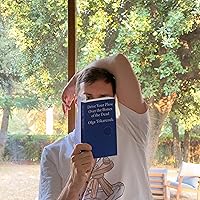
His sixth novel, Dooneen, is published by Fitzcarraldo Editions, and by New Directions in June 2026.
His previous books include A Shock, which won the 2021 James Tait Black Memorial Prize for Fiction, and was shortlisted for the Goldsmith’s Prize; Hawthorn & Child; and Animals. His first novel The Long Falling was filmed by Martin Provost as Où Va La Nuit in 2011.
He has been awarded the Prix Fémina Étranger and Premier Roman Étranger, the O Henry award, and the Rooney Prize for Irish Literature.
What an absolute fever dream of a novel that spits in your face and laughs every time you try to piece together what genre you’re even reading. This is a jarring and experimental novel about a writer who accidentally gets swept up in a political revolt (with Keith Ridgway really going off the rails in the final act), BUT is importantly also very readable on a sentence to sentence level and hilarious.
As the main Mew character says, I have never been to Dublin and have no clue if the city is captured like the publisher proclaims, but damn the dialogue here is real and just about the best I’ve read all year.
I’m kind of shocked that Ridgway has gotten such scant attention in the book world given how solid his writing is here, but perhaps the Fitzcarraldo effect will take affect here. Definitely recommend!!
Although this has superficial similarities to The Unconsoled by Kazuo Ishiguro I found it didn't quite live up to its initial promise.
The altered version of Dublin with its absence of cars and moving walkways was a good start but after that there wasn't enough strangeness for my liking.
The narrator's adventures with the insurrectionists didn't feel like it had enough jeopardy and I don't know why they felt they had to protect him.
I decided initially to drop it at the 20% mark. It's not a bad book but it didn't grab me. Maybe it's just not my thing. I was expecting a more mystical fantasy-style experience, and maybe it was getting there, but just reading about political unrest, organizations, meetings, protests, and abuse from landlords doesn't exactly entertain me and felt too non-fiction for me to want to keep going. All of these issues are dumped before the novel gives me a reason to care. Reading the synopsis sounds like it will get more interesting, but the opening was a bit too dry to want to wait for it.
The writing style is short and punchy with thoughts that would spread out and then come back together in a way that didn't flow well before I got my bearings. There are invented concepts like spinners and clickers that would lose me for a bit before falling into place later. The matter of fact sentences so far were too surface level for me and didn't give me a reason to invest in these people or their situation.
I found myself just uninterested in continuing for now, but will pick it back up later and will edit my review if I do.
_______________
At 50%
The story certainly got more exciting. Some interesting and mysterious plot for a bit, but then it descends into short monologues from random characters that I don't know or care about giving their opinions. More talk about insurrection and planning. So far the author has failed to make me care about these mostly-flat characters and their plan to fight the system. Lots and lots of pages about corrupt systems and landlords and blah blah blah. I am still just not invested.
______________
75%
Walking, tree with no leaves, clothes are weird, tunnels are spooky. I started skimming. While there's more plot, I still don't really care about what's happening or most of these side characters.
_____________
100%
This last bit grew on me. Full of action, heart, humor. The characters felt more real and the story was more interesting. If only the whole book had been more like this. The middle really dragged and the beginning was more flat and confusing. Having finished it now I'd like to reread it someday and see if I missed anything. At any point before the end I would have given 2 or 3 stars, but looking back it's grown on me. I'd have recommended reworking the earlier sections, giving depth to the characters to give me a reason to care about them and cutting way back on the over-explanations of the societal issues. Like 75 pages of that could be cut and it would be better for it.
Thank you WW Norton & Company for the advanced review copy.
A man inexplicably walks into a bush in South London and emerges into a strange, timeless near future version of Dublin with a confusing conflict of landlords, insurrectionists and police. The protagonist has a beautiful, bemused, poetic tone of voice, yearning for his lover. Interesting multiple point of view structure.
An artful mix of genres, alluding to a complex Irish history. The dialog is pitch perfect and often very funny. Family crisp sandwiches and never ending tea.
You don't like strikes sir? Well he had to check I suppose. It seems to me now that if I hadn't said what I said next I might still be in that hotel room. Or I might have seen it a second time at least. Or slept in what looked like its very comfortable bed. And I might have returned to you Mootie. At some point over that collapsing weekend, from the smoke over Dublin to the smoke over London. Ifit had been possible. But I said what I said. And it changed things. What I said Mootie, was this... - The world is badly managed. Unjustly run. I like when people take a stand. And I try - as close to useless as I am - I try my best to stand by their side. Something like that.
Doonen is Keith Ridgway's first novel since the Goldsmiths Prize shortlisted and James Tait Black Memorial Prize winning novel/connected short-stories A Shock.
That was a affectionate portrayal of South London with a socio-political edge, and here Ridgway turns his attention to Dublin - although the novel opens in London, and is told from a hideout in the cliffs of Dooneen, from the Jack McAuliffe ballad, on the west coast of Ireland.
The novel opens:
Two men strolled beside the Thames, east along Bermondsey Wall. For stretches they walked arm in arm, in close conversation. Or separate, in silence, glancing at the passers-by. Or they pointed across the choppy water to Wapping, and made jokes. A police boat moved up-river. At Cherry Garden Pier a small red dinghy fidgeted on the muddy waves. Dusk, and the lights coming on. They stopped in front of The Angel and debated for a moment, and went inside.
By the window in a corner they leaned towards each other. It was quiet. They talked, and laughed, and talked, and touched, and watched the darkness growing.
They talked about their landlord. About their rent. They sighed and reassured each other. They spoke of Gaza. They shook their heads and fell silent. They peered across the river and tried to imagine where Execution Dock might have stood. They talked about law, and government, and luck, and faith. They checked their phones. They talked again of Gaza. They fell silent. Then they talked about money. They talked about work. They laughed often. They gossiped about friends, housemates. They talked about the next day. About Dublin. Rent, again. The hot weather.
They left. They linked arms through Southwark Park and caught a bus to Peckham and walked to Havil Street, and home. Their names being Mahmoud Habib, and Bartholomew Port. Known to each other as Mootie, and Mew.
Shortly after Mew travels, via a 'spinner' (a portal) situated behind some bushes in Burgess Park, to Blessington Street Basin in Dublin, where he is presenting at a conference of some sort. Although this is a somewhat alternative ('wonky' in the author's words) Dublin - as well as the 'spinners', private cars have been largely replaced with 'clickers', moving footpaths.
Checking in to his hotel, prior to a reception at Dublin's castle he is accompanied to his room by two, initially rather comically overattentive porters, Charles and Vincent, reminscent of Kafka's Artur and Jeremias. But when he enquires about news he had picked up en route to the hotel of some strike action, the two enquire as to his views on the matter, and, having ascertained his support (see opening quote) he ends up sucked into an underground world of resistance action, prior to a planned mass protest and general strike the next day.
- I won't be able to make it tomorrow, he said. Given everything that's happening. So it's nice to run into you Port. Are you going to the meeting? - What's happening? - Oh. What isn't? The big Jaffa demonstration of course, but also a lot of separate small actions planned, or so I'm told, and Ipro are going to be out... - What's Jaffa? -Justice And Housing For All, he sang. J-A-H-F-A. Tenants, renters. Socialists the lot of them. - What's Ipro? - Ireland Protected. IPRO. Landlords. Bailiffs. Vigilantes you might say. Rough lot. The implied muscle behind the RDC, and lots of overlap of course, false moustaches everywhere. And who knows. They appeared not long after DISH did. DISH is Dublin Initiative... - For Socialist Housing. I've heard of them. What's RDC though? - Rathúnas do Chách. I just looked at him. And he just laughed. - Meeting you said. What meeting? - Public meeting at the Precious. You should come. You'd get a better sense of it there than you would from me. Speakers from the tenants unions, the main ones anyway, from the non-payment campaigns, from the anti-capitalist parties, such as they are, climate groups, the whole shooting match.
(Rathúnas do Chách meaning, I believe, Prosperity for All)
The novel itself is largely told by Mew in letters he is writing from hiding, the strike having ended in bloody defeat, addressed to his beloved Mootie, although not expected to be received, London and Dublin having become cut off. But it also includes testimonies from others, and songs (which I understand are set to music in the audiobook). The novel also contains various allusions e.g. to Irish history and culture, some explicit/clear and others which I suspect eluded me (e.g. from interviews, a ghost character is a nod to one first casualties of the Easter Rising).
KEITH RIDGWAY HIVE, RISE UP. i love when a dublin book doesnt make any effort to translate itself so it can be better understood by people in other cities or countries. yup the bleedin dubs and fuck fine gael and fianna fail and landlordism
Something has happened in the past. It usually does. Or did. Sometimes we can point to it, or follow the breadcrumbs of cause and effect that led from this to that. Sometimes the facts are unknown, or hidden, and we have to accept things at face value. We hang up our hang-ups and suspend our disbelief, alongside our dangling participles and man bits.
A man enters a park in one city and emerges from a park in another city. The first city is London, the second Dublin, the man’s erstwhile home. The man is Port, passed to the left, clockwise, chronological for want of other logic. His trousers are fouled, or at least dirty. The trousers are replaced, twice. The first replacement splits. The second holds. We follow Port around Dublin’s car-free streets. Some great change has happened. Motor vehicles have been replaced by clicking conveyor belts. We suspend our disbelief. Bike couriers and carters have survived the vehicular cull.
More durable is capital’s hold over the capital, landlords and government working hand in hand, one hand washing the other, both hands often those of the same body. The people are revolting. Much is known but unspoken. There are meetings, rallies, protests, things Port half-understands. He sympathises and goes along, getting deeper, eventually plunging underground, unsure of his destination or his new comrades’ goals. Why he is there at all, is a question he and the reader are both left pondering.
Is this the future? Some alternate present? At times it could be the past. The author carefully avoids the city centre territory of the streets of Moore and Henry. There is no mention of the GPO, yet the reader would be unsurprised at the mention of Sackville Street. This is familiar territory for any Dubliner. This is familiar history for anyone Irish, every story in our collective history hinging on the sigh-inducing denouement, "there was a traitor in their midst".
We know nothing of the traitor, or traitors. We know everything of them. The brave cowardice of self-preservation a healthier path by far than heroic self-sacrifice. How much of a traitor is our friend Port? Enough. Probably. Probably more than enough.
Did I mention that this is a love story? I doubt I'll read a more engaging novel this year.
The marketing for Keith Ridgway’s “Dooneen” invites comparisons to Joyce, Beckett, and Kafka, raising expectations for an intensely intellectual experience. Recognizing this, the novel demanded attentive reading. Despite an appreciation for the author’s prose, tracing the underlying train of thought frequently proved challenging. Although I am hesitant to place the author alongside Beckett and Joyce, it is clear that their work often requires multiple readings to fully reveal its depth—a quality “Dooneen” may also share. Yet, engaging with this style proved more difficult than anticipated; reminiscent of some of my dense college courses, sheer resolve was not always enough to keep the narrative clear.
The stream-of-consciousness narrative and brief, punchy sentences left my mind reeling as I tried to discern where the book was heading. At points, I was plagued by the fear that I was failing to connect with the text. Wanting to trust in the author’s methods, I fought the urge to set it aside more than once and a few outside reviews reassured me there would be more clarification. It was amidst this fog of confusion, however, that the narrative’s actual shape began to emerge. The book follows Bartholomew "Mew" Port, a writer who undergoes a bizarre transition: he steps into the bushes in a London park and emerges in a surreal, transformed version of his native Dublin. This is a city without cars, where "clickers" (moving footpaths) have replaced traditional transport, and the air is thick with the tension of an impending political insurgency. Mew’s primary drive is a desperate, recurring longing to reconnect with his partner, Mootie, back in London. As he navigates this city, he becomes hopelessly entangled in revolutionary groups, ghosts, and political factions.
Beneath this intricate world-building, the novel functions as an epistolary love story trapped inside a thriller. It is a book that demands you trust the author’s methods, even when the plot feels like a fever dream. While the middle sections can feel dense and the political jargon— an ‘alphabet soup’ of endless groups, the protests, the administrative chaos—can be exhausting, whether the final resolution justifies that investment will likely depend on your patience for the book’s experimental structure.
Ultimately, the narrative's trajectory rewards that patience; as the peak approaches, the initial bewilderment begins to coalesce into a resolution where the story's various threads finally align. The themes of human connection and the struggle to reach a loved one when communication fails remain central, though they are often obscured by the political turmoil. “Dooneen” is far from a light read, and its non-linear storytelling style means it might not appeal to every reader. Yet, for those who choose to persevere, the novel delivers a memorable, albeit challenging, experience. In the end, it functions as an intricate puzzle that delivers a unique perspective on contemporary identity, assuming one is ready to navigate its dense arrangement.
Thank you to New Directions Books and Edelweiss Plus for providing an advance reader copy in exchange for an honest review.
Have you ever found yourself reading a book where your internal dialogue is constantly screaming, "What am I reading?!"—this book is exactly that. Reading it made me feel like the Little Engine that Could; I was slowly, slowly pushing my way through the narrative until I finally made it over the hill to a gentle, thought-provoking conclusion.
If you are accustomed to long, flowing, beautiful prose, your brain might automatically revolt against the writing style at first—mine certainly did. The book is composed of very short sentences and quick thoughts, capturing a stream-of-consciousness style as Mew (Bartholomew) writes to his lover, Mootie, who is back home in London. Recounting his play-by-play experiences in Dublin, the story is a total whirlwind that constantly shifts between storylines, perspectives, facts, and pronouns leaving you perplexed.
Mew is always tired, perpetually confused, and frequently questioning things. By the halfway mark, the tone shifts into something much heavier, darker, and grimmer amidst political upheaval. However, the last 20% of the book flows wonderfully; I became invested and finally couldn't put it down.
I truly had no idea where the story was heading or what my final opinion would be until the very last words. While I usually dislike open-ended conclusions, I didn't mind this one at all because it's thought-provoking in such a deep and unique way. This book is perfect for readers who enjoy stories that are a little bit 'out there' and completely different. I couldn't rate it any less than a 4/5 for such a uniquely memorable experience.
A profusely verbal literary extravaganza, an unravelling of a torrent of human subversion, a dream-like interlude that transports us amongst a propitious multitude of voices- that is how I would like to term Keith Ridgway's new novel. The writer- by virtue of laying out the topography of a city and its inhabitants- excels in creating a myth out of the entrails of the city of Dublin that the reader is transported to by a fortuitous act of literary teleportation. The Dublin that is presented here is very quaintly queer and bordering on revolt and sedition, and nonetheless parallels can be drawn between this and the Dublin of Joyce's Ulysses. And besides, the spotlight in the novel is held by the unforgettable voice of the narrator who is transported to a city on the point of insurrection, largely speaking from the medium of letters to his beloved in London, from his hideout in Dublin, with the two cities being cut off permanently. In essence, this is a fever dream of a novel that overwhelmed me with its various allusions to Irish history and culture, as well being celebrated at places by a couple of songs- so that I would need another reading to fully absorb its contents. Finally, I can only say that we have at last 'the 21st century Dublin novel'- which it is indeed on several levels.
Keith Ridgway’s Dooneen is one of those novels that seems to operate according to its own dream logic. Bartholomew “Mew” Port steps through a London park and emerges into an alternative Dublin where moving footpaths replace cars, ghosts drift through the narrative, and political unrest simmers beneath the surface. As Mew tries to make sense of this strange city, he is also haunted by his separation from his partner, Mootie.
This is an unusual, ambitious book that blends speculative fiction, political satire, love story and literary experiment. Ridgway’s Dublin feels both familiar and completely alien, and there are passages of writing that are genuinely beautiful. The novel is often very funny too, with a dry absurdist humour running through even its darker moments.
There is a lot going on here: housing politics, echoes of the Troubles, questions about reality and consciousness, and a wonderfully reimagined Dublin. The emotional core of the novel — Mew’s longing for Mootie — gives the book a warmth that stops it becoming a purely intellectual exercise. I suspect this is a novel that will reward a second reading, and it is certainly one that has stayed with me.
Bartholomew Port, called Mew, writes to his partner, Mahmoud Habib, Mootie, from a room cut into a west-coast cliff. He is wounded and hidden, unsure whether his pages can reach London.
The first rupture in the novel's space has little to do with politics, at least at first. Mew steps into a hedge in a London park and steps out into Dublin, unexplained, climbing from the undergrowth at a city reservoir. The novel breaks its own physics before it breaks its own politics, but one is already leaking into the other.
Keith Ridgway's Dooneen starts with one man writing to another, then pushes that private act into a Dublin run by rumour and watched by the state, into a failed uprising that begins in a housing dispute over landlord ownership and ends under military force. Comic dislocation hardens into massacre, and a love letter is forced to carry the record of a damaged city. Mootie stays absent from Dublin, but not from the page: Mew still writes each scene back to him anyway.
Fitzcarraldo Edition, already published in June 2026 What was that about? Unreliable narrator, witnesses to history, different ways to tell the story, forms of language and communication, couples...? I started off trying to understand the "facts" but eventually let it wash over me (drown me at times) and let Mew /Port experience a moment in history, with assorted witness statements to throw doubt on his points of view. I think it would feel very different to a reader who knows Dublin. At times I just had to follow along in the dark (like Mew) and hope it would make sense in the end. Did it?!? Something about what it is that makes us human in an increasingly bewildering technology led world. I was rooting for Mew even though he did some incredibly stupid things. Was he really as stupid as he claimed? I could not understand why he didn't just go back to London while he could, when it was clear that he was getting in too deep. Charlie and Vincent were a sort of Tweedledum and Tweedledee pairing. Was Mew a sort of Alice? Gulliver? About 2/3 in I was struggling, but I wanted to know how it would end, even though I was told at the beginning... I didn't believe it would not resolve itself and I am still not at all sure how they ended up in Dooneen. Ha! Maybe that's the point. I was longing to know Mootie's version of the story. There's a project for a writing class!
victoria [chewing thoughtfully on a croissant]: I’m certainly pro-bread. But I’d take “Dooneen,” by Keith Ridgway. He published a beautiful story in The New Yorker a few years ago, and the new book, set in a bizarro Dublin, looks strange and thrilling. And, because you always need two, I’d also bring Ann Patchett’s new novel, “Whistler.” I’ve loved this essay she wrote about her friend the writer Lucy Grealy for a long time, but I only just read what I think might be my favorite of her books, “Commonwealth.”
Probably the most exhilarating, disorienting opening fifty pages of a novel that I’ve read in a while, and then you’re in a revolutionary moment as fantastical as anything that has preceded it.
Ridgway is at the level of Colson Whitehead or Han Kang, but it’s at heart a romance, for the narrator’s lover, for Dublin, for the idea of rebellion in Irish history, with writing that makes it feel incredibly urgent and essential.
One of the most exciting writers I’ve come across in a while.
Thanks to netgalley and ndpublishing for the eARC of this novel!
Mew steps into a bush in London and steps out of a bush in Dublin. But it is a Dublin where there are no more cars, no more religion, and people use “clickers” and “spinners” to travel and churches have been turned into apartments and meeting places. All Mew wants to do is get back to Mootie in London, but in this Dublin, there is no news of London and they seem to be cut off.
I actually feel quite proud of myself for, at least in my opinion, understanding the majority of this novel. The writing can be described as experimental, using one long letter from Mew to Mootie to drive most of the story, with interviews with side characters addedt in, where the reader does not get the interview questions, only the answers.
I found this book to be quite prose heavy, but I really enjoyed getting lost in this story. Keith Ridgway is a very talented writer and definitely draws the reader into the Dublin he created. My only issue is that I am not as intimately familiar with Dublin, which inevitably led to me missing or not fully grasping details.