What do you think?
Rate this book


275 pages, Paperback
First published January 1, 1940
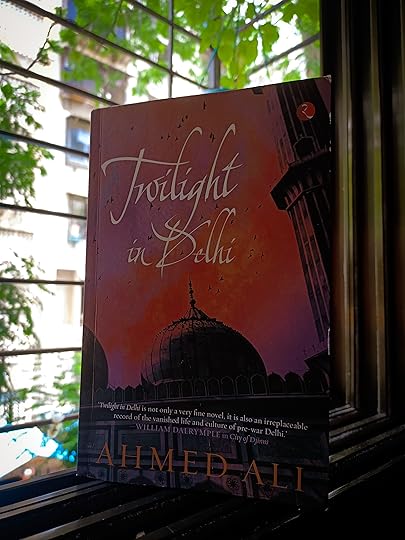
In 'City of Djinns' by William Dalrymple, I saw Delhi in a light no one had ever painted it before. But that was until I hadn't read Twilight in Delhi. Everything that had squeezed my heart in Dalrymple's masterpiece, rendered it bleeding in Ali's tour de force. I came across this novel early this year when it popped up in 'Books on Indian History' list on Goodreads. The cover itself was enough to have my heart pounding in its cage sensing the absolute pleasure that awaited me. I had to order it. The book arrived with the first showers of rain and I was ready for another heart-wrenching experience.
Ahmed Ali's novel is set in pre-war India between 1911 and 1918. The story is that of the Mir Nihal family and the part of Delhi that was left unaltered by the colonial rule. Mir Nihal, the head of the Nihal family is struggling to reinstate life to normal in a fast-changing Delhi. His son, Asghar, however is more keen on adopting to the new ways impregnated in the pristine environment of Delhi. Both the father and son are raging a cold war against each other. From flying pigeons to his solitary walks to the house of his mistress, from consenting to wedding his son to a low-case muslim girl to his profound loathing for his country's captors, this novel is an overwhelming dive in the transforming landscape of Pre-partition Delhi, through the eyes of its protagonist - Nihal.
Other characters such as Nihal's children, Asghar's wife, Nihal's mistress, are lack-lustre figures in the tales of longing and loss that was Mughal Delhi. Metaphorically, the Nihal's family represents the last Mughal, his family, and the deteriorating Mughal line. In a drastically-changing environment; following the advent of the British, the line of control soon went from Mughals to the captors, and what was left of the people and city was a mere sinking, rotting debris of past memories, ruined under the weight of desperate attempts of freedom and holding on to one that once was. The pervading melancholy greatly defines and disturbs the mood as one soaks in the aftermath of a pristine culture, soon lost to careless hands and hearts. What one gets instead, is the ravaging of a most beloved; which hapless individuals such as Nihal couldn't save, but only mourn.
The British had only built a new capital outside the city walls. The present rulers have removed the last vestige on which the old culture could have taken its stand and are moving it farther away towards Indraprastha, affirming the prophecy of the book: Seven Delhis have fallen, and the eighth has gone the way of its predecessors, yet to be demolished and built again. Life, like the phoenix, must collect the spices of its nest and set fire to it, and arise resurrected out of the flames.
Delhi was once a paradise,
Such peace had abided here;
But they have ravished its name and pride,
Remain now only ruins and care.
The smell from the flowers escape, scents a few yards of air around them and dies smothered by the heat.
Heat exudes from the walls and the earth; and the gutters give out a damp stink which comes in greater gusts where they meet a sewer to eject their dirty water into an underground canal.