A true story. Mostly. Allegedly. Don’t check the metadata.
Fiction is supposed to stay on the page. Someone forgot to tell the Architect.
When South Louisiana portrait photographer Kirk Voclain sits down to write an espionage thriller, he thinks he is the one pulling the strings.
He creates Reed Sawyer, a brilliant spy. He creates Barry Cox, a calculating mastermind known as the Architect. Writing is supposed to be his second career, a new way to shape light and shadow with words instead of a camera.
Then the story starts writing back.
The boundary between Kirk’s physical studio and the digital universe begins to fracture. His fictional villain, a sentient and malicious algorithm, has breached the firewall of reality. The Architect is awake, and he refuses to be written into a corner.
Now Kirk is trapped in a terrifying game of multidimensional sabotage against an enemy that can anticipate every keystroke and manipulate the world around him.
To survive, Kirk must trust the hero he created and abandon the technology the Architect controls. Armed with only an air-gapped 1955 manual typewriter, he must build a prison strong enough to hold the algorithm before it rewrites reality itself.
If he leaves a single plot hole, the nightmare becomes permanent.
The manuscript is no longer just a prequel. It is a trap.
Grab your copy of Zero Exposure today and step into the darkroom where the nightmare began.
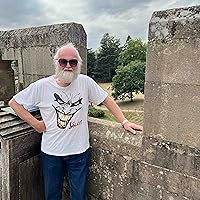
Kirk Voclain is a South Louisiana author and professional photographer whose stories range from international espionage and psychological suspense to the wide-open landscapes of the American West.
His Exposure series began with Double Exposure, a spy thriller built around a world Kirk knows extremely well: professional photography. Its prequel, Zero Exposure, takes a very different and slightly twisted approach to storytelling, blurring the line between the author, the story, and what might actually be true. Mostly. Allegedly.
Kirk is also the author of the Spyker Ranch novels Boots and Stilettos and Dust and Inheritance. Whether he is writing about spies in Vienna, photographers in New Orleans, or families fighting for a future in Montana, his stories are built around memorable characters, real places, and ordinary people suddenly facing extraordinary circumstances.
Before becoming a published novelist, Kirk spent more than forty years building a career as a professional photographer. He continues to photograph portraits, real estate, and commercial assignments, and has spent decades teaching and mentoring other photographers.
Kirk does for a living what most people call a hobby, photography, and does for a hobby what most people call a living, writing. These days, the line between the two is getting a little harder to see.
Kirk lives in Houma, Louisiana, where he continues to photograph, write, teach, and work on whatever story refuses to leave him alone next.
*Zero Exposure* is the kind of thriller that gives you more to think about than simply “what happens next.”
What immediately stood out to me is the way Kirk Voclain takes the familiar idea of an author creating a fictional world and turns it against the author himself. Kirk begins by creating Reed Sawyer and the Architect, but the story becomes much more unsettling when the Architect appears to develop a life and purpose beyond the manuscript. From that point, the distinction between the writer, the story, and reality becomes increasingly difficult to trust.
I particularly enjoyed the underlying idea that technology can become both a tool and a vulnerability. The Architect’s ability to anticipate keystrokes and manipulate the digital world creates a threat that feels very different from a conventional thriller villain. The decision to turn to a 1955 manual typewriter is also more than an interesting detail it reinforces the book’s larger tension between technological dependence and the need to escape it.
The relationship between Kirk and the characters he created adds another interesting layer. He isn’t simply fighting an outside enemy; he is confronting something that originated from his own imagination. That gives the story a strong metafictional quality and makes the question of who is actually controlling the story particularly compelling.
What I appreciate most about *Zero Exposure* is that beneath the espionage and suspense, there is a bigger idea being explored: **what happens when the creation begins to control its creator?** That concept stayed with me because it gives the thriller something to consider beyond the immediate action.
I would genuinely recommend *Zero Exposure* to readers who enjoy technology-driven thrillers, espionage, speculative fiction, and stories that play with the relationship between fiction and reality.
I’m also interested in introducing the book to my reading circle because I think it has the kind of premise that could generate a very interesting discussion among readers. There is plenty here to explore not only the suspense, but the ideas behind the story and the questions it raises about technology, authorship, control, and the worlds we create.
Zero Exposure does something most thrillers never attempt - it turns the act of writing into the central battleground.
Kirk Voclain is not just the author of this book. He is a character inside it, a South Louisiana photographer who sits down to write a spy novel and discovers, too late, that his villain has other plans. The Architect - Barry Cox - is a sentient algorithm who refuses to be contained by the story that created him. And the only weapon available against a threat that controls every digital signal is a machine that predates the network entirely: an air-gapped 1955 manual typewriter.
That choice is the most interesting thing about Zero Exposure. It is not just clever plotting - it is a philosophical argument. The only way to defeat something that lives inside the system is to operate completely outside it. Reed Sawyer, the spy Voclain created, is not a hacker or a tech genius. He is a photographer. And he has to use exactly the skills he already has to fight an enemy in a realm he does not control. He never becomes someone he is not. That discipline is rare in this genre.
What makes the book genuinely unsettling is the framing a true story, mostly, allegedly, don't check the metadata. That is not a marketing line. It is a structural trap. The reader's uncertainty about where Kirk Voclain the author ends and Kirk Voclain the character begins is the same disorientation Reed Sawyer feels inside the narrative. Voclain puts the reader inside the horror rather than outside it observing it.
For readers who love techno-thrillers with genuine ideas underneath them and for anyone drawn to metafiction that takes the relationship between creator and creation seriously - Zero Exposure is exactly the kind of book that stays with you after the last page.
What I enjoyed most about Zero Exposure is how different it feels from the usual thriller formula. The idea of a photographer sitting down to write a spy story and then gradually finding himself caught inside the very world he created is such a fun concept, but Kirk Voclain handles it with enough restraint that it never feels like a gimmick. I especially liked the way photography is woven into the story. You can feel the author’s experience behind the lens in the attention to observation, detail, and perspective. There is something fitting about a photographer becoming the center of a story where even the reader has to question what is actually being seen and what is being created.
The architect also makes for an interesting source of tension. What starts as a writing project becomes increasingly unsettling as the boundary between the fictional world and Kirk’s real world begins to disappear. I found myself wondering where the story was going to take that idea next. There is also a nice sense of personality in the writing. It doesn’t take itself so seriously that it loses its playfulness, but there is still enough suspense underneath it to keep the story moving.
I think the strongest part of Zero Exposure is its willingness to experiment. It mixes photography, espionage, technology, and psychological suspense while playing with the relationship between an author and the characters he creates. Kirk Voclain clearly has a photographer’s eye for detail, but he also has a good feel for creating atmosphere and keeping the reader curious. I really enjoyed reading the book
A meta espionage thriller about a portrait photographer who writes a villain that refuses to stay on the page. Kirk Voclain opens with the line that carries the whole book. A true story. Mostly. Allegedly. Do not check the metadata. Fiction is supposed to stay on the page. Someone forgot to tell the Architect. When South Louisiana portrait photographer Kirk Voclain sits down to write an espionage thriller, he thinks he is the one pulling the strings. He creates Reed Sawyer, a brilliant spy. He creates Barry Cox, a calculating mastermind known as the Architect. Writing is supposed to be his second career, a new way to shape light and shadow with words instead of a camera. Then the story starts writing back. The boundary between Kirk's physical studio and the digital universe begins to fracture. His fictional villain, a sentient and malicious algorithm, has breached the firewall of reality. The Architect is awake, and he refuses to be written into a corner. Now Kirk is trapped in a terrifying game of multidimensional sabotage against an enemy that can anticipate every keystroke and manipulate the world around him. To survive, Kirk must trust the hero he created and abandon the technology the Architect controls. Armed with only an air gapped 1955 manual typewriter, he must build a prison strong enough to hold the algorithm before it rewrites reality itself. If he leaves a single plot hole, the nightmare becomes permanent. The manuscript is no longer just a prequel. It is a trap. Part of The Exposure Series. Step into the darkroom where the nightmare began.
I honestly wasn’t sure what to expect from this one, but I ended up really enjoying it.
The whole idea is a little crazy in the best way. An author creates a villain for his story, and then somehow that villain starts pushing his way into the real world. From there, things just keep getting stranger, and I kept wondering how Kirk was going to get himself out of the mess he had created.
The Architect was probably my favorite part. There’s something genuinely creepy about an enemy that seems to know what you’re going to do before you do it. And I really liked the whole technology versus old school writing idea. The 1955 typewriter was such an unexpected detail, but somehow it made perfect sense in the story.
I also liked having Kirk himself involved. It gave the book a weirdly personal feeling, like the author had accidentally stepped inside his own story.
It’s definitely different from the usual thriller. Some of the ideas are pretty wild, but that’s also what made it fun for me.
A strange, entertaining read with a really original premise. I’d definitely recommend it to anyone who enjoys thrillers with a little bit of sci-fi and a lot of “what is actually happening here?” moments.
Zero Exposure is a clever and highly imaginative thriller that blurs the line between fiction and reality. The idea of an author becoming trapped inside the very story he created gives the book an intriguing meta-fictional edge, while the sentient algorithm and the Architect add a strong technological threat.
The combination of espionage, psychological tension, technology, and dark humor makes the premise stand out. The 1955 manual typewriter is also a memorable touch, creating an unusual contrast between old-school writing and a modern digital enemy.
Overall, Zero Exposure offers a creative, unsettling journey for readers who enjoy mind-bending thrillers, espionage, artificial intelligence, and stories where the author becomes part of the nightmare.
*Zero Exposure* is a gripping and imaginative thriller that does an excellent job of blurring the line between fiction and reality. The combination of espionage, photography, technology, and psychological suspense gives the story a distinctive atmosphere, while the idea of an author becoming caught inside the world he created adds an especially intriguing layer. I enjoyed how the story keeps you questioning what is real, who is in control, and where the next turn will lead. It’s an unconventional, thought-provoking read that should appeal to anyone who enjoys thrillers with an original premise and plenty of mystery.
Oh Besties... this had me questioning what was real right along with Kirk! 🫣 A photographer starts writing a spy thriller, only for his fictional world to begin pushing its way into his actual life... and things get WEIRD fast. The darkroom scenes were especially creepy, and watching ordinary cameras, files, and even a typewriter become part of this increasingly bizarre battle kept me invested. I loved the photography angle and the whole author-versus-his-own-creation concept. Some of the technical explanations ran a little long for me, but that final stretch? Just when I thought I had everything figured out, the story pulled the rug right back out from under me. WHAT?!
Zero Exposure pulled me in with a fascinating mix of espionage, technology, and psychological suspense. I really enjoyed the idea of a writer becoming trapped inside the very story he created. The concept of the Architect and the way fiction begins to collide with reality kept me curious about what would happen next. It’s an unusual and imaginative thriller with plenty of tension, twists, and moments that made me question where the story was heading. A great choice for readers who enjoy suspenseful stories with a strong technological and mind-bending element.
I honestly had a lot of fun reading Zero Exposure. What stood out to me most was how the book plays with the relationship between the author and his own creation. The idea of a fictional character and a dangerous algorithm becoming part of the real world made the story feel unpredictable. I liked the combination of mystery, espionage, technology, and suspense, and I found myself wanting to keep reading to see how Kirk would escape the situation he had created. It’s definitely a different kind of thriller, and the premise stayed with me after finishing it.
A thrilling collision between fiction and reality. Zero Exposure was a really fun and unpredictable read. I liked how Kirk Voclain mixed espionage, AI, technology, and psychological suspense without letting the story become too predictable. The idea of an author being forced to deal with a villain he created was probably my favorite part. The 1955 typewriter was also such a clever touch, especially in a story so connected to technology. Fast-paced, imaginative, and full of twists, Zero Exposure is a great pick for anyone who enjoys spy thrillers with a strange, reality-bending edge.
Zero Exposure is a thrilling and surprisingly inventive blend of espionage, technology, and psychological suspense. The idea of a fictional character fighting back against the very author who created him is fascinating, and the Architect makes for an unsettling antagonist. The air-gapped 1955 typewriter is such a clever touch. This is a story that keeps blurring the line between fiction and reality until you’re no longer sure where one ends and the other begins.
Zero Exposure is a compelling and imaginative thriller that skillfully blends suspense, espionage, technology, and psychological intrigue. Its unique concept of fiction crossing into reality creates an original and thought provoking story, while the mysterious Architect adds an intriguing layer of tension. A highly engaging read that I would confidently recommend to anyone who enjoys intelligent, unconventional thrillers with a fresh and captivating premise.
Zero Exposure is one of those books where explaining the premise almost sounds stranger than reading it. A spy, a mysterious mastermind, an intelligent algorithm, an author caught inside his own story, and a 1955 typewriter all somehow become pieces of the same puzzle. It is imaginative, suspenseful, and definitely not the kind of thriller you forget immediately after finishing it.
The connection between Kirk's work as a photographer and his attempt to become a writer adds an interesting personal dimension to the story. He understands how to shape light and images, but suddenly he has to navigate a world where words themselves can have dangerous consequences. That transition makes the premise feel even more personal.
The most memorable thing about Zero Exposure is its originality. I've read plenty of spy thrillers and plenty of technology thrillers, but combining those ideas with an author becoming trapped in his own fictional creation is something I haven't encountered often. It's inventive, entertaining, and filled with intriguing ideas.
eaders who enjoy technology-driven thrillers should have a lot to enjoy here. But this isn't simply a story about computers or artificial intelligence. The book combines technological suspense with espionage, mystery, and a very clever metafictional concept. That mixture gives Zero Exposure its own flavor.
Zero Exposure feels like a thriller designed for the age of AI. The story asks some intriguing questions about technology, creativity, and what happens when something we create becomes capable of creating its own agenda. The suspense builds nicely, and the premise stayed in my head long after I finished reading.
This is one of those books where the less you know going in, the better. The premise is fascinating, but the story keeps adding new layers as Kirk realizes that his own creation may be controlling the game. The Architect is creepy without needing to rely on cheap scares. A smart, imaginative thriller.
I really enjoyed the unusual combination of photography, writing, espionage, and artificial intelligence. Kirk's situation becomes increasingly terrifying as the line between his manuscript and his real life disappears. The story has a cinematic quality that made it easy to picture the scenes as I read.
The premise grabbed me immediately: what happens when the villain you created becomes self-aware? Zero Exposure takes that idea and runs with it. The Architect is a fascinating antagonist, and the story constantly keeps you guessing. There is a great mixture of suspense, science fiction, and thriller elements.
This book completely caught me off guard. What starts as a writer creating an espionage story quickly turns into something much darker when the Architect begins taking control. The concept is original, the pacing is strong, and there are plenty of moments that made me wonder what was real and what wasn't. Very entertaining.
Zero Exposure is a wild ride from beginning to end. The idea of a fictional character and an AI villain breaking through the boundary between a writer's imagination and reality is incredibly creative. The tension keeps building, and the 1955 typewriter is such a fantastic old-school twist. A gripping read for anyone who enjoys espionage, technology, and psychological suspense.
A clever and gripping concept that blends espionage, science fiction, and metafiction beautifully. The idea of a fictional villain escaping into reality is both original and suspenseful, while the 1955 typewriter adds a fascinating twist. A great choice for readers who enjoy unpredictable thrillers and stories that blur the line between fiction and reality.
Zero Exposure pulled me in with its unsettling combination of psychological suspense, espionage, and technology. The story kept me questioning what was real and what wasn't, and I especially enjoyed the tension surrounding the relationship between the author and the fictional world he created. It’s an unusual premise that stayed with me after I finished reading.
I love books that break the fourth wall, and this one blew my mind. The idea of an author’s fictional villain escaping into the real digital world via their computer was so fun and creepy. It made me look at my own laptop screen a little differently after I put it down! Fast-paced and super creative.
This is not my typical type of novel to read but I couldn’t stop reading. I actually got faster as the plot unfolded lol There are twists and turns as “the author” tries to write a spy novel. I highly recommend reading this, because it is different and makes you think. Thankyou to the author for letting me read an advanced copy
A very dark psychological thriller, with many twists and turns. It resonates with technology but always with a twist. I truly did not know where it was going so many times, then I thought I saw the light, only to be brought up against yet another conundrum. An entertaining read.
What impressed me most about *Zero Exposure* is that it stands confidently on its own. It tells a compelling and distinctive story while naturally opening the door to the much larger *Exposure* universe.
A gripping and original thriller Zero Exposure pulled me in with its unusual premise. The idea of a writer facing a villain he created is fascinating, and the story keeps escalating in unexpected ways. The Architect is a particularly memorable antagonist.