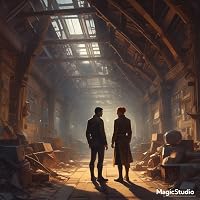
It is said that there was once a time of peace. A time when the sounds of swords clashing and shrieking cries of agony were not so familiar. This time was long ago and has passed out of the dreams of most. The rulers of the world were determined to wield their power with force to maintain their strength and wave their flags with pride.
Asalandia was a country that took pride in the history of war. Thousands of history books were written, depicting heroes, winning battles against the evil Kastanarians, who wanted to invade, steal, and change their way of life. As Asalandia grew, diversity was inevitable, and some grew weary of the constant invasions, wars and flag waving. However, the wars went on and warriors kept battling. The smell of burning arrows and the sounds of sinking ships became oh so familiar. Kastanarian catapults launched huge boulders into Asalandian walls, crushing everything in the way. Asalandian ships sailed across the seas to Kastanaria to seek revenge and launched their brutal attacks. Blood poured and hearts stopped, and this became a way of life and death between the two nations. Many wondered if it would ever stop but none of them did anything about it and just thought it was all a normal part of life. Nobody questioned anything, they just let it happen, repeatedly. They did this for years and years until someone finally did something. Someone, from the most unlikely of places, did the most uncommon thing to start change. That someone was a young man by the name of Outis Everrett.
After six years in Shanghai, I am finally back in Sydney (brand new home). Here I will teach and focus on my writing! I will be starting my Phd in Arts at the University of Sydney in March 2015! I have already polished off a children's novel, a collection of poetry and am about to publish a series of stories titled "The Students Sold Us Secrets Volume One" with ASJ Publishers. http://www.asjpublishing.com/ I'm also kept on my toes by my feisty wife and three year old daughter both of whom are Chinese. They like to let me know how bad my Chinese is on a daily basis.Oh yeah, I used to be an MC, I mean I was potentially the next Aussie Eminem,(just kidding) but there is an EP by yours trully somewhere out there in the world wide web.... Author interview here: http://thecultofme.blogspot.com/2013/...
The Wars Between* is an engaging and thought-provoking novel that goes beyond surface-level conflict. What I enjoyed most was how the story explored the emotional and psychological battles the characters faced, making them feel authentic and relatable. Lee J. Mavin YOU created a narrative that balances action, character development, and meaningful themes. The writing kept me invested throughout, and the story encouraged me to reflect on the complexities of human relationships, resilience, and the choices we make. Overall, this was a rewarding read that stayed with me after I finished it. I would happily recommend it to readers who enjoy character-driven fiction with emotional depth and thought-provoking themes.
The Wars Between is a beautifully written novel that combines emotional depth with captivating storytelling. Lee J. Mavin does an excellent job of creating believable characters whose journeys feel genuine and meaningful. Every chapter pulled me further into the story, and I appreciated how the author explored complex relationships and personal growth without losing momentum. It's a well-crafted book that offers both entertainment and substance. I thoroughly enjoyed every page and would gladly recommend it to other readers.
This author profile is engaging, personable, and refreshingly authentic. Rather than presenting a formal list of accomplishments, it introduces the writer through personal experiences, humor, and professional milestones, making the author feel approachable and relatable.
The biography effectively highlights significant achievements, including returning to Sydney after six years in Shanghai, beginning a PhD in Arts at the University of Sydney, completing multiple literary works, and preparing to publish *The Students Sold Us Secrets: Volume One*. These details establish credibility while demonstrating a strong commitment to writing and academic research.
The lighthearted references to family life and the author's playful comments about speaking Chinese add warmth and personality, helping readers connect with the person behind the books. The mention of a previous career as an MC also provides an interesting glimpse into a creative background that likely influences the author's storytelling style.
Overall, this is an informative and entertaining author biography that successfully combines professional accomplishments with personal charm. It leaves readers with the impression of a dedicated, versatile, and approachable writer whose experiences across cultures enrich his work.
This excerpt made me curious about the larger history of Asalandia. The narrator says that Outis's poem changed the course of the kingdom's history, which immediately makes the story feel larger than Outis's personal struggles. Yet the beginning focuses on his ordinary life: being bullied, hiding in his room, reading, and practicing poetry. That contrast is effective because it shows how enormous consequences can grow from seemingly insignificant beginnings. I also liked the description of Outis as someone who loves imagining distant lands and stories of monsters and horror. It gives him a strong creative identity. His father's warrior philosophy makes his choice to become a poet feel almost rebellious. The King's discovery of the poem then brings the private and public worlds together. The royal family's concern suggests that the King's transformation could threaten existing power. I would definitely continue because the excerpt promises a story where literature, politics, personal identity, and social change all intersect.
I found the father's expectations particularly powerful because they represent an entire culture rather than just one person's opinion. Outis is told that he comes from warriors and that fighting is his destiny. But Outis does not want that life. His body, personality, and interests all point toward something different. He is drawn to poetry, stories, imagination, and distant places. The fact that he becomes a poet gives him a way to reject the definition of strength imposed upon him. I also liked the King's storyline because it mirrors this theme. The King has inherited a position of authority, yet he is beginning to question what that position means. Both characters seem trapped by identities created before they had the opportunity to choose for themselves. The poem may become the bridge between them. I would be interested in seeing whether the story ultimately argues that people can redefine themselves, or whether changing an entire society is much harder than changing one person's mind.
The excerpt presents an appealing challenge to the traditional fantasy hero. Outis has no sword, no physical strength, and apparently no desire for adventure in the conventional sense. What he does possess is imagination. His childhood reading exposes him to worlds beyond Asalandia, and his fascination with poets teaches him another way of seeing reality. I liked that he develops his poetry slowly rather than instantly becoming successful. He practices alone, frustrated but persistent, until he creates something extraordinary. The poem's effect on Asalandian history is the biggest mystery. The King's discovery of it also raises fascinating questions about authority. If a king can be changed by the words of a commoner, then perhaps the social order is less stable than it appears. The royal family's concern suggests that they sense this danger. I am curious whether the poem itself contains a political message, a personal truth, or something supernatural. Either way, the premise is strong and unusual.
This excerpt has a very promising premise for a fantasy novel. The kingdom of Asalandia seems deeply committed to warrior traditions, while Outis represents an entirely different way of living. His father's expectations create immediate conflict, and the bullying he experiences explains why he becomes withdrawn. Instead of fighting back, he reads. Instead of training with weapons, he trains himself to write. That makes the eventual poem feel like the culmination of his entire childhood. The idea that this poem changes history is the strongest hook in the excerpt. I also like the narrative decision to reveal the consequences before fully explaining the cause. We know the poem matters, but we do not yet know why. The King's role is equally intriguing because he is already questioning himself when he encounters it. The royal family's concern suggests that his response could have political consequences. I would definitely continue reading because there are several unanswered questions that feel deliberately placed.
What makes this story interesting is that it seems to question the meaning of courage. Outis is afraid of conflict and has spent his life avoiding fights, so by the standards of his society he would probably be considered a coward. But writing honestly about the world may require another kind of courage. He spends years developing his poetic voice even though he does not think highly of himself. Eventually, he creates a poem that apparently contains truths powerful enough to transform a kingdom. That is a fascinating concept. I also enjoyed the King's introduction because he is going through a personal period of uncertainty despite being the most powerful person in Asalandia. The contrast suggests that external strength and internal strength are not the same thing. The story could become a compelling exploration of that difference. I am especially interested in whether Outis will eventually recognize that the qualities he considered weaknesses his sensitivity, imagination, and introspection—are actually the qualities that make him powerful.
There is a fascinating reversal of power in this excerpt. Outis has almost none of the characteristics associated with political power. He is an ordinary commoner, physically weak, shy, and uninterested in violence. The King, by contrast, possesses enormous authority. Yet the person whose words eventually have the greatest influence may be Outis. That contrast is what makes the story compelling. I also liked the way Outis's childhood is connected to his future. Being bullied pushes him toward books, and books expand his imagination. His imagination leads to poetry, and poetry becomes a source of influence. The chain of events feels natural. The King's personal crisis adds another layer because it suggests that even powerful people can become uncertain about the values they inherited. The poem seems poised to expose truths that people have ignored. I am curious whether the story will present Outis as deliberately revolutionary or simply as someone whose honest writing unexpectedly awakens change.
The story has a strong coming-of-age foundation. Outis grows up knowing that he does not fit the image his family has created for him. His father's speech about warriors makes that pressure very clear. Instead of fighting against it physically, Outis withdraws into literature. His childhood reading becomes the foundation for his later poetry, and his poetry becomes the means through which he influences the world around him. I liked the gradual progression because it makes his transformation believable. He does not suddenly become powerful. He spends years practicing and slowly develops his own voice. The poem is then presented as something extraordinary, almost as though the private work of an insecure young man has unexpectedly become a historical force. The King provides an excellent counterpoint because he is also questioning his inherited role. I would be interested to see whether the story eventually brings Outis and the King together directly or whether their connection remains centered around the poem.
The most compelling idea here is that strength can take different forms. Outis is surrounded by people who believe strength means physical ability, courage in battle, and a willingness to fight. He possesses none of those qualities. Instead, he has imagination and a developing talent for poetry. At first he sees that talent as almost insignificant, but the narrator tells us that one poem will change the course of history. I like the irony because it challenges the values that have made Outis feel inadequate. His father's expectations also make the conflict personal. Outis is not simply rejecting a career; he is rejecting an identity that his family believes should be his destiny. The King provides a fascinating parallel. He has everything society considers powerful, yet he is going through an uncertain period of self-reflection. The poem may therefore become a catalyst for both personal and political change. I am interested in seeing whether Outis eventually understands how extraordinary his voice really is.
I would describe this excerpt as quietly intriguing. Nothing depends entirely on sword fights or physical action. Instead, the tension comes from a young man trying to understand who he is in a society that expects him to be someone else. Outis is an especially effective protagonist because he lacks the qualities normally associated with fantasy heroes. He is small, weak, shy, and uncomfortable with confrontation. His greatest interests are books, poetry, and imagination. That makes the revelation about his poem even more surprising. Somehow, his words become powerful enough to change the history of Asalandia. I also like the King's subplot because it introduces a political dimension. The King is powerful but personally uncertain, while Outis is powerless socially but possesses a powerful voice. That contrast could become one of the story's strongest themes. The excerpt leaves me with several questions, especially about the poem, the King's response, and what happens when Outis's ideas begin spreading.
The excerpt creates an interesting conflict between destiny and choice. Outis's father believes his son's destiny has already been decided because of their family's warrior heritage. Outis, however, clearly feels no connection to that destiny. He is physically weak, dislikes conflict, and loves poetry. His life raises an important question: does family history determine who someone must become? The poem seems to represent Outis's answer. Instead of fighting with a sword, he creates something with words. I liked the fact that the poem eventually becomes historically significant because it transforms what might otherwise be viewed as a private hobby into a source of power. The King's involvement strengthens this idea. The ruler of Asalandia is himself beginning to question the life he has inherited. Perhaps Outis's poem gives him a new perspective. I appreciate stories where the central conflict is philosophical as well as personal. This excerpt suggests that the biggest battles may happen inside people's minds rather than on battlefields.
The relationship between power and pride is one of the things that makes The Wars Between stand out. The rulers of this world seem determined to maintain their strength, while ordinary people have become accustomed to the consequences. The ongoing struggle between Asalandia and Kastanaria demonstrates how easily revenge can become self-perpetuating when every generation inherits the anger of the one before it. I liked that the story doesn't simply present warfare as exciting adventure. There is a clear sense that something has gone terribly wrong with a society that considers constant conflict normal. Outis Everrett becomes especially intriguing because he emerges from an unlikely place and begins to challenge this pattern. Gwenia Xiachung also adds to the sense that the story is about more than armies and kingdoms. There are questions here about choice, courage, and whether individuals can actually influence the course of history.
The premise of a poet changing a warrior kingdom is excellent. Outis comes from a culture where physical strength seems to determine social value, yet he is almost completely unsuited to that culture. His father's expectations make him feel like a failure, and his childhood experiences with bullies reinforce that belief. Instead of becoming a warrior, however, he becomes a reader and eventually a poet. The story's suggestion that his poetry contains timeless truths gives his talent almost legendary significance. I particularly like the King discovering the poem during a period of self-reflection. That detail prevents the poem's influence from feeling completely random. The King is already questioning his life, so Outis's words arrive at a moment when he is vulnerable to new ideas. This creates an interesting connection between personal change and political change. I would definitely continue reading to discover whether Outis realizes what he has accomplished and whether the kingdom accepts or resists the truths expressed in his poem.
I liked the way the story gives Outis a very different kind of destiny. His father believes destiny means taking up arms because that is what their ancestors did. Outis's life suggests another possibility: perhaps destiny is something a person discovers rather than inherits. He spends years reading and writing, and eventually produces a poem that affects an entire kingdom. That makes his artistic development feel almost like a rebellion against the expectations placed upon him. The childhood bullying also adds emotional weight because it shows how deeply he has internalized the belief that he is weak. I am especially interested in seeing how his self-image changes once he learns that his words have real consequences. The King seems to be undergoing a similar process of self-discovery. He has inherited power but is beginning to question the assumptions behind it. The poem could therefore become a catalyst for both characters. This feels like a thoughtful fantasy premise with plenty of room for development.
Outis feels like a protagonist designed to make readers reconsider what a hero looks like. He is not physically impressive, does not want to fight, and has spent much of his life avoiding conflict. Yet he is deeply curious, imaginative, and persistent. Those qualities lead him toward poetry. I particularly liked the detail that he practiced constantly at night. It shows that his ability comes from dedication rather than simply natural talent. When he finally writes the special poem, its effect is enormous. The fact that it eventually reaches the King makes the story feel almost like a chain reaction: one private act of creativity begins affecting the highest levels of society. The King's personal uncertainty makes him especially receptive to the poem. I am curious about the exact truths contained in those lines and why they have such transformative power. The excerpt establishes a strong foundation for a fantasy story where intellectual and emotional courage matter as much as physical bravery.
The story's greatest strength, in my opinion, is its central metaphor. Outis believes he lacks power because he cannot fight, but he eventually discovers a different kind of strength through language. That makes the poem much more significant than a simple literary achievement. It becomes the instrument of change. I liked the way his background supports this development. He spends his childhood reading because he does not fit in with the warriors around him. His imagination becomes a refuge, and later it becomes his creative strength. The King's character introduces an interesting complication because he has the opposite problem. He possesses enormous physical and political power but is apparently uncertain about his purpose. The poem therefore has the potential to connect two very different forms of weakness and strength. I am interested in whether Outis's words will inspire peaceful transformation or create conflict. Either possibility would make sense based on the setup. The excerpt certainly leaves me wanting more.
This excerpt has a strong message about the danger of judging people according to a single definition of strength. Outis is considered weak because he is small, thin, shy, and unwilling to fight. Yet he has spent years developing something his society cannot easily measure: the power of language. His poetry becomes so influential that it changes the history of Asalandia. I found that contrast compelling. His father's belief that warrior heritage determines destiny also creates a meaningful conflict between tradition and individuality. Outis's decision to pursue poetry therefore becomes more than a personal preference; it challenges the assumptions of his entire upbringing. The King provides another fascinating example of someone trapped by expectations. He possesses enormous authority but is apparently struggling internally. The poem may give him a new way to understand himself and his kingdom. I like stories that explore power through ideas rather than simply through violence, and this excerpt appears to be heading in that direction.
I enjoyed the emotional vulnerability of Outis. He is not presented as secretly powerful from the beginning. He genuinely believes that he is weak and insignificant. That makes his journey more interesting because the reader can see potential in him before he can see it himself. His father's warrior speech is especially revealing. It shows that Outis has inherited expectations rather than a natural desire to fight. The bullying at Sword School reinforces his sense that he does not belong. Yet books give him another world, and poetry eventually gives him a voice. The mysterious poem is clearly the central turning point. I like the idea that a poem can have consequences beyond the person who wrote it. The King discovering it during a period of self-reflection makes the situation feel almost inevitable. Perhaps the poem reaches him because he is finally ready to hear its message. The story has enough emotional and political tension to make me want to read further.
The excerpt is particularly strong when it describes Outis's inner world. He is physically confined by his circumstances, but his imagination is enormous. He reads about adventures, monsters, distant lands, and love, then begins creating his own verses. That contrast gives him depth. He is not simply a weak character; he is someone with a rich internal life. His father's expectations provide an effective source of tension because they force him to compare himself with an ideal he cannot and does not want to embody. The poem is where everything seems to converge. Outis spends years practicing until he creates something powerful enough to influence the course of history. I find the King's reaction especially interesting because the ruler is already in a reflective state. Perhaps the poem gives language to doubts he has never been able to express. Overall, the excerpt makes me want to understand what truth Outis discovered and why that truth could make powerful people powerless.
I really liked how the story refuses to make Outis into a conventional hero. His weaknesses are not hidden. He is thin, small, shy, physically unfit, and afraid of conflict. Yet those qualities make his eventual importance more satisfying. He succeeds in an area that his society does not value as highly as physical strength: poetry. The description of him practicing alone at night is particularly effective because it shows commitment. He may not be confident, but he is persistent. That persistence eventually produces a poem that affects the kingdom itself. The King's discovery of the poem creates a fascinating connection between the private world of a commoner and the public world of royalty. I also like that the Queen and royal family become concerned about the King's changing behavior. It suggests that ideas can threaten established systems without anyone drawing a sword. The excerpt has made me curious about what the poem says and how far its influence will reach.
The relationship between Outis and the warrior culture around him is probably my favorite part of the excerpt. He is born into a family that values fighting, but he has absolutely no interest in continuing that tradition. His father sees destiny in their ancestry, while Outis sees himself as someone who simply does not belong. His escape into books is therefore understandable. I liked the details about the stories he reads because they show that he has a huge inner life despite his quiet personality. He imagines monsters, distant lands, adventures, and love. Eventually, he turns that imagination into poetry. The fact that one poem changes Asalandian history gives the story an almost legendary quality. I am also intrigued by the King because he seems to be experiencing a similar disconnect between his public role and his private thoughts. If the story continues to explore those parallels, it could become a very thoughtful fantasy about identity, authority, and the power of ideas.
Outis's character is what makes this excerpt work for me. He is vulnerable without being presented as helpless. He has been mocked, pressured, and made to feel inferior, but instead of becoming a fighter, he develops his imagination. His reading gives him an escape from the expectations of his family and his society. The description of his fascination with old poets is especially appropriate because those writers become the people from whom he learns to find his own voice. I also liked the fact that he does not initially think highly of himself. It makes his later importance more surprising. The poem is described as extraordinarily powerful, but the story keeps its contents hidden. That is an effective hook. Then we learn that the King encounters it while going through a period of self-reflection. This makes me think the poem does not simply entertain him; it challenges something fundamental inside him. The premise is unusual enough that I want to see where it goes.
The Wars Between grabbed my attention because it doesn’t treat war as something distant or heroic. Instead, it shows how easily people can become accustomed to violence when it happens for generation after generation. The history between Asalandia and Kastanaria feels deeply ingrained into everyday life, which makes the story’s central conflict even more interesting. I especially liked the introduction of Outis Everrett because he represents a completely different possibility in a world where everyone seems to accept the way things are. His willingness to challenge what others consider normal gives the story an important sense of hope. Gwenia Xiachung also adds another layer to the unfolding story. This is more than a tale about two nations fighting; it is about what happens when people finally begin questioning the reasons behind the fighting.
Outis Everrett is what made this story particularly memorable for me. In a world where warriors, rulers, and national pride have dominated the narrative for generations, having change come from an unexpected young man is a fascinating choice. The Wars Between builds its world around a long-running conflict between Asalandia and Kastanaria, but the story isn't simply interested in describing battles. It asks why people continue fighting when nobody seems to remember how the conflict truly began. I enjoyed that underlying question because it gives the book something deeper than a straightforward war story. Gwenia Xiachung also caught my interest, and I’m curious to see how her character develops alongside Outis. The book has an adventurous foundation, but underneath that is a thoughtful message about courage, tradition, and the importance of questioning what everyone else accepts.
The world-building in The Wars Between was one of the things I enjoyed most. Asalandia has a strong sense of history, with stories of heroes and battles shaping the way people understand themselves and their enemies. Kastanaria is viewed through the lens of that history, and it becomes clear that both sides have been trapped in a cycle that has continued for far too long. The descriptions of ships, walls, catapults, and armies create a vivid picture of a world constantly preparing for another battle. Yet the most interesting part is that the author doesn't simply celebrate this history. Instead, the story questions it. Outis Everrett’s arrival into this world gives the narrative a fresh direction, while Gwenia Xiachung adds another intriguing character to the developing conflict. I appreciated the combination of adventure and bigger questions about society.
There is something very interesting about a story where an entire society has been taught who its enemy is from childhood. The Wars Between explores that idea through the long conflict between Asalandia and Kastanaria. Asalandia has filled its history books with stories of heroic victories and dangerous enemies, but the longer the conflict continues, the more complicated everything becomes. I liked that the book encourages the reader to think about how history can influence the way people see the world. Outis Everrett feels important because he isn't simply another warrior continuing the same tradition. He represents someone willing to look at the conflict differently. Gwenia Xiachung is another character I was eager to learn more about as the story developed. The book left me thinking about how difficult it can be to challenge beliefs that an entire culture has accepted for generations.
At first glance, The Wars Between sounds like a traditional story about rival nations and endless battles, but there is considerably more happening underneath that premise. The conflict between Asalandia and Kastanaria has continued for so long that people barely seem capable of imagining another way to live. That was one of the strongest aspects of the story for me. The author creates a world where war isn't just an event; it has become part of people's identity and history. Then Outis Everrett enters the picture and begins to challenge that accepted reality. I enjoyed watching the story shift toward the possibility of change. Gwenia Xiachung also makes the cast more interesting and gives the reader another character to follow as events unfold. If you enjoy fantasy stories that combine adventure with questions about tradition, power, and change, this book has plenty to think about.
The central idea of breaking a cycle is what stayed with me after reading the description of The Wars Between. Asalandia and Kastanaria have been fighting for so long that war has practically become a tradition. People grow up hearing stories about victories, enemies, and revenge, and nobody seems willing to stop and ask whether continuing the conflict actually makes sense. That premise gives the story a surprisingly emotional foundation. Outis Everrett is introduced as the unlikely person who begins to challenge this established way of thinking, and that immediately made me interested in his journey. Gwenia Xiachung is another character who adds to the intrigue surrounding the story. I like books that take a familiar idea and approach it from a different angle, and this one seems to do exactly that. Beneath the battles and political conflict is a story about whether one person can inspire others to imagine a different future.