Автор знаменитого "Аленького цветочка" Сергей Тимофеевич Аксаков - один из выдающихся русских писателей 19в., чьи произведения входят в золотой фонд мировой литературы.
Acclaimed for his realistic prose, Sergei Timofeyevich Aksakov (Russian: Сергей Аксаков) captured the essence of Russian life in his trilogy of reminiscences—A Russian Gentleman, Years of Childhood, and A Russian Schoolboy. He also wrote literary sketches, and appreciations of hunting and fishing. Nikolai Gogol, a friend and correspondent, once wrote to Aksakov: "Your birds and fishes are more real than my men and women."
Valutazione: ⭐⭐⭐ 1/2 In questo volumetto sono contenuti 3 racconti dello scrittore ucraino Sergej Timofeevic Aksakov [1791-1859] noto per il romanzo “Cronaca di una Famiglia” (1856): il primo racconto, peraltro incompiuto, intitolato “Natasa” narra del fidanzamento della sorella dello scrittore che ancora giovanissima, all’età di sedici anni, viene chiesta in sposa da un facoltoso proprietario, il successivo “La Bufera” racconta invece l’improvviso peggioramento delle condizioni atmosferiche che sorprendono in mezzo alla steppa un piccolo convoglio di contadini russi ed infine l’ultimo racconto “Schizzo di una Giornata d’Inverno” descrive con partecipazione le sensazioni e le emozioni che colpiscono un giovane nobile all’apparire di un’intensa nevicata che annuncia l’inverno nella campagna russa. Tre racconti che evidenziano le qualità descrittive e introspettive di questo scrittore poco conosciuto rispetto ai suoi più noti contemporanei Turgenev, Tolstoj e Gogol dei quali peraltro fu amico e che ha rafforzato in me la decisione di leggere presto il suo “lavoro” più noto.
সাত সমুদ্দুর তেরো নদী পাড়ি দিয়ে সওদাগর যাবেন বাণিজ্যে; তিন কন্যার জন্য কী আনতে হবে, তা জানতে ওদের ডেকে পাঠালেন তিনি। একে একে আবদার এলো রত্নখচিত মুকুট আর কারুকাজ করা স্ফটিকের আরশির। কিন্তু ছোট্ট মেয়েটা বাবা ফিরে এলেই খুশি, সেই সাথে পৃথিবীর সবচেয়ে সুন্দর লাল টুকটুকে আলতা-রঙা জবাটা চাই ওর।
বাণিজ্য শেষে বাড়ি ফেরার সময় হলো। কিন্তু বনের ভেতর ডাকাতের ধাওয়া খেয়ে পথ হারিয়ে সওদাগর উপস্থিত হলেন প্রকাণ্ড এক প্রাসাদের সামনে। অচেনা সেই বাড়ির কর্তা তাকে আড়াল থেকে যথাসম্ভব আপ্যায়ন করে গেলেন। তারপর একদিন সেই বাড়ির বাগিচায় একটা আলতা-জবা দেখামাত্র সওদাগরের মনে পড়ল, ছোট্ট মেয়েটা তো এমন ফুলই চেয়েছে! যেঁই না তিনি ফুলটা ছিঁড়লেন, সাথে সাথে হাজির হলো মস্ত বড় এক জলদৈত্য; বাগানের ফুল ছেঁড়ার অপরাধে সওদাগরকে প্রাণ বধ করতে সিদ্ধহস্ত সে। একটা উপায় অবশ্য আছে। সওদাগর যদি বাড়ি ফিরে নিজের কোন মেয়েকে জলদত্যির কাছে পাঠিয়ে দেয়, তবেই তিনি প্রাণ ভিক্ষা পাবেন।
বাড়ি ফেরার পর বড় আর মেঝো মেয়ে সেই প্রস্তাবে রাজি হলো না, তাদের একটাই কথা - 'যেই মেয়ের জন্য বাপ আলতা জবা এনে দিয়েছেন, সেই মেয়েই তার বাপকে উদ্ধার করুক।' এমনটা না বললেও হতো অবশ্য, নরম মনের ছোট মেয়েটা ঠিকই এগিয়ে আসতো বাবার জীবন রক্ষার্থে। আর হলোও তাই, জলদত্যির পাঠানো জাদুর আংটি পরে এক নিমিষে সে হাজির হলো ভয়াল দৈত্যপূরীতে। বর্বর এক দৈত্যের সাথে বাকি জীবনটা তাকে সেখানেই কাটিয়ে দিতে হবে...
বাকি গল্পটা সবার-ই জানা। 'বিউটি এন্ড দ্য বিস্ট' গল্পটারই আরেক সংস্করণ এই 'আলতা জবা'। সিংহমুখো দৈত্যের জায়গায় জলদত্যি আর লাল গোলাপের জায়গায় আলতা জবা- পরিবর্তন মূলত এটুকুই!
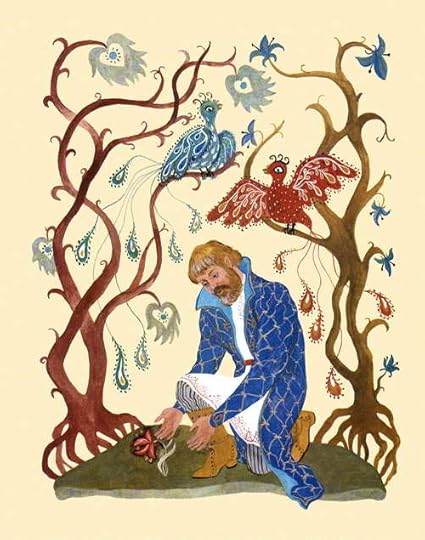
তবে অসম্ভব সুন্দর কিছু রঙিন ছবির কারণে আলতা জবায় যোগ হয়েছে ভিন্ন মাত্রা। ইউলিয়া উসতিনভা'র আঁকা চোখ ধাঁধানো ছবিগুলো দেখলে কেমন যেন নেশা ধরে যায়!
#বিউটি অ্যান্ড দ্য বিস্ট প্রসঙ্গেঃ
ফরাসি ঔপন্যাসিক গ্যাব্রিয়েল-সুজান বার্বট ডি ভিলুন্যেভ এর লেখা বিশাল ধাঁচের এই উপন্যাস ১৭৪০ সালে প্রথমবারের মতো প্রকাশিত হয়। ভিলুন্যেভের উপন্যাসে "বিউটি" এবং "বিস্ট" চরিত্র দু'টির বিস্তারিত অতীত আলোচনা করা হয়েছে। জাদুর প্রাসাদকেও তুলে ধরা হয়েছে শক্তি আর ইন্দ্রজালের প্রতীক হিসেবে।
১৭৫৬ সালে এই সুবিশাল উপন্যাসকে কাটছাঁট করে সংক্ষিপ্ত আকারে প্রকাশ করেন জিন-মেরি লেপ্রিন্স ডি বিউমন্ট। তবে আজকের যুগে আমরা যে গল্পটার সাথে পরিচিত, তার পেছনে ভূমিকা হচ্ছে অ্যাণ্ড্রিউ ল্যাং-এর; ১৮৮৯ সালে ব্লু ফেইরি বুক নামের বইয়ে তার সংস্করণটি প্রকাশিত হয়। পরবর্তীতে গ্রিম ভাইদের রূপকথা থেকে শুরু করে বিভিন্ন বিখ্যাত সংকলনে স্থান পায় গল্পটি।
বিউটি অ্যান্ড দ্য বিস্ট এর মূল প্রেক্ষাপট অবশ্য মধ্যযুগীয় কিছু উপাখ্যান থেকে অনুপ্রাণিত। এর ভেতর রোমান কাহিনী 'কিউপিড অ্যান্ড সাইকি' এবং ইতালিয়ান রূপকথা 'দ্য পিগ কিং' এর নাম বিশেষভাবে উল্লেখযোগ্য।
যুগে যুগে বিভিন্ন দেশে বিভিন্ন নামে প্রচলিত হয়ে পড়ে বিউটি অ্যান্ড দ্য বিস্টের গল্পটা। সের্গেই আক্সাকভের লেখা রাশিয়ান গল্প "দ্য স্কারলেট ফ্লাওয়ার" (আলতা-জবা) প্রকাশিত হয় ১৮৫৮ সালে। তৎকালীন সোভিয়েত ইউনিয়নে নতুনভাবে সুখ্যাতি লাভ করে চিরচেনা সেই বিউটি অ্যান্ড দ্য বিস্ট।
অরুণ সোমের মায়াকাড়া অনুবাদে বাংলায় বইটি প্রকাশিত হয় সোভিয়েত ইউনিয়নের প্রগতি প্রকাশন থেকে।
এক দেশে ছিলেন এক ধনী-মানী সওদাগর। তার ছিল তিনটি মেয়ে। সওদাগর ঠিক করলেন অনেক দূর বাণিজ্যে যাবেন। মেয়ে তিনটিকে উপহারের কথা জিজ্ঞাসা করলেন- বড় মেয়েটি চাইল মণি-মানিক গাঁথা সোনার মুকুট; মেজো মেয়ে চাইল স্ফটিকের নিখুঁত আরশি আর ছোট মেয়েটি চাইল একটি আলতা জবা,যার চেয়ে সুন্দর ফুল আর নেই।
সওদাগর সোনার মুকুট আর আরশি তো পেলেন কিন্তু আলতা রঙা জবা খুঁজতে গিয়েই পড়লেন বিপদে; এক ভয়াবহ জলদৈত্যের সামনে পড়ে গেলেন। আলতা জবা ছেঁড়ার অপরাধে সওদাগরের প্রাণ যায় যায় অবস্থা! সওদাগর যদি তার একটি মেয়েকে এখানে পাঠিয়ে দেয় তবেই সে প্রাণ ভিক্ষা পাবে।
মূল গল্প, অনুবাদ আর ছবিতে তিন তারা দিলাম। আরও বেশি দিলাম না এই জন্য যে, এরচেয়ে ঢেড় ভালো, ঢেড় মজার, ঢেড় আকর্ষণীয় বই সোভিয়েত ইউনিয়ন থেকে আরও বের হয়েছে। সেগুলোও আমরা পড়তে পেয়েছি, আকণ্ঠ গাণ্ডেপিণ্ডে গিলতে পেয়েছি।
আমি বরং একটা পর্যবেক্ষণের কথা বলে যাই।
সওদাগরের মেয়েরা তাকে গড় হয়ে প্রণাম করে, সওদাগর আবার বুনো জানোয়ার, জলদত্যির কাছে খ্রীষ্টের দোহাই দেয়। - আপাতদৃষ্টিতে এটা উপেক্ষা করার মতো একটা বিষয় কিন্তু যারা সোভিয়েত বইগুলোর বাংলা অনুবাদ পড়ে বড় হয়েছেন তারা জানেন এমন কালচারাল খটকা ঐসব বইগুলোতে ছড়িয়ে ছিটিয়ে আছে, বিশেষত অরুণ সোম আর ননী ভৌমিকের করা অনুবাদে। গল্পগুলো যেহেতু সোভিয়েত দেশের তাই অনুবাদেও তাদের মূল সংস্কৃতি ও রীতিগুলো অক্ষুণ্ণ রাখা যেতো। যেখানে নাম-ধামগুলো ঠিক রাখা হচ্ছে সেখানে রীতিগুলোকে বদলানোর দরকার ছিল না। আবার বদলাতে গিয়ে এমনসব কিছু করা হলো যেগুলো একটা পার্টিকুলার সংস্কৃতির পরিচায়ক হলো না।
আমার মনে হয় না সোভিয়েত আমলে প্রকাশিত ছোটদের বইয়ের রুশ সংস্করণে খ্রীষ্ট/ঈশ্বর/আল্লাহ্/ভগবানের শরণাগত হবার, গড় হয়ে প্রণাম করার মতো ব্যাপারগুলো রাখা হতো। কারণ, সোভিয়েত ইউনিয়ন প্রায় সকল ক্ষেত্রে তার সেক্যুলার চরিত্রটি ধরে রাখতে পেরেছিল। বঙ্গানুবাদের এসব ধর্মীয় ব্যাপারস্যাপার ঢুকিয়ে দেয়া সম্ভবত ভারতীয় অনুবাদকদের কাজ। তারা হয়তো তাদের সোভিয়েত কর্তাদের এমন বোঝাতে পেরেছিলেন যে, এসব এলিমেন্ট থাকলে ভারতীয় বাচ্চারা নৈকট্য অনুভব করবে। এসব এলিমেন্ট থাকায় ভারতের, বিশেষত পশ্চিমবঙ্গের বাচ্চারা আদৌ নৈকট্য অনুভব করেছে কিনা জানি না তবে সত্তর-আশির দশকে বাংলাদেশের বাচ্চারা এসবে নৈকট্য অনুভবের পরিবর্তে রুশ পরিবেশে বিজাতীয় সংস্কৃতির স্পর্শ পেয়েছে।
সোভিয়েত ইউনিয়ন যখন বিলুপ্ত হয় আমি তখন তরুণ। সুতরাং ঐ মুষলপর্বে কী কী ঘটেছিল তা ভুলিনি। তখন দেখেছি সাবেক কমিউনিস্টদের অনেকে সেক্যুলার খোলস ছিঁড়ে হিন্দু/মুসলিম মৌলবাদী রূপে মূর্ত হচ্ছে। দুনিয়াজুড়ে দেশে দেশে রাতারাতি পার্টিকে ভেঙে, পার্টির সম্পত্তি বেচে খেয়ে প্রমাণ করা হলো সোভিয়েত দেশগুলোতে তো বটেই অন্য দেশগুলোতে পার্টি আসলে কারা চালাতো। তো শকুনের দল যদি আগেই জায়গামতো বসে থাকে তাহলে তাদের চোখের সামনে অনুবাদকদের দ্বারা বাচ্চাদের বইয়ের সেক্যুলার চরিত্র ধ্বংস করা তো মামুলী ব্যাপার।
The Scarlet Flower, illustrated by Boris Diodorov.
I have a bit of a passion (or addiction, you might say) for collecting different illustrated versions of the classic fairy-tales. I've lost count of how many editions of Cinderella and Sleeping Beauty I've amassed over the years. I have any number of Rapunzel and The Snow Queen retellings on my shelves.
Sergei Aksakov's The Scarlet Flower, a Russian retelling of Beauty and the Beast, is another case in point. In addition to this edition, published by Harcourt Brace, with illustrations by Boris Diodorov, I also own an edition put out by Moscow-based Progress Publishers in 1976, with artwork by Yulia Ustinova.
As mentioned in my review of The Little Scarlet Flower (the Ustinova edition), this story of a beautiful young woman who agrees to go and live with a hideous monster, in order to save her father's life, corresponds in almost every detail to the French fairy-tale, La Belle et la Bête. I am not well enough informed, as it concerns Russian folklore, to state categorically that this tale does not arise from an indigenous folk tradition, but I suspect that, much like Pushkin's The Tale of the Dead Princess and the Seven Knights, this was a conscious literary adaptation on Aksakov's part.
However that may be, anyone who loves the tale of Beauty and the Beast will enjoy this story. Diodorov's colorful illustrations are quite beautiful, and I think I prefer them to Ustinova's more stylized work. As an online friend has noted, this is a text-heavy book, but the distribution of illustrations in this version is to be preferred to that in The Little Scarlet Flower.
In sum: if you're a fairy-tale nut like me, get both. If not, this is the better version..
The Little Scarlet Flower, illustrated by Yulia Ustinova.
Once upon a time, in a distant kingdom, there lived a wealthy merchant with three lovely daughters. Finding himself about to depart on a long trading voyage, the merchant asked each of his daughters what gifts they desired. While the elder two asked for great treasures, the youngest simply requested the "Little Scarlet Flower," more beautiful than anything in the world.
When the merchant's attempt to grant this wish leads him into danger, his youngest and best-beloved daughter agrees to become the prisoner of a terrible beast, in order to save his life. But the "Beast of the Forest, Denizen of the Deep" is not what she expected, and a strange courtship begins...
If this tale sounds oddly familiar - as folktales so often do - it is because it is a Russian version of the French fairytale, Beauty and the Beast, first popularized by Madame le Prince de Beaumont in the 18th century. This tale, written by Sergei Aksakov in the 19th century, reads more like a self-conscious literary adaptation than a genuine folk variant, although my knowledge of Russian folklore is not sufficient to state categorically that it does not spring from some indigenous tradition.
Whatever its specific national origin, The Little Scarlet Flower will appeal to any reader who loves Beauty and the Beast "type" tales. This edition was printed by Moscow Raduga Publishers, and features the illustrations of Yulia Ustinova. Although these are charming, I find that I prefer the artwork of Boris Diodorov, found in the edition of this tale published by Harcourt as The Scarlet Flower.
My copy of the book is from 1974 and has 32 pages. When I was a child I read this fairy tale countless times and I loved the illustrations. My favourite one was the picture of a port. Years later my mother told me that she'd thought it had been a bit weird because usually little girls liked pictures about princesses and this book had several beautiful pictures about the Beauty. I guess I never told her how much I liked the sea and those gorgeous ships and how I dreamed about being an explorer or a pirate.
Романтичная история, знакомая большинству из нас в различных вариациях с самого детства. Невозможно не проникнуться глубиной и красотой сюжета, чудесными образами и замечательными описаниями. Читать эту сказку - одно удовольствие, подарите себе немного красоты среди серых будней!
Рядко харесвам адаптирани разкази и въпреки че този разказ е нещо като първоизточник на Красавицата и Звяра, не беше чак толкова лоша цялостно историята. Имаше повече романтика, по-малко нездрави взаимоотношения, но превода/адаптацията за мен не са изпипани - мнго повторения, много нисък речник и липса на синоними. Оформлението се харесва на децата, защото е шаренко, но за мен беше дори доста натруфено. Появяваше се куче на няколко страници, което така и не беше споменато никъде.
Трієчку цій книзі можна дати за три речі: прекрасний адаптований український переклад, красиві іллюстраціі та той факт, что я дуже любила цю казку, коли була мала. Усе. Крапка. Якби не усі ці моменти, від мене була б одна зірочка. Бо ця історя підпадає про мій улюмленний казковий шаблон "в кінці усе буде добре, але тільки у красивих людей".
Фантазия во сказках – это будущее человечества. Не надо улыбаться. Возьмите любой сюжет – он обязательно сбудется. К тому и надо стремиться. Взять для примера “Аленький цветочек”. Вроде бы ничего примечательного, избитая тысячелетиями повествовательная линия. Так то оно так, но для рассмотрения предлагается вариант от Аксакова. И что видит читатель? Перед ним могущественные артефакты, позволяющие осуществиться части человеческих желаний, некоторые из них до сих пор не реализованы. Если надписи ныне появляются в воздухе, способные изменяться по заданному алгоритму, то с мгновенным переносом из одной точки в любую другую – громадное затруднение.
До сих пор помню картинку с Чудовищем (по-моему, его звали Чудо-юдо или что-то в этом роде). Долгое время все чудовища представлялись именно такими (оно было похоже на снежного человека, но с тёмной шерстью). И ещё на меня произвело сильное впечатление коварство сестёр, которые перевели стрелки часов назад!!!
P.S. Надо будет не забыть и обязательно почитать и европейский вариант истории!
Somewhat text-heavy. Supposedly a Russian folk tale but it sticks pretty close to the standard version of the B&B story. The cover of my edition is striking but overall I am less pleased with the illustrations by Boris Diodorov. The colored pencil art just seems a bit cartoonish and overly garish in spots. Beast is portrayed as a beaked, horned & fanged monster with bulging eyes.
Funny how you can get away with stealing ideas when the country you live in doesn't give a damn about author's rights (a.k.a. Beauty and the Beast retelling for those Russian-speaking people who don't know foreign languages).
A detailed, Russian retelling of the Beauty and the Beast tale. Definitely text heavy, as well as intricate drawings. Interesting for older children who may only be familiar with the Disney telling.
A detailed, Russian retelling of the Beauty and the Beast tale. Definitely text heavy, as well as intricate drawings. Interesting for older children who may only be familiar with the Disney telling.
A detailed, Russian retelling of the Beauty and the Beast tale. Definitely text heavy, as well as intricate drawings. Interesting for older children who may only be familiar with the Disney telling.
আলতা জবা। সওদাগরের আদরের ছোট্ট মেয়েটি তার বাবার কাছে চাইল এক আলতা জবা, যে জবার থেকে সুন্দর ফুল পৃথিবীতে আর কেউ কখনো দেখেনি। আদরের মেয়ের সেই ফুলের সন্ধানে সওদাগর পৌঁছালো, এক নিভৃত রাজ্যে। যেখানে সব কিছুই আছে কিন্তু কোন জন-মানুষ নেই। সেই রাজ্যের বাগানেই সে দেখতে পেল তার কাঙ্খিত জবা ফুলটি। মেয়ের সাধ পূরণে সেই ফুলটি ছিঁড়তেই নেমে এলো এক বিপদের হাতছানি। যে বিপদে একমাত্র উদ্ধার করতে পারবে, সওদাগরের আদরের বুকের ধন ছোট মেয়েটি।
বইয়ের গল্প সবারই জানা, কিন্তু বইয়ের মধ্যের ছবিগুলো এক অপরূপ কারূকাজ। বইয়ের প্রচ্ছদ, প্রচ্ছদের অপর পৃষ্ঠায় থাকা আলতা রঙের ময়ূরটিও কত ফুলের মাঝে বসে আছে। দেখলে চোখ জুড়িয়ে যায়।
Absolutely beautiful story. Honestly, it gave me so many emotions which I didn't expect! Fairytales are usually boring and predictable but this one was far from it. My interpretation of the tale was that being positive source to others will give you the best outcome and that no matter what happens (even a seemingly negative circumstance), you have to trust the process because everything that is meant to happen will happen. Incredible traditional illustrations which really give a sense for Russian folklore and culture.