

What do you think?

Questo buio feroce. Storia della mia morte
Harold Brodkey aveva 66 anni quando l'AIDS lo condannò a una morte lenta ma inesorabile. Il primo annuncio della malattia, quello ufficiale, l'aveva affidato al New Yorker, la rivista alla quale collaborava da anni, in un articolo uscito nel 1993 col titolo "Storia personale. Ai miei lettori". Gli era costata fatica scriverlo, temeva non tanto la fine ma il giudizio perché morire di AIDS significava morire al di fuori di una tradizione, in una specie di silenzio. E ciò che Brodkey mal tollerò in tutta la sua vita fu proprio il silenzio, l'oblio, la privazione degli affetti, cosa che invece l'esistenza gli inflisse duramente. La malattia arrivò nel periodo più bello, un momento importante per la sua carriera, intenso per la storia d'amore con la compagna Ellen, magico perché creativo, vulcanico. Non avrebbe potuto desiderare di meglio quando la morte bussò alla sua porta e si mise "lì in corridoio" aspettando di portarlo con sé. "Questo buio feroce" è la sua pietra tombale, il racconto che celebra le conquiste di una vita nell'estremo, finale saluto; è l'abbraccio alla donna amata, un viaggio nei meandri della psiche e dell'emotività. Un libro di memorie che non lascia terrore, angoscia, dolore, ma solo pace perché la sua scrittura, in quei giorni cruciali, fu attraversata da una grazia splendente, uno stato lucido di comprensione e di pietà.
176 pages, Paperback
First published January 1, 1996
About the author
Harold Brodkey
82 books92 followersHarold Brodkey, born Aaron Roy Weintraub, was an American short-story writer and novelist.
Ratings & Reviews
Friends & Following
Create a free account to discover what your friends think of this book!
Community Reviews
Displaying 1 - 30 of 51 reviews

June 29, 2012
UN MORSO ALL’OSCURITÀ

…nella sua imminenza la morte conferisce una certa bellezza alle proprie ore – una bellezza che forse non ha corrispettivi, ma che è travolgente.
Per dirla con Gadda, che del dolore faceva oggetto e tramite di ‘cognizione’, finiti tutti i viaggi possibili, l’altrove di cui resta da parlare è la morte.
La letteratura è il linguaggio che consente di esprimere il dolore mediandolo razionalmente e cioè imponendo all’espressione una sorveglianza che lo rende comunicabile: la letteratura rende pubblico ciò che non si sarebbe potuto dire, o, più semplicemente, trova le parole per dirlo.

Sono pagine che arrivano alla pancia passando dalla testa: le emozioni e il dolore non sono mai buttati sulla carta.
Ci sono le viscere di Harold Brodkey, malato di AIDS (malattia che negli anni Novanta si scriveva con le lettere scarlatte della Colpa e del Peccato), passate attraverso la mediazione razionale.
È letteratura, non un colpo basso: non è un libro piagnone, non c’è auto indulgenza, Brodkey sembra restare distante (in realtà, ovviamente, è dentro fino in fondo, ma alla sua maniera – d’altra parte, cos’altro potrebbe essere?), è il suo rifiuto di soffrire, ma soprattutto, direi, di farci soffrire, di essere compatito.
Non è un libro che si potrebbe presentare in TV.
È un libro che deluderà parecchio chi cerca la lacrima facile, l’emozione immediata sempre e comunque, sopra tutto, soprattutto.
Il poeta è un fingitore // finge tanto interamente // che sa fingere che è dolore // il vero dolor che sente, dice Pessoa.
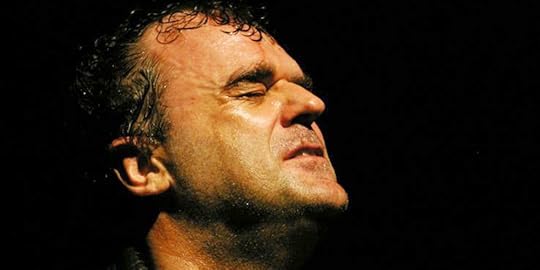
Pippo Delbono nello spettacolo teatrale “Questo buio feroce”.
Ma poi, in fondo, no, non è così, basta seguire il ritmo dei capitoli, scandito da passaggi di tempo, che seguono lo sviluppo del male, l’approssimarsi della fine: primavera 1993, l’inizio, l’annuncio della malattia (90 pagine); estate 1993 (10 pagine); inverno avanzato 1993 (8 pagine); primavera 1994, sta meglio, è tornato a Venezia (22 pagine); estate 1994 (6 pagine); inizio autunno 1995, un salto temporale che nello stato di salute di Brodkey si trasmette direttamente allo stomaco di me lettore (11 pagine); tardo autunno 1995 (6 pagine).
Ma poi, in fondo, no, non è così: perché dentro queste pagine è anche raccontata una grande meravigliosa perfetta storia d’amore, come la vorremmo tutti (come le avrei volute tutte).
Chi non vorrebbe essere descritto così: In lei adesso vedo un aspetto da Orlando: è padre e madre, moglie e marito e figlio e figlia; è se stessa e me-degli-anni-andati.
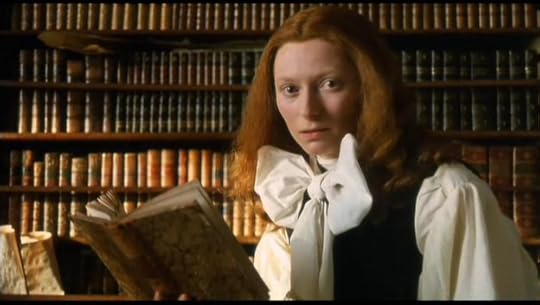
Tilda Swinton in “Orlando” di Sally Potter, 1992.
Devo dire che disprezzo vivere se non posso farlo a modo mio.
E ancora, proprio alla fine:
Se dovessi rinunciare a quello che ho scritto per guarire da questa malattia, non lo farei.
Chapeau, Mr Brodkey.

Ancora Delbono nell’omonimo adattamento teatrale del 2006.
…nella sua imminenza la morte conferisce una certa bellezza alle proprie ore – una bellezza che forse non ha corrispettivi, ma che è travolgente.
Per dirla con Gadda, che del dolore faceva oggetto e tramite di ‘cognizione’, finiti tutti i viaggi possibili, l’altrove di cui resta da parlare è la morte.
La letteratura è il linguaggio che consente di esprimere il dolore mediandolo razionalmente e cioè imponendo all’espressione una sorveglianza che lo rende comunicabile: la letteratura rende pubblico ciò che non si sarebbe potuto dire, o, più semplicemente, trova le parole per dirlo.
Sono pagine che arrivano alla pancia passando dalla testa: le emozioni e il dolore non sono mai buttati sulla carta.
Ci sono le viscere di Harold Brodkey, malato di AIDS (malattia che negli anni Novanta si scriveva con le lettere scarlatte della Colpa e del Peccato), passate attraverso la mediazione razionale.
È letteratura, non un colpo basso: non è un libro piagnone, non c’è auto indulgenza, Brodkey sembra restare distante (in realtà, ovviamente, è dentro fino in fondo, ma alla sua maniera – d’altra parte, cos’altro potrebbe essere?), è il suo rifiuto di soffrire, ma soprattutto, direi, di farci soffrire, di essere compatito.
Non è un libro che si potrebbe presentare in TV.
È un libro che deluderà parecchio chi cerca la lacrima facile, l’emozione immediata sempre e comunque, sopra tutto, soprattutto.
Il poeta è un fingitore // finge tanto interamente // che sa fingere che è dolore // il vero dolor che sente, dice Pessoa.
Pippo Delbono nello spettacolo teatrale “Questo buio feroce”.
Ma poi, in fondo, no, non è così, basta seguire il ritmo dei capitoli, scandito da passaggi di tempo, che seguono lo sviluppo del male, l’approssimarsi della fine: primavera 1993, l’inizio, l’annuncio della malattia (90 pagine); estate 1993 (10 pagine); inverno avanzato 1993 (8 pagine); primavera 1994, sta meglio, è tornato a Venezia (22 pagine); estate 1994 (6 pagine); inizio autunno 1995, un salto temporale che nello stato di salute di Brodkey si trasmette direttamente allo stomaco di me lettore (11 pagine); tardo autunno 1995 (6 pagine).
Ma poi, in fondo, no, non è così: perché dentro queste pagine è anche raccontata una grande meravigliosa perfetta storia d’amore, come la vorremmo tutti (come le avrei volute tutte).
Chi non vorrebbe essere descritto così: In lei adesso vedo un aspetto da Orlando: è padre e madre, moglie e marito e figlio e figlia; è se stessa e me-degli-anni-andati.
Tilda Swinton in “Orlando” di Sally Potter, 1992.
Devo dire che disprezzo vivere se non posso farlo a modo mio.
E ancora, proprio alla fine:
Se dovessi rinunciare a quello che ho scritto per guarire da questa malattia, non lo farei.
Chapeau, Mr Brodkey.
Ancora Delbono nell’omonimo adattamento teatrale del 2006.

May 25, 2014
Rating: 2.5* of five
The Publisher Says: It is possible not to care for Harold Brodkey's obsessive, digressive, almost plotless fiction and still be moved by this memoir of his last sufferings until his death, in mid-1996, of AIDS. Brodkey was a writer for whom style was everything, but in his own implacable and untimely mortality he found a subject before which style was nothing. In this assemblage of essays, journal entries, and brief notes, he confronts his illness from a clinical perspective without losing his ironic tone or his genius for minutiae. In a sense, Brodkey wrote nothing but autobiography throughout his career; this, then, is a fitting final chapter.
My Review: Fabulous language, gorgeous emotional honesty, and why in the end do I care so little? His wife seems to me a woman who made a bad bargain and stuck with it; he seems self aware and unblinkingly honest about his fate, but some essential something that would give this book its heart wasn't put into it. I suppose it could be the supre-tight focus on Brodkey's death and death alone that makes me feel somehow bereft of personal feeling. Perhaps I feel slightly uninterested because I know so little of the man himself before the illness. I can't really be certain, since my editorial sense deserted me as I read this book. I fell into a fogged unwillingness to read or stop reading, a very unusual state for me. A very strange book.

This work is licensed under a Creative Commons Attribution-NonCommercial-ShareAlike 3.0 Unported License.
The Publisher Says: It is possible not to care for Harold Brodkey's obsessive, digressive, almost plotless fiction and still be moved by this memoir of his last sufferings until his death, in mid-1996, of AIDS. Brodkey was a writer for whom style was everything, but in his own implacable and untimely mortality he found a subject before which style was nothing. In this assemblage of essays, journal entries, and brief notes, he confronts his illness from a clinical perspective without losing his ironic tone or his genius for minutiae. In a sense, Brodkey wrote nothing but autobiography throughout his career; this, then, is a fitting final chapter.
My Review: Fabulous language, gorgeous emotional honesty, and why in the end do I care so little? His wife seems to me a woman who made a bad bargain and stuck with it; he seems self aware and unblinkingly honest about his fate, but some essential something that would give this book its heart wasn't put into it. I suppose it could be the supre-tight focus on Brodkey's death and death alone that makes me feel somehow bereft of personal feeling. Perhaps I feel slightly uninterested because I know so little of the man himself before the illness. I can't really be certain, since my editorial sense deserted me as I read this book. I fell into a fogged unwillingness to read or stop reading, a very unusual state for me. A very strange book.
This work is licensed under a Creative Commons Attribution-NonCommercial-ShareAlike 3.0 Unported License.

December 30, 2010
Fascinating and challenging book about a writer at the end of his life reflecting on life and death. One of the things I like about this book is the fact that Brodkey does not set out to make the reader like him. He is irascible, selfish, angry,fierce and above all human as he faces his death from an AIDS related illness. His wife also comes across as a remarkable woman. This is not an easy read and the feel of impending death throughout is thought provoking. Brodkey does not shy away from his fear of death and there are no easy answers or glib solutions; but the last paragraph is remarkable.Not an easy read but an important book as we will all be where he is some day.
"Look, it's only death. It's not like losing your hair or all your money. I don't have to live with this"
"Much of the time I do nothing. I lie in bed or on the porch. I stare at death, and death stares at me"
"Living with AIDS is like being a character stuck in a bad John Updike novel".
At times Brodkey is overly abstract and a good deal of the time he really irritated me, but I was also moved and impressed. You can also trace Kubler-Ross's five stages of loss/grief (anger, denial, bargaining, depression, acceptance).
At times Brodkey is profound and poetic and as I said, the sign off is impressive.
"Look, it's only death. It's not like losing your hair or all your money. I don't have to live with this"
"Much of the time I do nothing. I lie in bed or on the porch. I stare at death, and death stares at me"
"Living with AIDS is like being a character stuck in a bad John Updike novel".
At times Brodkey is overly abstract and a good deal of the time he really irritated me, but I was also moved and impressed. You can also trace Kubler-Ross's five stages of loss/grief (anger, denial, bargaining, depression, acceptance).
At times Brodkey is profound and poetic and as I said, the sign off is impressive.

January 13, 2010
More a dissertation on Living rather then Dying
Harold Brodkey, now fifteen years after his death, remains in the highest category of writers of the English language. And this is a fine time to return to his memoirs THIS WILD DARKNESS: THE STORY OF MY DEATH simply to be reminded about how completely involved in the cycle of life Brodkey lived. There is nothing maudlin about these 177 pages of thoughts about his history of being diagnosed with AIDS and succumbing to it, and though the reader does feel the author's flirtation with the idea of the joy of being alive, Brodkey freely talks about the act of dying as a rather ordinary part of the cycle of being on the earth.
While some author's faced with the act of dying fill pages of memoirs with remorse, Brodkey instead shares his own experiences freely - from a very honest account of his contraction of the disease, to a discussion of his sexuality, a discussion that spends the majority of time in praise of his wife Ellen, to his thoughts on the act of dying. His discussions about his physician Barry who informs him of his diagnosis is a story within a story and one not at all unlike the author's novels. But perhaps those of us who deeply admire Harold Brodkey's gifts can find special meaning in some of his last thoughts: 'I regret having been so polite in the past. I'd like to trample on at least a dozen people. Maybe I will live long enough to do just that before I waste away to the point where I can't trample on a goose feather. Anyway, I have been in bed, in the fetal position, for two weeks. I wish were young. I am sick of leaves and fresh air. Nature doesn't seem serious enough, or rather it seems TOO serious on the death front.' And the final sentences from this book: 'Peace? There was never any in the world. But in the pliable water, under the sky, unmoored, I am traveling now and hearing myself laugh, at first with nerves and then with genuine amazement. It is all around me.'
This book is a gift for the living: reading it makes the ordinary aspects of living so divine.
Grady Harp
Harold Brodkey, now fifteen years after his death, remains in the highest category of writers of the English language. And this is a fine time to return to his memoirs THIS WILD DARKNESS: THE STORY OF MY DEATH simply to be reminded about how completely involved in the cycle of life Brodkey lived. There is nothing maudlin about these 177 pages of thoughts about his history of being diagnosed with AIDS and succumbing to it, and though the reader does feel the author's flirtation with the idea of the joy of being alive, Brodkey freely talks about the act of dying as a rather ordinary part of the cycle of being on the earth.
While some author's faced with the act of dying fill pages of memoirs with remorse, Brodkey instead shares his own experiences freely - from a very honest account of his contraction of the disease, to a discussion of his sexuality, a discussion that spends the majority of time in praise of his wife Ellen, to his thoughts on the act of dying. His discussions about his physician Barry who informs him of his diagnosis is a story within a story and one not at all unlike the author's novels. But perhaps those of us who deeply admire Harold Brodkey's gifts can find special meaning in some of his last thoughts: 'I regret having been so polite in the past. I'd like to trample on at least a dozen people. Maybe I will live long enough to do just that before I waste away to the point where I can't trample on a goose feather. Anyway, I have been in bed, in the fetal position, for two weeks. I wish were young. I am sick of leaves and fresh air. Nature doesn't seem serious enough, or rather it seems TOO serious on the death front.' And the final sentences from this book: 'Peace? There was never any in the world. But in the pliable water, under the sky, unmoored, I am traveling now and hearing myself laugh, at first with nerves and then with genuine amazement. It is all around me.'
This book is a gift for the living: reading it makes the ordinary aspects of living so divine.
Grady Harp

September 14, 2012
I feel bad not liking a brave book that tries to describe the process of a stigmatizing, torturous death from AIDS before HAART. But I just didn't, Brodkey is such a narcissist and so overall unpleasant. I can handle gloom and negativity but his nihilistic arrogance just irked me. I liked the metaphors of death as the great silence.

July 19, 2017
Being ill like this combines shock – this time I will die – with a pain and agony that are unfamiliar, that wrench me out of myself. It is like visiting one's funeral, like visiting loss in its purest and most monumental form, this wild darkness, which is not only unknown but which one cannot enter as oneself. Now one belongs entirely to nature, to time: identity was a game. It isn't cruel what happens next, it is merely a form of being caught. Memory, so complete and clear or so evasive, has to be ended, has to be put aside, as if one were leaving a chapel and bringing the prayer to an end in one's head. It is death that goes down to the center of the earth, the great burial church the earth is, and then to the curved ends of the universe, as light is said to do.
Having only read some of Harold Brodkey's anthologised short stories, I was nonetheless intrigued enough by the concept of a memoir of his final illness, This Wild Darkness: The Story of My Death, to pick it up. And I'm glad I did: despite its brevity (177 small pages in my edition), it contains everything a memoir should (brief overview of childhood, career, relationships) and everything that a talented literary mind might note about the experience of impending death. After finishing it, I was unsurprised to learn in my Googling around that what might seem like flaws in the tone this work – arrogance, defensiveness, self-absorption – are criticisms that had been flung at Brodkey throughout his entire career; indeed, all of his fiction might be considered reworked memoir, with This Wild Darkness his necessarily focussed capstone. I was never unaware that Brodkey, having been given a terminal diagnosis, had a unique opportunity to shape a reader's final impression of him and his work – it would be impossible to say what is plain truth and what was moulded for posterity – but I choose to take Brodkey at his word; this is an affecting and enlightening account of a life, and a death.
In the spring of 1993, Brodkey was diagnosed with AIDS, and just short of three years later, he would die. Over those years, he continued to live his life – with the support of his devoted wife, the novelist Ellen Schwamm – continued to work on his previous writing projects; continued to travel; began composing what would become This Wild Darkness. I could summarise his biography as Brodkey shared it, but I really only want to let him speak here; to use a few snippets to demonstrate the evolution of his approach to his own death. Immediately post-prognosis:
Having accepted death long ago in order to be physically and morally free to some extent, I am not crushed by this final sentence of death, at least not yet, and I don't think it is denial. Why should it be different now? Ought I to crack up because a bluff has been called? I am sick and exhausted, numbed and darkened, by my approximate dying a few weeks ago from Pneumocystis, and consider death a silence, a silence and a privacy and an untouchabilty, as no more reactions and opinions, as a relief, a privilege, a lucky and grateful symmetrical silence to be grateful for.
From the spring of 1994:
Often in the afternoons I wake after a nap with an awful sense of its being over and that it never meant much; I never had a life. The valuable sweetness and the hard work are infected by the fact of death: they no longer seem to have been so wonderful, but they are all I had. And then I want to be comforted. I want my old, unthreatening forms of silence, and comedy-and-cowardice. I want breath and stories and the world.
From the summer 1994:
I don't want any human gesture of solidarity. I feel quite human anyway, infinitely human, which is to say merely human, and I don't feel the need for physical reassurance. I find the silence of God to be very beautiful, even when the silence is directed at me.
And from the final entry:
I am standing on an unmoored raft, a punt moving on the flexing, flowing face of a river. It is precarious. The unknowing, the taut balance, the jolts and the instability spread in widening ripples through all my thoughts. Peace? There was never any in the world. But in the pliable water, under the sky, unmoored, I am traveling now and hearing myself laugh, at first with nerves and then with genuine amazement. It is all around me.
I was constantly marking passages in this book – Brodkey's turns of phrase suit my taste to a tee – and his stated acceptance of his fate seems a lesson in grace and dignity for us all. Sad but true: while in his lifetime Brodkey was expected to be “the American Proust” and elevate memoir to a form that would live forever, none of his books (two short story collections, two novels, this memoir, some posthumous releases) are carried in either my local library or the bookstore where I work; twenty years after his death, Brodkey is all but forgotten. And that's a pity.

February 15, 2018
Em “Esta Feroz Escuridão – A História da minha Morte” de Harold Brodkey o leitor é confrontado com a consciência que o autor tem da sua própria vida e morte desde que lhe é revelado ter uma doença fatal, SIDA, passando pelos vários estágios de menor ou maior aceitação do seu inefável destino.
Acompanhamos a sua luta em debelar doenças associadas à SIDA e em ultrapassar as barreiras psicológicas associadas à doença que, mesmo no meio cosmopolita de Nova Iorque parece, àquele tempo (1993/1994), ainda se apresentar como um obstáculo à normal convivência, suscitando incómodos e preconceitos sem fundamento.
Seguimos ainda a vida familiar do autor/paciente em que o foco central é Ellen, a sua mulher que assume o controlo de todos os aspectos relacionados com o seu tratamento e bem-estar, e que tenta até ao fim manter a normalidade possível nas suas vidas, apesar do cada vez mais debilitante estado de Harold. E, curiosamente, no momento de maior debilidade, instala-se uma paz e uma felicidade difíceis de traduzir…
O relato feito na primeira pessoa, aproxima-nos do autor, e não se limita à narração das etapas da doença que o assola. Harold Brodkey conversa com o leitor, transporta-o até à sua infância de órfão, à sua adolescência de abusos sofridos, à idade adulta onde prevaleceu a homossexualidade, e na confissão voluntária que nos faz, não há autocomiseração, apenas o realismo e a frieza dos factos que integram a sua vivência enquanto ser humano.
É o homem-fortaleza que se revela no seu momento de maior fragilidade.
Um livro com uma dimensão humana imensa que nos submerge nas experiências e pensamentos de um homem condenado a viver a sua morte.
Acompanhamos a sua luta em debelar doenças associadas à SIDA e em ultrapassar as barreiras psicológicas associadas à doença que, mesmo no meio cosmopolita de Nova Iorque parece, àquele tempo (1993/1994), ainda se apresentar como um obstáculo à normal convivência, suscitando incómodos e preconceitos sem fundamento.
Seguimos ainda a vida familiar do autor/paciente em que o foco central é Ellen, a sua mulher que assume o controlo de todos os aspectos relacionados com o seu tratamento e bem-estar, e que tenta até ao fim manter a normalidade possível nas suas vidas, apesar do cada vez mais debilitante estado de Harold. E, curiosamente, no momento de maior debilidade, instala-se uma paz e uma felicidade difíceis de traduzir…
O relato feito na primeira pessoa, aproxima-nos do autor, e não se limita à narração das etapas da doença que o assola. Harold Brodkey conversa com o leitor, transporta-o até à sua infância de órfão, à sua adolescência de abusos sofridos, à idade adulta onde prevaleceu a homossexualidade, e na confissão voluntária que nos faz, não há autocomiseração, apenas o realismo e a frieza dos factos que integram a sua vivência enquanto ser humano.
É o homem-fortaleza que se revela no seu momento de maior fragilidade.
Um livro com uma dimensão humana imensa que nos submerge nas experiências e pensamentos de um homem condenado a viver a sua morte.

July 15, 2013
"A morte é uma chatice. Mas a vida também não é interessante."
Harold Brodkey, escritor norte-americano - cujo estilo alguns comparam a David Foster Wallace - nasceu em 1930 e morreu em 1996.
Teve uma infância de abusos, por parte do pai adoptivo, que o marcaram e condicionaram a sua vida adulta. "Os homens tresandam a raiva e, por isso, sempre preferi as mulheres e os homossexuais."
Devido ao seu aspecto físico foi desejado por homens e mulheres (Marilyn Monroe foi uma das suas amantes). Teve vários relacionamentos amorosos e é contagiado com sida, por um dos seus amantes, a qual lhe é diagnosticada vinte anos depois.
"TENHO SIDA. ESTOU SURPREENDIDO POR TÊ-LA." Com estas palavras H. Brodkey inicía o seu ultimo livro, no qual conta a história da sua morte e reconhece a generosidade e o apoio dos que o acompanharam nos seus derradeiros momentos, principalmente a sua mulher - a escritora Ellen Schwamm - cujo amor e lealdade estiveram presentes até ao final.
Um relato heróico do esforço e coragem de um homem para manter a dignidade, apesar da decadência física. "A agulha substitui o beijo. A morte e eu estamos em plena colisão frontal, pura aversão mútua. A morte não quer ninguém que sabe a remédios, está inchado e coberto de manchas..."
Uma história exemplar de como aceitar a morte como algo inevitável, mas não necessariamente mau. "Mas estou agora a viajar na água maleável, sob o céu e à deriva; ouço-me rir, de nervoso ao principio e, depois, genuinamente fascinado. O riso está todo à minha volta."
Harold Brodkey, escritor norte-americano - cujo estilo alguns comparam a David Foster Wallace - nasceu em 1930 e morreu em 1996.
Teve uma infância de abusos, por parte do pai adoptivo, que o marcaram e condicionaram a sua vida adulta. "Os homens tresandam a raiva e, por isso, sempre preferi as mulheres e os homossexuais."
Devido ao seu aspecto físico foi desejado por homens e mulheres (Marilyn Monroe foi uma das suas amantes). Teve vários relacionamentos amorosos e é contagiado com sida, por um dos seus amantes, a qual lhe é diagnosticada vinte anos depois.
"TENHO SIDA. ESTOU SURPREENDIDO POR TÊ-LA." Com estas palavras H. Brodkey inicía o seu ultimo livro, no qual conta a história da sua morte e reconhece a generosidade e o apoio dos que o acompanharam nos seus derradeiros momentos, principalmente a sua mulher - a escritora Ellen Schwamm - cujo amor e lealdade estiveram presentes até ao final.
Um relato heróico do esforço e coragem de um homem para manter a dignidade, apesar da decadência física. "A agulha substitui o beijo. A morte e eu estamos em plena colisão frontal, pura aversão mútua. A morte não quer ninguém que sabe a remédios, está inchado e coberto de manchas..."
Uma história exemplar de como aceitar a morte como algo inevitável, mas não necessariamente mau. "Mas estou agora a viajar na água maleável, sob o céu e à deriva; ouço-me rir, de nervoso ao principio e, depois, genuinamente fascinado. O riso está todo à minha volta."

January 10, 2026
um livro triste, melancólico e duro. foi uma leitura que fui fazendo em pequenas doses. custava ler a percepção de Brodkey de que a morte se aproximava. um grande livro sobre o HIV/Sida.

May 19, 2024
Here Brodkey engages in a Runaway Soul-adjacent mode that, as ever, causes a strange blurring of the truth of languid reality against inspired idealistic introspection. Everything shimmers of some truth, but as Brodkey admits a sick man cannot properly sketch the healthy, they are forever at an infinite remove from the terminally ill, so his clamouring toward truth is marred as he shuttles forth into the trembling presence of death. Venice and nature are tainted, gondolas and their passengers remind one of Charon and the damned, the autumnal leaves and the great silence of the forest (what should be a site of tranquil ease) echo the somber sentiments that are at the very forefront of Brodkey’s mind.
To be curt and off-putting and unable to read the room I have to admit this isn’t The Runaway Soul, this is a microcosm of what that work achieved, but here true stakes are felt, and felt deeply. In the moments of transient, ephemeral contentment as Harold and his wife hold hands whilst watching mind numbing TV, him covered from head to toe in rashes due to an allergic reaction from the AIDS medication, you can’t help but be cut by a nasty upsurge of melancholy. It must be said this is a bit of a Debbie downer (NO SHIT) - but, to fully support the irony and determined self-assertiveness Brodkey props up in an attempt to save his soul from utter wretchedness, I’d like to say one last thing.... AIDS is a real bummer, isn’t it?
To be curt and off-putting and unable to read the room I have to admit this isn’t The Runaway Soul, this is a microcosm of what that work achieved, but here true stakes are felt, and felt deeply. In the moments of transient, ephemeral contentment as Harold and his wife hold hands whilst watching mind numbing TV, him covered from head to toe in rashes due to an allergic reaction from the AIDS medication, you can’t help but be cut by a nasty upsurge of melancholy. It must be said this is a bit of a Debbie downer (NO SHIT) - but, to fully support the irony and determined self-assertiveness Brodkey props up in an attempt to save his soul from utter wretchedness, I’d like to say one last thing.... AIDS is a real bummer, isn’t it?
July 1, 2013
Harold Brodkey es sencillamente todo un personaje; nace en 1930 en Illinois con una infancia digna de cualquier novela maldita, y con una vida en exceso interesante sobre sus hombros, es difícil resumir tanta historia de manera corta, muchas leyendas urbanas existen sobre Brodkey y sus controversiales opiniones, en mas de una oportunidad solía afirmar en publico y privado que escritores como Norman Mailer y Saul Bellow se robaban muchas de sus frases, que gracias a su físico hombres y mujeres habían caído bajo sus encantos (Marilyn Monroe entre ellas), y que hasta Sean Connery había robado su estilo para Indiana Jones; algo que es sin duda cierto es que Harold Bloom afirmó sobre Brodkey en mas de una oportunidad que era “el Proust americano, sin paralelo alguno desde Faulkner” y esto ya es una señal muy confiable de la calidad que poseía Brodkey; en la actualidad algunos lo comparan con el desaparecido David Foster Wallace en su estilo.
La bibliografía de Brodkey consta de 4 libros de relatos, 2 novelas y 3 ensayos, y con Editorial Anagrama editando 5 de ellos en español, es con “Esta Salvaje Oscuridad – La Historia de mi Muerte” mi primer contacto real con el, anteriormente solo tuve la oportunidad de leer uno que otro de sus relatos en Internet, dejándome bastante satisfecho su pluma.
Harold Brodkey es diagnosticado con SIDA en la primavera de 1993, después de haber publicado su Obra mas importante en la que trabajó durante mas de 25 años “El Alma Fugitiva”, el día en que recibe la terrible noticia decide emprender un viaje de sinceridad absoluta para dejar constancia del sufrimiento que le tocaría vivir durante los 2 años que le quedarían por delante; una frase importante para Brodkey siempre sería “no creo en la privacidad” y este libro da prueba de su absoluta fidelidad a eso, es un verdadero viaje por el sufrimiento y el dolor de un ser humano con mucho talento que sabe que tiene una fecha cercana para despedirse.
La Obra comienza con una frase demoledora “Tengo Sida. Me sorprende”, para quien no lo haya leído jamás ya sabe que el libro es crudo y directo, que estamos siendo invitados a la despedida de un ser humano que quiere dejar por escrito todo lo que le tocará vivir desde ese día, durante el viaje uno se encuentra con su esposa Ellen quien decide cargar con el peso de alguien que se muere lentamente, animándolo a escribir este testamento literario donde el “cadáver vivo” comienza a vomitar sobre el papel su posición radical ante la vida (“La vida es una especie de horror. Esta bien, pero cansa. Uno se va debilitando”), su terrible niñez, el abuso que vivió con su padrastro y como su madre lo vendió a otra familia por 300$, su bisexualidad irresponsable no oculta que lo condenaría en el futuro, su critica a la hipocresía con el sexo, su repulsión en algunos momentos hacia el ser humano (“Somos escoria”), y el miedo al rechazo de los que son vistos como la peor infección cuando los vecinos y los amigos se enteran de su enfermedad; Brodkey no deja ningún ladrillo en pie en este viaje hacia su muerte.
Existen muchos momentos duros; como descubrir que su felicidad se encuentra cuando vive los peores momentos acompañado por Ellen a quien demuestra un amor simplemente infinito sin ella saberlo, Brodkey sabe que es una lucha de David sin honda contra Goliat, o como el mismo llega a describirlo, como un viaje durante un año donde su muerte es como las hojas secándose de un árbol.
“Esta Salvaje Oscuridad – La Historia de mi Muerte” es un libro corto, duro y contundente, muy crudo y doloroso, no debería pasar desapercibido entre los que gusten de biografías escritas con dolor y sangre.
http://bitacoradelscriptorium.blogspo...
La bibliografía de Brodkey consta de 4 libros de relatos, 2 novelas y 3 ensayos, y con Editorial Anagrama editando 5 de ellos en español, es con “Esta Salvaje Oscuridad – La Historia de mi Muerte” mi primer contacto real con el, anteriormente solo tuve la oportunidad de leer uno que otro de sus relatos en Internet, dejándome bastante satisfecho su pluma.
Harold Brodkey es diagnosticado con SIDA en la primavera de 1993, después de haber publicado su Obra mas importante en la que trabajó durante mas de 25 años “El Alma Fugitiva”, el día en que recibe la terrible noticia decide emprender un viaje de sinceridad absoluta para dejar constancia del sufrimiento que le tocaría vivir durante los 2 años que le quedarían por delante; una frase importante para Brodkey siempre sería “no creo en la privacidad” y este libro da prueba de su absoluta fidelidad a eso, es un verdadero viaje por el sufrimiento y el dolor de un ser humano con mucho talento que sabe que tiene una fecha cercana para despedirse.
La Obra comienza con una frase demoledora “Tengo Sida. Me sorprende”, para quien no lo haya leído jamás ya sabe que el libro es crudo y directo, que estamos siendo invitados a la despedida de un ser humano que quiere dejar por escrito todo lo que le tocará vivir desde ese día, durante el viaje uno se encuentra con su esposa Ellen quien decide cargar con el peso de alguien que se muere lentamente, animándolo a escribir este testamento literario donde el “cadáver vivo” comienza a vomitar sobre el papel su posición radical ante la vida (“La vida es una especie de horror. Esta bien, pero cansa. Uno se va debilitando”), su terrible niñez, el abuso que vivió con su padrastro y como su madre lo vendió a otra familia por 300$, su bisexualidad irresponsable no oculta que lo condenaría en el futuro, su critica a la hipocresía con el sexo, su repulsión en algunos momentos hacia el ser humano (“Somos escoria”), y el miedo al rechazo de los que son vistos como la peor infección cuando los vecinos y los amigos se enteran de su enfermedad; Brodkey no deja ningún ladrillo en pie en este viaje hacia su muerte.
Existen muchos momentos duros; como descubrir que su felicidad se encuentra cuando vive los peores momentos acompañado por Ellen a quien demuestra un amor simplemente infinito sin ella saberlo, Brodkey sabe que es una lucha de David sin honda contra Goliat, o como el mismo llega a describirlo, como un viaje durante un año donde su muerte es como las hojas secándose de un árbol.
“Esta Salvaje Oscuridad – La Historia de mi Muerte” es un libro corto, duro y contundente, muy crudo y doloroso, no debería pasar desapercibido entre los que gusten de biografías escritas con dolor y sangre.
http://bitacoradelscriptorium.blogspo...

November 11, 2015
Hay muy poca literatura en estas memorias.

January 14, 2024
“Ormai appartieni interamente alla natura, al tempo: l’identità era un gioco. Non è crudele quel che succederà dopo, è semplicemente un modo di essere intrappolati.”
È il 1993 quando l’autore scopre di avere l’AIDS e usa il tempo che gli resta – morirà nel 1996 - per raccontare la cronaca della sua fine. Il “buio feroce” dell’ignoto che sente sta per inghiottirlo è costellato di ricordi, rimpianti, riflessioni sulla sua vita e sulla morte in generale.
Esce un quadro frammentato di eventi, di sentimenti, di episodi di vita ma anche un’interessante prospettiva del malato che percepisce progressivamente la rassegnazione dei medici e rivendica la volontà di finire i suoi giorni a casa.
Brodkey racconta anche la decadenza della New York delle “mille luci” da cui è stato abbagliato all’inizio della sua carriera e di come questa città inghiotte, abbaglia, altera la realtà.
L’accettazione della transitorietà, l’essere senza filtri, la fragilità delle conversazioni senza altri scopi, la mancanza di significato nella fine sono squarci febbrili nel desiderio di lasciare una testimonianza scritta di proprio pugno.
“Io sono un tossicodipendente del linguaggio, del racconto e del giornalismo. Leggo, non più in modo frenetico, ma costante. Ho un desiderio struggente di amare le parole di altri, di amare altri per le loro parole, le loro idee.”
Approcciare Brodkey dalla fine ha lasciato in me la voglia di leggere altri suoi titoli.
È il 1993 quando l’autore scopre di avere l’AIDS e usa il tempo che gli resta – morirà nel 1996 - per raccontare la cronaca della sua fine. Il “buio feroce” dell’ignoto che sente sta per inghiottirlo è costellato di ricordi, rimpianti, riflessioni sulla sua vita e sulla morte in generale.
Esce un quadro frammentato di eventi, di sentimenti, di episodi di vita ma anche un’interessante prospettiva del malato che percepisce progressivamente la rassegnazione dei medici e rivendica la volontà di finire i suoi giorni a casa.
Brodkey racconta anche la decadenza della New York delle “mille luci” da cui è stato abbagliato all’inizio della sua carriera e di come questa città inghiotte, abbaglia, altera la realtà.
L’accettazione della transitorietà, l’essere senza filtri, la fragilità delle conversazioni senza altri scopi, la mancanza di significato nella fine sono squarci febbrili nel desiderio di lasciare una testimonianza scritta di proprio pugno.
“Io sono un tossicodipendente del linguaggio, del racconto e del giornalismo. Leggo, non più in modo frenetico, ma costante. Ho un desiderio struggente di amare le parole di altri, di amare altri per le loro parole, le loro idee.”
Approcciare Brodkey dalla fine ha lasciato in me la voglia di leggere altri suoi titoli.

December 17, 2014
Puoi trovare questa recensione anche sul mio blog ---> La siepe di more
Questo buio feroce è un libro pieno di sapori contrastanti: possiamo trovarci l'amore e la morte, il dolore e la felicità, la verità e la fame di bugie, la stanchezza e la voglia di fare, la forza e il disfacimento.
Dimenticate le frasi strappalacrime sull'ingiustizia di beccarsi una malattia che nel 1993 non lasciava scampo (l'AIDS): Harold Brodkey era un giornalista e ha voluto lasciarci una testimonianza del suo avvicinarsi alla morte a causa di una malattia in odore di infamia e depravazione e a tratti sfoggia un'ironia che difficilmente non vi strapperà un sorriso.
Il guaio della morte-sulla-soglia-di-casa è che sta succedendo proprio a te. E anche, che non sei più l'eroe della tua storia, e nemmeno il narratore.
Nel corso del libro, Brodkey non manca di sottolineare i suoi momenti di felicità, basati su quello strano e documentato fenomeno secondo il quale si vive più intensamente quando le nostre aspettative di vita sono drasticamente – e certamente – ridimensionate. Tuttavia, neanche prova mai a indorarsi la pillola: sa che dovrà morire, che sarà solo questione di – poco – tempo. A volte va bene, a volte è terribile; a volte gli sembra di aver vissuto una vita piena e soddisfacente, a volte gli appare tutto così vano.
È un ritratto molto umano quello che Brodkey fa di se stesso: senza certezze, senza Dio (che, anche se c'è, è lontano), senza pace (perché la pace nel nostro mondo non è mai esistita). Solo un uomo sull'orlo di questo melodrammatico pozzo, che rappresenta la perdita nella sua forma più pura e più monumentale, questo buio feroce, che oltre a essere sconosciuto, è un buio in cui non puoi entrare come te stesso.
Ma Questo buio feroce non si limita a essere una cronaca di una morte annunciata: è anche uno sguardo lucido sulla sua contemporaneità, su una società così presa dai suoi costrutti da aver smarrito la sua umanità.
La vita borghese è animata da una forte tendenza a mentire, a nascondere le cose. […] Preferisco essere franco sull'AIDS e farmi beffe dell'umiliazione pubblica, piuttosto che provare la reale umiliazione. Preferisco impegnarmi per far sì che questa morte assomigli il più possibile a qualsiasi altra fine.
La gentilezza dice sempre molto sul significato dell'universo, ma forse è una qualità che conta e riluce di più applicata a questa malattia che a qualsiasi altra in questo momento. Forse perché questa malattia si prende beffe più pesantemente di ogni altra di tutto ciò che uno era prima – mentalmente e fisicamente, socialmente ed eroticamente, emotivamente e politicamente.
E davvero non so so cos'altro aggiungere.
Questo buio feroce è un libro pieno di sapori contrastanti: possiamo trovarci l'amore e la morte, il dolore e la felicità, la verità e la fame di bugie, la stanchezza e la voglia di fare, la forza e il disfacimento.
Dimenticate le frasi strappalacrime sull'ingiustizia di beccarsi una malattia che nel 1993 non lasciava scampo (l'AIDS): Harold Brodkey era un giornalista e ha voluto lasciarci una testimonianza del suo avvicinarsi alla morte a causa di una malattia in odore di infamia e depravazione e a tratti sfoggia un'ironia che difficilmente non vi strapperà un sorriso.
Il guaio della morte-sulla-soglia-di-casa è che sta succedendo proprio a te. E anche, che non sei più l'eroe della tua storia, e nemmeno il narratore.
Nel corso del libro, Brodkey non manca di sottolineare i suoi momenti di felicità, basati su quello strano e documentato fenomeno secondo il quale si vive più intensamente quando le nostre aspettative di vita sono drasticamente – e certamente – ridimensionate. Tuttavia, neanche prova mai a indorarsi la pillola: sa che dovrà morire, che sarà solo questione di – poco – tempo. A volte va bene, a volte è terribile; a volte gli sembra di aver vissuto una vita piena e soddisfacente, a volte gli appare tutto così vano.
È un ritratto molto umano quello che Brodkey fa di se stesso: senza certezze, senza Dio (che, anche se c'è, è lontano), senza pace (perché la pace nel nostro mondo non è mai esistita). Solo un uomo sull'orlo di questo melodrammatico pozzo, che rappresenta la perdita nella sua forma più pura e più monumentale, questo buio feroce, che oltre a essere sconosciuto, è un buio in cui non puoi entrare come te stesso.
Ma Questo buio feroce non si limita a essere una cronaca di una morte annunciata: è anche uno sguardo lucido sulla sua contemporaneità, su una società così presa dai suoi costrutti da aver smarrito la sua umanità.
La vita borghese è animata da una forte tendenza a mentire, a nascondere le cose. […] Preferisco essere franco sull'AIDS e farmi beffe dell'umiliazione pubblica, piuttosto che provare la reale umiliazione. Preferisco impegnarmi per far sì che questa morte assomigli il più possibile a qualsiasi altra fine.
La gentilezza dice sempre molto sul significato dell'universo, ma forse è una qualità che conta e riluce di più applicata a questa malattia che a qualsiasi altra in questo momento. Forse perché questa malattia si prende beffe più pesantemente di ogni altra di tutto ciò che uno era prima – mentalmente e fisicamente, socialmente ed eroticamente, emotivamente e politicamente.
E davvero non so so cos'altro aggiungere.

May 4, 2012
Read this in two sittings--the first, 44 pages, the second, the rest. Incredible. It is like one long chain of metaphors we, as readers, get to smoke. But I didn't want to smoke them. I wanted only to inhale.
It is the beautiful, poignant, gutwrenchingly honest story of a brilliant writer as he dies of AIDS. I know so many of the states of existence he lived through, only not so acutely, and mine didn't last so long. The way he pushes us through his sense of time is incredible. I felt the speed, the agony, the slowness--in so few pages, yet so many. Contrasts are always the best in writing. The writer's envy I felt was almost unbearable as I read this, if I hadn't fallen so deeply into him.
It is so difficult, as a person dying, not to roll your eyes at the existential questions that come up, at the existential quest you can't avoid. I didn't die, but I have certainly felt I was dying. That I would never heal. That I was imprisoned in my symptoms. Almost not wanting release I has grown so comfortable in my cell.
His honesty hits one in the stomach, his report of Ellen, his undyingly supportive wife, below the belt. It is a love story, in the end: with himself, life , death. Her. His doctor.
He discusses his death, then episodes of childhood sexual abuse, somehow writing them side-by-side but putting them into perspective, nonetheless. Everything he writes about seems just as large, just as entrapping. Just as resignatory. And the irresistibility, his myth of his own? My god. I had to find more pictures of him to understand, but then I saw that I was looking for reason, and he made so clear how such matters defy logic.
It is not for the weary-hearted, but so incredibly moving as to be worth the trip, both going down then back up.
It is the beautiful, poignant, gutwrenchingly honest story of a brilliant writer as he dies of AIDS. I know so many of the states of existence he lived through, only not so acutely, and mine didn't last so long. The way he pushes us through his sense of time is incredible. I felt the speed, the agony, the slowness--in so few pages, yet so many. Contrasts are always the best in writing. The writer's envy I felt was almost unbearable as I read this, if I hadn't fallen so deeply into him.
It is so difficult, as a person dying, not to roll your eyes at the existential questions that come up, at the existential quest you can't avoid. I didn't die, but I have certainly felt I was dying. That I would never heal. That I was imprisoned in my symptoms. Almost not wanting release I has grown so comfortable in my cell.
His honesty hits one in the stomach, his report of Ellen, his undyingly supportive wife, below the belt. It is a love story, in the end: with himself, life , death. Her. His doctor.
He discusses his death, then episodes of childhood sexual abuse, somehow writing them side-by-side but putting them into perspective, nonetheless. Everything he writes about seems just as large, just as entrapping. Just as resignatory. And the irresistibility, his myth of his own? My god. I had to find more pictures of him to understand, but then I saw that I was looking for reason, and he made so clear how such matters defy logic.
It is not for the weary-hearted, but so incredibly moving as to be worth the trip, both going down then back up.

April 14, 2013
I avoided this book for many years, but now I've read it. I'm sorry I did. Brodkey may be the most self-obsessed person I have yet encountered in my reading on AIDS. Not once does he surrender center-stage, not once is anyone at least as important in the world as he, much less any more so. Poor Elen, but even poorer poor Charlie, whom Brodkey astonishingly attributes his infection, thereby breaking the cardinal rule. Then, maybe Brodkey didn't know the rules: not anywhere in this memoir is there the mention of anyone else dying in New York of AIDS, when in fact 65,000 died of it, in Manhattan, in 1995, the last complete year of his life. You'd think that during his many hsipital stays he might have reached out, found another dying man and offered to talk or better yet, listen: but not Brodkey. Instead he is busy asking for our sympathy. Of course I offer him some. But only a fraction of what Charlie, hardly described, earns.

April 17, 2015
Ironia e dolore, accettazione sgomento e ancora accettazione, sono i punti fermi di questo memoir di Harold Brodkey. Non solo la malattia (AIDS diagnosticata nel 1993) e lo spettro della morte imminente (sopraggiunta tre anni più tardi), ma anche e soprattutto il suo passato, i ricordi di tutto quello che lo ha portato ad essere quell’uomo ora spesso costretto in un letto, senza forze, e ancora l’amore, la gratitudine verso la moglie Ellen per averlo accettato.
http://www.subliminalpop.com/?p=9685
http://www.subliminalpop.com/?p=9685

July 26, 2021
Un testo potente, una testimonianza che stupisce per lucidità e chiarezza nel rappresentare l'angoscia e i pensieri che accompagnano una fine.

November 29, 2013
How do you even begin?
The book is a slim diary from Brodkey's last days. He had AIDS, which killed him in 1996. At the time of his diagnosis, a few good years was the most a person could hope for, and his last years were spent in decline, knowing the parameters of his life were foreshortened.
So can I forgive a lot of things? Yes. It doesn't serve other readers if I'm not honest, if I don't say that there were parts where I found the prose a little confusing or rambly, or if I say that the true gems in this book were obscured and planted deep within some stuff that was pretty hard to penetrate.
However, talking about this book, I think it'd cost less to my soul to say that there was some wisdom and depth of sadness here, and after saying that much to simply move on.
The book is a slim diary from Brodkey's last days. He had AIDS, which killed him in 1996. At the time of his diagnosis, a few good years was the most a person could hope for, and his last years were spent in decline, knowing the parameters of his life were foreshortened.
So can I forgive a lot of things? Yes. It doesn't serve other readers if I'm not honest, if I don't say that there were parts where I found the prose a little confusing or rambly, or if I say that the true gems in this book were obscured and planted deep within some stuff that was pretty hard to penetrate.
However, talking about this book, I think it'd cost less to my soul to say that there was some wisdom and depth of sadness here, and after saying that much to simply move on.

October 1, 2017
"È tutto incredibilmente strano quando le cose sono finite, quando le cose sono concluse. Povero Kundera. È insostenibile la leggerezza del non essere. Cosa credete che varrebbe un mio abbraccio adesso?" (p. 156)

February 8, 2008
I'm still blown away by the lucidity he manages as he is dying. Amazing.
March 26, 2011
Devastating.

Read
February 22, 2024Im Frühjahr 1993 bekommt Harold Brodkey die überraschende Diagnose: er hat AIDS. Er wurde wegen einer Lungenentzündung ins Krankenhaus eingewiesen, aber er glaubte dass die Erkrankung wegen Stress so dramatisch verlaufen war. Dass er HIV-positiv ist, wusste er nicht. In seinem Buch schreibt er über sein Leben von der Diagnose 1993 bis zu dem Moment 1996, als die Medikamente nicht mehr die gewünschte Wirkung zeigten.
Es ist ebenso sehr die Geschichte von Harold als auch von seiner Frau Ellen. Beim Lesen hatte ich manchmal den Eindruck, als ob er über einen Dritten schreiben würde, dem das alles passiert. Denn Harold Brodkey lässt den Leser nur selten wirklich nah an sich heran. Er schreibt sehr offen, auch selbstkritisch über sein Leben und seine Vergangenheit und liebevoll ironisch über seine Frau. Nur da, wo er seinen Kindern und Enkeln von seiner Krankheit erzählt, spüre ich die Trauer darüber, dass er sie verlassen muss.
Die meiste Zeit betrachtet er seine Krankheit fast wie ein Außenstehender. Er beschreibt die Symptome, die Medikation und wie die Leute mit ihm umgehen. Dass es ihm nicht gut geht, konnte ich zwar zwischen den Zeilen lesen, aber direkt hat er es nie angesprochen.
Es ist ein ungewöhnliches Buch über das Sterben, aber das macht es nicht weniger berührend.
Es ist ebenso sehr die Geschichte von Harold als auch von seiner Frau Ellen. Beim Lesen hatte ich manchmal den Eindruck, als ob er über einen Dritten schreiben würde, dem das alles passiert. Denn Harold Brodkey lässt den Leser nur selten wirklich nah an sich heran. Er schreibt sehr offen, auch selbstkritisch über sein Leben und seine Vergangenheit und liebevoll ironisch über seine Frau. Nur da, wo er seinen Kindern und Enkeln von seiner Krankheit erzählt, spüre ich die Trauer darüber, dass er sie verlassen muss.
Die meiste Zeit betrachtet er seine Krankheit fast wie ein Außenstehender. Er beschreibt die Symptome, die Medikation und wie die Leute mit ihm umgehen. Dass es ihm nicht gut geht, konnte ich zwar zwischen den Zeilen lesen, aber direkt hat er es nie angesprochen.
Es ist ein ungewöhnliches Buch über das Sterben, aber das macht es nicht weniger berührend.

February 9, 2023
Senza retorica ne melenso.
Un punto di vista lucido, un racconto scevro dai sentimentalismi di facile reperibilità.
Forse non in tutto il libro cogliamo un capolavoro, si sente però forte il bisogno di scrivere nel tempo che a lui rimane.
Le ultime pagine, forse anche per questo, il fatto che non ci sia spazio per facili sentimentalismi, sono le più toccanti, tra tutte le ultime righe di lui in piedi su una zattera e la pace estrema intorno a lui, immagine di un silenzio profondo , assoluto , in cui si immerge lo scrittore e in cui sentiamo di doverci immergere anche noi .... vale per tutti, credenti di un Dio supremo o un Dio minore e militante ...
Nessuno escluso
Un punto di vista lucido, un racconto scevro dai sentimentalismi di facile reperibilità.
Forse non in tutto il libro cogliamo un capolavoro, si sente però forte il bisogno di scrivere nel tempo che a lui rimane.
Le ultime pagine, forse anche per questo, il fatto che non ci sia spazio per facili sentimentalismi, sono le più toccanti, tra tutte le ultime righe di lui in piedi su una zattera e la pace estrema intorno a lui, immagine di un silenzio profondo , assoluto , in cui si immerge lo scrittore e in cui sentiamo di doverci immergere anche noi .... vale per tutti, credenti di un Dio supremo o un Dio minore e militante ...
Nessuno escluso

November 22, 2024
Overpeinzingen over leven en dood van een aidslijder in een vergevorderd stadium, gericht aan de lezer, in mijn geval de Nederlandse lezer van Het verhaal van mijn dood. De ernstig zieke schrijver behoort al niet meer tot de levenden en kijkt jaloers naar de laatsten Hij wordt als aidslijder ook nog eens met de nek aangekeken. Gelukkig is er de bijstand van zijn vrouw Ellen en arts Barry. Na enige tijd verlaat Brodkey, die Oost-Europese wortels heeft, het ziekenhuis in New York, bezoekt Venetië en hervat, zij het met moeite, zijn schrijfwerkzaamheden, die hij zelf van steeds minder belang is gaan vinden. De man met een passie voor taal, merkt zelf dat het boek voortdurend dichtslaat.
June 23, 2022
Tiene fragmentos hermosos de la oscuridad, soledad y del dolor y pensamientos relacionados a una muérete asegurada y como es que poco a poco se acerca anunciando su llegada. Sin embargo se pierde mucho en sus propias descripciones detalles sin llegar a sumergir al lector en un verdadero interés por lo leído.
This entire review has been hidden because of spoilers.
August 10, 2026
j’ai trouvé très très beau la place que l’auteur malade et mourant fait à sa femme dans ses mémoires - l’importance du care est au centre du texte, plus centrale même que la maladie
et évidemment de très jolis passages sur la mort, un peu difficiles à juger car souvent sans artifices, peu romancés
et évidemment de très jolis passages sur la mort, un peu difficiles à juger car souvent sans artifices, peu romancés
December 6, 2023
A metà fra l’autobiografia e la raccolta di pensieri dell’autore.
Voce a tratti potente, argomento molto spinoso visti anche gli anni in cui si svolgono i fatti.
Un buon libro senza dubbio di un grande autore, spero di leggere altro scritto da lui.
Voce a tratti potente, argomento molto spinoso visti anche gli anni in cui si svolgono i fatti.
Un buon libro senza dubbio di un grande autore, spero di leggere altro scritto da lui.
February 25, 2019
Really fascinating. Will probably reread in the future.

January 5, 2022
Een merkwaardige memoir. Er waren stukken die me grepen, maar er waren meer passages die me verward of verbaasd achterlieten.
Displaying 1 - 30 of 51 reviews