"If you have ever stopped yourself doing something you love because 'now just isn't the right time', read this book."
A personal journey that inadvertently became an alternative self-help guide to doing what you love and living as your true self – whoever that might turn out to be.
100 days of solitude is inspiring hundreds of people to seek out and claim the space they need to find themselves and live the life they want.
"A book for everyone."
How far do you need to go to find yourself? What do you have to give up?
Daphne didn't go very far. After too many years of living as a writer who didn't write, she gave up her life in London to spend 100 days of solitude on the remote Greek island of Sifnos, off season, and find out, once and for all, who she really was. Her challenge: to write every day.
One hundred days and one hundred entries later, her question had been answered in more ways than she could have imagined, and the things she'd given up never mattered in the first place. This book is her story, as personal as it is universal, of the most obvious and most fundamental quest of all: to be happy; to do what you love.
Part memoir, part fiction, part philosophy and part travel writing, 100 days of solitude is a collection of one hundred stories, all of them connected and each one self-contained. One hundred essays on choosing uncertainty over security, change over convenience, seeing things for what they truly are, and being surprised by yourself; on love, loss, death and donkeys; on reaching for your dreams, finding enlightenment on a rural road, peeing in public, and locking yourself out of the house; on dangerous herbs, friendly farmers, flying Bentleys and existential cats; and on what it feels like to live in a small, isolated island community through the autumn and winter, to live as a writer who actually writes, and to live as your true, authentic self, no matter who that turns out to be. And to write your own story, the way you want it told; to find your voice, and the courage to let it be heard.
Daphne Kapsali is a writer, reluctant yogi, and pathological optimist - among many other things. In 2014, she gave up her life in London to spend the autumn and winter writing on a remote Greek island; the result, a book entitled "100 days of solitude" – 100 separate and interconnected stories on claiming the time and space to live as your true self and do what you love – was published in March 2015 and has become an unexpected bestseller. She has since published another seven books, all of which are available from Amazon.
I could write pages upon pages in praise of “100 days of solitude”, but that would take time away from reading the masterpiece itself, and that is what has come of Daphne Kapsali’s journey: a masterpiece and future classic, I’m predicting on the shelf right next to Stephen King’s, On Writing. There’s so much here to talk about that I don’t know where to begin. I’m not much on non-fiction or memoir, and I’m not sure exactly where this novel fits, but I can tell you this, there is something here for everyone. It’s great storytelling and writing that makes you feel like you know the author, makes you root for the author, and then long to know her better. I found myself savoring the read, pacing myself as I discovered this a craft book as well, perfect for the burgeoning and seasoned writer alike.
The prose is elegant; Kapsali brings us in with observations like, “my life was like a beautiful, serene lake: deep enough and lovely to look at, but stagnant in places, and closed in. There was nowhere to go,” then leaves us with reflections like, “Loneliness isn’t the price. It’s the space to see other people for what they are, the space to invite them in.”
Kapsali writes about mythology and stories of Apollo I never knew, and she’s funny in a natural quirky way that keeps you laughing to yourself and out loud as the days rush by and you find yourself trying to slow down again, trying to savor what will inevitably come to an end. There’s horror on Halloween, fantasy with flying cars, and Christmas cheer. I’m telling this one has it all. There’s even romance on this quaint island of Sifnos with the music of Pink Floyd. I wanted more. It made me sigh … music and love combined can have that effect on the soul. We even get the character we love to hate in Sonia … good riddance to her. My favorite characters are the antagonist aptly named, Antagonist and Boy Cat. I Love the analogy of Boy Cat and the people of Sifnos as to trusting Daphne as one of them on the island. Beard or no beard, I elect, or at least nominate, Daphne Kapsali as the Guru Of All Writers.
Kapsali is a master of the metaphor as she positions the development of a story like the development of a relationship and how we protect and nurture it the same, hopeful of the fruit that it may one day bear. Thank God for self-publishing. Thank God for Kickstarter. Thank God for Daphne Kapsali. Formal training is good to be sure, but if you want to be a great tennis or basketball player, watch Serena Williams and Stephen Curry. If want to be a great composer, listen to John Williams, and if you want to be a great writer … read Daphne Kapsali’s “100 days of solitude”, many times, and keep it close by. My highest recommendation and five and a half stars for “100 days Of solitude”! I must order a hardcopy and “you can’t name an unfinished thing” today!
A lot of reviewers are over the moon about this book. I was looking forward to it for two reasons: the author chose her hundred days of solitude to become a better writer, and she was spending those hundred days on a Greek island. I have a friend whose husband is Greek and they usually spend about half the year in Greece, the other half in the U.S. I was looking forward to hearing some of the details of living on the Greek island of Sifnos so I could compare it to my friend's experiences on the Greek island where her husband was born. That part of the book I enjoyed - Daphne's interactions with the people who lived on the island, her descriptions of the island, the sea, and the sky, as well as the flora and fauna.
But...at 400 pages, this book was way, way too long. Not every day deserves four pages. And there were times when the author was obviously writing fiction. A flying Bentley?? Yes, there is a car called the flying Bentley, but it doesn't actually fly. If you start out saying you are going to write about your experiences, you should give your reader a heads up when you decide to fantasize. Not only that, but particularly at the end, it is obvious that the days, although numbered, are not in chronological order. She describes Christmas alone on the island several weeks before Christmas day, which she did not spend on the island. There are a couple of other instances of the days being out of order, not just Christmas day.
The main thing which irritated me every time I saw it - and it occurred frequently - is that this 36-year-old woman called herself a "girl" all through the book. There were a few times, during flashbacks, when she called herself a "chick." There was one time when she actually said "woman." Believe me, I was looking for it. If you are thirty-six years old, you are no longer a "girl," whether you're married, single, dependent on your parents or the kindness of strangers, or whatever. Grow up!
The author's writing style did improve over the course of the year. By the end, there were some memorable passages. I still don't think I would enjoy knowing this person. Fair or not, that is one criterion I use to judge memoirs. However, Daphne did go on to write several novels, so I am going to give those a try. It is not her writing style I object to, it is her personality and her lack of transparency with her readers.
It is not often that I give books five stars, I always feel like that will limit my ability to at some point properly show appreciation for truly amazing books...and of course every committed reader will come across that handful of five star worthy books!
This book fits right into that handful.
I was recommended it on my holidays in Greece by a Greek friend, who told me to read it because it is witty and relatable, and she was indeed right.
There were tears and awkward laughing out loud on trains and I didn't even feel bad about it. Anyone who has a problem with my book induced public outbursts of emotion can bugger off.
The point is, 100 days of solitude was brilliant and made me...as well as my friend who recommended the book, feel like we are not insane!
I could use these fancy book review terms: Thought-provoking! An emotional roller coaster!... oh many more would apply. However, unless you read it yourself you won't know what this book could be for you.
For me, every time I sat down to read it it felt as though someone shook out the madness from my head onto a big shiny table... then bit by bit organised it, made sense of it and put it away somewhere where it almost belongs.
The word 'relatable' doesn't really do the book justice, but is as close as my non-writer vocabulary will get me to what I mean.
So if for you solitude is not loneliness, ill kitties make you cry and your own thoughts baffle you, you can expect to fall in love with this book in ways similar to mine.
I started reading this book as soon as I got it from the post office. It has my favorite word in it (loneliness) and also a reference to the one and only Gabriel Garcia Marquez, so I just couldn't resist.
Despite its title, I discovered that the book is full of positivity, several funny and touching moments. It made me feel that I'm not the only crazy person on earth who talks to cats and prefers solitude and books rather than extensive human contact.
The stories being described are ordinary. Nothing unusual or remarkable. They could happen to anybody and you wouldn't call them impressive. But at the same time they teach you how to get through life one day at a time and give meaning and beauty even to simple everyday things, the ones that we usually don't even bother to notice.
Every once in a very long time, a book comes along that stops you in your tracks… I absolutely LOVED this and have not enjoyed a book so much in ages! Daphne Kaspsali does what so many people dream of doing, but never have the guts to do. She heads off into the sunset of a rural Greek village to spend 100 days in solitude, in order to write. During these 100 days (which are not all sunshine as you’ll learn), Daphne shares her ups and downs with us in such an insightful, honest and down-to-earth way that you just know you have found a writer with a unique and beautiful voice.
I knew the moment I started this that I was going to love it and would not want it to end… so I actually rationed myself to 4 or 5 days at a time to make it last. I looked forward to evening when my day was done, so that I could ‘catch up with my new best friend’… well, it kind of felt like that. Daphne invites you into her world in a way that makes you feel like you really are sitting down for a cup of tea or a glass of wine with a dear old friend. What I loved so much was that she can see the beauty, love and joy in the simplest things, that she can become introspective and depressed but finds even simpler ways to pull herself up by the bootstraps and get over it… and accepts that it is always ok… she will make you think: ‘Wow! It really is that simple!’
As a Clinical NLP/Hypnotherapist and Personal Development Author myself, I deal a lot with the power of the subconscious mind, so I loved the way the author introduced the various aspects of herself – aspects we all have within ourselves – as characters almost in their own right… and with whom she had lots of feisty conversations. You’ll meet City Girl and Sifnos Chick, and the Antagonist… This is SO what we humans do, all the time, but it’s rare for a writer to put it across so well. When we put the different aspects of ourselves under the spotlight, we realize that we have several people living inside us… but which one is the real one? Are all parts essential to make up the whole of us? How do we sift through the different parts of ourselves to find the true us? Do we even have to? And what can we learn when we do? Daphne explores this in a way few writers do, and it really worked for me. Here’s a snippet of the kind of thing I mean:
‘I went into the water and dove and swam and did a handstand and saw some fish and took my bikini top off and felt like a mermaid in my own, private ocean. When I came out, city girl sighed and shook her head, and we both watched the 12.50 bus pull in and pull out. ‘Now look what you’ve done,’ she said petulantly.’
When you read the book, you just keep having ‘AHA’ moments that make you realize you do this kind of thing yourself all the time… you constantly beat yourself into submission to adhere to a schedule because you think you must do this, you must do that… and won’t the world just stop spinning on its axis if you don’t live your life by rigid regimes? But guess what? The world keeps on spinning, and if you take Daphne’s line of thinking, suddenly it spins faster, slower, darker, and more brightly and sparkly than ever before.
The book made me laugh out loud A LOT (Day 58 had me in tears of laugher), it made me sad… but not for long, because that’s not Daphne Kapsali! If you ever want to escape the rat race but don’t have the time, money, resources, ability or whatever it is that you think is stopping you, do the next best thing and join Daphne on her journey. You may well come away with a very different perspective on life and on yourself.
I am NOT surprised that this has become a ‘surprise’ bestselling ‘self-help’ book that has hit a chord with so many people. It resonates on so many levels. I can’t help but add one more snippet from the book… about surprises:
‘It's a disconcerting thing, to be surprised by yourself. To allow yourself to be surprised. To step out side the margins of your story, the story you've been telling yourself so far, and go further. To actually get to know yourself out side the story, and be surprised.’
I could write a whole book myself about this book! But I suggest you go get it now! Absolutely wonderful! Can’t recommend it highly enough!
Maria McMahon Author, Law of Attraction Shortcut Secrets
Although this book doesn’t have to be read in any particular location or at any specific time, I was lucky enough to read it during my own seven day writing break as the summer season wound down in Greece, where all the elements of Daphne’s experience resonated even more strongly. I found myself fascinated with all the distinctive nuances of the locals as they went about their daily business, while slowly accepting Daphne into their society and, finally, into their hearts. The descriptions of the ever-changing landscape, the difficulties of maintaining a summer house in winter and the daily wonder of producing another eloquent and insightful essay will mean different things to different people, but they can all be appreciated as an important step on Daphne’s journey which explores the good and bad in equal measure. During the 100 days, her writing style changes from chatty, diary-like entries of what she is observing around her to more perceptive descriptions of the landscape and the locals, developing her understanding of the psychology behind island life. Towards the end of her experience, she seems more at ease with who she is and accepts all the assorted characters which make up her personality in a way which leaves her free to pursue her passion for writing. I, for one, am very pleased about that and I believe that anyone who reads this book in a similar spirit will feel the same way. During my last evening in Greece, with my writing schedule completed, I was listening to some music and felt the urge to dance, although the “British girl” inside me initially resisted that option. I suddenly recalled a passage of Daphne’s book where she danced with complete freedom and, taking her lead, I did exactly the same. So thank you, Daphne, for an unusual and inspiring read, but also for allowing me to feel the freedom to dance like an idiot and laugh about it afterwards. It’s an experience I won’t forget.
The title, in my opinion, is a bit ironic because if you spend time in Greece you’ll see that there is no “solitude” no matter how much you strive for it. Again—my opinion—but also, I think the author sort of pointed that out throughout the book. I very much enjoyed the anecdotes and vignettes describing the author’s life on the island of Sifnos or memories from her past or just the crazy/funny way of life in Greece, specifically on that small Greek island. Though I tend to think it’s more of a “village” lifestyle for villages are often islands unto themselves. For example, her postal address includes “just past the church, on the left, next to Mrs. Souli,” not that the post master would ever deliver her mail as she finds out when she goes to inquire as to why she hasn’t gotten any yet. And further on, the realization that nothing is delivered to the island when the boats stop running.
I love her comparison of initiation into a fraternity vs. acceptance into a small village. Hilarious. Her romantic involvement with the Italian as well as others had me laughing aloud. The author’s description of the inhabitants and her interaction with them are absolutely wonderful. In my opinion, this author’s strength is in her talent for comedic presentation.
That being said, I had a difficult time assigning stars to this review as it is a book I actually abandoned at first. The beginning lost me in the author’s pleas for Kickstarter contributions, yoga philosophy and her talk of Bow Tech. But she quotes the poet, Cavafy! And there are other redeeming factors, but it's like sifting through sand to find gold nuggets. When she actually writes about herself, her experiences on the island and off of it, she’s brilliant. So I powered on a few more pages before I put it aside to start another book. I’m very glad I went back to it. The Kickstarter/yoga/Bow Tech stuff fizzled out and it became the book I'd hoped it would be—the one that was recommended to me on Facebook. It’s not a linear story so to speak, even though it's labeled in chronological days. The reader can put it down and pick it up a while later to read a few chapters without having lost a narrative thread. It’s a book I recommend wholeheartedly, with the caveat above, and especially if you’ve spent time in Greece.
100 Days of Solitude is one woman’s journey to find herself through the written word. She chooses to leave behind the noise and the bustle of London – her adopted home, to say goodbye to her family, her friends and her lover in order to connect with herself and to push the boundaries and open her heart to her vocation as a writer. Her chosen place of exile is Sifnos, a remote Greek island in the West Cyclandes and she will remain there long after the last summer tourist boards the last boat home. A beautifully crafted and inspiring book, not just to the writer’s among us who understand her need to create, her desperate drive to be true to her authentic self. This is a also the story of one woman’s search for her soul, the need to separate herself from all distractions and lose herself in the beauty of an island that continues on season after season as it has done for centuries. She is humbled by the ordinary everyday Sifnos- the preserving of olives, chickpea cooking and picking basil and wild sage. This book forced me to re-evaluate my own life, resonating with me on many levels. A wonderful piece of writing, this is a journal to revisit and share
This book charts much of my own journey to becoming a writer. I found I identified strongly with the author and shared many of her views on writing and life in general. If anyone is ever in doubt about whether they should take that leap of faith and be the person their heart is telling them to be, then they should read this book. It very much confirmed, for me, that I am travelling in the direction I want to go.
I really enjoyed reading this book because I'm in the process of starting out as a new author as well, having just published my first non fiction book. Daphne Kapsali has a refreshing honest way of writing that is easy to read. I loved the way she took the everyday things in her life and turned them into a metaphor of what was happening internally. For anyone thinking of making a significant life change, I'd definitely recommend that you read this account of a life in transition.
I enjoyed this book. I started out wondering whether I would, as it was far from what I'd expected, but ended up being absorbed and finding that the author's self-analysis was prompting me to do something similar. It's not your usual travelogue, which is why I really began to enjoy it once I'd reached about day 35 and begun to "get it". It's an intelligent, witty off the wall take on the whole idea and I recommend it to anyone with a decent IQ!!
I enjoyed Daphne's book for a few reasons. First, I loved the scenes of off-season Greece set in the Cycladic islands. One of my favorite places in the world. Secondly, I can relate to her as a woman with goals, fears, ambitions, dreams and lots of emotions. We all need to take a leap of faith within ourselves and the journey in this book is about that to me.
Admittedly, I did not finish this book. Many people seemed to like it, so maybe I'm missing something. I could not bring myself to finish it. It was incredibly boring. Perhaps I'll give it a try again someday, but likely not with so many page-turners to get to.
Boring. Mundane. The first few pages made me think there would be insights and reflections on creativity and solitude, but it did not follow through. It was mostly just "what I did today" and how I am justifying my kickstarter campaign. I did not even finish this book.
This book is about stripping your life down to find growth, priorities and contentment in every day; and joy too! It was fun to read. A free-lance writer/yoga instructor goes to her family’s summer home on a Greek island to immerse herself in writing and fully become a writer. The author does justice to how our environment, urban vs rural, impacts our persona and interactions with others.
Each day was a chapter in the book. It moved quickly and was largely entertaining. I struggled with the few portions of the book where she frames the 100 days as a trial in her life. I realize she took a risk and had limited income. However it’s a summer home in Greece, even though she’s in the lonely off season - I think that’s a version of ‘glamping’ that sounds like a good risk to me! She chose to go pursue her dream. So when the author came across with pages of self-pity, that was hard to accept.
Her writing was silly at times, then would suddenly churn out a philosophical truth so simple and beautiful. The story doesn’t fall neatly into any category. It’s was quirky and meandered, but then would also package life lessons eloquently delivered in each of the 100 days.
P.S. I quickly added this from the choices on Prime I thought it was a classic- and was geared up for a huge challenge. After starting, I quickly noticed the Days not Years in the title, ha! I think the author would enjoy that blunder! It was a pleasant surprise and a good mistake.
Let’s get the solitude question out of the way first. The title is a misnomer. The author intends solitude to refer to the inner solitude of the writer who stands that step apart from herself and others in order to observe, witness and record. The other solitude, the one we think of where you don’t see anyone or talk to anyone for days and weeks wasn’t in this book at all. Kapsali went into town from her cottage at the top of a hill on a Greek island almost every day, talked to people, went out for meals, travelled to Athens a couple of times to see family and her lover.
So if you’re a purist about solitude, don’t read this book. But if you’re like me and you’ve ever had a fanciful idea of something you really, really want to do — mine is to live in a thatched roof cottage by the sea in Wales for several months and write — read 100 Days of Solitude. It is 100 days of self-contained stories about the events of each day and the meanings the author took or made from them. It’s an interesting book and an inspiring one, reminding us that doing what we love and what is authentic to our natures is the definition of a good life.
This was such a lovely book to read. It's interesting to read it now, when many people are spending a lot of days alone due to the pandemic and how a few years ago when she decided to do it, people saw it as a bit crazy and very hard. Each day can be read alone, but as the book goes on you see how the author develops as a person and as a writer.
100 Days of Solitude has been a great accompaniment to these long, dark, rainy evenings. Despite of my usual preferences to reading fiction, Daphne's book had me captivated from page one. It describes perks, struggles and adventures of living and writing on a Greek island. At times, I felt like I was writing the book myself, I found so many things/thoughts in common with the writer. But what impressed me the most was the sense of humour of the writer, some events/thoughts kept me amused for hours!
I highly recommend this book. I have added the other books by Daphne Kapsali to my to-be-read lost.
I had wrong expectations for the book - I imagined it to be something like the Mamma Mia movies. I loved the beginning of the book for it made me laugh, but I got slowly very bored. I probably wouldn't have finished the book without my book club's group pressure. So I pushed through and around day 75 I started enjoying the book again, though not as much as I had in the beginning. I found myself thinking that most of the chapters' last paragraph was not needed and that the previous one had a better ending phrase in my opinion. I also got confused of the few 'flying Bentley' chapters. All in all a sweet depiction of the island life, though slow as the life described itself.
Antagonist, City Girl, Writer...those are just some of Daphne's personalities that inhabit her island home with her. In her search to find herself, Daphne goes on a trip to dedicate her life to pursing her passion -writing. She learns a few things along the way that I think are important lessons that everyone needs to realize. This was an amazing read! I would highly recommend!
3.5 really. I like diaries, journals, memoirs a great deal, particularly from an author, so when I saw a review for this on youtube, I had to check it out. I also like the fact that it is set in Sifnos, a Greek island. Kapsali's family owns a home on Sifnos, and she decides to spend the offseason (autumn) on the island to write a novel, free from the distractions of her life in London. She ends up writing a daily blog (journal) for 100 days.
I enjoyed her beautiful prose, although I could have done without all the f words, which kind of took away some of my enjoyment.
I read a couple of chapters of this every day on my commute and found it ideal. It's quite light but thoughtful. Spending a month solo on a remote Greek island actually sounds pretty appealing!
Daphne Kapsali's 100 Days of Solitude is a profound and reflective exploration of isolation and self-discovery. The book chronicles the author's journey through a self-imposed period of solitude, offering readers an intimate look at the transformative power of being alone with one's thoughts. Kapsali's reflective narrative provides valuable insights into the nature of solitude, mental resilience, and personal growth.
Suitability for Studying: This book is excellent for those studying psychology, personal development, or literature. Kapsali's detailed account of her solitary experience serves as a practical case study in understanding the effects of isolation on mental and emotional well-being. Her observations and insights can enhance discussions about the psychological impacts of solitude and contribute to academic analyses of self-exploration.
Inspiration for Writing a Fantasy Novel: 100 Days of Solitude also holds potential for inspiring fantasy novelists. The themes of isolation and introspection can be creatively applied to fictional worlds where characters undergo transformative journeys. Writers might explore how prolonged solitude affects their protagonists or incorporate personal discovery and self-realization elements into their fantasy narratives, drawing on Kapsali's evocative reflections to enrich their storytelling.
Kapsali's work offers a profound study and a creative wellspring for imaginative writers.
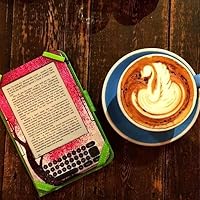
Reading this was like a mental vacation. Everytime I picked up my Kindle to read more about her days in solitude, going through each one by one, I knew I'd feel at ease. I don't know much about Sifnos, or any Greek island, or anything about Greece as a whole. Except for, maybe, whatever I saw in Mamma Mia. But when I finished reading this memoir, I immediately did a Google search of Sifnos. Let me just say, the mental images I had of Sifnos while reading and the actual images I found, were perfectly alike. The images she paints, the stories she tells, the lessons she learned, the independence gained, all of it, just painted the perfect image of the perfect island to have the perfect getaway in. Now, I have an affinity for Greece. I wouldn't go for 100 days, that's not how my life is structured and I don't have any connection to Greece besides what I read in this book and what I saw in Mamma Mia, but wow, just to see it. If anyone wants some light reading with a dab of profound experience and simple lessons, they should read this book. And read it on a Kindle, because it includes a few of the days after her allotted hundred, and a small excerpt about her return to her city life in London.
This is a book about moving from the rat race conformity to the freedom of nature and listening to your own needs. It is not a book about loneliness but more a book of communication and a sense of community with others and the inner world of the self. Of how loneliness can give the space for greater connections with the world around us and the people that inhabit our lives. Beautifully written in short chapters . Yes there are a few typos but somehow these can be forgiven in the message of the prose that life is not perfect and yet it is at the same time. It is about how we embrace it that makes the difference.