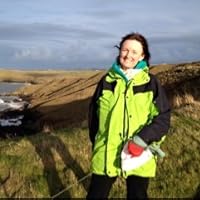
In her funny and wistful new book, Reeve Lindbergh contemplates entering a new stage in life, turning sixty, the period her mother, Anne Morrow Lindbergh, once described as "the youth of old age." It is a time of life, she writes, that produces some unexpected surprises. Age brings loss, but also love; disaster, but also delight. The second-graders Reeve taught many years ago are now middle-aged; her own children grow, marry, have children themselves. "Time flies," she observes, "but if I am willing to fly with it, then I can be airborne, too." A milestone birthday is also an opportunity to take stock of oneself, although such self-reflection may lead to nothing more than the realization, as Reeve puts it, "that I just seem to continue being me, the same person I was at twelve and at fifty." At sixty, as she observes, "all I really can do with the rest of my life is to...feel all of it, every bit of it, as much as I can for as long as I can." Age is only one of many subjects that Reeve writes about with perception and insight. In northern Vermont, nature is an integral part of daily life, especially on a farm. Whether it is the arrival and departure of certain birds in spring and fall, wandering turtles, or the springtime ritual of lambing, the natural world is a constant revelation. With a wry sense of humor, Reeve contemplates the infirmities of the aging body, as well as the many new drugs that treat these maladies. Briefly considering the risks of drug dependency, she writes that "the least we [the "Sixties Generation"] can do for ourselves is live up to our mythology, and take lots of drugs." Legal drugs, that is -- although what sustains us as we grow older is not drugs but an appreciation for life, augmented by compassion, a sense of humor, and common sense. And of course there is family -- especially with the Lindberghs. Reeve writes about discovering, thirty years after her father's death and two and a half years after her mother's, that her father had three secret families in Europe. She travels to meet them, learning to expand her "daughter of," "mother of," "sister of" -- sister of many more siblings than she'd known, in a family more complicated than even she had imagined. Forward from Here is a brave book, a reflective book, a funny book -- a book that will charm and fascinate anyone on the journey from middle age to the uncertain future that lies ahead.
Children's author, novelist, and poet Reeve Lindbergh is the daughter of world-renowned aviator Charles Lindbergh and his wife, the talented writer Anne Morrow Lindbergh.
couldn't read it all--after about half, I skimmed ahead to the part about Charles Lindbergh's secret families -- some good stuff there on his hypocrisy and what it was like to discover it belatedly, as well as more generally what it's like to know someone intimately that the public knows only as a hero.
beyond that, I found this an extremely boring book. Not a lot of screeching tires or breaking glass, as my wife would say. I gather it's the author's third memoir, and maybe there's just nothing left to say. Book jacket praise for it as "brave", "wry", and "wistful" should have cued me. There are extended excerpts from her personal journals, travelogues, updates on her Mom's tea-drinking habits, etc.
I don't mean to be mean -- she sounds like a really nice person and a good friend. I guess there's just a tipping point for each reader with blogs, personal essays etc. as to what makes a connection and what doesn't. Being middle-aged, having had a tumor (one chapter in here is about her brain tumor), and being interested in families and writers, I thought I'd be able to make that connection, but not so.
Reeve Lindbergh, daughter of Charles and Anne Morrow Lindbergh, used the occasion of her sixtieth birthday to publish a new collection of essays entitled, Forward from Here: Leaving Middle Age—and Other Unexpected Adventures. (I often wonder at the necessity of the “coloned” book title. Would we not understand the title without this seemingly parenthetic explanation?) The Hippie lifestyle in Vermont didn’t exactly mirror my 1970s experiences; however, Lindbergh’s thoughtful passages regarding the who’s and the what’s of passing life experiences grabbed me and didn’t let go until the last page.
Forward from Here is thoughtful reading for everyone, not just those of us approaching or in our 60s. Any reader will find direction in learning to embrace the everyday, to appreciate the details of life from the hissing of a teakettle to the crunch of stone underfoot on a daily walk, or to make friends with that most important person in life--yourself.
Although I am not the target audience for this book (middle age is still, thankfully, a decade away), I will read anything Reeve Lindbergh writes, and the fact that I loved this book means she speaks truths that resonate with the heart at any age. She is one of the writers I most desire to emulate---turning everyday experiences into lively stories that give meaning and beauty to ordinary moments. I especially enjoyed her chapter on writing (Ch. 10, "The Good Lord and the Details"), where she talks about how she---like the rest of us---finds the hardest thing about writing to be actually sitting down and writing. Other observations on life and aging, replete with humor, made this a thought-provoking book. I had borrowed it from the library, but I think I will purchase it so I can peruse it in days to come---most especially ten years from now!
I am not in the target demographic for this book, as it was written about middle age and growing old. However I have read books by Reeve Lindbergh in the past and enjoyed them and there were parts of this book that sounded interesting, like the scandal about her father having several secret families in Europe. So I took a chance. For me the book was mixed. There were parts that I couldn't relate to, I have no children so stories about having an empty nest or watching your baby graduate didn't have much meaning for me and I skimmed through them. Other stories though were quite enjoyable and some even made me laugh out loud. It might be difficult to believe that a chapter titled Brain Tumor Diary was one the most entertaining, but not only did I lose myself in those pages, I laughed out loud in quite a few places. I found many little nuggets of wisdom throughout the pages and can even see a bit of her mother's style in her work. Though I didn't relate to the stories of getting older as someone who has parents in that age group and who has worked for many years in nursing homes I gained some insight into what their lives were once like and some of the things my parents say and do makes a bit more sense. The chapter called drugs I realized was completely true in many ways. Most of the residents I have helped care for usually oppose any sort of drugs no matter what they are for, shaking their heads and pushing it away saying it makes them feel worse. My favourite line in the whole book was something I have often thought to be true at least in my own experience. "Those who have never experienced depression have trouble understanding what it is." So true. Finally to the anticipated final chapter of the book where Lindbergh learns about her father's secret life. I must say she took it better than I expected. I wonder if I could've been so forgiven in the circumstances. By the end of the book I had a sense that Reeve Lindbergh is a person who seems relatively at peace with her life, with her and her family's place in the world and left me hoping that I could one day find that same contentment in my own life.
Comprised of a series of essays about her later years. While she is slightly younger than me, some of her observations rang bells of recognition. Favorite chapter was the one about a neighbor's fight with the DMV over the loss of his license due to symptoms of Parkinson's. Loved the many quotes and allusions and was pleased that she included a list of the books that she read during this period. Loved the comment that a visitor to her mother was a good egg because she was "polite to animals". I,too, find it hard to like people who are dismissive of animals. For a similar read check outAnd I Shall Have Some Peace There: Trading in the Fast Lane for My Own Dirt Road.
Totally adored this book by Reeve Lindbergh, daughter of Charles and Anne Morrow Lindbergh.
Her refreshingly honest outlook on life as she turns 60 is simply brilliant. I love the message she lives--her anticipation, outlook, recognizing delight and despair, and the idea that decluttering one's lifestyle, is not unlike decluttering one's mind (which becomes crucially important to her, when diagnosed with a brain tumor). I can wrap myself around many of her sentiments--especially those on motherhood, loss, the decluttering ideas, and so much more.
Her words truly touched my soul.
Therese "Squitch" lent this book to me. I remember when it came out several years back. I had wondered if I might pick it up, as Anne Morrow Lindbergh's GIFT OF THE SEA had touched me so.
My review has nothing to do with the fact that some may claim I am too young to appreciate what Lindbergh has written since her audience is presumably those who left middle age behind 10+ years ago.
The book has some sweet spots in it, and I even chuckled in a few places, but for the majority of the book I felt as if Lindbergh were simply trying too hard. And I asked myself more than once,"if she didn't come from a famous family, would this book have been published?"
With that said, the book is a contemplation of life at a certain age and a musing of events lived previously. It's a simple read with no ah-ha moments, and it fits its purpose (although I do believe the book is self indulgent).
This was a very pleasant read and completely unexpected. I am from Minnesota and Charles Lindbergh is a patron saint - except when you hear too much about his life outside of aviation and then he's something else altogether different. I feared this would be kind of dry and ho hum. Reeve Lindbergh chats with the reader. I felt like I was curled up on her couch petting a dog holding a hot cup of tea listening to her ramble while she was maybe cleaning the venetian blinds. What was nice was the humor, slightly self deprecating, and a very matter of fact look at how we all have stuff that makes us somewhat tragic, somewhat magical, and most of all just uniquely us.
a wonderful series of essays about being in our 60s written by reeve lindbergh. i love the quote from her mom (anne morrow lindbergh) about 60 being the youth of old age. its nice to be young again for something!
i especially liked the chaper on birds. since we now live 'in the sticks' as my father calls this area of california, i too watch all the different birds and take immense please from them. and the chapter on the dogs, pets really...was very poignant as we have just lost our last cat and i miss the chattering we did with them.
Reeve is the daughter of Anne Morrow Lindbergh and famous aviator Charles Lindbergh. I've ruminated about what to say about this book. At times it was touching, and yet overall, it seemed more self-absorbed than insightful.
She is a good writer, but the book seems to lack substance. I very much liked two other books that I read which I thought were excellent, namely Under A Wing A Memoir and No More Words: A Journal of My Mother
I thoroughly enjoyed this biography. Reeve is an excellent writer.
On aging she says, "Getting old is what I want to do. Getting old, whatever the years bring, is better by far than not getting old... Whatever I was then, I am now, only older...The living of a life, day by day and moment by moment, is also wild with joy."
An easy-to-read book about aging gracefully in a famous American family. I'm sorry Reeve L. Isn't my neighbor/friend; I'd love to sit on the porch and meander through conversations about country life, authors, rising to whatever life throws at you....a comfy, thought-provoking read.
Essays on Reeve Lindbergh's life and feelings as she turns sixty. Her many meditations on writing encouraged me to begin a more serious writing program of my own. A book I have reread annually, finding some new insight each time.
Reeve talks about turning 60. I have read another memoir of hers and I really enjoy her humor. She seems like the kind of lady who would fit right in with our pilates coffee group!
I came across this book by Reeve Lindbergh while looking up books by her mother, Anne Lindbergh. With year 60 on my horizon (in a few years), I thought Reeve’s memoir would be a timely read. While some of be chapters seem a little random, each of them has a poignant story to tell. I teared up over her thoughts on the loss of our loved ones and laughed (and agreed) with her wondering why parents don’t get superlative awards at their kids’ graduations. Reeve opens us up to her home and her heart, and at times it feels like hearing from a friend. In my early 20’s I “dreamed” of being a writer in a cabin in Vermont-and Reeve has spent most of her adult life living and writing in Vermont! Forward from Here was published in 2008 when Reeve was turning 60. She is now 80 and I would love to know how the time went for her in those years. The book left me with thoughts to ponder and a new perspective on facing, as her mother called it, “the youth of old age.”
This book by Reeve Lindbergh was off the track of my usual literary pursuits, and I was delighted with my deviation! Her thoughts on remembrance, regret, meaningfulness and the kaleidoscope of ever changing perceptions made a great deal of sense from my current vantage point. The chapter, Gift from Captiva, written on the same island where her famous mother had penned Gift from the Sea, was especially rich. Reeve is a bit more down to earth. Her hippie phase, however, had no relevance to this reader! In the course of my current fascination with the Lindberghs, I loved the bits about her family life growing up and her relationship to her parents. The fact that she shared her evolving reaction to the news about her father’s hidden families was moving, and seemed very genuine. There were many strands woven throughout, ranging from Reeve’s varying emotions in dealing with her brain tumor to her sense of humor, as is evidenced in the chapter, Living with the Dog. I enjoyed the level of reminiscing and reflection.
I originally began this book out of curiosity about the author's reaction to the revelation that her famous father kept three secret families in Germany, in addition to his American one. (I researched Charles Lindbergh's life for another unrelated reason.) While she covered that subject, and did so with honesty, compassion, and restraint (difficult, but she succeeded!), I thoroughly enjoyed this book and would have done so without the slightly titillating topic previously mentioned. The author writes about approaching her sixtieth birthday (as I will next year) and the issues she faces as she ages. She does so with a wacky sense of humor that several times caused me to LOL, much to the puzzlement of the dog snoozing beside me. Ms. Lindbergh comes across as a down-to-earth woman who does not take herself overseriously but nevertheless writes about sensitve subjects with a fluent but simple style I like. I'll be trying more of her work.
I have read all of Reeve Lindbergh's books and enjoyed her middle-aged musings and observations. She talks about the everyday things that touch her: The birds that grace a tree in her yard, her children, her husband, her opinions on makeup, writing, her friends, but most importantly about herself. She does refer to her famous parents here and there, and devotes the last chapter to her reactions to the revelations of her philandering father and his three secret families in Europe. However, I feel this book is finally one Reeve could call her own. She is an established author in her own right and finally coming out of the shadow of her parents. Hope to hear more from her in the future.
The chapter on Noel Perrin's snail mail tussle with the Vermont Department of Motor Vehicles was a real treat, but sad too (I have read all his books also). He is driving around heaven somewhere in the latest, most efficient model Prius.
Reeve Lindbergh has a very warm, inclusive style of writing, combining her thoughts on turning 60 with reflections on the past and little bits of her journals and poetry and some writing of others she admires. Although much is on the day to day of living on a farm in Vermont, she connects each daily experience with a larger view of the world and life. And she takes in stride the pressures of being the youngest child of Anne Morrow and Charles Lindbergh, dipping into her relationship with her mother and her father and even writing a little about meeting her father's "other" families in Europe after the shocking revelation that these families existed. There are some very personal details told here, but they are measured, never dramatic, intrusive, or unkind. I found myself very drawn to her voice and into her private world.
I waited for this book to come to my library, because I couldn't wait to read it. And I was not disappointed. This book was a realistic, amazing look into what a phony Charles Lindbergh was.
This strict disciplinarian who lectured his children to live moral, decent lives, was a liar, a Nazi sympathizer and who had 5 children with 3 different European mistresses.
I have such sympathy for Anne Lindbergh, his wife. She was a good woman who deserved better. Reeve tells a very compelling story of her father and I spent the whole day reading this book because once I started it, I couldn't put it down.
Charles Lindbergh was no hero. He was a deceitful, lying, cheating pig. I wish the truth about him would have come out when he was alive. What defense could he have had for his behavior?
Thank you Reeve for such a wonderful book. You and your mother are incredible.
I enjoyed this in a gentle kind of a way. I have read Anne Morrow Lindbergh's Gift from the Sea and also her later letters and diaries. I also have read Reeve Lindbergh's account of caring for her mother in her later life. There's is a fascinating family full of tragedy and interesting family dynamic. Anne Morrow Lindbergh's authorial voice is very accessible - it feels as if she is sitting in the room with you sharing her thoughts on life, which are always insightful. Reeve Lindbergh's book is much more of a personal journal but adds to the picture of this family's life. It was particularly interesting to read her response to the discovery that her father had fathered many more children through affairs he had.
Well I'd actually give this even 5 stars if the it appealed to a broader audience. I thoroughly enjoyed each essay. The book is written by Reeve Lindbergh, the youngest daughter of Anne and Charles Lindbergh. Her book radiates with humor, good will, a sharp eye for the details that fill ones life, insights into living a "good life", devotion to family and friends... The essays are a very loose collection of reflections of a woman "of a certain age". Lindbergh gathered these essays the year that she turned 60. As this is the year I turned 65 I found her insights into the shifting foundation- and perspective- as one begins that journey of "old" to be comforting and entertaining. I'm so glad I read it- and will read it again. She felt like an old friend at the end of the book.
A lot of the thoughts in this book are puffery that I don't care about. The reason I picked it up was to read what she had to say about her father's additional children in Europe, what she felt in finding it out (shocked and angry), what it was like meeting them (open curious and accepting), and whether her mother knew (perhaps an inkling but certainly not any details). Ms. Lindbergh came through with the goods on these pointed questions in the last chapter.
Ms. Lindbergh seems long ago to have accepted the peculiar aspects of being he daughter of exceptional parents, Charles & Anne Morrow Lindbergh. I note that she uses her maiden name rather than her married name. She does not seem to lament the notoriety, and has played her expected role throughout her life.
A well-written account of Reeve Lindbergh (daughter of Anne Morrow and Charles) later years - including dealing with the empty nest, brain surgery and most fascinating the discovery after his death that Charles Lindbergh had three secret families in Europe. The facts were not discovered until after both his and Ann Morrow Lindbergh's death.
The irony of his righteous indignation over any slight infraction of moral behavior by his children seen alongside the duplicity of his life during his 50's and 60's is a cause of bitterness on the part of his children.
Up until the last chapter, I would have given this book 4 or 5 stars. However, the last chapter totally blew me away. Had I read the dust jacket, I would have been aware of the bombshell awaiting me, but I didn't and as a result, my impressions of the whole book were shadowed by finding out things I really would rather not have known about someone I had considered a hero. If you want to read this, read the dust jacket first. Probably my rating is not really fair because of the emotional upheaval. Possibly I'll come back later and re-rate it.
A fascinating glimpse of Reeve's life as seen from late middle age/early senior status. Wisdom plays a larger role than ever before and helps her view all of life from a wider perspective. Superhero Charles Lindbergh, we find, is complex to say the least. I am filled with admiration for Anne Morrow Lindbergh, the author's mother, because of the incredible difficulties life hands her time and again and for the way she handles it all. Reeve's talent with pen and paper are reminiscent of her mother's formidable talent. Highly recommended.
A lovely person living her best life. I liked this memoir even better with my second reading. Reeve Lindbergh has led a privileged life as the daughter of aviator, inventor and activist, Charles Lindbergh and pioneer aviator/writer, Anne Morrow Lindbergh. Reeve has also led a life of disadvantage, loss, and unexpected discoveries, as when 30 years after her father's death the world learned about his three secret families in Europe bringing his total number of children to 13. Through it all, she lives her life with kindness, charm and grace. There is much wisdom shared in this small volume.
As I start my life in retirement, Reeve Lindbergh seems to be my mouthpiece. In this collection of essays, she recaptures her life in rural Vermont in the early 70s and reflects on external events and internal thoughts and questions. In the chapter entitled, "Minding the Clutter, Cluttering the Mind", she writes, "Sooner or later I should probably face up to the task of weeding and sorting the accumulations of my cluttered lifetime." She inspires me to open my journals and start writing.