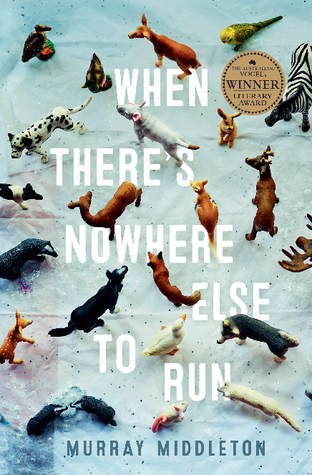
When There's Nowhere Else to Run, a sweeping collection of short stories by Murray Middleton, was the third book reviewed with The Promise Seed in the Sydney Review of Books late last year, and it won the Vogel Literary Award. The beauty of a short story collection is that you can dip into it at will, reading as much or as little as you like. Middleton presents us with a diverse range of stories, all set in Australia, from the horrors of Victoria's Black Saturday bushfires, to Perth, to the Sydney Royal Easter Show, to the tropics of Queensland. We are introduced to a wide variety of characters, too - a group of young people caring for their dying friend; single parents coping on their own; a hit-and-run driver wrestling with his conscience; a man driving his sister to a rehab clinic. Some of the stories work better than others, and in some we become much more invested in the fates of the protagonists. I did find my interest waning at times, but perhaps that was more because I would just start getting into a character/plot and then the story would be over and I'd be on to the next one!
Middleton is a very astute observer of human behaviour and interactions and this collection is testament to people whose lives are unravelling, whether through fear or lonliness, through misjudgments or selfishness, or through grief or cruelty. The tales span generations, genders, ages, circumstances and geography. The ties are explored between parents and children, between siblings - both adult and children, between married couples, and between children and their aging parents. A recurrent theme running through this collection seems to be of hope - hope for something better or different, hope for redemption, hope for reconciliation, hope attached to the past, hope for the future. In some stories, hope is lost, forgotten, waylaid or trampled on, but it is still there, hovering in the background, like a hungry ghost.