In this novel, we follow the destiny of Kikuji Mitani. A well-off thirty-year-old whose parents died today. He does not know what to do with his life, caught up in the wanderings of modernization, in the work of Japanese society, and in nostalgia for ancient rites.
Kikuji had to be marked by the image of horrific brown spots on the chest of Chikako Kurimoto, who had briefly been one of his late father's mistresses and loved his rival, Mrs. Ota, more.
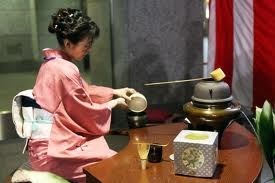
Kikuji is attached to the tea ceremony ritual and regularly meets these two women who knew his father. Chikako is intrusive, jealous, and mean, without embarrassment, and will work, as if to avenge his father, to rot in Kikuji's sentimental life in a poisonous friendship. This one will not miss, as his father, formerly, fell under the spell of the sweet Mrs. Ota. It does not mention that the very young and pretty Yukiko Inamura, during a tea ceremony, came out of a dream. All haloed by her pink silk furoshiki (square of fabric), white birds, and the very discreet girl of Mrs. Ota, Fumiko, who looks too much like his mother not to generate some emotion in Kikuji. As is often the case in great classic Japanese novels, Kawabata offers us a psychological game in which the male hero is the toy of women who are sometimes perverse and evil, sometimes fragile, mysterious, and ephemeral.
The atmosphere here is oppressive, and we feel that dramas will arise from a situation with a shaky start. Kikuji feels the same emotions as the women who have marked his father as a kind of fatality, a destiny that is almost hereditary and somewhat vicious.
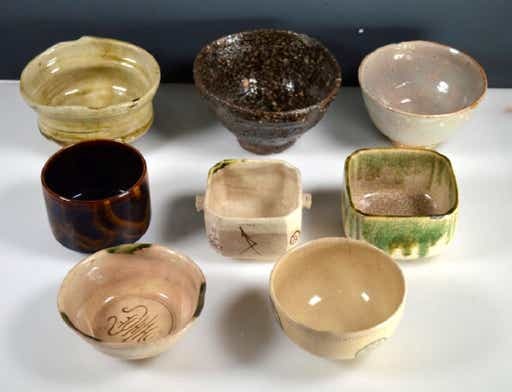
The pace is slow, and the story seems rich in events. The author piles up mountains of things without much interest in building his dialogue or the relationships between his characters. Yet, it works when we project ourselves into Japanese psychology and traditions. We were struck by the central role of the tea ceremony and its objects, such as the cups. We presented genuine works of art that continuously convey memories and transmit feelings from generation to generation, arousing the characters' imagination and emotions.
Despite a reservation about the end being semi-open and not neat enough for my taste, I found a beautiful novel that was not dull, as tasting the style of great classical elegance and poetry was powerful. Moreover, it is a great vehicle to share with us the art and the sensory experience of the tea ceremony, the emotions that animate the characters, and give a sharp acuity to the images that strike the imagination of the reader (Chikako's stains, precious objects, dress, and accessories of Yukiko).
It is a pleasant reading moment, enjoyed with a sweet green tea from Japan.