

What do you think?

My First Summer in the Sierra
EXCERPT:
In the great Central Valley of California there are only two seasons—spring and summer. The spring begins with the first rainstorm, which usually falls in November. In a few months the wonderful flowery vegetation is in full bloom, and by the end of May it is dead and dry and crisp, as if every plant had been roasted in an oven.
Then the lolling, panting flocks and herds are driven to the high, cool, green pastures of the Sierra. I was longing for the mountains about this time, but money was scarce and I couldn’t see how a bread supply was to be kept up. While I was anxiously brooding on the bread problem, so troublesome to wanderers, and trying to believe that I might learn to live like the wild animals, gleaning nourishment here and there from seeds, berries, etc., sauntering and climbing in joyful independence of money or baggage, Mr. Delaney, a sheep-owner, for whom I had worked a few weeks, called on me, and offered to engage me to go with his shepherd and flock to the headwaters of the Merced and Tuolumne rivers—the very region I had most in mind. I was in the mood to accept work of any kind that would take me into the mountains whose treasures I had tasted last summer in the Yosemite region. The flock, he explained, would be moved gradually higher through the successive forest belts as the snow melted, stopping for a few weeks at the best places we came to. These I thought would be good centers of observation from which I might be able to make many telling excursions within a radius of eight or ten miles of the camps to learn something of the plants, animals, and rocks; for he assured me that I should be left perfectly free to follow my studies. I judged, however, that I was in no way the right man for the place, and freely explained my shortcomings, confessing that I was wholly unacquainted with the topography of the upper mountains, the streams that would have to be crossed, and the wild sheep-eating animals, etc.; in short that, what with bears, coyotes, rivers, cañons, and thorny, bewildering chaparral, I feared that half or more of his flock would be lost. Fortunately these shortcom ings seemed insignificant to Mr. Delaney. The main thing, he said, was to have a man about the camp whom he could trust to see that the shepherd did his duty, and he assured me that the difficulties that seemed so formidable at a distance would vanish as we went on; encouraging me further by saying that the shepherd would do all the herding, that I could study plants and rocks and scenery as much as I liked, and that he would himself accompany us to the first main camp and make occasional visits to our higher ones to replenish our store of provisions and see how we prospered. Therefore I concluded to go, though still fearing, when I saw the silly sheep bouncing one by one through the narrow gate of the home corral to be counted, that of the two thousand and fifty many would never return.
264 pages, Kindle Edition
First published January 1, 1911
About the author
John Muir
654 books1,484 followersJohn Muir was far more than a naturalist; he was a secular prophet who translated the rugged language of the wilderness into a spiritual calling that saved the American soul from total surrender to materialism. Born in 1838 in the coastal town of Dunbar, Scotland, Muir’s childhood was a blend of seaside wanderings and a brutal religious upbringing. His father, Daniel Muir, was a man of uncompromising faith who forced John to memorize the New Testament and most of the Old Testament by age eleven. When the family immigrated to the frontier of Wisconsin in 1849, this iron-fisted discipline continued on their farm. However, for the young Muir, the "Book of Nature" began to rival the Bible. He saw the divine not just in scripture, but in the black locust trees and the sun-drenched meadows of the midwest.
The pivotal moment of Muir’s life occurred in 1867 while working at a wagon wheel factory in Indianapolis. A tool slipped, piercing his cornea and leaving him temporarily blind in both eyes. Confined to a darkened room for six weeks, Muir faced the terrifying prospect of a life without light. When his sight miraculously returned, he emerged with a clarity of purpose that would change the course of American history. He famously wrote, "This affliction has driven me to the sweet fields. God has to nearly kill us sometimes, to teach us lessons." He immediately set out on a 1,000-mile walk to the Gulf of Mexico, beginning a lifelong odyssey of exploration.
Muir eventually found his "true home" in California’s Sierra Nevada. To Muir, the mountains were not mere piles of rock, but "the range of light." He spent years as a shepherd and guide in Yosemite, living a life of extreme simplicity—often traveling with nothing but a tin cup, a crust of bread, and a volume of Emerson’s essays. His scientific contributions were equally profound; he defied the leading geologists of the day by proving that the Yosemite Valley was carved by ancient glaciers. While the state geologist, Josiah Whitney, dismissed him as a mere "shepherd," the world’s leading glaciologists eventually recognized Muir’s genius.
His transition from explorer to activist was born of necessity. Seeing the "hoofed locusts"—domestic sheep—devouring the high mountain meadows, Muir took up his pen. His landmark articles in The Century Magazine and his 1903 camping trip with President Theodore Roosevelt became the catalysts for the modern conservation movement. Under the stars at Glacier Point, Muir convinced the President that the wilderness required federal protection. This meeting laid the groundwork for the expansion of the National Park system and the eventual return of Yosemite Valley to federal control.
As the co-founder and first president of the Sierra Club, Muir spent his final years in a fierce philosophical battle with Gifford Pinchot. While Pinchot argued for "conservation" (the sustainable use of resources), Muir championed "preservation" (the protection of nature for its own sake). Though he lost the battle to save the Hetch Hetchy Valley from being dammed, the heartbreak of that loss galvanized the American public, ensuring that future "cathedrals of nature" would remain inviolate. John Muir died in 1914, but his voice remains ubiquitous, reminding us that "into the woods we go, to lose our minds and find our souls."
The pivotal moment of Muir’s life occurred in 1867 while working at a wagon wheel factory in Indianapolis. A tool slipped, piercing his cornea and leaving him temporarily blind in both eyes. Confined to a darkened room for six weeks, Muir faced the terrifying prospect of a life without light. When his sight miraculously returned, he emerged with a clarity of purpose that would change the course of American history. He famously wrote, "This affliction has driven me to the sweet fields. God has to nearly kill us sometimes, to teach us lessons." He immediately set out on a 1,000-mile walk to the Gulf of Mexico, beginning a lifelong odyssey of exploration.
Muir eventually found his "true home" in California’s Sierra Nevada. To Muir, the mountains were not mere piles of rock, but "the range of light." He spent years as a shepherd and guide in Yosemite, living a life of extreme simplicity—often traveling with nothing but a tin cup, a crust of bread, and a volume of Emerson’s essays. His scientific contributions were equally profound; he defied the leading geologists of the day by proving that the Yosemite Valley was carved by ancient glaciers. While the state geologist, Josiah Whitney, dismissed him as a mere "shepherd," the world’s leading glaciologists eventually recognized Muir’s genius.
His transition from explorer to activist was born of necessity. Seeing the "hoofed locusts"—domestic sheep—devouring the high mountain meadows, Muir took up his pen. His landmark articles in The Century Magazine and his 1903 camping trip with President Theodore Roosevelt became the catalysts for the modern conservation movement. Under the stars at Glacier Point, Muir convinced the President that the wilderness required federal protection. This meeting laid the groundwork for the expansion of the National Park system and the eventual return of Yosemite Valley to federal control.
As the co-founder and first president of the Sierra Club, Muir spent his final years in a fierce philosophical battle with Gifford Pinchot. While Pinchot argued for "conservation" (the sustainable use of resources), Muir championed "preservation" (the protection of nature for its own sake). Though he lost the battle to save the Hetch Hetchy Valley from being dammed, the heartbreak of that loss galvanized the American public, ensuring that future "cathedrals of nature" would remain inviolate. John Muir died in 1914, but his voice remains ubiquitous, reminding us that "into the woods we go, to lose our minds and find our souls."
Ratings & Reviews
Friends & Following
Create a free account to discover what your friends think of this book!
Community Reviews
Displaying 1 - 30 of 758 reviews

June 11, 2014
Why would I read this? For one, it takes place in my hood. Two, it's by John Muir, the famous Scottish/American naturalist and founder of the Sierra Club, which saved national treasures like Yosemite and the Sequoia National Park.
Without Muir this might no longer exist as it does to this day...


If it weren't for Muir these living trees, some of which have been here longer than the pyramids, may have been cut down...


To look at a map of the United States, one would get the impression that moving west a traveler would encounter the Rocky Mountains and then nothing but lowlands stretching out to the Pacific. But no, there are more mountains to be passed once you hit California and they are no joke. Just ask the Donner Party. Muir's task was to enter this rugged country to oversee a herd of sheep sent into the mountains to forage during the blistering Summers suffered upon the San Joaquin Valley floor. My First Summer in the Sierra is his recounting of this life-altering experience.
One thing is obvious almost from the beginning. John Muir was a good writer. His elegant use of language was apt for the grandeur of his subject. And the sheer joy he felt in being there is so evident in his effusive language.
The second thing that became apparent about Muir is that he was smart. His writing portraits a clear head and a clearly intelligent mind. One gets the impression that he would've excelled at whatever vocation he chose.
The Nobly-Bearded John Muir
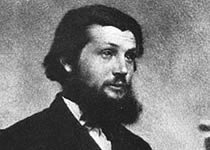
He was a man of science who believed in God and believed he was best communed with through nature. No need to cut down the trees to make cathedrals when the cathedrals are already built and have been standing for hundreds, even thousands of years.
My First Summer in the Sierra will likely invest within you a strong desire to see all he is describing. I felt as if I could've gone on and on reading his accounts forever. However, it's probably for the best that this is short. It's mostly just straight up description - like watching a well-shot nature documentary - very beautiful description indeed, but pretty much plotless. The only tension is in whether or not the sheep will survive and a few encounters with friend and foe. Just the same, readers should be thankful there's any tension at all, this isn't a novel after all.
This is an ode to the glories this world has been providing its inhabitants long before we arrived. And long may it last.
Without Muir this might no longer exist as it does to this day...
If it weren't for Muir these living trees, some of which have been here longer than the pyramids, may have been cut down...
To look at a map of the United States, one would get the impression that moving west a traveler would encounter the Rocky Mountains and then nothing but lowlands stretching out to the Pacific. But no, there are more mountains to be passed once you hit California and they are no joke. Just ask the Donner Party. Muir's task was to enter this rugged country to oversee a herd of sheep sent into the mountains to forage during the blistering Summers suffered upon the San Joaquin Valley floor. My First Summer in the Sierra is his recounting of this life-altering experience.
One thing is obvious almost from the beginning. John Muir was a good writer. His elegant use of language was apt for the grandeur of his subject. And the sheer joy he felt in being there is so evident in his effusive language.
The second thing that became apparent about Muir is that he was smart. His writing portraits a clear head and a clearly intelligent mind. One gets the impression that he would've excelled at whatever vocation he chose.
The Nobly-Bearded John Muir
He was a man of science who believed in God and believed he was best communed with through nature. No need to cut down the trees to make cathedrals when the cathedrals are already built and have been standing for hundreds, even thousands of years.
My First Summer in the Sierra will likely invest within you a strong desire to see all he is describing. I felt as if I could've gone on and on reading his accounts forever. However, it's probably for the best that this is short. It's mostly just straight up description - like watching a well-shot nature documentary - very beautiful description indeed, but pretty much plotless. The only tension is in whether or not the sheep will survive and a few encounters with friend and foe. Just the same, readers should be thankful there's any tension at all, this isn't a novel after all.
This is an ode to the glories this world has been providing its inhabitants long before we arrived. And long may it last.

May 11, 2011
Listen to Bach, Brandenburg Concerto No. 3 – this is how you will feel while reading John Muir. Exhilarated. Joyous. Passionate. Alive.
This book is never far from my reach. It is my inspiration for life.
Take a few minutes and read a sample:
“Here, we are camped for the night, our big fire, heaped high with rosiny logs and branches, is blazing like a sunrise, gladly giving back the light slowly sifted from the sunbeams of centuries of summers; and in the glow of that old sunlight how impressively surrounding objects are bought forward in relief against the outer darkness.”
“Watching the daybreak and sunrise. The pale rose and purple sky changing softly to daffodil yellow and white, sunbeams pouring through the passes between the peaks and over the Yosemite domes, making their edges burn; the silver firs in the middle ground catching the glow on their spiry tops, and our camp grove fills and thrills with the glorious light. Everything awakening alert and joyful; the birds begin to stir and innumerable insect people. Deer quietly withdraw into leafy hiding-places in the chaparral; the dew vanishes, flowers spread their petals, every pulse beats high, every life cell rejoices, the very rocks seem to thrill with life. The whole landscape glows like a human face in a glory of enthusiasm, and the blue sky, pale around the horizon, bends peacefully down over all like one vast flower.”
“Every morning, arising from the death of sleep, the happy plants and all our fellow animal creatures great and small, and even the rocks, seemed to be shouting, ‘Awake, awake, rejoice, rejoice, come love us and join in our song. Come! Come!’ Nevermore, however weary, should one faint by the way who gains the blessings of one mountain day; whatever his fate, long life, short life, stormy or calm, he is rich forever.”
“…it seemed the most romantic spot I had yet found—the one big stone with its mossy level top and smooth sides standing square and firm and solitary, like an altar, the fall in front of it bathing it lightly with the finest of the spray, just enough to keep its moss cover fresh; the clear green pool beneath, with its foam-bells and its half circle of lilies leaning forward like a band of admirers, and flowering dogwood and alder trees leaning over all in sun-sifted arches. How delightful the water music—the deep bass tones of the fall, the clashing, ringing spray, and infinite variety of small low tones of the current gliding past the side of the boulder-island, and glinting against a thousand smaller stones down the ferny channel!”
“Now comes sundown. The west is all a glory of color transfiguring everything. Far up the Pilot Peak Ridge the radiant host of trees stand hushed and thoughtful, receiving the Sun’s good-night, as solemn and impressive a leave-taking as if sun and trees were to meet no more. The daylight fades, the color spell is broken, and the forest breathes free in the night breeze beneath the stars.”
“How beautiful a rock is made by leaf shadows! Those of the live oak are particularly clear and distinct, and beyond all are in grace and delicacy, now still as if painted on stone, now gliding softly as if afraid of noise, now dancing, waltzing in swift, merry swirls, or jumping on and off sunny rocks in quick dashes like wave embroidery on seashore cliffs. How true and substantial is this shadow beauty, and with what sublime extravagance is beauty thus multiplied.”
This book is never far from my reach. It is my inspiration for life.
Take a few minutes and read a sample:
“Here, we are camped for the night, our big fire, heaped high with rosiny logs and branches, is blazing like a sunrise, gladly giving back the light slowly sifted from the sunbeams of centuries of summers; and in the glow of that old sunlight how impressively surrounding objects are bought forward in relief against the outer darkness.”
“Watching the daybreak and sunrise. The pale rose and purple sky changing softly to daffodil yellow and white, sunbeams pouring through the passes between the peaks and over the Yosemite domes, making their edges burn; the silver firs in the middle ground catching the glow on their spiry tops, and our camp grove fills and thrills with the glorious light. Everything awakening alert and joyful; the birds begin to stir and innumerable insect people. Deer quietly withdraw into leafy hiding-places in the chaparral; the dew vanishes, flowers spread their petals, every pulse beats high, every life cell rejoices, the very rocks seem to thrill with life. The whole landscape glows like a human face in a glory of enthusiasm, and the blue sky, pale around the horizon, bends peacefully down over all like one vast flower.”
“Every morning, arising from the death of sleep, the happy plants and all our fellow animal creatures great and small, and even the rocks, seemed to be shouting, ‘Awake, awake, rejoice, rejoice, come love us and join in our song. Come! Come!’ Nevermore, however weary, should one faint by the way who gains the blessings of one mountain day; whatever his fate, long life, short life, stormy or calm, he is rich forever.”
“…it seemed the most romantic spot I had yet found—the one big stone with its mossy level top and smooth sides standing square and firm and solitary, like an altar, the fall in front of it bathing it lightly with the finest of the spray, just enough to keep its moss cover fresh; the clear green pool beneath, with its foam-bells and its half circle of lilies leaning forward like a band of admirers, and flowering dogwood and alder trees leaning over all in sun-sifted arches. How delightful the water music—the deep bass tones of the fall, the clashing, ringing spray, and infinite variety of small low tones of the current gliding past the side of the boulder-island, and glinting against a thousand smaller stones down the ferny channel!”
“Now comes sundown. The west is all a glory of color transfiguring everything. Far up the Pilot Peak Ridge the radiant host of trees stand hushed and thoughtful, receiving the Sun’s good-night, as solemn and impressive a leave-taking as if sun and trees were to meet no more. The daylight fades, the color spell is broken, and the forest breathes free in the night breeze beneath the stars.”
“How beautiful a rock is made by leaf shadows! Those of the live oak are particularly clear and distinct, and beyond all are in grace and delicacy, now still as if painted on stone, now gliding softly as if afraid of noise, now dancing, waltzing in swift, merry swirls, or jumping on and off sunny rocks in quick dashes like wave embroidery on seashore cliffs. How true and substantial is this shadow beauty, and with what sublime extravagance is beauty thus multiplied.”

November 15, 2018
My First Summer in the Sierra chronicles John Muir’s first summer in the Yosemite River Valley from June through September 1869. He was thirty-one years old. He accompanied a small group of men and a flock of sheep 2050 strong; they were to be fattened up in the valley. I am speaking of the sheep of course! Muir would sketch and observe the flora and fauna and the land. He came to return to the valley numerous times, but this time was his first.
What is written is in diary format; day by day he records what he observed—cloud formations and the weather, animals and bugs and vegetation, geological formations and the few Native Americans they came in contact with too. There is a bit of excitement when bears attack. There are some delightful descriptions of sunrises and sunsets and landscape viewed, but all too often the text is choppy and short, not even written in full sentences. One reads lists of scientific nomenclature. Plants and trees are referred to by their Latin name, not their common name.
For the most part, I found the text boring and dry. So really, I cannot recommend this book. It’s not terrible, but merely OK, and that is why I am giving it two stars. Instead read about John Muir’s youth; The Story of My Boyhood and Youth is much better. Are you curious? Here follows my review of that book:
https://www.goodreads.com/review/show...
I listened to the audiobook narrated by Brett Barry. It was fine; it is not hard to follow. The narration I have given three stars.
I think you will appreciate the book more if you see photos of Yosemite. I looked on the net and in: Gentle Wilderness: The Sierra Nevada. Muir's words are not enough.
What is written is in diary format; day by day he records what he observed—cloud formations and the weather, animals and bugs and vegetation, geological formations and the few Native Americans they came in contact with too. There is a bit of excitement when bears attack. There are some delightful descriptions of sunrises and sunsets and landscape viewed, but all too often the text is choppy and short, not even written in full sentences. One reads lists of scientific nomenclature. Plants and trees are referred to by their Latin name, not their common name.
For the most part, I found the text boring and dry. So really, I cannot recommend this book. It’s not terrible, but merely OK, and that is why I am giving it two stars. Instead read about John Muir’s youth; The Story of My Boyhood and Youth is much better. Are you curious? Here follows my review of that book:
https://www.goodreads.com/review/show...
I listened to the audiobook narrated by Brett Barry. It was fine; it is not hard to follow. The narration I have given three stars.
I think you will appreciate the book more if you see photos of Yosemite. I looked on the net and in: Gentle Wilderness: The Sierra Nevada. Muir's words are not enough.

July 14, 2018
Here I could stay tethered forever with just bread and water, nor would I be lonely; loved friends and neighbors, as love for everything increased, would seem all the nearer however many the miles and mountains between us.
"My First Summer in the Sierra" is a naturalist's diary detailing an 1869 hike in Sierra Nevada Mountains. John Muir accompanied shepherds for four months, observing and taking notes about the nature of the Yosemite region and the High Sierra.
His journal contains both romantic/philosophical musings about nature's beauty and specific naturalist's descriptions of plants and animals with their proper Latin names, height, girth, distinctive traits etc.
Another glorious Sierra day in which one seems to be dissolved and absorbed and sent pulsing onward we know not where. Life seems neither long nor short, and we take no more heed to save time or make haste than do the trees and stars. This is true freedom, a good practical sort of immortality.
If this is not poetic, I don't know what is. Muir is a scientist and he took this journey as one, but almost every entry in his diary betrays his love and awe of nature. I really liked Muir's writing. I think it was one of the major reasons I enjoyed this book so much.
He writes about the specific sites they visit along the way, the weather, the shepherds and sheep who accompany him. And believe it or not, it was interesting! I never knew anything about sheep herding, and there's apparently a lot of stuff that can go wrong.
Having escaped restraint, they were, like some people we know of, afraid of their freedom, did not know what to do with it, and seemed glad to get back into the old familiar bondage.
I found out about this book because it was mentioned in Wild: From Lost to Found on the Pacific Crest Trail. And the reason I was reading Wild was that I'm a big mountain lover myself, every year I spend a week hiking in a different set of mountains. This resonates with me. It was really interesting to read the perspective of a person who undertook such a journey 150 years ago, without any of the fancy modern gear!
The deeper the solitude the less the sense of loneliness, and the nearer our friends.
So this was fascinating. Also, apparently, travel blogs are not a new thing.

February 14, 2013
I vacillated between being completely absorbed in this book to being bored out of my mind. I couldn't place my finger on it at first, but I quickly figured out what my issue was. While I very much enjoyed Muir's description and narration of the animals he saw during his camping, I had zero interest in his descriptions of the trees and plants. The journal is split pretty much 50/50 between the two, so I flip flopped between being interested and disinterested as he switched focus.
I continued reading despite this because his writing is beautiful. Every time I considered to just leave the book, he said something absolutely stunning. I also really enjoyed his sense of humour, especially when it came to talking about the two-thousand sheep he was traveling with. He constantly talks about them as "the grand mass of mutton" or "the wool bundles" or "the woolly locusts."
I continued reading despite this because his writing is beautiful. Every time I considered to just leave the book, he said something absolutely stunning. I also really enjoyed his sense of humour, especially when it came to talking about the two-thousand sheep he was traveling with. He constantly talks about them as "the grand mass of mutton" or "the wool bundles" or "the woolly locusts."
Read
January 3, 2021. . .

February 13, 2024
More sheep content than expected

August 5, 2026
Je ne pensais pas qu'il existait autant de mots pour parler de la nature. C'est vraiment bien pour s'évader mais un peu trop plat pour m'émouvoir

June 27, 2022
My First Summer in the Sierra is a diary naturalist John Muir kept during the first summer he spent in the Sierra Mountains. He worked as a sheepherder, but he had a lot of time to observe nature, write about nature, and to make pictures of nature.
I was taken by Muir's knowledge of nature and his detailed observational skills. He is also a brilliant writer, with fresh comparisons and surprising thoughts.
I was taken by Muir's knowledge of nature and his detailed observational skills. He is also a brilliant writer, with fresh comparisons and surprising thoughts.

May 3, 2012
Beautiful and inspiring. I just love Muir's personality. His outlook on the world is so close to my own. I feel like I can really related to his writings. Themes that make sense to me: the natural world as sacred; God speaking to us through nature; spirituality coming to us mostly through the mundane and canny, but with occasional, apparently supernatural experiences that serve to confuse as much as anything.
My favorite passage from the book is Muir's description of going to see the falls:
He later says that he couldn't sleep that night at all, because each time he dosed off, he dreamed the granite beneath him was giving way and he was falling through free space into Yosemite Valley. Hilarious and wonderful material.
My favorite passage from the book is Muir's description of going to see the falls:
I took off my shoes and stockings and worked my way cautiously down alongside the rushing flood, keeping my feet and hands pressed firmly on the polished rock. the booming, roaring water, rushing past close to my head, was very exciting. I had expected that the sloping apron would terminate with the perpendicular wall of the valley, and that from the foot of it, where it is less steeply inclined, I should be able to lean far enough out to see the forms and behavior of the fall all the way down to the bottom. But I found that there was yet another small brow over which I could not see, and which appeared to be too steep for mortal feet. Scanning it keenly, I discovered a narrow shelf about three inches wide on the very brink, just wide enough for a rest for one's heels. But there seemed to be no way of reaching it over so steep a brow. At length, after careful scrutiny of the surface, I gound an irregular edge of a flake of the rock some distance back from the margin of the torrent. If I was to get down to the brink at all that rough edge, which might offer slight finger holds, was the only way. But the slope beside it looked dangerously smooth and steep, and the swift roaring flood beneath, overhead, and beside me was very nerve-trying. I therefore concluded not to venture farther, but did nevertheless. Tufts of artemisia were growing in clefts of the rock near by, and I filled my mouth with the bitter leaves, hoping they might help to prevent giddiness. Then, with a caution not known in ordinary circumstances, I crept down safely to the little ledge, got my heels well planted on it, then shuffled in a horizontal direction twenty or thirty feet until close to the outplunging current, which, by the time it had descended thus far, was already white. Here I obtained a perfectly free view down into the heart of the snowy, chanting throng of comet-like streamers, into which the body of the fall soon separates.
He later says that he couldn't sleep that night at all, because each time he dosed off, he dreamed the granite beneath him was giving way and he was falling through free space into Yosemite Valley. Hilarious and wonderful material.

June 25, 2025
My First Summer in the Sierra comprises John Muir's journal entries that document his journey, in the company of a herd of sheep, a shepherd, and a dog, to California's Sierra Nevada mountains during the summer of 1869. Muir records his daily experiences moving through spectacular wilderness areas that would later become Yosemite National Park. Muir presents the Sierra as a pristine ecosystem, depicts wildlife in their habitats, and observes the destructive impact of sheep grazing. He encounters several indigenous tribes and describes their ways of life.
The prose alternates between detailed scientific observation and rapturous descriptions of the landscape. He mentions practical concerns about animals, weather, and terrain. He also muses on humanity's relationship with nature. This region is not far from where I live so I had a personal interest in this memoir. I have visited the John Muir house in Martinez, California, and the Muir Woods in Marin County. It will appeal to fans of lyrical nature writing. I enjoyed it as a historic record written by an early proponent of conservationist thought.
The prose alternates between detailed scientific observation and rapturous descriptions of the landscape. He mentions practical concerns about animals, weather, and terrain. He also muses on humanity's relationship with nature. This region is not far from where I live so I had a personal interest in this memoir. I have visited the John Muir house in Martinez, California, and the Muir Woods in Marin County. It will appeal to fans of lyrical nature writing. I enjoyed it as a historic record written by an early proponent of conservationist thought.

December 31, 2016
This is not my usual style of book. It is a diary, with no real story, and with long and detailed descriptions of plants. It takes a while to get into the book, and took me almost nine months to finish it. Yet there is a progression to the diary. Particularly once Muir gets to higher elevations, then still higher, his delight becomes infectious, and the story moves quickly. Although the prose can be terribly purple, Muir back it up and justifies it with a fine eye for detail. I regretted getting to the end of the Sierra summer.

March 19, 2019
Andrea Wulf's totally awesome biography of Alexander Von Humboldt brought me to this book. There is an entire chapter near the end of the Wulf book on Von Humboldt's influence on John Muir.
I downloaded a free copy of this book directly to my ebook reader in the Kindle store, but you can also find a free download of this book in a variety of formats from the Gutenberg Project, find it in the form of a 57-page, single-spaced, narrow-margined .pdf document at Yosemite Online, or read it online, chapter by chapter, either at Google Books or the website of the Sierra Club. You can listen free of charge to an unabridged recording of this book on YouTube as well.
This book caused me a strange nostalgia for a time that I have never come close to knowing, that is, the time before mass media. People would line up around the block to pay a dime and see an oil painting of the Andes, because there were no photographs. Families would spend dark winter nights listening to one of its members reading about Yosemite by oil-lamp light, because (while closer than the Andes) you would probably never experience the Californian Sierras yourself. This has a bittersweet irony as by the time of its publication (1911), the social and technological changes which would make this post-dinner activity as outdated as whalebone corsets were just gathering a head of steam.
I imagined a house. Western Massachusetts. Wrap-around porch. Grandfather clock striking. Cold rainy evening. Flickering shadows.
I imagined a family. Father, reading: vest straining against belly, pocket-watch, pince-nez, baritone, center-parted hair. Mother doing needlepoint, smiling. Three children: youngest, a boy, laying on the floor, fully engrossed; two older sisters, the elder bored, the thoughtful middle child gaining a new respect of and wonder for nature.
Today, of course, the world is improved in some ways (painless dentistry, flyscreens) but few people are sitting still for long wordy descriptions of Yosemite when you can see spectacular high-quality video footage of the same free of charge. It's a shame, really, because, of course, reading at its best is like making the most spectacularly compelling movie in your head, and can reach the parts that even YouTube can't.
I regard myself as sort of an average modern schlub. While not especially alienated from nature, but I regard it as near-miraculous that my Long-Suffering Wife (LSW) of many decades can point at a flower and say what variety it is. (Sometimes I think she has no idea and has just been putting me on all these years.) Furthermore, LSW can get really enthusiastic about the first flower in bloom in a season, an event which seems to me about as miraculous as the passing of a city bus. Turn LSW's volume of enthusiasm for nature up to eleven, and you will start to get some idea of what reading the John Muir of this book is like. This is the journal of a young man, and even though being stuck out in the isolated butt-end of nowhere with a bunch of sheep might not float everybody's boat, you can tell that, at this point in his life, Muir just about considers himself the luckiest guy in the world, while still retaining some compassion for the rest of us poor suckers, who just didn't have his good fortune.
So, all right, there are some long descriptions of trees, etc., that may tax the patience of the modern reader, but maybe you can amuse yourself by trying to imagine what it would have been like to have such an intense reverence for nature or, failing that, just trying skimming a little.
There are also parts that, even after (or perhaps because of) the intervening years, make you sit up and notice. Muir wonders at the behavior of day-tripping tourists to Yosemite park – remember, this book was published in 1911! Muir reports that the tourists of his day won't even stop to admire the grandeur of Yosemite's waterfalls because they are busy looking down at …. their fishing lures. Needless to say, today's smartphone gawkers would have probably made his head explode.
I especially enjoyed a long comic set-piece about the difficulty getting a flock of sheep to cross a body of water, which allows Muir to show some writer's chops not really on display elsewhere in the book.
To repeat: This is a huge great slab of nature-worship. City dwellers may not like this book, partly because of the frequent appearance of specialized vocabulary for natural phenomena not often encountered in proximity to public transit stations, many of which stumped my Kindle's dictionary function. City dwellers also may not enjoy being reminded that there is a big part of human experience that they have voluntarily and often proudly held themselves ignorant of.
But it is also possible for city dwellers to enjoy this book, as it is a serene recollection of a young man who lucked into a job he loved, and managed to transmit that serenity to those who are open to receiving it.
I downloaded a free copy of this book directly to my ebook reader in the Kindle store, but you can also find a free download of this book in a variety of formats from the Gutenberg Project, find it in the form of a 57-page, single-spaced, narrow-margined .pdf document at Yosemite Online, or read it online, chapter by chapter, either at Google Books or the website of the Sierra Club. You can listen free of charge to an unabridged recording of this book on YouTube as well.
This book caused me a strange nostalgia for a time that I have never come close to knowing, that is, the time before mass media. People would line up around the block to pay a dime and see an oil painting of the Andes, because there were no photographs. Families would spend dark winter nights listening to one of its members reading about Yosemite by oil-lamp light, because (while closer than the Andes) you would probably never experience the Californian Sierras yourself. This has a bittersweet irony as by the time of its publication (1911), the social and technological changes which would make this post-dinner activity as outdated as whalebone corsets were just gathering a head of steam.
I imagined a house. Western Massachusetts. Wrap-around porch. Grandfather clock striking. Cold rainy evening. Flickering shadows.
I imagined a family. Father, reading: vest straining against belly, pocket-watch, pince-nez, baritone, center-parted hair. Mother doing needlepoint, smiling. Three children: youngest, a boy, laying on the floor, fully engrossed; two older sisters, the elder bored, the thoughtful middle child gaining a new respect of and wonder for nature.
Today, of course, the world is improved in some ways (painless dentistry, flyscreens) but few people are sitting still for long wordy descriptions of Yosemite when you can see spectacular high-quality video footage of the same free of charge. It's a shame, really, because, of course, reading at its best is like making the most spectacularly compelling movie in your head, and can reach the parts that even YouTube can't.
I regard myself as sort of an average modern schlub. While not especially alienated from nature, but I regard it as near-miraculous that my Long-Suffering Wife (LSW) of many decades can point at a flower and say what variety it is. (Sometimes I think she has no idea and has just been putting me on all these years.) Furthermore, LSW can get really enthusiastic about the first flower in bloom in a season, an event which seems to me about as miraculous as the passing of a city bus. Turn LSW's volume of enthusiasm for nature up to eleven, and you will start to get some idea of what reading the John Muir of this book is like. This is the journal of a young man, and even though being stuck out in the isolated butt-end of nowhere with a bunch of sheep might not float everybody's boat, you can tell that, at this point in his life, Muir just about considers himself the luckiest guy in the world, while still retaining some compassion for the rest of us poor suckers, who just didn't have his good fortune.
So, all right, there are some long descriptions of trees, etc., that may tax the patience of the modern reader, but maybe you can amuse yourself by trying to imagine what it would have been like to have such an intense reverence for nature or, failing that, just trying skimming a little.
There are also parts that, even after (or perhaps because of) the intervening years, make you sit up and notice. Muir wonders at the behavior of day-tripping tourists to Yosemite park – remember, this book was published in 1911! Muir reports that the tourists of his day won't even stop to admire the grandeur of Yosemite's waterfalls because they are busy looking down at …. their fishing lures. Needless to say, today's smartphone gawkers would have probably made his head explode.
I especially enjoyed a long comic set-piece about the difficulty getting a flock of sheep to cross a body of water, which allows Muir to show some writer's chops not really on display elsewhere in the book.
To repeat: This is a huge great slab of nature-worship. City dwellers may not like this book, partly because of the frequent appearance of specialized vocabulary for natural phenomena not often encountered in proximity to public transit stations, many of which stumped my Kindle's dictionary function. City dwellers also may not enjoy being reminded that there is a big part of human experience that they have voluntarily and often proudly held themselves ignorant of.
But it is also possible for city dwellers to enjoy this book, as it is a serene recollection of a young man who lucked into a job he loved, and managed to transmit that serenity to those who are open to receiving it.

January 24, 2021
This book is the daily journal of John Muir’s time in Yosemite doing a summer job working a herd of sheep with a small group of men. Muir is the granddaddy and icon of the Sierra Club and modern nature preservationists. As a mid nineteenth century romantic writer I really expected to dislike his earnestness and over enthusiasm but was surprised to find him likable after all. Nice writing. A straightforward Victorian lacking the cringeworthy ecstasy I had expected. Muir is sometimes even funny, as in the description of the shepherd’s lacquered pants.
He is hugely in love with the area and its plants, animals and trees—not the sheep though. They are brainless and trample and eat the lilies in the beautiful meadows! I doubt he ever signed up as a shepherd again. One incident might interest you modern thrill seekers. I reacted very uncomfortably to his pursuit of thrills at the top of Yosemite falls. That was followed by his very good description of the withdrawal of adrenaline.
It is funny to see his reaction to early tourists to the area. They are seen as over-privileged and as not fully appreciative of the wonders. A pretty universal reaction to tourists, yes, but a touch ironic considering he later worked so hard to save Yosemite and other areas of natural wonder for the people. Bless him.
He is hugely in love with the area and its plants, animals and trees—not the sheep though. They are brainless and trample and eat the lilies in the beautiful meadows! I doubt he ever signed up as a shepherd again. One incident might interest you modern thrill seekers. I reacted very uncomfortably to his pursuit of thrills at the top of Yosemite falls. That was followed by his very good description of the withdrawal of adrenaline.
It is funny to see his reaction to early tourists to the area. They are seen as over-privileged and as not fully appreciative of the wonders. A pretty universal reaction to tourists, yes, but a touch ironic considering he later worked so hard to save Yosemite and other areas of natural wonder for the people. Bless him.


January 23, 2021
Dear Diary,
I love undomesticated plants! *describes in detail, draws crappy drawing*
I love squirrels and rats! *describes behaviors and nests
I love water and air! *says weather each day
Sheep herds are bad!
I like my dog!
Settler colonialism is good!
*insert extremely racist comments throughout*
Later....
*founds Sierra Club
*supports eugenics
*promotes removing Native people from their ancestral land
To his credit, the description of the mountains, streams, swaying trees etc. are beautiful and give me the spring fever to take off and explore.
-1 point for the monotony
-2 points for the racism
I love undomesticated plants! *describes in detail, draws crappy drawing*
I love squirrels and rats! *describes behaviors and nests
I love water and air! *says weather each day
Sheep herds are bad!
I like my dog!
Settler colonialism is good!
*insert extremely racist comments throughout*
Later....
*founds Sierra Club
*supports eugenics
*promotes removing Native people from their ancestral land
To his credit, the description of the mountains, streams, swaying trees etc. are beautiful and give me the spring fever to take off and explore.
-1 point for the monotony
-2 points for the racism

July 3, 2025
"As long as I live, I'll hear waterfalls and birds and winds sing. I'll interpret the rocks, learn the language of flood, storm, and the avalanche. I'll acquaint myself with the glaciers and wild gardens, and get as near the heart of the world as I can".
John Muir
I had long had John Muir in my sights, but I little suspected how wonderful his writing would turn out to be.
That feeling of being in nature, the fresh air, the sunshine, the views, the birds and butterflies - that heart-full feeling we've all had - he manages to transfer that to the page, and transmit it to his readers.
John Muir
I had long had John Muir in my sights, but I little suspected how wonderful his writing would turn out to be.
That feeling of being in nature, the fresh air, the sunshine, the views, the birds and butterflies - that heart-full feeling we've all had - he manages to transfer that to the page, and transmit it to his readers.

February 23, 2022
I have been feeling the weight of the world lately. Two years of pandemic, the state of politics, everything going to shit all over the place. I feel stagnant, and sad, and cranky basically all the time. Plus, it's February, which we all know is the worst month. So I thought this might be a good palette cleanser, a meditation on the beauty of the world.
Unfortunately, somehow, it had the opposite effect.
I thought of all the beautiful places humans have ruined and we continue to ruin them. All the creatures we will never see again. John Muir speaks so eloquently about the beauty of Yosemite and the Sierra and it made me all the more depressed because this wondrous land he describes is now full of people.
I don't think I was supposed to take away more depression.
I might try this one again in paperback while backpacking instead of wandering around city streets hating humanity while I listen to it.
Unfortunately, somehow, it had the opposite effect.
I thought of all the beautiful places humans have ruined and we continue to ruin them. All the creatures we will never see again. John Muir speaks so eloquently about the beauty of Yosemite and the Sierra and it made me all the more depressed because this wondrous land he describes is now full of people.
I don't think I was supposed to take away more depression.
I might try this one again in paperback while backpacking instead of wandering around city streets hating humanity while I listen to it.
June 16, 2025
Late last year, I suddenly found myself looking for a nature journal / diary / travel book when visiting a bookstore in Campbell, CA. I found multiple titles by John Muir in the 'Nature' section. I had some familiarity with who John Muir was from my trips to Yosemite and Sequoia National Parks. I decided the pick this one up since I love the Sierras and it was a portal to mid-Nineteenth century California.
Right from the start, I was taken by his narration and journey to the Yosemite. His description of the flora encountered on the way was quiet interesting -- as I never quiet pay attention to that part when going to the National Parks. His adventures into the Yosemite Valley, Higher Sierras, and Mammoth Lake made me want to the whole John Muir trail (This will have to wait for a few years but definitely a bucketlist item! :))
After reading this, I got all his books and I'll definitely try to get through them this year. Not sure if it is for everyone, but if you're into nature-travel writing, or if you live in Northern California, this might interest you.
Right from the start, I was taken by his narration and journey to the Yosemite. His description of the flora encountered on the way was quiet interesting -- as I never quiet pay attention to that part when going to the National Parks. His adventures into the Yosemite Valley, Higher Sierras, and Mammoth Lake made me want to the whole John Muir trail (This will have to wait for a few years but definitely a bucketlist item! :))
After reading this, I got all his books and I'll definitely try to get through them this year. Not sure if it is for everyone, but if you're into nature-travel writing, or if you live in Northern California, this might interest you.
March 23, 2026
4 Stars for My First Summer in the Sierra (audiobook) by John Muir read by Brett Barry.
It was really interesting to get to hear how John Muir got his start as a young man. This seems to be his journal entries for this extended trip where he signed on to help heard sheep through the mountains of California. This journey takes us through the Sierra Nevada mountains and deep into Yosemite.
It was really interesting to get to hear how John Muir got his start as a young man. This seems to be his journal entries for this extended trip where he signed on to help heard sheep through the mountains of California. This journey takes us through the Sierra Nevada mountains and deep into Yosemite.

April 25, 2025
did i read this book bc it has my name in the title? yes.

August 29, 2012
This book was excellent. It covers John Muir's first summer in the Sierra Mountains. I love reading books where I can see life at another point in time through someone else's eyes. For me, the most fascinating parts of the book were his encounters with the Native Americans. His reportage on these encounters are honest, discomforting and sometimes a bit frightening--and they have bear no resemblence the politically correct images of Native Americans you get in today's scrubbed history of these encounters. I personally find changing history so as not to hurt anyone's feelings, dishonest and I love reading original sources that are not subject to modern views like this.
Having now visited Yosemite myself, I really enjoyed the descriptions of places I have seen. What is amazing is how much was recognizable. This particular version of this book contained pictures of John Muir's actual journal and I found myself reading through all of the text he wrote, crossed out, and put in the margins. I also enjoyed looking at the sketches that were in his journal too, and it was really fun to look at the sketch right next to a photograph of the same scene--which this edition had a few of these.
I recommend this book for anyone who has visited or is planning a visit to Yosemite, Sequoia or Kings Canyon, and other natural history nerds.
Having now visited Yosemite myself, I really enjoyed the descriptions of places I have seen. What is amazing is how much was recognizable. This particular version of this book contained pictures of John Muir's actual journal and I found myself reading through all of the text he wrote, crossed out, and put in the margins. I also enjoyed looking at the sketches that were in his journal too, and it was really fun to look at the sketch right next to a photograph of the same scene--which this edition had a few of these.
I recommend this book for anyone who has visited or is planning a visit to Yosemite, Sequoia or Kings Canyon, and other natural history nerds.
March 11, 2021
Everyone knows about the immense contributions of John Muir to the cause of environmental preservation. It’s obvious that we’re all better off because of him. However, I’ve increasingly come to believe that he has saddled the environmental movement with the inherently defeatist perception that all human influence is inherently deleterious to nature, that nature can only be destroyed, never restored, by human action. He perceives humans as alien to the earth, rather than as a part of it. In My First Summer in the Sierra, this is evident in his negative characterizations of almost everyone other than himself. In fact, he seems to view himself as the sole legitimate arbiter of determining what is valuable and good, while heaping scorn on anyone with differing views. As for the writing itself, Muir sometimes dwells excessively on describing characteristics of various plant and animal species.
The preceding complaints periodically annoyed me as I was reading My First Summer in the Sierra, and I was prepared to lay a three-star review on it, but eventually my negative impressions were overpowered by the sheer exuberance of Muir’s enrapturement with nature. It’s a powerful emotional force that’s just impossible not to like.
The preceding complaints periodically annoyed me as I was reading My First Summer in the Sierra, and I was prepared to lay a three-star review on it, but eventually my negative impressions were overpowered by the sheer exuberance of Muir’s enrapturement with nature. It’s a powerful emotional force that’s just impossible not to like.
July 30, 2025
John Muir is so special. I really wonder what the world would be like if everyone reveled in nature like this. He has an appreciation for, and harmony with, the natural world that is fascinating to read. This book is a detailed log of what can be observed in the Sierra, and it may be overly specific and moderately repetitive about the flora and fauna for most readers, but it really captures the magic of Yosemite. The book is nearly candid when it comes to actual events and life in the woods, but the minutia of the region are recounted in great detail. It’s almost like a scientific journal, which I think was more of the goal, to characterize and qualify a mostly undocumented region. It is fascinating to read, as Muir could sit for his entire life in one spot in the woods and write infinite pages on his observations of the dynamic environment that we ignore every day.

November 11, 2012
My First Summer in the Sierra is a journal, not a novel. As a journal, it garners an A+++ from me.
John Muir's wonderfully descriptive account is a work of art, a labor of love. And it poses the question how can we have become so technologically advanced and yet we have lost the basic skills of journalling? How lamentable.
I deeply appreciate John Muir's prose. It is way above novels that try to tackle the natural world but fall short.
This read is for anyone who has gone to Yosemite National Park and wants to relive the awe that was felt when gazing at its grandeur. This is for everyone who loves the outdoors.
John Muir's wonderfully descriptive account is a work of art, a labor of love. And it poses the question how can we have become so technologically advanced and yet we have lost the basic skills of journalling? How lamentable.
I deeply appreciate John Muir's prose. It is way above novels that try to tackle the natural world but fall short.
This read is for anyone who has gone to Yosemite National Park and wants to relive the awe that was felt when gazing at its grandeur. This is for everyone who loves the outdoors.
Read
July 17, 2026Big John’s enthusiasm for the outdoors really enhanced my time at Yosemite. Some of my favorite observations of his:
- (on the head-waters of the Merced River): “How consuming strong the invitation they extend! Shall I be allowed to go to them? Night & day i’ll pray that i may, but it seems too good to be true”
- “June 18 — Another inspiring morning, nothing better in any world can be conceived”
- (on Douglas squirrels) “How charming the sprightly confident looks and ways of these little feathered people of the trees!”
- “Sing on brave Tamarack Creek, fresh from your snowy fountains, plash and swirl and dance to your fate in the sea”
- (On Lilies) “The whole world seems richer now that i have found this plant in so noble a landscape”
- “Gladly i climbed the first tree i found to revel in the midst of it. How the touch of the flowers makes one’s flesh tingle!”
- (on the head-waters of the Merced River): “How consuming strong the invitation they extend! Shall I be allowed to go to them? Night & day i’ll pray that i may, but it seems too good to be true”
- “June 18 — Another inspiring morning, nothing better in any world can be conceived”
- (on Douglas squirrels) “How charming the sprightly confident looks and ways of these little feathered people of the trees!”
- “Sing on brave Tamarack Creek, fresh from your snowy fountains, plash and swirl and dance to your fate in the sea”
- (On Lilies) “The whole world seems richer now that i have found this plant in so noble a landscape”
- “Gladly i climbed the first tree i found to revel in the midst of it. How the touch of the flowers makes one’s flesh tingle!”

Read
September 8, 2025Ugh, the rumors are true, blatant and ugly racism and degrading remarks about Native people tucked into every other chapter. It’s frankly whiplash from the sweeping beautified prose about nature and ecology and his own assertion that no being or plant or animal is lesser than human to then his plain racism and horrible descriptions he makes about the Tribes he encounters. Having never actually read anything by Muir (just accepted the Berkeley rhetoric that he should be rejected and shamed as a raging racist), I was prepared to encounter this

Read
August 14, 2024Oh John Muir, the man that you wuir. This mans was literally out in the woods just chasing bears lollll. His writing was a bit too repetitive and slow for me in this one. Definitely worth noting he also made some pretty racist remarks in his day and played a pretty big part in erasing Indigenous peoples to create national parks. Soooo…

April 2, 2024
L'effetto è stato quello di una bella boccata d'aria.
John Muir inizia a scrivere il suo diario da europeo, quasi descrivendo il paesaggio e l'esperienza con accenti lirico-romantici e lo termina da americano, perso e quasi assorbito dagli spazi del grande west e della frontiera.
O qualcosa del genere.
John Muir inizia a scrivere il suo diario da europeo, quasi descrivendo il paesaggio e l'esperienza con accenti lirico-romantici e lo termina da americano, perso e quasi assorbito dagli spazi del grande west e della frontiera.
O qualcosa del genere.
January 8, 2025
I loved this so much I was so sad to finish it. Actually changed how I look at the world I’ll be driving on the highway and start crying because the dead grass on the side of the road is so beautiful. UW’s most notable alum in my heart (other than my husband)
Displaying 1 - 30 of 758 reviews