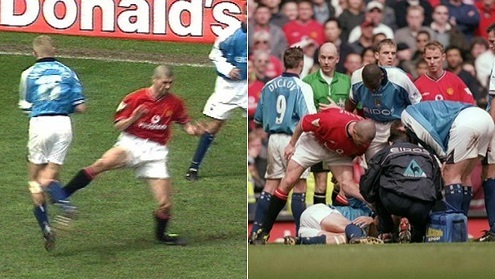
In an 18-year playing career for Cobh Ramblers, Nottingham Forest, and Manchester United (under Sir Alex Ferguson) and Celtic, Roy Keane dominated every midfield he led to glory. Aggressive and highly competitive, his attitude helped him to excel as captain of Manchester United from 1997 until his departure in 2005. He played at an international level for nearly all of his career, representing the Republic of Ireland more 14 years, mainly as team captain, until an incident with national coach Mick McCarthy resulted in Keane's walk-out from the 2002 World Cup. Since retiring as a player, Keane has managed Sunderland and Ipswich and become a notably contrarian pundit for ITV. He is assistant (to Martin O'Neill) manager of the Ireland team. The TV analyst reflects the manager, the player, and the man himself, the unique Roy Keane—Keano. As part of a tiny elite of soccer players, Roy Keane has lived and experienced what very few people could ever imagine. His status one of soccer's greatest stars is undisputed, but what of the challenges beyond the pitch? How did he succeed in coming to terms with life as a former Manchester United and Ireland leader and champion, reinvent himself as a broadcaster, and cope with the psychological struggles this entailed? This book is a personal odyssey, a blend of anecdote and reflection which re-evaluates the meaning of success. In following his personal struggle to reinvent himself, confronting a few demons along the way, The Second Half blends memoir and motivational writing in a manner which both disquiets and reassures in Roy Keane's original voice, in a stunning collaboration brilliantly captured with Man Booker Prize-winning writer Roddy Doyle.
Roddy Doyle (Irish: Ruaidhrí Ó Dúill) is an Irish novelist, dramatist and screenwriter. Several of his books have been made into successful films, beginning with The Commitments in 1991. He won the Booker Prize in 1993.
Doyle grew up in Kilbarrack, Dublin. He graduated with a Bachelor of Arts from University College, Dublin. He spent several years as an English and geography teacher before becoming a full-time writer in 1993.
I didn't expect to like this book and I certainly didn't expect to like Roy Keane after reading it. I was surprised on both counts.
The opening is crude and nasty - it cemented the picture I already had of him as a foul mouthed, bad tempered bully. He recounted the incident with Alf Inga Haaland, where a bad tackle he made finished the Leeds player's career. I thought, yeah, just what I expected.
But thereafter, as he talked about his football career as player, manager and (for a short period) a television pundit, he revised my view of him. He came across as very honest and often humble; he displayed a sense of humour I hadn't previously seen any sign of. His anecdotes were insightful, interesting and sometimes funny.
This is a great read and I recommend it to all footie fans, whether you like Keane or not.
At first, I was extremely disappointed that the early chapters were simply debunking the sensationalism of the previous book - essentially Keane was saying that many of the accounts documented in his first book were false and overly sensationalised which seems odd - surely events weren’t exaggerated to create interest and sell more copies? This book is nowhere near the level of the excellent first book, but then it mainly covers the end of Keane’s playing career and then his short managerial and punditry careers which naturally, have been way less eventful. Nevertheless, the style is eminently readable and the chapters about his time at Sunderland are most interesting. I was rather disappointed in the lack of insight into what occurred and caused problems at Ipswich Town - his last management role before settling as an assistant to more experienced managers. It’s worth a read, especially if you can pick up a copy cheap, but I’d be disappointed if I’d paid full cover price for it. The £2 charity shop cost was fine for me!
Sarà che, essendo il frutto della collaborazione con Roddy Doyle, mi aspettavo molto di più, ma devo dire che ho trovato questo libro incredibilmente piatto. Non certo ai livelli di come Roy Keane ha sempre giocato da capitano del Manchester United e della nazionale irlandese.
Se in campo ha sempre trascinato le sue squadre con la sua grinta e la sua cattiveria, sulle pagine non riesce a raggiungere lo stesso obiettivo con noi lettori: oltre 300 pagine di elenchi di partite con pochi aneddoti "gustosi" che invece dovrebbero essere il sale di autobiografie come questa.
Se voleva essere un bilancio intimo della sua vita, dei suoi successi e fallimenti, devo ammettere che non ne ho colto affatto la poeticità.
Roy Keane, noto per non essere esattamente uno stinco di santo, una ruspanza che emerge anche da queste pagine tanto a livello narrativo quanto a quello, organizzativo diciamo. Nonostante una certa linearità temporale infatti non si parte dalle origini calcistiche per proseguire lungo questa strada ma si inizia subito col Manchester United e l’episodio più famoso, o forse sarebbe meglio dire famigerato, la “vendetta” sul norvegese Haaland (padre dell’odierno centravanti stella del Dortmund).
Si prosegue con le varie “battaglie” in Premier e il litigio di Saipan che lo allontanò dalla nazionale del trifoglio. Insomma più che un architettato piano di esposizione sembra più di stare ad ascoltare l'amico al bar che ti racconta ciò che gli è successo, il che ha un suo fascino, soprattutto perché il temperamentoso irlandese vive il calcio con un agonismo che lascia poco allo spettacolo e punta più sul fare legna… sugli stinchi avversari. Tuttavia, proprio e purtroppo come l’amico che ti racconta le cose al bar (solitamente quando alza il gomito), inizia presto a ripetersi entrando in loop, una ridondanza che fa progressivamente calare la soglia di interesse/attenzione. Altro difetto, se così si può chiamare, è il monocentrismo. Ok è il libro di Keane, ma qui si tratta di un autentico One Man Band che concede giusto le briciole a tutti i campioni, come lui, che lo circondavano. Inoltre mi permetto di rilevare una eccessiva indulgenza nei propri confronti stemperata solo da un’autocritica appena accennata. Con la fine della corposa parte di carriera da giocatore per passare, un po’ in malo modo tra Manchester e Celtic, a quella di allenatore si cambia registro; una nuova prospettiva che prendo pari pari dal libro:
…ma era davvero come dice il presidente a Brian Clough nel film Il maledetto United: Il presidente è il capo, poi ci sono i consiglieri, poi il segretario, poi i tifosi, poi i giocatori e poi alla fine di tutto, in fondo al mucchio, l’ultimo degli ultimi, la persona di cui alla fine possiamo tutti fare a meno, il fottuto allenatore!
Esaltante l’esordio col Sunderland, nondimeno la lettura si affievolisce col passaggio all’Ipswich, tramontando definitivamente con l’abbandono della panchina per diventare commentatore indolente e presenziare a eventi vari… colpo di coda nell’epilogo che si riscatta un pochetto. Nel complesso è stato un libro interessante che però spara tutte le sue cartucce migliori nella prima parte, quando inizia a perdere colpi ce ne si accorge subito, una visione mooolto soggettiva e faziosa del mondo del calcio sotto diversi circoscritti aspetti eppure, proprio per questo e per ciò che rappresenta Roy Keane nell’immaginario calcistico, ha un suo appeal.
Roy Keane isn’t quite as mad as his on-screen persona would have us believe. I think the fact that most of his ex-team mates always have a good word to say about him is a good sign. Or maybe they’re just scared of him.
The only thing I really remember from this – again, it was read during peak period of sleep deprivation – was that Keane went to a dietician one year, and came back trying to get his body fat down to something like 5%. Which was almost dangerous. I do remember him running around with a shaved head one season and resembling a particularly aggressive skeleton, like something out of an Indiana Jones film. Anyway, his wife told him to stop so he started having proper dinners. Maybe a pudd, too.
Really enjoyed this. Keane comes across as a complex man, embarrassed by success and what it brings yet always driven to succeed. He expects the best from himself and everyone around him. Some interesting thoughts about being a football manager too!
In short a very, very good read. Very enjoyable, genuine and funny and I just didn't want to stop reading. Possible the best book from someone involved with football, there really is only one Roy Keane and its a shame there are no longer any like personalities currently in the sport.
A fun and interesting read regarding a great character of British football. Not too heavy but good for a bit of light entertainment. The book can be quite humorous in places and I did find myself chuckling at several moments. Would recommend as an easy read to pass the time.
I went into this book with high expectations. It was, after all, a book about my childhood hero (Keane), co-written and composed by a Booker prize winner (Doyle). How could it possibly disappoint? Well, it did, and on reflection, the blame lies with the author more than the subject matter. For that, we first need to talk about the subject matter.
Roy Keane is a retired Irish footballer and a Manchester United legend. This is his second book. The first one, a ghost-written autobiography, came out in the early 2000s and dealt with his life till that point. That book covered the best years of his footballing life and told his tale from his point of view. In his prime, Keane was a fierce competitor, a leader of men and an etcher of gladiatorial victories. His ruthless drive for perfection and excellence coupled with his pugnacious nature often got him into fights with authoritarian figures but the same qualities made him both a sporting icon and a folk hero of the masses. The first book covered all this.
The Doyle book is a sequel of sorts. It entails Keane's last few years at United, expands on his acrimonious exit from the club, including his falling out with one time mentor, Sir Alex Ferguson. Thereafter, the book talks about the end of his playing days at Celtic football club and his post-retirement life and career as a football manager, first for Sunderland FC and then for Ipswich Town.
Now, let's discuss why the book doesn't work. First, it spends a majority of its time on Keane's managerial career. As great as a player he was, Keane was a middling failure as a football manager and was sacked by both the clubs that ever employed him as head coach or manager. In light of that prescient knowledge, the lucid exposition of Keane's tactical leanings, training-ground routine and transfer-market pickings seem more like a futile exercise in shifting blame than a fascinating insight into any discernible blueprint. Secondly, a lot of his time as manager was spent in the lower rungs of English football and for a fan of the big teams he played for, it becomes difficult to remain compelled by Keane's experiences at a lower level where players are bought and sold at a fraction of the cost of a Premier League footballer and where the quality of football and attendances are generally much lower. Keane, a larger than life figure, seems almost a misfit in this environment but it is here that the book lodges itself for almost its entirety. This is a missed opportunity.
For me, the pulse of the book should have been Keane's last years at Manchester United. The book doesn't spend enough time on that. It could easily have cast Keane as a fallen hero, like Brick in 'Cat on a Hot Tin Roof', and told us of the physical decline of a man ravaged by years of playing the game dangerously, a man who set the highest standards in strength and stamina and then fell victim to age, injuries and a combination of both. Alas, the book deals with these issues with abrupt acceptance but even for someone as plainspoken as Keane, his own decline couldn't have been something he dealt with as easily as that.
Early on, this book presents a mind-bending ontological puzzle regarding reality and perception. The book starts with Keane being hauled in front of a disciplinary board as a result of inflammatory comments in his former book, Keane. Of course though, Keane didn't write his last book, and he hasn't written this one either: this time he is channelled by Roddy Doyle, whereas the first was written by Eamon Dunphy. So what follows is a passage where Keane (via Doyle) explains how the words in Keane (by Dunphy) which Keane (as relayed by Doyle) is now being punished for were not Keane's words, but words pieced together by Dunphy, and how bewildered Keane (actually Doyle) is to be punished for the contents of Keane, which was really the responsibility of Dunphy. Got it?
The metaphysics don't last though, and this book becomes rather average and too episodic. Doyle doesn't seem to have dared to challenge or probe Keane. Why does Keane melodramatically flounce out of Man Utd, in doing so letting them off the hook of honouring his contract? Why does he freak out at Sunderland at the first sign of criticism? Keane's insecurities are writ large throughout, but at no point are their origins probed. The book is also undermined by the fact that all the really juicy bits were covered in depth in the media at the time of publication, making this fairly missable.
Intanto la copertina è bellissima, perché è bellissima la faccia di Roy Keane. Però sono rimasto un po' deluso, ecco, chissà cosa mi aspettavo... Le premesse c'erano tutte: sono capitato nel sito di Guanda e tra le novità cosa mi trovo? Il faccione di Roy Keane. La sua biografia. Scritta da Roddy Doyle! Non avrei potuto immaginare niente di meglio se non, che so, la vita di Paul Gascoigne scritta da Irvine Welsh o quella di Gigi Riva narrata da Sergio Atzeni. Ma questi restano sogni irrealizzabili, soprattutto l'ultimo. E invece no. Alcune parti sono carine, altre divertenti, ma in generale è noioso: non gliene frega niente a nessuno, Roy&Roddy, della cavalcata trionfale del Sunderland nella serie B inglese... e dura troppo. Molto meglio la parte depressa ad Ipswich, che io Ipswich me lo immagino un posto triste tipo Ancona (mai stato ad Ancona, né conto di andarci). Con in più la pioggia. Avessero scritto 317 pagine di Roy Keane mogio mogio a Ipswich me la sarei goduta di più. E anche le avventure di Roy Keane ad Ancona non sarebbero state male, ma così no.
I enjoyed this easy read, another sporting biography but it wasn't the best I had ever written. Some interesting stories but you probably have already heard them in the previews to this book. For me it was too much we played this match and then we played this match etc. etc. OK read but I thought it would be better after all the hype.
Keano certainly had thing or two to get out of his chest from the previous autobiography written by Eamon Dunphy. The first chapters were bit scattered because of that and the reading wasn't flowing as freely as I would have liked, but there were still interesting bits, for example his take on events that led to his eventual departure from United and that Real Madrid came courting him after the departure but as we know he decided to go to Celtic, his boyhood dream club.
Looking into his first managerial stints and punditry and life in general after the footballing career, Keano gives honest and self-critical view as always, there might be even bit of self-loathing in it. It's certainly engaging and entertaining stuff, would like to say even for non footie-person. But then again, I'm not a non-footie person, but a fan. I really like Keanos character of being straight-talker, with low-tolerance level and giving his all always. I can relate to that.
Things might be going really well, and I don't trust it: "It's not going to last", or "Why am I getting this? Why are things going well? And I'll fuck it up. I'll drag things down around me, and then I'll get started again. When I get back up to the top, I look and see that there were things that I wasn't happy with, and I could have managed differently"
I can procrastinate about lots of things but, once I make a decision, it's made!
You train as you play
The surprising part of the book was about money, didn't think that it will be get mentioned so often and is important topic for him as he doesn't struck you person who is after money.
My take is that he definitely wants to have an another crack in management.
I read Roy Keane's first autobiography several years ago, and meant to read this about four years ago when it first came out, particularly as the first book seemed to end abruptly, since it was written in 2002, and there were many things about his career that he had yet to write about.
This book tells of the final years of Keane's playing career and how he moved into management; the one story that I knew I'd see in there was how he left Manchester United after laying into all his team-mates in an interview, and he gives accounts of other stories that hit the headlines, including the infamous confrontation in a tunnel, and the injury inflicted on David Beckham by Sir Alex Ferguson kicking a boot at him.
This is really a book that football fans will be more interested in, and although Roy Keane has a reputation as someone who constantly loses his temper, he seems regretful and almost self-deprecating at times, when he reflects on things he could have done differently, such as how he insisted the players call him "Boss" or "Gaffer" than addressing him by his first name.
I was glad I read this book, because it provided more of a sense of completeness, and with someone with a career as long as Roy Keane's, it felt like a story that needed to be continued.
First time trying out an audiobook 😤😂 I really enjoyed the different experience of having a book read out to me. It probably helped that it was an autobiography with witty anecdotes which made it feel like I was listening to a podcast. I adored Roy Keane as a player growing up as a Man United fan for his no nonsense persona and that this book has definitely shredded a light on the more personal and thoughtful side of him. I really liked the in depth complications of what it takes to be a manager in the modern world.
A Good insight on what was happening after he finished up with Man Utd. Roy's own thoughts and opinions on the way he saw things he tells it how it is. Grow up watching him play for Man Utd as a young lad good to see the influence he had as a teammate & leader a real winning mentality.
Not as good as his first book. Left an impression that it was written and published in a hurry. Liam Miller's name was spelt incorrectly twice so it wasn't even well proof-read!
"Reading Keano's memoir was like seeing through his mind and heart. Very candid."
After reading a few autobiographies of players and staff associated with Manchester United, certainly the biggest premiership club in past two decades, now in turmoil, Roy Keane's The Second Half is one of the most honest and straightforward memoir I have ever read.
For me and some might agree, keeping apart his big-mouth quality which I consider his trait as a part of being a leader, was not a "top, top player". His peak would be the 1999 season, Champions League semi-final, scoring a header against Juventus and sending Manchester United straight to the finals. Other ups in his career, strong personality or pretended to be, supporting his players when needed, encouraging newcomers, fighting the battles on and off the pitch. Of course, I am not going to talk about his downs, for that you have to read them in his own words in which he justifies his course of actions and regret on being such a big-mouth. We all live with ghost of our pasts called 'regrets'. He is indifferent.
The book straight starts with Keane's incident on ALf Halaand, which Keane believes that he still accuses him of destructing his playing career. Moving forward, the main attraction, as media claims, should be when Manchester United tore up his contract after Keane lambasted his teammates in an interview with the club’s television channel. On reading, a reader will be able to judge by his own conscience.
The main focus of this memoir, was what happened to Roy Keane after his playing career got over by a battle-worn hip and how ended up on being appointed as a manager of Sunderland F.C., bringing them from Championship to Premier League, Ipswich Town, and finally as an assistant manager of Aston Villa currently. Reading on, it is more of an aftermath of later half of his life. Talking about regrets, Keane goes on explaining the difference between a person's anger and a person's frustration. Anger can be understood as an emotion, can be used as a driving force but frustration is an outburst. In any case it must be avoided, if not the outcome will vary from injuring an opponent to wrecking your own career. And that is what Keane's memoir is all about. Along with his mental sufferings, unsophisticated mind, and living in a conundrum of his own, he observes the difference between the two and accepts them. Moved on, did the same mistake. Moved on hoping for a betterment. That's life, but one must be waken enough to determine the difference between the two-- anger and frustration, and should be clear on whom to avoid and when. Sport's is that profession in which the practice of the aforementioned subjects can be easily determined and are segments of every sport.
For Roy Keane, it's quite hard to consume the fact that football is mostly business. Technically, it's wrong for any sport and every sport must be considered as a 'sport', but to earn and put food on the table for your family, for sportsmen it's a job and any job is the part of a business.
Overall, the memoir is well written purely in 'Keano' style and I will recommend it to any football fan.
"Reading Keano's memoir was like seeing through his mind and heart. Very candid."
After reading a few autobiographies of players and staff associated with Manchester United, certainly the biggest premiership club in past two decades, now in turmoil, Roy Keane's The Second Half is one of the most honest and straightforward memoir I have ever read.
For me and some might agree, keeping apart his big-mouth quality which I consider his trait as a part of being a leader, was not a "top, top player". His peak would be the 1999 season, Champions League semi-final, scoring a header against Juventus and sending Manchester United straight to the finals. Other ups in his career, strong personality or pretended to be, supporting his players when needed, encouraging newcomers, fighting the battles on and off the pitch. Of course, I am not going to talk about his downs, for that you have to read them in his own words in which he justifies his course of actions and regret on being such a big-mouth. We all live with ghost of our pasts called 'regrets'. He is indifferent.
The book straight starts with Keane's incident on ALf Halaand, which Keane believes that he still accuses him of destructing his playing career. Moving forward, the main attraction, as media claims, should be when Manchester United tore up his contract after Keane lambasted his teammates in an interview with the club’s television channel. On reading, a reader will be able to judge by his own conscience.
The main focus of this memoir, was what happened to Roy Keane after his playing career got over by a battle-worn hip and how ended up on being appointed as a manager of Sunderland F.C., bringing them from Championship to Premier League, Ipswich Town, and finally as an assistant manager of Aston Villa currently. Reading on, it is more of an aftermath of later half of his life. Talking about regrets, Keane goes on explaining the difference between a person's anger and a person's frustration. Anger can be understood as an emotion, can be used as a driving force but frustration is an outburst. In any case it must be avoided, if not the outcome will vary from injuring an opponent to wrecking your own career. And that is what Keane's memoir is all about. Along with his mental sufferings, unsophisticated mind, and living in a conundrum of his own, he observes the difference between the two and accepts them. Moved on, did the same mistake. Moved on hoping for a betterment. That's life, but one must be waken enough to determine the difference between the two-- anger and frustration, and should be clear on whom to avoid and when. Sport's is that profession in which the practice of the aforementioned subjects can be easily determined and are segments of every sport.
For Roy Keane, it's quite hard to consume the fact that football is mostly business. Technically, it's wrong for any sport and every sport must be considered as a 'sport', but to earn and put food on the table for your family, for sportsmen it's a job and any job is the part of a business.
Overall, the memoir is well written purely in 'Keano' style and I will recommend it to any football fan.
As a Sunderland fan this book appealed to me more than the first as it documented his stint as our manager. It certainly didn't disappoint.
Had Ellis Short not taken over from the Drumaville Consortium would Keane have stuck with Sunderland? Probably not, but the book does leave you wondering 'what if'.
Well worth a read if you're interested in Keane's post-playing career.
Roy Keane's second autobiography charting the end of his Manchester United career, his playing career and his time as a manager, coach and pundit. As sports biographies go this wasn't too bad. We get an insight into Keane's take on how he left Man Utd and the relationship with Alex Ferguson broke down. At first I thought this was the whole reason the book existed but luckily, unlike Ferguson's second book this actually charted his life instead of dedicating chapters to individual people or events. Reading about Keane's time as a manager and the trials and tribulations he went through was really interesting. Normally when you read about a manager it's a guy who's been doing the job for quite some time. This was someone new to it all giving a refreshing insight into the role. Also it's really nice to see Keane (someone who's known as a hard man and a bit of a bastard at times) actually admit when he handled situations badly and didn't treat people how he should have. Combine all this with his time as an ITV pundit and it makes for a decent read. So why only 3 stars? Because for some reason Keane thinks we want / need to know almost every result he had as a player or manager. And while I can appreciate telling some results to get to a story or make a point. But the amount of results he talks about got repetitive quickly.
Perhaps the most absorbing book I have read recently. Keano doesn't bullshit, he doesn't fuck around, he doesn't make excuses. He gives an honest account of what happened and the reason it happened. If he was to blame, he accepts it. But he doesn't pander to anyone or sensationalize any event. But the controversies are not even the most gripping part of the book. His account of his managerial career at Sunderland and his post football career is. I have never read a book which provides this much insight into the world of football management. How the backroom and administration works. It's rich in details, filled with humorous, highly interesting anecdotes. Roddy Doyle's writing style is brilliant, a joy to read and you expect nothing less from a Booker winner. Ultimately, The Second Half is a gripping, melancholy story of a man who was mostly misunderstood, often vilified and hated but who in reality is a flawed hero who suffered because he cared too much. For his country, for his club, for football.
I received The Second Half as a gift. I'm from Cork originally so it was presumed I imagine that I would enjoy the autobiography of one of its native sons. But to be honest I've never really liked Keane. I've always thought him massively overrated and painfully self absorbed. And after reading The Second Half I'm even more of that opinion. Keane is a boor, focused, heartless and without self doubt. For all intents he's mechanical. And that's all well and good. You don't have to like someone to admire him but what is there to admire? He was a failure as a manager. His playing career ended in disaster also. A financial success but not someone to emulate. And this comes across in the book. A victim mentality and an inability to take responsibility for personal shortcomings pervades throughout. On the plus points its a quick and very easy read. Like reading The Sun. Roddy Doyle does a good job channelling him.
Всеки, който е следил кариерата на Кийн, няма да изгуби и минута повече, а ще се сдобие с това прекрасно издание на Жануа 98. За мен бе чест, че бях редактор и коректор на този биография.
Цялата кариера на Кийн и като играч, и като мениджър ще ви покаже какъв човек е той! Колко се е борил. Какво отношение е получил от сър Фъргюсън. Как се е разделил с "Манчестър Юнайтед" и още много интересни истории.
As a non-football fan who knows nothing about Roy Keane, I really enjoyed this book. The co-authoring by the brilliant Roddy Doyle no doubt helped. He came across as very honest and self-aware. I would quite like to read the perspectives of Roy Keane's colleagues on some of the situations described in this book.