The inspiring guide to letting go of competition, reducing stress, and living a happier, more authentic life – from the 15-million-copy bestselling author of the Japanese self-help phenomenon, The Courage to Be Disliked.
Are you exhausted from trying to be exceptional? It’s time to break the cycle of burnout and choose ordinary.
In The Courage to be Ordinary, Ichiro Kishimi speaks to everyone burned out by hustle, comparison and the pressure to prove their worth. His message is disarmingly simple: stop trying to stand out.
Being ordinary isn’t failure – it’s freedom. Freedom from constant competition, from chasing approval, from feeling habitually tense. Letting go of the need to be special will finally give your strengths the space they need to shine.
It’s time to release the pressure and embrace the superpower you really need to succeed: The Power of Ordinary.
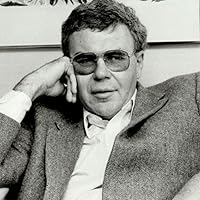
Ichiro KISHIMI Philosopher, Adlerian psychologist and translator of English and German languages. Born in 1956.
M.A.in philosophy from Kyoto University. Director of the Japanese Society of Adlerian psychology. Former counselor at Maeda Clinic in Kyoto and has taught philosophy and ancient Greek at various institutions such as Kyoto University of Education and Nara Women's University.
He presently teaches educational psychology and clinical psychology at Meiji School of Oriental Medicine in Suita, Osaka. Kishimi now has his own private counseling office in Kameoka, Kyoto, and devotes his time to giving lectures on Adlerian Psychology and child education.
did not really relate to this book very much, however, only got a few chapters in. ideas are spoken like facts and not like concepts to reflect and ponder on which isn’t sitting right with me. might revisit but not willing to delve into this yet. going to try the courage to be disliked first. DNF (for now)
يمتاز عالم النفس الياباني أشيرو كيشايمي ببساطة السرد وعمق الأفكار والحكمة كذلك. وفي هذا الكتاب يتناول فكرة أن المبالغة في الرغبة في التميز غالبا ما تكون قناعا نخفي خلفه شعورا عميقاً بالنقص والخوف من عدم القبول. فالإنسان قد يستهلك الكثير من طاقته في المظاهر والمباهاة بدلا من التركيز على هدف حقيقي في الحياة - لاسيما في زمننا هذا حيث تحكم الصورة لا الفكرة في تقديرنا للأشخاص وإمكاناتهم. أعجبني في الكتاب فكرة التخلص من حاجة الموافقة والتقدير الخارجي، فالشخص العادي لا يحتاج لارتداء أقنعة ليزيد من قيمته بنظر المجتمع. ومن يرغب بقراءة كتب أخرى ممتازة - سبق لي ان كتبت مراجعاتهم - كذلك لنفس المؤلف فهي The Courage To Be Happy The Courage To Be Disliked
Book purported some ideas that I disagree strongly with where no interesting counterpoints to my position were offered; ideas such as: -that a sense of urgency is a bad thing -that being slow is not inherently inferior to being fast
Still, the book did offer some original ideas and reframings; a lot reminded me of Peter Thiel's famous "Competition is for losers" concept
The reading has been enjoyable, and encouraged me to philosophize about the current competitive nature of society and our own role within it. I cannot stop comparing this book to the courage to be disliked, but that is not fair. The book has some “common sense” woven into it, but I feel that is one of the points; we do not always listen and make space to think about those points.
Most important take away for me? - we all love to be connected, which should not come from competition and “being the best” but just being there for each other and contributing to life.
Something older me would tell younger me.. but he would not understand it yet anyway.
It must have taken a lot of courage to write this book and get it published. Most likely that's the whole point of it. To quote the author, it looks like he felt like he needed to prove that he has courage, and therefore this book came out.
I liked the other works from the author but majority of this book was his anecdotes, almost an autobiography in disguise, which I'm not interested in reading at all.
A lot of the same material covered in the last 2 books, but I actually enjoyed it more. I didn't really gel with the dialogue set up of the courage to be disliked/happy so this was an easier read for me.
Nothing particularly groundbreaking in here either, but I found myself agreeing with pretty much everything Kishimi was saying. Also, this book made me uncomfortably reflect on my own personality as someone who is unfortunately, for better or worse, forever striving to be 'better'.
I feel this book is a very gentle and soft reminder which I think could be revisited time and time again.
If you liked the concepts in the Kishimi's previous books but hated the format, then give this one a try.
I was very happy to receive a free review copy of The Courage to be Ordinary by Ichiro Kishimi from NetGalley, and this is my honest review. The book is well structured, with clear and detailed chapters that are easy to follow. It explores feelings of inferiority when we feel we have not achieved as much as others and how we can begin to challenge and change this mindset.
The author questions many of our thought patterns and suggests ways to approach studying, work, and life with greater confidence. Chapters focus on a range of ideas, including approval, confidence, recognition, originality, judgement, responsibility, ambition, growth, and, of course, courage. Personal stories are woven throughout to emphasise key points, which I found really helpful and made many of the ideas easier to connect with.
Some of this book reminded me of the Chinese concept of “Lying Flat”, which has gained momentum amongst younger people, which is the idea of stepping away from constant striving in academic life, careers and society’s expectations. To me, this book felt as though it touched on some similar ideas. The author discusses how many young people may not naturally choose the elite school route or certain careers and how these decisions can sometimes be driven more by parental expectations than personal wishes.
The book explores many other concepts too, all of which I enjoyed reading about, and encourages us to think more deeply about what really matters in life. The final chapter neatly concludes and draws together the key points discussed throughout.
I really enjoyed The Courage to Be Disliked. It’s one of those books that you enjoy reading, but that also leaves you wanting to pause, reflect, and return to some of its ideas.
Based on Alfred Adler’s psychology, it reflects on comparing ourselves to others, feelings of inferiority and inferiority and superiority complexes, the need for approval, and the importance of focusing on our own tasks instead of constantly worrying about the outcome or external judgment.
I especially liked the idea that we don’t need to be “special” to give our lives meaning. From an early age, we learn to stand out and compare ourselves to others, when perhaps accepting our individuality and following our own path is much more important.
It also made me think deeply about the concept of the “realm of possibility”: how the fear of not achieving the result we hope for can keep us focused on what might happen instead of committing to action.
My husband bought this after previously reading The Courage to Be Disliked, and I picked it up partly to better understand his perspective as someone who has very high expectations of himself.
I found the book quite repetitive and, in my opinion, it relies a little too heavily on Adler’s writing and theories. That said, there were some genuinely useful insights that made me think differently, particularly around parenting.
Raising two very different personalities has made me realise that the expectations we place on our children aren’t always helpful, even when they come from the best intentions. I found the discussions around allowing children to be themselves, rather than trying to shape them into who we think they should be, particularly thought-provoking.
The Courage to Be Ordinary is interesting enough. There are several points that I can apply and take to heart. There is not necessarily anything profound in this, but more simple ideas that make sense. It is about not basing your life on success measured against others. Not succeeding academically for your parents or peers, but learning for the sake of learning and finding joy in that. I listened to it on audiobook and do believe visually seeing it and annotating notes would be more beneficial. However, it was a great inspirational message to listen to on the way to work. Thanks to NetGalley for an advanced copy.
Finished courage to be disliked recently and was curious about this. There is lot of repetition of same stuff which felt irritating. 1 st book covered a lot of good stuff and i liked the socratic way of discussion. TLDR of this book: Forget about possiblilities of failures and others expections cuz they weigh u down/ u make distractions or emotions and blame them for not having results. Instead just work and adapt and see failure as learning and move on. Dont consider cause and effect relationship.
"What matters isn't how you're seen, but what you actually are. To actually be capable, you have to accept yourself when yhou dohn't know or can't do something. You need to let go of the belief that you have to be special and accept yourself as you are."
"[People] believe they could do it if they tried --yet they never actually try. People who think they could do it if they wanted to are the ones who do nothing. Those who think they know everything are the ones who refuse to learn. Since they already see themselves as superior, they assume that learning is for the ignorant."
Początek bardzo mnie poruszył, nie chcac zobaczyłam tam siebie, szczególnie dobre rozdziały analizujące rodzinę, oddziaływania wśród rodzeństwa. Potem niestety tylko gorzej, od połowy autor już bardzo się powtarza i zaczyna sie to czytać jak kazda inna ksiazke o samorozwoju (źle). Skończyłam tylko dlatego, że jest krotka, ale moglabym przerwać w polowie. Wnioski oczywiście ogólnie niezaskakujące, oczywiste na zdrowy rozsądek, ale czasami może warto to zobaczyć zwerbalizowane. Nie oceniam jako zupełną stratę czasu.
There are some very good elements to this book but also it’s a bit of a one trick pony. The entire book is basically saying that you need to stop comparing yourself to others because it holds you back. Great advice but maybe it doesn’t need a whole book to say it. There are also a lot of quotes from Adler. I couldn’t help but find myself wondering if I would have done better reading some of his original works. Thanks to NetGalley and Vermilion for the ARC.
The structure of the book changes from a dialogue to short takes that leave wishing for more. The second half of the book comes far too quickly and the realisation that the author’s pondering about certain ideas and positions is not just going deep enough and does not providing enough practical advice—if any at all.
I would say it is necessary as a closing chapter in the “The Courage to be” series but a clear step down, too.
Up to the end I couldn't decide if I liked this book or not. It is very repetitive and I am not sure if it really reaches the goal of teaching one how to not be ordinary. I would have liked more life examples, instead of it focusing so much on work and education. On the other hand I did highlight multiple passages that stood out for me. I liked the Adler references, but I am a fan. I'm also not sure whether the Japanese cultural undertones translate to a western audience.
I don't know why this says pre-publication. I picked it up at the airport.
It's an interesting concept and made me reconsider my life. Does it deal with burn out? -maybe. Does it deal with altered expectations of life? - Definitely.
Worth a read I think. Not sure it has enough to practically do for me. But is a good thought piece.
This book was disappointing. I loved The Courage to be Disliked so maybe I was expecting too much from this book and it did not deliver. I appreciated that it did not replicated the young man and the master dialogue which I thought it was good, but the book could be half as long and give us the same content.
In my current state (very burnt out) I did find this somewhat helpful to read and a couple of sections did genuinely help me. However, all in all o found it a tad repetitive and on the nose. It also referenced Adler so much I may as well just go read his stuff instead! Didn’t hate it but not my favourite.
I’m retired and on disability, so this book felt irrelevant to me, which made me genuinely sad. Each chapter seemed focused on the person having a job, and it didn’t connect with my situation. That said, the author has other really good books, so I hope their work continues to be a better fit for others.
picked this up as i'd been reading The Things You Can Only See When You Slow Down by Haemin Sunim and thought it might have similar anecdotes. if you're already versed in psychological theories and the importance of self worth and filling your own cup first, you will likely not take much away from this. i do highly recommend the Sunim book above though.
My biggest problem with this book is the dishonesty. If the editing was honest, this book is 80 pages. If the writing was honest, avoiding unnecessary repetition of commonplaces, it's 40 pages. If the pricing is honest, it's not a PLN 90 (~USD23) book for a 40 pages booklet. If the cover is hoest it wouldn't try to ride the wave of Disliked, which is truly a fantastic book. This isn't.
Solid follow-up to one of the better books of the last few years. More simple, practical advice that will help anyone willing to consider & apply it. I certainly have differences in worldview and core values, but there is plenty here to find helpful.
As I enjoyed The Courage to Be Disliked by Ichiro Kishimi, I was really looking forward to this book- Frequent references to Adlerian psychology began to feel predictable and uninspired and the book progressed.
A very readable but quite simple self help book with some interesting points and observations, but often repetitive in places. Really enjoyed the true life examples which add depth and interest to the narrative. Thank you for the review copy.
Ichiro Kishimi uses Adlerian psychology to remind us that we don't need to be extraordinary to be worthy. It’s a wonderfully easy read that shows how embracing an ordinary life and stopping yourself from comparing yourself to others is the best path to real peace, confidence, and happiness!