

What do you think?

The Splintered Parts: A dark academia thriller of identity under attack
Someone—or something—is trying to bury itself inside Soraya’s skin.
It started her sophomore year of college, after she slipped in the shower and hit her head. Since then, nothing has felt real. The lights flicker all at once. She hears tapping at her window, and someone outside keeps calling her name.
Desperate to understand what’s happening to her, Soraya enters a neuroscience doctoral program in the Southwestern desert. But the deeper she dives into her studies, the more the line blurs between reality and distortion.
As a rare solar eclipse approaches, Soraya races to uncover the mystery. Eclipses have a way of exposing what’s been lurking in the dark, and if Soraya gets it wrong, she may lose far more than her sanity.
It started her sophomore year of college, after she slipped in the shower and hit her head. Since then, nothing has felt real. The lights flicker all at once. She hears tapping at her window, and someone outside keeps calling her name.
Desperate to understand what’s happening to her, Soraya enters a neuroscience doctoral program in the Southwestern desert. But the deeper she dives into her studies, the more the line blurs between reality and distortion.
As a rare solar eclipse approaches, Soraya races to uncover the mystery. Eclipses have a way of exposing what’s been lurking in the dark, and if Soraya gets it wrong, she may lose far more than her sanity.
Unknown Binding
Published August 14, 2026
Ratings & Reviews
Friends & Following
Create a free account to discover what your friends think of this book!
Community Reviews
Displaying 1 - 14 of 14 reviews

August 16, 2026
Four stars. The Splintered Parts is Ana Yudin's most ambitious novel and her most personal. Having read her previous two books —
The Curse in Their Veins
(2023) and
A Song at Dead Man's Cove
(2025) — I came to this one with a sense of her range as a writer. The Splintered Parts goes further than either predecessor in its intellectual ambition, weaving together neuroscience, philosophy of mind, quantum mechanics, Southwestern folklore, and dark academia into a genuinely surprising thriller.
The Setup
Soraya is a doctoral student in a neuroscience program in the Southwestern desert. She has been experiencing disturbing perceptual disturbances since a head injury — flickering lights, sounds that shouldn't be there, a creeping sense that her reality is not entirely reliable. She is also, crucially, a writer who has chosen neuroscience as a more viable career path. The research she is pursuing — into consciousness, near-death experiences, and the relationship between brain states and subjective experience — is not purely academic. She is trying to understand what is happening to her.
The Philosophy of Consciousness
What I did not expect from a dark academia thriller was this level of genuine engagement with the philosophy of mind. The seminar scenes between Soraya, her fellow doctoral student Cyrus, and their supervisor Dr. Wu are the novel's intellectual heart. The debate between materialism and idealism is dramatized through characters who embody each position:
Dr. Wu is a materialist — and, as I am also a materialist, he is the character I found most interesting. But Yudin is careful not to make the idealist position a straw man. Soraya articulates the genuine problem with pure materialism with precision: "If the brain produces reality, then what produces the brain?" (p. 76). This is the hard problem of consciousness in one sentence, and it is the right question.
The novel also engages with quantum mechanics, the Pauli Effect, synchronicities, and microtubule theories of consciousness — the kind of territory that sits at the intersection of legitimate science and speculative philosophy. Soraya articulates my own position well: she is tired of having to choose a side between science and spirituality and finds that "neither party wanted to admit the blind spots of their philosophy" (p. 98). Dr. Wu's position, that the probability of a spiritual explanation is "nonzero" even if he personally rejects it, models exactly the kind of epistemological humility that distinguishes good science from scientism.
The Setting
The Southwestern desert is a genuine character in this novel. Yudin brings out its spookiness with precision: the dust, the silence, the sense of a landscape that is indifferent to human presence:
This reminded me of Gabrielle Walker's description of the McMurdo Dry Valleys in Antarctica — another landscape so hostile to life that it feels genuinely alien. Yudin also captures Las Vegas with characteristic honesty. Her afterword describes visiting the city and being "stunned by the artificiality and the malaise of the place" (p. 312) — and that malaise permeates the novel's early sections.
The Point of View Structure
The novel is formally self-aware in a way that rewards careful reading. An early creative writing seminar establishes the terminology and the stakes of point of view as a narrative tool:
This is not incidental setup. In Part 4, the narrative deliberately splinters — what has been a consistent third-person limited perspective fractures into first person and third person omniscient, giving us access to the inner lives of multiple characters simultaneously. The title announces this formally: the narrative itself becomes splintered at the moment the protagonist's sense of reality splinters. It is an effective structural choice and the kind of deliberate, purposeful point-of-view shift that the seminar scene teaches the reader to recognize and appreciate.
Dr. Wu and the Autobiography Beneath the Fiction
The character of Dr. Wu is the novel's most interesting supporting figure — a man who chose the practical career over the dream and has spent years resenting it. Soraya's perception of him is one of the book's sharpest moments:
This is where the novel's autobiographical dimension becomes most visible. Yudin herself began with ambitions to be a novelist, pursued a doctorate in clinical psychology as the practical path, found that being a therapist was not part of her identity, and has now devoted herself to writing, YouTube, and motherhood. She discusses this openly in her video "The truth about why I quit being a therapist" (June 2, 2025). Soraya's arc mirrors this exactly — the discovery that the identity one has constructed for practical reasons is not the identity one actually has.
As a full-time therapist and social worker who has no intention of leaving my profession, I find this theme personally interesting rather than personally resonant. I love my work. But I recognize the dynamic Yudin is describing, and it is rendered with genuine psychological honesty.
The Skinwalker and the Materialist
The novel incorporates the Navajo legend of the skinwalker — a being that can assume the appearance of another person — as a possible explanation for Soraya's experiences. I want to be honest about my position here: I am not open-minded to magic in any literal sense. If skinwalkers exist, they fall under the purview of science. There is no such thing as the supernatural in the strict sense: only things we do not yet understand.
But Yudin's novel is not arguing for a literal supernatural explanation. Cyrus puts the position I actually hold: "Just because something is spiritual doesn't mean it isn't also rooted in science" (p. 224). And Dr. Wu's eclipse speech captures the genuine wonder available to the committed materialist:
You do not need to believe in fairies to find the world extraordinary. This is the same argument Robin Wall Kimmerer makes in Braiding Sweetgrass and that Hannah Murray arrives at by the end of The Make-Believe : the real world is strange and beautiful enough without supernatural supplement.
The novel's Part 4 twist (which I will not describe in detail to avoid spoilers) provides a satisfying explanation for Soraya's experiences that is consistent with both the scientific and the folkloric threads. I found it effective.
Stoic Philosophy and Near-Death Experiences
The line "One apology was the right thing to do, but any more than that made a person look weak and submissive" (p. 252) caught my attention specifically because I have been reading Epictetus this year. Yudin has made YouTube videos about Stoicism — like me, she sees its practical value for mental health and therapy. The alignment is another point of connection between us as readers.
The near-death experience research that Soraya and Cyrus are conducting also connects to my own clinical work. I have worked with dozens of people who have overdosed on opioids and been revived with naloxone — people who came clinically close to death. The question of what, if anything, they experienced during that period is one that the novel takes seriously without pretending to answer.
Yudin as a Writer in Progress
I want to be honest that Yudin is still developing as a prose stylist. Her writing has improved significantly from The Curse in Their Veins to this novel, and the intellectual ambition of The Splintered Parts is genuinely impressive. Some passages are more polished than others, and the novel occasionally tells where it could show. But the ideas are strong, the formal structure is purposeful, and the autobiographical honesty gives the book an emotional grounding that her earlier work did not fully achieve.
I look forward to her next novel.
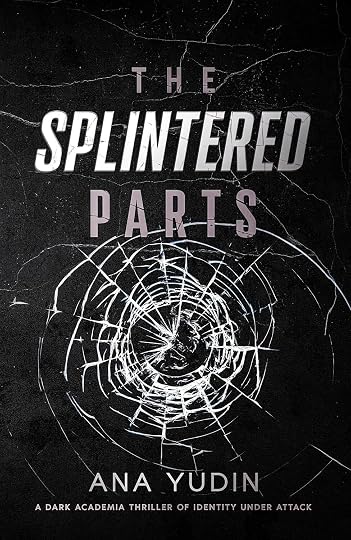
[Image: Book Cover]
Citation:
Yudin, A. (2026). The splintered parts: A dark academia thriller of identity under attack [eBook]. Ana Yudin. https://www.amazon.com/Splintered-Par...
Title: The Splintered Parts: A Dark Academia Thriller of Identity Under Attack
Author(s): Ana Yudin
Year: 2026
Genre: Fiction — Novel: Speculative Fiction, Thriller, Dark Academia
Page count: 315 pages
Date(s) read: 8/14/26–8/16/26
Book 165 in 2026
The Setup
Soraya is a doctoral student in a neuroscience program in the Southwestern desert. She has been experiencing disturbing perceptual disturbances since a head injury — flickering lights, sounds that shouldn't be there, a creeping sense that her reality is not entirely reliable. She is also, crucially, a writer who has chosen neuroscience as a more viable career path. The research she is pursuing — into consciousness, near-death experiences, and the relationship between brain states and subjective experience — is not purely academic. She is trying to understand what is happening to her.
The Philosophy of Consciousness
What I did not expect from a dark academia thriller was this level of genuine engagement with the philosophy of mind. The seminar scenes between Soraya, her fellow doctoral student Cyrus, and their supervisor Dr. Wu are the novel's intellectual heart. The debate between materialism and idealism is dramatized through characters who embody each position:
"Personally, I take a more materialist approach to the subject. An idealist like yourself might say that your ayahuasca trip showed you the world as it really is, but a materialist like me might say that the ayahuasca triggered a series of events in your brain that made you feel that way. That subjective experience is directly caused by neurons firing in the brain." (p. 76)
Dr. Wu is a materialist — and, as I am also a materialist, he is the character I found most interesting. But Yudin is careful not to make the idealist position a straw man. Soraya articulates the genuine problem with pure materialism with precision: "If the brain produces reality, then what produces the brain?" (p. 76). This is the hard problem of consciousness in one sentence, and it is the right question.
The novel also engages with quantum mechanics, the Pauli Effect, synchronicities, and microtubule theories of consciousness — the kind of territory that sits at the intersection of legitimate science and speculative philosophy. Soraya articulates my own position well: she is tired of having to choose a side between science and spirituality and finds that "neither party wanted to admit the blind spots of their philosophy" (p. 98). Dr. Wu's position, that the probability of a spiritual explanation is "nonzero" even if he personally rejects it, models exactly the kind of epistemological humility that distinguishes good science from scientism.
The Setting
The Southwestern desert is a genuine character in this novel. Yudin brings out its spookiness with precision: the dust, the silence, the sense of a landscape that is indifferent to human presence:
"This place was a wasteland; it might as well have been footage from Mars. Even the chirping of birds had stopped. As far as Soraya could tell, nothing lived here for miles and miles. No adobe villas, nothing. Just a vast, untouched horizon." (p. 288)
This reminded me of Gabrielle Walker's description of the McMurdo Dry Valleys in Antarctica — another landscape so hostile to life that it feels genuinely alien. Yudin also captures Las Vegas with characteristic honesty. Her afterword describes visiting the city and being "stunned by the artificiality and the malaise of the place" (p. 312) — and that malaise permeates the novel's early sections.
The Point of View Structure
The novel is formally self-aware in a way that rewards careful reading. An early creative writing seminar establishes the terminology and the stakes of point of view as a narrative tool:
"The narrator jumps from place to place. He can see what other characters are thinking and feeling, but that shouldn't be possible in third-person, limited," Soraya said." (p. 20)
This is not incidental setup. In Part 4, the narrative deliberately splinters — what has been a consistent third-person limited perspective fractures into first person and third person omniscient, giving us access to the inner lives of multiple characters simultaneously. The title announces this formally: the narrative itself becomes splintered at the moment the protagonist's sense of reality splinters. It is an effective structural choice and the kind of deliberate, purposeful point-of-view shift that the seminar scene teaches the reader to recognize and appreciate.
Dr. Wu and the Autobiography Beneath the Fiction
The character of Dr. Wu is the novel's most interesting supporting figure — a man who chose the practical career over the dream and has spent years resenting it. Soraya's perception of him is one of the book's sharpest moments:
"Underneath all this talk of scientific rigor and professionalism, there was a man who had forsaken his dreams to live out someone else's vision. Soraya recalled the excitement with which he had discussed astronomy. If he couldn't be a rocket scientist, then she couldn't be a writer, either." (p. 245)
This is where the novel's autobiographical dimension becomes most visible. Yudin herself began with ambitions to be a novelist, pursued a doctorate in clinical psychology as the practical path, found that being a therapist was not part of her identity, and has now devoted herself to writing, YouTube, and motherhood. She discusses this openly in her video "The truth about why I quit being a therapist" (June 2, 2025). Soraya's arc mirrors this exactly — the discovery that the identity one has constructed for practical reasons is not the identity one actually has.
As a full-time therapist and social worker who has no intention of leaving my profession, I find this theme personally interesting rather than personally resonant. I love my work. But I recognize the dynamic Yudin is describing, and it is rendered with genuine psychological honesty.
The Skinwalker and the Materialist
The novel incorporates the Navajo legend of the skinwalker — a being that can assume the appearance of another person — as a possible explanation for Soraya's experiences. I want to be honest about my position here: I am not open-minded to magic in any literal sense. If skinwalkers exist, they fall under the purview of science. There is no such thing as the supernatural in the strict sense: only things we do not yet understand.
But Yudin's novel is not arguing for a literal supernatural explanation. Cyrus puts the position I actually hold: "Just because something is spiritual doesn't mean it isn't also rooted in science" (p. 224). And Dr. Wu's eclipse speech captures the genuine wonder available to the committed materialist:
"The fact that Earth can host life is nothing short of a miracle... So, yes. I would call it pretty magical that we're here to begin with." (p. 256)
You do not need to believe in fairies to find the world extraordinary. This is the same argument Robin Wall Kimmerer makes in Braiding Sweetgrass and that Hannah Murray arrives at by the end of The Make-Believe : the real world is strange and beautiful enough without supernatural supplement.
The novel's Part 4 twist (which I will not describe in detail to avoid spoilers) provides a satisfying explanation for Soraya's experiences that is consistent with both the scientific and the folkloric threads. I found it effective.
Stoic Philosophy and Near-Death Experiences
The line "One apology was the right thing to do, but any more than that made a person look weak and submissive" (p. 252) caught my attention specifically because I have been reading Epictetus this year. Yudin has made YouTube videos about Stoicism — like me, she sees its practical value for mental health and therapy. The alignment is another point of connection between us as readers.
The near-death experience research that Soraya and Cyrus are conducting also connects to my own clinical work. I have worked with dozens of people who have overdosed on opioids and been revived with naloxone — people who came clinically close to death. The question of what, if anything, they experienced during that period is one that the novel takes seriously without pretending to answer.
Yudin as a Writer in Progress
I want to be honest that Yudin is still developing as a prose stylist. Her writing has improved significantly from The Curse in Their Veins to this novel, and the intellectual ambition of The Splintered Parts is genuinely impressive. Some passages are more polished than others, and the novel occasionally tells where it could show. But the ideas are strong, the formal structure is purposeful, and the autobiographical honesty gives the book an emotional grounding that her earlier work did not fully achieve.
I look forward to her next novel.
[Image: Book Cover]
Citation:
Yudin, A. (2026). The splintered parts: A dark academia thriller of identity under attack [eBook]. Ana Yudin. https://www.amazon.com/Splintered-Par...
Title: The Splintered Parts: A Dark Academia Thriller of Identity Under Attack
Author(s): Ana Yudin
Year: 2026
Genre: Fiction — Novel: Speculative Fiction, Thriller, Dark Academia
Page count: 315 pages
Date(s) read: 8/14/26–8/16/26
Book 165 in 2026

August 20, 2026
I received a copy of this book from the author in exchange for my honest opinion.
Psychological thrillers can be difficult to pull off because they ask readers to question everything they’re seeing without making the story feel unfair. The Splintered Parts does a nice job walking that line. From the opening chapters, there’s an unsettling feeling that something isn’t quite right, and while the book introduces plenty of possible explanations along the way, it never rushes to give the reader answers. Instead, it slowly builds an atmosphere of uncertainty where every strange event leaves you wondering whether Soraya is dealing with a mental health crisis, something neurological, something supernatural, or perhaps a combination of all three. I found myself constantly second-guessing what I thought was happening, which is exactly what I want from this type of story.
Soraya is an interesting main character because so much of her internal conflict exists outside of the mystery itself. She’s a neuroscience Ph.D. student researching consciousness and near-death experiences, but she’s also someone who can’t seem to shake the feeling that she’s living a life she didn’t entirely choose. Throughout the story, the tension between pursuing a practical career and pursuing something that genuinely fulfills her becomes just as compelling as the strange events surrounding her. I also appreciated that the scientific discussions never felt like they were there simply to sound impressive. They fit naturally with Soraya’s academic interests and gave the mystery a unique angle that separates this from many other psychological thrillers.
The relationships were another highlight for me. Soraya’s friendships, her complicated relationship with her family, and especially her interactions with her younger sister all add another layer to the story. There are moments where the family dynamics feel painfully realistic, particularly when expectations, comparisons, and career choices come into play. Even when I didn’t always agree with Soraya’s perspective, I understood why she reacted the way she did, which made her feel like a believable and flawed protagonist rather than someone who was simply easy to root for.
The atmosphere is probably what stayed with me the most after I finished reading. The Arizona desert, the hiking trails, the research lab, and Soraya’s apartment all gradually become places that feel just a little off, creating an almost dreamlike sense of unease. Yudin also does a good job weaving together psychology, folklore, neuroscience, and speculative ideas without losing sight of the emotional story underneath. By the end, I found myself thinking less about the mystery itself and more about the questions the novel raises regarding identity, purpose, and the different versions of ourselves that might exist because of the choices we’ve made throughout our lives.
Check out my full review here: https://likelystory.blog/2026/08/20/r...
Psychological thrillers can be difficult to pull off because they ask readers to question everything they’re seeing without making the story feel unfair. The Splintered Parts does a nice job walking that line. From the opening chapters, there’s an unsettling feeling that something isn’t quite right, and while the book introduces plenty of possible explanations along the way, it never rushes to give the reader answers. Instead, it slowly builds an atmosphere of uncertainty where every strange event leaves you wondering whether Soraya is dealing with a mental health crisis, something neurological, something supernatural, or perhaps a combination of all three. I found myself constantly second-guessing what I thought was happening, which is exactly what I want from this type of story.
Soraya is an interesting main character because so much of her internal conflict exists outside of the mystery itself. She’s a neuroscience Ph.D. student researching consciousness and near-death experiences, but she’s also someone who can’t seem to shake the feeling that she’s living a life she didn’t entirely choose. Throughout the story, the tension between pursuing a practical career and pursuing something that genuinely fulfills her becomes just as compelling as the strange events surrounding her. I also appreciated that the scientific discussions never felt like they were there simply to sound impressive. They fit naturally with Soraya’s academic interests and gave the mystery a unique angle that separates this from many other psychological thrillers.
The relationships were another highlight for me. Soraya’s friendships, her complicated relationship with her family, and especially her interactions with her younger sister all add another layer to the story. There are moments where the family dynamics feel painfully realistic, particularly when expectations, comparisons, and career choices come into play. Even when I didn’t always agree with Soraya’s perspective, I understood why she reacted the way she did, which made her feel like a believable and flawed protagonist rather than someone who was simply easy to root for.
The atmosphere is probably what stayed with me the most after I finished reading. The Arizona desert, the hiking trails, the research lab, and Soraya’s apartment all gradually become places that feel just a little off, creating an almost dreamlike sense of unease. Yudin also does a good job weaving together psychology, folklore, neuroscience, and speculative ideas without losing sight of the emotional story underneath. By the end, I found myself thinking less about the mystery itself and more about the questions the novel raises regarding identity, purpose, and the different versions of ourselves that might exist because of the choices we’ve made throughout our lives.
Check out my full review here: https://likelystory.blog/2026/08/20/r...

September 9, 2026
🆃🅷🅴 🆂🅿🅻🅸🅽🆃🅴🆁🅴🅳 🅿🅰🆁🆃🆂
< @authoranthonyavina >
ᴀᴠᴀɪʟᴀʙʟᴇ ɴᴏᴡ
4.5 star read
Soraya is supposed to be living her best life - she’s in college, experiencing those years that are supposed to be exciting and full of possibilities. But something she doesn’t quite understand is happening to her. She’s experiencing odd occurrences, hearing voices, and has this overwhelming feeling that something just isn’t right.
I loved this book! I was already expecting to love it based on the blurb alone, but actually reading it was a whole other experience. It has the horror and mystery elements I was looking for, but it also brings in a strong academic side - and I absolutely geek out over academic conversations in books like this. This author delivered!!
The author did such a great job portraying what it can feel like when something like this is happening to you. From the reactions of friends and family to navigating medical resources, everything felt all too real. When Soraya is left to try to figure out what’s happening to her on her own, you could really feel that isolation and confusion.
I especially loved the Native culture thread throughout the story and the way the author explored the pressures of family and following the path they want for you versus following your own heart. You could see Soraya’s internal battle with this, and I thought that aspect added so much depth to her character.
And as someone who recently started practicing meditation for astral projection, I found the out-of-body aspect of this book absolutely fascinating. Is it real or is it in our mind?
One of my favorite parts was the academic convos. The college courses and doctorate program discussions had my intellectual side completely geeking out. I loved how the book incorporated true stories and academic discussions while still maintaining an addictive plot. That combination is what really made this book for me.
I also loved that I genuinely had no idea where this story was going to end. The journey was fantastic, and I was completely along for the ride.
Overall, just a fun, fascinating, and addictive read that I fully enjoyed. It gave me horror, mystery, academia, and a plot that kept me guessing, and I was here for it all.
Memorable:
Don’t ever turn to Google when trying to figure out an ailment.
Yet I do it too, and it always confirms that yep, something is majorly wrong and I’m definitely dying.
< @authoranthonyavina >
ᴀᴠᴀɪʟᴀʙʟᴇ ɴᴏᴡ
4.5 star read
Soraya is supposed to be living her best life - she’s in college, experiencing those years that are supposed to be exciting and full of possibilities. But something she doesn’t quite understand is happening to her. She’s experiencing odd occurrences, hearing voices, and has this overwhelming feeling that something just isn’t right.
I loved this book! I was already expecting to love it based on the blurb alone, but actually reading it was a whole other experience. It has the horror and mystery elements I was looking for, but it also brings in a strong academic side - and I absolutely geek out over academic conversations in books like this. This author delivered!!
The author did such a great job portraying what it can feel like when something like this is happening to you. From the reactions of friends and family to navigating medical resources, everything felt all too real. When Soraya is left to try to figure out what’s happening to her on her own, you could really feel that isolation and confusion.
I especially loved the Native culture thread throughout the story and the way the author explored the pressures of family and following the path they want for you versus following your own heart. You could see Soraya’s internal battle with this, and I thought that aspect added so much depth to her character.
And as someone who recently started practicing meditation for astral projection, I found the out-of-body aspect of this book absolutely fascinating. Is it real or is it in our mind?
One of my favorite parts was the academic convos. The college courses and doctorate program discussions had my intellectual side completely geeking out. I loved how the book incorporated true stories and academic discussions while still maintaining an addictive plot. That combination is what really made this book for me.
I also loved that I genuinely had no idea where this story was going to end. The journey was fantastic, and I was completely along for the ride.
Overall, just a fun, fascinating, and addictive read that I fully enjoyed. It gave me horror, mystery, academia, and a plot that kept me guessing, and I was here for it all.
Memorable:
Don’t ever turn to Google when trying to figure out an ailment.
Yet I do it too, and it always confirms that yep, something is majorly wrong and I’m definitely dying.
August 15, 2026
i’m writing this review at 1am sleepy eyed after finishing the book in a day, so please forgive me if this isn’t the best written review!
that being said, i really enjoyed this book overall. i found this novel to be really intelligently executed, intellectual and unique. i really enjoyed the subject matter explored and wasn’t expecting to learn so much about quantum physics, astronomy, consciousness, schrödinger’s cat, wormholes, solar eclipses, psychedelics, and more. this will send me down many rabbit holes and i’m really appreciative to the author for this!
in many ways, it was like three books in one - non-fiction, fiction, as well as the author’s own autobiographical experiences used as inspiration. i think it takes skill to be able to balance these attributes in a novel in just the right amount of quantities, so well done on that!
the writing was clear, descriptive and the book felt fast-paced. the only trouble i had was wishing i could connect with the characters a bit more - perhaps a bit more of an exploration of their personalities - although i appreciate there’s only so much that can be accomplished in just over 300 pages!
i also think the author touches on a great broader theme overall that many of us can relate to - studying a subject that we may be mildly interested but ultimately choose for other reasons, while being forced to ignore our true passions in life if we don’t want to starve apparently.
overall, i’m really glad i read this book. it really does cover a broad range of topics that i think i’ll find myself thinking about long afterwards. it was also a very refreshing and modern take on dark academia!
that being said, i really enjoyed this book overall. i found this novel to be really intelligently executed, intellectual and unique. i really enjoyed the subject matter explored and wasn’t expecting to learn so much about quantum physics, astronomy, consciousness, schrödinger’s cat, wormholes, solar eclipses, psychedelics, and more. this will send me down many rabbit holes and i’m really appreciative to the author for this!
in many ways, it was like three books in one - non-fiction, fiction, as well as the author’s own autobiographical experiences used as inspiration. i think it takes skill to be able to balance these attributes in a novel in just the right amount of quantities, so well done on that!
the writing was clear, descriptive and the book felt fast-paced. the only trouble i had was wishing i could connect with the characters a bit more - perhaps a bit more of an exploration of their personalities - although i appreciate there’s only so much that can be accomplished in just over 300 pages!
i also think the author touches on a great broader theme overall that many of us can relate to - studying a subject that we may be mildly interested but ultimately choose for other reasons, while being forced to ignore our true passions in life if we don’t want to starve apparently.
overall, i’m really glad i read this book. it really does cover a broad range of topics that i think i’ll find myself thinking about long afterwards. it was also a very refreshing and modern take on dark academia!

August 14, 2026
*The Splintered Parts* by Ana Yudin is a 2026 psychological thriller about a neuroscience student whose reality begins to fracture after a head injury. I loved the concept of someone questioning whether her experiences have a neurological explanation or whether something is genuinely trying to take her identity. Unfortunately, I struggled with the execution.
Although the book is presented as adult dark academia, the writing and dialogue felt much more YA to me. The story rushes into Soraya’s accident before giving us enough time to care about her, then slows down considerably afterward. Too much attention is given to mundane details that neither develop the characters nor move the mystery forward, while some of the unusual word choices feel forced and interrupt the flow.
I eventually found myself skimming because I couldn’t connect with Soraya or become invested in what was happening. Even the later sections lacked the tension and emotional impact I expected from such a strong premise. This may work better for readers who enjoy quieter, YA-style speculative mysteries, but it simply wasn’t for me.
**Rating: 2/5 Stars**
**Author Note:** Thank you to Ana Yudin, Victory Editing NetGalley Co-op, and NetGalley for providing this book for review consideration. All opinions are my own.
Although the book is presented as adult dark academia, the writing and dialogue felt much more YA to me. The story rushes into Soraya’s accident before giving us enough time to care about her, then slows down considerably afterward. Too much attention is given to mundane details that neither develop the characters nor move the mystery forward, while some of the unusual word choices feel forced and interrupt the flow.
I eventually found myself skimming because I couldn’t connect with Soraya or become invested in what was happening. Even the later sections lacked the tension and emotional impact I expected from such a strong premise. This may work better for readers who enjoy quieter, YA-style speculative mysteries, but it simply wasn’t for me.
**Rating: 2/5 Stars**
**Author Note:** Thank you to Ana Yudin, Victory Editing NetGalley Co-op, and NetGalley for providing this book for review consideration. All opinions are my own.

August 15, 2026
THE REVIEW
This was a compelling, gripping psychological thriller that meets dark academia horror. The author crafted a powerful narrative that both entertained and challenged the reader with powerful concepts that were both psychological and metaphysical at the same time. The powerful imagery and descriptive writing the author poured into this book allow the reader to feel fully immersed in this mind-bending thriller.
The heart of this narrative really was in the character development. The protagonist's shocking discoveries and almost paranormal-like experiences were perfectly balanced with the complex family dynamics and relationships with friends and others. The way the author was able to infuse science, specifically neuroscience, as well as metaphysical philosophy and supernatural elements into concepts of spirituality and psychology, pushed the boundaries of these genres to new levels and kept readers on the edge of their seats.
THE VERDICT
Compelling, entertaining, and thrilling, Anna Yudin’s “The Splintered Parts” is a must-read psychological thriller that meets dark academia horror. The twists and turns of this narrative harmonize with the protagonist's personal, intimate development on their journey, and the lingering questions it leaves readers with will challenge and enthrall them as they explore what the ending truly means.
This was a compelling, gripping psychological thriller that meets dark academia horror. The author crafted a powerful narrative that both entertained and challenged the reader with powerful concepts that were both psychological and metaphysical at the same time. The powerful imagery and descriptive writing the author poured into this book allow the reader to feel fully immersed in this mind-bending thriller.
The heart of this narrative really was in the character development. The protagonist's shocking discoveries and almost paranormal-like experiences were perfectly balanced with the complex family dynamics and relationships with friends and others. The way the author was able to infuse science, specifically neuroscience, as well as metaphysical philosophy and supernatural elements into concepts of spirituality and psychology, pushed the boundaries of these genres to new levels and kept readers on the edge of their seats.
THE VERDICT
Compelling, entertaining, and thrilling, Anna Yudin’s “The Splintered Parts” is a must-read psychological thriller that meets dark academia horror. The twists and turns of this narrative harmonize with the protagonist's personal, intimate development on their journey, and the lingering questions it leaves readers with will challenge and enthrall them as they explore what the ending truly means.

October 5, 2026
A solid, cohesive, well-written, well-paced work, melding a great many of my favorite subjects--psychology, neuroscience, philosophy, creative writing, the transpersonal, the quantum realm, cultural anthropology and astronomy into one gripping page-turner.
As a psychodynamic psychotherapist, I have deep respect for Dr. Yudin, and have long-admired her thoughtful exegeses on YouTube. I was ever-so-delighted to find her eloquence carries over to the written word as well.
I tip my hat to you, wonder-filled word alchemist. May you continue to give birth to many more thought-provoking brainchildren to come! And thank you for sharing your gifts with this realm (and possibly some others)!
You serve as a beautiful inspiration in so many ways.
As a psychodynamic psychotherapist, I have deep respect for Dr. Yudin, and have long-admired her thoughtful exegeses on YouTube. I was ever-so-delighted to find her eloquence carries over to the written word as well.
I tip my hat to you, wonder-filled word alchemist. May you continue to give birth to many more thought-provoking brainchildren to come! And thank you for sharing your gifts with this realm (and possibly some others)!
You serve as a beautiful inspiration in so many ways.
August 19, 2026
I had the privilege of reading an ARC - it was such a fascinating, twisty-turvy, nail-biting, page-turner! I had all sorts of theories going, trying to figure out what was really going on. I especially loved the combination of physics and spirituality themes. The relationships Yudin spun felt very 3D and real, the conversations flowed well, and the narrative had just the right amount of lyrical prose without bogging down the fast-paced plot. I highly recommend this book to anyone wanting a mind-bending experience (in the best way possible).
September 19, 2026
A creepy thriller with themes of dissociation, neuroscience, astronomy, quantum physics and navajo folklore? I don't remember the last time I came across a book with all of those put together. And a shocking twist at the end too! This ride was incredible, it actually gave me nightmares one night! I'm not mad about it hehe.
August 17, 2026
This was definitely a page-turner! I did not see the plot twist coming, and it kept me guessing even after the twist was revealed. I also liked the descriptive writing, the neuroscience elements and Soraya's sassiness.
October 1, 2026
The Splintered Parts is a psychologically intense dark academia thriller that blends academic ambition with unsettling distortion and uncertainty. Ana Yudin builds a compelling atmosphere where reality feels increasingly unstable, creating a gripping and immersive reading experience.
August 24, 2026
I absolutely loved this book! I even finished it in one day. I was so excited for it to be released, and rightfully so. It exceeded my expectations by far. I was excited to read Ana’s characters bc of her incredible insight (PhD in Psychology) into the human psyche. I love the fact that I learned a lot a long the way as well. Excellent.
August 23, 2026
I've longed to read a book this thrilling for quite some time. The plot idea is very original and has a great fantasy-science ratio.
Best to read in the evening while listening to dark academia or western ambiance 📚
Best to read in the evening while listening to dark academia or western ambiance 📚

Review of advance copy received from NetGalley
Thank you for the ARC through Netgalley!
Driven by a series of disturbing events and parental pressure, Soraya abandons her love of writing to study neuroscience. Ever since she slipped in the shower and hit her head, a strange feeling of displacement has been creeping up on her. Through Soraya's eyes, the world feels hostile and heavy with tension.
Soraya is intensely observant and deeply cynical. She is constantly analysing and intellectualising, forming a protective barrier between herself and the world. Her interactions with others are calculated. Whether it’s sorority girls, classmates, or meditators, Soraya views people through a lens of superiority and suspicion. She uses her analytical mind to construct a façade in pursuit of her ambitions. Yet, beneath her armour, we see an anxious person perpetually grasping for control.
As a protagonist who relies so heavily on her intellect, she makes for a fascinating character to watch as she begins to question whether she can even trust her own mind.
I say "watch," because I often felt I was observing Soraya from a distance rather than experiencing events alongside her. Frequent filter verbs and explanations of her thought process create a pervasive sense of detachment. On the one hand, this narrative distance makes sense; Soraya is someone who keeps everyone at arm's length. On the other hand, I found myself craving prose that would make me feel more immersed in the experience.
The prose itself is descriptive and precise, which complements Soraya’s analytical mind. Settings and character actions are often described in granular detail. Conversely, Soraya’s symptoms, which are central to the story, are described rather vaguely. I was expecting to feel her experiences of derealisation and depersonalisation on a visceral level, but the descriptions instead focused on an absence, often defined by what they weren't. Things "felt off" or "not quite right."
What I enjoyed most was how each new character or concept encouraged me to view Soraya's problem from a new angle. The way the story blended neuroscience, physics, spirituality, and the supernatural was fantastic, especially since these concepts are broken down in such simple, memorable terms.
Where the story fell short for me was the overt explanations drawn for the reader. As the story progressed, I missed the initial excitement of piecing things together myself. I strongly believe that readers who have been paying attention won't need so much spelled out for them. (I'm trying to be vague here to avoid spoilers!)
Strangely enough, I keep thinking of this as a "fun" book. While it is dark and scary, it's also captivating and entertaining. There were plenty of moments that took me by surprise, as well as some moments that were incredibly creepy! If you are looking for a story full of twists and turns that will keep you on your toes, I think you will have a great time with this one!
Driven by a series of disturbing events and parental pressure, Soraya abandons her love of writing to study neuroscience. Ever since she slipped in the shower and hit her head, a strange feeling of displacement has been creeping up on her. Through Soraya's eyes, the world feels hostile and heavy with tension.
Soraya is intensely observant and deeply cynical. She is constantly analysing and intellectualising, forming a protective barrier between herself and the world. Her interactions with others are calculated. Whether it’s sorority girls, classmates, or meditators, Soraya views people through a lens of superiority and suspicion. She uses her analytical mind to construct a façade in pursuit of her ambitions. Yet, beneath her armour, we see an anxious person perpetually grasping for control.
As a protagonist who relies so heavily on her intellect, she makes for a fascinating character to watch as she begins to question whether she can even trust her own mind.
I say "watch," because I often felt I was observing Soraya from a distance rather than experiencing events alongside her. Frequent filter verbs and explanations of her thought process create a pervasive sense of detachment. On the one hand, this narrative distance makes sense; Soraya is someone who keeps everyone at arm's length. On the other hand, I found myself craving prose that would make me feel more immersed in the experience.
The prose itself is descriptive and precise, which complements Soraya’s analytical mind. Settings and character actions are often described in granular detail. Conversely, Soraya’s symptoms, which are central to the story, are described rather vaguely. I was expecting to feel her experiences of derealisation and depersonalisation on a visceral level, but the descriptions instead focused on an absence, often defined by what they weren't. Things "felt off" or "not quite right."
What I enjoyed most was how each new character or concept encouraged me to view Soraya's problem from a new angle. The way the story blended neuroscience, physics, spirituality, and the supernatural was fantastic, especially since these concepts are broken down in such simple, memorable terms.
Where the story fell short for me was the overt explanations drawn for the reader. As the story progressed, I missed the initial excitement of piecing things together myself. I strongly believe that readers who have been paying attention won't need so much spelled out for them. (I'm trying to be vague here to avoid spoilers!)
Strangely enough, I keep thinking of this as a "fun" book. While it is dark and scary, it's also captivating and entertaining. There were plenty of moments that took me by surprise, as well as some moments that were incredibly creepy! If you are looking for a story full of twists and turns that will keep you on your toes, I think you will have a great time with this one!
Displaying 1 - 14 of 14 reviews