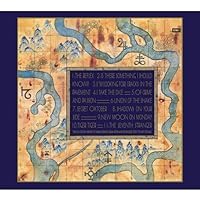
In his long anticipated poetic memoir, internationally acclaimed author and poet David Kherdian continues his poetic reflections, focusing on the city of his youth, Racine, Wisconsin during the 1930 s and 40 s. The poems and prose explore the bittersweet childhood and adolescence of the author at a time when the second generation of Armenian-Americans experienced not only the Depression and the war years, but also the anguish of dual identity, deracination, and discrimination. It was a stressful and confusing era, especially for children and adolescents who had little guidance and no social scientist to verbalize their plight. Meanwhile their impoverished parents, mostly peasants from the old country, were going through the trauma of genocide memories and survival in a strange land.
Kherdian portrays the various layers of these stresses in pain and in joy, compassion and understanding. Kherdian succeeds at a very difficult he has "forgiven" his childhood. His old friends are all here and remembered with tenderness. Eggs Krikorian, Dominic Galati, Chuck (Horse) Kamakian, Nancy Jacobsen, Gob Kaiserlian, fishing ace Joe Perch, Dafje Vartan, Ray Rodriguez, Lotch Oglanian.
The vibrant mosaic of Racine is also the rag man calling from his horse-drawn wagon, bridges, trains, Lake Michigan, Garfield [elementary] School, the Boranian Grocery Store on State Street, driving to a picnic in his uncle's Model- A Ford, the Root River which separated and joined the various communities, St. Mesrob Armenian Church, downtown's Monument Square, Rex, Rialto, and Venetian theatres, and the Armenian sourjarran (coffee house). They all come alive as Kherdian rolls back the years gently into his sometimes gray, sometimes luminescent boyhood.
The poems and prose of Root River Return spring from an ancient tradition and bear its stain. The poems are filtered through Kherdian s sensibilities that are uniquely Armenian, but welded to an American tongue, and the solid background of his Midwestern beginnings. Kherdian addresses his life through these poems, digging beneath the events of each experience, pushing them into the light, and revealing their meanings.
I am a relative latecomer to David Kherdian’s poetry and prose, having read his "Seeds of Light" only about a year ago. But this was not my first encounter with this author’s work as I had previously read his book "On a Spaceship with Beelzebub", Kherdian’s personal account of his spiritual journey (Beelzebub is a mythological angel working his way back to God).
I discovered Kherdian’s poetry by way of the recommendation of a good friend who saw him read at a humanities conference in my area. I was ill and missed the reading, but I asked my friend what her impressions of his reading were, and she compared him to Keats. So in spite of my not being a huge poetry or prose enthusiast, I decided to read his book Seeds of Light, followed by more of his titles. I quickly surmised that Kherdian is a master of the poem. Truthfully, I haven’t enjoyed poetry so much since I read the Beat poets in high school, and William Carlos Williams in college.
However, Kherdian doesn’t fit into any school or movement, perhaps one reason his poetry is lesser known than his bestseller "The Road From Home" (I haven’t failed to notice how many reviews there are on Goodreads of that book!). The Road From Home is an account of his mother’s experiences during the Armenian Genocide.
Kherdian simply writes from personal experience. He does not follow any style or any crowd in spite of the fact that he was active in the San Francisco scene in the sixties, was mentored by William Saroyan, and is a contemporary of Ginsberg and Brautigan. It is hard to compare him to anybody, really – although perhaps, with his new book, there are comparisons to be made with Steinbeck, who also immortalized a region of the country. Of course Steinbeck did it by way of the novel, not memoir, prose and poetry, which is what one finds in Root River Return.
I read "Root River Return" in part because I was curious about how Kherdian portrayed his early experience, the journey from childhood through adolescence. To that end, I picked up this work and read it cover to cover in one night, which I rarely do unless a book really, really grabs me.
The book is set in Racine, Wisconsin, the Midwest during the 1930’s and 40’s. The poignant story of his early life and impressions are presented through prose and poetry in a dynamic way that I have never seen elsewhere. The book feels more like a piece of music than a book of vignettes, very much as an album of songs is to be seen as a whole, rather than as unrelated single tracks. Like an entire album, Root River Return is a journey with many moods, and many emotions, and the lives of the people he writes about are fascinating, the characters colorful, universal, archetypal.
His poems and prose have a distinct universality, that could have been set anywhere, and in any era. The sincerity of his writing unearthed long buried memories in my own early life, which occurred in a totally different setting and generation. Yet, although universal, he simultaneously immortalizes, perhaps paradoxically, a small Midwestern city, its people of that era, and particularly the river, which I took as a metaphor for something very deep in our subconscious, possibly only describable in what I concluded is Kherdian’s finest element: poetry.
In one of the most remarkable poems in Root River Return, Kherdian writes about his sixth grade teacher. She was someone he overtly undervalued at the time when children undervalue so much, but internally he valued her deeply, seemingly an unconscious valuation which came to him much later, and encompassed her kindness, her generosity, her wisdom. The poem is so perfectly constructed and executed that it hit me emotionally, right in the chest. The pacing is extraordinary, because at first I expected it to be a vignette, but it took a sudden turn and I was shocked by the missed opportunity at the end, a moment in life when one fails to embrace the possibilities of the moment. Kherdian is probably the most sincere writer I have encountered in many years, who aims to tell about life as it is, not as we want, ordinarily, to see it, in illusions, and thus it becomes a completely refreshing contrast to most of the current book releases in this day and age.