Jump to ratings and reviews
Rate this book

A Brief History of the Samurai

Rate this book
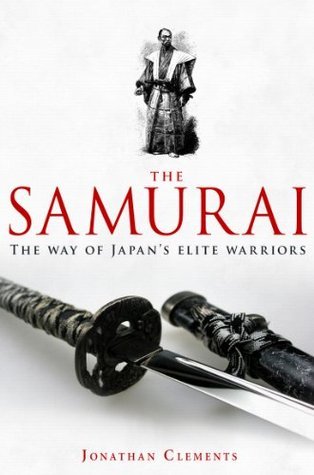
'Clements has a knack for writing suspenseful sure-footed conflict His recounting of the Korean invasion led by samurai and daimyo Toyotomi Hideyoshi reads like a thriller. If you're looking for a samurai primer, Clements' guide will keep you on the hook' Japan Times, reviewed as part of an Essential Reading for Japanophiles series From a leading expert in Japanese history, this is one of the first full histories of the art and culture of the Samurai warrior. The Samurai emerged as a warrior caste in Medieval Japan and would have a powerful influence on the history and culture of the country from the next 500 years. Clements also looks at the Samurai wars that tore Japan apart in the 17th and 18th centuries and how the caste was finally demolished in the advent of the mechanized world.

335 pages, Kindle Edition

First published March 1, 2010

177 people are currently reading
1761 people want to read

About the author

Jonathan Clements

153 books124 followers
Jonathan Clements is an author, translator, biographer and scriptwriter. His non-fiction works include biographies of Confucius, Marco Polo, Mao Zedong, Koxinga and Qin Shihuangdi. He also writes for NEO magazine and is the co-author of encyclopedias of anime and Japanese television dramas.

Ratings & Reviews

What do you think?
Rate this book

Friends & Following

Create a free account to discover what your friends think of this book!

Community Reviews

5 stars
232 (18%)
4 stars
525 (41%)
3 stars
416 (33%)
2 stars
58 (4%)
1 star
20 (1%)
Displaying 1 - 30 of 130 reviews
Profile Image for Tristan.
112 reviews253 followers
August 26, 2017
In telling the story of Japan, one is in fact telling the story of its samurai..

description
Print picturing a battle during the Boshin War (1868-1869)

Jonathan Clement’s entry in the “Brief History..” series delivers precisely what it says on the tin: a concise, for the layman not overly elaborate survey of the 700 (!) year-long de facto reign of the samurai, Japan’s illustrious elite warrior class.

Within these boundaries, the author executes his gargantuan task exceedingly well, as he covers the major events of the island’s tumultuous history, yet without losing sight of the personal lives affected by them. As such, it is an ideal stepping stone to more detailed - perhaps more engrossing – works operating in a smaller timeframe or touching on one specific aspect, which the author thoughtfully makes ample reference to.

Quite the sobering read though, especially if popular culture has somehow instilled in you romantic notions of the “way of the samurai”. With even a cursory reading, such a naive view is quickly laid to rest. Small, isolated acts of moving kindness and ethical integrity are drowned out by a suffocating deluge of acts of petty envy, cowardly betrayal, pointless tribalism, cold-blooded murder and indiscriminate mass slaughter of women and children.

Severely flawed and ever corruptible human beings these samurai were, but fascinating folk nonetheless.
Profile Image for Elizabeta.
155 reviews42 followers
July 14, 2016
It felt like a looong history. I really had a hard time at first just remembering those names. I had to do additional internet research to help me remember them. But it was very informative, especially for little ol' me, who doesn't know squat about samurai's and Japan's history.
Profile Image for Olethros.
2,724 reviews534 followers
August 18, 2014
-Más de diferentes momentos de la historia del Japón en el que vivieron y al que afectaron profundamente que de ellos propiamente dichos.-

Género. Ensayo.

Lo que nos cuenta. Repaso del Japón samurái, desde los oscuros orígenes de los icónicos guerreros hasta la visión de la cultura contemporánea sobre los mismos, pasando por la historia del propio Japón desde la óptica de la influencia de su figura, concepto y actividad.

¿Quiere saber más de este libro, sin spoilers? Visite:

http://librosdeolethros.blogspot.com/...
Profile Image for Ricardo de Brito.
3 reviews1 follower
March 7, 2012
People in general recognize samurai lore as a series of epic happenings and the figure of the samurai as a romantic warrior. That was also my case. When I finished the book, I was very thankful for the greater knowledge I ended up having of the class, but also a bit sad when I realized I had lost the transcendental idea that samurais were noble men that followed, for the most part, the "bushido" code, the way of the sword.

Jonathan Clements write it swiftly and in a comprehensible manner, even with subjects that are difficult to assimilate by westerns. As the story is too long, you finish the book with the feeling that it was kinda rushed off, but one shouldn't blame the author on that; he did the best he could with the restrictions he had to deal with.

In the end I found a very pleasurable reading and as a fan of samurais myself, much glad with everything I learned, which spans through all Japan's history. As I mentioned before, it's possible that the reader's lose some of the idea of romanticism and code of honor to the samurai - Clements always try to put up some real facts, and reality can be grim, mostly for people who had war as a way of life - but nonetheless will finish the book enlightened and perhaps admiring the samurai and its history not only because of pre-conceived ideas of romantic lore but as true men that didn't fear to change history and helped molded Japan into what it is known today.
689 reviews9 followers
June 15, 2021
This book was to me a sort of Japanese version of the Silmarilion. A lot of faceless names battling each other in lands you've either never heard of or that don't exist (don't exist anymore because the names were changed). Which in hindsight I suppose is a good summary of the very complex, chaotic and leaderless history of the Samurai. There were some interesting and insightful gems of the samurai scattered throughout the book but not enough to keep me excited or fully interested. (some examples of this were the samurai bows, seppuko, the failure of crossbows and the success of muskets, and the armor variations)
I would only recommend this book to someone who was extremely interested in the specific samurai history.
Profile Image for Checkman.
606 reviews75 followers
July 20, 2015
A solid general survery of the history of the Samurai class in Japan. As is typical of books like this it doesn't go into great depth on any aspect be it political, military, or social history. That isn't a bad thing since not everyone wants to read an eight hundred page tome on the history of the Ashikaga Shogunate. Mr. Clements understands what this series is about (A Brief History of.........) and writes within the parameters. It's much like what one would find in a 100 or 200 level history class at university. Covers a little bit of everything but not to such an extant as to put the reader to sleep. For those who are looking for a more in-depth look at Samurai weapons, training and tactics I suggest Secrets of the Samurai: The Martial Arts of Feudal Japan by Oscar Ratti as a good starting point. Also pretty much anything by Stephen Turnbull will satisfy any curiosity one might have about the nuts and bolts of the Samurai lifestyle and ways of waging war. But if you want to know something about the Samurai, but not at the microscopic level Mr. Clements book is a good one to go with.
Profile Image for Daan Bultje.
150 reviews2 followers
November 10, 2021
Een uitgebreide beschrijving van 7 eeuwen samoerai in Japan en de invloed die dit blijvend gehad heeft op de samenleving. Ik raakte op het gegeven moment wel de draad kwijt met alle clans, shogun en veldslagen, maar goed. Het inspireerde wel weer om Ghost of Tsushima te spelen op de PlayStation
Profile Image for Anna Renee.
102 reviews11 followers
May 21, 2019
My first encounters with the concept of the Samurai was watching Kurosawa's Ran with my parents when I was about 9. At that age, the film was fascinating but too complex for me and I was left with two basic ideas: the Samurai were a fearsome force and, they fought a lot. As the years passed, I knew little about them except through the popular culture representations of the iconic armour and the honour code. Then about 8 years ago, I attended the Ako Gishisai at Sengakuji Temple. My Japanese then went as far as greetings then and my knowledge of Japanese culture dismal. But thankfully, a small museum offered some English explanations. It was the dramatic story of the 47 Ronin and the solemn rites that I observed at Sengakuji that finally impressed upon me that the Samurai were so integral to Japan. I was a tad intrigued. But it wasn't until a trip this March to the Samurai Museum in Tokyo that made me genuinely curious about the Samurai. Listening to the tour guide, I had a sense that there was so much more to the story. So, it was with this background that I started reading this introductory historical account of the Samurai that spanned from the rise of the first Samurai, through the many years of evolution till the end of the Samurai era and then to the influence of the Samurai on more modern times.

My earliest concepts of the Samurai were that they were fearsome and fought a lot were definitely confirmed by Clements presentation of the many battles that were fought fiercely by and among the Samurai. My later ideas of their armour and the honour code however, suffered some what. I am left with a sadness that a code (or should I say codes? there were so many changes) of honour when abused by self-serving or misguided men are not quite so honourable. The part of me that wants to stay in awe of the formidable spirit of the Samurai wants to discard this discomfort and simply accept that all Samurai were honourable but at the end of the day, there were after all humans. Stronger than most, but humans all the same with our human faults and vanities.

I feel equally illuminated and confused by the facts in the book. Clements' facts certainly gave me clearer ideas of the messiness of the Samurai jidai but exactly because it was messy, I also feel somewhat overwhelmed. This uncomfortable state though serves only to make me even more curious and though less mesmerized, even more fascinated by this elite warrior class. Many times, Clements alludes to contradictory accounts of events and presentations of the many battles that were crafted intentionally to influence. At the point of completing this book, I am bracing myself for an onslaught of more reading about the samurai to come. In the words of Tokugawa Ieyasu, "At the moment of victory, tighten the straps of your helmet."
Profile Image for Tony.
4 reviews
July 2, 2014
An excellent, highly accessible, and relatively brief introduction to the warriors of medieval and early modern Japan, hitting all the key highlights, from the emergence of the warriors and their distinctive codes, to how they came to dominate the Emperors they nominally served, through the Sengoku Jidai and the Tokugawa Shogunate, to the Meiji Restoration, Satsuma Rebellion and their legacy in modern times. Keeping track of all the different clans and characters can be tricky at times, but that's just the nature of the beast! Includes an interesting final chapter on how samurai have been portrayed and re-interpreted over the generations, right up to the present day, and reflects objectively both the positive and negative aspects of this group of people who dominated Japanese society for 700 years.
Profile Image for Filip.
499 reviews55 followers
August 3, 2018
What an excellent novel for a layman who knows little to nothing about Japanese history! 'A Brief History of the Samurai' presents historical fact and folktale alike, contrasting real events with incredible legends!
This is thoroughly researched, and has an excellent 'Sources and Recommended Reading' section, which will aid my reading on the topic of Japanese history a great deal.
Five stars, and my hearty recommendation to anyone who's interested in Japanese history but uncertain where to start.
Profile Image for Matina.
36 reviews
February 13, 2021
FINISHED: FEB 13, 2021

"The way of the samurai is death." - Yamamoto Tsunetomo

Before reading this book, I would have thought that to be an exaggeration. In fact, it's a blunt reminder of the inherently warlike nature of the samurai.

I'm impressed by the balanced way in which Clements managed to retell dramatic tales of battle, while acknowledging and remaining critical of the socio-political and economic realities of an often-mythicized period. The writing was clear and factual but not without a healthy appreciation for irony (something that the study of history seems to demand). This book does a great job of deglamorizing samurai culture, and distinguishing between fact, fiction, and speculation across time without losing its main narrative. The assessments of each event were careful and fair, and took into account crucial factors, while still achieving the difficult task of remaining within the bounds of discussion.

Whenever I approach the end of a book I enjoy, I have this small desire to go back to the beginning and do it all over again. I also just wanna go back to refine my memory of key names and events, because there were so many and I did get lost at times.

The result of reading this book is that I learned much more than I hoped to about samurai culture and Japanese history, and have a greater appreciation for history in general, and the never-ending conversation and reevaluation that it requires. And this was just the tip of the iceberg. I like that very much; it keeps me curious.

This was a stimulating book and I recommend it! I thought the writing was pretty clever. See below:
"As the Tokugawa Era wore on, the strains on the samurai class became more obvious. Among the most unfortunate, there was a difficult choice - of clinging to a class status that they could not afford, or recognizing that they had dropped out of a social bracket that had been won for them at the point of a sword by their ancestors."
Profile Image for Sammy.
1,913 reviews18 followers
September 3, 2021
Interesting, but I think audio may not be the best way of taking this in. It's crying out for photographic examples of some of the things described in the book, such as weapons and armour for example.

But there are definitely a few memorable sections. Such as finding out why disembowelment is the preferred method of committing ritual suicide (seppuku)...

This is one to read if you're looking for an informative account of the history of the Samurai. If you're looking for something exciting and action-packed, go watch Seven Samurai instead ;)
Profile Image for Denise.
7,492 reviews136 followers
September 7, 2022
Well-researched, interesting and accessible survey of the samurai class and many of its wellknown figures. Covering centuries of history in a fairly short book, depth is of course at times lacking. The narrator's Japanese pronunciation in the audio version is rather atrocious.
Profile Image for Klaas Bottelier.
204 reviews77 followers
December 11, 2025
An interesting read about the history of the Samurai, I liked this better than Clements general history of Japan, because the focus is better. It highlights some of the amazing Samurai warriors and warlords, and some of the key moments that shaped the history of Japan.
Profile Image for Cat.
48 reviews
October 12, 2022
Difficult to rate as it isnt fiction - it was interesting
Profile Image for F.R..
Author 37 books221 followers
November 27, 2025
A thousand years of history crammed into 300 (plus change) entertaining and informative pages.

Like all good overviews, makes me want to delve more in depth into the subject.
Profile Image for Steven "Steve".
Author 4 books6 followers
September 6, 2025
An interesting if somewhat odd history. Given that much of the history of the Samurai is actually based on fictional works of the time or “histories” written for different purposes, this book is more a collection of stories concerning people whose historical accuracy is not always certain. To be sure, the later and more current writing tend to be factual, but when the sources cited for the earlier periods are more in the vein of tales than anything else, it is difficult to be certain just how much we actually know about the factual samurai of history. Despite that, this book summarizes the facts as best as it possible and delivers a coherent history while acknowledging that much of what we know about Bushido might be a more recent and often fictional development than a historical accuracy. But at least, as the book points out, we have more factual information than has ever existed for the Ninja.
Profile Image for Cav.
907 reviews205 followers
May 16, 2021
"The way of the samurai is death."
-
Yamamoto Tsunetomo

“At the moment of victory, tighten the straps of your helmet.”
Tokugawa Ieyasu

A Brief History of the Samurai was an interesting look into the subject.

Author Jonathan Michael Clements is a British author and scriptwriter. His non-fiction works include biographies of Confucius, Koxinga and Qin Shi Huangdi (the First Emperor of China), as well as monthly opinion columns for Neo magazine. He is also the co-author of encyclopedias of anime and Japanese television dramas.

Jonathan Clements:
Jonathan-Clements-Author-Profile-Pic

A Brief History of the Samurai gets off to a good start, with a well-written intro.
Unfortunately, I found much of the body of the rest of the book to be a bit dry. Possibly a subjective thing - I found it somewhat difficult to frame these historic figures into a cohesive narrative, and establish context to the story told here. Clements introduces many historic prominent Japanese figures, in a format that will possibly leave some readers lost in the woods...

A historic picture of two Samurai:
samurai

Clements unfolds this story in a chronological manner, also including a big-picture history of Japan along the way. He briefly covers Kublai Khan's failed Mongol invasions of Japan, and the creation of the kamikaze or "divine wind" myth.

The introduction of firearms to Japan is mentioned:
"Foreign traders in the south of Japan had introduced the Japanese to the concept of the matchlock gun, and the new weapon had swiftly caught on. The samurai were not unfamiliar with gunpowder – they had, after all, suffered dearly from its use in the Mongol invasion – but the concept of a portable, light arquebus that could be carried by a single soldier was new to them. The first guns had arrived in the early 1540s on the island of Tanegashima, a remote outpost just off the southwest coast of Japan. There, Portuguese sailors had demonstrated their arquebuses to the enraptured local warlord, who ordered his master swordsmith to make as many copies as he could. The swordsmith was initially stumped by the technology required, but after legendarily selling his daughter to another set of Portuguese traders in exchange for further lessons, he was soon churning out reasonable facsimiles of the Portuguese guns. The Japanese began calling the weapons tanegashima, after the place of their ‘discovery’.
As are the many internal wars between clans that took place after Kublai Khan's failed Mongol invasion:
"There are two keywords for the Country at War period. One is daimyō, literally ‘great names’ – the new breed of local lords, each supreme in his own domain, constantly jockeying for position. The other is gekokujō, ‘the low dominating the high’ – a reference by many disinherited members of the old order to the rapid, brutal social mobility of the time. Japan entered one of its periodic purges of noble houses: once-great names sank with the declining fortunes of their families, and entire clans were wiped out. The emperor, of course, was powerless to intervene, and the Shōgun unable to fulfil the conditions of his title. The country would not stabilize again until a single individual could gather together the fragmented clans and domains and unite them all, thereby allowing for the proclamation of a new Shōgunate. The rise of such an individual would take a century, as the small clans fought and merged to form bigger clans, until eventually all Japan was split into only a handful of rival factions, fighting to determine who was the true ruler..."

The book also mentions the proliferation of Christianity in Japan:
"Guns were not the only thing that had arrived from the West. First the Portuguese, then the Spanish and then the Italians sent Christian missionaries, determined to spread the Bible to the Japanese. Exotic and alien, Christian belief achieved virulent proportions in Japan, with such large number of converts that Japan effectively became the largest non-European diocese in the world by the end of the sixteenth century.
The rise and fall of the missionaries during the period 1549–1650 is often known as ‘Japan’s Christian Century’, a problematic term.1 In the south-west, in particular on the island of Kyūshū, there was a strong upwelling of interest, particularly after missionary orders stopped targeting the poor, sick and needy, and adopted the Buddhists’ strategy of preaching to the upper classes, in the hope that their subjects would follow their lead. This led to a couple of generations of Japanese nobility with Christian names, as converts adopted baptismal names from the distant West – among others, we see a Dario Sō in the ruling clan of Tsushima, a lord André of Arima, and the zealous lord Bartholomew of Ōmura, who briefly granted Jesuit missionaries authority over the harbour town of Nagasaki."

A Brief History of the Samurai also details a baffling amount of head-chopping. Apparently, the samurai were encouraged to keep their enemies' heads after battle, and they were often mounted at the end of spears and paraded around. Beheading was also a common practice during seppuku. The most common form of seppuku for men was composed of the cutting of the abdomen, and when the samurai was finished, he stretched out his neck for an assistant to sever his spinal cord. It was the assistant's job to decapitate the samurai in one swing, otherwise it would bring great shame to the assistant and his family.[1]

Some of the other historical events and themes central to Japan covered here by Clements include:
* Japanese invasions of Korea (1592–1598)
* Bushido code; including Nitobe Inazō's book Bushido: The Soul of Japan
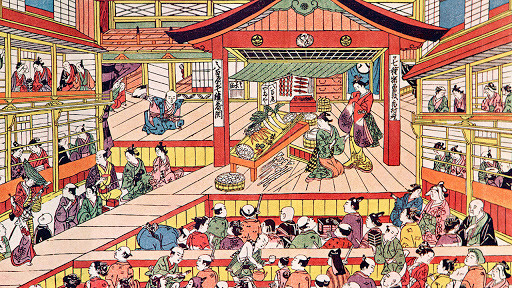
* Kabuki theatre
* The Tokugawa period
* The legends and myths of the Muramasa blade; in lore and popular culture from the 18th century, the swords have been regarded as yōtō (妖刀, "cursed katana")
* The arrival of Commodore Matthew Calbraith Perry (1794–1858) of the US Navy, who was under clear instructions to put an end to Japan’s selfimposed isolation for the benefit of American traders and whalers in the area.
* Modern post-WW2 Japan; Emporer Hirohito's famous speeches, Ninjas in popular culture.
* The enduring cultural legacy of the Samurai; Akira Kurosawa's Seven Samurai and Yoshikawa Eiji’s book Musashi are briefly mentioned.


Muramasa katana known as ''Yoto Muramasa.'' Bizen Osafune Museum:
55635121-373608506567856-931026335701139456-n

Kabuki Theatre in Japan:
kabuki

Clements closes the book with this quote, speaking on the legacy of the samurai:
"...A warrior elite does not dominate a state for 700 years without leaving a long shadow, for good or ill. However, we should not be surprised if we are unable to precisely classify the nature of the samurai, since even the Japanese have never been able to agree among themselves about the true nature of Bushidō. The ‘way of the samurai’, whatever it may be, is an integral component of the soul of Japan. Nothing happens in modern Japan that is not in imitation of it, or reaction to it. Loyalty or opposition to the way of the samurai takes as many forms as there were sides in the Meiji Restoration, but it is always there, like the Emperor himself, ancient, unknowable and enduring..."

***************

A Brief History of the Samurai was an interesting read. Although I did enjoy the book, I found the writing a bit dry at times...
It also would have been nice if the book included pictures. The ones included in this review were found online, not in the book itself.
3.5 stars.
Profile Image for Paul.
988 reviews17 followers
November 23, 2022
An interesting take on the Samurai and definitely educational. Though much of the read was akin to a struggling walk through dense undergrowth.
Profile Image for Hilmi Isa.
378 reviews29 followers
September 25, 2015
Samurai. Nama ini sinonim dengan negara Jepun. Terbayang di dalam kotak pemikiran kita imej seorang pahlawan yang bersenjatakan senjata ikoniknya,katana,iaitu pedang jenis sabre atau berlengkung. Walaupun kita sudah berada di dalam abad ke-21,pahlawan silam ini masih meninggalkan legasi dan pengaruhnya yang tersendiri. Malah,bukan bangsa Jepun sahaja yang mengaguminya. Orang lain yang bukan berbangsa Jepun juga sebegitu. Imej seorang samurai yang bersifat mistik dan eksotik ternyata berjaya menarik perhatian sesiapa jua,terutamanya kepada para peminat dunia samurai. Sebuah novel Melayu,hasil karya Ramlee Awang Murshid,yang bertajuk Hatiku di Harajuku,menjadikan samurai sebagai tema utama penceritaan.

Penulis buku ini,Jonathan Clements,berjaya menyampaikan isi ceritanya dengan baik dan mudah difahami. Isi penceritaannya juga agak ringkas tetapi padat. Di dalam buku yang mengandungi 11 bab ini,penulis membentangkan sejarah mengenai sejarah samurai secara kronologi.

Di dalam bab-bab awal,penulis mendedahkan bagaimana Perang 38 Tahun (774 - 812 Masihi) menentang puak Emishi di utara Honshu memberikan pengaruh besar di dalam budaya perang samurai. Ini termasuk pengenalan kepada pedang berlengkung yang digunakan oleh puak gasar Emishi ini yang akhirnya akan diadaptasi oleh orang Jepun sendiri sebagai katana selepas beberapa generasi. Di dalam bab-bab seterusnya,Clements membincangkan bagaimana suku-suku puak samurai saling berebut kuasa melalui konflik dan peperangan untuk menjadi shogun dan menjadi pemerintah de facto Jepun dengan menggunakan nama Maharaja Jepun. Shogun Tokugawa merupakan salah satu dinasti shogun yang paling berpengaruh di Jepun dari tahun 1603 - 1868. Tokugawa juga merupakan shogun terakhir yang memerintah Jepun dan membawa kepada Meiji Restoration atau Pemulihan Meiji yang menyaksikan Jepun mengalami fasa pemodenan yang pesat. Tetapi,malangnya,ini juga menandakan tamatnya zaman atau era samurai itu sendiri.

Sesungguhnya,membaca buku ini banyak memberikan saya maklumat-maklumat yang selama ini saya tidak ketahui,terutamanya yang berkaitan dengan samurai dan sejarah Jepun. Tahukah anda bahawa tentera Jepun yang berada di bawah kawalan suku puak samurai yang berpengaruh menggunakan senapang lantak sebagai salah satu senjata utama mereka? Tentera pejalan kaki yang dikenali sebagai ashigaru menggunakan senjata api yang dikenali sebagai tanegashima. Senjata ini digunakan secara berkesan dan menjadi salah satu faktor utama kejayaan tentera Jepun mengalahkan tentera Korea di dalam Kempen Penaklukan Korea pada tahun 1592 sehingga 1598.
Profile Image for kelly.
211 reviews7 followers
Read
August 22, 2023
an excellent introduction to the samurai class of feudal japan that immensely benefits from clements's focus on how external socio-political forces shaped the samurai class, as well as its values and tactics. rather than falling into the trap of romanticising samurai (like in inazō nitobe's retrospectively written bushido: the soul of japan, wherein its teachings are unfortunately taken as historical fact at times) and thereby perpetuating japanese exceptionalism, clements's explores how geo-political conflicts, militarism, nationalism and the hatred of outsiders have shaped the violent samurai class. clements clears an important misconception that associates the samurai with honour, stating that they mostly fought to gain "access to the luxuries and power of the privileged few."

the history here is admittedly brief, as the title suggests, but still manages to cover many significant events, such as: the genpei war, kenmu restoration, sengoku period and a brief bit on the bakumatsu period. key battles are mentioned but i would have loved more insight into them: like the battle of nagashino (kagemusha (1980) fans will understand), dannoura and of course, sekigahara. but the focus on external geopolitics is the strongest part of the book and the sections i found to be the most fascinating detailed hideyoshi toyotomi's "[delusional and doomed]" attempt at conquering china through korea (apparently he had plans to invade india next) and the section covering the persecution of christianity under the tokugawa shogunate (which was absolutely brutal, demonstrating the worst of the rampant xenophobia fostered within a largely isolated country but was still, ultimately, a defence against western colonialism).

this review is very rambly and needs to be edited for clarity but! there's lots of fascinating stuff here. recommended for anyone interested in a historical overview of feudal japan that does not romanticise the past.
3 reviews
February 3, 2024
Overall, this is a good overview of samurai history. A very good introduction for a general audience, I especially liked the fist half of the book, but the second has some issues. I am, however, a Japanese Studies graduate who majored specifically in samurai history, martial arts, warfare and Bushido (and currently writing a thesis on samurai weapons), so allow me to offer my criticisms (it will be a long list...).

Really positive things about the book: it provides a nice overview on the samurai during the Heian period (unlike Jonathan Lopez-Vera's book which has omitted this important period) and the Gempei War, and it also goes into great detail about the Mongol invasions, Hideyoshi's invasion of Korea and the significance of matchlock firearms. The reader will surely learn a lot from these chapters, they are very informative and well-structured. But now for the bad things:

1. There isn't much information about the shoen system and how it actually functioned, it's mentioned briefly, but it is vital to the emergence of the samurai as a class.
2. Nothing about the internal politics, laws, codes and administration of the Kamakura shogunate. This was a huge letdown for me.
3. Nothing about the Kamakura shogunate's foreign and cultural relations with China and the influence of Zen Buddhism on the samurai. (Admittedly, most samurai were not of the Zen school, most belonged to schools of Esoteric Buddhism and Pure Land Buddhism, but Zen did play an important part still.)
4. There are brief mentions of samurai arms and armour, but the author ignores the existence of the do-maru armour before the 14th c., he writes that footsoldier armour developed in the 14th c., meaning the haramaki. Also, he does describe the Japanese bows and the naginata polearm well, but is under the false impression that the other major battlefield weapon of the samurai was the sword. Actually, the sword was never a main battlefield weapon, it was only a backup weapon while spears played the main role alongside the bows, naginata and matchlocks.
5. Nothing about the Onin War itself - this, too, was a disappointment for me. The Onin War is a great example of samurai urban warfare and is important because of change in tactics, that is when the samurai adopted mass spear formations.
6. Almost nothing about the great Sengoku Daimyo and their clans and policies. At least Takeda Shingen and Uesugi Kenshin are mentioned, which is good, but nothing about the Shimazu, Mori, Hojo. There's also almost nothing about Nobunaga's campaigns, his many battles with the Ikko Ikki or his invasion of Iga.
7. Very few mentions of the samurai values and code of honour, known now as Bushido. The author does describe seppuku and sakigake well, and briefly mentions Yamamoto Tsunetomo but that's all. Nothing about the samurai house teachings and rules, nothing about the influence of Zen through authors like master Takuan, nothing about Yamaga Soko, Daidoji Yuzan and Yagyu Munenori - all great samurai thinkers and theorists of the samurai code of honour.
8. No mention of Miyamoto Musashi apart from one sentence in the last chapter. Musashi wasn't simply "one of thousands" to write guides for samurai, and he didn't become important because of a Yoshikawa Eiji novel about him, as the author claims, he was important because he was the first to create a martial arts school applying the usage of both swords, the first to adopt dual wielding - not useful and pragmatic for the battlefield, but very useful for duels during the Edo period.
9. Nothing about the thoughts, emotions and motives of Tokugawa Yoshinobu, Saigo Takamori, Katsu Kaishu, Sakamoto Ryoma, etc. Saigo Takamori's Satsuma Rebellion - a crucial event, the last stand of the samurai, is barely described with only a few sentences. The chapters called "Twilight of the Samurai" and "The Last Hurrah" are very badly structured and simply bombard you with many facts.
10. The writing style is generally good, in my opinion, easy to follow, but is too casual at times. I know it's intended for a wide audience and isn't supposed to be too academic, but at times the author uses words like "loonies" which I find very unprofessional. There are also typos and other mistakes which are passable, but at one place it says "Hideyoshi" when actually referring to Hideyori, which might confuse the readers.

I understand that the author was restricted by page limit and it is a difficult task to decide which stories to tell and which to omit in such a book. But having in mind this is specifically a history of the samurai, not of pre-modern Japan, I can only give it three stars. Still - it's a good introduction to the topic and I do recommend it to the layman.
Profile Image for Laurent De Serres Berard.
101 reviews1 follower
June 10, 2024
Great and fun book, for those who wish to wants to be more acquainted with the timelines and familiar with outline of Samurai domination of Japan. The author wrote many history books on different subjects, and the quality of this book is maybe more due to the author being an honest writer than an historian. He doesn't dive too deeply in details, making the reading light and easy, but still take time to warn when sources are distant from actual events, and nuances in some understanding. Nor does he seeks a forever elusive "essence" of samurai, instead explaining where the current understanding of "samurai" comes from.

In terms, it is truly a good "brief" history book of the samurai, easy to read ( except the lineage part often) and for which the simplicity was greatly appreciated.

My key take aways for me are really the important paradigm shift that marked the different stage of the samurai domination of Japan, but also the change in how or who the "samurai" was.
- A lot of the samurai culture came from the Kanto region, and therefore was estranged in the beginning to the west par of Japan.
- The exchange and influence from Korea and China were regular and had some influence.
- The shift and making of a new nobility class, and the development of intense needs for strong social etiquette and protocol due to precarious political relations, quickly developing into conflict.
- The fact that most historical sources were often written down decades or even a century after the events, and came through theater a lot of the time.
- The most hilarious last quotes of an englishman in Edo Japan, saying " I know how to deal with these people" before proceeding to be killed by a samurai procession, as he did not pay his respects.

I terms of historical framework, this is what I retained :
- Japan was first dominated by a very limited nobility ( Heian period, late 600) surrounding the emperor and being supported by lands in the west of Japan. Samurai were then often simply civils engaged in military, without being a specific social class
- Two factors change this dramatically : 1) the war on "Emishi" in the east, building a distinct warrior culture among those military civils in those territories along with new lands more under their control and 2) The emperor sending many of its extended family to marry off in regional domains, far off Kyoto and imperial court, to alleviate financial burdens of having too many nobles to support. This lead suddenly to some Samurai regional lord in having a claim into nobility, fighting for access to the court life, and eventually displacing most nobility due to having military experience and resources from the region they controlled. Most Samurai habits came then from the Kanto and their war with the Emishi people.

- This culminated with the samurai taking more firmly control of Japan's politics, with the conflict of the "two courts", where there was two claim to the emperor's role, which ended by a tragic end for the Taira clan and winning of the Minamoto clan. This marked more specifically the start of the Shogun era and true samurai domination, as the non-military court seems to have dwindled.

- Around the 1200, due to regular conflicts with the emperor itself or with other clans, Kyoto was regularly the scene of tragedies, and along with declining nobility, the court life lost its influence. Kyoto was still the center of power due to the presence of the emperor, but there seems to have a better understanding that real power was over domains and regional.

- This lead to long decline in the centralization power during the Ashikaga shogunate, which materialize during the long warring period of Japan between various domains and clans of Samurai, the Sengoku period. This period is maybe what defined the samurai the most.

- Technology changed the game and the stalemate between domains of the warring period, when Oda Nobunaga in the 1500s conquer most of Japan in notably through better use of fire weapons, and when its successor, Hideyoshi and finally Tokugawa, unified Japan under severe policies that would take away samurai recruitment of peasantry and cementing it into a class ( controlling numbers of soldiers) and controling weapons available.

- This in turn came to an end upon pressure from foreign countries to open Japan, leading to throwring away the shogunate to focus power on the emperor once more, and along modernization, the decline of the samurai class.
Profile Image for Nilesh Jasani.
1,212 reviews227 followers
January 18, 2025
Japanese history, when viewed through the lens of the Samurai, transforms into a whirlwind of battlefield exploits and shifting martial loyalties, a stark contrast to the narratives woven around the intrigues of the Imperial court or the calculated strategies of the Shogunate. "A Brief History of the Samurai" dives headfirst into this warrior-centric perspective, offering a chronicle dominated by the clash of swords. While the book ambitiously attempts to cover a vast swathe of history, its relentless focus on military campaigns and the individuals who led them results in a somewhat breathless and ultimately unsatisfying experience, particularly for those seeking a deeper understanding of the Samurai beyond their martial prowess.

The narrative almost entirely sidelines the political machinations within the Imperial Court or the implications of various battle results. For instance, the subtle power plays and marriage politics of the Fujiwara regents, who dominated the Heian period, are largely absent. Similarly, the internal dynamics of the powerful Shogunates are barely touched upon. We get scant details about the Hojo regency that truly controlled the Kamakura Shogunate, or the complex relationships between Tokugawa Ieyasu and his vassals that cemented his rule.Instead, the narrative is propelled forward by a relentless succession of battles and campaigns, with the names of prominent Samurai generals serving as signposts along the way. We're introduced to figures like Minamoto no Yoritomo, the founder of the Kamakura Shogunate, primarily through his military victories rather than his statecraft. While staying true to the book's premise, this approach leaves the reader with a somewhat one-dimensional understanding of these historical actors.

The book's pacing is another point of contention, feeling particularly rushed as it moves beyond the Genpei War. The rise and the fall of the Taira clan up until the Genpei War is covered relatively well. But, the subsequent Sengoku period, a chaotic era of warring states that produced some of Japan's most iconic Samurai, feels compressed and hurried. For example, Oda Nobunaga's ruthless campaigns of unification, Toyotomi Hideyoshi's ambitious invasions of Korea, and Tokugawa Ieyasu's strategic brilliance at the Battle of Sekigahara, which paved the way for the long-lasting Tokugawa Shogunate, are all dealt with in a relatively cursory manner. The narrative moves from one battle to the next with such speed that there's little time to understand or appreciate these legendary figures’ motivations, personalities, and strategies.

Furthermore, the book's emphasis on military conflicts leaves little room for exploring the lives and contributions of Samurai who weren't primarily known for their battlefield exploits. Miyamoto Musashi, the legendary swordsman, philosopher, and author of "The Book of Five Rings," is relegated to a brief mention. Such limited coverage extends to the cultural and philosophical dimensions of the Samurai class. While the book touches upon the concept of Bushido, it doesn't fully explore its evolution and nuances, relegating to most of its practices as a later-day revisionism.

Overall, “the book ultimately feels like an overwhelming torrent of names, dates, and battles. There is some discussion about every dimension of the Samurai life, but little is covered to the point of satisfaction.
Profile Image for Allthebooks.
14 reviews1 follower
April 4, 2018
Trying to summarize the history of a group that spans 700 years is no easy feat, but Jonathan Clements does a good job in A Brief History of the Samurai . In 319 pages he manages to cover their vast and highly detailed history, starting from the founding of Japan, and ending with how, even after the death of 'the last samurai', the samurai spirit still lives on in modern Japan.

There is so much detail that goes into the history of the samurai. Names, places, battles, forts and castles, and a complex political system with shadowy rulers - sometimes it's hard to keep everything straight and to remember what happened in the events leading up to the current battle or political coup. Even though Clements himself admitted that he couldn't include all of the facts that he wanted to, there are still so many facts and figures in the book it sometimes feels like a punch in the face of history.

I think the proper way of viewing this book is as a samurai history sampler. Clements provides an overview of important points of samurai history - enough information to give the reader an idea of whether or not they want to do further research on a particular period, event, or person on their own.

What I think would have made things clearer and presented the information in a more reader-friendly way, especially for someone who comes into this knowing very little about the samurai or Japanese culture, would have been more charts and diagrams. The maps and genealogical charts that are included in the beginning of the book are too general and not very clear. Having an individual summary chart or map for important periods or wars - a brief, visual representation of key moments - would have better described the events and helped in keeping the names and locations of important people and places clearer in the readers mind.

Overall, if you're looking for a book to give you a brief taste of samurai history, this is a good book to begin with. But in no way should your samurai research end here. Their history is so vast and rich, it's worth taking a closer look at this group whose ideals still linger even though they do not.
Profile Image for H..
135 reviews
May 25, 2022
Samurai names changed a couple times, even a few times, over the course of their lives.
Allegiances shifted, families divided. There were conversions and apostasies, adoptions and betrayals. Clans were moved like pawns from one end of Japan to the other.
Place names have changed, capitals have moved, castles and temples have been razed and rebuilt.

This is the first book I've encountered crafted to manage this confusion, and joyously so. Clements does a great job of harnessing the propaganda, gossip, and art of the time to build memorable personality and emotion around people and events. His introduces major historical figures into crowds of players, into crowded and chaotic story lines, and makes them distinct by merrily weaving in popular anecdotes or fictions of their rowdy, cunning, noble, or craven behavior. Even when these names pop up into the text again after decades and scores of other characters and events, they are vividly summoned by way of a quick joke or other reference to these colorful tales.

Clements has a stated interest and focus on the edges of Japan's power and influence through the age of the samurai, so he covers many lesser-known battles and power struggles. The reportage on Japan's various conflicts with Korea is particularly fascinating and enlightening. He also brings fresh light to even the most famous and oft-told narratives, including the attempted Mongol invasions and the Battle of Sekigahara, which he details with cinematic excitement and suspense.

A Brief History of the Samurai sets a good foundation for understanding Japanese history. I read it in parts, while exploring Japan, and it was a delightful companion that broadened my appreciation for the land around me.
Profile Image for Pat MacEwen.
Author 18 books7 followers
September 27, 2021
The author, Jonathan Clements is a British biographer and historian who focuses on East Asian topics, in particular notable figures in Chinese and Japanese history. This book is focused on the samurai warrior and the how the caste and the culture of the samurai developed from clashes between new immigrants from the mainland and the Emshi who populated the North. Continual conflict resulted in partial absorption of the Emshi by the warrior class and from there the samurai grew into a complex social/military juggernaut that supported, then supplanted the emperor and ruled Japan in his name for five centuries. Clements is careful not to let the reader get lost in the endless battles and campaigns seeking first to unite and defend the nation, and later to expand into Korea as a prelude to invading China. Here you will find the roots of Bushido, if not a complete and generally agreed-upon definition, because there simply isn't one. Likewise he covers the changing customs of warfare, the importance of the swords, the impact of Portuguese guns, the arrival of Christianity, and then its violent suppression, followed by the Shogun's orders closing off Japan from the rest of the world for the next two hundred years. Clear, concise, yet full of interesting tidbits and colorful characters, the book won't tell you everything there is to know, but it will provide a coherent background for anyone interested in Japanese culture. Worth the price of the book for the suggested reading list alone.
Profile Image for Royce Ratterman.
Author 13 books25 followers
September 21, 2022
There are enough historical accounts and associated individuals within this work to keep any researcher busy searching original source documents for verification for years on end but what a magnificent journey that certainly would be. More of 'history' that includes Samurai than a focus predominately upon the Samurai. Speculations, alternate versions, likely true, likely false or exaggerated, are presented in this work.

During the time prior to the Democratic Party President, Harry S. Truman, order for the A-Bombings of the citizenry of Hiroshima and Nagasaki, "Fictions of the samurai would return to haunt the Japanese through American propaganda. 'Know Your Enemy: Japan' (1945), produced by the US Department of War placed strong emphasis on the swords carried by Japanese officers... (held in the) hands of a corrupt and privileged elite, used to suppress all thought of Christian or Democratic values."

- Excerpts:

"Another edict, in 1590, organized a census... came on the heels of another edict that called for a 'katanagari', literally 'sword hunt', to ensure that only samurai and approved personnel possessed swords. This covered not only swords, but also axes, spears and many types of knife." (de-weaponization - not Japan's first)

"As the oft-cited Chinese aphorism held: 'There can be no two suns in the sky, nor two emperors on the throne'." reminded me of: “No servant can serve two masters; for either he will hate the one and love the other, or else he will be loyal to the one and despise the other.”
Profile Image for Blogul.
478 reviews
May 5, 2023
very thoroughly documented and researched, i will give it that. Too detailed for its own, or the reader's, good, unfortunately. It is not a history of the samurai (class) as I expected, but a collection of many histories of some samurai (men) - the big picture cannot be seen, just and endless stream of repetitive small pictures of individuals. The author also dwells way too much into the literary/poems sources (famous for the Japanese, I think, and for him, but not for the ordinary reader), even though he admits they are not reliable historical sources.
The fact that so many Japanese names are very similar (must every samurai have a name starting with Y, damn it!?) and difficult to remember for a European is not the authors fault, but it sure does not help.
The book is too detailed and sinks too much into the individual, personal stories, failing to provide a clear history of the class itself or of the social phenomenons. And, frankly, is also very boring. I am fascinated by the samurai and read a lot about them (both historical and literary works), or zen, or bushido, but this one I just could not finish.
Displaying 1 - 30 of 130 reviews

Can't find what you're looking for?

Get help and learn more about the design.