

What do you think?

A Friend of Mr. Lincoln
The author of the best-selling The Gates of the Alamo now gives us a galvanizing portrait of Abraham Lincoln during a crucially revealing period of his life, the early Springfield years, when he risked both his sanity and his ethical bearings as he searched for the great destiny he believed to be his.
It is Illinois in the 1830s and 1840s. Abraham Lincoln is a circuit-riding lawyer, a member of the state legislature, a man of almost ungovernable ambition. To his friends he is also a beloved figure, by turns charmingly awkward and mesmerizingly self-possessed—a man of whom they, too, expect big things. Among his friends and political colleagues are Joshua Speed, William Herndon, Stephen Douglas, and many others who have come to the exploding frontier town of Springfield to find their futures.
It is through another friend, a fictional poet, Cage Weatherby, that we will come to know Lincoln in his twenties and thirties, as a series of formative, surprising incidents unfolds—his service in the Black Hawk War, his participation in a poetry-writing society, a challenge to a duel that begins as a farce but quickly rises to lethal potential . . . Cage both admires and clashes with Lincoln, sometimes questioning his legal ethics and his cautious stance on slavery. But he is by Lincoln’s side as Lincoln slips back and forth between high spirits and soul-hollowing sadness and depression, and as he recovers from a disastrous courtship of one woman to marry the beautiful, capricious, politically savvy Mary Todd. It is Mary who will bring stability to Lincoln’s life, but who will also trigger a conflict that sends the two men on very different paths into the future.
Historically accurate, rich in character, filled with the juice and dreams and raw ambitions of Americans on the make in an early frontier city, A Friend of Mr. Lincoln is a revelatory and moving portrayal of Abraham Lincoln in his young manhood. It is a close-up, involving experience, the sort of vibrant glimpse beneath the veneer of history that only the very best fiction can provide.
It is Illinois in the 1830s and 1840s. Abraham Lincoln is a circuit-riding lawyer, a member of the state legislature, a man of almost ungovernable ambition. To his friends he is also a beloved figure, by turns charmingly awkward and mesmerizingly self-possessed—a man of whom they, too, expect big things. Among his friends and political colleagues are Joshua Speed, William Herndon, Stephen Douglas, and many others who have come to the exploding frontier town of Springfield to find their futures.
It is through another friend, a fictional poet, Cage Weatherby, that we will come to know Lincoln in his twenties and thirties, as a series of formative, surprising incidents unfolds—his service in the Black Hawk War, his participation in a poetry-writing society, a challenge to a duel that begins as a farce but quickly rises to lethal potential . . . Cage both admires and clashes with Lincoln, sometimes questioning his legal ethics and his cautious stance on slavery. But he is by Lincoln’s side as Lincoln slips back and forth between high spirits and soul-hollowing sadness and depression, and as he recovers from a disastrous courtship of one woman to marry the beautiful, capricious, politically savvy Mary Todd. It is Mary who will bring stability to Lincoln’s life, but who will also trigger a conflict that sends the two men on very different paths into the future.
Historically accurate, rich in character, filled with the juice and dreams and raw ambitions of Americans on the make in an early frontier city, A Friend of Mr. Lincoln is a revelatory and moving portrayal of Abraham Lincoln in his young manhood. It is a close-up, involving experience, the sort of vibrant glimpse beneath the veneer of history that only the very best fiction can provide.
415 pages, Hardcover
First published February 2, 2016
About the author
Stephen Harrigan
28 books202 followersStephen Harrigan was born in Oklahoma City in 1948 and has lived in Texas since the age of five, growing up in Abilene and Corpus Christi.
He is a longtime writer for Texas Monthly, and his articles and essays have appeared in a wide range of other publications as well, including The Atlantic, Outside, The New York Times Magazine, Conde Nast Traveler, Audubon, Travel Holiday, Life, American History, National Geographic and Slate. His film column for Texas Monthly was a finalist for the 2015 National Magazine Awards.
Harrigan is the author of nine books of fiction and non-fiction, including The Gates of the Alamo, which became a New York Times bestseller and Notable Book, and received a number of awards, including the TCU Texas Book Award, the Western Heritage Award from the National Cowboy and Western Heritage Museum, and the Spur Award for Best Novel of the West.Remember Ben Clayton was published by Knopf in 2011 and praised by Booklist as a "stunning work of art" and by The Wall Street Journal as a "a poignantly human monument to our history." Remember Ben Clayton also won a Spur Award, as well as the Jesse H. Jones Award from the Texas Institute of Letters and the James Fenimore Cooper Prize, given by the Society of American Historians for the best work of historical fiction. In the Spring of 2013, the University of Texas Press published a career-spanning volume of his essays, The Eye of the Mammoth, which reviewers called “masterful” (from a starred review in Publishers Weekly), “enchanting and irresistible” (the Dallas Morning News) and written with “acuity and matchless prose.”(Booklist). His latest novel is A Friend of Mr. Lincoln.
Among the many movies Harrigan has written for television are HBO’s award-winning The Last of His Tribe, starring Jon Voight and Graham Greene, and King of Texas, a western retelling of Shakespeare’s King Lear for TNT, which starred Patrick Stewart, Marcia Gay Harden, and Roy Scheider. His most recent television production was The Colt, an adaptation of a short story by the Nobel-prize winning author Mikhail Sholokhov, which aired on The Hallmark Channel. For his screenplay of The Colt, Harrigan was nominated for a Writers Guild Award and the Humanitas Prize. Young Caesar, a feature adaptation of Conn Iggulden’s Emperor novels, which he co-wrote with William Broyles, Jr., is currently in development with Exclusive Media.
A 1971 graduate of the University of Texas, Harrigan lives in Austin, where he is a faculty fellow at UT’s James A. Michener Center for Writers and a writer-at-large for Texas Monthly. He is also a founding member of CAST (Capital Area Statues, Inc.) an organization in Austin that commissions monumental works of art as gifts to the city. He is the recipient of the Texas Book Festival’s Texas Writers Award, the Lon Tinkle Award for lifetime achievement from the Texas Institute of Letters, and was recently inducted into the Texas Literary Hall of Fame. Stephen Harrigan and his wife Sue Ellen have three daughters and four grandchildren.
Harrigan is the author of nine books of fiction and non-fiction, including The Gates of the Alamo, which became a New York Times bestseller and Notable Book, and received a number of awards, including the TCU Texas Book Award, the Western Heritage Award from the National Cowboy and Western Heritage Museum, and the Spur Award for Best Novel of the West.Remember Ben Clayton was published by Knopf in 2011 and praised by Booklist as a "stunning work of art" and by The Wall Street Journal as a "a poignantly human monument to our history." Remember Ben Clayton also won a Spur Award, as well as the Jesse H. Jones Award from the Texas Institute of Letters and the James Fenimore Cooper Prize, given by the Society of American Historians for the best work of historical fiction. In the Spring of 2013, the University of Texas Press published a career-spanning volume of his essays, The Eye of the Mammoth, which reviewers called “masterful” (from a starred review in Publishers Weekly), “enchanting and irresistible” (the Dallas Morning News) and written with “acuity and matchless prose.”(Booklist). His latest novel is A Friend of Mr. Lincoln.
Among the many movies Harrigan has written for television are HBO’s award-winning The Last of His Tribe, starring Jon Voight and Graham Greene, and King of Texas, a western retelling of Shakespeare’s King Lear for TNT, which starred Patrick Stewart, Marcia Gay Harden, and Roy Scheider. His most recent television production was The Colt, an adaptation of a short story by the Nobel-prize winning author Mikhail Sholokhov, which aired on The Hallmark Channel. For his screenplay of The Colt, Harrigan was nominated for a Writers Guild Award and the Humanitas Prize. Young Caesar, a feature adaptation of Conn Iggulden’s Emperor novels, which he co-wrote with William Broyles, Jr., is currently in development with Exclusive Media.
A 1971 graduate of the University of Texas, Harrigan lives in Austin, where he is a faculty fellow at UT’s James A. Michener Center for Writers and a writer-at-large for Texas Monthly. He is also a founding member of CAST (Capital Area Statues, Inc.) an organization in Austin that commissions monumental works of art as gifts to the city. He is the recipient of the Texas Book Festival’s Texas Writers Award, the Lon Tinkle Award for lifetime achievement from the Texas Institute of Letters, and was recently inducted into the Texas Literary Hall of Fame. Stephen Harrigan and his wife Sue Ellen have three daughters and four grandchildren.
Ratings & Reviews
Friends & Following
Create a free account to discover what your friends think of this book!
Community Reviews
Displaying 1 - 30 of 140 reviews

May 16, 2016
”Why did he not drink? Surely no sense of refinement or decorum prevented it, since he was neither refined nor decorous and kept in his head an extensive archive of the filthiest stories and jests human beings had ever uttered. For all of Lincoln’s instinct for hearty comradeship, his was a private mind. He was a tightly held, unrevealing man, and perhaps he was afraid of what spirituous liquors might reveal of himself, afraid of the places within himself they might lead him.”
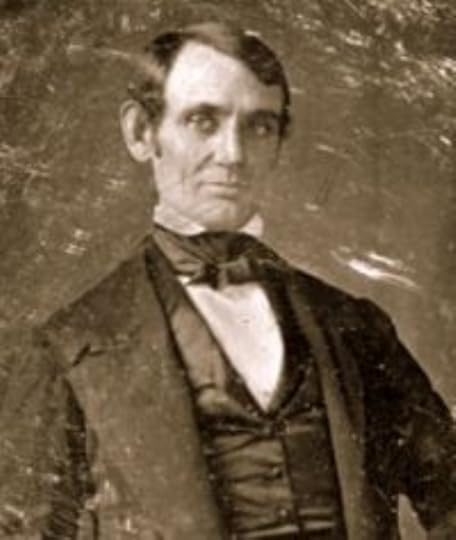
A young Abraham Lincoln from about 1847.
The melancholy that afflicted Abraham Lincoln his whole life is well documented. There were times in his life when dark depressions were so debilitating that he even considered taking his own life to end his torment. He suffered from hopelessness and soul crushing guilt. He thrusted a salt crusted thumb into the raw wounds of every failure he’d ever experienced.
The rest of the time he was a studious, but fun loving, lecherous storytelling, and ambitious young man. People may have felt they knew Lincoln, but I think, the more I read about him the more the real Lincoln, the man locked up in that large, melon head was someone he never felt comfortable revealing. I think he was exceptionally bright and ruled by dark passions. He was afraid of himself, afraid of what he might do if he ever let loose the shackles around his true self (axe-wielding vampire hunter, maybe?). The world wasn’t ready for his true self. They were barely ready for the persona he chose to show the world.
Cage Weatherby, a struggling poet, was one of Lincoln’s best friends in Springfield. They both arrived prepared to take advantage of a burgeoning city. Cage had made investments and tried to stay away from the rampant speculation that was suddenly sweeping the city up in tattered blankets of greed. I certainly identified with the trials and tribulations of a businessman. ”He was holding on to four town lots, thinking the ripest time to sell them would be when the statehouse was finished and the assembly was at last settled in Springfield, and he had two farm properties to manage, in addition to the Palatine and Ellie’s shop. All of these matters---rent income, repairs, tenancy arrangements, town taxes, salaries, procurements---were increasingly complicated and vexing, with money always never quite where it needed to be.”
All these financial worries were also a constant distraction from his true calling... to write poetry. He wanted more than just a roof over his head. He wanted stability, a security that would keep the fear of penury away from his golden years. He was also in love with a woman who refused to be trapped in a relationship. Her husband absconded to parts unknown with her fervent hopes of his untimely demise chasing closely behind him. She decided, with her husband’s departure, that she would never let a man make decisions for her again. Cage loved her progressiveness, but still couldn’t help feeling those very natural feelings of wanting to possess her. He wanted to help her open a dress shop, but desired to take something from her that she was determined to hang onto. Her freedom.
”’In that case I assume you’d want to break your arrangement with Speed.’
‘So that I can start a new arrangement with you? So that I can’t be shared? I don’t consider myself to be Joshua Speed’s chattel, and if we open a shop together I won’t consider myself to be yours. So nobody will be ‘“sharing” me. I’ll share myself, of my free will, and with whomever I want.’
‘And at the moment,’ she said, slowly unbuttoning her dress,‘that happens to be you.’”
Weatherby might have been friends with Lincoln, but there were important issues that they disagreed on. Like when Lincoln wrote a scathing article about a political opponent that nearly got him killed in a duel. The problem that Weatherby had with the articles was that Lincoln hid, very ineffectively, behind a pseudonym. ”It is my philosophy. Put your name to what you write, or don’t write it at all.”
Here, here!
I don’t know what percentage of people on GR have their account under a pseudonym, but I do know that most of the time when someone parachutes in on a review thread and leaves a nasty, abusive, or rude comment, they are not using their real name. Would they have made those same comments if their name was attached to the words? Maybe, but probably not. I know that most people do not abuse the use of anonymity in social media, but I for one have never posted a single thing online that did not have my real name attached to it. In that regard, Weatherby and I are in perfect agreement.
Another major issue he has with Lincoln is in regard to a social butterfly from Kentucky named Mary Todd.
”She stood in the sunlit center of the room in her pale yellow dress, clasping her hands in front of her waist, her elbows bent to show off her slender arms to best effect. It was a fetching pose, a portrait of thoughtful female gravity. Her face was perfect, in its way: a little round, a little soft, a mouth that was straight but not stern, eyes that were clear and frank. But there was no serenity in that face---there never had been, probably. She was a woman who could strike a pose of physical stillness but could not conceal the fact that her spirit was always plotting, wanting, needing more. Just like the men she had surrounded herself with---Lincoln, Douglas, Ned Baker, Ash Merritt, Cage himself---she had a governing appetite, a need to identify opportunities and then to seized them before they were gone.”
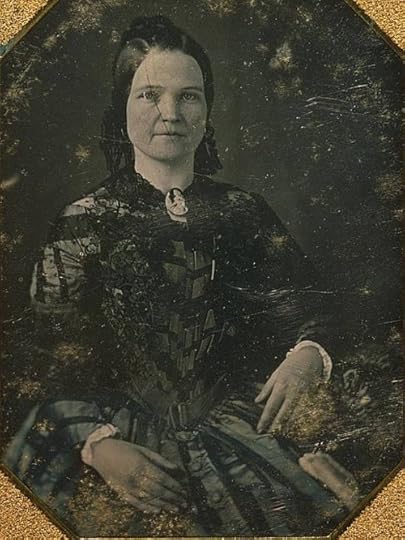
Mary Todd with Lincoln just added to her name.
Her naked ambition. Her feral intelligence. Her own battles with depression. All these traits had most men, despite her family money, looking for a wife who would be more compliant, happier, and more easily contented. She sifted all these men through her tiny fingers and decided that there was only one man who could hold up under the strain of her own expectations for him. His willowy frame would bend, but not break. She could make this man president.
I’ve never warmed to Mary Todd. I understand the demons that beset her. She paid a heavy price for her relationship with Lincoln, not only in the daily stresses and strains, but also in the losses they both suffered with the deaths of their sons. I often think that Lincoln needed a woman with smaller expectations for him, but then he would have probably never been president. Like many things, when I start thinking about changing the course of history, rarely does it work the way I want it to. In an odd way, the people unshackled from slavery should probably thank Mary Todd Lincoln for their freedom. Not because she wanted them free, but because she put the steel in the spine of the right man, at the right time, who was willing to do whatever it took to end the scourge of slavery in the United States.
Interestingly enough, when Lincoln was younger, he did not feel this way. Not that he was for slavery, but he was not an abolitionist. Weatherby several times purchased the freedoms of escaped slaves and found work for them. He was often befuddled by the noncommittal attitude of Lincoln towards what he felt was the largest issue of the time.
But then Lincoln was a political animal, and one thing he knew was having a strong stance one way or the other on the issue of slavery would only cost him votes. It was a hot potato, and though his hands were calloused from rail splitting in his youth, he was not willing to hold onto that potato. That said, when it counted most, he not only held the potato, but ate it.
Stephen Harrigan presents a very real portrait of a young Lincoln. A man not yet formed into the man who would eventually be the driving force behind, without a doubt, the largest shift in American policy in the history of the nation. We see him at his best. We see him at his most vulnerable. We wince when he isn’t the progressive we so expect him to be. We feel uncomfortable with his greedy ambition for power. He was so afraid of being nobody that he was determined to bend the will of the universe to escape that fate. Like most people who leave their mark on history, Lincoln was a complicated man, but a man that, when push came to shove, was able to take the arc of history on his shoulders and move it in the right direction.
If you wish to see more of my most recent book and movie reviews, visit http://www.jeffreykeeten.com
I also have a Facebook blogger page at:https://www.facebook.com/JeffreyKeeten

A young Abraham Lincoln from about 1847.
The melancholy that afflicted Abraham Lincoln his whole life is well documented. There were times in his life when dark depressions were so debilitating that he even considered taking his own life to end his torment. He suffered from hopelessness and soul crushing guilt. He thrusted a salt crusted thumb into the raw wounds of every failure he’d ever experienced.
The rest of the time he was a studious, but fun loving, lecherous storytelling, and ambitious young man. People may have felt they knew Lincoln, but I think, the more I read about him the more the real Lincoln, the man locked up in that large, melon head was someone he never felt comfortable revealing. I think he was exceptionally bright and ruled by dark passions. He was afraid of himself, afraid of what he might do if he ever let loose the shackles around his true self (axe-wielding vampire hunter, maybe?). The world wasn’t ready for his true self. They were barely ready for the persona he chose to show the world.
Cage Weatherby, a struggling poet, was one of Lincoln’s best friends in Springfield. They both arrived prepared to take advantage of a burgeoning city. Cage had made investments and tried to stay away from the rampant speculation that was suddenly sweeping the city up in tattered blankets of greed. I certainly identified with the trials and tribulations of a businessman. ”He was holding on to four town lots, thinking the ripest time to sell them would be when the statehouse was finished and the assembly was at last settled in Springfield, and he had two farm properties to manage, in addition to the Palatine and Ellie’s shop. All of these matters---rent income, repairs, tenancy arrangements, town taxes, salaries, procurements---were increasingly complicated and vexing, with money always never quite where it needed to be.”
All these financial worries were also a constant distraction from his true calling... to write poetry. He wanted more than just a roof over his head. He wanted stability, a security that would keep the fear of penury away from his golden years. He was also in love with a woman who refused to be trapped in a relationship. Her husband absconded to parts unknown with her fervent hopes of his untimely demise chasing closely behind him. She decided, with her husband’s departure, that she would never let a man make decisions for her again. Cage loved her progressiveness, but still couldn’t help feeling those very natural feelings of wanting to possess her. He wanted to help her open a dress shop, but desired to take something from her that she was determined to hang onto. Her freedom.
”’In that case I assume you’d want to break your arrangement with Speed.’
‘So that I can start a new arrangement with you? So that I can’t be shared? I don’t consider myself to be Joshua Speed’s chattel, and if we open a shop together I won’t consider myself to be yours. So nobody will be ‘“sharing” me. I’ll share myself, of my free will, and with whomever I want.’
‘And at the moment,’ she said, slowly unbuttoning her dress,‘that happens to be you.’”
Weatherby might have been friends with Lincoln, but there were important issues that they disagreed on. Like when Lincoln wrote a scathing article about a political opponent that nearly got him killed in a duel. The problem that Weatherby had with the articles was that Lincoln hid, very ineffectively, behind a pseudonym. ”It is my philosophy. Put your name to what you write, or don’t write it at all.”
Here, here!
I don’t know what percentage of people on GR have their account under a pseudonym, but I do know that most of the time when someone parachutes in on a review thread and leaves a nasty, abusive, or rude comment, they are not using their real name. Would they have made those same comments if their name was attached to the words? Maybe, but probably not. I know that most people do not abuse the use of anonymity in social media, but I for one have never posted a single thing online that did not have my real name attached to it. In that regard, Weatherby and I are in perfect agreement.
Another major issue he has with Lincoln is in regard to a social butterfly from Kentucky named Mary Todd.
”She stood in the sunlit center of the room in her pale yellow dress, clasping her hands in front of her waist, her elbows bent to show off her slender arms to best effect. It was a fetching pose, a portrait of thoughtful female gravity. Her face was perfect, in its way: a little round, a little soft, a mouth that was straight but not stern, eyes that were clear and frank. But there was no serenity in that face---there never had been, probably. She was a woman who could strike a pose of physical stillness but could not conceal the fact that her spirit was always plotting, wanting, needing more. Just like the men she had surrounded herself with---Lincoln, Douglas, Ned Baker, Ash Merritt, Cage himself---she had a governing appetite, a need to identify opportunities and then to seized them before they were gone.”

Mary Todd with Lincoln just added to her name.
Her naked ambition. Her feral intelligence. Her own battles with depression. All these traits had most men, despite her family money, looking for a wife who would be more compliant, happier, and more easily contented. She sifted all these men through her tiny fingers and decided that there was only one man who could hold up under the strain of her own expectations for him. His willowy frame would bend, but not break. She could make this man president.
I’ve never warmed to Mary Todd. I understand the demons that beset her. She paid a heavy price for her relationship with Lincoln, not only in the daily stresses and strains, but also in the losses they both suffered with the deaths of their sons. I often think that Lincoln needed a woman with smaller expectations for him, but then he would have probably never been president. Like many things, when I start thinking about changing the course of history, rarely does it work the way I want it to. In an odd way, the people unshackled from slavery should probably thank Mary Todd Lincoln for their freedom. Not because she wanted them free, but because she put the steel in the spine of the right man, at the right time, who was willing to do whatever it took to end the scourge of slavery in the United States.
Interestingly enough, when Lincoln was younger, he did not feel this way. Not that he was for slavery, but he was not an abolitionist. Weatherby several times purchased the freedoms of escaped slaves and found work for them. He was often befuddled by the noncommittal attitude of Lincoln towards what he felt was the largest issue of the time.
But then Lincoln was a political animal, and one thing he knew was having a strong stance one way or the other on the issue of slavery would only cost him votes. It was a hot potato, and though his hands were calloused from rail splitting in his youth, he was not willing to hold onto that potato. That said, when it counted most, he not only held the potato, but ate it.
Stephen Harrigan presents a very real portrait of a young Lincoln. A man not yet formed into the man who would eventually be the driving force behind, without a doubt, the largest shift in American policy in the history of the nation. We see him at his best. We see him at his most vulnerable. We wince when he isn’t the progressive we so expect him to be. We feel uncomfortable with his greedy ambition for power. He was so afraid of being nobody that he was determined to bend the will of the universe to escape that fate. Like most people who leave their mark on history, Lincoln was a complicated man, but a man that, when push came to shove, was able to take the arc of history on his shoulders and move it in the right direction.
If you wish to see more of my most recent book and movie reviews, visit http://www.jeffreykeeten.com
I also have a Facebook blogger page at:https://www.facebook.com/JeffreyKeeten

January 31, 2016
Perhaps I've been spoiled by Patrick O'Brian, a master practitioner of the art form, but I approach historical fiction with a hefty dose of skepticism – warily on the lookout for anachronisms, the misapprehension of manners, neglect of the everyday standards of decorum which governed earlier eras, and attuned to the misuse of historical figures and events to propel a weak plot or characters. A historical novel is simply that – a novel with historical events and personages as a backdrop. But if that backdrop contains a whiff of inauthenticity, then the story, no matter how well-crafted, fails. Stephen Harrigan avoids the traps luring lesser writers of historical fiction. He is strong in his use of language that fits the period (mostly) and the interplay between his characters feels substantially correct.
I read Harrigan's The Gates of the Alamo several years ago and thought it quite good, so seeing several laudatory press reviews, I picked up A Friend of Mr. Lincoln at my local library. I wasn't disappointed. Harrigan has told the story of the up-and-coming Abe Lincoln in Springfield, Illinois in the 1830s and 1840s. The tale is presented from the perspective of a fictional friend, the poet Micajah Weatherby, and includes the coterie of real friends of Lincoln in Springfield – Edward Baker, William Herndon, John Hardin, Joshua Speed – as principal characters. The novel centers on Lincoln's rise as a lawyer and Whig Party politico, as well as his on-again, off-again courtship of the manipulative and vindictive Mary Todd. Harrigan provides a warts and all portrait of Lincoln, including his ethical shortcomings, political dirty tricks, and bouts of deep depression. The flavor of frontier life pervades the story and enriches the full-blooded characterizations that make the novel a success.
Stephen Harrigan has again produced a fine example of historical fiction. A Friend of Mr. Lincoln earned Four Stars from me. I recommend it to any reader with an interest in American history or those just looking for a good story well-told.
I read Harrigan's The Gates of the Alamo several years ago and thought it quite good, so seeing several laudatory press reviews, I picked up A Friend of Mr. Lincoln at my local library. I wasn't disappointed. Harrigan has told the story of the up-and-coming Abe Lincoln in Springfield, Illinois in the 1830s and 1840s. The tale is presented from the perspective of a fictional friend, the poet Micajah Weatherby, and includes the coterie of real friends of Lincoln in Springfield – Edward Baker, William Herndon, John Hardin, Joshua Speed – as principal characters. The novel centers on Lincoln's rise as a lawyer and Whig Party politico, as well as his on-again, off-again courtship of the manipulative and vindictive Mary Todd. Harrigan provides a warts and all portrait of Lincoln, including his ethical shortcomings, political dirty tricks, and bouts of deep depression. The flavor of frontier life pervades the story and enriches the full-blooded characterizations that make the novel a success.
Stephen Harrigan has again produced a fine example of historical fiction. A Friend of Mr. Lincoln earned Four Stars from me. I recommend it to any reader with an interest in American history or those just looking for a good story well-told.

September 4, 2020
This kind of fiction, the blending in of real and not, historical figures and events with add-in's for tweeking the fact to include what-if's and should this... well in this case it's ol' honest Abe and chums in their formative prairie years with many a chuckle an grin! Dint't realize I had this author just down the road to Austin, and that he's written some other good reads to get to next or soon.

March 28, 2016
Also on my blog, Luthien Reviews
2.5/5
If you’re like me, you would pick up this book because it’s (ostensibly) about Abraham Lincoln. And while he certainly frequents the pages, it’s the stiff, unlikable titular–and very fictional–character who is, unfortunately, the protagonist. Cage as dull and uninteresting as plain toast. He is perpetually unhappy or at least dissatisfied and comes across as both self-pitying and self-righteous, a somewhat jarring combination.
Cage’s worldview, and as a result that of the entire book, was just too cut-and-dry, too black-and-white for me. In case anyone was in doubt, Slavery was Bad and Wrong and Evil. I’m not denying that, but this book really smacks you upside the head with those supposed “lessons,” and it gets old fast.
And instead of being a solid friend of Lincoln’s, Cage–while he is usually there when Lincoln needs him–mostly judges him and finds him wanting. Cage fills in for the modern reader by wanting Lincoln to be noble, honest, and saintly at all times…for some reason. This allows Harrigan to point out–many, many times–that poor Lincoln, just a young man after all, was flawed and not yet the man he would become in twenty-five years’ time.
I’m more familiar with Lincoln than most people (though I also admit that I love him to bits, so my opinion isn’t entirely objective either). Harrigan’s portrait of him is accurate in a technical sense, at least. Lincoln was provincial and self-taught; he was a storyteller; he was prone to self-deprecation and melancholy and did indeed probably suffer what we think of as clinical depression. He lacked social graces and was awkward with women. (A small aside: I was delighted that Ann Rutledge got a somewhat extended mention early on.)
Yet this true-to-life portrait is accompanied by Cage’s near-constant criticism, and while I’m all for realism, Harrigan also never misses an opportunity to give Lincoln something vulgar to say. (If I never have to read Lincoln, fictional or otherwise, use the word “pecker” again, it will be too soon.) I appreciate the technical accuracy, since Harrigan clearly did his research, but he should have let the execution speak for itself rather than using Cage as a way to hammer his points home.
Cage’s love interest, Ellie–one-time battered wife, one-time prostitute–was the only other half-decent character in the book, but her story fizzled out and left me unsatisfied. She is fiercely independent and infuriatingly distant. The nature of her feelings for Cage, and even his for her, are never properly explored. Perhaps this is because Friend is not really Cage’s story (though it isn’t quite Lincoln’s either).
As for the other major female character, Lincoln’s eventual wife Mary Todd…well, Harrigan must hate the poor woman. Full disclosure: I’m no fan of Mary Lincoln myself. True, she was charming and well-educated and well-connected, and had he not married her Lincoln may never have become president, but I think she and Lincoln were poorly matched. Their relationship was often an unhealthy one, and as Harrigan shows, Lincoln certainly had his doubts before he married her.
However, I don’t think she was the manipulative, grasping “hellcat” (as she was sometimes called in Washington) that Harrigan paints her as. For all her faults, she was a loving mother, a generous and charitable neighbor, and important personal political advisory to her husband. She was high-strung and easily manipulated, especially as First Lady–but she was far from stupid. At first I was looking forward to a realistic, even-handed portrayal of Mary. Instead, Cage dislikes and judges her even more than he does Lincoln. And then he gives us this bizarre description:
(Also, a tiny aside, but it bothered me: Robert Lincoln really did have lazy eye as a child and really had surgery to correct it. As someone who’s struggled with the same condition and been highly self-conscious of it her whole life, I didn’t like the dismissal of “Bobbie” being potentially cross-eyed as Mary’s ridiculous paranoia at all.)
I can’t fault the writing itself. Harrigan is a good, solid writer. His actual prose was sometimes a bit dry, but otherwise, fine and sometimes even lovely. But since there’s no real plot and little character development to go along with it, it falls a little flat. Worse, time flows in fits and bursts, sometimes skipping months and years at a time, with the result that the narrative seems unbalanced.
What A Friend of Mr. Lincoln has going for it is its strong sense of time and place; other than his constant judgmental tone regarding Abraham and Mary Lincoln, Harrigan has nailed the art of historical fiction writing (this is his tenth novel). But good prose and a solid setting alone do not a good novel make, and the other flaws–namely, a weak main character and the lack of any actual story–really hindered my enjoyment of this book. Maybe I doomed it to failure before I even started with my high expectations. I don’t know. All I can say is that it was definitely a disappointment.
2.5/5
If you’re like me, you would pick up this book because it’s (ostensibly) about Abraham Lincoln. And while he certainly frequents the pages, it’s the stiff, unlikable titular–and very fictional–character who is, unfortunately, the protagonist. Cage as dull and uninteresting as plain toast. He is perpetually unhappy or at least dissatisfied and comes across as both self-pitying and self-righteous, a somewhat jarring combination.
Cage’s worldview, and as a result that of the entire book, was just too cut-and-dry, too black-and-white for me. In case anyone was in doubt, Slavery was Bad and Wrong and Evil. I’m not denying that, but this book really smacks you upside the head with those supposed “lessons,” and it gets old fast.
And instead of being a solid friend of Lincoln’s, Cage–while he is usually there when Lincoln needs him–mostly judges him and finds him wanting. Cage fills in for the modern reader by wanting Lincoln to be noble, honest, and saintly at all times…for some reason. This allows Harrigan to point out–many, many times–that poor Lincoln, just a young man after all, was flawed and not yet the man he would become in twenty-five years’ time.
I’m more familiar with Lincoln than most people (though I also admit that I love him to bits, so my opinion isn’t entirely objective either). Harrigan’s portrait of him is accurate in a technical sense, at least. Lincoln was provincial and self-taught; he was a storyteller; he was prone to self-deprecation and melancholy and did indeed probably suffer what we think of as clinical depression. He lacked social graces and was awkward with women. (A small aside: I was delighted that Ann Rutledge got a somewhat extended mention early on.)
Yet this true-to-life portrait is accompanied by Cage’s near-constant criticism, and while I’m all for realism, Harrigan also never misses an opportunity to give Lincoln something vulgar to say. (If I never have to read Lincoln, fictional or otherwise, use the word “pecker” again, it will be too soon.) I appreciate the technical accuracy, since Harrigan clearly did his research, but he should have let the execution speak for itself rather than using Cage as a way to hammer his points home.
Cage’s love interest, Ellie–one-time battered wife, one-time prostitute–was the only other half-decent character in the book, but her story fizzled out and left me unsatisfied. She is fiercely independent and infuriatingly distant. The nature of her feelings for Cage, and even his for her, are never properly explored. Perhaps this is because Friend is not really Cage’s story (though it isn’t quite Lincoln’s either).
As for the other major female character, Lincoln’s eventual wife Mary Todd…well, Harrigan must hate the poor woman. Full disclosure: I’m no fan of Mary Lincoln myself. True, she was charming and well-educated and well-connected, and had he not married her Lincoln may never have become president, but I think she and Lincoln were poorly matched. Their relationship was often an unhealthy one, and as Harrigan shows, Lincoln certainly had his doubts before he married her.
However, I don’t think she was the manipulative, grasping “hellcat” (as she was sometimes called in Washington) that Harrigan paints her as. For all her faults, she was a loving mother, a generous and charitable neighbor, and important personal political advisory to her husband. She was high-strung and easily manipulated, especially as First Lady–but she was far from stupid. At first I was looking forward to a realistic, even-handed portrayal of Mary. Instead, Cage dislikes and judges her even more than he does Lincoln. And then he gives us this bizarre description:
…[H]er skin [was] as luminous as marble in the candlelight, a silver necklace fastened at her throat in a way whose suggestiveness he could not logically interpret. It was as if she had put it there only to signal that it should be removed, that everything she wore was only for the purpose of making you understand that there was bare skin beneath it. (334)W-what…? I’m sort of reluctant to cry sexism, but between passages like the one above (in which her weight is almost always mentioned) and Cage’s constant belief that Mary reveals her conniving ways and ulterior motives in everything she says and does…well, it was unpleasant to read, to say the least. Mostly, it left me wondering: Just what does Stephen Harrigan have against Mary Lincoln?
(Also, a tiny aside, but it bothered me: Robert Lincoln really did have lazy eye as a child and really had surgery to correct it. As someone who’s struggled with the same condition and been highly self-conscious of it her whole life, I didn’t like the dismissal of “Bobbie” being potentially cross-eyed as Mary’s ridiculous paranoia at all.)
I can’t fault the writing itself. Harrigan is a good, solid writer. His actual prose was sometimes a bit dry, but otherwise, fine and sometimes even lovely. But since there’s no real plot and little character development to go along with it, it falls a little flat. Worse, time flows in fits and bursts, sometimes skipping months and years at a time, with the result that the narrative seems unbalanced.
What A Friend of Mr. Lincoln has going for it is its strong sense of time and place; other than his constant judgmental tone regarding Abraham and Mary Lincoln, Harrigan has nailed the art of historical fiction writing (this is his tenth novel). But good prose and a solid setting alone do not a good novel make, and the other flaws–namely, a weak main character and the lack of any actual story–really hindered my enjoyment of this book. Maybe I doomed it to failure before I even started with my high expectations. I don’t know. All I can say is that it was definitely a disappointment.

October 18, 2015
Stephen Harrigan is one of the most compelling authors writing today. "Remember Ben Clayton" is one of my very favorite novels (and the reviews on Goodreads and Amazon backme up on its quality) and I have returned to "Gates of the Alamo" twice. His ability to create instantly interesting characters and place them so intentionally in their time and place is a marvel.
"A Friend of Mr. Lincoln" takes place mostly in Springfield and concerns Lincoln and his circle of friends in what was then just a largish settlement. Lincoln's charisma shines like a beacon, even though he is the raggediest, homeliest guy in town. Poet Cage Weatherby is among the group of young men who swap stories (or just listen to Lincoln) and discuss books, poetry, and politics out there on the prairie. The discussions are deeply satisfying to all and their tight circle offers an intellectual life to all that would not otherwise be available. Until . . .
Harrigan's Lincoln is a total political animal, and the people of the young town of Springfield revel in the debates, discussions, scurrilous newspaper articles, and occasional fist fights that follow. "A Friend of Mr. Lincoln" could have gone on for another 50 pages at least, so rich is the world he creates.
I'm giving this novel four stars because, even though it is excellent, it is not as much so as Harrigan's other books.
I recommend it for all lovers of historical fiction, Lincoln lovers, and readers who like a deep involving read. I wish Mr. Harrigan wrote faster so I could look forward to his next book.
"A Friend of Mr. Lincoln" takes place mostly in Springfield and concerns Lincoln and his circle of friends in what was then just a largish settlement. Lincoln's charisma shines like a beacon, even though he is the raggediest, homeliest guy in town. Poet Cage Weatherby is among the group of young men who swap stories (or just listen to Lincoln) and discuss books, poetry, and politics out there on the prairie. The discussions are deeply satisfying to all and their tight circle offers an intellectual life to all that would not otherwise be available. Until . . .
Harrigan's Lincoln is a total political animal, and the people of the young town of Springfield revel in the debates, discussions, scurrilous newspaper articles, and occasional fist fights that follow. "A Friend of Mr. Lincoln" could have gone on for another 50 pages at least, so rich is the world he creates.
I'm giving this novel four stars because, even though it is excellent, it is not as much so as Harrigan's other books.
I recommend it for all lovers of historical fiction, Lincoln lovers, and readers who like a deep involving read. I wish Mr. Harrigan wrote faster so I could look forward to his next book.

July 9, 2024
Even though this book was written as a work of fiction, it felt very very authentic. The author delves into the early years of one of the best known characters in Americana-Abraham Lincoln. We learn to appreciate the intimate relationship he shares with the fictional poet Cage Weatherby. This portrayal of Lincoln's rise to power has been too often condensed down to a bare mention in the majority of Lincoln biographies. The book, in my humble opinion, has earned a place of honor on my shelf of Lincoln books. A very worthy effort.
Read
September 25, 2017Loved it. Great on Springfield, early Lincoln relationships.

July 26, 2025
A historical fiction told from the perspective of Lincoln’s friend in the late 1830’s and early 40’s. The time frame spans mostly from the time he enters politics to about the time he marries Mary Todd.
Not a page turner, but a quiet novel that is enjoyable.
Not a page turner, but a quiet novel that is enjoyable.

August 1, 2017
This is a well-written historical novel, and it appears to be well researched.
The narrator knew Abraham Lincoln as a young lawyer. It works well that the narrator is a writer, not another lawyer. His skepticism about the law gives us some perspective on Lincoln's devotion to it.
I'm assuming that most of the historical information is accurate. If so, the young Lincoln played a minor part in assisting soldiers in wars against Native Americans in Illinois. He later defended a woman who escaped from slavery and prevented her from being sent back to the man who purported to "own" her. But, if this account is correct, he later defended a man who was seeking the return of a fugitive slave. If so, that shocked me more than anything else in the book.
I wonder about the portrayal of personalities. Much about Lincoln seems accurate. But did he really tell many obscene jokes? Was he really initially afraid of Mary Todd? I'm a little skeptical of the narrator's dislike of Mary Todd. Is he supposed to be an unreliable narrator in that, or are we supposed to believe his portrayal?
The book is certainly a good read. Reading about Lincoln seems like a good escape from the present day. I can imagine what Lincoln would think of No. 45.
The narrator knew Abraham Lincoln as a young lawyer. It works well that the narrator is a writer, not another lawyer. His skepticism about the law gives us some perspective on Lincoln's devotion to it.
I'm assuming that most of the historical information is accurate. If so, the young Lincoln played a minor part in assisting soldiers in wars against Native Americans in Illinois. He later defended a woman who escaped from slavery and prevented her from being sent back to the man who purported to "own" her. But, if this account is correct, he later defended a man who was seeking the return of a fugitive slave. If so, that shocked me more than anything else in the book.
I wonder about the portrayal of personalities. Much about Lincoln seems accurate. But did he really tell many obscene jokes? Was he really initially afraid of Mary Todd? I'm a little skeptical of the narrator's dislike of Mary Todd. Is he supposed to be an unreliable narrator in that, or are we supposed to believe his portrayal?
The book is certainly a good read. Reading about Lincoln seems like a good escape from the present day. I can imagine what Lincoln would think of No. 45.

July 2, 2020
Maybe it was the mood I was in but I gave it a good 150 pages and was not drawn in. I ended up skimming the rest and am happy to have this book in my past.

April 3, 2017
Involving, moving look at the early life of Abraham Lincoln through the life of a fictional friend. Brilliantly evokes Springfield, Illinois between the Black Hawk War of 1832 and the outbreak of the Mexican War in 1846, when "the Midwest"--the modern byword for paste-pudding normative suburbia--was a rough-and-tumble frontier peopled by the rude, the rich and adventurous, and the up-and-coming.
Harrigan draws a striking and convincing portrait of a Lincoln in his late 20s and early 30s, trying to figure himself and his ideas and principles out while already diving into the world of law and politics. The "Honest Abe" of folklore and American civic myth is here a self-conscious, studious, awkward, but darkly ambitious young man who walks a fine ethical line and regales his marks with a litany of "colorful" stories (colorful here in the sense of blue). I'm not Lincoln scholar but this depiction squares with the impression one gets from reading a goodly bit about his early life.
The fictional frame for the story is Micajah "Cage" Weatherby, a detached young man of old Massachusetts money who finds himself in Illinois and befriends Lincoln during the Black Hawk War. Cage fancies the life of a literary man and his quest for fame as a poet is one half of his story, and also the way in which he keeps finding himself in the company of Lincoln--who was no mean poet himself. Cage is a winsome character and an interesting foil for Lincoln and the other historical figures who flit in and out of the plot.
As I said, the historical and fictional events are well-drawn and seamlessly interwoven, and Harrigan runs the reader through the emotional gamut--Cage's disappointments and tragic disillusionment sit comfortably beside the comic (true) story of Lincoln's only duel and the awkward twenty-somethings and-again-off-again romantic plots involving Lincoln and a revolving cast of Springfield's eligible young ladies. Occupying more and more attention, coming to take over the plot as she seems to have taken over Lincoln's life, is Mary Todd, who comes perhaps even more to life in this fiction than Lincoln himself. Getting all this together into one novel and having it hang together is an accomplishment.
The one part of the book that keeps me from giving it five stars is the other half of Cage's own story: Ellie Bicknell. Ellie begins as a "kept woman" frequented by Joshua Speed but soon becomes Cage's own, and--you don't have to be much of a prophet to see it coming--a bitter disappointment to him as she never comes to love him. Portions of this story are moving--what awkward young man hasn't felt the stab of unrequited love, especially when he becomes aware that his crush knows about his feelings?--but I just didn't believe Ellie. She's too tough in a modern sense, too early 21st century in her opinions, mores, and speech; she felt like an obvious intrusion of the contemporary into an otherwise completely believable mid-19th-century American West. She reminded me of any number of Bernard Cornwell's heroes, who are less characters realistically depicted in a real past and more avatars for what the author finds heroic now.
That one misgiving aside, this is an excellent book, which I highly recommend.
Harrigan draws a striking and convincing portrait of a Lincoln in his late 20s and early 30s, trying to figure himself and his ideas and principles out while already diving into the world of law and politics. The "Honest Abe" of folklore and American civic myth is here a self-conscious, studious, awkward, but darkly ambitious young man who walks a fine ethical line and regales his marks with a litany of "colorful" stories (colorful here in the sense of blue). I'm not Lincoln scholar but this depiction squares with the impression one gets from reading a goodly bit about his early life.
The fictional frame for the story is Micajah "Cage" Weatherby, a detached young man of old Massachusetts money who finds himself in Illinois and befriends Lincoln during the Black Hawk War. Cage fancies the life of a literary man and his quest for fame as a poet is one half of his story, and also the way in which he keeps finding himself in the company of Lincoln--who was no mean poet himself. Cage is a winsome character and an interesting foil for Lincoln and the other historical figures who flit in and out of the plot.
As I said, the historical and fictional events are well-drawn and seamlessly interwoven, and Harrigan runs the reader through the emotional gamut--Cage's disappointments and tragic disillusionment sit comfortably beside the comic (true) story of Lincoln's only duel and the awkward twenty-somethings and-again-off-again romantic plots involving Lincoln and a revolving cast of Springfield's eligible young ladies. Occupying more and more attention, coming to take over the plot as she seems to have taken over Lincoln's life, is Mary Todd, who comes perhaps even more to life in this fiction than Lincoln himself. Getting all this together into one novel and having it hang together is an accomplishment.
The one part of the book that keeps me from giving it five stars is the other half of Cage's own story: Ellie Bicknell. Ellie begins as a "kept woman" frequented by Joshua Speed but soon becomes Cage's own, and--you don't have to be much of a prophet to see it coming--a bitter disappointment to him as she never comes to love him. Portions of this story are moving--what awkward young man hasn't felt the stab of unrequited love, especially when he becomes aware that his crush knows about his feelings?--but I just didn't believe Ellie. She's too tough in a modern sense, too early 21st century in her opinions, mores, and speech; she felt like an obvious intrusion of the contemporary into an otherwise completely believable mid-19th-century American West. She reminded me of any number of Bernard Cornwell's heroes, who are less characters realistically depicted in a real past and more avatars for what the author finds heroic now.
That one misgiving aside, this is an excellent book, which I highly recommend.

May 2, 2016
If biographies and historical fiction entice you to read, this is one that got me interested. I can't tell how accurate it is since the friend is fictional but I believe it does portray the off and on again darkness that invaded Lincoln all his life. This story gives a good picture of friendships of the time before the Civil War and what it was like to: have sex outside marriage and participate in the rigors of circuit riding when courts were taken on the move around a state on a predictable schedule to give people in various areas a chance at justice. It describes how men had to share bedrooms when they went to Inns because each Inn had few rooms.
The description of how awkward Lincoln was in social graces while courting Mary Todd rings true. The portrayal of Lincoln is one of him as a young lawyer spending almost every moment becoming politically involved. It also shows he added intellectual pursuit of poetry and philosophical discussion to his daily life. The description that is often reinforced is about his total disinterest in clothing and how disheveled he dressed every day.
The description of how awkward Lincoln was in social graces while courting Mary Todd rings true. The portrayal of Lincoln is one of him as a young lawyer spending almost every moment becoming politically involved. It also shows he added intellectual pursuit of poetry and philosophical discussion to his daily life. The description that is often reinforced is about his total disinterest in clothing and how disheveled he dressed every day.

October 4, 2015
Stephen Harrigan is one of my favorite historical fiction authors. He has once again brought a great story to life.
It was a bit strange for me to read fictionalized accounts of Lincoln after having read so much of his life in non-fiction. I loved the character of Cage who made it all possible.
One of my favorite episodes was the court case for Cordelia's freedom. I was a bit saddened to learn that this was also fiction loosely based on a real case. I guess Harrigan still wins my praise for being a great storyteller.
I suspect people who don't know Lincoln's back story will very much appreciate this version of events.
It was a bit strange for me to read fictionalized accounts of Lincoln after having read so much of his life in non-fiction. I loved the character of Cage who made it all possible.
One of my favorite episodes was the court case for Cordelia's freedom. I was a bit saddened to learn that this was also fiction loosely based on a real case. I guess Harrigan still wins my praise for being a great storyteller.
I suspect people who don't know Lincoln's back story will very much appreciate this version of events.

January 27, 2016
Full disclosure: Steve Harrigan is a close friend of mine; I read this as a manuscript but haven't yet read the book. Having finished it over a year ago I still can't get it out of my mind. The characters are nuanced and fascinating, their relationships are riveting, and the prose just can't be beat. I highly recommend reading this. You'll feel like you've disappeared through a wormhole and landed in Springfield in the 1830's. Even better, you'll get to walk around with Mr. Lincoln.

March 9, 2016
A well written and solid story about Cage Weatherby, a poet and businessman who befriends Lincoln during the years of his early political career in Illinois. Opening with the Blackhawk War through the establishment of Springfield as the capital, the California gold rush and the civil war. Harrigan set down solid characters, particularly women, in this tale of the friendship of men.
February 21, 2016
Excellent. Such insights into his early life! Hlghly recommend . Great insight to Mary Todd and that era

May 10, 2016
Okay reading, not close enough to the facts for my liking. Like all Americans I have Lincoln on an imaginary pedestal, too much literary liberty for me.

May 28, 2016
This is a fabulous book. It would be a good book even without Lincoln in it!!

May 30, 2018
This is historical fiction at its best. It takes us deep inside a particular time and place: Springfield, Illinois, mostly 1836-1843, with a prologue of sorts during the Black Hawk War and a postlude during the Civil War. In this case, it also offers keen insight into human nature and human aspirations. We get a picture of Lincoln as a young lawyer, as an ambitious politician, as an overly sensitive soul susceptible to bouts of “hypo,” as a friend to other young ambitious young men in a new settlement, as a purveyor of humorous, often obscene, stories and jokes, and, perhaps as a tormented pursuer of the manipulative Mary Todd. We also see the complexities and contradictions of Lincoln’s views on slavery. At the heart of the story, though, is a fictional character, Cage Weatherby, who self-identifies mostly as a poet, but is also a local businessman and speculator. His self-description late in the novel is concise and apt: “The persona of these poems was at heart an observer, a compromised one: a man who was righteously intolerant of slavery but a compliant guest at a slave plantation; who was disdainful of politics but drawn to the liveliness and tribal spirit of politicians; who was romantic-minded but infatuated with a woman determined not to love him” (302). That woman, Cage’s fiercely independent lady friend, Ellie, is another fascinating character. “She did not consider herself particularly bound by law [or, even less, propriety], but like many lawless people she had a rigid investment in justice” (276). There are many examples of ways historical fiction like this can take us back to a time and place in ways that nonfiction histories cannot. Take this passage, for example: “To try to settle his mind he unwrapped the book he had just bought: Voices in the Night, by a new Massachusetts poet--his age? younger?--he had read good things about. The author had the improbably perfect name of Longfellow. It was a slim volume, a first modest offering to the world. As he walked, he thumbed through the uncut pages, reading a line or two at random and then glancing up to make sure he didn’t collide with a teamster’s wagon or a rooting sow” (152-53). A nonfiction historical account would note that Cage (if he actually existed) read Longfellow as an influence on his own work, assuming that we know who Longfellow is; this fictional account takes us back and sets us in that time & place in a way nonfiction can’t, a time when a young poet named Longfellow is barely known. Another example: the author’s immersion in the details of everyday life during the period leads him to, in effect, debunk a claim made a few years ago that Lincoln must have been gay because he occasionally shared a bed with other men. Harrigan shows repeatedly that this was a common practice during the period, especially among lawyers “on the circuit.” He is, though, a little overly fond of using archaic period vocabulary: “camelopard,” “slantindicular” (which he has Lincoln using to describe a miller’s pecker [168], “callithumpian” (237), etc. In the course of reading it, I happened upon an enthusiastic review of it on the blog of one of my favorite authors, Mary Doria Russell. This novel has many of the same strengths as Russell’s two novels about Doc Holliday & the Earp Brothers. I second her endorsement. And readers who enjoy this would probably also enjoy Harrigan's earlier book, The Gates of the Alamo.

July 3, 2017
Imagine becoming a close personal associate of a world famous, almost god-like, historical personality. This is the intriguing premise of Stephen Harrigan's A Friend of Mr. Lincoln.
A fictional character, Micajah "Cage" Weatherby, makes the acquaintance of a young and ambitious Illinois assemblyman, Abraham Lincoln. Cage, Lincoln and a group of other Springfield young men share a passion for poetry and discussing the important topics of the day--the Alamo, then the Annexation of Texas; the need for infrastructure improvement such as canals and railroads in the state and how to pay for them, and sometimes even the evils of slavery. Cage, as a published poet with abolitionist leanings, doesn't understand his friend's skirting the issue. He sees Lincoln as two-faced, trying too hard to please everyone so he doesn't risk losing his office or pulling the Whig party down. Cage feels Lincoln needs to take a stand on slavery, and he finds himself both surprised and disappointed when Lincoln helps free a captured run-away slave woman in court, yet he also goes on to represent a Kentuckian who insists his Black servants remain slaves and return with him after he manages his land in the free state of Illinois.
Perhaps what causes the most heated conflict between the two men is their respective love lives. Lincoln's heart seems inconsistent to Cage. After losing the love of his life early on, Ann Rutherford, Lincoln doesn't seem able to settle with any of the ladies of Springfield society who want to attach themselves to the up-and-coming lawyer/politician. One in particular, Mary Todd, seems determined to win Lincoln over. Cage and Lincoln's other friends see Mary as a danger to the sanity of their manic-depressive comrade when Lincoln finds himself deeply unhappy after becoming "engaged to be engaged" to the ambitious woman. After rousing Lincoln from a near death depression over the misunderstanding, Cage makes an enemy of Miss Todd (and become off limits to Lincoln, once married to Mary). Cage's own love life falls apart when his secret lover, Ellie, moves her dress shop to Chicago after an anonymous letter in the newspaper exposes their affair. Cage and Lincoln drift apart, but the mutual admiration for the talent and humanity in each other doesn't, even as the years pass and the onset of Civil War brings both men to the same conclusion, slavery must end.
A Friend of Mr. Lincoln evokes a strong sense of being a part of history, of breathing the same air of great men during their formative years. Harrigan does an excellent job of building believable and well-rounded characters, both real and fictional. The settings and details bring the 1830s through1840s in Springfield, Illinois alive, giving modern readers insights into the customs, culture and politics of the time and place. It is a novel sure to please both history and Lincoln biography lovers alike.
A fictional character, Micajah "Cage" Weatherby, makes the acquaintance of a young and ambitious Illinois assemblyman, Abraham Lincoln. Cage, Lincoln and a group of other Springfield young men share a passion for poetry and discussing the important topics of the day--the Alamo, then the Annexation of Texas; the need for infrastructure improvement such as canals and railroads in the state and how to pay for them, and sometimes even the evils of slavery. Cage, as a published poet with abolitionist leanings, doesn't understand his friend's skirting the issue. He sees Lincoln as two-faced, trying too hard to please everyone so he doesn't risk losing his office or pulling the Whig party down. Cage feels Lincoln needs to take a stand on slavery, and he finds himself both surprised and disappointed when Lincoln helps free a captured run-away slave woman in court, yet he also goes on to represent a Kentuckian who insists his Black servants remain slaves and return with him after he manages his land in the free state of Illinois.
Perhaps what causes the most heated conflict between the two men is their respective love lives. Lincoln's heart seems inconsistent to Cage. After losing the love of his life early on, Ann Rutherford, Lincoln doesn't seem able to settle with any of the ladies of Springfield society who want to attach themselves to the up-and-coming lawyer/politician. One in particular, Mary Todd, seems determined to win Lincoln over. Cage and Lincoln's other friends see Mary as a danger to the sanity of their manic-depressive comrade when Lincoln finds himself deeply unhappy after becoming "engaged to be engaged" to the ambitious woman. After rousing Lincoln from a near death depression over the misunderstanding, Cage makes an enemy of Miss Todd (and become off limits to Lincoln, once married to Mary). Cage's own love life falls apart when his secret lover, Ellie, moves her dress shop to Chicago after an anonymous letter in the newspaper exposes their affair. Cage and Lincoln drift apart, but the mutual admiration for the talent and humanity in each other doesn't, even as the years pass and the onset of Civil War brings both men to the same conclusion, slavery must end.
A Friend of Mr. Lincoln evokes a strong sense of being a part of history, of breathing the same air of great men during their formative years. Harrigan does an excellent job of building believable and well-rounded characters, both real and fictional. The settings and details bring the 1830s through1840s in Springfield, Illinois alive, giving modern readers insights into the customs, culture and politics of the time and place. It is a novel sure to please both history and Lincoln biography lovers alike.

September 16, 2021
I read this as a companion to Ronald White’s biography of Lincoln and for the most part Harrigan does a good job sticking to the historical account of Lincoln’s life during the years leading up to his presidency. And yet my overall reaction upon finishing the book is less than enthusiastic.
Harrigan has pulled Lincoln from the pages of history books (where he will always need to be) just long enough for us to be reminded that he was a man long before he turned into a legend. And it was refreshing to see him in that light – as a young man full of ambition but with lots of rough edges, determined to make something of his life. Harrigan’s portrait of Lincoln mirrored much that I was reading about him in Ronald White’s biography—his early years in Illinois, his days as a young entirely self-educated lawyer, his entry into politics, his brilliant debates with Stephen Douglas, his conflicted decision to get married, the evolution of his views about slavery. Direct quotes from Lincoln’s speeches, debates and legal pronouncements, as well as what others had to say about him added a great deal of credibility to the narrative.
Harrigan succeeds in portraying Lincoln warts and all and yet at times I think he’s gone a little too far in his attempt to make Lincoln seem more human than mythical. His descriptions of a manic-suicidal Lincoln driven beyond the boundary of depression because he can’t make up his mind whether or not he’s actually engaged to Mary Todd are a bit over the top. I also suspect that Harrigan decided he needed to invent a sexier, spicier side of Lincoln than what the history books give us – and so this Lincoln visits a prostitute, tells dirty jokes and has sex with Mary before the wedding.
My biggest complaint is that the book takes up far too much space telling a phony story about a friend of Lincoln who didn’t even exist – when in fact there were quite a few actual friends (like Joshua Speed, William Herndon and Judge David Davis to name a few) who show up in the narrative but in lesser roles.
On the other hand, I really enjoyed all the period details and political scheming (not all that different from what goes on these days except that newspapers were the social media and internet of Lincoln’s time.) Nonetheless if this is the only book you’ll ever read about our 16th president I’m afraid you won’t get an accurate picture of who he was.
Harrigan has pulled Lincoln from the pages of history books (where he will always need to be) just long enough for us to be reminded that he was a man long before he turned into a legend. And it was refreshing to see him in that light – as a young man full of ambition but with lots of rough edges, determined to make something of his life. Harrigan’s portrait of Lincoln mirrored much that I was reading about him in Ronald White’s biography—his early years in Illinois, his days as a young entirely self-educated lawyer, his entry into politics, his brilliant debates with Stephen Douglas, his conflicted decision to get married, the evolution of his views about slavery. Direct quotes from Lincoln’s speeches, debates and legal pronouncements, as well as what others had to say about him added a great deal of credibility to the narrative.
Harrigan succeeds in portraying Lincoln warts and all and yet at times I think he’s gone a little too far in his attempt to make Lincoln seem more human than mythical. His descriptions of a manic-suicidal Lincoln driven beyond the boundary of depression because he can’t make up his mind whether or not he’s actually engaged to Mary Todd are a bit over the top. I also suspect that Harrigan decided he needed to invent a sexier, spicier side of Lincoln than what the history books give us – and so this Lincoln visits a prostitute, tells dirty jokes and has sex with Mary before the wedding.
My biggest complaint is that the book takes up far too much space telling a phony story about a friend of Lincoln who didn’t even exist – when in fact there were quite a few actual friends (like Joshua Speed, William Herndon and Judge David Davis to name a few) who show up in the narrative but in lesser roles.
On the other hand, I really enjoyed all the period details and political scheming (not all that different from what goes on these days except that newspapers were the social media and internet of Lincoln’s time.) Nonetheless if this is the only book you’ll ever read about our 16th president I’m afraid you won’t get an accurate picture of who he was.

December 13, 2020
“he was different . . . Most of the men who were going around promoting themselves and their schemes were smoother than Lincoln, not as raw, not as striking in appearance, not as obviously self-invented. . . . He looked like a man who did not quite fit in, whom nature had made too tall and loose-jointed, with an unpleasant squeaky voice and some taint of deep, lingering poverty. He seemed to Cage like a man who desperately wanted to be better than the world would ever possibly let him be. But in Lincoln’s case that hunger did not seem underlaid with anger, as with other men it might, but with a strange seeping kindness.”
Young Lincoln is a fascinating man to read about. Quite obviously, plenty of biographical, non-fiction accounts exist, but Harrigan brings him to life in the way that only fiction can.
As a young man in rural Illinois, Lincoln was trying to find his footing. What would he do with his life? Who would he marry? Where would his potent ambition bring him? Amidst a lot of trial and error, he settled on law as a profession, and was as active and capable a lawyer as ever became president.
Aside: Plenty of our chief executives have held the title of lawyer, but only a handful ever actually practiced. Lincoln sometimes argued a dozen cases per day in court, working in that profession until he was about 50 years old before suddenly and surprisingly being elected president.
In this novel, Harrigan has invented a poet and friend of Lincoln named Cage who functions as sort of a fly on the wall in Lincoln’s life. The future president is restless, sometimes depressed, honest (of course), socially awkward (especially with women), and naturally ambitious — even desperate — to make a name for himself in some way, shape, or form.
While plenty of dialogue is a figment of the author’s imagination, Harrigan never deviates from the record of how things actually happened in Lincoln’s life, borrowing from diaries and numerous early accounts and even providing readers some of the famous jokes and anecdotes that Lincoln actually told.
A Friend of Mr. Lincoln reads easily and gives us a pretty clear sense of Lincoln the man during an especially important decade in his life (and in an easier form to digest than a lengthy biography). Even if you’re not into historical fiction, I’m guessing you’ll get a kick out of Harrigan’s novel. I sure did.
Young Lincoln is a fascinating man to read about. Quite obviously, plenty of biographical, non-fiction accounts exist, but Harrigan brings him to life in the way that only fiction can.
As a young man in rural Illinois, Lincoln was trying to find his footing. What would he do with his life? Who would he marry? Where would his potent ambition bring him? Amidst a lot of trial and error, he settled on law as a profession, and was as active and capable a lawyer as ever became president.
Aside: Plenty of our chief executives have held the title of lawyer, but only a handful ever actually practiced. Lincoln sometimes argued a dozen cases per day in court, working in that profession until he was about 50 years old before suddenly and surprisingly being elected president.
In this novel, Harrigan has invented a poet and friend of Lincoln named Cage who functions as sort of a fly on the wall in Lincoln’s life. The future president is restless, sometimes depressed, honest (of course), socially awkward (especially with women), and naturally ambitious — even desperate — to make a name for himself in some way, shape, or form.
While plenty of dialogue is a figment of the author’s imagination, Harrigan never deviates from the record of how things actually happened in Lincoln’s life, borrowing from diaries and numerous early accounts and even providing readers some of the famous jokes and anecdotes that Lincoln actually told.
A Friend of Mr. Lincoln reads easily and gives us a pretty clear sense of Lincoln the man during an especially important decade in his life (and in an easier form to digest than a lengthy biography). Even if you’re not into historical fiction, I’m guessing you’ll get a kick out of Harrigan’s novel. I sure did.

February 1, 2018
A young, ambitious Lincoln explains why he can't commit to the anti-slavery movement. "...if slavery isn't wrong, nothing's wrong. But outright abolition is impossible... And if I start preaching abolition the only thing that's going to get abolished is me."
This is a wonderful fictional account of Lincoln and his close circle of friends and foes who inhabited a very lively Springfield, IL during the 1830-40’s. Through it all, the questions about slavery return again and again. The main character, the ‘friend’ is Cage Weatherby, a poet among politicians. Cage is a stout abolitionist who writes poems, while Lincoln lives for the rule of law, even if the law is wrong. But despite their differences, Cage remains steadfast. He has his friend's back, even pulls him from the brink of suicide and rescues him from a potentially deadly duel. As good a friend as Cage is, Lincoln leaves something to be desired. He is profane, politically ambitious, sometimes petty, socially awkward and prone to embarrassing incidents and periods of deep depression. In other words, Harrigan gives us a very flawed, very human Lincoln, no saint Abraham, for sure. As he suffers through an extended, tortuous courtship of Mary Todd, Cage stands by him, all the while fighting his own battles. Cage struggles with his poetry and his finances. He enjoys but also endures a confusing, frustrating relationship with his lover, Ellie. And he suffers the cold wrath of one Mary Todd Lincoln. Top shelf historical fiction.
This is a wonderful fictional account of Lincoln and his close circle of friends and foes who inhabited a very lively Springfield, IL during the 1830-40’s. Through it all, the questions about slavery return again and again. The main character, the ‘friend’ is Cage Weatherby, a poet among politicians. Cage is a stout abolitionist who writes poems, while Lincoln lives for the rule of law, even if the law is wrong. But despite their differences, Cage remains steadfast. He has his friend's back, even pulls him from the brink of suicide and rescues him from a potentially deadly duel. As good a friend as Cage is, Lincoln leaves something to be desired. He is profane, politically ambitious, sometimes petty, socially awkward and prone to embarrassing incidents and periods of deep depression. In other words, Harrigan gives us a very flawed, very human Lincoln, no saint Abraham, for sure. As he suffers through an extended, tortuous courtship of Mary Todd, Cage stands by him, all the while fighting his own battles. Cage struggles with his poetry and his finances. He enjoys but also endures a confusing, frustrating relationship with his lover, Ellie. And he suffers the cold wrath of one Mary Todd Lincoln. Top shelf historical fiction.

May 27, 2019
The friend in the title is Cage Weatherby, who first met Lincoln the day Cage was almost killed in the Black Hawk War of 1832. Cage, a would-be poet, and Lincoln, a lover of poetry, share friendship for the next ten years.
The reader gains a look at Lincoln away from the later days of Lincoln’s political rise and association with the end of formal slavery in the United States. Instead the book lets us see Lincoln as a product of Illinois when it was still a raw frontier state. We do not see Lincoln as firmly wishing to abolish slavery. Instead, we see a Lincoln confused about many things but consistently opting for the political life.
The tone of the book is wistful, the longing for a time when both men were unmarried and part of a group of other young men. They read poetry, helped Lincoln through his despondent moods, and risked being called out to fight duels.
Most of them involve themselves in politics, though not Cage, who prefers to write poetry. He has a continuing relationship with a women he would like to marry but who enjoys her unmarried freedom to do as she pleases.
Basically, I appreciated the book’s ability to present historic events, such as the buildup to war against Mexico, as a part of this time.
In the background are whispers questioning how otherwise sensible people could allow themselves to accept the slavery of fellow men and women. Unanswered, of course, the nation would drift toward murderous war.

September 27, 2018
I listened to this book. As historical fiction that is acknowledged as “impeccably researched” I am assuming that much of the early character and personally of Abraham Lincoln is factual. While loyal, brilliant, and dedicated to his intrinsic goal to make something of himself, I was surprised to hear the raunchy jokes that Lincoln would tell, or to learn that while he privately didn’t like slavery, he did mot set out to become the abolishonist that he is known for. In fact he was quite conflicted on the issue. I was probably most surprised by Mary Todd, their courtship, their marriage, and her eccentricities.
This book got a little repetitive/tedious with about 1/3 to go, and I had a “come on, really” moment when a main character stumbled on to the Donne party. He goes through that ordeal on top of already being Lincoln’s BFF, now he is a survivor of the Donner Party? Really? But that is a brief blip in the book.
The book really centers upon Lincoln’s early life, before marriage, searching for his path to make something, a name, a legacy, for himself. It then skips over his actual political offices and picks back up again briefly as he is inaugurated as President and the start of the war. The big take away for me was that the friendships (and enemies) that he forged in his early 20’s were the friendships upon that his rise to the presidency rested.
This book got a little repetitive/tedious with about 1/3 to go, and I had a “come on, really” moment when a main character stumbled on to the Donne party. He goes through that ordeal on top of already being Lincoln’s BFF, now he is a survivor of the Donner Party? Really? But that is a brief blip in the book.
The book really centers upon Lincoln’s early life, before marriage, searching for his path to make something, a name, a legacy, for himself. It then skips over his actual political offices and picks back up again briefly as he is inaugurated as President and the start of the war. The big take away for me was that the friendships (and enemies) that he forged in his early 20’s were the friendships upon that his rise to the presidency rested.

July 23, 2019
Nice historical fiction for Lincolnphiles like me. Harrigan creates a fictional poet who meets and is befriended by Lincoln during the 1830s up to 1846, while Lincoln is deep into Whig politics, riding the 8th Judicial circuit, and building his practice in Springfield. It's a very human portrait of Lincoln, who is often beset with depression, conflicted on slavery, and uncertain about women and whom to marry. Mary Todd is treated from a 19th century male perspective, even though Cage Weatherby realizes she is hampered by the gender restrictions of the day. His status as a poet sets him apart from the typical male attitude of the day. The novel ends as the war begins.
Loved the interplay between Lincoln and Weatherby, and the exposure of Lincoln's crude side, while still maintaining his greatness. I liked the character of Ellie and her relationship with Weatherby. The duel chapters were hilarious and exposed how ridiculous duels and their rules were. Looking forward to reading some of the books that Harrigan used to inform himself as he wrote.
Loved the interplay between Lincoln and Weatherby, and the exposure of Lincoln's crude side, while still maintaining his greatness. I liked the character of Ellie and her relationship with Weatherby. The duel chapters were hilarious and exposed how ridiculous duels and their rules were. Looking forward to reading some of the books that Harrigan used to inform himself as he wrote.
May 28, 2018
This is a quiet book, whose strength builds steadily as the story progresses. At first, I found it hard to get into a novel about such a well-known historical figure, as it's almost inevitable that any North American reader would have a pre-conceived idea of Abraham Lincoln, but Harrigan slowly won me over. I felt his chief ambition was to tell the story of a deep friendship between two men at a pivotal point in American history, with the almost secondary goal of developing a more nuanced and real portrait of Lincoln, and the novel succeeds because of this approach. I think it also helps that he focuses on a period prior to Lincoln's great fame, and therefore less defined.
Harrigan's writing is fresh, thoughtful, and empathetic. His love for his country is evident, but so too is his desire to bring perspective to it. Looking forward to reading Remembering Ben Clayton.
Harrigan's writing is fresh, thoughtful, and empathetic. His love for his country is evident, but so too is his desire to bring perspective to it. Looking forward to reading Remembering Ben Clayton.
September 28, 2021
The book itself was probably fine. Unfortunately it had the misfortune of being narrated by George Guidall, who next to Dominic Hoffman, is the WORST person to read a book aloud. The guy puts periods and commas after Every. Single. Word. Constantly. I thought I could overcome my annoyance, but nope, from start to finish I wanted to yell “you don’t have to breathe in between every word! And if you do, narration is not the job for you!!”
The book itself was ok. I’ve never thought about how Lincoln might have behaved as a young adult. He’s just this immortalized and revered historical person. It also painted Mary Lincoln in a very bad light. But because the main character was completely made up I don’t trust that any of the other information is also fictional.
This is a book you will want to read yourself.
The book itself was ok. I’ve never thought about how Lincoln might have behaved as a young adult. He’s just this immortalized and revered historical person. It also painted Mary Lincoln in a very bad light. But because the main character was completely made up I don’t trust that any of the other information is also fictional.
This is a book you will want to read yourself.

April 5, 2018
I quite enjoyed this book. The story are the years between Salem, IL and Springfield, IL, years before he became the president. And yet it is told in flashback after his murder, narrated by a long-forgotten friend from those years. He is a friend who became estranged from Lincoln but reflects with fondness of their Springfield years. I particularly enjoyed the episodes involving Lincoln and his prostitute girlfriend. The initial naive tenderness of Abe balanced with the crude awakenings and moxie of the woman was well crafted. Lincoln evolves and eventually becomes better suited and accepting of his proclivities and well-meaning toward the woman, no longer demanding she skulk out the back door.
Overall, a decent read from a genre (historical fiction) that too often disappoints.
Overall, a decent read from a genre (historical fiction) that too often disappoints.
July 22, 2019
While a novel, I find this book true to other non fictional work about Lincoln. A well written and entertaining look about Lincoln during his time in Springfield as a laywer and state legislator, up to including the courtship and marriage to Mary Todd. The book is written as a recollection after the assassination of Lincoln and his return to Springfield for his burial. The main character, a fiction firend of Lincoln, Cage Weatherby, recounts his first meeting Lincoln and subsequent friendship with Lincoln as he waits in line to view Lincoln's body lying in state in Springfield prior to his burial. Mr .Weatherby is not a fan of Mary Todd, but grudgenly acknowledges that Marry Todd had the gumption to push Lincoln into the presidency.
Displaying 1 - 30 of 140 reviews