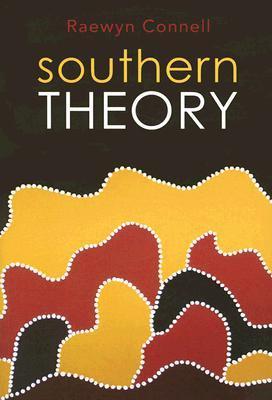
The longer I have lived in the UK while most of my research deals with imperial and colonial cultural issues the more I have become aware that it is not just political theory that needs adapting to non-metropolitan conditions, but broader social theory as well. In this book Raewyn Connell builds a compelling critique of sociology that draws out many of the problems of using metropolitan ideas in the periphery. There are three sections – a critical outline of the development of sociology and critique of analyses of globalisation, a set of case studies of scholars from outside the periphery (west Africa, Latin America, Iran, India) whose work shows the limitations of metropolitan theory, and a case for sociological analyses grounded in place, in which she draws on Australia (and she says, the place she knows best). Overall, this is a powerful case for building new networks of scholars not mediated by the metropole that can help break the traditional arrangement where the usual role of places outside the Euro-American North Atlantic nexus (including subaltern communities located within those countries) is to provide data to be exploited by the high priests of classical social theory (developed and in generalised from conditions in that nexus).
Since moving to the UK I have become acutely aware of the place-based characteristics of theory, and of the subtle ways that my upbringing in the (antipodean) edge of the world means that I look at and see things differently, that the conceptual ideas I come across in Indian, Latin American/Caribbean and indigenous peoples analyses resonate in ways they don’t seem to with my British fellow researchers and other academics. Connell’s case for more synthetic (or syncretic) theoretical development therefore rings true.
But this is not an anti-theory argument or a postmodernist diatribe against grand narratives, just a powerful case that sociology’s dominant grand narratives stem from the specific conditions of the North Atlantic nexus (my term, not hers) and that too much of the impressive and exciting intellectual development outside the metropolitan socio-political space has to be sacrificed to the terms of the dominant metropolitan discourses (or it won’t be understood) or is discounted because the metropolitan concepts are of little use in other settings. So, she says, we need to continue to challenge the metropolitan dominance and build networks between ourselves to develop Southern Theory and therefore the liberatory potential of social science research. One of the most intellectually liberating books I have read in years.