

What do you think?

The Divine Farce
“A Dante/Beckett reduction of human struggle to its lowest common denominator.”—Michael Mirolla, author of The Formal Logic of Emotion and Berlin
“One of the most original and thought-provoking stories I have ever read...true literary art...Not a word is wasted in this masterpiece. Yes, I call it that. I have read many classics, and I can tell you that The Divine Farce should be counted among them; the finest in American literature.”—Geekscribe
Three strangers are condemned to live together in darkness, crushed together in a concrete stall so small that they can never sit down. Liquid food drips down from above. Waste drains through a grid on the floor. So begins one of the strangest, most surreal comments on the human experience, on love and hatred and the human ability to find good in any situation, no matter how difficult. Michael S. A. Graziano delights in the macabre and surreal, yet it is his optimism that lifts this little novel. Like The Love Song of Monkey, this book is deeply thought provoking, horrifying, and funny.
Praise for The Love Song of
“Imaginative, intelligent narrative. Twin ideas of forgiveness and mercy twist through this strange, moving, patiently wrought novel.”—Publishers Weekly
“Fabulously imagined, seriously considered, and very funny. A kind of fairytale antithesis on the meaning of existence. . . . Fantastic.”—Spirituality and Health Books
“Strange but wonderful . . . like nothing I’ve read before. A very short book, but the scope is epic in detail. . . . I enjoyed the heck out of this book.”—Geekscribe
“Should be required reading in the writing grad schools. . . . There’s nary a word wasted. What’s left is comedy, retrospection, betrayal, tenderness, meditations on loneliness, a love story that survives all attempts to suppress it . . . not bad within 149 pages.”—Barnstable Patriot
Michael S. A. Graziano, Princeton University neuroscientist, is the author of the novella Hiding Places (New England Review, 1997), the novel The Love Song of Monkey (Leapfrog Press, 2008), and The Intelligent Movement Machine (Oxford University Press, 2008).
“One of the most original and thought-provoking stories I have ever read...true literary art...Not a word is wasted in this masterpiece. Yes, I call it that. I have read many classics, and I can tell you that The Divine Farce should be counted among them; the finest in American literature.”—Geekscribe
Three strangers are condemned to live together in darkness, crushed together in a concrete stall so small that they can never sit down. Liquid food drips down from above. Waste drains through a grid on the floor. So begins one of the strangest, most surreal comments on the human experience, on love and hatred and the human ability to find good in any situation, no matter how difficult. Michael S. A. Graziano delights in the macabre and surreal, yet it is his optimism that lifts this little novel. Like The Love Song of Monkey, this book is deeply thought provoking, horrifying, and funny.
Praise for The Love Song of
“Imaginative, intelligent narrative. Twin ideas of forgiveness and mercy twist through this strange, moving, patiently wrought novel.”—Publishers Weekly
“Fabulously imagined, seriously considered, and very funny. A kind of fairytale antithesis on the meaning of existence. . . . Fantastic.”—Spirituality and Health Books
“Strange but wonderful . . . like nothing I’ve read before. A very short book, but the scope is epic in detail. . . . I enjoyed the heck out of this book.”—Geekscribe
“Should be required reading in the writing grad schools. . . . There’s nary a word wasted. What’s left is comedy, retrospection, betrayal, tenderness, meditations on loneliness, a love story that survives all attempts to suppress it . . . not bad within 149 pages.”—Barnstable Patriot
Michael S. A. Graziano, Princeton University neuroscientist, is the author of the novella Hiding Places (New England Review, 1997), the novel The Love Song of Monkey (Leapfrog Press, 2008), and The Intelligent Movement Machine (Oxford University Press, 2008).
71 pages, Kindle Edition
First published November 1, 2009
About the author
Michael S.A. Graziano
17 books200 followersMichael S. A. Graziano, PhD, is a professor of neuroscience and psychology at Princeton University. He is also a composer and occasional ventriloquist. Love is his latest work of fiction published by Leapfrog. Others include The Love Song of Monkey, The Divine Farce, and Death My Own Way. He has also published popular science books: God Soul Mind Brain (Leapfrog Press, 2010), Consciousness and the Social Brain (Oxford University Press, 2013), Rethinking Consciousness (W. W. Norton, 2021), which was a finalist for the Penn-Faulkner award, and most recently, Charlie's Lab (Press 53, 2023). He has written for the Atlantic, the New York Times, the Wall Street Journal, and other media outlets. He lives in Princeton, New Jersey with his wife and a backyard fox family.
Ratings & Reviews
Friends & Following
Create a free account to discover what your friends think of this book!
Community Reviews
Displaying 1 - 30 of 1,217 reviews

October 3, 2024
this happened to my buddy once

December 14, 2023
a horrible lil allegory I couldn't recommend to anyone, 10/10

June 7, 2025
I was having a good day, I was happy enough, then I sat down and read this book, and now I feel like I might have a panic attack 😇
Def recommend if you liked the existential dread of A Short Stay In Hell!
Def recommend if you liked the existential dread of A Short Stay In Hell!

June 23, 2026
Maybe we are condemned to an endless nagging sense of discomfort balanced against comfort, satisfaction against the itch to escape.
This is a really unsettling little book, combining elements of nihilism and existentialism into a disturbing allegory. It can be read as "just" a suffocating horror story— the blurb sets the scene nicely, and more horrors await —or as a philosophical tale about the question of meaning, the search for more, and whether it is a good thing to receive answers.
Three humans are locked in a cramped cage, fed and watered but barely able to move... until the day that they escape to the world outside. A bigger, wilder, nastier world where it is necessary to compete for food. Much is lost in the pursuit of more, and you can't help wondering if it was worth it. Genuinely, it's hard to know which fate was worse.
There is a creeping sadness that grows as the story progresses. It is a tale of loneliness in a crowd, the price of freedom, and how overwhelming it can be to look for a meaning when there perhaps is none. But there is a beauty to it, too. Throughout it all, Graziano depicts the true value of our world, beyond anything else, being in love and companionship.
And it's exactly the right length for an ugly and poignant little story like this.

October 17, 2025
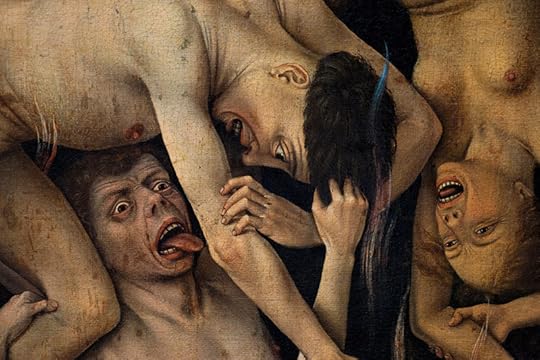
If there ever was an author who could write cogently about three people crammed into a tight space, it is Michael S. A. Graziano. After all, with his background in psychology and neuroscience, he has conducted extensive research on how the brain’s system for maintaining personal space—an invisible safety zone—constitutes a fundamental part of human nature, the central topic of his book The Space Between Us.
The Divine Farce is the author’s short novel in three parts: (1) the narrator, along with a woman and a man, crammed into a tight space; (2) the trio breaking free and the narrator squeezing through a labyrinth of caverns amid thousands of naked bodies; and (3) the narrator, in isolation, moving atop the enclosed labyrinthine structure. Is this a kind of hell, similar in many ways to A Short Stay in Hell by Steven L. Peck? The narrator, a chap calling himself Brother Brian Blue, certainly thinks so.
“We were in darkness. It was our home. The vertical, cylindrical hollow was about two feet in diameter—tight for three adults, just large enough for us to breathe up against each other or to shuffle slowly in a bumping, awkward revolution.”
So begins this incredibly compelling tale. A few personal observations. I'm claustrophobic. Thus, I couldn't imagine a less appealing space to be entrapped. Actually, I could. If instead of “a mumbling garble of sound” this cramped space had piped in Muzak, I would quickly go crazy. Also, narrator Brian Blue doesn't mention having to deal with insects. Since I'm allergic to insect bites, dealing with chigger bites, bee bites, wasp bites, or any other type of bites would intensify this hell immeasurably.
If I had to endure such a tiny space with two other naked people and was given three wishes, here they are: (1) I would ask for a shower fixture with soap since I hate feeling dirty. Brian Blue and the others remain filthy dirty and stink. Just reflecting on such an abysmal physical state turns my stomach. (2) I would also ask for a muted yellow light in the ceiling to at least share some degree of vision with my two companions. (3) Lastly, being a typical macho guy, I would ask for two pleasant, attractive, healthy ladies to share this tiny space.
I mention the above for a good reason: at every stage in Graziano's novella, we as readers will naturally ask ourselves what we would do if faced with such diabolical challenges.
“We had no mutual barriers. At first we might have resented physical intrusion, but let a week pass, let a year pass, let moments trickle into moments until the concept of the temporal increment is entirely lost—and psychological barriers dissolve in the lukewarm pear nectar. Taboos fall and liberties become ordinary. Touch replaces vision.”
Here Graziano draws on his research in psychology. Crammed into such a tight space, the natural “invisible safety zone” each individual constructs has disappeared, and, on a profound level, the three bodies have become one. Touch is now the king and as long as touching remains pleasant, there are no restrictions. “Sex helped us to achieve a single warm blend. It was emotional nectar, and we maintained ourselves on a regular diet of it.”
“Talking is what kept us sane, if that is what we were. . . . “It isn't heaven, it isn't hell, it's simply where we are, and it stinks. It stinks literally. It stinks and it hurts. And the people here are driving me crazy.”
We believe you Brian Blue! Even if I was granted my three wishes, I'm not naïve. Any three people wedged into an inhumanly restricted space will, given time, drive one another insane.
When the trio breaks out of their cell and land in an endless labyrinth--corridor after corridor after corridor of thousands of naked women and men--the narrator quickly loses contact with the pair he's spent what feels like a lifetime with. From this point forward, it's Brian Blue going solo.
I had to ask myself, faced with this stinking labyrinth and crushing crowds where life is reduced to sheer survival, what would I do? I know, I know--it might appear I'm taking the high road, but I think I would find a quiet corner of a small cave (such caves exist, so Brian Blue tells us), sit down, and begin meditating. And remain in meditation as long as humanly possible.
What would you do? I urge you to pick up The Divine Farce and reflect on this question as you turn the pages.

American author and neuroscientist Michael S.A. Graziano, born 1967
September 9, 2024
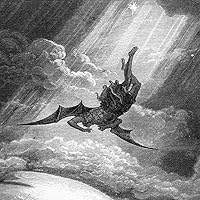
I started reading this book after A Short Stay in Hell by Steven Peck, with which it shared overarching themes of existentialism, nihilism, and absurdism. A more straightforward allegory, Graziano’s The Divine Farce frames human crisis in different lights through the transforming perspectives of Sage as he experiences an existential struggle. In a seemingly absurd realm in which there are no answers to the question of existence, Sage is pushed to realize that it is personal meaning that makes his experiences worthwhile. Overall, this book was a thought-provoking read on the human experience, of loneliness and compassion, and on what it means to live in a world with no real answers to why things are the way they are.

September 19, 2026
This is quite a weird novella that starts with a man, aptly named Sage, who wakes up in a cramped concrete prison-like stall pressed up against two strangers. They survive on liquid dripping from above and their waste drains through the floor. They eventually find a way out into another cave and another thought provoking world, and so on. The ‘Divine’ in the title seems to refer to the Divine comedy, and the discussions of hell most likely to Sartre’s Huis Clos’. I don’t usually appreciate surreal stories or parables, but this one really worked for me.

June 9, 2025
so like… would u rather be posted up with some friends in a dark, cramped hole drinking pear juice or in a huge cave fighting over Popeyes biscuits with a bajillion people… pick one.
for a book dripping, and I mean absolutely SMOTHERED and DROWNING, in philosophical allegory, I was really surprised at how hopeful it is.
A book that believes Hell, in all of its many, MANY, portrayals, is, at its core, a product of the human need for meaning. That, because of our insatiable and hungry want for an answer, we lock ourselves in our own selfish, isolated hells. I do appreciate, however, the books stance that the way to break through one’s own damnation, to alleviate the masochistic turmoil within one’s psyche, is to surround yourself with people you love. Corny, I know, but I love a good love wins story, call me a dreamer idc. Also this is what I (as in ME ME ME) took away from it, and you can see it through a totally different lense if you want ig… I’m not the art police.
I don’t even really share that belief per se, but this random guy from New Jersey made a story so succinct and impactful that it can still resonate regardless.
for a book dripping, and I mean absolutely SMOTHERED and DROWNING, in philosophical allegory, I was really surprised at how hopeful it is.
A book that believes Hell, in all of its many, MANY, portrayals, is, at its core, a product of the human need for meaning. That, because of our insatiable and hungry want for an answer, we lock ourselves in our own selfish, isolated hells. I do appreciate, however, the books stance that the way to break through one’s own damnation, to alleviate the masochistic turmoil within one’s psyche, is to surround yourself with people you love. Corny, I know, but I love a good love wins story, call me a dreamer idc. Also this is what I (as in ME ME ME) took away from it, and you can see it through a totally different lense if you want ig… I’m not the art police.
I don’t even really share that belief per se, but this random guy from New Jersey made a story so succinct and impactful that it can still resonate regardless.

October 31, 2025
نسخه فارسی به گودریدز اضافه شد.
این کتاب سفری فلسفی و روانی به ماهیت آگاهی، گناه، رهایی و چرخههای تکرارشوندهٔ انسان است. اثر در ظاهر با موقعیتی ساده آغاز میشود: سه انسان در استوانهای تنگ و بینور به دام افتادهاند، تغذیهشان از شهدی است و هیچ راه فراری ندارند. اما همین موقعیت بهتدریج از استعارهای جسمانی به تمثیلی از وضعیت انسان بدل میشود؛ جهانی که نه جهنم است و نه بهشت، بلکه حدّ میانیای است که انسان باید در آن به شناخت خویش برسد. در تاریکی مطلق، زبان و لمس جای دیدن را میگیرد و گفتگو میان سه زندانی، تصویری از جدال همیشگی روح انسانی با خود و دیگران میسازد: میل، فلسفه، خشم، و سپس عادت.
در لایههای عمیقتر، داستان یادآور اسطورهٔ آفرینش معکوس است. راوی در آغاز در فضایی بسته و بیپایان زندگی میکند، شبیه رحم یا گور، و با یافتن نقطهای سست در دیوار به جهان بیرون راه مییابد. اما بیرون، نه آزادی که دوزخی بزرگتر است: انبوه انسانها و جانورانی که در هزارتویی از غارها سرگرداناند، برای لقمهای غذا و جرعهای آب میجنگند، و معنای زندگی در همین بقا و تکرار تحلیل میرود. گراتزیانو از این گذار استفاده میکند تا نشان دهد که انسان از زندان ذهن خویش به زندان اجتماع منتقل میشود، و هرچه از مرکز فاصله میگیرد، جوهر خویش را بیشتر از دست میدهد.
زبان اثر بهشدت حسی و فیزیکی است؛ نویسنده عذاب و زیست در تنگنا را با جزئیاتی گوشتوار و گاه چندشآور توصیف میکند تا مرز جسم و روح فروبریزد. از دید فلسفی، میتوان اثر را واکاویِ جهنم خودساخته دانست: جهانی که در آن خدا یا نیروی برتر خاموش است و انسان ناچار است معنا را از دل بیمعنایی استخراج کند. سه شخصیت آغازین، تصویر مثلثی از حالات بشرند ـ عقل، احساس و غریزه ـ که در مسیر شناخت، از هم گسیخته و در انبوه جمع محو میشوند.
در پایان، راوی به درکی میرسد که یادآور بیت مولوی است: هر کسی کو دور ماند از اصل خویش، باز جوید روزگار وصل خویش. سفر او نه از زندان به رهایی، بلکه از بیخبری به آگاهی است. فهم اینکه شاید تمام جهان، آزمایشی برای بازگشت به اصل باشد. گراتزیانو با طنزی تلخ و نگاهی علمی-فلسفی، تصویری از جهان پس از مرگ یا شاید ذهن پس از فروپاشی ترسیم میکند؛ جهانی که در آن انسان تنها زمانی معنا مییابد که در چرخهٔ رنج و تکرار، خود را بشناسد و بپذیرد.
در مجموع، این کتاب، اثری است میان فلسفه و کابوس؛ نه با درخشش شگفتانگیز اقامتی کوتاه در جهنم، اما همسنگ آن در ژرفای اندیشه. کتابی که اگرچه منطقش گاه گنگ و کابوسگونه است، در نهایت آیینهای میشود از درون ما؛ از تلاش بیپایان روح برای یافتن نوری در دل تاریکی.
این کتاب سفری فلسفی و روانی به ماهیت آگاهی، گناه، رهایی و چرخههای تکرارشوندهٔ انسان است. اثر در ظاهر با موقعیتی ساده آغاز میشود: سه انسان در استوانهای تنگ و بینور به دام افتادهاند، تغذیهشان از شهدی است و هیچ راه فراری ندارند. اما همین موقعیت بهتدریج از استعارهای جسمانی به تمثیلی از وضعیت انسان بدل میشود؛ جهانی که نه جهنم است و نه بهشت، بلکه حدّ میانیای است که انسان باید در آن به شناخت خویش برسد. در تاریکی مطلق، زبان و لمس جای دیدن را میگیرد و گفتگو میان سه زندانی، تصویری از جدال همیشگی روح انسانی با خود و دیگران میسازد: میل، فلسفه، خشم، و سپس عادت.
در لایههای عمیقتر، داستان یادآور اسطورهٔ آفرینش معکوس است. راوی در آغاز در فضایی بسته و بیپایان زندگی میکند، شبیه رحم یا گور، و با یافتن نقطهای سست در دیوار به جهان بیرون راه مییابد. اما بیرون، نه آزادی که دوزخی بزرگتر است: انبوه انسانها و جانورانی که در هزارتویی از غارها سرگرداناند، برای لقمهای غذا و جرعهای آب میجنگند، و معنای زندگی در همین بقا و تکرار تحلیل میرود. گراتزیانو از این گذار استفاده میکند تا نشان دهد که انسان از زندان ذهن خویش به زندان اجتماع منتقل میشود، و هرچه از مرکز فاصله میگیرد، جوهر خویش را بیشتر از دست میدهد.
زبان اثر بهشدت حسی و فیزیکی است؛ نویسنده عذاب و زیست در تنگنا را با جزئیاتی گوشتوار و گاه چندشآور توصیف میکند تا مرز جسم و روح فروبریزد. از دید فلسفی، میتوان اثر را واکاویِ جهنم خودساخته دانست: جهانی که در آن خدا یا نیروی برتر خاموش است و انسان ناچار است معنا را از دل بیمعنایی استخراج کند. سه شخصیت آغازین، تصویر مثلثی از حالات بشرند ـ عقل، احساس و غریزه ـ که در مسیر شناخت، از هم گسیخته و در انبوه جمع محو میشوند.
در پایان، راوی به درکی میرسد که یادآور بیت مولوی است: هر کسی کو دور ماند از اصل خویش، باز جوید روزگار وصل خویش. سفر او نه از زندان به رهایی، بلکه از بیخبری به آگاهی است. فهم اینکه شاید تمام جهان، آزمایشی برای بازگشت به اصل باشد. گراتزیانو با طنزی تلخ و نگاهی علمی-فلسفی، تصویری از جهان پس از مرگ یا شاید ذهن پس از فروپاشی ترسیم میکند؛ جهانی که در آن انسان تنها زمانی معنا مییابد که در چرخهٔ رنج و تکرار، خود را بشناسد و بپذیرد.
در مجموع، این کتاب، اثری است میان فلسفه و کابوس؛ نه با درخشش شگفتانگیز اقامتی کوتاه در جهنم، اما همسنگ آن در ژرفای اندیشه. کتابی که اگرچه منطقش گاه گنگ و کابوسگونه است، در نهایت آیینهای میشود از درون ما؛ از تلاش بیپایان روح برای یافتن نوری در دل تاریکی.

July 30, 2025
This is like a POV from a Hieronymus Bosch painting

November 14, 2024
A man wakes up in a concrete cell crammed in with two other people. All of their basic needs are met, but the space is so small they can barely move or even sit down. After what seems an eternity, they escape to a desolate world where they have to fight to survive. Is this really any better? What drives a person to persevere when there is no hope or light at the end of the tunnel?
I’ve been getting a kick out of reading books that take place in hell after reading A Short Stay In Hell and this hit the mark. It’s a grim tale here, not a whole lot of bright sides, but it’s an interesting and grotesque look into the positive and negative aspects of being human. How we can endure pretty much anything with the right attitude.
Liked it, especially the introduction and the first half of the book - really well done.
I’ve been getting a kick out of reading books that take place in hell after reading A Short Stay In Hell and this hit the mark. It’s a grim tale here, not a whole lot of bright sides, but it’s an interesting and grotesque look into the positive and negative aspects of being human. How we can endure pretty much anything with the right attitude.
Liked it, especially the introduction and the first half of the book - really well done.

February 20, 2024
”Why are we here? What can we do? It is what it is.”
What a tiny, claustrophobic, surreal book that packs a punch with its commentary on the human experience.
The Divine Farce is a complete mixture of dark and light. From funny to somber, happy to sad, and Heaven to Hell— all cycling around and around— this book was full of philosophy, allegories, and examples of what it means to be human.
Three random strangers are damned and crushed together in a small concrete tube. It’s so small that they cannot sit down. Pear nectar is their only means of food. They are so close that they learn every crevice, detail, virtue and vice about one another. Fecal matter is rid of through grates in the floor. Sex is primitive and necessary— sometimes all three engaging together. What a strange little novella.
But— it’s kinda wonderful, too.
It depicts both our strengths and weaknesses as human beings— but ultimately, our ability to persevere and find goodness, even in the dark.
I’ve been really into existential, artsy writing works lately, and this scratched my itch. I took my time admiring all of its beautiful quotes and allegorical references.
I think you should read this to understand the ugliness and beauty of what it means to be human, too.
+ read my kindle highlights for some amazing quotes from the book!
What a tiny, claustrophobic, surreal book that packs a punch with its commentary on the human experience.
The Divine Farce is a complete mixture of dark and light. From funny to somber, happy to sad, and Heaven to Hell— all cycling around and around— this book was full of philosophy, allegories, and examples of what it means to be human.
Three random strangers are damned and crushed together in a small concrete tube. It’s so small that they cannot sit down. Pear nectar is their only means of food. They are so close that they learn every crevice, detail, virtue and vice about one another. Fecal matter is rid of through grates in the floor. Sex is primitive and necessary— sometimes all three engaging together. What a strange little novella.
But— it’s kinda wonderful, too.
It depicts both our strengths and weaknesses as human beings— but ultimately, our ability to persevere and find goodness, even in the dark.
I’ve been really into existential, artsy writing works lately, and this scratched my itch. I took my time admiring all of its beautiful quotes and allegorical references.
I think you should read this to understand the ugliness and beauty of what it means to be human, too.
+ read my kindle highlights for some amazing quotes from the book!

September 25, 2024
it is what it is
(4.5/5)

March 24, 2025
Suffocating, gross, and overwhelmingly claustrophobic.
CW: violence, bodily fluids, sexual content, depression, imprisonment, torture
CW: violence, bodily fluids, sexual content, depression, imprisonment, torture

June 17, 2025
a fantastic book that i never ever want to read ever again
February 5, 2025
the power of friendship

April 17, 2026
The Divine Farce was a Buddy Read for this month on HGW which was a short work of philosophy. I happen to enjoy philosophy so it was an especially appropriate pick of Ian's. It doesn't impress me as a read that lends itself well to a book review, though. I would suggest readers "go in cold" as the saying goes.
This story was brilliant. The author's writing style was addictive, and his prose arresting, articulate, and yet manages to be poetic and evoke emotions from the reader. How can a storyline be up ending yet uplifting? The protagonist ultimately reaches the end of the road or more accurately accomplishes his established goals. He was searching like a pragmatist yet analyzing the cold hard facts like an imaginative, idealistic dreamer. I guessed the ending but not its implications for the searcher.
In my opinion when all potential outcomes are less than ideal, I think their intolerable nature will be evaluated differently by all those who experience the nature of each choice. The moral to me was the old saying "You don't miss what you have until it's gone".
This story was brilliant. The author's writing style was addictive, and his prose arresting, articulate, and yet manages to be poetic and evoke emotions from the reader. How can a storyline be up ending yet uplifting? The protagonist ultimately reaches the end of the road or more accurately accomplishes his established goals. He was searching like a pragmatist yet analyzing the cold hard facts like an imaginative, idealistic dreamer. I guessed the ending but not its implications for the searcher.
In my opinion when all potential outcomes are less than ideal, I think their intolerable nature will be evaluated differently by all those who experience the nature of each choice. The moral to me was the old saying "You don't miss what you have until it's gone".
February 18, 2025
Beautifully fucked up

May 21, 2025
Not a single wasted word. I went in blind, and needless to say, I felt everything. Dare I say beautifully written, suffocating, claustrophobic, gut-wrenching, sad, disgusted, optimistic, captivating, lonely, oddly funny at times, heartbreaking & unputdownable. I will never forget this book. It is my all-time favorite.

July 23, 2024
Brother eughhh

September 11, 2024
I'm disgusted and inspired at the same time

October 26, 2025
Absolutely revolting, wretched, and surreal. Two thumbs up.
It makes you wonder what you would/could do in the same situation (god forbid). It’s pretty impressive that this story manages to be both utterly depressing and inspiring at once.
This is often compared to the existential dread in A Short Stay in Hell, and that’s really spot on. If you enjoyed one, you’ll likely enjoy the other.
It makes you wonder what you would/could do in the same situation (god forbid). It’s pretty impressive that this story manages to be both utterly depressing and inspiring at once.
This is often compared to the existential dread in A Short Stay in Hell, and that’s really spot on. If you enjoyed one, you’ll likely enjoy the other.

July 4, 2026
I enjoy a good existentialist novel (or novella) which bluntly locates human existence in a despairing system of confusion and misery. Some are more blunt than others and I would say that this is very much in the former category. A bleak and immediate existential nightmare.
It begins with a man, our narrator, explaining how he is in utter darkness, naked, with two other people, another man and a woman. They cannot see, they can barely move, and they are squashed together in their concrete cell to the extent that they are constantly in physical contact with one another. They defecate together, slurp apricot juice which runs down from holes in the ceiling and casually have sex with each another. After noticing that part of the wall crumbles as it’s picked, they pursue this endeavour and eventually find themselves falling into a vast cavern filled with other people, everywhere, thousands, perhaps millions. These people are also naked and half mad, surrounded by endless caves and caverns that lead God knows where, the three of them quickly separated until our narrator is alone. People eat biscuits from troughs, drink from water that comes down from pipes, and generally just exist here, pointlessly, maddeningly, eating defecating, having sex, fighting, ignoring one another. The protagonist notices light coming from the ceilings and plans to make a rope from dead hair so that he might get up there.
The book is very short and very bleak. It doesn’t have the nuance of other more complex narratives which explore the futility of human existence but it’s reasonably effective and very well written. I definitely enjoyed it. But I’m not sure it’s saying anything that hasn’t been said before (often better). For example, I Who Have Never Known Men or The Woman in The Dunes or, more similarly (given the length and setting), A Short Stay in Hell. But this version of the empty human condition, its oppressive and cynical lack of meaning, is more basic, straight-forward, and ultimately a little visceral and repulsive. It kinda hits you over the head with the premise. But if you like that sort of thing (and I do) then it’s pretty good.
For good reason, a book like this cannot afford to outstay its welcome so its brevity is very welcome, with very little development, of either characters or plot, and instead the narrative almost instantly giving you an entrance into a world which serves as a metaphor for existence. I would even argue there is an element of purgatory adopted as a method for detailing the human condition more than metaphor with an open and ambiguous ending which leaves the reader with a blunt experience. Like I said, if you like that sort of thing, it’s pretty good. It does what it sets out to do. Would recommend.
It begins with a man, our narrator, explaining how he is in utter darkness, naked, with two other people, another man and a woman. They cannot see, they can barely move, and they are squashed together in their concrete cell to the extent that they are constantly in physical contact with one another. They defecate together, slurp apricot juice which runs down from holes in the ceiling and casually have sex with each another. After noticing that part of the wall crumbles as it’s picked, they pursue this endeavour and eventually find themselves falling into a vast cavern filled with other people, everywhere, thousands, perhaps millions. These people are also naked and half mad, surrounded by endless caves and caverns that lead God knows where, the three of them quickly separated until our narrator is alone. People eat biscuits from troughs, drink from water that comes down from pipes, and generally just exist here, pointlessly, maddeningly, eating defecating, having sex, fighting, ignoring one another. The protagonist notices light coming from the ceilings and plans to make a rope from dead hair so that he might get up there.
The book is very short and very bleak. It doesn’t have the nuance of other more complex narratives which explore the futility of human existence but it’s reasonably effective and very well written. I definitely enjoyed it. But I’m not sure it’s saying anything that hasn’t been said before (often better). For example, I Who Have Never Known Men or The Woman in The Dunes or, more similarly (given the length and setting), A Short Stay in Hell. But this version of the empty human condition, its oppressive and cynical lack of meaning, is more basic, straight-forward, and ultimately a little visceral and repulsive. It kinda hits you over the head with the premise. But if you like that sort of thing (and I do) then it’s pretty good.
For good reason, a book like this cannot afford to outstay its welcome so its brevity is very welcome, with very little development, of either characters or plot, and instead the narrative almost instantly giving you an entrance into a world which serves as a metaphor for existence. I would even argue there is an element of purgatory adopted as a method for detailing the human condition more than metaphor with an open and ambiguous ending which leaves the reader with a blunt experience. Like I said, if you like that sort of thing, it’s pretty good. It does what it sets out to do. Would recommend.

March 1, 2026
brian said f this simulation i’m a ride or die mf and i love that about him

September 23, 2024
uhm. ok. this was recommended as similar to A Short Stay in Hell. unfortunately it did not even come close to that. snooze

August 9, 2026
The title led me to anticipate some element of comedy in this novella. Instead I got a bleak Boschian panoply. Farce also denotes improbability, so it still fits, I suppose.
The initial description of a Sartre-reminiscent version of Hell was compelling, but it could not be sustained indefinitely. Thus, I was glad when the narrative branched into unexpected, bizarro territory.
What most fascinated me were the descriptions. The people met by the narrator adapted to their environment, and thus became animalistic, as one would expect. Adverse conditions seem to magnify humanity's flaws. Humans morphed to fit the environment. The environment took part in the plot, dictating how the narrator responded.
The author sought to allegorize common fears and hang-ups, to extrapolate to extremes the contents of a peculiar nightmare. Nightmares often run off themes and the fumes of base emotions. This small book functions in the same way. One is left without explanation, broadly at a loss to excuse human experience or the purpose of the universe. Why does the universe work in exactly the way it does? There is absurd beauty in the self-sustaining nature of this afterlife scenario. Yet, the ultimate origin of the resources, of the materials, of the organization, and the long-term goal of the set-up are beyond the scope of the main character's perception. He extends his reach as far as humanly possible, but that ends up being not very far at all, pathetically un-far.
The sardonic narration compliments the gray, brown, mucky color palette.
I would certainly read more books in this vein. Alas, it seems the author's other books are not comparable to this in terms of world-building.
Recommended for horror enthusiasts seeking something different.
Everyone compares this to A Short Stay in Hell. The comparison doesn't do it justice. I know how it feels to have one's book continuously compared to another author's book. I will say they are not similar except that they are both are passed off as taking place in the afterlife. But there is no guarantee that this is a legitimate afterlife story. There is also no indication whether the characters must reside in the setting as a result of their actions or if it was just random chance. There are only three causes in the universe: random chance (although true randomness is far more rare than most realize), design, and inevitable natural forces. None of those seem like a good enough candidate for an ultimate cause of the plenitude of suffering. Higher-level, imperceptible forces or intelligence must be at work. That seems to echo through the subtext here.
What it lacks in psychological complexity, it gains as a streamlined descent into cinematic hell.
Doris Lessing's Memoirs of a Survivor, on the other hand, is too bogged down with psychological discernment and various ramblings to actually reach the heights of literary precision this book offered.
I am reminded of the Netflix film called Platform.
A very easy, one-sitting read. Plenty of dribbling bodily juices, squelching through effluence, and fondling grotesque flesh phalanxes to satisfy any fan of Lovecraftian yuckiness.
The initial description of a Sartre-reminiscent version of Hell was compelling, but it could not be sustained indefinitely. Thus, I was glad when the narrative branched into unexpected, bizarro territory.
What most fascinated me were the descriptions. The people met by the narrator adapted to their environment, and thus became animalistic, as one would expect. Adverse conditions seem to magnify humanity's flaws. Humans morphed to fit the environment. The environment took part in the plot, dictating how the narrator responded.
The author sought to allegorize common fears and hang-ups, to extrapolate to extremes the contents of a peculiar nightmare. Nightmares often run off themes and the fumes of base emotions. This small book functions in the same way. One is left without explanation, broadly at a loss to excuse human experience or the purpose of the universe. Why does the universe work in exactly the way it does? There is absurd beauty in the self-sustaining nature of this afterlife scenario. Yet, the ultimate origin of the resources, of the materials, of the organization, and the long-term goal of the set-up are beyond the scope of the main character's perception. He extends his reach as far as humanly possible, but that ends up being not very far at all, pathetically un-far.
The sardonic narration compliments the gray, brown, mucky color palette.
I would certainly read more books in this vein. Alas, it seems the author's other books are not comparable to this in terms of world-building.
Recommended for horror enthusiasts seeking something different.
Everyone compares this to A Short Stay in Hell. The comparison doesn't do it justice. I know how it feels to have one's book continuously compared to another author's book. I will say they are not similar except that they are both are passed off as taking place in the afterlife. But there is no guarantee that this is a legitimate afterlife story. There is also no indication whether the characters must reside in the setting as a result of their actions or if it was just random chance. There are only three causes in the universe: random chance (although true randomness is far more rare than most realize), design, and inevitable natural forces. None of those seem like a good enough candidate for an ultimate cause of the plenitude of suffering. Higher-level, imperceptible forces or intelligence must be at work. That seems to echo through the subtext here.
What it lacks in psychological complexity, it gains as a streamlined descent into cinematic hell.
Doris Lessing's Memoirs of a Survivor, on the other hand, is too bogged down with psychological discernment and various ramblings to actually reach the heights of literary precision this book offered.
I am reminded of the Netflix film called Platform.
A very easy, one-sitting read. Plenty of dribbling bodily juices, squelching through effluence, and fondling grotesque flesh phalanxes to satisfy any fan of Lovecraftian yuckiness.

October 1, 2026
a wild way to say humans have an inherent desire for connection lol

February 1, 2011
from publisher
About a month ago, I stumbled across Leapfrog Press. They are an indie publisher who pride themselves on their eclectic quality fiction, poetry, and nonfiction. And I think I am in love.
I chose to test the waters with The Divine Farce - a short but incredibly moving story about three naked strangers who find themselves confined in an incredibly small, pitch black concrete tube. With no room to sit, they stand on a floor of metal grate while the low ceiling oozes Pear Nectar, their only form of sustenance. Unsure whether they will be there for eternity, but convinced it is some sort of Hell, they surrender themselves to their wretched predicament. Until one day, the concrete wall that holds them in begins to crumble ...
The author, Michael Graziano, weaves a warped and demented tale that also doubles as an allegory for our insatiable need to understand the world in which live. Constantly probing and questioning, never content with the answers we get or the situations we find ourselves in...
What would you do when everything you knew was about to change? Would you face the unknown or cower from it? Would you be willing to exchange what you know and loathe, what you've grown accustomed to, if given the opportunity to escape it, even if it meant the possibility of entering into something worse?
An amazing story that highlights the best, and worst, of each of us. One that illustrates just how hard it can be to see the brighter side of things when all you really want to do it scream and thrash and give up. But if you persevere, and push forward, and don't give up, that perhaps, you will come to find that there is a light at the end of the tunnel...after all?
http://thenextbestbookblog.blogspot.c...
About a month ago, I stumbled across Leapfrog Press. They are an indie publisher who pride themselves on their eclectic quality fiction, poetry, and nonfiction. And I think I am in love.
I chose to test the waters with The Divine Farce - a short but incredibly moving story about three naked strangers who find themselves confined in an incredibly small, pitch black concrete tube. With no room to sit, they stand on a floor of metal grate while the low ceiling oozes Pear Nectar, their only form of sustenance. Unsure whether they will be there for eternity, but convinced it is some sort of Hell, they surrender themselves to their wretched predicament. Until one day, the concrete wall that holds them in begins to crumble ...
The author, Michael Graziano, weaves a warped and demented tale that also doubles as an allegory for our insatiable need to understand the world in which live. Constantly probing and questioning, never content with the answers we get or the situations we find ourselves in...
What would you do when everything you knew was about to change? Would you face the unknown or cower from it? Would you be willing to exchange what you know and loathe, what you've grown accustomed to, if given the opportunity to escape it, even if it meant the possibility of entering into something worse?
An amazing story that highlights the best, and worst, of each of us. One that illustrates just how hard it can be to see the brighter side of things when all you really want to do it scream and thrash and give up. But if you persevere, and push forward, and don't give up, that perhaps, you will come to find that there is a light at the end of the tunnel...after all?
http://thenextbestbookblog.blogspot.c...
May 17, 2020
If a shade in the second circle of hell wrote a book, it might be like this book. It begins with the narrator, Henry, confined in a narrow cylinder with a man and a woman. He has no idea how he got there or why. They can hardly move. They live by licking substance flowing down the wall. They relieve themselves standing up. Luckily, the floor is a mesh. They scratch their way out of the cylinder and into a dimly lit cavern. They become separated, so Henry explores the nether world alone. I didn't find the book interesting or exciting. There is no interacting with the divine, or speculating why the Henry is going through the ordeal.
This entire review has been hidden because of spoilers.

November 23, 2025
Read for book club. Decent novella, an uncomfortable read especially as someone who is very claustrophobic and disgusted by the human body lol. Also this is essentially how we treat the 80 billion farm animals that are slaughtered each year.
Displaying 1 - 30 of 1,217 reviews