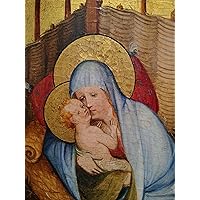
With a new Preface by the noted writer Madeleine L'Engle, author of nearly fifty books of fiction and non-fiction, including A Wrinkle in Time . St. Francis of Assisi's ecstatic embrace of a life of poverty revolutionized Christianity even as it transformed the ethics of the West. In this luminous and lively book, St. Francis's followers preserved his legend and those of his first disciples, combining stories of miracles with convincing portraits of men who were no less human for having been touched by God.
"God is our home but many of us have strayed from our native land. The venerable authors of these Spiritual Classics are expert guides--may we follow their directions home." --Archbishop Desmond Tutu
Ugolino Brunforte (c. 1262 – c. 1348) was an Italian Friar Minor and chronicler, known principally as the author of the Fioretti or Little Flowers of St. Francis. He passed most of his life at the convent of Santa Maria in Monte Giorgio, whence he is often called Ugolino of Monte Giorgio.
When awful news looms large in your life, and the daily routine sits heavily upon your shoulders, you can recollect your scattered hopes by going back to the little things.
Like the marvellous Fioretti - Little Flowers - of the gentle Saint Francis. Or rather, by a little-known Friar Minor, now in oblivious blessedness, few years after the soft-spoken saint passed to his reward in 1226.
Stories about the little saint were rife throughout the medieval world at this time - as they always must be when some virtuous folks don’t seem to go with the flow - but especially in this young, credulous world, where such stories became a staple of village life.
It’d be so nice to have MODERN urban myths like these, wouldn’t it?
So what if Fioretti is overshadowed by the greater Life of Francis by his pre-eminent pupil, Saint Bonaventure?
That classic doesn't hold as much of a loving candle to the charismatic and charming images of this beloved man we know from the legends - as the Little Flowers!
You know, nowadays modern Franciscans like Richard Rohr and Murray Bodo give us angst-ridden looks at the saint’s human failings and brokenness.
Granted, we often start our spiritual wanderings in such places of desolation, but at the end of our journeyings - in which from time to time we glimpse vast vistas of a final peace - will see a fulfilled Francis, for whom the plenitude of peace is simply the apt conclusion of all such hapless strivings.
The Francis of the Fioretti!
It’s as if this is is the way the saint appears to the Angels.
50 years ago, I took this tiny gem with me on my long walks through the fields adjacent to some nearby newly-built suburbs - fields that were hallowed ground for my childhood self.
There, as kids we used to build forts and catch tadpoles - hoping they would mature into frogs in our bedrooms, which of course they never did.
I was rediscovering my childhood self against the backdrop of a beckoning Catholic faith...
Concurrent to reading the Fioretti, I was just finishing Newman's Apologia Pro Vita Sua, his blistering defence of his carefully thought out move from High Anglicanism to a Catholic place of refuge from his many free-thinking and vocal critics.
Newman had come to see clearly, at least to his own mind, that the doctrine of apostolic succession alone answered the instructions of Christ, though the modern Church, of course, has so many other magnets for the lost.
However, be that as it may, I was seriously contemplating an identical move. And move I did, 35 years ago.
But just follow me, if you will, as I think back to the first time I read this book in a pastoral setting...
Francis and his motley crew of friends, most remarkably the good Brother Leo, talk to the animals of the medieval forests, heal the sick, and feed the hungry.
Where was this beautiful, straightforward world now, I thought?
Beautiful simple stories such such as they were...
Which I read at a time when the nightly news from Vietnam was becoming ever more gruesome and appalling with each newscast.
You know, when the New York Times put out a call to their readers for one essential desert island book from each reader, at about that time, one sweet old lady chose this.
No book gave her as much comfort in this crazy, evil world as these same Little Flowers!
So if you long for the little things of life, on this day of the usual bad news, it’ll give YOU comfort too.
So, in closing:
Five eternally shining stars, Francis. And you as well, O saintly unknown writer of this wonderful little classic!
I really hated this. It took tremendous will power just to finish it. The first Franciscans seemed more crazy than holy. They falsely equated The Order with salvation, sometimes with very unchristian results. Francis at one point damned a monk to Hell for starting a school. Several times the authors told tales where someone left the Order and was almost immediately struck dead by God and dragged down to hell. The Order also seems very materialistic. Their Holy Poverty depends upon other people staying in the world and having jobs. Their excess focus on poverty becomes an obsession with material goods. They approach people as Rich or Poor but not as individuals. Idolatry is the setting up of false demons as much as it is false gods. The obsessive hatred and obsessive love both center your life around the loved/hated object with no room left over for God. Lady Poverty can be just another idol if she isn't tempered by the love of God. Also, Brother Juniper seems to have crossed that fine line between piety and mental illness. He is more selfish than holy. He steals. He tortures a pig. He makes a spectacle of himself so others can admire his humility. All in all, a very creepy guy. This most definitely gets rid of those cute, cuddle Victorian stereotypes of St Francis. I think I was better off reading GKC on Francis and not reading this.
L'ideale francescano di semplicità, candore, purezza, fede e fiducia in Dio e amore per il prossimo, stupore, contemplazione e ringraziamento per la bellezza del creato: queste cose per me sono I Fioretti di S. Francesco, intramontabili, delicati. Sono sorgenti cristalline a cui abbeverare lo spirito assetato di una nuova fanciullezza consapevole, quella dei figli del Padre.
It's good to remember that 7,000 miles and about 800 years separate me and this strange Italian man. But not only is the world of space and time bigger than I am used to thinking; the possibilities that arise when a human being becomes a genuine friend of the Lord are much weirder, more surprising, delighting and baffling than I ever knew.
Wow. Was definitely not expecting this to be that interesting. A book of little short stories about St. Francis and his “little club” as i like to call it. My favorite story of course involved fish: PLEASE ask me about it. Dog eared alot of stories so i will enjoy reading back over them (if i ever actually do that). Not a book for all, but very intriguing for me.
Creo que esta es una lectura que deja enseñanzas para todo tipo de lector, también creo que aquellos que tengan afinidad por San Francisco o la religión católica disfrutarán más.
En particular, esta edición tiene, aparte de Florecillas, otros escritos relacionados con los primeros franciscanos, aunque los relacionados directamente con San Francisco fueron los que más me gustaron.
Hay pasajes completos que narran la relación de Francisco con la naturaleza, resultan muy poéticos y tiernos; y en mi caso, hacen que me sienta más cercana a esa característica de su ser.
Si te llama un poquito la atención, dale esa oportunidad.
2.5 Pieśń o Rolandzie wersja zakonna?? nie, średniowiecze to zdecydowanie nie moja epoka. Totalnie nie trawię. Oprócz lektur, już nigdy nie mam zamiaru sięgać po literaturę z tego okresu
Bracing scenes showing the weirdness and wildness of uncompromising humility. I will be rereading this. The Rossellini film captures its spirit well, though you don't get the startling & necessary chapter where Francis orders a friar to condemn him and God makes the friar disobey. (That chapter is not just important for those of us struggling to negotiate the divide between humility and self-hatred; it's also very funny. Francis is MEEKLY ANGRY at being thwarted!) You also get the wolf of Gubbio, which if I were a saint, that's the saint I'd want to be. heart emoji, wolf emoji
Al tempo che santo Francesco dimorava nella città di Agobbio, nel contado d’Agobbio apparì un lupo grandissimo, terribile e feroce, il quale non solamente divorava gli animali, ma eziandio gli uomini; in tanto che tutti i cittadini stavano in gran paura, però che spesse volte s’appressava alla città; e tutti andavano armati quando uscivano della città, come s’eglino andassono a combattere, e con tutto ciò non si poteano difendere da lui, chi in lui si scontrava solo.
E per paura di questo lupo e’vennono a tanto, che nessuno era ardito d’uscire fuori della terra. Per la qual cosa avendo compassione santo Francesco agli uomini della terra, sì volle uscire fuori a questo lupo, bene che li cittadini al tutto non gliel consigliavano; e facendosi il segno della santissima croce, uscì fuori della terra egli co’suoi compagni, tutta la sua confidanza ponendo in Dio.
E dubitando gli altri di andare più oltre, santo Francesco prese il cammino inverso il luogo dove era il lupo. Ed ecco che, vedendo molti cittadini li quali erano venuti a vedere cotesto miracolo, il detto lupo si fa incontro a santo Francesco, con la bocca aperta; ed appressandosi a lui santo Francesco gli fa il segno della santissima croce, e chiamollo a sé e disse così: «Vieni qui, frate lupo, io ti comando dalla parte di Cristo che tu non facci male né a me né a persona»[…] Frate lupo, tu fai molti danni in queste parti, e hai fatti grandi malifici, guastando e uccidendo le creature di Dio sanza sua licenza, e non solamente hai uccise e divorate le bestie, ma hai avuto ardire d’uccidere uomini fatti alla immagine di Dio; per la qual cosa tu se’degno delle forche come ladro e omicida pessimo; e ogni gente grida e mormora di te, e tutta questa terra t’è nemica. Ma io voglio, frate lupo, far la pace fra te e costoro, sicché tu non gli offenda più, ed eglino ti perdonino ogni passata offesa, e né li uomini né li cani ti perseguitino più». E dette queste parole, il lupo con atti di corpo e di coda e di orecchi e con inchinare il capo mostrava d’accettare ciò che santo Francesco dicea e di volerlo osservare.
Allora santo Francesco disse: «Frate lupo, poiché ti piace di fare e di tenere questa pace, io ti prometto ch’io ti farò dare le spese continuamente, mentre tu viverai, dagli uomini di questa terra, sicché tu non patirai più fame; imperò che io so bene che per la fame tu hai fatto ogni male. Ma poich’io t’accatto questa grazia, io voglio, frate lupo, che tu mi imprometta che tu non nocerai mai a nessuna persona umana né ad animale: promettimi tu questo?». E il lupo, con inchinare di capo, fece evidente segnale che ’l prometteva. E santo Francesco sì dice: «Frate lupo, io voglio che tu mi facci fede di questa promessa, acciò ch’io me ne possa bene fidare».
4,25 ⭐ Moja pierwsza mini recenzja. Pierwsze rozdziały czytalo mi sie z ciepłem na sercu przez dobroć jaką emanował św. Franciszek oraz przez jego równe i rozsądne traktowanie siebie i braci. W połowie książki autor już skupia się prawie całkowicie na zakonnikach i jak na początku np. przedstawienie postaci brata Bernarda bylo bardzo ciekawe, tak dlugie opisy cudów w kilku rozdziałach stawały sie nudne. Samo zakończenie jak również rozdział poświęcony bratu, który trzykrotnie próbował opuścić most, chyba są moimi ulubionymi fragmentami. Tekst pomimo swoich lat jest całkowicie zrozumiały, choć język jest nieco "biblijny". Jednak trochę rozczarowalo mnie to, że nie znajdziemy w nim zbyt wielu informacji o samym św. Franciszku (poza jego zachowaniami, które znamy z Biblii, jak np. post czy kazania oraz pokuta cielesna), a na głównym planie są opowieści o braciach i siostrach.
Muy recomendable. Se notan muchas correlaciones entre la vida de los frailes Franciscanos y el Camino. De hecho una de las motivaciones para leer las Florecillas fue precisamente que Kiko llevó este libro a Palomeras. La parte que más me ha gustado es la de la Impresión de las Santas Llagas.
Read with a contemplative spirit, these little flowers provide us with a vignette into the holy life of St Francis and his early companions.
Read with an aesthetic appreciation, they can afford us a way to holiness and place us in the companionship of the Good Lord and the saints in heaven. And when we are tempted to think that some of the chapters border on absurdity, the Holy Spirit is quick to enlighten us that St Francis and his holy Friars are seeking perfection in their Christian life. And, in turn, this inspires us to be likewise.
“The Little Flowers” strengthens us in our pursuit to imitate Christ in all things.
IS this the first annual calendar of quotes? Anyway, plenty of saints are territories in Silicon Valley so first time I heard about St Cupertino (Apple). Just joking but the essence is that this is a good book, dont ask what days were my favourites. All of them are for contemplation. Book packed with wise words.
Interesting insight into Fransican spirituality. Helpful to read to understand some more Catholic spirituality and what is upheld as virtue. But truly not my cup of tea. I can't believe in the self-flagellation and self-loathing St Francis and his brothers believed in.
Una lettura non facilissima, vuoi per la lingua un po' pesante del Quattrocento, vuoi per certi miracoli difficili da comprendere. Ma una lettura davvero consigliata.
I bought this because, standing there in the second-hand bookshop, I couldn’t work out what the nature of the text was. My curiosity would have been satisfied if I’d spotted the endnote. It turns out it’s a Medieval amalgamation of various texts, stitched together by a later editor. There’s a fair bit about it on Wikipedia if you’re interested, all of which makes it sound like a bit of a mess. That couldn’t be further from the truth. Whoever edited it together was some sort of genius.
The text as we have it is a collection of short chapters, mostly two or three pages long. Each tells a story either about St. Francis or various early Franciscan monks. Each story exemplifies a thoughtworthy point. The stories are fantastical, full of miracles. There’s little here that you could use for a biography of Francis, but it is a window into what Franciscans at the time believed about him. The section on the stigmata is particularly interesting in this regard. Here St Francis is portrayed as a second Christ, a living God, and after death, a psychopomp with powers of judgement over the dead. How did they avoid being killed as heretics? I don’t know enough about the period to answer that.
It made me consider the reliability of any written historical information from any dead culture. We have a clear dividing line between what we consider possible or impossible, but we cannot simply exclude the miracles and accept the remainder as history because the writers too had a clear dividing line. Their possible clearly differs from ours and includes the miraculous, but that doesn’t mean the remainder is true just because it happens to coincide with our possible. Imagine a testimony from the past that happens not to cross the line into our concept of the impossible. We might take it as a reliable historical account, yet to someone from that culture it might contain the most egregious series of improbabilities. But after all, what is history but a story we tell ourselves about the past?
Anyhow, I read the first 50 or 60 pages straight through like normal book and then, quite organically, my approach changed and I took to reading a chapter here, a chapter there as I had a quiet moment. Because no matter how strange the writers’ view of the universe and their mode of expressing themselves, the points they raise are worthy of contemplation. I think it would be a stretch to describe a hoary old sinner like me as reading anything in a devotional manner, but I can completely see why people are still using this book in this way nearly 700 years later.
There were parts I enjoyed, parts that sparked contemplation, and parts that were wild or just plain strange. I had a hard time making it through and really had to push to finish this.
Unlike what good reads says, this is not written by St Francis but by brothers in his order. This book captures the spirit of early Franciscans in living out the gospel, but should not be taken as straight history, as outlined in the introduction to this edition. The introduction is well done and I would highly recommend reading it to gain context of what you will find in the following chapters and stories.
From the added sections to this edition, I appreciated “The Sayings of Brother Giles” most. It is filled with wisdom like the Proverbs in living to honor Christ.
"An example of holy men, calculated to excite in the minds of the devout hearer a contempt for transitory joys and to inspire him with the desire of eternal salvation."
Description of the lives of some saints, who are either holy or crazy; oftentimes you can't tell the difference, and maybe that's the point.
I enjoyed some of the stories (my favorite was when they joined they gave the sermon naked) but many of them were kind of repetitive and not very interesting.
Espectaculares narraciones sobre la vida mística de los primeros franciscanos. Me abrió el apetito a conocer más sobre la vida mística, recomendadisimo!
so you're telling me St francis showed the way of Jesus to fish and birds and yet condemned a monk to hell? Cursing him for eternity- that is so contradictory to everything he preached and all the deeds he committed. Yeah Christianity is one weird religion