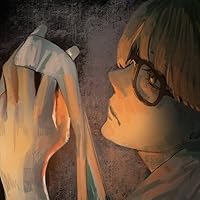
If Gene Wolfe's The Shadow of the Torturer (1980) is Severian's bildingsroman, depicting his growth from a boy apprentice to a young journeyman of the guild of torturers and his exile into the world outside it, The Claw of the Conciliator (1981), the second novel in Wolfe's four-book science fiction classic The Urth of the New Sun, is his romance, relating his experiences--many involving women he loves--outside Nessus, the City Imperishable, as he attempts to travel north to become the lictor of Thrax. The novel also traces his growing awareness of the powers of the awesome jewel hidden in his sabertache, the Claw of the Conciliator.
The second novel is more difficult than the first, having less humor and more disturbing things, including a woman's graphic execution, excessive "cooing," narcotic cannibalism, algophiliac sex, an awful fate for an artificially beautiful woman, and a confusing climax (that isn't explained till the third book). The darker mood of the novel is reflected by a line Severian sees in the Book of Wonders of Urth and Sky: "Hell has no limits, nor is circumscribed, for where we are is Hell, and where Hell is, there we must be."
Moreover, the two longest chapters of the novel consist of a story that Severian reads aloud and of a transcription of play that Dr. Talos' company performs, and although the story and especially the play (a series of funny lines and outrageous scenes satirizing religion, politics, and humanity and reflecting a culture longing for a new sun) are interesting, they both seem to last too long.
All that said, there are many poignant and sublime points in the novel, which thrums with Wolfe's perfect prose, exotic vocabulary, philosophical asides, and vivid, dream-like descriptions. And there are many powerful moments, as when Severian hears an apocalyptic step in a deep mine, raises his "iron phallus" over Agia, enters Vodalus' forest headquarters atop an elephantine baluchither, looks in a man-sized mirror-paged book in the House Absolute, tosses a coin into the Vatic Fountain there, talks with Dorcas about the Conciliator, and sees and is seen by the mythic Apu-Punchau.
And another line in the novel beatifies the Hell vision: "In the final reckoning there is only love, only that divinity." Indeed, this novel is largely about love in many of its forms, among them Severian's sad and abiding first love for Thecla, his protective and companionable love for Dorcas, his self-destructive love for Agia, his resentful lust for Jolenta, his awed attraction for a gargantuan undine, his lost love for his mother, his warm friendship for Jonas, and his fly-captured-in-amber admiration for Vodalus. At one point Severian senses Thecla's mind inside his: "We were one, naked and happy and clean, and we knew that she was no more and that I still lived, and we struggled against neither of those things, but with woven hair read from a single book and talked and sang of other matters."