La imagen primordial del conde Drácula se ha convertido en una presencia continua e indeleble en el imaginario colectivo moderno. La mayoría de nosotros somos capaces de recitar, sin necesidad de que nadie nos las sople, las características más destacadas del vampiro. Hemos recibido la información, no siempre mediante la experiencia directa sino a través de una curiosa transfusión cultural. Siempre moldeable, Drácula se ha ido adaptando paulatinamente a los roles más variados: pesadilla sexual victoriana, presencia habitual en el teatro, icono cinematográfico, marca registrada, peluche, helado y hasta cereales para el desayuno. A estas alturas, ha sido recreado en el cine en más ocasiones que prácticamente cualquier otro personaje de ficción (con la única excepción posible de Sherlock Holmes) y ha acabado infiltrándose de tal manera en el mundo de las comunicaciones y la publicidad que hace tiempo que dejó de ser necesario leer la novela o incluso ver una de sus adaptaciones para estar completamente familiarizado con el conde y sus hazañas.
David J. Skal, autor de estudios fundamentales como Monster Show, centra en esta ocasión su incisiva mirada y su talento investigador en los orígenes, la historia y la infinidad de lecturas de uno de los iconos más universales del terror y la cultura popular, trazando la implacable trayectoria del más arquetípico de los vampiros, desde sus orígenes literarios y su paso por el teatro y el cine hasta su última reencarnación como moderno producto de consumo, raspando el barniz populista para sacar a la luz todo cuanto este complejo, contradictorio y desconcertante príncipe de las tinieblas revela sobre todos nosotros.
David J. Skal became fascinated with monsters at the height of the 1962 Cuban missile crisis, when indestructible monsters like Dracula, Frankenstein and the Wolf Man provided a "nuclear security blanket" for a whole generation of youngsters.
Active as an editor and reporter on his high school newspaper, he was granted a journalism scholarship to Ohio University, Athens, where he earned a bachelor's degree in 1974. His work as film critic, arts reporter, arts editor and assistant managing editor of the Ohio University Post, one of the country's leading college papers,led to his three-season appointment as publicity director of the University-operated Monomoy Theatre on Cape Cod. Following his graduation, he served as a public affairs intern in the office of National Endowment for the Arts chairman Nancy Hanks, and went on to the position of Publicity Director at the Hartford Stage Company, where he oversaw all media relations while the regional company fund-raised, built and opened a major new facility in downtown Hartford. In 1978, he was staff writer for the American Conservatory Theatre in San Francisco, with responsibility for the content of all printed materials. From 1979-1982 he was Publications Director of Theatre Communications Group, a national service organization in New York City. From 1982 to 1992 he was president and creative director of David J. Skal Associates, Inc. (later Visual Cortex Ltd.), a Manhattan-based, nationally oriented design and marketing consultancy with clients ranging from the Metroplitan Opera to regional theatre, dance and music organizations.
A published writer of short fiction since his early college years (he was one of the youngest students ever admitted to the celebrated Clarion Writers Workshop in fantasy and science fiction), he authored three well-received science fiction novels: SCAVENGERS (1980), WHEN WE WERE GOOD (1981) and ANTIBODIES (1987). His long-standing interest in Dracula and his extensive contacts in the theatre world led to his first nonfiction book, HOLLYWOOD GOTHIC: THE TANGLED WEB OF DRACULA FROM NOVEL TO STAGE TO SCREEN (1990), followed by THE MONSTER SHOW: A CULTURAL HISTORY OF HORROR (1993). Many other books followed, including V IS FOR VAMPIRE (1995); DARK CARNIVAL: THE SECRET WORLD OF TOD BROWNING (1995,with Elias Savada); the Norton Critical Edition of Bram Stoker's DRACULA (1996, co-edited with Nina Auerbach); SCREAMS OF REASON: MAD SCIENCE AND MODERN CULTURE(1997); and the monumental anthology VAMPIRES: ENCOUNTERS WITH THE UNDEAD (2001, the largest such illustrated/annotated compendium ever published.
Skal began his work as a documentary filmmaker writing and co-producing segments for the A&E Network's award-winning series "Biography," and contributed scripts chronicling the lives and careers of Bela Lugosi, Boris Karloff, Lon Chaney, Jr. and Angela Lansbury (with whom he had worked during his theatre career). In 1999, he wrote, co-produced and co-directed a behind-the-scenes chronicle of the Academy Award-winning film GODS AND MONSTERS. The same year, he was tapped by Universal Studios Home Video for a series of twelve original DVD documentaries exploring the legacies of the studio's classic horror and science fiction films. His DVD work has continued with Disney Home Video's "Jules Verne and Walt Disney: Explorers of the Imagination" (2003) and the feature commentary for Warner Home Video's special-edition release of Tod Browning's FREAKS (2004).
His current projects include CITIZEN CLONE: THE MORPHING OF AMERICA (Faber and Faber, 2005)and CLAUDE RAINS: AN ACTOR'S VOICE, a biography based on the acclaimed character actor's never-published reminiscences, written in collaboration with the actor's daughter, Jessica Rains.
David Skal is a member of the Authors Guild. He lives and writes in Glendale, California.
01/16 The afterlife of the novel Dracula is a long (ongoing) story involving the law and endless plays and movies. I love the fact of the Spanish language version filmed at night on the sets of the Bela Lugosi version in1930.
David Skal escribe tan entretenido y se documenta tan maravillosamente, que no me queda más que recomendarlo con muchísimo entusiasmo.
Cada vez que leo sobre la triste suerte de Bela Lugosi, se me parte el corazón :/
En este libro el aborda, ilustrativa y amenamente, parte de la creación de la novela Dracula, datos sobre su autor y familia, sus adaptaciones teatrales y cinematograficas y la pelea por los derechos de autor que estas provocan. Incluye algunos análisis de histórico-culturales, literarios, de género así como varios chismes sabrosos, frases irónicas y mucha documentación interesante.
Isabeel Adjani rules forever! (aunque al querido David no le gusto la adaptación :/)
Me muero de ganas de leer la biografía que sacó el año pasado sobre Bram Stoker.
Nota: Leido para el Programa de Radio "Conversando con la historia"
I loved Hollywood Gothic: The Tangled Web of Dracula from Novel to Stage to Screen by David J. Skal! It's was fascinating finding out some of the things that could have been with the 1931 film, especially that Louis Bromfield was originally tapped to write the screenplay. One of these days I need to watch the Spanish one that was shot back to back with it. I also will have to check out the 1970s movie with Louis Jordan. I would very much like to see what David J. Skal thinks of the new Nosferatu, the new Interview with the Vampire, Buffy the Vampire Slayer, Angel, Forever Knight, Moonlight, and Blood Ties, and many others, please and thank you.
Begins with the Bram Stoker novel, proceeds to the stage version, the trouble with Florence Stoker, copyright, lawsuits and studio troubles. Includes an entire chapter explaining why the Spanish version is better than the Lugosi version. There is good info about how Bela Lugosi sabotaged himself in the role that subsumed. Then, how the studio fought with his heirs.
Also includes bits about how Hammer films put life back into the Dracula character and snubbed the censors. This version ends with the 2004 film Van Helsing.
Recommended. But required prerequisites are the movies Dracula (Lugosi), Nosferatu (Murnau's), Dracula (Spanish version), and, of course, the original Stoker novel.
Lo mejor: que he aprendido y que me he divertido muchísimo conociendo los avatares que han llevado a Drácula del papel a la pantalla, pasando por el teatro y otro tipo de artes como el ballet. Lo peor: que ahora tengo una laaarga lista de películas que me gustaría ver cuando antes :-P
El libro es fantástico pero no he visto incluida en la filmografía "Brácula: Condemor II" (Álvaro Sáenz de Heredia, 1997). ¿Qué hubiera opinado Skal de Chiquito con colmillos brincando junto a Bigote Arrocet?
My Opinion: Oh, this was wonderful. As title suggests, the book goes through all the various stages and phases Dracula has been in, from the mildly popular book to a few unauthorized movies, to groundbreaking actors we still see in our heads when we think of Dracula, and farther down into the modern age. How it happened, whom it affected and how, what was the public reaction, and how Dracula remains so very alive, in compared to other, lukewarm stories attempted through the decades and even centuries. It was extremely informative and entertaining through every single page.
This is an excellent history of the various adaptations of Dracula, up to and including the most famous Universal Studios version, released in 1931 and featuring Bela Lugosi. According to Skal, Stoker introduced his novel, Dracula, to the public with a non-stop reading at a theater he managed. His employer, Henry Irving (a famous Shakespearean actor of the late 19c), is reported to have passed by while the reading was in progress, and pronounced the story "rubbish!"
Soon after the novel was published, it was adapted for the stage. It's been awhile since I read Skal's book now, but I seem to recall that there was more than one version of the play, and in particular that a separate American version was developed. Lugosi was not the first to play the role, but did indeed take the part on stage (in NYC, I believe) before he starred in the Universal film. The Dracula plays were immensely popular, and probably did more to embed Stoker's story into collective consciousness than the novel itself. According to Skal, however, the stage versions eviscerated the story, and unfortunately the famous Universal film was based, more or less, on the anemic stage plays.
The most famous pre-Universal version of Dracula is Murnau's silent film from the early 1920's, Nosferatu. Max Shreck's vampire makeup, featured in this film, contributes to the creepiest depiction of Dracula ever. (Although the name "Dracula" is studiously avoided by Murnau, Nosferatu is fairly clearly an adaptation of Stoker's novel).
We are lucky that Nosferatu survived at all. Bram Stoker's widow, Florence, embarked upon a campaign to destroy every copy in existence after winning a copyright lawsuit against the distributor. She was almost successful in finding every copy, but the film itself seemed to have vampiric qualities and simply could not be killed off.
Florence also sued or threatened suit against Universal. The studio settled, but might not have done so had it realized that Stoker had failed to perfect a valid copyright registration of his novel, Dracula, in the United States. Florence Stoker was old by then, and running out of cash, so the settlement award was probably for the best.
The Universal film was actually shot twice: during the day the sets were used for the Lugosi version, while at night, a parallel Spanish language version was filmed with completely different actors. Skal praises the cinematography of the Spanish version and rates it better than Tod Browning's English version. Although Carlos Villarias, the actor who portrays Dracula in the Spanish version, did a great job, he is simply not as memorable as Lugosi. Who could be?
Sadly, Lugosi was forever cursed by the public's identification of him as Dracula. He did go on to play a few other great roles, such as the "beast man" in Island of Lost Souls, but he was forever stuck in B-level horror films. After his death, his heirs sued Universal on a theory that their Dracula franchise (including toys and other products) were unauthorized appropriations of Lugosi's likeness. Universal won the suit, because the courts refused to recognize this kind of tort except in cases where the plaintiff is a living person.
Skal's book is lush with additional details that make the history of the various Dracula productions (and personalities associated with them) full of life and intrigue. I recommend this book to anyone who loves the old Universal film or simply takes an interest in Dracula as a cultural icon.
Todo interesado en la historia de Drácula, como libro y sus derivados como obras de teatro, películas, óperas, ballet y la figura de Lugosi como LA imagen de Drácula por antonomasia, tiene que leer este libro. Es una maravilla tener a mano anécdotas, entrevistas y hechos no muy conocidos (como la filmación del Drácula en español a la par que el Drácula de Browning, el paso de Florence Balcombe de ex novia de Oscar Wilde y futura esposa y viuda feroz de Stoker en la casi destrucción de todas las copias de "Nosferatu") con una estupenda prosa de Skal y muchas imágenes en su mayoría no muy conocidas. Muy bueno. Viene además con un listado de películas y obras de teatro muy completo.
Growing up a Monster Kid, I always liked seeing David J Skal pop up after the movie on the VHS of Dracula to drop some knowledge on how the movies were made and more BTS info on Stoker and whatnot. I’ve always kinda just fused his face and voice with all the big guys like Lugosi, Karloff, Chaney, and all the other boys and gals of Universal Monster fame. This was a great nonfiction look at all things Dracula, and even though I’ve listening to this exact guy telling stories about this exact source material, Hollywood Gothic was filled with information I had never heard before. A treasure trove for any true fan of the OG bat-man.
Imprescindible para todo fan del mito de Dracula, ya que el autor hace un ameno e interesante (hay mucho salseo y tema de derechos con Nosferatu) recorrido desde su creacción por Bram Stoker, como fue la lucha de sus derechos cinematograficos hasta el impacto de la interpretación de Bela Lugosi.
Como curiosidad, la primera edición del libro es del año 1990 y ha sido acompañado de revisiones añadiendo más películas y versiones teatrales al final.
Pero lo que me gustaría destacar, su importancia para recuperar la versión hispana de Drácula, que ahora podemos disfrutar en Blu Ray.
[Crítica] ‘Hollywood Gótico’: Las memorias del icono vampírico.
¿Es posible entender lo que implica Drácula en el género del terror? David J. Skal lo intentó explicar y salió vivo del intento. Estamos ante una de las historias más enrevesadas de nuestra historia cultural reciente. Este libro arroja algo de luz sobre una de la figuras más complejas del género.
El crítico cultural y cineasta David J. Skal (1952) es el artífice de Hollywood Gótico (1990), el primer ensayo del autor y que, sorprendentemente, permanecía inédito en castellano a pesar de que otras obras suyas posteriores sí habían visto la luz. Y digo sorprendente porque el tema tratado es indudablemente atractivo. Como se indica al comienzo, es posible que el mito de Drácula sea uno de los más conocidos dentro de la cultura pop:
“Aunque desconozcamos por completo los orígenes del mito, la mayoría de nosotros somos capaces de recitar sin que nadie nos las sople las características más destacadas del vampiro: que duerme durante el día para alzarse de su lecho-ataúd con la llegada del crepúsculo y nutrirse con la sangre de los vivos; su facultad de asumir la forma del murciélago, el lobo o la niebla; que puede ser destruido atravesándole el corazón con una estaca y rechazado eficazmente mediante el uso del ajo, el acónito, el crucifijo o el poder de la Eucaristía. Hemos recibido la información, no mediante la experiencia directa sino a través de una curiosa transfusión cultural… y sin embargo, a determinado nivel psicológico, debe de reflejar alguna especie de conocimiento universal, por muy velado o recóndito que sea.”
En esta “enmarañada historia de Drácula” el autor se propone dar luz a esas sombras de hechos no tan conocidos y que conforman la historia del personaje, e incluso ahonda en las razones de su atractivo; está claro que Drácula añade una sutileza al monstruo que nos aterroriza: su capacidad de convertirse en una persona normal y corriente, perop con la capacidad de ser subyugadora y seductora:
“El atractivo de Drácula es decididamente ambiguo. La negra capa y la enfática corbata blanca, tan llamativos a primera vista, rápidamente despliegan infinitos matices de gris. La mayor parte de los monstruos despojan y aplastan. Únicamente Drácula seduce y a menudo corteja antes de matar. Al contrario que otros monstruos, no siempre resulta reconocible como tal. Drácula parece en demasiados aspectos uno más entre nosotros. Con sus zapatos de charol y su pelo no menos acharolado, se burla de nuestros conceptos de civismo y sociedad, utilizándolos como atrevido camuflaje para acechar mejor entre nosotros, sus lectores, sus espectadores, su presa. Drácula no empezó en Hollywood, pero viajó hasta allí llevado por un impulso inexorable. El propio medio del cine tiene sus orígenes en los atavíos del ocultismo.”
Dracamer99
El propósito del norteamericano, por lo tanto, fue desgranar la figura desde sus inicios, y no podría hacerlo de mejor forma que yéndose al texto que supuso la consagración y, al mismo tiempo, inicio de su fama:
“Éste no es el primer libro que se escribe acerca de Drácula y tampoco será el último, pero hasta la fecha la mayoría de los enfoques han ignorado en gran medida la fascinante historia –que en la actualidad abarca más de un siglo- de los hombres y mujeres cuyas vidas acabaron entrelazadas con el peculiar poder del mito. Drácula ha ejercido una atracción irresistible y, en ocasiones, faustiana sobre numerosos individuos que se han servido de la cada vez más poderosa maquinaria de la edición, la dramaturgia y la cinematografía para explotar el poder de la historia y extender su influencia.
Al margen de cualquier cosa que pueda ser, Drácula resulta uno de los textos más obsesionantes de todos los tiempos, un verdadero agujero negro de la imaginación. La historia parece rejuvenecer con el paso del tiempo, extrayendo vitalidad de su longevidad y atrayendo a un público cada vez más amplio.”
Para ello analiza la obra de Bram Stoker desde un punto de vista bastante imparcial. No duda en reconocer que el autor posiblemente no fuera un verdadero estilista ni un innovador; ello no fue óbice para creara uno de los textos más influyentes y obsesivos en el género:
“La novela de 1897 de Bram Stoker, Drácula, presenta uno de los rompecabezas más fascinantes de la historia de la literatura, un libro que ha alcanzado el estatus de clásico menor en base a su obstinada longevidad y a su perturbadora resonancia psicológica, más que por sus logros técnicos o narrativos. Stoker no era un innovador ni un estilista distinguido –incluso sus críticos más devotos no pueden evitar la palabra “plumífero” en relación con sus obras menores- y, sin embargo, Drácula sigue siendo una de las novelas más leídas de finales del siglo XIX. Nunca ha dejado de estar en circulación. Sus adaptaciones teatrales y cinematográficas se cuentan entre las más indelebles e influyentes del siglo XX, y el legado de Drácula sigue creciendo en el XXI.”
No se queda ahí Skal, sino que intenta explorar las influencias que le llevarían a la creación de su obra en particular; señala como texto fundacional El vampiro de John Polidori, que inicialmente se atribuyó a Byron:
“Un amigo íntimo de Byron, el doctor John Polidori, insufló nueva vida al villado de Lamb cuando tomó el nombre prestado para su propio misterio romántico: ‘El vampiro’. En este relato de 1819, Polidori introdujo por vez primera varios de los motivos que vincularían para siempre a Byron con los vampiros; de hecho, en su primera edición, incluso la autoría del mismo fue atribuida de manera fraudulenta a Byron. “
1280px-Carmilla
También considera que Le Fanu y su obra Carmilla (1871) debieron ser una influencia decisiva a la hora de configurar definitivamente su personaje:
“Una obra que sin duda cautivó la imaginación de Stoker fue la elegante novela corta ‘Carmilla’ de Joseph Sheridan Le Fanu, en la que el lesbianismo de buen gusto añadía picante al guiso literario vampírico. Le Fanu, otro dublinés con cuyos refinados relatos de fantasmas Stoker muy probablemente debía de estar familiarizado, relata una historia de talante onírico en la que los recuerdos de infancia, el vampirismo y el amor homosexual se desarrollan con la lógica surrealista de un cuenta de hadas. Laura, una joven que reside en una especie de castillo de cuento en la provincia austríaca de Estiria, es la narradora de la historia.”
Me fascina especialmente el análisis que realiza de la obra de Stoker:
“Los enigmas interpretativos a los que esto da pie son prácticamente incontenibles. Si Stoker no pretendía aportarle a su novela un mensaje implícito, ¿es legítimo intentar imponérselo a posteriori? Drácula, por ejemplo, ha acabado siendo considerada en muchos ámbitos como una incitante piedra Rosetta para los aspectos más oscuros de la psique victoriana y ciertamente cumple tal función de manera admirable, tal como atestiguan cientos de artículos y estudios académicos. Pero Drácula también puede ser fructíferamente leída como una alegoría (o parodia) del cristianismo, como parábola de la xenofobia cultural, como texto ocultista o como un escasamente velado tratado darwinista e incluso marxista. La conclusión ineludible es que Bram Stoker, trabajando de manera en gran medida intuitiva, pero sin duda impulsado por no pocos demonios personales, fue a dar con un pozo artesiano de motivos arquetípicos tan profundo y persistente que es capaz de adaptarse a la forma de prácticamente cualquier contenedor crítico.”
Consciente o inconscientemente el británico dotó a su obra de una miríada de posibles interpretaciones que sirven para enriquecer aún más el fenómeno. Tantos niveles de lecturas no hacen más que engrandecer un texto tan polisémico como este y lo llevan más allá de simplificaciones generalistas.
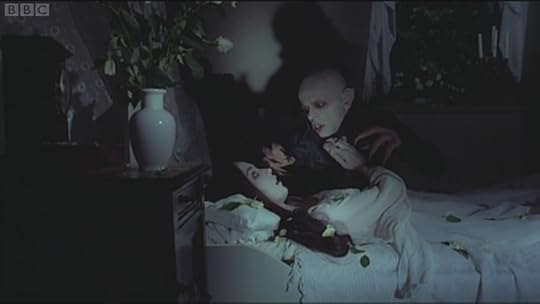
Nosferatu
Quizá una de las cosas que menos se espera el lector del ensayo es la detallada descripción de la lucha de derechos que se desencadenó tras el éxito de la novela y es ahí donde todo se enmaraña, como dice el subtítulo de la novela; buen ejemplo es el siguiente fragmento acerca del estreno de una adaptación de la novela, Nosferatu, sin contar con la viuda:
“Thring siguió leyendo para averiguar que el acontecimiento en cuestión era una versión cinematográfica alemana de la novela Drácula, de Bram Stoker; “una adaptación libre”, según el programa, afirmación airadamente ratificada por la viuda de Stoker, que ni había dado su autorización ni había recibido pago alguno por ‘Nosferatu, eine Symphonie des Grauens’. Esta “sinfonía del horror” era la primera película de una empresa llamada Prana-Film y parecía una producción bastante elaborada, si bien tremendamente morbosa. El estreno había sido suntuoso, con acompañamiento orquestal en directo, y había recibido una generosa cobertura por parte de la prensa cinematográfica. Era evidente que no estaban escatimando en gastos.”
Inevitablemente, en estos casos siempre surgen las típicas figuras de aquellos que consideran que no puede ser interesante adaptar al cine a cierto personaje o a cierto género y lo disfrazan con las opiniones de un público que suponen conocer. El tiempo revela que tal cosa no es así: Drácula es una de las figuras más fascinantes del cine de terror y no solo no pierde vigencia sino que sigue renovándose:
“Freedman añadió que tuvo que ‘conseguir interesar en el proyecto a varios directores y a uno o dos productores individuales’ antes de que Universal accediera, a finales de junio, a comprar ‘Drácula’ por cuarenta mil dólares. Según explicaba Freedman años más tarde, ‘conseguí cerrar la venta a pesar de la tajante oposición, por escrito, del señor Laemmle padre.’ Tal como afirmó este último ante un entrevistador, refiriéndose a ‘El Doctor Frankenstein’ (James Whale, 1931), producida por Universal al año siguiente: ‘No creo en las películas de horror. Son morbosas. Ninguno de nuestros directivos está a favor. El público no desea este tipo de producto. Junior es el único que está empeñado.’
belalugosi
Hablar de Drácula es hablar de Bela Lugosi. Skal es muy consciente de lo que supuso el actor para la consolidación del mito y lo compara con Marilyn Monroe. Ambos se convirtieron en arquetipos: tal fue la identificación de actor y personaje que a veces es difícil distinguir los límites entre personaje y vida real. Sexo y muerte confluyen de manera inversa en ambos para quedarse eternamente unidos en el subconsciente colectivo:
“Pero la víctima más dramática y desdichada de cuantas cruzaron sus caminos con Drácula fue sin duda Bela Lugosi, cuya abrumadora identificación con el personaje desdibuja los límites entre la ilusión y la realidad, el vampiro y la víctima, e incluso entre la vida y la muerte. La tragedia de Lugosi solo palidece, quizás, ante la de Marilyn Monroe como ejemplo de intérprete completamente atrapado por una imagen arquetípica. (De hecho, varios conservadores de archivos y colecciones de todo el país afirmaron ante el que esto suscribe que los recuerdos relacionados con Bela Lugosi son los que mayor tendencia tienen a ser robados… por detrás de los de Monroe. Estos iconos gemelos del sexo y la muerte poseen, al parecer, una misma capacidad de incitar el deseo y la posesividad de los monomaníacos. En la adoración de Drácula encontramos la muerte a través del sexo; en la idolatría postmortem de Monroe encontramos el sexo a través de la muerte.”
Es Pop Ediciones, a través de la figura de su editor y traductor, Óscar Palmer, vuelve a seleccionar otro de esos textos que no pueden permanecer olvidados y que interesará a todos los aficionados al género o, simplemente, a aquellos interesados en discernir los derroteros por los que avanza una buena parte de nuestra cultura. El texto que extracto a continuación es una buena manera de concluir esta crítica:
“Sombras, se diría, persiguiendo sombras.
Tal como observó Bram Stoker en ‘La joya de las siete estrellas’, ‘es en los arcanos de los sueños donde las existencias se funden y se renuevan, cambian para seguir siendo las mismas, como el alma de un músico durante una fuga’.
Y en los arcanos de Drácula, una fuga de luces y sombras, el siglo XX forjó algunos de sus sueños más perturbadores y sin embargo irresistibles, visiones urgentes que deben ser afrontadas, asimiladas, imágenes de violencia y oscuridad, sustancia y alma, identidad y sangre.
La sangre, después de todo, es vida. Y Drácula es la corriente sanguínea que nutre los sueños que nunca terminan.”
Drácula sigue y seguirá nutriendo nuestros sueños, aquellos sueños terroríficos que nunca terminan.
Los textos provienen de la traducción de Óscar Palmer Yáñez de Hollywood Gótico de David J. Skal para la editorial Es Pop Ediciones.
Starting with the conversion of Stoker's original novel to a stage play was hard enough, let alone from the there to the silver screen. The differences between the source vs. what people know about the story on screen are close to a day and (children of the) night dichotomy. Skal gives you all of the dirt (including the tragic story of Bela Lugosi, an actor that could not climb out of the shadow of the cape, let alone his own way) on how it all came together.
An absolutely invigorating and informative telling of the history of pop culture's favorite vampire. Skal weaves an in-depth history lesson that is as engaging as it is satisfying. For anyone with even an inkling of interest in old school horrors, this is a delicious treat.
This is an excellent, excellent book, for either those interested in the Dracula story and the various forms that it's taken, those interested in the history of horror films, or those who just like vampires. It's wonderfully designed - a gorgeous still from the 1931 Bela Lugosi movie graces the first page - eliminating at the onset most of the danger that this book could fall into painful cheesiness. And Skal writes about the first forty years of the Dracula story with intelligence, wit, and a great deal of passion for the subject matter. This book was both incredibly informative and occasionally made me laugh out loud.
For me, the first chapter was slightly boring - I knew most of the Skal's material on Stoker's inspiration for the novel and its critical and popular reception. But as soon as he reached the play version that catapulted Dracula into being a popular icon, I was riveted. Skal describes in loving detail all he can find out about both the London and Broadway productions of that play, and manages to make not only the anecdotes but also the potentially tiresome financial details engaging and interesting.
When he gets to Murnau's Nosferatu and the 1931 Dracula, the earliest adapatations which many readers will be familiar with, Skal then does something with I applaud greatly - he's not afriad to criticize either of them, even as he acknowledges the dreamlike, symbolism filled world of Nosferatu and Dracula's position as an unquestionably classic film. He points out (and rightfully so) that Murnau's experiments with faced paced film, an attempt to induce a supernatural cast to such mundane moments as Hutter's carriage speeding into the mountains, seem merely laughable in the modern age. And he shows how careless the vast majority of both the screenplay and cinematography of Dracula is, and justifiably mocks the completely inexplicable armadillos in the Count's castle in that same movie.
He also lauds the virtues of the Spanish version of the 1931 Dracula, so much so that I was convinced to see it. He says that, in addition to more satisfactorally resolving Lucy's plotline, that version utilizes the sets far more effectively, and chooses to take far more dramatic shots at many points. I hadn't heard anyone quite this enthusiastic about this version before, and it's quite interesting.
This book did disappoint me, however, in its rather limited scope, though it's a testament to how good it was that I wanted to read more. Such differing eras and interpertations as the Hammer films, Werner Herzog's Nosferatu, the Frank Langella Dracula, and Bram Stoker's Dracula, were all glossed over in one quick chapter that said little more than "and Count Dracula continues to be a powerful image today," which is such a common statement in any essay on Dracula as to be essentially meaningless.
That said, this was a wonderful book, especially for someone who doesn't quite fit into either the 'horror movie buff' or 'Victorian literary critic searching for metaphors of xenophobia/homosexuality/imperialism/Catholicism vs. Protestatism/etc.' categories of Dracula fan, and likes to criticize the movie versions without completely disregarding them.
Invaluable resource for anyone who is interested in the tangled road that this story took to get to the film we know now. This book is extremely thorough in its treatment of the details, full of extra stories that really make it a treat for any fan of Dracula and the Universal Monsters.
This book is a little more serious that it first appears. The major theme is not necessarily the vampire in general but instead it follows the legal and personal tragedies that were a result of the original book written by Bram Stoker. After his death his wife Florence was in charge of the estate and although there was little in writing that gave her control over the content or, rather, the use of the vampire as the main character,, she believed that there was. When the German classic film Nosferatu was released, a legal storm ensued and Florence finally won a decision that all copies of the film would be destroyed.(Luckily, for the film historian this did not happen.) The book was adapted for the stage and the fight was on again. Then Hollywood got involved. It was a legal nightmare for years but it finally worked out although Florence never got the money to which she thought she was entitled.
The second half of the book deals with the filming of the 1931 version of Dracula which made Bela Lugosi a star for a while but eventually ruined his career and his life and negatively affected many connected with the production. This writer may be the first to call the film "a bit of a stinker", static, over or under acted and inconsistent. I tend to agree with him, especially after I saw the armadillos in Dracula's castle in Transylvania! It has its moments but as a whole it is not very good.
You might want to give this book a try if you are interested in film history. An easy read but it does drag a bit in some sections, therefore my lower rating.
El trabajo de documentación de Skal es TITÁNICO, pero no le he dado 5⭐ porque lo he leído justo después de terminar "Halloween. La muerte sale de fiesta" y, en MI opinión, no resulta tan entretenido como este porque, especialmente en el capítulo final, hay una saturación de datos que puede ralentizar mucho la lectura.
Evidentemente, sólo lo recomiendo a fanáticos tanto de Stoker como de su emblemático personaje. Hablando de. Florence Stoker, la viuda del autor, merecería una biografía para ella solita. Genio y figura.
Another great work by David J. Skal on a subject he knows well: Horror in pop culture. HE covers the origins of Count Dracula through history from myth to novel to plays to film to products that lived on forever and ever This could be subtitled EVERYTHING YOU ALWAYS WANTED TO KNOW ABOUT DRAC, BUT WERE AFRAID TO ASK.
I was reading this predominantly as research but it told such a fascinating story that I will go back and read it at a more relaxed pace. An clear telling of an extraordinarily complex story. Must-read for anyone interested in film history.
It was a strange journey for Dracula and I didn’t want to miss a second of it. Plus, I’ll take Bela Lugosi stories any way, anywhere I can. Amazing how a moderately successful book could build and build into the most recognizable character in fiction.
Como persona que ha leído en lo que lleva de año bastantes libros sobre la figura del vampiro, Hollywood gótico es seguramente el mejor de todos ellos. Es divertido y ameno, y aunque no tiene un formato académico, cuenta con un gran número de fuentes. 100% recomendable.
Fascinating look at the early incarnations of the Count, and his unlikely genesis as a cultural icon. Skal's writing is extremely knowledgeable, and very amusing and readable. Generous with illustrations, and the large-size format (while a little hard on the wrists!) means that the pictures are right there, where you want them, by the text. (Example: reading a paragraph about the various actors who were considered for the part of Dracula in the Universal movie, several of whom were unknown to me, I thought, I wish he'd just have a page with pictures of all of them ... Turned the page, and guess what ...? That's thorough ...)
If I have a quibble, it's that Skal seems oddly resistant to his material. He's pretty dismissive of the novel and scathing about the Tod Browning film. He seems to cordially loathe Bram Stoker himself. He has very little good to say about the three theatrical versions that wound up touring the UK and the USA, thanks to Florence Stoker's litigious grasp on the copyright of her late husband's one and only cash cow. (He's not crazy about Florence Stoker, either ...)
Now, I'm not saying that Bram Stoker's Dracula is a work of literary genius. It's clunky, and amateurish, and it's much more interesting for what it reveals of the psychology of its author, and the society he lived in and, indeed, the psychology of anyone reading it. And Skal does acknowledge its strange attraction as a pop culture Rorschach test, on which a reader can and does project almost any of their personal or cultural concerns.
And yes, Bram Stoker was a very strange, sad man. He lived his life struggling with his homosexual yearnings, and turned himself into the worst kind of closeted person -- one obsessed with "good, clean manliness" and obviously very frightened of women. (And Florence Stoker was a woman who married a strange, sad man, and had to live with the consequences of that). But having recently read a novel about Stoker which presents Stoker and Florence in a much more sympathetic light (Shadowplay by Joseph O'Connor), I found it a little hard to go along with Skal's very hostile reading. (A novel is a novel, of course, and Skal backs up his claims with evidence, and may be absolutely right about Stoker and Florence. But it just seemed that there was more nuance there than Skal was allowing.)
And finally, the movie. Yes, yes, yes: Tod Browning's movie is a hot mess, and it was very interesting to learn how much of that mess was NOT due to primitive technology, and to the lingering aesthetics of silent movies, or even to studio interference. By contrasting it with the simultaneous Spanish language version, which was directed with much more flair and sensitivity for the possibilities of the script, Skal makes it clear that, no, the limitation of the 1931 movie are all down to the curious limitations of Tod Browning, who seemed determined to ignore the opportunities that his script, cast, set and technology offered him.
It reminds me that I must watch the Spanish language version which, since Skal wrote this book, has been rescued and reissued on a deluxe dvd with the Tod Browning version.
One thing Skal makes clear: it's a little miracle of pop culture that so many flawed individuals --Stoker, Mrs. Stoker, Browning, Bela Lugosi -- wound up producing something that lingers in the mind, and has spawned such a weird, rich mythology.
...ahh, the children of the night. What music they make!
I do remember at one point while reading Monster Show thinking.. "I could read an entire book by Skal JUST about Dracula and would likely love it.." I did not, at the time, know that Hollywood Gothic existed. I'm glad I did because it was everything I'd hoped it would be and more.
Skal goes into so much depth and detail, but not in the style of a dense historical text. Instead, he tells it in a most intriguing and engaging way, as if telling the tale of an adventure that spanned across centuries. From the original vampire myths to the competing 19th century writings of Stoker and Le Fanu, to the various early stage and film adaptations we're treated to a wealth of information and context which just adds so much richness to everything we've ever enjoyed that features the Count.
I do wish that the final chapter, "The Dracula Century", which kind of crams in everything between WW2 and the present, went a little deeper. I thought... "I could read a whole book just on this!" Maybe it's out there?
This was an interesting look at how Dracula transferred from novel to film, with a stop at the theater along the way. There were a lot of things I didn't know, or know that much about, like the details of the stage adaptations from Hamilton Dean and John L. Balderston (I'm definitely buying Skal's collection of them), and the sheer number of legal issues Universal faced when acquiring the rights.
There are some flaws, which I'll bullet point to save time:
-Skal briefly indulges in applying all of the usual overblown sexual metaphors to the original novel. While there are definite sexual overtones to the story, literary critics all take them to a ridiculous extreme. Skal is comparatively muted on the subject, but I still find it all rather silly.
-The Nosferatu chapter is more focused on the legal battles that Florence Stoker waged over it, rather than the film itself. This is understandable, but not to my preference.
-Yes Skal, we know it's silly that there are armadillos in Castle Dracula in the Browning film. You don't need to make fun of it multiple times.
-The almost unvarnished praise that the Spanish Version gets is something I don't really agree with. Skal's arguments are almost all very well presented, but then he descends into oddly picky details, like praising the title sequence as superior because the candle flickers, and babbling about foreground objects like they were somehow revolutionary.
-Also, the revisions on the Spanish Version chapter are very half-assed. It still reads like a book written in 1989, when the full film was only available in Havana and you needed special permission to travel there... until the last two paragraphs, which feel very tacked on just to update the book.
Other than those points, it's a very good book, and definitely worth reading, especially for a Dracula fan.
David J. Skal is a wonderful historian of horror. For a book with this topic, length, and parameters, it would be hard to ask for more. A real pleasure and delight to read. This is one of his earlier books and even at this time, his work is thorough and extremely readable, even through something like descriptions of the convoluted legal battles of the rights to Dracula in its various forms.
In addition to nailing his history, I find that Skal always does an at least competent and often more-than-competent job outlining the social and psychological issues and themes at stake in the works that he is dealing with. This book came out way back in 1990 and Skal is from a generation whose time is much closer to having passed now than when this came out, but I find that his takes and his tone for the most part would probably go down well with the intelligent and spooky youth of today just as much as back then. I hope he lives many more years and turns out more work for us.
Next, I'll be reading Skal's "The Monster Show: a Cultural History of Horror."
The first “grown up” book I ever read in my life was Dracula, around age 10/11. It was the first book to give me nightmares and the beginning of my lifelong fascination with Vampyric lore and Vampiric media. (I mean, I actually got a vampire tattoo literally a week ago)
This was exactly what I wanted it to be. Immensely interesting and filled with fun facts, this book tells the story of Dracula’s long lived Hollywood legacy. I was thoroughly impressed with Skal’s research, and the story structure made it easy to follow over a century of Dracula history.
Of course, as an avid Dracula fan, I did know a few pieces of info prior to reading this book, but so much of this story was new to me that it didn’t feel redundant.
I definitely will be picking up some more of Skal’s books in the future.
The history of Dracula on stage and theater is explored, and discussed, with particular focus on the Universal years with Bela Lugosi. Many things were explained that illustrated the many reasons why I fall asleep every time I watch the Tod Browning production and cheer when I get to see the "Spanish Dracula" version of the film. Lots of time is spent focused on Bela Lugosi and his problems at Universal and afterwards. Time is also spent focused on Florence Stoker's attempt to control the vampire in film and stage mediums. This is a book that is well worth the time spent to read it, and the stills from various movies are wonderful. If you are a Dracula scholar or a scholar of American film horror, this is a must read.
Drácula es uno de los personajes más connotados de la cultura popular, aunque es muy probable que un porcentaje muy menor es la que se haya aproximado a la novela de Bram Stoker. ¿Cómo es entonces que este vampiro sea conocido por todo el mundo? El gran responsable de esto es el cine. David J. Skal realiza un fascinante recorrido desde las primera adaptaciones teatrales del vampiro, pasando por la primera y polémica adaptación al celuloide (la hoy imprescindible "Nosferatu", en su momento condenada a la destrucción por su carácter pirata) hasta la gloria e inmortalidad de los años de la Universal, Browning, Lugosi y compañía. Impagable cada anexo con una completísima filmografía.
This might be tough to appreciate without being familiar with (at least) Stoker’s novel, Nosferatu, Dracula 31’ (and honestly, if helped bring familiar with both the extended Universal Monster catalog and the Hammer Dracula films). This is not intended for the initiated. However, even a big monster kid like myself learned a ton. Most interesting was learning just how much influence (through legal fights and authorized adaptations) Florence Stoker (Bram’s widow) had on popular culture’s idea of what Dracula was vs the actual novel. Her presence is felt through most of this book. Great deeps cuts for a horror cinephile and Dracula aficionado.