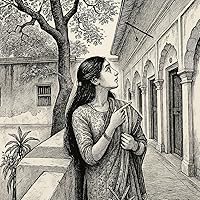
Shahidullah Kaiser's "Sangshaptak" stands as one of the most significant literary works to emerge from East Bengal (now Bangladesh) in the 1960s. The novel's title, "সংশপ্তক" (Sangshaptak) doesn't have a direct English translation. However, it can be roughly translated as "determined soldier" or "sworn warriors who took an oath to fight until death" - a metaphor that encapsulates the book's revolutionary spirit.
📖 𝐁𝐨𝐨𝐤: সংশপ্তক/ Sangshaptak
✍️ 𝐀𝐮𝐭𝐡𝐨𝐫: শহীদ বুদ্ধিজীবী শহীদুল্লাহ কায়সার/ 𝐌𝐚𝐫𝐭𝐲𝐫 𝐈𝐧𝐭𝐞𝐥𝐥𝐞𝐜𝐭𝐮𝐚𝐥 Shahidullah Kaiser
📚 𝐆𝐞𝐧𝐫𝐞: Historical Fiction, Political Drama
📅 𝐏𝐮𝐛𝐥𝐢𝐬𝐡𝐞𝐝: 1965 by চারুলিপি প্রকাশন/ Charulipi Prokashan
The novel portrays class struggles, resilience, and the indomitable human spirit amid socio-political upheaval. It delves into the lives of hardworking Bangladeshis, exposing hypocritical elders, societal disregard for virtuous individuals, and a corrupt elite. Through its vivid depiction of exploitation across economic, religious, political, educational, and class systems, it becomes a mirror of the real Bangladesh. Kaiser's background as a leftist activist and journalist imbues the narrative with authenticity and depth
Ω 𝐏𝐥𝐨𝐭 𝐎𝐯𝐞𝐫𝐯𝐢𝐞𝐰: Set against the turbulent backdrop of pre-Independence Bengal, 𝑆𝑎𝑛𝑔𝑠ℎ𝑎𝑝𝑡𝑎𝑘 captures the socio-political upheaval of the time through the eyes of rural villagers. The story unfolds in two villages—Bakulia (Muslim-majority) and Talatali (Hindu-majority)—amid the final years of British rule, the Partition, and subsequent political shifts. Kaiser's masterful narrative portrays the enduring struggle of the villagers against entrenched systems of exploitation—be it through economic, religious, political, or class-based oppression.
Ω 𝐌𝐲 𝐓𝐚𝐤𝐞 𝐨𝐧 𝐭𝐡𝐞 𝐁𝐨𝐨𝐤: At its core, 𝑆𝑎𝑛𝑔𝑠ℎ𝑎𝑝𝑡𝑎𝑘 is about resistance—not just against oppressive forces but also against the inner contradictions of human nature. Kaiser explores how personal convictions evolve into collective action, driven by the promise of justice. As mentioned earlier, the title, 𝑆𝑎𝑛𝑔𝑠ℎ𝑎𝑝𝑡𝑎𝑘, refers to those who swear an oath to fight until death—a fitting metaphor for the characters who refuse to yield to a corrupt world.
Kaiser delves into the complexities of Bengali society, with characters like Zaheed/Mejho Bhai and Sekander Master who represent contrasting yet interconnected aspects of the human mind—asceticism and struggle. Rabu, though soft and gentle, faces adversities with resilience, while Hurmati and Leku adapt to life's challenges, embodying human persistence. Even Ramzan, the novel's antagonist, is portrayed as a survivor—cunning and relentless, yet trapped within his own struggle for survival. While Zaheed and Rabu take center stage, Malu’s journey is the heart of the narrative. Malu’s life—shaped by communal riots, the traumatic partition, love, and personal struggles—captures the timeless human quest for identity and belonging. As Malu strives to rebuild his life amidst these challenges, his resilience becomes emblematic of the eternal human spirit. So, it can be said that the novel's characters—Malu, Rabu, Zaheed, Sekander Master, Leku, Hurmati, Phelu Mia, and Ramzan—are all soldiers in their own battles, embodying heroism in their lives. Uniquely for its time, 𝑆𝑎𝑛𝑔𝑠ℎ𝑎𝑝𝑡𝑎𝑘 portrays women as active participants, challenging societal norms and shaping their community's struggles. Each and every character’s journey deepens the narrative's emotional resonance, driving the novel's broader themes of resilience and transformation.
So, we see that, 𝑆𝑎𝑛𝑔𝑠ℎ𝑎𝑝𝑡𝑎𝑘 transcends its historical setting with themes of political resistance, justice, and collective defiance against oppression that remain profoundly relevant. The struggles of the past—illiteracy, bigotry, coercion, and epidemics—mirror many of today’s challenges, with education still inadequate, prejudice persisting, and figures like Ramzan continuing their exploitation. Kaiser’s exploration of personal loyalty versus political ideology offers timeless insight into the human condition. The novel’s depiction of social upheaval echoes contemporary global fights for justice, equality, and freedom. By the end, 𝑆𝑎𝑛𝑔𝑠ℎ𝑎𝑝𝑡𝑎𝑘 doesn’t just look back at the past—it foreshadows the tumultuous political changes that would lead to the liberation of Bangladesh, offering crucial insights into the nation’s formative years.
Despite its political intensity, 𝑆𝑎𝑛𝑔𝑠ℎ𝑎𝑝𝑡𝑎𝑘 does face some challenges in terms of pacing and narrative structure. The novel’s ideological discussions may feel dense, especially for those unfamiliar with the political history of Bengal. Some readers may find the portrayal of rural life to be somewhat disconnected from authentic experiences, while others may struggle with the fragmented character arcs. The slow pacing and non-linear sequence of events could detract from the flow, making it a bit harder to fully engage with the story at times. Nevertheless, these elements are integral to the novel’s larger purpose—contextualizing the personal within the political and highlighting the collective struggle for justice. 𝑆𝑎𝑛𝑔𝑠ℎ𝑎𝑝𝑡𝑎𝑘 isn’t just a story about individuals; it’s a commentary on the societal structures that shape their lives and actions.
At the end, we can say that, 𝑆𝑎𝑛𝑔𝑠ℎ𝑎𝑝𝑡𝑎𝑘 is more than just a historical novel; it is a powerful reflection on the resilience of the human spirit amidst adversity. Shahidullah Kaiser’s storytelling, paired with his deep understanding of political and social dynamics, makes this work a cornerstone of Bengali literature. For readers interested in exploring the intersection of history, politics, and human emotion, Sangshaptak is an essential read.
𝐓𝐡𝐞 𝐮𝐧𝐟𝐨𝐫𝐭𝐮𝐧𝐚𝐭𝐞 𝐫𝐞𝐚𝐥𝐢𝐭𝐲 𝐢𝐬 𝐭𝐡𝐚𝐭 masterpieces like this remain largely inaccessible to global readers due to the lack of English translations. It is imperative that such works are shared with the world to inspire future generations of leaders and thinkers.