

What do you think?

Of Gods and Kings #1
Pagan Warrior: Britain The Seventh Century - the first book in the action-packed historical fiction trilogy from MJ Porter featuring the mighty pagan king, Penda
From the author of The Chronicles of the English and the Earls of Mercia, a step back in time to the founding years of the Anglo-Saxon kingdoms.
Before England, Scotland and Wales formed, a disparate set of kingdoms stretched their way across the British Isles, expanding and compressing with the personalities and successes of their warrior Kings, more war-leaders, and more often than not, owing allegiance to one overlord, one over mighty King exacting tribute from whomever he could.
The year is 632 and the great Edwin of Northumbria, bretwalda over England, must battle against an alliance of the old Britons under his foster-brother Cadwallon of Gwynedd, aided by Penda of Mercia, a brutal young war leader gaining in strength and reputation.
Alliances will be made and broken, and the victory will go to the man most skilled in warcraft and statecraft.
The ebb and flow of battle will once more redraw the lines of the petty kingdoms stretching across the British Isles.
There will be a victor and a bloody loser.
Before England, Scotland and Wales formed, a disparate set of kingdoms stretched their way across the British Isles, expanding and compressing with the personalities and successes of their warrior Kings, more war-leaders, and more often than not, owing allegiance to one overlord, one over mighty King exacting tribute from whomever he could.
The year is 632 and the great Edwin of Northumbria, bretwalda over England, must battle against an alliance of the old Britons under his foster-brother Cadwallon of Gwynedd, aided by Penda of Mercia, a brutal young war leader gaining in strength and reputation.
Alliances will be made and broken, and the victory will go to the man most skilled in warcraft and statecraft.
The ebb and flow of battle will once more redraw the lines of the petty kingdoms stretching across the British Isles.
There will be a victor and a bloody loser.
286 pages, Kindle Edition
First published May 25, 2015
About the author
M.J. Porter
120 books273 followersI'm an author of historical fiction (Early English/Saxon, Vikings and the British Isles as a whole before the Norman Conquest, as well as five 20th-century historical mysteries) and historical romantasy.
I was born in the old Mercian kingdom at some point since 1066. Raised in the shadow of a strange little building, told from a very young age that it housed the bones of long-dead kings of Mercia and that our garden was littered with old pieces of pottery from a long-ago battle, it's little wonder that my curiosity in Early England ran riot. I can only blame my parents!
I like to write. You've been warned!
Not sure where to start your journey through Saxon/Early England? The Dark Ages trilogy will take readers back to the very beginnings of Saxon England before the creation of Mercia and the other kingdoms. The Eagle of Mercia Chronicles featuring our reluctant hero, Icel, will introduce you to the best Saxon kingdom of all, Mercia! Storm of Mercia is the latest release.
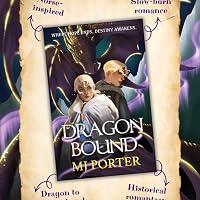
Looking for my historical fantasy/romantasy? Dragonbound, the first book in the Ice and Fire series, will be available from September 2026.
Looking for my 20th-century mysteries? The Erdington Mysteries and Cragside, a standalone 1930s murder mystery, are the titles for you.
My first non-fiction book, The Royal Women Who Made England, is now published by Pen and Sword in hardback and ebook.
Happy reading:)
Find me at
www.mjporterauthor.com or at www.mjporterauthor.blog where I blog about books and films and sometimes, writing! I also have an online store for signed paperbacks and a few others goodies at mjporterauthor.co.uk.
https://linktr.ee/MJPorterauthor
https://mjporterauthor.sumupstore.com
You can join my monthly subscriber newsletters and gain access to the restricted page on my blog at the same time.
https://BookHip.com/MGWHLDC (Saxon stories)
https://BookHip.com/THPKCKP (mysteries only)
(I have odd reading tastes - there's no need to notice though!!) I'm also exceedingly anti-social - that you may notice but must accept!
I was born in the old Mercian kingdom at some point since 1066. Raised in the shadow of a strange little building, told from a very young age that it housed the bones of long-dead kings of Mercia and that our garden was littered with old pieces of pottery from a long-ago battle, it's little wonder that my curiosity in Early England ran riot. I can only blame my parents!
I like to write. You've been warned!
Not sure where to start your journey through Saxon/Early England? The Dark Ages trilogy will take readers back to the very beginnings of Saxon England before the creation of Mercia and the other kingdoms. The Eagle of Mercia Chronicles featuring our reluctant hero, Icel, will introduce you to the best Saxon kingdom of all, Mercia! Storm of Mercia is the latest release.
Looking for my historical fantasy/romantasy? Dragonbound, the first book in the Ice and Fire series, will be available from September 2026.
Looking for my 20th-century mysteries? The Erdington Mysteries and Cragside, a standalone 1930s murder mystery, are the titles for you.
My first non-fiction book, The Royal Women Who Made England, is now published by Pen and Sword in hardback and ebook.
Happy reading:)
Find me at
www.mjporterauthor.com or at www.mjporterauthor.blog where I blog about books and films and sometimes, writing! I also have an online store for signed paperbacks and a few others goodies at mjporterauthor.co.uk.
https://linktr.ee/MJPorterauthor
https://mjporterauthor.sumupstore.com
You can join my monthly subscriber newsletters and gain access to the restricted page on my blog at the same time.
https://BookHip.com/MGWHLDC (Saxon stories)
https://BookHip.com/THPKCKP (mysteries only)
(I have odd reading tastes - there's no need to notice though!!) I'm also exceedingly anti-social - that you may notice but must accept!
Ratings & Reviews
Friends & Following
Create a free account to discover what your friends think of this book!
Community Reviews
Displaying 1 - 16 of 16 reviews

December 18, 2023
There is a myriad of characters and ambitions here. Although there are battles to gain lands, the emphasis is on the political alliances and intrigues. The story is told by several points of view of important leaders of the time. There are so many angles and perspectives. It is a little hard to keep it all straight. But it’s an early time in the forming of the eventual country of England. And I’m sure there’s more intrigue, betrayal, and mayhem to come.
February 10, 2022
Excellent book
Yet another great write from MJ Porter
Loved how each chapter a different central character
Great look at events/ characters of the time.
Great plot twist & turn of enemies and allies.
Yet another great write from MJ Porter
Loved how each chapter a different central character
Great look at events/ characters of the time.
Great plot twist & turn of enemies and allies.

August 4, 2022
I should start by saying I have read a lot of MJ Porters novels and have always found them to be exceptional and well delivered.
This was a new series for me, and fortunately I got the class and quality I have come to expect from Porters story telling.
This book is quite different in structure to other books by Porter. With the same single story being told by multiple POV.
This felt quite different to other multiple POV stories, where multi entwining stories are told. What this structure gives you is multiple viewpoints which enable the twists and turns of the story and battles to come across in different flavours.
I would say this book is also different to the other series from the author, in that its less about the battles (there is still some epic fighting) but more about the political and alliances of kings and wannabe kings! It was similar to the way Bernard Cornwell tells his Saxon series and I think that’s a huge compliment
I look forward to continuing this series
*Note, the narrator Matt Coles is bloody great!
This was a new series for me, and fortunately I got the class and quality I have come to expect from Porters story telling.
This book is quite different in structure to other books by Porter. With the same single story being told by multiple POV.
This felt quite different to other multiple POV stories, where multi entwining stories are told. What this structure gives you is multiple viewpoints which enable the twists and turns of the story and battles to come across in different flavours.
I would say this book is also different to the other series from the author, in that its less about the battles (there is still some epic fighting) but more about the political and alliances of kings and wannabe kings! It was similar to the way Bernard Cornwell tells his Saxon series and I think that’s a huge compliment
I look forward to continuing this series
*Note, the narrator Matt Coles is bloody great!
June 18, 2022
Going into this book, I was a little hesitant. Dark Ages fiction for me is kinda sticky. There are too many fiction authors who fill their pages with plots that just barely give you a legitimate glimpse into that era, who read a basic timeline and grab a dictionary and away they go. All too often I have suspend knowledge of actual history to finish those books, if I even make it beyond the first chapter. Porter does an excellent job of giving me what I want to read. He has brought these mighty, historical people to life and given them a voice.

August 16, 2020
BLURB
Before England, Scotland and Wales formed, a disparate set of kingdoms stretched their way across the British Isles, expanding and compressing with the personalities and successes of their warrior kings, more war-leaders, and more often than not, owing allegiance to one overlord, one over mighty king exacting tribute from whomever he could, punishing those who failed to tithe with bloody means.
The year is 632 and the great Edwin of Northumbria, bretwalda over England, must battle against an alliance of the old Britons under his foster-brother Cadwallon of Gwynedd, aided by Penda of Mercia, a brutal young war leader gaining in strength and reputation.
Who will ally with whom? Who will play false to their Lord? Who will turn their back on their own family? The ebb and flow of battle will once more redraw the lines of the petty kingdoms stretching across the British Isles.
There will be a victor and a bloody loser and kings will rise from the ashes of a great battle.
REVIEW
Oh bollocks and damnation! I knew going in that if I read Pagan Warrior and enjoyed it, that I'd have to read the rest of the series. Oh by the glare of one-eyed Odin, just what I need; more books added to my 'to be read' pile. 🤷♂️ Yes, my fellow readers, I did enjoy it. How could I not? The author has crafted the kind of tale that is not only an entertaining yarn, but also one that enlightens as well. This period of Britain's long history is ripe with potential material. There is enough fodder for the creative writer to enhance the sparse historical record; something the author has done very well indeed. The main characters are written in first person - a great way to get each one's thoughts and emotions about the same event or meeting. Throughout the build up to the climatic battle, the author weaves a tortuous path of switching allegiances, and surprising twists, making for some tense moments that compel the reader to keep turning the pages. A fictional feast fit for serving in Edwin's hall. Come on in and enjoy the telling.
So, it appears that I have no choice but to add the next volumes to my TBR. Please check in with me occasionally to make sure I haven't been buried by an avalanche.😊 5 ⭐⭐⭐⭐⭐
February 12, 2015
Haedfeld - a novel of 632 has a complex beginning with the introduction of many characters one after another. The fight scenes were excellent. The battle scenes were strong and exciting without being prolonged. All the characters were very engaging and felt very relevant to the known facts with intriguing characterisations which never became samey although that could have happened easily.
My favourite character was the young pagan king Penda who has the arrogance and presence I expect from a portrayal of the famous King of the Mercians in his fledgling years and who brought an unexpected element to the novel.
The machinations of the kings was handled well and offered a new and exciting take on a battle that could be handled in a very different way.
The fact that I know the novel has been impeccably researched added to the enjoyment of the book, as all the other author's historical fiction novels have been.
Highly recommended.
My favourite character was the young pagan king Penda who has the arrogance and presence I expect from a portrayal of the famous King of the Mercians in his fledgling years and who brought an unexpected element to the novel.
The machinations of the kings was handled well and offered a new and exciting take on a battle that could be handled in a very different way.
The fact that I know the novel has been impeccably researched added to the enjoyment of the book, as all the other author's historical fiction novels have been.
Highly recommended.
May 10, 2015
Hædfeld, Old English for Hatfield Chase, imagines a UK wide alliance against an over-mighty and insufferable Edwin of Northumbria, a man who's ridden rough shod over his own family and who's had no problem killing any who stand in his way, although he now professes the new Christian religion, which he thinks will protect him from all who oppose him.
And the man behind the alliance is Cadwallon, foster brother to Edwin and now his deadliest enemy. Bringing together the many, many kingdoms of England, Hædfeld concentrates on Edwin, his sons Eadfrith and Osfrith, his cousin Osric, his nephew Eanfrith, Cadwallon of Gwynedd, Penda and Eowa of Mercia with staring roles for the other kings of the petty kingdoms of England - Clydog, Eiludd, Beli, Domnall Brecc ad Cloten.
A patchwork quilt of shifting alliances and deadly intentions with an unexpected and twisted ended.
I loved it - (of course). Hope my readers do too.
And the man behind the alliance is Cadwallon, foster brother to Edwin and now his deadliest enemy. Bringing together the many, many kingdoms of England, Hædfeld concentrates on Edwin, his sons Eadfrith and Osfrith, his cousin Osric, his nephew Eanfrith, Cadwallon of Gwynedd, Penda and Eowa of Mercia with staring roles for the other kings of the petty kingdoms of England - Clydog, Eiludd, Beli, Domnall Brecc ad Cloten.
A patchwork quilt of shifting alliances and deadly intentions with an unexpected and twisted ended.
I loved it - (of course). Hope my readers do too.
May 19, 2016
A very enjoyable book, ended up reading it very quickly. MJ Porter tells a story of intrigue and battles in 7th century Britain. The book has an interesting style, multiple points of view shifting from one character to another, it is written in a rather spare style, not overly descriptive, focusing on the thoughts and plans of the various protagonists. I will definitely look out for more books in this series.

October 3, 2016
Intriguing Story
Very interesting tale of early England. Gives insight into characters in the early history of the United Kingdom. Kept me intrigued.
Very interesting tale of early England. Gives insight into characters in the early history of the United Kingdom. Kept me intrigued.

March 21, 2023
There are plenty who would love to see the Northumbrian king dead, and just as many who would love to be the one to kill him. So what happens when kings and military leaders begin to join together, and create an allied force to fight against him?
Penda is an extraordinary warrior, a man who can command armies, and either create friends or enemies with just a few words. So when Cadwallon, having been defeated by his foster brother, Edwin, King of Northumbria, finds Penda on his side, it finally seems like he will be able to exact some revenge, and remove the crown from Edwin’s hands. But as Cadwallon and Penda begin to find their alliances, Edwin is also desperately trying to find people who do not want him dead enough to be able to trust.
Tensions start to mount as people betray, switch allegiances, and try to claim titles for themselves. Brother stands against brother, kings against kings, and it will take a bloody battle before a victor can be crowned.
There are plenty of characters in this book, making way for the full ins and outs of loyalty and betrayal. A lot of family turned against each other, many of the characters in this book are related in some way or another, and yet, they still wage war on each other, and fight to be the ones to cut off each other’s heads. This book has successfully given off the sense of not knowing who is trustworthy that Edwin must’ve felt, for it is almost impossible to predict who is going to change sides, or whether someone will reveal that they have been a traitor all along. It is easy to get hooked in the social politics of the book, as people try to figure out who they would rather support, depending on how much they want revenge, or what rewards they may be awarded for choosing to show their support to a particular side.
As always, religion plays a big part in the lead-up to this battle. Plenty of the kings and lords have converted from paganism to Christianity, but there are a few who have stayed loyal to their religion, and refuse to convert. People’s religions are used against each other, especially those who are still pagan. The power of the church is definitely shown in this book, for if the priests happen to mention that something is a ‘sign’, they can give change the way the leaders are thinking, make them believe that God will guide and protect them, rather than being too concerned about planning their next moves.
I knew little going into this book about the battle of Hædfeld, I did not know who was involved, or how the battle came about. I really enjoyed learning what happened to cause so many to unite against king Edwin, and how he managed to alienate so many, including his own sons. I have read up on the history a little after reading this book, and it’s especially interesting how much is still unknown about these people, and what happened in their lives. The author must’ve spent hours upon hours researching, just to find out the smallest details. After all, we are still very much in the dark as to the ins and outs of the Dark Ages.
This book was written in a very strange way, in my opinion. Almost every chapter shows a different character’s point of view, so we not only see both sides of the battle, we see the opinions of a lot of different people. While this attempts to provide a well-rounded account of the events leading up to the battle of Hædfeld, it did make the book rather difficult to follow. There are many different names, and a backstory for each of the characters, so at times it is incredibly difficult to keep track of who is who, and whose perspective you are reading from. I found it difficult to properly get to know any of the characters, as barely any time was spent with any of them. It is certainly a unique style of writing historical fiction, and one I haven’t come across before, but unfortunately, I did not get on with it.
If you are a fan of the Dark Ages, especially in the build-up to a big battle, this is certainly the book for you. It was incredibly interesting to read, and I did enjoy learning more about people I didn’t even know had ever existed. I didn’t get on with the different perspectives each chapter, and think I would’ve enjoyed the book a lot more if it was told from just one perspective, perhaps Penda’s, but it was a great read. I would definitely read more books by this author.
Penda is an extraordinary warrior, a man who can command armies, and either create friends or enemies with just a few words. So when Cadwallon, having been defeated by his foster brother, Edwin, King of Northumbria, finds Penda on his side, it finally seems like he will be able to exact some revenge, and remove the crown from Edwin’s hands. But as Cadwallon and Penda begin to find their alliances, Edwin is also desperately trying to find people who do not want him dead enough to be able to trust.
Tensions start to mount as people betray, switch allegiances, and try to claim titles for themselves. Brother stands against brother, kings against kings, and it will take a bloody battle before a victor can be crowned.
There are plenty of characters in this book, making way for the full ins and outs of loyalty and betrayal. A lot of family turned against each other, many of the characters in this book are related in some way or another, and yet, they still wage war on each other, and fight to be the ones to cut off each other’s heads. This book has successfully given off the sense of not knowing who is trustworthy that Edwin must’ve felt, for it is almost impossible to predict who is going to change sides, or whether someone will reveal that they have been a traitor all along. It is easy to get hooked in the social politics of the book, as people try to figure out who they would rather support, depending on how much they want revenge, or what rewards they may be awarded for choosing to show their support to a particular side.
As always, religion plays a big part in the lead-up to this battle. Plenty of the kings and lords have converted from paganism to Christianity, but there are a few who have stayed loyal to their religion, and refuse to convert. People’s religions are used against each other, especially those who are still pagan. The power of the church is definitely shown in this book, for if the priests happen to mention that something is a ‘sign’, they can give change the way the leaders are thinking, make them believe that God will guide and protect them, rather than being too concerned about planning their next moves.
I knew little going into this book about the battle of Hædfeld, I did not know who was involved, or how the battle came about. I really enjoyed learning what happened to cause so many to unite against king Edwin, and how he managed to alienate so many, including his own sons. I have read up on the history a little after reading this book, and it’s especially interesting how much is still unknown about these people, and what happened in their lives. The author must’ve spent hours upon hours researching, just to find out the smallest details. After all, we are still very much in the dark as to the ins and outs of the Dark Ages.
This book was written in a very strange way, in my opinion. Almost every chapter shows a different character’s point of view, so we not only see both sides of the battle, we see the opinions of a lot of different people. While this attempts to provide a well-rounded account of the events leading up to the battle of Hædfeld, it did make the book rather difficult to follow. There are many different names, and a backstory for each of the characters, so at times it is incredibly difficult to keep track of who is who, and whose perspective you are reading from. I found it difficult to properly get to know any of the characters, as barely any time was spent with any of them. It is certainly a unique style of writing historical fiction, and one I haven’t come across before, but unfortunately, I did not get on with it.
If you are a fan of the Dark Ages, especially in the build-up to a big battle, this is certainly the book for you. It was incredibly interesting to read, and I did enjoy learning more about people I didn’t even know had ever existed. I didn’t get on with the different perspectives each chapter, and think I would’ve enjoyed the book a lot more if it was told from just one perspective, perhaps Penda’s, but it was a great read. I would definitely read more books by this author.

April 30, 2023
Pagan Warrior is the first book in MJ Porter's The Seventh Century series that I've read, and it is a riveting start to the series. Although the series focuses on Penda, a mighty warrior king from Mercia, the chapters are divided into different points of view by a range of major characters who all played their role in either supporting self-proclaimed King Edwin of Northumbria – or plotting against him.
Apart from Penda, we have the voice of Edwin himself. A ruthless warrior, he killed the rightful king and usurped the throne. Seeing plots against his life everywhere, he's keen to forge alliances, by negotiation or by force. He sets his sights on the lands of Bernicia, the Picts, and even Dal Riata. But conquest sounds easier than it is.
We also hear from Edwin's sons by his first, Pagan, wife, who both hate their father and his new, Christian, wife. They fear Edwin wants to leave his kingdom to a son by his second wife. So they're seeking alliances with his enemies.
Penda and his brother, Eowa, forge their own alliances, with the Welsh kings, and Edwin's half-brother, Cadwallon, whom he defeated in battle. Cadwallon has his own ambitions, but first and foremost he's seeking revenge.
There are other players we hear of, leaders of minor kingdoms, and their support for Cadwallon and Penda just tips the scales against Edwin.
The ultimate fate of all is the famous battle of Hædfeld.
Pagan Warrior is not only a story about political plots, personal ambitions, greed, and revenge – it also shows a battle of the Gods. With Christianity spreading, and more and more rulers joining the new religion of the one true God, the Pagan rulers are fighting for the continuity of the old ways, the old Gods.
MJ Porter portrays this struggle for power – and for souls – incredibly well. In the unique way the author tells this story, from varying points of view clearly marked in each chapter, we learn the different aspects we'd usually only read about through a third party. As in the brilliant King of Kings (find my review here), we discover plots, fears, and ambitions from each major player's 1st person point of view. Through that, we learn that not all is as it seems to the outside world.
The only issue with these varying points of view is that we often hear the same information repeatedly. It is unavoidable in a context such as this, and it does slow down the pace at times.
Pagan Warrior is a rough novel. It contains much swearing, and is far earthier than King of Kings. Men's ambitions are laid bare on a more base level, and with it their hatred of each other, culminating in that bloody battle at Hædfeld.
MJ Porter has deftly spun a fascinating tale of political intrigues and personal vendettas. None of the characters are likeable, but they are true to their times, and the author cleverly plays them off against each other. Set against the uncertainties of that century, the changing environment both politically and spiritually, Pagan Warrior is a gripping novel that takes you back to the end of the Dark Ages.
I'm looking forward to reading more books in the series...
Another highly recommended read by MJ Porter!
Note: I received a free ebook copy in exchange for an honest review. All views expressed are my own.
Apart from Penda, we have the voice of Edwin himself. A ruthless warrior, he killed the rightful king and usurped the throne. Seeing plots against his life everywhere, he's keen to forge alliances, by negotiation or by force. He sets his sights on the lands of Bernicia, the Picts, and even Dal Riata. But conquest sounds easier than it is.
We also hear from Edwin's sons by his first, Pagan, wife, who both hate their father and his new, Christian, wife. They fear Edwin wants to leave his kingdom to a son by his second wife. So they're seeking alliances with his enemies.
Penda and his brother, Eowa, forge their own alliances, with the Welsh kings, and Edwin's half-brother, Cadwallon, whom he defeated in battle. Cadwallon has his own ambitions, but first and foremost he's seeking revenge.
There are other players we hear of, leaders of minor kingdoms, and their support for Cadwallon and Penda just tips the scales against Edwin.
The ultimate fate of all is the famous battle of Hædfeld.
Pagan Warrior is not only a story about political plots, personal ambitions, greed, and revenge – it also shows a battle of the Gods. With Christianity spreading, and more and more rulers joining the new religion of the one true God, the Pagan rulers are fighting for the continuity of the old ways, the old Gods.
MJ Porter portrays this struggle for power – and for souls – incredibly well. In the unique way the author tells this story, from varying points of view clearly marked in each chapter, we learn the different aspects we'd usually only read about through a third party. As in the brilliant King of Kings (find my review here), we discover plots, fears, and ambitions from each major player's 1st person point of view. Through that, we learn that not all is as it seems to the outside world.
The only issue with these varying points of view is that we often hear the same information repeatedly. It is unavoidable in a context such as this, and it does slow down the pace at times.
Pagan Warrior is a rough novel. It contains much swearing, and is far earthier than King of Kings. Men's ambitions are laid bare on a more base level, and with it their hatred of each other, culminating in that bloody battle at Hædfeld.
MJ Porter has deftly spun a fascinating tale of political intrigues and personal vendettas. None of the characters are likeable, but they are true to their times, and the author cleverly plays them off against each other. Set against the uncertainties of that century, the changing environment both politically and spiritually, Pagan Warrior is a gripping novel that takes you back to the end of the Dark Ages.
I'm looking forward to reading more books in the series...
Another highly recommended read by MJ Porter!
Note: I received a free ebook copy in exchange for an honest review. All views expressed are my own.

May 15, 2023
Pagan Warrior by MJ Porter is a 7th Century novel of political intrigue between various factions leading up to the Battle of Hæðfeld in 732 AD Northumbria. It is told in the first person point of view by major historical figures that fought in the battle, including Penda of Mercia, King Cadwallon of Gwynedd, and King Edwin of Northumbria. The story begins three years earlier when King Edwin defeats King Cadwallon in battle but fails to pursue and kill him. A deadly mistake.
Exiled, King Cadwallon convinces the renowned warrior, Pendra, to ally with him. Together, they scheme which allies to win over and find ways to lure King Edwin into a disadvantageous battlefield. Meanwhile, spies inform King Edwin of King Cadwallon's intent to war with him again. Both kings form fragile alliances with other kings and influential commanders in preparation for the final battle that will decide who rules the various regions. Treachery abounds, where family ties are tested. It is not revealed until the final battle who will betray the other and rise to power.
Author Porter has written a unique historical fiction told in the present tense from the perspective of eight rulers, each having the potential to gain power and wealth after the final battle. This plot-driven book provides insight into each character's motivations and an overview of battle tactics and fighting methods used by the various clans. It explores how Christian and pagan religions further incite division among the kings and within their families. The theme of how abuse of power corrupts absolutely is highlighted in raw detail and relatable modern-day language. The climactic battle packs a punch. Vivid, riveting fight scenes project the brutality of battle.
It is difficult to navigate the novel's beginning, with so many characters telling the story. However, the tale unfolds seamlessly as one narrator switches to another in the next chapter. Access to each character's internal thoughts and motivations yields a greater impact in the climactic battle scenes where betrayals are revealed and when medieval justice is ultimately served.
For those who enjoy reading about the political machinations of British rulers and the great battles fought in the Dark Ages, I recommend Pagan Warrior for its realistic depiction of warrior kings vying for power and seeking vengeance.
Exiled, King Cadwallon convinces the renowned warrior, Pendra, to ally with him. Together, they scheme which allies to win over and find ways to lure King Edwin into a disadvantageous battlefield. Meanwhile, spies inform King Edwin of King Cadwallon's intent to war with him again. Both kings form fragile alliances with other kings and influential commanders in preparation for the final battle that will decide who rules the various regions. Treachery abounds, where family ties are tested. It is not revealed until the final battle who will betray the other and rise to power.
Author Porter has written a unique historical fiction told in the present tense from the perspective of eight rulers, each having the potential to gain power and wealth after the final battle. This plot-driven book provides insight into each character's motivations and an overview of battle tactics and fighting methods used by the various clans. It explores how Christian and pagan religions further incite division among the kings and within their families. The theme of how abuse of power corrupts absolutely is highlighted in raw detail and relatable modern-day language. The climactic battle packs a punch. Vivid, riveting fight scenes project the brutality of battle.
It is difficult to navigate the novel's beginning, with so many characters telling the story. However, the tale unfolds seamlessly as one narrator switches to another in the next chapter. Access to each character's internal thoughts and motivations yields a greater impact in the climactic battle scenes where betrayals are revealed and when medieval justice is ultimately served.
For those who enjoy reading about the political machinations of British rulers and the great battles fought in the Dark Ages, I recommend Pagan Warrior for its realistic depiction of warrior kings vying for power and seeking vengeance.
April 21, 2025
Pagan
This was an extremely hard read only because I wanted it to be more action and Violence rather than historical facts. But it still was fascinating and completely enjoyable. I am so looking forward to reading the second book in this series with the anticipation that the action will increase.
This was an extremely hard read only because I wanted it to be more action and Violence rather than historical facts. But it still was fascinating and completely enjoyable. I am so looking forward to reading the second book in this series with the anticipation that the action will increase.
December 15, 2021
Good read
An interesting and successful way to write a novel of this type.
I personally would have appreciated a little more detail about the after effect on the kingdoms involved, what happened to the harvest?
An interesting and successful way to write a novel of this type.
I personally would have appreciated a little more detail about the after effect on the kingdoms involved, what happened to the harvest?
June 2, 2024
Enjoyed the book. My first time reading anything about 7th century England.
I very much enjoy M J Porter’s books.
I very much enjoy M J Porter’s books.
August 12, 2025
It was fine? But too many different POV’s, so the chapters felt very loosely connected. And I don’t think I’m a fan of this author’s writing style personally.
Displaying 1 - 16 of 16 reviews