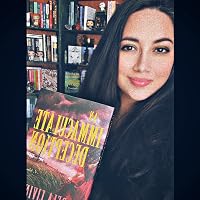
Every book I've wanted to write has started with a fact that was already shaped like a story before I got to it. This one started with an omission.
In 1959, twelve nations signed a treaty that set aside an entire continent for peaceful purposes. It was negotiated in six weeks, at the coldest hour of the Cold War, between governments that agreed on almost nothing else, and it has never been broken by force. In the whole of the text, resource extraction never appears, because the people drafting it judged the subject so dangerous that putting it on the page would have collapsed the agreement. So they left a hole in the middle of it and built the rest around it.
A hole in a document becomes a plot the moment you ask who agreed to leave it there. Twelve governments did, for reasons they judged too dangerous to write down, and that is the exact shape of a thriller. The genre's oldest engine is the thing someone chose not to say, and here it was in a real treaty, checkable by anyone with a search engine. What I had to invent was people who would notice the silence and be unable to leave it alone. The conspiracy came ready-made.
Which is why there are six of them. One protagonist is cleaner and lets you go deep. But a single mind noticing a silence is a paranoid. Six strangers noticing it independently, from six directions, with six different reasons to distrust what they are seeing, is evidence. The plural was the point. I needed the reader to reach the conclusion the way a jury reaches one.
The other thing the six bought me was administrative chance. Nobody recruits them. They are the people who happened to be on the same flight south, sorted into the same block of the same building, and the book asks what such a group does under pressure with no leader and no reason to trust anyone. Teams are assembled. These people were filed together, and then the continent closed behind them.
That closing is the part I most wanted to get right, and I am still not sure I did. Antarctica traps people with arithmetic rather than walls: the number of hours to the next flight, the temperature at which exposed skin stops being a problem you can solve, the fact that help, when it exists, is measured in days. I tried to let that press on the characters the way weather presses, constantly and without malice. The ice was already doing most of the work.
Underneath all of that is Leo and his mother, and this is the part I find hardest to talk about, which probably means it is the part that matters most.
Elena is a cartographer who spent her life charting a continent most people never see, and she is dead before the first page. Leo follows the same ground. That is the whole emotional architecture, and I decided early that I would not let the conspiracy explain the grief. The two run alongside each other. The plot gives Leo things to do. The grief is what he brings to doing them.
The register I was reaching for is closer to inheritance than to sadness. He measures things because she measured things, and he files what he sees because she filed what she saw. From the outside it looks like mourning. From the inside it feels like continuing her, and he does not know whether that is love or a failure to let go. I don't know either. I wanted the book to be honest about not knowing.
There is one sentence readers keep choosing, and I want to admit that it surprised me. It belongs to Darius, or rather to his grandmother, who told him as a boy to learn the difference between impossible and inconvenient, because most of what people call the first is the second wearing a bigger coat.
I wrote it as character furniture: the kind of thing a grandmother says, and Darius is the kind of person who would carry it around for years. I did not expect it to become the sentence people underline. Readers keep picking it out. It comes back later, and does more than I gave it credit for. The novel's whole ethic is in that one sentence, and I had let a grandmother say it while I was busy elsewhere. I think that is how the true lines usually arrive. You don't write them. You overhear them.
One thing I cut. There was a version of this book with a seventh arrival, a man older than the others, whose job was to explain things. He was competent and useful and I could not make him alive. He knew what the six did not, and so every scene he was in became a scene where someone was told something. I took him out and gave what he knew to the ice instead, which cannot explain itself and does not try. The book got harder to write and much better to read. Nobody in it understands more than they have earned.
Everything presented as real in the novel is real: the treaty, the expedition, the physics. The parts that are invented are the parts that had to be, and I have tried not to disguise the seam. Where my ice runs deeper than the record, I would rather a reader know that than think I was fooling them.
Thank you for reading it.
Cole Winters