A clever resource for the ever-growing home recording market.
The revised edition is updated with a greater focus on digital recording techniques, the most powerful tools available to the home recordist. There are chapters devoted to instrument recording, humanizing drum patterns, mixing with plug-ins and virtual consoles, and a new section on using digital audio skills. And since, many true “Guerrillas” still record to analog tape, we have retained the best of that world. This edition features many more graphics than in the original edition, further enforcing Guerrilla Home Recording 's reputation as the most readable, user-frienly recording title on the market.
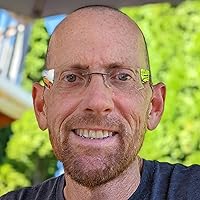
I was raised in Upstate New York and Connecticut. I moved west to study biology at U.C. Berkeley, and while in college, I became seriously interested in playing and recording music. My first (and pretty much last) real job was as an editor at Bass Player magazine, where I interviewed many famous musicians while honing my recording skills. In the 2000s, I wrote two music books that did very well: Guerrilla Home Recording and The Frustrated Songwriter’s Handbook, the latter with Nicholas Dobson.
Around that same time, I started getting back into science, specifically cosmology and quantum mechanics. After reading several hundred physics papers and a bunch of books, in 2012 I won a prize in a major physics-essay competition. I spent the next four years organizing and writing The Simplest-Case Scenario, a philosophy-of-science book based on that essay.
On the musical side, I have transitioned more into live performance. I currently play bass and sing lead vocals in a popular San Francisco Bay Area band called Joyride. I also have another career as a comedian under a pseudonym, but that’s enough for now.
Dense, in the good way - this reference is solid useful information, written at the technical level (I believe) that makes it accessible to non-professionals but still useful for techie types trying to solve specific problems or achieve specific results. If you're putting together a home/other small studio, this is a good investment.
Great reminder to pay attention to audio basics instead of the gear. Anyone can get something out of this no matter your skill level or studio configuration.
When I first bought the book I had visions of reading through and then passing it on to a couple of friends. Having finished the book, that is not going to happen. This is a book that I’m going to keep by my side for a few years to come. I’m afraid my friends are going to have to get their own copy. There are a couple of sections I’m going to want to have on hand as a reference (particularly the stuff about gain staging, dynamic range, and the mix-down check-list). There are other parts (especially chapters 6 and 7) where the suggestions come so thick and fast, I’m going to be going back for inspiration and help for a long time to come.
If you’ve got some recording gear and are more interested in trying to make the best use of what you’ve got, instead of looking for a new “silver bullet” piece of gear then I can’t recommend this book highly enough. And let me put this in context; the book costs about the same as two guitar mags. It is going to provide me with months (perhaps years) worth of inspiration, and it isn’t stuffed with adverts. Now that’s what I call value for money.
Really enjoyed this book. Read both the first and second version. The first has to do more with older recording techniques (using reel-to-reel, adat, large mixers etc), whereas the 2nd version is updated to address what is most commonly used today, while still including an appendix for older methods in case you're interested. I like how this book encourages the bare-bone "Guerrilla-style" approach to recording. I see myself as someone who thinks that the better gear you have, the more you'll get out of it, but this is not always true. You also need to know how it works and how to use it for your needs. The author convinced me that this is quite true in some respects, and you can do a lot without much. One of the chapters I probably used the most in real life was the "Recording Drums" chapter, specifically on humanizing drums. I also really like the way writes...there's something quite honest going on. And he shares a lot of knowledge, which is nice! It encouraged me to keep recording, and to also read other books on the subject. But I will be coming back to this one for main reference.
Great book for a beginner in home recording. I learned a lot about the signal chain and ways to make your recording sound better. For instance, before reading this book, I did not understand what a compressor did or why I would want to use one (although I'd heard that they were important to use!), but now I understand the theory behind it. Putting it all into practice is another story altogether, but that's a matter of practicing and training my ears.