

What do you think?

Sugar Surfing: How to manage type 1 diabetes in a modern world
New books are here! They are available from “Sugar Surfing” as the only supplier of new books. As always, the maximum price you should pay for this book is $29.95. If a seller is offering a used copy for more than a fair discount to the original new price, please do not buy at these prices and help us report these unscrupulous sellers to Amazon. Thank you. || For those considering or already using Continuous Glucose Monitoring, this book takes you beyond the basics and shows you a better way to manage. Interested in eating whatever you like? Prefer a low carb diet? Either way this book will show you how. Sugar Surfing is the first book written to debunk the myths surrounding classic diabetes management while also teaching the reader a better way. More than 50 full color images help the reader to break through the over-reliance on ratios and static thinking which live at the root of unexpected highs and lows; especially for people who already work hard. The traditional method taught by well meaning medical providers is woefully inadequate given the recent advancements in continuous glucose monitoring (CGM). With real time feedback including direction and rate of change, even novice users get better results almost immediately when they use this Endocrinologists' dynamic approach to managing in the moment. Online resources complement the book by giving readers direct access to the authors. Steve has had type 1 diabetes for more than 50 years while Kevin is a diabetes Dad and behavioral researcher since 2001. Working together for more than a decade, these two pioneers have helped thousands of people to gain control and live a more normal life in spite of diabetes. *** Register for updates at sugarsurfing.com. Available in paperback and all e-book formats. All proceeds are used to support workshops and other educational programs.
280 pages, Paperback
First published January 1, 2015
Ratings & Reviews
Friends & Following
Create a free account to discover what your friends think of this book!
Community Reviews
Displaying 1 - 30 of 34 reviews

May 27, 2015
Before you start reading this review, you may want to sit down and make yourself comfortable. I have a lot to say, most of it complimentary.
Let's start with my background. As of this review, my daughter has been a type 1 diabetic for 9 years (she's 11) and my son has been a T1D for 2 years (he's 13.) It would be fair to say that I spend a decent chunk of time as a pancreas. Well, pancreata, actually, if one can be plural. Anyhow, I have spent years learning about diabetes. We've done MDI and pumps, been through surgeries, illnesses and the diagnosis of additional auto immunes. I make all changes, evaluate all Dexcom reading, manage foods, oversee carb counting, change sites, wake up sleeping kids to feed them, stay up late to watch a temp basal kick in and then spend my free time researching ways to do it even better.
I first heard of Dr. Ponder on Facebook. I became a follower because I liked his tips/posts. At some point, I realized he was writing a book about his approach to diabetes and when he started to raise funding, I contributed. Going in, I expected to like the book. But, please note that I was not GIVEN this book - there is no giveaway and this isn't a review based on a freebie. I paid my money and I'm very happy to have done so.
So on to the book. Basically, I loved it. In 9 years, I have tried many, many things. People that don't live with T1D have no idea how hard diabetes is. It's 24/7/365 and there are no days off. Ever. There is no afternoon off. Most parents of T1Ds are just happy when the stars align and they are able to sleep through an entire night without an alarm. We don't have the disease but we have to have the knowledge because we feel this pressure to make sure our kids are given every opportunity to have healthy, complication-free adult lives without being constantly in their faces about diabetes.
I remember when my daughter was diagnosed and I found carb factors in my research...and then had to explain it to the CNP at the next four endo visits. And implementing the TAG idea in meal planning so that fats and proteins were covered appropriately...and then explain it to the CNP. As you can imagine, I decided to do my own thing fairly early on and the habit has stuck. I see the endo as a prescription source and like to figure out things on my own.
And then along came this book! And I realized that I wasn't alone. That there is an endo out there (who is a multi-decade T1D himself) that gets this. That experiments and tests and keeps an open mind. That takes his results, figures out WHY they happened and then figures out how to repeat it. And then SHARES it with the world.
I'm going to touch on a few topics that might help reviewers determine if this is a book for them.
First, basal rates. Dr. Ponder is a bit pushy about the idea of a single basal rate, or at least a small number of them. It's not a rule but it's something he appears to value. I have varied basals greatly over the years but I've never used a single basal rate. Perhaps it's because we did split dosing on long-acting insulins and I timed the overlap to cover dawn effects and bedtime growth hormones...so we never really had "one flat line" even on MDI. But I have learned over time that I gradually add basal rates until I become overwhelmed by them, at which point I scrap them all and start minimal again. With both kids in puberty and a son that is that teenage stage where kids 'forget' to bolus, one rate isn't right for them...but I have really given some thought to it. My son has three different levels - lower at night, really high in the morning, and high all day - and it's working well, so point to Dr. Ponder. My daughter's basal rates have been incredibly detailed before so while it's not three, I have reduced them by 3. Again, it's working well and it's easier to remember, so another point to Dr. Ponder.
Second, I needed a good reminder that a flat line means a basal rate is right, and that it means the other details need changed. I had been struggling with nights and had been changing them so often...and it was completely the wrong approach. I changed my mindset and the results have been wonderful.He slept 12 hours last night and was between 75 and 100 the entire time with no eating, no temping, no bolusing. Thank you, Dr. Ponder.
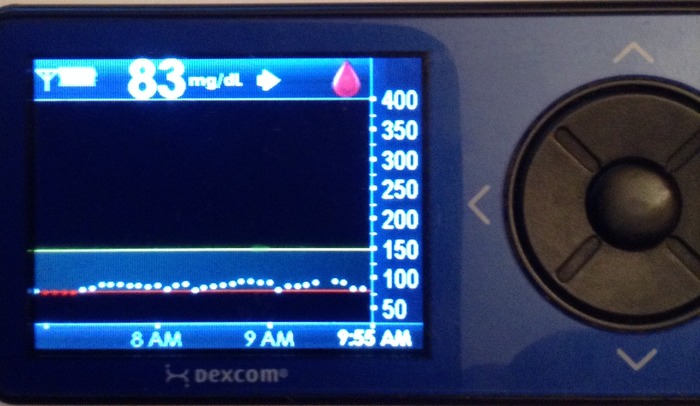
Third, pivot points. He talks about the idea of using micro-boluses and small amounts of carbs to turn the line, and to do it before a high gets high and a low gets low. It's an idea I first introduced to the kids when my daughter tried a low carb lifestyle a few years ago and it was fabulous. For whatever reason, the pivot point made it much clearer to my daughter and she selected 100 as her cut off, with 70 as low and 140 as high...but she doses by 130 and eats or temps by 80 so she's been able to head off more highs and lows. My son has zero interest in that level of self-management so it's not a point against Dr. Ponder - just that I only have one kid that utilizes that idea.
Fourth, hollow highs. It's something my kids don't grasp yet - the idea that some highs aren't 'real' highs and need to be left alone to drop. Giving it a name has helped get the idea across, however. And, with my son at basketball camp every evening, we've had some great examples (adrenaline highs that drop within an hour of the end of a game). Dr. Ponder's approach to handling these hollow highs has been spot on for us.
Lastly, the images in the book are incredibly helpful. Actual, real results with explanations, labels, arrows...they add so much to the book.
Now, the few negatives. The book layout is confusing. It reads like chunks of data that have been organized into larger chunks and then combined into chapters. It lacks flow, basically. I realize that it's a quasi-manual but it's just a little too choppy. And I'm not a fan of the surfing analogies. His idea, his book so his terms stay but there were so many sections and examples and phrases that were forced into a ocean theme and it made it feel a little gimmicky. The section where ketones are "sharks in the water" did me in. I had to stop reading for awhile. Which is a shame because the ketone section was fabulous. No negatives outweigh the awesomeness of the book, though, so it's a five star book for me.
Let's start with my background. As of this review, my daughter has been a type 1 diabetic for 9 years (she's 11) and my son has been a T1D for 2 years (he's 13.) It would be fair to say that I spend a decent chunk of time as a pancreas. Well, pancreata, actually, if one can be plural. Anyhow, I have spent years learning about diabetes. We've done MDI and pumps, been through surgeries, illnesses and the diagnosis of additional auto immunes. I make all changes, evaluate all Dexcom reading, manage foods, oversee carb counting, change sites, wake up sleeping kids to feed them, stay up late to watch a temp basal kick in and then spend my free time researching ways to do it even better.
I first heard of Dr. Ponder on Facebook. I became a follower because I liked his tips/posts. At some point, I realized he was writing a book about his approach to diabetes and when he started to raise funding, I contributed. Going in, I expected to like the book. But, please note that I was not GIVEN this book - there is no giveaway and this isn't a review based on a freebie. I paid my money and I'm very happy to have done so.
So on to the book. Basically, I loved it. In 9 years, I have tried many, many things. People that don't live with T1D have no idea how hard diabetes is. It's 24/7/365 and there are no days off. Ever. There is no afternoon off. Most parents of T1Ds are just happy when the stars align and they are able to sleep through an entire night without an alarm. We don't have the disease but we have to have the knowledge because we feel this pressure to make sure our kids are given every opportunity to have healthy, complication-free adult lives without being constantly in their faces about diabetes.
I remember when my daughter was diagnosed and I found carb factors in my research...and then had to explain it to the CNP at the next four endo visits. And implementing the TAG idea in meal planning so that fats and proteins were covered appropriately...and then explain it to the CNP. As you can imagine, I decided to do my own thing fairly early on and the habit has stuck. I see the endo as a prescription source and like to figure out things on my own.
And then along came this book! And I realized that I wasn't alone. That there is an endo out there (who is a multi-decade T1D himself) that gets this. That experiments and tests and keeps an open mind. That takes his results, figures out WHY they happened and then figures out how to repeat it. And then SHARES it with the world.
I'm going to touch on a few topics that might help reviewers determine if this is a book for them.
First, basal rates. Dr. Ponder is a bit pushy about the idea of a single basal rate, or at least a small number of them. It's not a rule but it's something he appears to value. I have varied basals greatly over the years but I've never used a single basal rate. Perhaps it's because we did split dosing on long-acting insulins and I timed the overlap to cover dawn effects and bedtime growth hormones...so we never really had "one flat line" even on MDI. But I have learned over time that I gradually add basal rates until I become overwhelmed by them, at which point I scrap them all and start minimal again. With both kids in puberty and a son that is that teenage stage where kids 'forget' to bolus, one rate isn't right for them...but I have really given some thought to it. My son has three different levels - lower at night, really high in the morning, and high all day - and it's working well, so point to Dr. Ponder. My daughter's basal rates have been incredibly detailed before so while it's not three, I have reduced them by 3. Again, it's working well and it's easier to remember, so another point to Dr. Ponder.
Second, I needed a good reminder that a flat line means a basal rate is right, and that it means the other details need changed. I had been struggling with nights and had been changing them so often...and it was completely the wrong approach. I changed my mindset and the results have been wonderful.He slept 12 hours last night and was between 75 and 100 the entire time with no eating, no temping, no bolusing. Thank you, Dr. Ponder.
Third, pivot points. He talks about the idea of using micro-boluses and small amounts of carbs to turn the line, and to do it before a high gets high and a low gets low. It's an idea I first introduced to the kids when my daughter tried a low carb lifestyle a few years ago and it was fabulous. For whatever reason, the pivot point made it much clearer to my daughter and she selected 100 as her cut off, with 70 as low and 140 as high...but she doses by 130 and eats or temps by 80 so she's been able to head off more highs and lows. My son has zero interest in that level of self-management so it's not a point against Dr. Ponder - just that I only have one kid that utilizes that idea.
Fourth, hollow highs. It's something my kids don't grasp yet - the idea that some highs aren't 'real' highs and need to be left alone to drop. Giving it a name has helped get the idea across, however. And, with my son at basketball camp every evening, we've had some great examples (adrenaline highs that drop within an hour of the end of a game). Dr. Ponder's approach to handling these hollow highs has been spot on for us.
Lastly, the images in the book are incredibly helpful. Actual, real results with explanations, labels, arrows...they add so much to the book.
Now, the few negatives. The book layout is confusing. It reads like chunks of data that have been organized into larger chunks and then combined into chapters. It lacks flow, basically. I realize that it's a quasi-manual but it's just a little too choppy. And I'm not a fan of the surfing analogies. His idea, his book so his terms stay but there were so many sections and examples and phrases that were forced into a ocean theme and it made it feel a little gimmicky. The section where ketones are "sharks in the water" did me in. I had to stop reading for awhile. Which is a shame because the ketone section was fabulous. No negatives outweigh the awesomeness of the book, though, so it's a five star book for me.
February 1, 2017
I liked the premise but not the writing style. Way too much repetition of the same things over and over.

May 1, 2021
I just got my first pump and continuous glucose monitor (CGM) after 30 years on multiple daily injections (MDI) and someone recommended this book to me, so I read it. It’s excellent, but mostly I say that because it agrees with the method I figured out for myself entirely on my own for the last 20 years. My method has long been to test often and treat accordingly. I’ve long micro-bolused, long stacked insulin for high carb/fat meals, long been able to feel very small blood sugar changes and tested repeatedly to watch trends. I’ve long believed that carb counting is not effective, and that insulin needs are not based strictly on carb counts. I’ve long learned to dose for foods I enjoy eating by experimenting and figuring it out for next time. I can eat an Impossible Whopper from Burger King without going high if I want!
So I took to this pump/CGM lifestyle very well. I definitely glance at the CGM 25 times per day or more, like this author does as well. So, I’m happy to have my methods echoed back to me, which makes me feel good about myself. And there are a few new things I got from this book. One is the idea of having a phantom high sugar. I forget what he calls it. I believe that having treated phantom highs have caused many lows in my life. I never realized it until this book explained it.
As a type 1 diabetic of 30+ years, I recommend this book to other people with type 1 diabetes & their caretakers. It is smart. It’s really the way to manage diabetes. If you understand The lessons in this book, you can eat the food you want to eat. I did this without a pump or CGM for years and kept an a1c of 5.5, though likely with too frequent of low. Now I have a pump & CGM and barely ever go low and if I do it’s like 68 for a couple minutes, since the CGM alerts me I’m dropping before that, so it never has the chance to sit low. But it also rarely goes above 120, though it may go as high as 180 sometimes. So I suspect that my a1c will be just as low of not lower now that I have the pump & CGM, even without the lows. And I don’t eat low carb and never will.
So I took to this pump/CGM lifestyle very well. I definitely glance at the CGM 25 times per day or more, like this author does as well. So, I’m happy to have my methods echoed back to me, which makes me feel good about myself. And there are a few new things I got from this book. One is the idea of having a phantom high sugar. I forget what he calls it. I believe that having treated phantom highs have caused many lows in my life. I never realized it until this book explained it.
As a type 1 diabetic of 30+ years, I recommend this book to other people with type 1 diabetes & their caretakers. It is smart. It’s really the way to manage diabetes. If you understand The lessons in this book, you can eat the food you want to eat. I did this without a pump or CGM for years and kept an a1c of 5.5, though likely with too frequent of low. Now I have a pump & CGM and barely ever go low and if I do it’s like 68 for a couple minutes, since the CGM alerts me I’m dropping before that, so it never has the chance to sit low. But it also rarely goes above 120, though it may go as high as 180 sometimes. So I suspect that my a1c will be just as low of not lower now that I have the pump & CGM, even without the lows. And I don’t eat low carb and never will.

January 19, 2016
Must read for T1Ds
This book is well written, easy to read and very, very interesting! I am looking forward to applying these techniques.
This book is well written, easy to read and very, very interesting! I am looking forward to applying these techniques.

April 2, 2022
It's good to know we are not crazy since 90% of our toddler's diabetes management is pretty much according to this book before I even read it. It is already a bit outdated, especially on the tech front, but principles are still very sound. Picked up a couple useful points and re-iterated others for my own peace of mind. Would definitely recommend to anyone with T1D.

March 19, 2017
I hate to give this book a low rating, simply because there aren't enough books out there that are candid and realistic about Type 1 care. And also there aren't a lot of Drs out there that are so realistic and helpful. I also hate to give a self published book a low rating, but honestly it could use a good over haul from an actual editor. There was simply too much in this book. It could have been cut down probably by half. There was a lot repeated and he tended to talk around and around, writing 10 sentences that could have been condensed and more direct with one sentence. That's not to say I didn't learn anything from the book. I have been a Type 1 for 33 years and have had a pump for 17, and a CGM for about 5. I really did like the concept of micro-blousing, micro-carbing and even "pivoting". It also inspired me to actually put on my alarms and narrow in on a good blood sugar. But honestly, the concepts in this book, if you have been a Type 1 for any amount of time and have a pump, and are interested in taking care of your disease, you probably have figured a lot of this out.
May 15, 2020
Sugar Surfing is a book written by Dr. Stephen Ponder and Kevin McMahon about type 1 diabetes. Dr. Ponder was diagnosed with type 1 diabetes in 1966. He is now pediatric endocrinologist, which gives care for children with diabetes and other endocrine system related issues. McMahon is co-author of this book and has a child with type 1 diabetes. This book gives detailed information about how to better manage diabetes. When Dr. Ponder was diagnosed, there weren’t many resources and accessories to help manage blood sugar. I believe what motivated these writers write this book is the journey they went through. In 1966, life expectancy was very short with diabetes, accessing insulin wasn’t easy, they had to manually check their blood sugar, in general, awareness of diabetes wasn’t much.
The target audiences are primarily people with type 1 diabetes however, this book is helpful for people following low carb diet, anyone that is using insulin pump or not, those who use a syringe to deliver insulin, families and friends of a diabetic patients, for diabetes educators and anyone that is interested in learning about type 1 diabetes. Dr. Ponder however suggests that the use of Continuous Glucose Monitor (CGM) in order to be able to make a quick decision and prevent highs and lows. CGM is a tool that diabetic person sticks on their body and can see their blood sugar number continuously. Diabetes affects the whole family, not just one person. when a person is diagnosed with type 1 diabetes, the whole family gets involved in the person's diabetes journey. When my child was diagnosed with type 1 diabetes, she was in the hospital for twelve days. Since I stayed with her, my husband had to take care of our son and the house. Even after coming home, we take turn to check on her each night. We didn’t know much about diabetes until her diagnosis, so it was and still is a learning process. We must communicate about her all-day activity and meal plan and the amount of insulin she needs without neglecting the other child. Diabetes is a journey and the patients need their loved once love and support. Therefore, it is helpful if everyone around the person gets educated about the sugar surfing.
The main goal of the work is help people and make them the best sugar surfer. In this book, Diabetes is considered as the wave and the surfers (diabetic patients) get on a surfboard (the CGM). Dr. Ponder shows in his book the comparison of a real-life surfing to a diabetic sugar surfing. The wave helps move the surfboard to go up and down. The surfer has to stay balanced on the board to enjoy the ride. The same is true for a diabetic person, their blood sugar has to stay in a certain range in order to have the best A1C. A1C is a test done every three months and it measures what percentage of their hemoglobin (a protein in red blood cells that carries oxygen) is coated with sugar. The higher the A1C level, the poorer the blood sugar control and the higher the risk of diabetes complications. Just like in real life surfing, if they don’t keep their balance and stay at a certain pace, they could possibly fall off the surfboard and drown. Therefore, it is important to become a good sugar surfer and be able to manage diabetes in order to avoid complications.
Some of the main points made by Dr. Pandora are
1. Knowing basic sugar surfing skills well and to use them all the time. This means, keeping the CGM properly calibrated, making sure the basal (background) insulin is doing its job, and learning how much insulin to give at each mealtime.
2. Developing the habit of frequent CGM display glances. It is important to keep an eye on the sensor (a little phone like machine that shows blood sugar reading every five minutes 24 hours). Viewing and managing blood glucose data is one the secrets of an ultimate success as a surfer. Knowing the blood sugar gives control over the diabetes.
3. Setting personal points (range where the blood sugar has to be). This is different for every individual and it is also different for different age groups. Children have a wide range and as they get older the range gets smaller. The better the range, the lesser A1C. For new surfers, it is easier to have a wide range (80 to 350) and manage it in that range. As they develop the surfing skill however, it is important to bring down the range (80 to 150).
4. Putting pieces together. Once a week, it is important to go back to look at the trend of the CGM and make changes accordingly. If there are too many highs, adjust the insulin pump to give more at those times to bring down the lows. Or if there are too many lows, adjust the pump to give less at those times to avoid those lows. Dr. Ponder says that “experienced surfers always study the waves before paddling out on the water to attack them.” page 51.
5. Repeat the steps and keep doing it. Surfing is learning how to manage the lows and highs with the help of CGM.
6. As the surfing abilities progress, it is important to lower targets for a better A1C.
I believe Dr. Ponder and McMahan have effectively accomplished their goal. They have shared their personal experience and explained about diabetes in detail. They have tried to compare diabetes experience to a real-life surfing experience in a way that everyone can understand.
I recommend that diabetes patients, families of diabetes patients, friends, healthcare providers, doctors, and anyone that is interested in learning about diabetes should read Sugar Surfing. There is on specific time to read this book, the sooner it is read, the better management of the blood sugar. My co-worker with type 1 diabetes suggested that I read this book so I can learn more about managing diabetes. However, when I read the book, not only that I learned to better manage, I also learned we are not the only ones that struggle with the situation. Therefore, this book is for anyone who is interested in better managing or helping a loved one to better manage their diabetes.
The target audiences are primarily people with type 1 diabetes however, this book is helpful for people following low carb diet, anyone that is using insulin pump or not, those who use a syringe to deliver insulin, families and friends of a diabetic patients, for diabetes educators and anyone that is interested in learning about type 1 diabetes. Dr. Ponder however suggests that the use of Continuous Glucose Monitor (CGM) in order to be able to make a quick decision and prevent highs and lows. CGM is a tool that diabetic person sticks on their body and can see their blood sugar number continuously. Diabetes affects the whole family, not just one person. when a person is diagnosed with type 1 diabetes, the whole family gets involved in the person's diabetes journey. When my child was diagnosed with type 1 diabetes, she was in the hospital for twelve days. Since I stayed with her, my husband had to take care of our son and the house. Even after coming home, we take turn to check on her each night. We didn’t know much about diabetes until her diagnosis, so it was and still is a learning process. We must communicate about her all-day activity and meal plan and the amount of insulin she needs without neglecting the other child. Diabetes is a journey and the patients need their loved once love and support. Therefore, it is helpful if everyone around the person gets educated about the sugar surfing.
The main goal of the work is help people and make them the best sugar surfer. In this book, Diabetes is considered as the wave and the surfers (diabetic patients) get on a surfboard (the CGM). Dr. Ponder shows in his book the comparison of a real-life surfing to a diabetic sugar surfing. The wave helps move the surfboard to go up and down. The surfer has to stay balanced on the board to enjoy the ride. The same is true for a diabetic person, their blood sugar has to stay in a certain range in order to have the best A1C. A1C is a test done every three months and it measures what percentage of their hemoglobin (a protein in red blood cells that carries oxygen) is coated with sugar. The higher the A1C level, the poorer the blood sugar control and the higher the risk of diabetes complications. Just like in real life surfing, if they don’t keep their balance and stay at a certain pace, they could possibly fall off the surfboard and drown. Therefore, it is important to become a good sugar surfer and be able to manage diabetes in order to avoid complications.
Some of the main points made by Dr. Pandora are
1. Knowing basic sugar surfing skills well and to use them all the time. This means, keeping the CGM properly calibrated, making sure the basal (background) insulin is doing its job, and learning how much insulin to give at each mealtime.
2. Developing the habit of frequent CGM display glances. It is important to keep an eye on the sensor (a little phone like machine that shows blood sugar reading every five minutes 24 hours). Viewing and managing blood glucose data is one the secrets of an ultimate success as a surfer. Knowing the blood sugar gives control over the diabetes.
3. Setting personal points (range where the blood sugar has to be). This is different for every individual and it is also different for different age groups. Children have a wide range and as they get older the range gets smaller. The better the range, the lesser A1C. For new surfers, it is easier to have a wide range (80 to 350) and manage it in that range. As they develop the surfing skill however, it is important to bring down the range (80 to 150).
4. Putting pieces together. Once a week, it is important to go back to look at the trend of the CGM and make changes accordingly. If there are too many highs, adjust the insulin pump to give more at those times to bring down the lows. Or if there are too many lows, adjust the pump to give less at those times to avoid those lows. Dr. Ponder says that “experienced surfers always study the waves before paddling out on the water to attack them.” page 51.
5. Repeat the steps and keep doing it. Surfing is learning how to manage the lows and highs with the help of CGM.
6. As the surfing abilities progress, it is important to lower targets for a better A1C.
I believe Dr. Ponder and McMahan have effectively accomplished their goal. They have shared their personal experience and explained about diabetes in detail. They have tried to compare diabetes experience to a real-life surfing experience in a way that everyone can understand.
I recommend that diabetes patients, families of diabetes patients, friends, healthcare providers, doctors, and anyone that is interested in learning about diabetes should read Sugar Surfing. There is on specific time to read this book, the sooner it is read, the better management of the blood sugar. My co-worker with type 1 diabetes suggested that I read this book so I can learn more about managing diabetes. However, when I read the book, not only that I learned to better manage, I also learned we are not the only ones that struggle with the situation. Therefore, this book is for anyone who is interested in better managing or helping a loved one to better manage their diabetes.
June 23, 2015
This is a great resource for diabetics who want to maximize the use of their CGM to achieve tight control of their blood sugars. When I first heard about the CGM, I imagined that it would lesson the need for multiple finger sticks each day and help me manage my blood sugars minute by minute. But, when I was initially trained to use the CGM, it wasn't for much more than as a back up to the usual multiple finger stick routine. There is soooo much more and, using the strategies outlined in Dr. Ponder's book, I'm now getting the support I need to achieve the tight control that I imagined I would get from my CGM.

June 7, 2018
Good information, but should have been pamphlet .
January 27, 2023
First of all, kudos to anyone spending their life figuring out the complexities of Type One and the fact that this book is crowdfunded is impressive (also, best title!). That said, this book is outdated (because let’s face it: medical advances are outpacing publishing which is a happy problem) and the book could really use some editing. So five stars for the great stuff (wonderful, clear chapter explaining ketones medically; phenomenal definition section in the appendix, etc). Skip the first 67 pages or so because it’s basically a very verbose introduction with a lot of vague phrases that aren’t explained and it comes across as a bit condescending and arrogant since it keeps repeating over and over that this is a revolutionary method that the reader has never heard of and we’ve (the reader) have all learned to handle type one an old-fashioned, outdated way and he’s going to explain the right way to handle it. The author is an amazing doctor and probably did revolutionize endocrinology but an editor needs to fix the text so it reads clearly and concisely with a more humble truth without alienating the reader. The reality is that most type ones are taught at least a variation of this method from the start (my daughter’s Endo even recommended this book) and a lot of the method is actually intuitive: as soon as my daughter had a CGM, we immediately began giving her a half unit of insulin as soon as she reached the glucose number where a .5 correction would be the proper correction factor (we were MDI at the time) which is what Ponder would term as “pivoting” and using a “micro-bolus.” When my daughter was at school, whenever she went under 100 with a downward trend (although we considered low as 70), she would eat one 4carb glucose tab or half of one to bump her BG up so she didn’t have to watch over it during school (what Ponder terms as “nudging “ and “microcarbing.”). I hadn’t read the book yet. Our Endo didn’t encourage us to do so. It just made intuitive sense. Also, the book is outdated because it devotes a lot of time to calibrating meters/sensors and double checking CGM with a blood meter pretty much always. It also never mentions (understandably since it was published a few years ago) how to handle his methods with Control IQ (which basically does a lot of what he’s touting automatically within the insulin pump’s algorithms). The book was evidently revolutionary at the time but simply needs to be updated (and please take out some of the forced surfing terms). I’m glad I read it, though, because I enjoyed the refresher on ketones and the way insulin works within the body…and it even explained in beautiful detail why my daughter’s face was so flushed constantly for the month before diagnosis (one of her only symptoms) which even the specialists at our hospital said was unrelated to her diagnosis. I had previously read an explanation of it in another T1D book post-diagnosis but this one was more in depth about it. Isn’t it a beautiful thing that pumps now take out partial basal doses on their own, etc? The fact that we have advanced beyond some of this book’s instruction is simply delightful.

June 1, 2020
This challenges the way diabetes (insulin dependent) is managed. Putting the responsibility back into the patient (instead of the doctor). Empowerment not paternalistic one-size-fits-all prescription.
The result? The “power” to deal with hypos and hypers with “advanced” techniques like insulin stacking. Goes beyond what DAPHNE teaches, in fact, this extends and builds on that.
Then suddenly, HbA1c is no longer an adequate measure of sugar control. Making the standard deviations over an increasingly normal average sugar level.
“Would you bolus when faced with a sugar level of 6.9mmol/L?”
The author has the credentials and the experience and shared his experience. Much of this is simple to understand and may take some time to master.
Sugar surfing is possible with a meter and MDI. But a rtCGM or at last a flash CGM (not the blind CGM) is highly recommended. Using a pump reduces the number of injections and allows for some fancy programming, using MDI (even the regular, non-analogue, insulins can lead to amazing results.
I bought the ebook. Will probably order a hard copy also.
PS: with power comes great responsibility... there is a learning curve (how steep depends on how involved one previously are with regards to managing diabetes) and a fiduciary component to this— sourcing of funds to support the sensors and use of technology can in itself be hugely daunting.
The result? The “power” to deal with hypos and hypers with “advanced” techniques like insulin stacking. Goes beyond what DAPHNE teaches, in fact, this extends and builds on that.
Then suddenly, HbA1c is no longer an adequate measure of sugar control. Making the standard deviations over an increasingly normal average sugar level.
“Would you bolus when faced with a sugar level of 6.9mmol/L?”
The author has the credentials and the experience and shared his experience. Much of this is simple to understand and may take some time to master.
Sugar surfing is possible with a meter and MDI. But a rtCGM or at last a flash CGM (not the blind CGM) is highly recommended. Using a pump reduces the number of injections and allows for some fancy programming, using MDI (even the regular, non-analogue, insulins can lead to amazing results.
I bought the ebook. Will probably order a hard copy also.
PS: with power comes great responsibility... there is a learning curve (how steep depends on how involved one previously are with regards to managing diabetes) and a fiduciary component to this— sourcing of funds to support the sensors and use of technology can in itself be hugely daunting.
This entire review has been hidden because of spoilers.

February 6, 2020
I have just read this book all the way through.
There are some great ideas in it for evening out your blood sugars and graph on your CGM. I am currently trying the "wait for the bend" before I eat my breakfast but it is now 45 minutes since I took my breakfast bolus, my toast has gone cold and my graph is stubbornly straight!!
On this point, who has time to wait and respond like this? The author seems to be a bit OCD when it comes to his bg control. Every tiny movement of his graph is monitored and acted upon. Even a slight rise from 5.6mmol/l to 6.8mmol/l is given a correction bolus. And yet he doesn't seem to be that bothered about getting the carb counting overly accurate in the first place. Who is awake at 4am responding to a tiny rise and fall in their blood sugars? And then stays awake to see what the response is. Does he ever sleep??
I will be using some of the techniques but I'm not going to be soooooo obsessed.
There are some great ideas in it for evening out your blood sugars and graph on your CGM. I am currently trying the "wait for the bend" before I eat my breakfast but it is now 45 minutes since I took my breakfast bolus, my toast has gone cold and my graph is stubbornly straight!!
On this point, who has time to wait and respond like this? The author seems to be a bit OCD when it comes to his bg control. Every tiny movement of his graph is monitored and acted upon. Even a slight rise from 5.6mmol/l to 6.8mmol/l is given a correction bolus. And yet he doesn't seem to be that bothered about getting the carb counting overly accurate in the first place. Who is awake at 4am responding to a tiny rise and fall in their blood sugars? And then stays awake to see what the response is. Does he ever sleep??
I will be using some of the techniques but I'm not going to be soooooo obsessed.

March 24, 2020
This book is not for beginners. It is for people who know their body and the way it functions, people who are at a level where they can safely experiment.
This book has given a name to most of my actions, giving a reassurance that what I've been doing is correct.
The book aims at maintaining perfect sugar levels, probably better than those of a non-diabetic, by using data and analysing it. Also, it seems achievable because the author himself has been following these methods, and has refered to his own graphs for examples. It gives strategies which can be used in daily life. However, the author does speak a lot about the cgm. It is a must read if you're using a cgm.
It gives information about ketones and how blood sugar gets affected by the smallest of things.
Overall, the information given in the book is extremely useful but the author could've articulated better so as to avoid repetitions.
This book has given a name to most of my actions, giving a reassurance that what I've been doing is correct.
The book aims at maintaining perfect sugar levels, probably better than those of a non-diabetic, by using data and analysing it. Also, it seems achievable because the author himself has been following these methods, and has refered to his own graphs for examples. It gives strategies which can be used in daily life. However, the author does speak a lot about the cgm. It is a must read if you're using a cgm.
It gives information about ketones and how blood sugar gets affected by the smallest of things.
Overall, the information given in the book is extremely useful but the author could've articulated better so as to avoid repetitions.
November 30, 2016
Very good book and well written.
Some of the information tends to be a little technical, but overall understandable.
I found a lot of useful information in this book that I am already starting to apply to my diabetes.
The book is very well written and will have to be referred to often because of the vast amount of information.
It helps that the author is a type 1 diabetic and has developed this approach over a vast amount of years.
If you are open to trying things in a non-traditional manner, then you will benefit greatly from this book.
A word of caution, some endocrinologists may not be receptive to this approach and may offer resistance.
Some of the information tends to be a little technical, but overall understandable.
I found a lot of useful information in this book that I am already starting to apply to my diabetes.
The book is very well written and will have to be referred to often because of the vast amount of information.
It helps that the author is a type 1 diabetic and has developed this approach over a vast amount of years.
If you are open to trying things in a non-traditional manner, then you will benefit greatly from this book.
A word of caution, some endocrinologists may not be receptive to this approach and may offer resistance.
July 15, 2018
I have 2 kids with type 1 diabetes. Yeah, it’s fun. Our daughter is also disabled so we completely manage her diabetes for her. With CGM use becoming more common, the premise behind Sugar Surfing is very helpful. We manage her diabetes a lot differently than we used to before CGM. There are a lot of great hints and suggestions for those with type 1 or have a loved one with it. The writing style was a bit not to my liking and I found myself skimming in areas where it felt like there was a lot of repetition or just too many examples. That being said, it is a very helpful book.

January 3, 2019
I consider this a must read for any diabetic who uses a continuous glucose monitor. The principles can be used without a CGM but if you do have a CGM this book can help you use it to its maximum potential.
I’ve read it cover to cover several times and still refer to it at least once or twice a year.
I have a pretty extensive collection of books regarding Diabetes and this is in my top three list.
I’ve read it cover to cover several times and still refer to it at least once or twice a year.
I have a pretty extensive collection of books regarding Diabetes and this is in my top three list.
December 4, 2016
Important Paradigm Shift
Dr Ponder has been an amazing source of support since our daughter's diagnosis in 2014. As a leading pediatric endocrinologist and fellow T1D, we have been blessed to have Dr Ponder as her primary physician. This book summarizes his revolutionary perspective as it relates to proactive diabetes care. I highly recommend!
Dr Ponder has been an amazing source of support since our daughter's diagnosis in 2014. As a leading pediatric endocrinologist and fellow T1D, we have been blessed to have Dr Ponder as her primary physician. This book summarizes his revolutionary perspective as it relates to proactive diabetes care. I highly recommend!

March 24, 2017
Loved the subject/concept. Totally worth reading to get the knowledge and technic.
Started applying and results are great. Really enjoyed the surfing references, but I have to mention that it needs a serious editing job; way to many repeats and going in circles.
Started applying and results are great. Really enjoyed the surfing references, but I have to mention that it needs a serious editing job; way to many repeats and going in circles.

July 16, 2018
Every insulin dependent diabetic or family member of a diabetic should have a copy of this book. Learned so much. Full of examples of situations that we’ve all had as a type 1. Why not learn how to decrease your chances of complications and live a healthy life like those that don’t have diabetes

December 17, 2019
The concepts in the book are great, the tone and repetition and “salesy” voice drove me a bit crazy. That being said if you or someone you love are learning to live with T1D, applying the ideas found in the pages have been very helpful.
March 3, 2023
This book is a game changer.
This book has so much information. I wish I knew all this when a was diagnosed. Since reading this book my numbers have improved dramatically!! It’s a must have.
This book has so much information. I wish I knew all this when a was diagnosed. Since reading this book my numbers have improved dramatically!! It’s a must have.
September 3, 2019
This is an excellent read. I've been type 1 diabetic for 40 years and still learned some useful stuff from this book. I highly recommend it.
September 19, 2019
It was a little long but had some good ideas.
October 28, 2019
I think it could have been more succinct but there were *so* many helpful tips and strategies within this book. A huge help to a parent with a T1D child. I'm really glad this book exists.

March 19, 2022
Kinda of dates now with automated insulin delivery pumps. Would be good for people still on multiple daily injections or newly diagnosed.

November 16, 2022
Surf's up 😎
January 27, 2024
Wonderful experience!
Real world experience that is clearly passed on. This read/study should remove confusion and inaction, fostering well reasoned diabetic action.
Real world experience that is clearly passed on. This read/study should remove confusion and inaction, fostering well reasoned diabetic action.
July 2, 2025
Gratifying reread in an era of automated insulin delivery systems!

February 1, 2017
I've been using a CGM (Dexcom) for almost 2 years now and had figured out a lot of this on my own--but I am going to be more diligent about micro-bolusing and micro-carbing when possible, and hunt up the control solution for my meter. :) I also look forward to experimenting with "waiting for the bend."
I echo what others have said--the drawback of this book being homespun and self-published was that it's poorly edited. I feel like it could have been half as long and still contain all the relevant info. Also, I struggle with authors (of all kinds!) who come off as though they have All The Answers. While I really appreciated his pointing out our need for patience, resilience, and consistency, I feel like he doesn't acknowledge how much mental effort this level of diligence requires. Sure, you can do very well with this system--as long as you're willing to glance at your CGM 40-50 times a day and take action (or decide not to) accordingly.
I was surprised that he didn't mention the importance of being properly hydrated for your CGM to work properly. Also, I was surprised that he gives actual doses in his examples without offering constant caveats that everyone's doses, ratios, sensitivities, etc. are different. Someone new to diabetes may glance through the book and take his doses as guidelines for themselves, which could be dangerous.
I echo what others have said--the drawback of this book being homespun and self-published was that it's poorly edited. I feel like it could have been half as long and still contain all the relevant info. Also, I struggle with authors (of all kinds!) who come off as though they have All The Answers. While I really appreciated his pointing out our need for patience, resilience, and consistency, I feel like he doesn't acknowledge how much mental effort this level of diligence requires. Sure, you can do very well with this system--as long as you're willing to glance at your CGM 40-50 times a day and take action (or decide not to) accordingly.
I was surprised that he didn't mention the importance of being properly hydrated for your CGM to work properly. Also, I was surprised that he gives actual doses in his examples without offering constant caveats that everyone's doses, ratios, sensitivities, etc. are different. Someone new to diabetes may glance through the book and take his doses as guidelines for themselves, which could be dangerous.

March 7, 2024
Required reading for anyone who wants to make the most of their CGM info. I am now a proud Sugar Surfer!
This book does a great job simply explaining the science behind type 1 diabetes (insulin action, comparisons to non-diabetic BGs, how glucagon works, etc.) and diabetes tech (insulin pumps, MDI, CGMs, etc.). Then the book gives you tips on strategies to use all the tools available, including your brain, to achieve dynamic care.
It is a little repetitive at times, but I learned new things with every iteration so it is worth every word. Don't even skip the Terminology section at the end; there are gems in there too.
Some basic takeaways:
-- Be patient, consistent, and resilient. No shame or guilt, we're just doing our best. Some factors are harder to predict than others, and the unpredictable will happen.
-- Glance at your CGM frequently. Ask:
1) How do I feel? "Practice guessing the trend line direction before you glance. The brain can sense subtle BG shifts up, down, or steady. Practice!"
2) What am I doing? What will I do next? If eating, will the food act fast, medium, or slow?
3) When did I last eat? When did I last take insulin?
4) Do I need to check my blood sugar? Do I need to micro-bolus or micro-carb? (Micro-carb and micro-bolus around your upper and lower pivot point. Be patient. Remember that insulin takes more time to work than carbs do.)
This book does a great job simply explaining the science behind type 1 diabetes (insulin action, comparisons to non-diabetic BGs, how glucagon works, etc.) and diabetes tech (insulin pumps, MDI, CGMs, etc.). Then the book gives you tips on strategies to use all the tools available, including your brain, to achieve dynamic care.
It is a little repetitive at times, but I learned new things with every iteration so it is worth every word. Don't even skip the Terminology section at the end; there are gems in there too.
Some basic takeaways:
-- Be patient, consistent, and resilient. No shame or guilt, we're just doing our best. Some factors are harder to predict than others, and the unpredictable will happen.
-- Glance at your CGM frequently. Ask:
1) How do I feel? "Practice guessing the trend line direction before you glance. The brain can sense subtle BG shifts up, down, or steady. Practice!"
2) What am I doing? What will I do next? If eating, will the food act fast, medium, or slow?
3) When did I last eat? When did I last take insulin?
4) Do I need to check my blood sugar? Do I need to micro-bolus or micro-carb? (Micro-carb and micro-bolus around your upper and lower pivot point. Be patient. Remember that insulin takes more time to work than carbs do.)
Displaying 1 - 30 of 34 reviews