

What do you think?
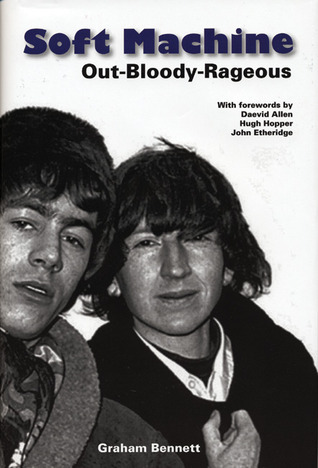
Soft Machine: Out-bloody-rageous
From their cult status as the serious hippy’s favorite psychedelic band to their final days as the champions of fusion, Soft Machine never played the game by the rules. The book traces the lives of Soft Machine’s members, pieces together the band’s serendipitous formation and colorful career, and unravels the truth, mystique, and legends. It recounts the incidents and internal tensions that led to an astonishing 24 different lineups, and places Soft Machine’s development in the musical and social context of the time. Lavishly illustrated with over 80 color photographs, posters, and clippings, Soft Machine includes a full Soft Machine family tree, concert file, discography, and sessionography. It is essential reading for any serious fan of rock or jazz.
- GenresMusic
415 pages, Hardcover
First published October 1, 2005
Ratings & Reviews
Friends & Following
Create a free account to discover what your friends think of this book!
Community Reviews
Displaying 1 - 10 of 10 reviews
January 10, 2026
I thoroughly enjoyed my time with this one. It gave me a reason to delve deeper into band that I have always admired and been interested in despite being mostly unaware of the band’s internal culture.
This book has helped me to understand why such a cutting-edge and unique band managed to avoid major success at every opportunity. The 24 (!) lineup changes have led me to characterise them as the musical equivalent of Theseus’ Ship; Soft Machine replaced their oars with a stern drive motor, only to swap this out for sails.
It’s unsurprising that the popularity of the Softs was stifled. The identity crisis that plagued the band throughout the 60s and 70s led fans to be confused as to what the band was striving to be. Given that musical taste was largely monogamous at the time of Soft Machine’s prime years, the constant change of direction was bound to prevent the establishment of a firm audience.
Fortunately, people today are far more accustomed to exploring and appreciating a wider range of music than decades gone by. I think this helps the Softs’ case. In the time since this book was written, the band has been celebrated more than ever, and I believe Bennett’s account of the tumultuous life of Soft Machine has been material to the modern revival of their music. While it is clear that this was written by a fan for fans, I appreciate that Bennett isn’t afraid to be brutally honest about the reality of the band.
Although it’s a little outdated now given the modern incarnation of the band, it would be hard to find a better source for learning about Soft Machine.
This book has helped me to understand why such a cutting-edge and unique band managed to avoid major success at every opportunity. The 24 (!) lineup changes have led me to characterise them as the musical equivalent of Theseus’ Ship; Soft Machine replaced their oars with a stern drive motor, only to swap this out for sails.
It’s unsurprising that the popularity of the Softs was stifled. The identity crisis that plagued the band throughout the 60s and 70s led fans to be confused as to what the band was striving to be. Given that musical taste was largely monogamous at the time of Soft Machine’s prime years, the constant change of direction was bound to prevent the establishment of a firm audience.
Fortunately, people today are far more accustomed to exploring and appreciating a wider range of music than decades gone by. I think this helps the Softs’ case. In the time since this book was written, the band has been celebrated more than ever, and I believe Bennett’s account of the tumultuous life of Soft Machine has been material to the modern revival of their music. While it is clear that this was written by a fan for fans, I appreciate that Bennett isn’t afraid to be brutally honest about the reality of the band.
Although it’s a little outdated now given the modern incarnation of the band, it would be hard to find a better source for learning about Soft Machine.

December 2, 2025
One of the finest music bios I've ever read. Soft Machine were (and are again, since 2015- though that's after this book was written) a complicated beast, with the radical changes in the band's style and sound, as well as its lineup, making it hard to get a handle on their work in its entirety. Bennett has a remarkable sympathy for the group through its twists and turns, as well as, vitally, candid interviews with most of the principals, and the book's greatest strength is that it makes the band's convoluted voyage from psychedelic rock heroes to avant-prog pioneers to more straightforward fusion outfit to, ultimately, tepid library music ensemble make sense. Critical consensus has typically held that the band became less innovative, and lost something special, when Robert Wyatt quit; Bennett doesn't really disagree with this, I think, and he doesn't really hide his feelings about the quality of the band's later work, but he doesn't write it off, either, as so many other writers do, and he's willing to sincerely engage with and find value in the post-Wyatt stuff, which is good.
An interesting recurring theme through the book- and one which is crucial to understanding Soft Machine's evolution- is the way in which the band's internal dynamics repeatedly resulted in the departure of key members, then their replacement(s) changed the dynamics again such that another member quit, and so on. Kevin Ayers chose to leave the band as he felt the more muso-type other members left little space for his deadpan pop songwriting. The decision to expand the three-piece to a septet with a four-piece horn section, though short-lived, put the band on a course to longer and more involved instrumental compositions (as opposed to medleys combining brief instrumental and vocal pieces), leading to Robert Wyatt's alienation and eventual departure as he felt he had no room to explore the use of lyrics and vocals as he wanted. Wyatt's replacement, Phil Howard, pushed the band hard towards free jazz, but in so doing stepped on the toes of two of the band's other three members, who fired him in turn- and then Elton Dean, who was himself basically a free jazzer, quit in his wake, uninterested in the band's turn from his favored style. Hugh Hopper quit as he felt that Karl Jenkins's and Mike Ratledge's focus on structured compositions left little room for his favored avant-garde-influenced tape-loop-based pieces. Ratledge left quietly as he'd lost all interest in performing, and then lost interest in composing, too, with the prolific Jenkins suddenly writing the lion's share of the group's albums. Further on the composition front, Roy Babbington quit because he simply couldn't afford to keep playing with the band- as a non-composing member of the group, he got no share of their publishing royalties, and they didn't make enough gigging to live on.
These constant internal conflicts and shake-ups to an extent gave the group a dynamism and a protean quality- there are major differences of style from album to album. But the perverse results of the band's game of musical chairs are, on the one hand, a long string of embittered ex-members of one of the greatest bands of their generation, and, on the other, that Soft Machine ultimately became the Karl Jenkins Group in all but name, and when Jenkins's interest shifted from playing hard-edged jazz-rock to composing bland library music, the band unfortunately followed. (No insult meant to Karl Jenkins, here, even- I don't think he did anything wrong; the pained internal environment of the band started well before he joined, and he didn't really do anything to make it worse. He's just the guy who got left holding the bag for the last stage of their career.)
An interesting recurring theme through the book- and one which is crucial to understanding Soft Machine's evolution- is the way in which the band's internal dynamics repeatedly resulted in the departure of key members, then their replacement(s) changed the dynamics again such that another member quit, and so on. Kevin Ayers chose to leave the band as he felt the more muso-type other members left little space for his deadpan pop songwriting. The decision to expand the three-piece to a septet with a four-piece horn section, though short-lived, put the band on a course to longer and more involved instrumental compositions (as opposed to medleys combining brief instrumental and vocal pieces), leading to Robert Wyatt's alienation and eventual departure as he felt he had no room to explore the use of lyrics and vocals as he wanted. Wyatt's replacement, Phil Howard, pushed the band hard towards free jazz, but in so doing stepped on the toes of two of the band's other three members, who fired him in turn- and then Elton Dean, who was himself basically a free jazzer, quit in his wake, uninterested in the band's turn from his favored style. Hugh Hopper quit as he felt that Karl Jenkins's and Mike Ratledge's focus on structured compositions left little room for his favored avant-garde-influenced tape-loop-based pieces. Ratledge left quietly as he'd lost all interest in performing, and then lost interest in composing, too, with the prolific Jenkins suddenly writing the lion's share of the group's albums. Further on the composition front, Roy Babbington quit because he simply couldn't afford to keep playing with the band- as a non-composing member of the group, he got no share of their publishing royalties, and they didn't make enough gigging to live on.
These constant internal conflicts and shake-ups to an extent gave the group a dynamism and a protean quality- there are major differences of style from album to album. But the perverse results of the band's game of musical chairs are, on the one hand, a long string of embittered ex-members of one of the greatest bands of their generation, and, on the other, that Soft Machine ultimately became the Karl Jenkins Group in all but name, and when Jenkins's interest shifted from playing hard-edged jazz-rock to composing bland library music, the band unfortunately followed. (No insult meant to Karl Jenkins, here, even- I don't think he did anything wrong; the pained internal environment of the band started well before he joined, and he didn't really do anything to make it worse. He's just the guy who got left holding the bag for the last stage of their career.)

March 2, 2025
This is a great biography of the band, but it has one flaw - it shifts style completely after 1971. Up until that, we are provided with lots of details about the various member's personal lives and artistic differences. With the start of John Marshall joining, the books turns into a parade of short mini-biographies, where each new member of the band (there are quite a few coming and going) is presented like they were sportsmen, with lots of focus on their "weapons of choice" (ie their respective instruments).
The member of the later line-ups that Bennett seems to have the best contact with, is Roy Babbington, who - with his working class background - puts the band into a class perspective, and describes a sorry bunch of players who never seems to have much fun.
Not that you could tell from the music. Read this, and listen to all the great records as you go along!
The member of the later line-ups that Bennett seems to have the best contact with, is Roy Babbington, who - with his working class background - puts the band into a class perspective, and describes a sorry bunch of players who never seems to have much fun.
Not that you could tell from the music. Read this, and listen to all the great records as you go along!

April 8, 2015
This is the third book about music that I have recently read: after the ground-breaking biography of Frank Zappa , and the collection of essays about Beethoven's string quartets , I have just finished reading Graham Bennett's book "Soft Machine: Out-Bloody-Rageous" about one of the most important bands that emerged from the rock revolution of the 1960s. To me, Soft Machine's music was absolutely the best in the crucial period between mid-1960s and mid-1970s.
It would be misleading to call Soft Machine a rock band. Their music always defied categorizations. They pioneered psychedelic pop (not rock). For a little while, during the late 1960s, one could count them as a progressive rock band, where the "progressive" qualifier meant "influenced by jazz, classical music, and avant-garde". Soft Machine then ventured into jazz-rock category and so-called "fusion", and from there they went deeper and deeper into jazz and avant-garde contemporary music, including misguided excursions into the horrid "ambient music".
Obviously, Soft Machine's creative trajectory that went from dadaist and psychedelic pop to pure jazz was related to extremely frequent changes in band's personnel. No other important music band had 24 different line-ups (performing units). The musician who belonged to the most line-ups (from #1 to #17, continually) was Mike Ratledge. The next most "permanent" member, Karl Jenkins, was in 12 line-ups, from #13 to #24. Interestingly, the best known member of the band, drummer and singer Robert Wyatt, was only in line-ups from #1 to #10. The author shows that the personnel-genre relationship worked both ways: not only did changes in personnel cause changes in music, but also the turns in musical focus of the band's compositions resulted in members quitting the band or being fired.
The Soft Machine story began in mid-1960s in the Simon Langston Grammar School for Boys in Canterbury, UK. Mike Ratledge, Robert Wyatt, and the Hopper brothers, Hugh and Brian, all attended the school and knew each other. Kevin Ayers of Wilde Flowers and Daevid Aellen, an Australian poet, guitarist and performance artist, joined Ratledge and Wyatt to form one of the first line-ups of Soft Machine in the fall of 1966. These four, plus the Hopper brothers, plus 19 other musicians belonged to the band at different times between 1966 and 1984.
The absolute majority of artists who at one point or another played for Soft Machine were influenced by jazz or were jazz musicians. Some, like Mike Ratledge, were classically trained. Mr. Bennett writes that "Daevid, Robert and Mike had all been profoundly inspired in their formative years by bebop - which emphasized rhythmic and harmonic complexity and chordal rather than melodic improvisation - and also free jazz, with its philosophy of impulsive musical experience." Most of them were not interested in playing rock music at all. (Funny how the same thing applied to one of the rock music icons, Frank Zappa.)
Soft Machine never played to the crowd, and were never really interested in stardom. Soft Machine and Pink Floyd had very similar beginnings, often played on the same bill, yet they went in very different directions. Mr. Bennett quotes Nick Mason, Pink Floyd's drummer: "Pink Floyd were far more geared to wanting to be a commercial band than Soft Machine, who had far more musical ability than we ever did. So inevitably we went different ways."
Mr. Bennett's meticulously researched book is well written and very readable. By all means it deserves the distinction of being considered the "definitive biography" of Soft Machine. A very solid and impressive work about one of the most important bands of the rock era, who never were a rock band.
Four and a half stars.
It would be misleading to call Soft Machine a rock band. Their music always defied categorizations. They pioneered psychedelic pop (not rock). For a little while, during the late 1960s, one could count them as a progressive rock band, where the "progressive" qualifier meant "influenced by jazz, classical music, and avant-garde". Soft Machine then ventured into jazz-rock category and so-called "fusion", and from there they went deeper and deeper into jazz and avant-garde contemporary music, including misguided excursions into the horrid "ambient music".
Obviously, Soft Machine's creative trajectory that went from dadaist and psychedelic pop to pure jazz was related to extremely frequent changes in band's personnel. No other important music band had 24 different line-ups (performing units). The musician who belonged to the most line-ups (from #1 to #17, continually) was Mike Ratledge. The next most "permanent" member, Karl Jenkins, was in 12 line-ups, from #13 to #24. Interestingly, the best known member of the band, drummer and singer Robert Wyatt, was only in line-ups from #1 to #10. The author shows that the personnel-genre relationship worked both ways: not only did changes in personnel cause changes in music, but also the turns in musical focus of the band's compositions resulted in members quitting the band or being fired.
The Soft Machine story began in mid-1960s in the Simon Langston Grammar School for Boys in Canterbury, UK. Mike Ratledge, Robert Wyatt, and the Hopper brothers, Hugh and Brian, all attended the school and knew each other. Kevin Ayers of Wilde Flowers and Daevid Aellen, an Australian poet, guitarist and performance artist, joined Ratledge and Wyatt to form one of the first line-ups of Soft Machine in the fall of 1966. These four, plus the Hopper brothers, plus 19 other musicians belonged to the band at different times between 1966 and 1984.
The absolute majority of artists who at one point or another played for Soft Machine were influenced by jazz or were jazz musicians. Some, like Mike Ratledge, were classically trained. Mr. Bennett writes that "Daevid, Robert and Mike had all been profoundly inspired in their formative years by bebop - which emphasized rhythmic and harmonic complexity and chordal rather than melodic improvisation - and also free jazz, with its philosophy of impulsive musical experience." Most of them were not interested in playing rock music at all. (Funny how the same thing applied to one of the rock music icons, Frank Zappa.)
Soft Machine never played to the crowd, and were never really interested in stardom. Soft Machine and Pink Floyd had very similar beginnings, often played on the same bill, yet they went in very different directions. Mr. Bennett quotes Nick Mason, Pink Floyd's drummer: "Pink Floyd were far more geared to wanting to be a commercial band than Soft Machine, who had far more musical ability than we ever did. So inevitably we went different ways."
Mr. Bennett's meticulously researched book is well written and very readable. By all means it deserves the distinction of being considered the "definitive biography" of Soft Machine. A very solid and impressive work about one of the most important bands of the rock era, who never were a rock band.
Four and a half stars.
September 4, 2020
I saw Soft Machine in the nid 1970's, they were to me an amazing jazz/fusion band that I had listened to over the years on John Peel's various shows.
It was sad to read that the band was never that happy together, that there was a sense of obligation to do rather than commitment to the amazing sounds they produced.
That, like so many of the 1960's and 70's, that they were systematically cheated by promoters and managers alike, that there was no living to be made for them - how sad!
I was introduced to the book by the John Etheridge and the 21st century Soft Machine that he is the voice of - he was right in his description of the book as being a sad tale!
It was sad to read that the band was never that happy together, that there was a sense of obligation to do rather than commitment to the amazing sounds they produced.
That, like so many of the 1960's and 70's, that they were systematically cheated by promoters and managers alike, that there was no living to be made for them - how sad!
I was introduced to the book by the John Etheridge and the 21st century Soft Machine that he is the voice of - he was right in his description of the book as being a sad tale!

February 20, 2013
Kevin Ayers has just died in his sleep, he was the one who wrote a song called 'Why are we sleeping?' Hugh Hopper has gone too, a great player and SO fuzzy! Robert Wyatt may not play the drums again but he does other extraordinary music. Soft Machine will not reform this side of the grave but there is always You Tube, French television and their recorded legacy. Everyone who has ever heard Tubular Bells, Lol Coxhill busking on the Underground or appreciated Nucleus, the Amazing Band, Mal Dean....This book is essential reading.

February 21, 2016
A little mechanical in its account but then again many of the events of the book were a long time ago and recollections fade, it was a hazy time and maybe it's not easy sometimes to actually say what happened in all its glorious detail especially when many of the actors are still around. Taking that aside as a recent convert to Soft Machine a working account of the progress of some talented people.
September 25, 2007
Again, I've overrated a book because it's the only one around. The facts are nicely arranged, the prose style stumbling, and if you're not already interested don't bothr.
June 9, 2014
Out-Bloody-Rageous book.
November 29, 2014
An invaluable document to any fan of Soft Machine. I got the ebook version, which I didn't even know was available until I found it, purely by chance, a couple of weeks ago.
Displaying 1 - 10 of 10 reviews