Intorno alla metà degli anni Trenta del Novecento, il piccolo Henry Gustave Molaison comincia a soffrire di ripetute crisi convulsive, sviluppando un'epilessia farmaco-resistente. Quando il neurochirurgo William B. Scoville decide di sottoporlo, ormai ventisettenne, a un'operazione al cervello, il prezzo da pagare per la remissione delle crisi sarà, per Henry, il manifestarsi di una severa amnesia anterograda: l'incapacità, cioè, di ricordare le sequenze della sua vita successive all'operazione – al punto da salutare ogni giorno persone note come se le incontrasse per la prima volta, cominciando dai medici. Da quel momento, Henry diventerà semplicemente H. M., l'acronimo più pervasivo e perturbante di tutta la letteratura neuroscientifica degli ultimi decenni. Esito di una frequentazione professionale e umana di quasi mezzo secolo, quello di Suzanne Corkin non è «un» libro, ma «il» libro su un caso cui si devono scoperte decisive sulla natura della memoria e sugli specifici processi attraverso i quali viene costruita («Il cervello di Henry» scrive la Corkin «ha risposto a più domande sulla memoria di quanto abbiano fatto gli studi scientifici dei cento anni precedenti»). Un libro che ci offre, oltre a uno dei più intensi ‘ritratti clinici', una affascinante riflessione sulla tessitura fragile e tenace, coerente e composita, che sta alla base dell'identità di ognuno di noi.
Imagine living in the present - that everything that happened 30 seconds ago might as well not have happened, nothing exists but now. A zen life of living in the moment, only the moment. Imagine too being studied for forty years. The researchers remember, they study you, they know everything about your life, everything you have forgotten.
This book is about Henry who had an operation for epilepsy that removed the entorhinal cortex which is the main pathway for information to reach the hippocampus which is where memories are formed and retained. It cured the epilepsy but left Henry with only his past memories and those of the last few seconds.
For more than 40 years Dr. Corkin, the author, had a relationship with Henry both as researcher and friend. But Henry had no relationship with her, every day she was someone new to him. As were the other 120 researchers who came to study and test him over the years.
This operation didn't affect memories formed before the operation, nor his intelligence nor motor memory. He liked crafts and when he had learned how to do something, that ability remained with him. But he didn't know people. His relationships were all superficial. So when he died, Suzanne Corkin mourned him, the loss of a friend of 46 years, but even unto the last time they met, he didn't know who she was.
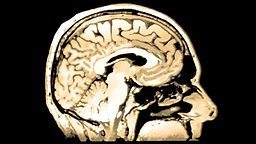
After his death, as during his life, he was the subject of much research into brain function after a revolutionary procedure that sliced his frozen brain into 2,400 ultra-thin slices, all of which have been uploaded into the cloud.
The book is biased towards the scientific study of Henry, it isn't a biography of the man by his friend. Although the author's high regard and affection for Henry shines through with her descriptions of the man himself, primarily she saw him as the subject of her scientific studies.
In the same way as Henrietta Lacks was immeasurably invaluable to medicine and the development of new drugs, so Henry is to both the physical and mental aspects of what the brain is, how it works and therefore, how we work.
An excellent book, very well-written, dry if you don't have an interest in neurology, fascinating if you do. At the end of the book, you feel a great affection for Henry and a sadness of a life he lived to the very fullest of his ability, which wasn't much. Zen may have us all living in the moment, but really, without memories there are no relationships and no intellectual learning, but there is still a yearning for what is missing, and frustation because what is missing isn't known.
Henry Molaison, born in Connecticut in 1926, had loving parents and a happy childhood. The highlight of his young days was a junior high school graduation gift from his parents - a short plane ride (costing $2.50) where he actually got to handle the controls. By then, however, Henry had already begun to suffer 'fading out' episodes which eventually became frequent and severe epileptic fits.
A common treatment for epilepsy at the time involved destroying the parts of the brain thought to trigger seizures. So in 1953, when Henry was 27-years-old, Dr. William Scoville performed a bilateral lobectomy, removing a considerable amount of tissue from both sides of Henry's brain. Unfortunately, this resulted in severe anterograde amnesia - Henry was unable to form any new memories; and some retrograde amnesia - Henry could not recall some things from before the operation.
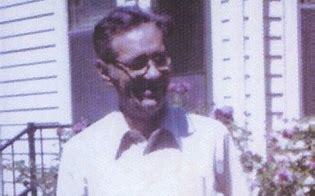
Young Henry Molaison
Henry's condition came to the attention of doctors interested in brain/memory research and he eventually became the long-term research subject of Dr. Suzanne Corkin and her team at the Department of Brain and Cognitive Sciences at MIT - who tested Henry periodically for 46 years.
Dr. Suzanne Corkin
Henry was always friendly and cooperative at MIT, even though he didn't remember the researchers from one visit to the next - or even one minute to the next if they left the room and returned. However, Henry came to believe he knew Dr. Corkin 'from high school' and playfully called her 'Doctress' - and the entire MIT team became very fond of the cordial man.
Henry Molaison
Several times each year Henry was picked up from his home in Connecticut and driven to MIT, where he remained for days to weeks at a time for testing.
Dr. Suzanne Corkin at MIT
The book describes the numerous brain scans performed on Henry as well as the many tests devised to elucidate aspects of his memory including: working memory (short term memory...like briefly remembering a phone number); procedural memory (performing a learned skill...like hitting a baseball); episodic memory (recalling a personal experience...like going to prom); semantic memory (knowing facts...like Columbus discovered America); spatial memory (familiarity with surroundings...like knowing the layout of a house)
Henry's abilities (or lack thereof) helped scientists learn more about the various parts of the brain and how they interact.
Corkin also talks about Henry's personal life, which was challenging. Henry couldn't go out alone or take care of himself and - over the course of his life - lived with his parents (his mom after his dad died); in the home of caring relatives; and finally in a nursing home. Henry had to be constantly reminded about personal hygiene (shower, deodorant, teeth brushing); reminded it was time to go to bed; time to eat; etc.
Henry Molaison
In one experiment at MIT Henry was served dinner, after which another plate of food was presented to him. Henry didn't remember having eaten and readily consumed the additional meal. Henry DID recall some things: he didn't like liver and he preferred cake to salad. Henry also enjoyed watching television, reading magazines, and doing crossword puzzles.
Some of Henry's difficulties were familiar to me because my mother has serious memory problems due to age-related dementia. Thus, she repeats things over and over; asks the same questions again and again; can't remember having eaten; doesn't recall that her husband died; gets confused about who's on the phone; and so on.
Dr. Corkin made careful and detailed advance plans - involving many scientists and researchers - for what to do with Henry's brain after his death. Thus when Henry died - in 2008 at the age of 82 - his head was quickly embedded in ice and his body was rushed to Massachusetts General Hospital for an extended brain scan. Then, following an autopsy, Henry's brain was flown to the University of California at San Diego. There, the organ was preserved and cut into thousands of thin slices for later study by qualified scientists. The plan is to (eventually) make all research results available on the internet.
As I read the book I felt very sad about Henry's circumscribed life, probably worse than Henry himself, who couldn't remember how bad off he was. I also felt angry at Dr. Scoville, who apparently gouged out too much of Henry's brain. (Note: cutting out pieces of people's brains 'for medical reasons' strikes me as a terrible idea in any circumstances.)
On the other hand, I'm glad that Henry's misfortune had a positive side, in the form of his vast - and continuing - contribution to science.
Most of the book is quite technical, with a lot of jargon about brain anatomy, kinds of memory, how memories form, medical tests, and so on. Thus, it might not appeal to the general public. However, for people interested in the brain and memory the book is well worth reading.
'Why Sir, if you have but one book with you upon a journey let it be a book of science. When you read through a book of entertainment, you know it, and it can do no more for you, but a book of science is inexhaustible'. This quote of Samuel Johnson’s was recorded by his Scottish friend, James Boswell, in his book,"'Journal of a Tour to the Hebrides', published in 1785, a year after Johnson’s death.
Suzanne Corkin’s new biography of Henry Molaison, the man with no memory, is a fitting example of Johnson’s wise quote.' Permanent Present Tense: The Unforgettable Life of Amnesic Patient, H.M.' (Basic Books, New York, 2013), has been eagerly anticipated since the news leaked out that Dr. Corkin had begun writing the life story of her most famous patient, H.M., shortly after his death in December, 2008. Corkin met H.M. in 1962 on his only visit to the Montreal Neurological Institute. Her supervisor, Dr. Brenda Milner, a neuropsychologist, and neurosurgeon, Dr. Wilder Penfield, both from the Montreal Neurological Institute, were the first to realize that the experimental brain operation performed by William Scoville on 27-year-old H.M. in an effort to cure his epilepsy, had rendered him amnesic. His seizures were almost vanquished, but he would never again be able to make new conscious (declarative) memories.
In 1966, at the age of 40, H.M. —as he was known until after his death—made his first of 55 visits to the Clinical Research Center at MIT in Boston, not far from where he lived in Hartford, Connecticut. Corkin was now a research scientist at MIT and “inherited” H.M., partly because of the ready access of MIT to Hartford. In Dr. Corkin’s lab, Henry was the subject of thousands of experiments on memory and other cognitive abilities. When H.M. had his surgery, it was not known that the hippocampus, the structures underlying the temporal lobes on each side of the brain, were essential for forming new long-term memories. The studies on Henry have not only taught us about memory processes and the brain substrates underlying them, but have stimulated and inspired countless students and researchers to pursue careers in neuroscience. The way in which temporal lobe epilepsy is surgically treated also changed as a result of the experimental surgery performed on H.M. In his case the hippocampus was removed from both sides of his brain; we now know that if just one hippocampus is removed, leaving a healthy structure on the other side, temporal lobe seizures can be cured without the patient becoming amnesic.
When 82-year-old Henry died in 2008, Dr. Corkin had been working with him for 46 years, yet he still didn’t know who she was. When told her name was Suzanne, he could say ‘Corkin’, but this was a superficial association of words rather than a signal that he knew her. Corkin’s book is a science book in that it tells the fascinating story of memory, and the methods, experiments and technologies developed in order to understand it; it is a history book in that it draws the reader into the lives of the neuroscience researchers, allowing us a peek into their thinking; it is a human story of the special relationship between researcher and patient; and it is a memoir about the man who did not lose his intelligence, sense of humor, or generosity when he lost his memory. For me, as one of the privileged few who worked with Henry when I was a postdoctoral fellow in Corkin’s lab, reading this book was like a walk through the past, her descriptions were so evocative, and the voices, especially Henry’s, so clear.
The last chapter, ‘Henry’s Legacy’, recounting the dramatic final journey of the most famous brain in the world, is a page turner as exciting—more exciting— than the best thriller, and takes us into the future; a future more mind-boggling than any science fiction book. After nine hours of in situ MRI brain scanning in Boston, followed by a delicate autopsy to remove the brain from the skull, followed by more scanning, Henry’s carefully protected brain had its own seat for the flight across America to the University of California, San Diego. There it was cut into 2,401 very thin slices, each one photographed. Now there is more work to do as the slices are stained and mounted on large glass slides, and the digital images used to create a 3-dimensional, stunningly detailed model of Henry’s brain that will be freely available on the internet. In the epilogue of her book, Dr. Corkin reminds us of the lovely man Henry was, as the people who cared for him and worked with him say their goodbyes, and reminisce about the good times they shared with the man who never remembered them.
For lovers of science, and those who relish a heroic story, this is a book that will stand up to a lifetime of journeys, with every reading providing inspiration and something new to contemplate.
This book tells the story of a 27 year old patient, HM, who in 1953 underwent experimental surgery to relieve the effects of a severe case of epilepsy. An unintended consequence of the operation, however, was the loss of the capacity to form long-term memories of any experience after the operation. While the real situation in the case had complexities, the basic problem was that whatever HM experienced, he lost about 30 seconds later. He could not transform his experience into memories, that contribute to personality, identity, and an orientation to the world. HM was perpetually stuck in the present - hence the title of the book.
The story gets more interesting. The case is brought to the attention of researchers who are studying the brain and memory and they see this patient as providing an opportunity for very important research. HM's conditions allows the scientists to test their theories on how we remember experience, what we retain, what type of learning takes place at what location in the brain, and a host of other problems. This patient's case combined a clearly identified brain disorder and the ability to talk about it, take tests, and be a continuing subject in a study. This case is one of a very few that permit the physical study of the brain to be studied in conjunction with the cognitive psychology studies of the individual suffering the disability. HM provided a once in a lifetime opportunity to advance research, settle conflicting theories, and help in the understanding of brain disorders such as Alzheimer's, Parkinson's Disease, Huntingdon's disease, and various forms of dementia. The author, Suzanne Corkin, ran the lab at MIT through which much of this research took place and studied this patient for fifty years. By the time HM died, the author knew more about him that anyone else alive.
The interaction of the personal tragedy and the research triumph would be enough to make a good story. At the same time, the author uses the book to provide a fantastic account of how the research questions raised by this case developed, how the studies were designed, and how new lines of inquiry were suggested by prior research. The book provides a wonderful history of neuroscience and an exciting account of how research develops in a hot area of neuroscience. There are few popular accounts of scientific activity that match this account of how the field developed through its interaction with HM as a perpetual test subject.
The book is not without contradictions and issues. What happened to HM is horrible and gives cause for questioning just what he experienced for those fifty years. At the same time, HM's tragedy was certainly a boon to neuroscience and the success of this research stream made careers, brought fame to many, drew new scientists into the area, and most likely was good for raising money as well. All that is fine, but a what cost? The neurosurgeon who conducted the operation disappears from the narrative early on, but not without noting that what he did was a big mistake. The author clearly took her relationship with HM very seriously and worked to ensure his welfare. At the same time, it is impossible not to note the planning that went into managing how to make the best use of HM's body once he died. It is also clear that important careers were made studying this man's life with his horrible man-made condition. It is difficult to see how that tension is effectively managed and balanced. I see HM's value to research and also think the author was very committed. Having said that, the tensions inherent in this situation almost jump out of the book if you are watching for them and I am glad I did not have to settle them in my head.
The book is very engaging, even if one feels a bit uneasy while reading it. The science writing and introduction to brain research is memorable. ... and it will make many readers count their blessings in contemplating how they would fare if they lost the ability to form long term memories.
I heard about the book from a public radio feature about the case. I did not think I would become engaged in reading the book as I did and overall it was a rewarding read and time well spent.
The first thing you should be aware of about this book is that Suzanne Corkin was one of the people who did most research with Henry Molaison before his death, even involving herself in who was his guardian and the arrangements for what would happen after his death. She liked him, and clearly thought that he was a good man, but she also remained first and foremost a researcher. So she was pleased when, after his death, they successfully removed his brain intact for study. If that’s going to bother you, this may not be the book for you; Corkin remains a scientist primarily, throughout.
For me, though, it was fascinating. It explains a lot about the various different tests that were done on Henry Molaison, yes, but it also describes his willing cooperation, his character, the way the operation which took his memories affected him, even his sense of humour and the things he enjoyed. According to Corkin — and I’ve heard nothing to contradict this — he was happy to offer himself up for research, happy to contribute to medical science. It ends up being a touching account because of that: the number of people who cared about what happened to him, about his legacy, and the number of people who benefited because of his willingness to be studied.
Of course, you can question whether he would have been so willing if he remembered the immense number of trials he was run through, the sheer amount of time he spent in the labs. Probably not, I would think — it requires an immense amount of patience, after all. But if he had his memory, he wouldn’t have been the object of so much study, so it’s a bit of a circular argument. I would be interested in reading a book about the ethics behind all the experiments run on him and if any of them caused him any distress, etc, but as it is here, it doesn’t seem so — and certainly the fact that he was closely monitored at all times made sure he received good medical care throughout his life.
It’s difficult to construct a continuous narrative of a life as necessarily fragmented as Henry’s, so Corkin follows the progress of study on his brain instead. It’s not primarily about H.M. in that sense — except that without him, those advances couldn’t have been made. I think it still brings across a tenderness and affection for the man, despite Corkin’s academic interest.
Questo libro è bello, utile, interessante; scritto con linguaggio esatto da chi sa quel che dice e perché è arrivato a dirlo, mai sentimentale, mai astruso. A tratti commovente, a tratti e per forza di cose. Prigioniero del presente è la storia del rapporto tra una studiosa e il suo paziente, durato dal 1962 al 2008. Il paziente Henry Molaison in seguito a un'operazione sbagliata, nel 1952, ha perso la capacità di immagazzinare i ricordi immediati, è come se la sua vita fosse tutto un eterno presente. Questo caso, famoso, ha fatto fare enormi progressi alle neuroscienze che avevano capito molto poco sul funzionamento della memoria e dei ricordi, tantoché a questo uomo avevano asportato parte di ippocampo e amigdala convinti di attenuare la sua epilessia, ma non avevano considerato gli effetti tragici di impatto sulla memoria breve, anzi non avevano alcuna cognizione di memoria breve e a lungo termine. La memoria breve si capì ex post, attraverso lo studio del caso. La memoria breve è di circa 30 secondi e permette tutte quelle normali attività di comunicazione che a Henry Molaison erano precluse. Ricerche affinate dopo l'introduzione della TAC, e in particolare dopo l'introduzione negli anni '90 della risonanza magnetica. Henry memorizzava atti pratici, ovvero come usare una macchina per un esame di ambulatorio, come andare in bicicletta, ma cancellava i volti e le frasi di chi aveva davanti, la stessa dottoressa che era con lui, per decenni, era sempre un persona nuova a ogni nuovo incontro. Non avendo il carico del passato Henry era una persona gentile, non gravata da offese e in grado di ripartire continuamente. Ma allo stesso tempo chi può dire se era o non era felice, aveva un io? La dottoressa Corkin sostiene di sì, era in grado di fare ironia sul fatto che una persona nuova era sempre nuova solo per lui, in qualche maniera sapeva della sua memoria a breve termine che non funzionava. Una storia toccante, dal punto di vista scientifico descritta con maestria.
I had really hoped to enjoy this book. I am a medical researcher myself, and much of my work has been informed by the exciting studies that were first illuminated by HM. Still, I found the writing to be drab and textbook-like. Much of the book was split between Corkin highlighting her own work and defensively explaining her use of Henry Molaison her experiments. She somehow argues that HM 'only' made up 22% of the work that came out of her lab. There is a mix of a sad story about the trajectory of HM's life, along with the advances made possible by his participation in studies. Unfortunately, this is not the most interesting place to read that story.
Siamo fatti così. E potremmo non ricordarcelo. Leggetelo! Leggetelo anche se questo commento potrebbe farvi passare la voglia...
L'esistenza tanto interessante quanto spaventosa di Henry Molaison, colpito da amnesia anterograda dopo un intervento psicochirurgico "francamente sperimentale" pensato per curarlo dall'epilessia che lo torturava - gli vennero rimosse chirurgicamente parti dei lobi temporali, principalmente ippocampo e amigdala, andando a distruggere quasi completamente le sue capacità di formare nuovi ricordi. Impossibile, soprattutto per un perfetto estraneo alla materia, riassumere decentemente come, perché e con che conseguenze Henry venne operato, e in che modo la sua immensa sfortuna lo trasformò in una sorta di Eldorado per i ricercatori interessati alla memoria.
La vicenda di H.M. (al pari di qualche altro famoso caso neurologico, Phineas Gage o il Solomon Šereševskij di cui si occupò Alexander R. Luria e che ispirò Borges) è riuscita a suscitare in me reazioni diversissime: curiosità riguardo al funzionamento della memoria e agli studi effettuati a riguardo, ai test pensati per valutare i danni subiti da Henry, le capacità perse e i modi con cui ha cercato di ovviare alla difficilissima condizione. Paura a livelli elevatissimi, per la confermata consapevolezza che il corpo umano è sì un meraviglioso meccanismo, ma basta pochissimo per comprometterne il funzionamento - una banalità, certo, ma sapere che sono pochi centimetri di tessuti a darci la possibilità di incamerare ricordi, o di mutare completamente personalità (come Gage, quando per disattenzione si trovò con un'asta metallica a trapassargli il cranio). Tanta paura me l'hanno fatta solo Collasso e pochi altri libri. Dubbi a non finire, i soliti e non solo, riguardo a cos'è un uomo, chi è un uomo, cosa lo definisce: H.M. fu operato a 27 anni, e ne visse circa altri 60 - ma è possibile definirla vita? L'amnesia non solo era anterograda, ma andò a coprire anche gran parte dei ricordi dell'esistenza pre-operazione, anche se - pare - non andò a modificare in modo significativo il carattere e l'indole di Henry. Cosa si prova a vivere un eterno presente, inconsapevoli del mondo e in gran parte anche di sé stessi? Brividi di paura, di nuovo.
Potrei continuare a sproloquiare, argomenti ce ne sarebbero, ma evito di mettermi in ulteriore imbarazzo. Mi limito a sospendere il giudizio riguardo all'Autrice, Suzanne Corkin, rinomata neuroscienziata che ebbe modo di lavorare (o meglio studiare, testare) Henry per diversi decenni, anche post-mortem. Non certo per mettere in dubbio il suo lavoro, non ne ho i mezzi (anche se pare ci sia stata qualche polemica). Per l'aspetto umano della vicenda, e del suo rapporto con Henry: questione difficile, quella del legame tra paziente e studioso. Non si stenta a credere che una certa empatia si sia creata, nel corso dei decenni, tra i due, anche solo per consuetudine, e neppure che la Corkin si fosse affezionata a Henry - nei limiti della naturale distanza che doveva mantenere verso il suo soggetto di studio. Ma infastidisce un po' sentirla parlarne con familiarità e affetto, e poche decine di pagine dopo leggere il resoconto dell'eccitazione e dei concitati momenti seguiti alla morte di Molaison, per preservare e studiare il suo cervello (che, va sottolineato, era stato consapevolmente donato alla scienza). Si capisce l'importanza dell'evento, la possibilità unica di approfondire e verificare ipotesi fatte quando Henry era in vita. Si capisce che la scienziata prenda il sopravvento sulla persona. Ma si resta con una sensazione di profondo disagio: dopotutto, il lettore non è necessariamente dotato del giusto distacco - questa, probabilmente, l'unica pecca del volume, l'oscillazione tra "guardate com'era idilliaco il nostro rapporto" e "corriamo a portare il cadavere in obitorio, prima che sia troppo tardi" (credo sia un problema letterario, non di scarsa umanità della Corkin, chiaro, che credo abbia sofferto per la perdita di una persona a cui si era - volente o nolente - affezionata).
Un ringraziamento a Nolan e Memento, che hanno dato il via a una scombinata ricerca in rete che ha condotto il sottoscritto a scoprire l'esistenza di Henry e di questo libro. E Memento è e resta un film geniale.
H.M. is one of the most famous case histories in all of neuroscience. You've probably read about him in multiple places. While the author of this book had the most direct access to patient H.M., she is hardly an objective observer.
The book Patient H.M., written by a grandson of the man who invented the surgery that caused H.M.'s memory impairment -- a surgery he also performed on his own wife -- adds details that Corkin would probably prefer remain hidden.
A fascinating insight into the workings of memory and the man who's affliction helped explore many theoretical inquiries into the subject. Permanent Present Tense is one part memoir but it is largely an academic review of the work done with H.M. and it's implications. H.M.'s surgery for epilepsy involved the destruction of crucial points in his medial temporal lobes which mediated the production of long term episodic memory. After this, he became a person of intrigue in the neuroscience and psychology fields and then eventually in the world as a man "frozen in time". It is difficult for most to even imagine being unable to make new memories, and this book is a good look at what we learned about the human memory system from his unusual circumstance. This discussion, while interesting, is also somewhat technical and readers without sufficient background may have more trouble following the book's very academic prose. Although neuroscience techniques and biology are described in layman's terms, having a decent understanding of brain anatomy is an useful asset for keeping this book's topic straight. Even so, the nature of the research and the book's focus on this mean that often the content between chapters is spent focusing on the minute details in a way that might make some things redundant. I found the book quite useful because it shed light on the role and function of several memory processes and gave me a useful perspective on the man and the amnesia I had heard so much about previously. (It is hard to understate the importance of HM in memory research) and I think that I did get what I was looking for. Despite this I wouldn't necessarily recommend this book except to the motivated reader or someone researching the subject.
I am not sure who the audience for this book is meant to be. If it is those of us who were long familiar with the case of HM, but wanted to know more about the man and his life, a more severe editor might have culled out the tedious details of the psychological and cognitive testing methods. If the book is for people who want to better understand the foundations of memory research, then Henry might have been given a few chapters to introduce the concepts of testing and interpretation of results. As the book is written, Henry seems like a prop for the history of memory research, reappearing abruptly and repetitively in the middle of discussions of testing, with reminders that he could not perform because various parts of his brain were surgically removed. One hopes he was not a just a scaffold for research careers but the book is not entirely reassuring on this account. Henry's story and the history of memory research are both interesting, but it would have taken a much more skilled writer to make this book a compelling read, a writer who might not have seemed almost gleeful when Henry finally died and his brain could be removed from his body and examined properly.
Imagine spending 46 years with Patient H.M. only to write a book this dull.
I’m the target audience (a PhD in Human Factors with an emphasis in cognitive engineering) and this book was insufferable:
- the author’s word choice hints at a superiority bias. Fellow researchers are described as “brilliant” while Henry is “polite” and “humorous”.
- considering the author worked with people with dementia I was shocked by the line “His kind heart and polite demeanor helped him to be tolerant of the demented people who surrounded him”. Even from a 2013 lens this is antiquated thinking
- while the author does her best to argue that Henry wanted to participate in these experiments, there’s so many instances where informed consent is dubious at best. The line “Henry was dead, but he remained a precious research participant” is chilling
I read this book to learn what it is like to live with amnesia. What was it like to be Patient H.M.? Instead I read a research cautionary tale.
Dr. Corkin presents the case of the amnesia patient H.M. in its historical and scientific context. She was able to study H. M. most of his life and was part of preserving his brain when he died. The book presents the testing and studies with H. M. throughout his life which were foundational in many cognitive studies but especially of memory, which is far more complex than most of us realize. Corkin includes some aspects of the life and family of H. M. as well as how she, her lab team, and others related to H. M. as caregivers and researchers. -- There was always a personal and caring touch. While Corkin spends most of the book presenting the research that was done, how one study lead to others, and the process of doing cognitive science with humans, from Corkin's perspective, H. M. was never just a patient but a willing participant in the studies as well as a human being to know. The book includes a section of notes by chapter, an index, and a section of photographs of the brain, scans of the brain of H.M., photos of H.M. and family, tests conducted, and other items of interest to the story. This is a fascinating book from which there is much to be gained, including understanding the scientific and research process (especially in cognitive sciences), historical developments in psychology and neuroscience, amnesia, and memory. Highly recommended.
I did not give this book 3 stars because I think it's bad. It's a very good description of one of science's biggest cases and most importar test subjects. Simply, it's not my kind of book. I am in the world of science, but I'm not into neurosciences. I did enjoy reading about Henry's life from a personal view of someone from his inner circule, and how he helped gather new information throughout the years, but I found the description of most tests too long and detailed and sometimes even repetitive (again, I see this book as a kind of scientific paper, and so it's good to know these things, maybe not the best for all readers). It was interesting and I am now more educated on a topic I don't know much about, but I don't think I will be reading something similar any time soon.
This entire review has been hidden because of spoilers.
Utimately DNF. I loved learning about brain science, because it's interesting. And because my brain is a bit, well, damaged, so it's fascinating.
The history of psychosurgery is interesting too, in a sort of blood-curdling way. HM's case is sad. What happens to him is terrible. Basically, he had debilitating epilepsy, and was on a lot of heavy medication in the 1950s, but it wasn't working, so world-renowned doctors decided they would go in and cut pieces of his brain out, in case that would help. *insert long long pause of stupefaction*
It did and didn't, really. HM's epilepsy improved. But. HM, in 1953, lost his memory. He had memories of his life before the surgery, but his memory for anything that happened after he woke up was good for about 30 seconds at a time. HM died in 2008. That means for 55 years, he couldn't remember people he met, things he had seen, or if he had eaten a peach for breakfast, even if breakfast was 10 minutes ago.
HM became a research case, and numerous and detailed studies made him a research case for his whole life, and when he died, he donated his brain to science. HM's brain is still being studied, in the hopes that it will yield yet more discoveries to memory research, neurosurgery, neuroscience...
This is the problem I ultimately had with this book. After doctors had done experimental and dangeous surgery on this patient, without really knowing what the consequences would be, the burgeoning research establishment proceeded to capitalize on the boondoggle, because there was now all of this evidence of real damage, and HM was a docile patient and subject.
HM gave at the office, my friends.
He was a human being, and while the researchers enjoyed his company and his patient goodwill and good humor and happy attitude--the author takes great pains to reassure us that he was 'happy'--this reader got the sense that ultimately he was worth more to them as a subject of tests and experiments.
This is the logical consequence of the medicoscientific worshiping of DATA as the only legitimate way of knowing things, and the only valid value-schema. The underlying message of this book is that even when terrible mistakes are made, even when it is we ourselves who make them, there is some kind of justification that we can use to make it less catastrophic in terms of the devastating consequences to HM's own life. HM's utility as a research subject, and the potential benefits of all the knowledge gained from his case does not an ethical dilemma resolve. HM, in my opinion, became research cannon fodder. The author repeatedly mentions how the HM articles and case studies remain oft-cited and of high scientific value. Does that make what happened to HM okay? Is it all about the 'utility' of the subject? Is it okay to use someone 'for the greater good' precisely because he is an unusual case? Is it okay to take advantage of other people's catastrophic mistakes, and/or to benefit in one's career because of them?
Let me be clear. My problem is not with the author. My problem is with the mindset that reduced a living man to a fifty-five year dataset. I am not a scientist. I am not pragmatic enough, and too holistic in my thinking. I am not result-driven. Also as a person with neurological damage, and more than a passing familiarity with disability studies as well as having experienced and lived with useless, generally ineffective "medical treatments," perhaps this book cut a little too close to the bone for me. I cannot be as objective as I or the author might wish, precisely because of my human, individual, subjective, lived experience.
This book made me more suspicious of the real goals and motivations of some scientific research, and also solidified my belief that a lot of medical science is guesswork. HM became a nearly inexhaustible source of potential and achieved research, because 'experts' thought they knew what was best for him, when they didn't know what the consequences would be of removing the parts of his brain that they did. HM did consent to the surgery; that is not the problem. The problem is that this man was the victim of medical-establishment hubris, and then that mistake was further capitalized on because the damage was, after all, quite conveniently there to be studied. So it was. For 55 years. This book was less about HM and his life and the consequences of his amnesia than the use he could be, and was, put to by doctors and researchers. The title and subtitle are disingenuous in that regard.
In the scientific literature and in the genre of the case study, it is conventional to refer to the subject just by the initial. This is for privacy purposes. The agreement regarding HM was that his name and identity could be revealed after his death. The author does this, referring to HM by name, giving his various addresses, and the name of the assisted living facility where he was living at the time of his death. Perhaps this is an attempt to humanize him. I don't know. I have chosen not to use his name in this review, not because the interested reader cannot find his name; it's right there on the jacket copy, after all, but simply because I don't want to contribute to making a fellow human being any more transparent to the general reading public than he was already made to the wider scientific community.
An account of the incredible research and life of patient H.M. This specific book, I did struggle to keep engaged with, even as someone who has studied neuroanatomy, as it is really quite a long text that goes into a lot of details of specific research. So, I would suggest perhaps reading a couple of shorter articles or watching some videos if the topic interests you just on a surface level. I am also not so sure on my stance on how Henry is presented in this account, docile, compliant but with little autonomy is the impression I got some of the descriptions.
I was listening to this as an audiobook because I wanted to know more about Henry Molaison and his impact on the scientific field of neuroscience and memory.
Unfortunately I have DNF’d at 45% simply because the book is so incredibly dull. It keeps flitting back and fourth between recollections of Henry’s testing (in excessive detail) to scientific discoveries about the brain at different times in history in a way that is just too difficult to follow.
H.M., Henry Molaison (his real name wasn't made public until after his death), was a man with severe epilepsy who put his head into the hands of a surgeon, Bill Scoville, to heal him. Unfortunately, the parts of H.M.'s brain that Scoville removed destroyed Henry's ability to create new long-term memories. (And his epilepsy wasn't even cured.) His brain and memory were studied and tested by scientists for decades and led to many revelations about memory, like that there are many kinds of memory and they're rooted in different places in the brain. Sure, his life was thoroughly ruined but....
Suzanne Corkin, one of the head researchers of Henry and his condition, wrote this book. Unfortunately, after a beginning that talks about Henry's life prior to his surgery, the book spends too much time on every test given to him and why and just goes on and on like that. It's too dry for me and it became a chore to get through--which is how I started it in June and declared myself defeated now in August--so I couldn't finish it.
Perhaps my perspective is skewed by my reading of Patient H.M., but it is clear from both readings that Susan Corkin sees Henry as little more than a subject to prod, poke, and prey upon. To her, Henry is nothing more than a scientific phenomenon, and the fact that she made a career out of a man who was never given a penny for his dozens of years of work at MIT, fundamentally changing the way we understand the human brain, is absolutely disgusting. This book inadvertently exposes the dark underbelly of research and the college institutions, and the length they'll go for the sake of so-called science.
This book turned out better than I expected. My favorite quote from the book is, "Even as I type these words, I wonder what exactly is going on in my overcrowded brain. How do my networks of neurons marshal together the pieces of complex technical information I have learned, synthesize them into thoughts and perspectives, and put the total sum into words my fingers are then directed to type?" Those are my feelings exactly.
I appreciated that technical descriptions and procedures were related in a way nonscientists could understand. I also enjoyed the intermix of personal stories of Henery.
This would not be an "enjoy" book for most people. But it sure was for me. Non-fiction in the Cognitive Psychology fields are my fav- since I spent years in tracking trials and various kinds of associated research.
As I age, I try to remain in the ever present. Every minute that can bring joy (some quite tiny). In human reality we only have NOW to use!
But to really live without so many aspects of memory! What lessons learned.
A fascinating book describing both the life of a man with surgically induced memory loss and the research he participated in throughout his life. The author directed research over many years which resulted in extensive knowledge about how the brain processes and retains memories. While I found this book in general quite fascinating, I confess I sometimes skimmed portions describing testing situations in great detail. This book belongs on the goodreads list of best science books.
Henry Molaison was horribly damaged by an experimental operation to cure his epilepsy. The operation reduced his seizures but left him unable to form new memories. Corkin interweaves Molaison's life story with information on how our brains work, much of it gained from studying H.M., as he was known to the neuroscientists who studied him.
Interesting, if somewhat clinical.while I was fascinated by the memory research done on Henry Molaison, I was more curious about life as he experienced it. I'll probably try the other book about him that is not by a neuroscientists , but the fact is, we'll probably never know what it would be like. A fact I'll try to remember to be thankful for in the future
Though much of the human brain is still a mystery, the study of human memory has made enormous strides. One can learn about the evolution of knowledge on human memory from reading primary literature and psychology textbooks. On the other hand, it is incredibly helpful to have this information presented in the context of what is arguably the most famous case study of memory. In the book Permanent Present Tense: The Unforgettable Life of the Amnesic Patient, H.M., Suzanne Corkin created more than just a biography of the famous H.M. She combines a historical account on the field of psychological research and a scientific perspective on the study of human memory. The story of H.M. is known to nearly everyone who has cracked open a psychology or neuroscience textbook. This famous case has been pivotal to scientists since H.M.’s bilateral medial temporal resection in 1953. Although many scientists have studied H.M. and have published scientific papers about his memory and brain, few written works consider H.M. from a biographical standpoint. Suzanne Corkin was privileged to know Henry Gustave Molaison well-enough to provide a description of his personal life.
Corkin relates information on a wide range of knowledge that has been acquired thus far on human memory. To deal with the overwhelming amount of studies, theories, and conclusions, Corkin places the evidence on brain functions into the context of Henry’s brain. She wisely chooses to address the brain by separating its functions into categories, such as short-versus long-term memory, perceptual memory, and motor skill learning. Corkin writes about how scientists questioned if short- and long-term memory processes were located in separate brain regions. She then provides readers with past and current theories on the matter, along with various studies that have been performed to explain the separation. Readers with a solid base in psychology will easily recognize the established theories and psychologists to which Corkin refers. She follows this basic set-up for each category of research that she addresses. Henry provides the true framework of her book; she usually begins each section with Henry’s abilities or deficits in an area, and describes, often in great detail, the laboratory experiments performed on Henry. In following this pattern, Corkin tactfully makes the vast realm of brain functions and aspects of memory seem much more manageable.
Intertwined with these biological and psychological inquiries, Corkin raises other, not-so-easily-answered, metaphysical and philosophical questions. By placing the study of the human brain and memory in the context of Henry’s life, Corkin questions the concept of self-identity and what life could be like for one who lacks a long-term memory. Thus, Corkin has created a book with factual details of the human brain and a historical look at the study of memory encompassed in an inspirational story that evokes thoughts and emotions from its readers.
It is horrible to imagine what it might be like to go through life severely brain damaged. Some individuals have raised controversy regarding if Henry’s misfortune should have been used as an excuse to turn him into a laboratory experimen
We are continually reminded of the importance of controlled studies. We see how the combined efforts of numerous scientists who are constantly questioning and attempting to reproduce each other’s work, theories, and conclusions are necessary to establish an extremely thorough analysis of all relevant aspects. With the advances in imaging techniques and scientific analysis that came into play since Henry’s devastating surgery, scientists were, and still are, able to broaden the field of knowledge on human memory. Henry Molaison has, and will continue to be, one of the most vital contributions to the field of neuroscience.
من الكتب المميزة التي قرأتها كتاب (زمن حاضر دائم) أو Permanent present tense . هو مزيج من السيرة الذاتية مع البحث العلمي في مجال علم الأعصاب، أو بالأحرى هو سيرة ذاتية لرجل ساهمت مأساته بتقدم العلم في مجال الذاكرة إلى درجة غير مسبوقة. الكاتبة هي باحثة في معهد ماساتشوستس للتكنولوجيا MIT ، بدأت بدراسة هذا المريض في بحث الدكتوراه الخاص بها ، واستمرت لأكثر من 46 عاماً متواصلاً. لم يعرف الاسم الحقيقي للمريض إلا بعد وفاته منذ سنوات ، وكان يرمز له في الأدبيات العلمية باسم H.M. قصته باختصار أنه كان مريضاً بالصرع منذ سن مبكرة وأن نوباته ازدادت حدة لدرجة عدم قدرة خمس أدوية مضادة للصرع على إيقافها. كان تفاقم الحالة سبباً لموافقته عام 1953 على الخضوع لجراحة تزيل أقسام محددة من الدماغ بهدف تخفيف النوبات أو إيقافها. في تلك الفترة ، كانت الجراحة متداولة للأمراض النفسية رغم كونها أدت إلى نتائج كارثية. في تلك العملية الجراحية أزال الجراح منطقتي الحصين واللوزة Hippocampus & amygdula من دماغ المريض، وبالفعل خفت نوبات الصرع كثيراً ، ولكن تركت المريض مع نتيجة كارثية : عدم القدرة على تكوين ذكريات جديدة. هي حالة صعبة جداً. أي شخص يقابله هو جديد بالنسبة له حتى لو رآه عشرات المرات. ليس عنده القدرة على تذكر ما كان يفعله منذ عشر دقائق ، أو ما أكل قبل قليل. لا شئ على الإطلاق. بسبب هذه العملية عرف العلماء أهمية الحصين في عملية التذكر . عرفوا الفرق بين الذاكرة التصريحية والذاكرة غير التصريحية. بين الذاكرة المختصة بالحقائق العامة وتلك المختصة بأحداث الحياة الشخصية. ساهم هذا المريض حتى بعد وفاته في دفع عجلة العلم إلى الأمام بشكل غير مسبوق ، وفي توسع مجال العلوم العصبية بشكل كبير مع دخول الذاكرة في مرض الزهايمر ومرض باركنسون والخرف وغيرها.
يعرض الكتاب سيرة حياة المريض ممتزجة مع أنواع الدراسات والأبحاث والفحوص التي أجريت عليه في مجال الذاكرة والأسئلة البحثية التي أجاب عليها.
من الأمور التي استوقفتني في قراءة الأقسام الخاصة بسيرة حياته هو أن الله (ما بيقطع بحدا) كما يقال. كانت الأم هي التي تعتني بابنها فاقد الذاكرة طول حياتها رغم بلغها من الكبر عتياً، ثم ساءت حالتها الصحية ، فتقدمت زوجة قريب لها تعمل ممرضة واستضافت الأم والابن في بيتها لسنوات مقدمة لهما الرعاية الصحية اللازمة ونوعية الحياة الملائمة. كان الباحثون في MIT أيضاً بمثابة عائلة ثانية للمريض بعد وفاة كل أقربائه.
I'm on the fence about this book. I came across it in the New York Times book review as I searched for a book about dementia and Alzheimer's, with which my father-in-law was recently diagnosed. The NYT article said that books on these subjects are hard to find, and that this one was a broader book about memory.
That it is--it is the story of one man whose severe epileptic seizures made his doctor think that performing a lobotomy would be the only way to end the seizures and prolong his life. And that's what happened, but at the cost of Henry (Patient H.M., whose identity was revealed only after his death in early 2000s)'s memory. It is a fascinating look at a scientific subject, and the author, who was also the primary doctor to test Henry over and over and over across 47 years. She respects Henry and appreciates him, but it was hard to read her thrill of looking inside his brain after he passed away without wanting a fuller discussion of the ethics that applied to this case. (She mentions them in passing in the middle of the book but does not ever extrapolate on the medical ethics as well as how Henry's family was compensated for all of his contributions to the science of memory.)
However, I did appreciate when the author discusses how memory serves us normal humans--those of us with hippocampuses that are functioning just fine. I found myself musing on my own life, and how memory sometimes weighs me down but then enriches me in the next moment with long relationships that are rich because of the memories attached to them.
I'm glad to have read this book but will have to read another one to learn more about what ails my father-in-law, and how to appreciate the man he is now, rather than mourn the loss of the man he was.