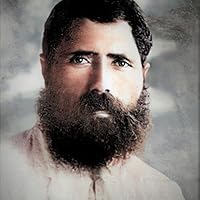
Paul West (February 23, 1930) was an English-born novelist, literary historian and poet, the author of 24 novels, who lived in America since the early 1960s. He resided in upstate New York with his wife, the writer, poet and well-known naturalist Diane Ackerman, until his death in 2015. Paul, still remembered with affection by his old colleagues and friends in England as a big, jolly man, was born in Eckington, which is near (and now considered a part of) Sheffield in South Yorkshire, but was during West’s childhood a Derbyshire village associated with the famous literary Sitwells of Renishaw. Paul was honoured with the American Academy of Arts and Letters Literature Award (1985), the Lannan Prize for Fiction (1993), the Grand Prix Halperine-Kaminsky Award (1993), and three Pushcart Prizes (1987, 1991, 2003). He was also a recipient of a Guggenheim Fellowship, a New York Public Library Literary Lion (1987), and a Chevalier of the Order of Arts and Letters 1996, France). His parents, Alfred and Mildred, really cared for books, and created an environment which ensured that young Paul inherited a great passion for literature, which was enhanced when he went from his native village to study first at Oxford University in England and later at Columbia University in America. He never lived in England again after going to Columbia, and in later years Paul was involved with other US universities in teaching roles, notably Pennsylvania State University. Paul West’s novels have included: ‘A Quality of Mercy’ (1961); ‘Tenement of Clay’ (1965); ‘Alley Jaggers’ (1966); ‘I'm Expecting to Live Quite Soon’ (1970); ‘Bela Lugosi's White Christmas’ (1972); ‘The Very Rich Hours of Count von Stauffenberg’ (1980); ‘Rat Man of Paris’ (1986); ‘The Women of Whitechapel and Jack the Ripper’ (1991); and ‘OK: The Corral, the Earps and Doc Holliday’ (2000). His non-fiction has included the autobiographical ‘I, Said the Sparrow’, a delightful essay on his Eckington childhood; ‘The Growth of the Novel’ (1959), ‘The Modern Novel’ (in 2 vols, 1963); ‘Robert Penn Warren’ (1964); ‘Words for a Deaf Daughter’ (1969); ‘A Stroke of Genius: Illness and Self-discovery’ (1995); and the remarkable ‘The Shadow Factory’ (2008), the aphasic memoir he dictated with such struggle and resolve –it brings tears to the eyes and admiration to the heart, as we are reminded in reading it of the courage of this man. It is a ‘must-read’ in the context of the terrible stroke he suffered in 2003. Paul’s wife, Diane, also wrote about that stroke and its consequences in her book ‘One Hundred Names for Love: A Stroke, a Marriage and the Language of Healing’. Paul’s poetry collections include ‘Poems’ (1952), ‘The Spellbound Horses’ (1960), and ‘The Snow Leopard’ (1964).
Librarian Note: There is more than one author in the GoodReads database with this name.
A frequent admirer of West’s word-splurges (in the likes of Caliban’s Filibuster), in this one I couldn’t progress past p.54. The intention to create an imaginative world from the limited vocabulary of his daughter for me was lost in the rambling, digressive sentences of esoteric, borderline incoherent flitting from one bizarre list or whisk of prose-flexing hooha to the next.
Paul West published "Words for a Deaf Daughter" in 1970, which means it arrived at roughly the same moment as the Velvet Underground's third album and the invention of the floppy disk, two other artifacts that repaid closer attention than they initially received.
West, an Englishman transplanted to Pennsylvania State University with his Oxford education and his talent for sentences that refuse to stop, wrote this book directly to his daughter Mandy, profoundly deaf and possibly brain-damaged, who at the time of writing could not read it and might, West acknowledged with his characteristic mix of honesty and gallows humor, take years to get there.
The book is therefore a letter addressed to someone who has not yet learned to open envelopes. It is an act of supreme parental devotion as well as the most elaborate literary vanity project ever staged, and West is too honest a writer to pretend the line between those two things is easy to locate.
Mandy is a force of nature so concentrated she makes ordinary childhood look like a rehearsal for something timid. She drinks from her potty, eats six bananas in six minutes, flushes every key in the house down the toilet, coats the windows in lavender furniture polish with the focused artistry of a miniature Vermeer, and communicates in a private vocabulary of ee-ya (contentment), oi-ya (outrage), baba, ish-ish, and a birdcall that sends every dog in the vicinity into competitive howling.
She hangs a gallery of golliwogs, clowns, and a homemade Nosferatu on a clothesline strung across the living room, and when visitors flinch at the swaying cardboard menagerie, she regards their reaction with the serene indifference of someone who has already decided that other people's aesthetic preferences are their own problem.
West follows her through audiology clinics in Manchester, where she sits regally beneath an open umbrella singing to herself while experts tap dials and exchange professional headshakes; through a school for the deaf presided over by the allegorically named Mrs. Standeven; through a domestic life in which she referees the budgerigar, dismantles and reconstructs her broken umbrellas with the concentration of a watchmaker, and delivers karate-grade affections to anyone within range.
West's brazen method is to ransack the whole of natural history in search of company for Mandy. He finds it in abundance. The shark, which has no swim bladder and must keep moving or sink, qualifies. So does the axolotl, the Mexican amphibian that chooses, through some combination of dietary deficiency and evolutionary caution, never to grow up, remaining a full-grown juvenile capable of breeding but permanently larval, a Peter Pan whose problem is a lack of iodine rather than a fear of growing up. The barracudina has no light-emitting organs and swims at two miles' depth anyway. Certain snails have the wrong color rim lips. Hens grow wattles and begin to crow but lay eggs regardless. Dalmatians are born deaf. Gentiana acaulis refuses to flower in good soil.
West assembles these creatures into a taxonomy of the magnificently impaired, and the implicit argument, stated obliquely enough to avoid sentimentality, is that Mandy belongs in this company by right. The universe, he suggests, is considerably less tidy than its admirers prefer, and the creatures who operate outside its statistical norms are not its mistakes but its more interesting experiments.
The prose is the thing, and there is no point pretending otherwise. West writes with a density and invention that makes most contemporary memoir look like a post-it note left on the refrigerator of literature.
He pulls grotesque faces on the stairs to make Mandy laugh, takes a xylophone to the forehead at the audiology clinic when she swings it backward to attack a locked cabinet, and calls it fair exchange. He keeps two notebooks. One for what Mandy does, one for what he learns while waiting for her to speak with him, tasting coal (a rotted iron-and-yeast pill, he reports), sniffing bark (woolly and bland, suggesting vulcanized crab meat), licking ink (a flavor of charred toenail).
He is building her a world capacious enough to contain her particular way of being alive, which requires considerably more square footage than the average parental memoir provides.
He also writes with a fury about the social world's treatment of children like Mandy, the stares in supermarkets, the retrospective sin-hunting that leads strangers to assume the mother must have committed some unmentionable trespass to deserve this visitation, the professionals who lose files, prefer the meekest of their patients, and communicate in the clinical understatement of people who have everything under control except the child in front of them.
His observation that the handicapped are most often found in vacuums, where having nothing to breathe they make faces and no progress, has not softened in the intervening half-century.
What has dated, slightly and forgivably, is West's extended polemic against the literary silence-cult of the late 1960s, the Beckett-worship and the Cut Up aesthetics and the fashionable repudiation of language as a fraudulent medium inferior to chemical equations and symbolic logic. He conducts this argument with considerable verve, but it reads now as a period quarrel between people who have since been composted by time, and I found the detour into Mallarmé and Burroughs a mildly eccentric interruption of the main proceedings.
The deeper point outlasts its occasion: that language is precious precisely because it can be lost, and that those who perform its repudiation from a position of full verbal comfort are engaged in a luxury that Mandy, stranded in a city with no address, no currency, and no native tongue, simply cannot afford.
West ends the book on Christmas, with Mandy at eight performing a ritual of rewrapped presents she has devised herself, demanding the same gift be concealed and returned to her over and over again out of a desire to repeat what is reliable.
West loves Mandy without strategy, without the option of stopping, and with a complete absence of self-congratulation. This is love as fieldwork, as vocation, as the most demanding and unrewardable research a person can run.
One of those books I hadn't known I needed to read. Paul's love for his daughter is in the depth and intensity of his gaze, that he doesn't look away, but sees her as she is and accepts her as complete.
This is a book dense with detail, and certain parts meander to tangential topics that seem intent on highlighting the vast richness of the world that Paul is eager to share with his language-delayed daughter. His lamentation of this distance is bigger than the book... I am fortunate to have two wonderful and healthy children, yet no profusion of words - no closeness whatsoever - could fully soothe my desire to cross the distance to their mental worlds.