Jump to ratings and reviews
Rate this book

Thieves of State: Why Corruption Threatens Global Security

Rate this book
The world is blowing up. Every day a new blaze seems to ignite: the bloody implosion of Iraq and Syria; the East-West standoff in Ukraine; abducted schoolgirls in Nigeria. Is there some thread tying these frightening international security crises together? In a riveting account that weaves history with fast-moving reportage and insider accounts from the Afghanistan war, Sarah Chayes identifies the unexpected link: corruption.


Since the late 1990s, corruption has reached such an extent that some governments resemble glorified criminal gangs, bent solely on their own enrichment. These kleptocrats drive indignant populations to extremes—ranging from revolution to militant puritanical religion. Chayes plunges readers into some of the most venal environments on earth and examines what emerges: Afghans returning to the Taliban, Egyptians overthrowing the Mubarak government (but also redesigning Al-Qaeda), and Nigerians embracing both radical evangelical Christianity and the Islamist terror group Boko Haram. In many such places, rigid moral codes are put forth as an antidote to the collapse of public integrity.


The pattern, moreover, pervades history. Through deep archival research, Chayes reveals that canonical political thinkers such as John Locke and Machiavelli, as well as the great medieval Islamic statesman Nizam al-Mulk, all named corruption as a threat to the realm. In a thrilling argument connecting the Protestant Reformation to the Arab Spring, Thieves of State presents a powerful new way to understand global extremism. And it makes a compelling case that we must confront corruption, for it is a cause—not a result—of global instability.

272 pages, Paperback

First published January 19, 2015

223 people are currently reading
3676 people want to read

About the author

Sarah Chayes

10 books122 followers
Sarah Chayes is a former senior associate in the Democracy and Rule of Law Program at the Carnegie Endowment for International Peace and former award-winning reporter for National Public Radio, she also served as special advisor to the Chairman of the Joint Chiefs of Staff.

She graduated from Phillips Academy, Andover (1980) and Harvard University (1984) with a degree in History, magna cum laude. She was awarded the Radcliffe College History Prize. She then served in the Peace Corps in Morocco, returning to Harvard to earn a master's degree in History, specializing in the Medieval Islamic period. Besides English, she speaks Pashto, French, and Arabic.

From 1996 to 2002, she served as Paris reporter for National Public Radio, covering France, the European Union, North Africa, and the Balkans. She earned 1999 Foreign Press Club and Sigma Delta Chi awards (together with other members of the NPR team) for her reporting on the Kosovo War. After covering the fall of the Taliban and the early weeks of post-Taliban Afghanistan, in 2002 Chayes decided to leave reporting and stay behind to try to contribute to the rebuilding of the war-torn country.

Chayes lived in Kandahar, Afghanistan from 2002 to 2009. Having learned to speak Pashto, she helped rebuild homes and set up a dairy cooperative. In May 2005, she established the Arghand Cooperative, a venture that encourages local Afghan farmers to produce flowers, fruits, and herbs instead of opium poppies. The cooperative buys their almonds, pomegranate seeds, cumin and anise and artemisia and root dyes, extracts oils, essential oils, and tinctures from them, with which it produces soaps and other scented products for export. The cooperative is an associate member of the Natural Perfumers Guild.

Since leaving full-time radio reporting, she has been a frequent contributor to the print media, contributing to Foreign Policy Magazine, the Los Angeles Times, The Atlantic, and the Washington Post, among other outlets. Carnegie Endowment for International Peace maintains an archive of her writings.

Ratings & Reviews

What do you think?
Rate this book

Friends & Following

Create a free account to discover what your friends think of this book!

Community Reviews

5 stars
414 (38%)
4 stars
417 (39%)
3 stars
180 (16%)
2 stars
39 (3%)
1 star
14 (1%)
Displaying 1 - 30 of 195 reviews
Profile Image for Will Byrnes.
1,373 reviews121k followers
September 18, 2025
Some say the heart is just like a wheel. When you bend it, you can’t mend it.
The sage counsel offered by the McGarrigle sisters for matters of love could just as easily apply to the question of trust. Once betrayed, how easy is it to trust that person ever again. Now kick that up a level or three and apply to governments. When the people who offer to the public the face of government, the leaders, the police, the military, turn out to be criminals themselves, how can a people ever trust their government again? And if people cannot trust their government, that creates a breeding ground for lawlessness and even insurgency.
description
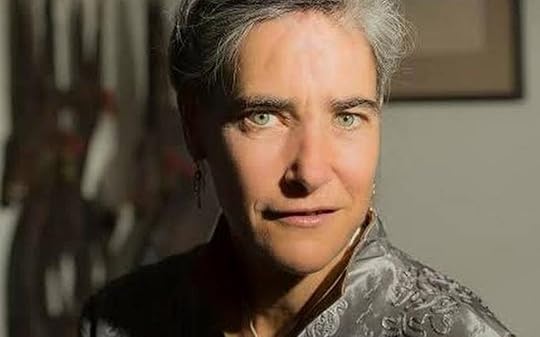
Sarah Chayes - image from The Kansas City Star
As Afghans, beginning around 2005, found the international presence in their country increasingly offensive, it was not because of their purported age-old hatred of foreigners. Nor did puritanical horror at the presence of unbelievers in their land enter our conversations, or outrage about Afghan sovereignty trod underfoot. My neighbors pointed to the abusive behavior of the Afghan government. Given the U.S. role in ushering its officials to power and financing and protecting them, Afghans held the international community, and the United States in particular, responsible. My neighbors wanted the international community to be stricter with Afghan government officials, not more respectful. “You brought our donkeys back,” one man put it in 2009. “You brought these dogs back here. You should bring them to heel.”
In her brilliant book Ghettoside, Jill Leovy notes the failure of government to prosecute murders against black men, noting the resulting establishment of non-official institutions that would. Sarah Cheyes looks at corruption on a national scale, over a considerable period of time. Government of, by, and for thieves is hardly a modern invention. And lest we think of it as a third world issue, there are plenty of first-world examples brought into the light. She makes the case that government corruption is an incubator for extremism, generating terrorism that extends beyond the corrupt nation’s borders, and presents challenges to other nations.

Chayes looks at many examples and kinds of corruption in the world, east and west, and brings to bear the counsel of classic writers who addressed the same issues over the centuries. She cites Machiavelli
…there was one vice that Machiavelli admonished his reader to shun if he cared to prolong his reign: theft of his subjects’ possessions. In other words, corruption. “Being rapacious and arrogating subjects’ goods and women is what, above all else . . . renders him hateful,” he wrote. And widespread hatred of a ruler was conducive to conspiracy. And conspiracy reliably brought down governments.
There was already, in Machiavelli’s time a considerable body of advice-to-ruler writing, generally referred to as “Mirrors,” from as far back as 700 CE, by an anonymous Irish writer. Another was written in 1018 by a thoughtful Muslim administrator, as an aid to the rulers he served. Another, from the 9th century, was written by a bishop to advise an emperor’s grandson. Erasmus wrote a mirror as well. There are others. She notes eternal wisdom that can be found in these writings, writings that apply well to leadership issues of the 21st century.

Chayes came to Afghanistan as an NPR reporter in 2001 to cover the fall of the Taliban, left that to work on local economic development, and later became an advisor to the US military. She has seen a lot first hand. Currently she is a senior associate in the Rule of Law Program at the Carnegie Endowment for International Peace.

The examples she cites here are from Afghanistan, (the most attention to the place with which she is most familiar) Morocco, Algeria, Tunisia, Egypt, Uzbekistan, Nigeria, Ireland, Iraq. There are plenty more in the world. Her analysis is fascinating and compelling. Autocracy and corruption are far less the product of extremism than they are the causes of it. Attempts to address violence by attacking insurgents is doomed to failure. Only a vision that takes on internal corruption within nations has any chance of succeeding in keeping extremist movements from sprouting up like mushrooms after a shower.
INTELLIGENCE AGENCIES are driven by the questions their clients ask them. If they have not compiled much information on the security impacts of acute corruption to date, it is because few policy makers have pointed them at that problem.
Thus our focus on terrorism rather than its causes. Chayes’ analysis includes diagrammatic representations of the various structures of governmental corruption. She offers recommendations for addressing some of these problems.

There is a tendency for kleptocracy to generate and be generated from autocracy, a necessary means for keeping those being fleeced from solving the problem legally or through more direct kinetic actions. In the USA, look at how few police are convicted for killing unarmed black men. Look at how Wall Streeters suffered virtually no jail time for fleecing the entire US economy. Look at how corporations include codicils in every purchase or contract that protects them from legal responsibility. We are headed in this direction. Personally, I would be more than happy to see Wall Street lined with pikes decorated by the CEOs responsible for the 2008 crash. And I am a relatively peaceful sort, no guns, or other weapons, no affiliations with extreme organizations. Just livid that there are two sets of rules in the USA, one for the rich and powerful and another for the rest of us, “the little people.” If I feel this way, I can only imagine how black people feel about the open season that our courts have declared for police violence against black men. It is also clear that there are many who feel that leaders of both parties have stood by while any gains in the national economy were all channeled to the already well off. And it does not help that one of the biggest thieves in the country was in charge of guarding the mint.

It is clear by the pattern of his actions, that, if he is capable of planning, beyond his manifest talent for diversion, he would love to turn the USA into his private piggy bank. Refusal to reveal his tax returns, stonewalling investigations into his actions, refusing to divest his properties in order to spare the nation the uncertainty of wondering whether his executive decision-making is being done for the good of the nation or the good of his balance sheet, all lead one to question where his leadership interests lie. When the leadership of a nation, whether Afghanistan. Egypt, Ireland or the USA, is seen as being out solely for its own interests at the expense of the citizens those leaders are supposedly representing, the groundwork is laid for bad results. When the application of law is seen as unfair, the ground is laid for resistance. When elements of the public see the enforcers of the law as corrupt or insensitive to their rights, the groundwork is set for the growth of extra-legal forms of justice and, in the worst cases, insurrection. When those on top cheat and lie without compunction, it encourages everyone to follow suit.

We are faced with a growing crisis here in the USA. We expect out commander in chief to accept command responsibility for the actions he has approved. The buck stops in the Oval Office. Except when the occupier of that office is incapable of accepting any responsibility for his actions. A jaw-dropping example of his incapacity is when Swamp Thing actually told a grieving gold star widow soon after her husband had been killed in action that he “knew what he had signed up for.“

Corruption is the seed from which many toxic horrors grow. Chayes details many examples in the nations she describes. And how about at home? How about payments to legislators from those in the business of building and staffing private jails in order to encourage mass incarceration. How about massive contributions to legislators by the gas/oil/natural gas industries to ensure unnecessary tax breaks, and to protect them from responsibility for the ecological horrors they generate? How about contributions to legislators and others from the weapons industry, channeled through the NRA, to ensure that one of the largest public health crises in the nation, death by gunshot, remains minimally regulated. How about the deliberately mis-named Tax Reform proposal that is nothing less than the wealthy, operating through their paid legislative pawns, backing a Brinks truck up to the US treasury and loading up, yet again, leaving the resulting deficits for the rest of us to cover. The rich are taking advantage, by cheating, lying, manipulating, misdirecting, and stealing. So long as there is little or no progress in holding them accountable for their greed-based crimes, the chances increase that the only way to seek redress will be outside the boundaries of the legal framework.

Unfortunately, autocracy can sometimes be sustained for generations, but the reactions it is generating these days will continue to make miserable the lives of millions of people across the world, as extremist elements seek to undermine government by proving, again and again, that government cannot protect them.

Take a lesson from the past. Take a lesson from the experience of far too many nations across the globe. Corruption kills. It should be the highest priority of this and every nation. Without faith in the relative honesty of government, no government can, or should stand.

The horrors we are experiencing in the USA are only the tip of the iceberg of dark possibility. Sara Chayes, in shining a light not only on some of the many corrupt regimes in the world, but on the long history of public corruption and its collateral damage, and on the sage advice offered by wise counselors of the past, offers us a way to understand much of what we see going on, both domestically and internationally, in today’s world. This is a must-read for anyone who cares about good government or who seeks to gain insight into the mechanisms of extremism and terrorism. Check it out before those it describes prevent you from, or arrest you for, doing so.


Review first posted – October 20, 2017

Publication date – January 19, 2015


=============================EXTRA STUFF

Here is Chayes’ profile at the Carnegie Endowment

PRINT
-----A nice list of several Chayes-related pieces on PRI
-----The Atlantic - Scents and Sensibility - on setting up a soap and body-oil business in Afghanistan- by Chayes
---Interview by Tim Lewis of The Guardian – Sarah Chayes: on living in Afghanistan and sleeping with a Kalashnikov
In the UK and the US, we’re in danger of letting our republics slip out of our hands without even noticing it and the results could be really devastating over time.
VIDEO
-----An excellent Carnegie Endowment panel discussion on corruption, focusing on Honduras. One of her points is that the theftocracy twists public regulation to support private interests. See every Trump cabinet appointment for glaring examples
-----NY Times - October 21, 2017 - Why Has the E.P.A.Shifted on Toxic Chemicals? An Industry Insider Helps Call the Shots - by Eric Lipton
-----Rachel Maddow Show - October 21, 2017 - Rachel interview with Chayes - Trump flouting norms risks venal turn in US
----- Relevant music - Everything Old is New Again

AUDIO
----- NPR - Sarah Chayes: Taliban Terrorizing Afghanistan - 2009
Profile Image for Michael Finocchiaro.
Author 3 books6,276 followers
January 23, 2018
If you read my book reviews, you know where I stand on American politics these days and so it should come as no surprise that I watch Rachel Maddow more often than not to understand what is happening over there, back home. Rachel has had Sarah Chayes on several times who has always impressed me in terms of her experience (having lived seven years in Afghanistan after being there for PBS as a journalist) and her brilliance (she is fluent in several dialects of Arabic, French and I am assuming several other languages). In Thieves of State, Ms. Chayes takes the experiences she had in Afghanistan with the corrupt Karzai regime and their endemic levels of corruption which were largely ignored by the US and UN military operations there. She uses lots of parallels in the literature of prince mirrors - books like The Prince that were written by courtiers and counselors over the years to advise men in power, Machiavelli being the most known one in the west but there are many she cites that are far older in the Islamic world as well as Erasmus from the end of the Middle Ages. In any case, Ms. Chayes surveys how corruption is very hard to root out of a society once it sets in, like a cancer.The somewhat surprising conclusion she makes is that money actually travels upwards from the street to the top of the power pyramid rather than the other way around. In other words, the common folk pay bribes for health care or administrative access of whatever, those folks bribe those above them and so on up the chain to the ruling clique. The system has several variants that she analyses (Tunisia, Egypt, Nigeria, Uzbekistan) outside of Afghanistan which are all described and even diagrammed. The nice thing is that rather than leaving us in despair, she leaves us with a chapter that details a host of countermeasures that can be taken if the rest of the world has the balls to do so in order to fight corruption.

While this may seem like an anodyne problem, the other primary thesis of the book (and thus its subtitle), is that corruption also plays into the hands of religious extremism. Having observed this personally in Afghanistan, she talks about how once people have been bled dry by the rapacious government functionaries via bribes and such and they realize that the police and justice system are equally corrupt and therefore there is absolutely no appeal process, many of them turn to militant Salafi movements - the radical Islamic strains that underpin the Taliban and ISIS. Now wait, you may say, we, the US, is there to help the government contain radical Islam and why don't they come to us for help? Well, the answer was alluded to already - we are there BACKING the regime which is essentially and irremediably corrupt so naturally we are seen as "just as bad" as the corrupt state and alien to their values whereas radical Islam appeals to their common culture and feeds off their anger and feeling of helplessness. In other words, the corruption feeds the radicalisation of the population and not the other way around as many think. Unfortunately, in many systems, such as Nigeria, this radicalisation is tolerated by the state because it keeps people's focus off the wholesale destruction of the environment and robbing the state of its natural resources. (This also happened in Argentina as I learned in the Peron biography by Page and in Algeria as I learned in the book about decolonization by Shepard).

I think that it is an important book, but it would be good to have a wider palette of variants to be studied - she does not talk about European corruption or that of Central and South America which is just as sinister and often in lockstep with the drug cartels (this is extremely well analyzed in Extra Pure by Saviani). Regardless, I highly recommend this short but powerful analysis about the ills of corruption and also that you look for her segments on MSNBC and elsewhere where she talks about the dangers of corruption right at home in the current White House.
Profile Image for Jennifer.
778 reviews45 followers
April 2, 2015
This book is one of the most significant I've read in a long time, and one I think should be read by anyone who's concerned about 'failed states' and the seemingly endless entanglements the U.S. and Europe have with them. First, Chayes makes the excellent point that what we've termed 'failed' states are actually very good at what they mean to do: channel money and power to an elite few. She points out that when we think of these not as governments, but essentially fronts for illicit behavior, then it makes clear why our foreign policy and efforts at state-building have so often been ineffective.

Beyond that, however, Chayes illustrates her thesis with examples from her experiences in Africa, Afghanistan, and the Middle East, and doesn't flinch from pointing the finger at herself when she sees ways in which her own decisions (while trying to help Afghanis start small businesses) exacerbated the problem. And as a historian, I appreciated the brief excerpts from various examples of medieval and Renaissance 'mirror of kings' literature. Drawn from various sources, from England to Persia, these snippets indicate that we as a society are dealing with a problem old as civilization itself . . . and one to which we are not immune, even within our own borders.
Profile Image for Book Shark.
783 reviews169 followers
October 9, 2015


Thieves of State: Why Corruption Threatens Global Security by Sarah Chayes

“Thieves of State” is an insightful look inside the world of global corruption. Former reporter, entrepreneur, and former special adviser to Generals McKiernan and McChrystal, Sarah Chayes provides readers with a revealing and unique perspective on one of the main causes of global upheaval, corruption. This provocative 272-page book includes fourteen chapters that will take the reader on a journey through: Afghanistan, Morocco, Algeria, Tunisia, Egypt, Uzbekistan, Nigeria, Netherlands, England and the United States.
Positives:
1. A well-written, insightful, and accessible book.
2. A fascinating and important topic. Chayes should be commended for her ability to gain insights into a unique arena.
3. Refreshingly candid. “I had, in other words, been an accessory to fraud.”
4. Makes perfectly clear what this book is all about. “Acute government corruption may in fact lie at the root of some of the world’s most dangerous and disruptive security challenges—among them the spread of violent extremism.” Provocative analysis is at the hallmark of this book.
5. A historical look at corruption. “But there was one vice that Machiavelli admonished his reader to shun if he cared to prolong his reign: theft of his subjects’ possessions.”
6. Interesting perspectives that most observers haven’t considered. “Given the U.S. role in ushering its officials to power and financing and protecting them, Afghans held the international community, and the United States in particular, responsible.”
7. The hidden reality exposed. “ONE GROUP at ISAF headquarters was receptive to the premise that systematic corruption was discrediting the Afghan government in the eyes of the people and tainting the international community by association.” “In other words, development resources passed through a corrupt system not only reinforced that system by helping to fund it but also inflamed the feelings of injustice that were driving people toward the insurgency.”
8. The business models of corruption. “That is because the business model their leadership has developed has nothing to do with governing a country. But it is remarkably effective in achieving its objective: enriching the ruling clique.”” The link between kleptocracy and violent religious extremism wasn’t just an Afghanistan thing. It was a global phenomenon.”
9. Keen observations. “Moroccans told me that what was pushing people over the edge wasn’t just poverty or misfortune in general—it was poverty in combination with acute injustice: the visible, daily contrast between ordinary people’s privations and the ostentatious display of lavish wealth corruptly siphoned off by ruling cliques from what was broadly understood to be public resources.”
10. The heart at the eruption in Egypt. “SO IT WASN’T Hosni Mubarak’s army that enraged the revolutionaries of 2011. It was, instead, a small network of high-rolling capitalists centered around the dictator’s son, Gamal.” “Abusive corruption brought down the Egyptian “prince”—as Machiavelli and so many other mirror writers had warned that it would.”
11. …and in Tunisia. “In other words, state capture in Tunisia was not carried out through a parallel structure that operated alongside an increasingly marginalized bureaucracy, as in Egypt. Rather, the Tunisian bureaucracy itself was placed in the service of corruption.”
12. Discusses the difficulties in addressing corruption.
13. Uzbekistan’s corruption looked at. “Like their Afghan, Egyptian, or Tunisian counterparts, however, Uzbeks’ most frequent contact with their kleptocracy is through everyday shakedowns, especially at the hands of the police.”
14. Nigeria’s corruptption. “The official salary of a senator tops one million U.S. dollars per year. With such fabulous sums in play, Nigerian politics has become a blood sport.” “And yet many Nigerians have accused these churches, with their opulent pastors and well-dressed officers, of replicating the very corruption they were supposed to counter. “They are taking money from poor people and keeping it for themselves,” says Ruth, explaining why she, the daughter of a pastor, no longer goes to church.”
15. Military challenges. “Decision makers, including civilians, still saw corruption as secondary to the immediate task of fighting insurgents. The basic equation had not penetrated: that corruption was in fact driving the insecurity we were struggling to quell.” ““We have come to conclude that unless Afghans take the lead in combating corruption, efforts are doomed,” State Department officials insisted.”
16. The sad realization that, “The overwhelming evidence that the market liberalization, privatization, and structural adjustment programs the West imposed on developing countries in the 1990s have often helped catalyze kleptocratic networks—and may have actually exacerbated corruption, not reduced it—conflicts with this group’s orthodoxy, and so is hard to process.”
17. Myths debunked. “At the top of the list of reasons cited by prisoners for joining the Taliban was not ethnic bias, or disrespect of Islam, or concern that U.S. forces might stay in their country forever, or even civilian casualties. At the top of the list was the perception that the Afghan government was ‘irrevocably’ corrupt.”
18. In support of democracy. “Milton had described elective kingship, or a presidency. He had built the argument for democracy—as the best practical means of guaranteeing redress of legitimate grievances, the best means of appeal here on earth.”
19. Fascinating look at religious extremism. “Luther’s historic Ninety-Five Theses founded Protestantism, one of the most far-reaching intellectual and spiritual revolutions in human history.” “Luther’s theses—the genesis of the Reformation—were in large part an indictment of corruption.“ “Without doubt, the Reformation—which ignited wars and toppled kingdoms, in one of the most sweeping upheavals in Western history—was a revolution against kleptocracy.”
20. A look at some remedies against corruption.
21. Notes and helpful appendix included.
Negatives:
1. Corruption comes in many flavors and degrees. I wished Chayes would have done a better job of differentiating them for the reader. There was one attempt to do so but it fell quite short.
2. The tone is serious and unrelenting until the end.
3. The book takes a while to find its footing but once it does it excels.
4. The author rambles a bit and is at times repetitive. Some of it is due to the nature of global corruption.
5. The book is limited to the Middle East.
6. The book will not surprise those who have lived in any of the countries mentioned in the book.
7. No formal bibliography.

In summary, this is a worthwhile book to read. Chayes’s expertise in global corruption and her journalistic background helps her showcase some of her astute observations. She does a commendable job of demonstrating the impact of corruption on global security. The book does take a while to get going but once it does it really takes off and in fact I found some of the latter chapters to be the most rewarding. I recommend it!

Further recommendations: “Corruption in America” by Zephyr Teachout, “Plutocrats” by Chrystia Freeland, “The Looting Machine” by Tom Burgis, “Pay Any Price” by James Risen, “Predator Nation” by Charles H. Ferguson, “Globalization and its Discontents” by Joseph E. Stiglitz, “Republic, Lost” by Lawrence Lessig, “Why Nations Fail” by Daron Acemoglu, “ECONned” by Yves Smith, “The Great Divergence” by Timothy Noah, and “Bailout” by Neil Barofsky.
Profile Image for Cara Putman.
Author 67 books1,898 followers
July 20, 2023
Fascinating listen — especially opposite Democracy by Condi Rice.
Profile Image for Mehrsa.
2,245 reviews3,579 followers
December 14, 2016
Corruption causes extremism. Let this stand as a warning to us all.
Profile Image for Bettie.
9,976 reviews5 followers
wish-list
October 21, 2017
Description: The world is blowing up. Every day a new blaze seems to ignite: the bloody implosion of Iraq and Syria; the East-West standoff in Ukraine; abducted schoolgirls in Nigeria. Is there some thread tying these frightening international security crises together? In a riveting account that weaves history with fast-moving reportage and insider accounts from the Afghanistan war, Sarah Chayes identifies the unexpected link: corruption.

Since the late 1990s, corruption has reached such an extent that some governments resemble glorified criminal gangs, bent solely on their own enrichment. These kleptocrats drive indignant populations to extremes—ranging from revolution to militant puritanical religion. Chayes plunges readers into some of the most venal environments on earth and examines what emerges: Afghans returning to the Taliban, Egyptians overthrowing the Mubarak government (but also redesigning Al-Qaeda), and Nigerians embracing both radical evangelical Christianity and the Islamist terror group Boko Haram. In many such places, rigid moral codes are put forth as an antidote to the collapse of public integrity.

The pattern, moreover, pervades history. Through deep archival research, Chayes reveals that canonical political thinkers such as John Locke and Machiavelli, as well as the great medieval Islamic statesman Nizam al-Mulk, all named corruption as a threat to the realm. In a thrilling argument connecting the Protestant Reformation to the Arab Spring, Thieves of State presents a powerful new way to understand global extremism. And it makes a compelling case that we must confront corruption, for it is a cause—not a result—of global instability.

The Rachel Maddow Show 10/20: "THAT'S HIGHLY INAPPROPRIATE"
Profile Image for Thomas Ray.
1,514 reviews523 followers
March 7, 2016
Details ways in which various countries governments are actually kleptocracies, existing to siphon wealth into the hands of government officials for their private benefit. These include Afghanistan (the U.S.-created Karzai regime, where the corruption is funded by the U.S. CIA), Egypt, Tunisia, Uzbekistan, and Nigeria.


Then at the end, we hear the fall of the other shoe: the worst of the bunch is the U.S. itself. Here the kleptocracy exists to use the machinery of government to enrich Wall Street banks and corporations--often illegally.


The author cites four other books for further reading on U.S. corruption:


Simon Johnson and James Kwak, /13 Bankers/, 2010


Charles Ferguson, /Predator Nation: Corporate Criminals, Political Corruption, and the Hijacking of America/, 2012


Neil Barofsky, /Bailout/, 2012


Laurence Lessig, /Republic Lost: How Money Corrupts Congress/, 2011


and the documentary film /Inside Job/, 2010, whose author, Charles Ferguson, details the "deliberate concealment of financial transactions that aided terrorism, nuclear weapons proliferation, and large-scale tax evasion; assisting in major financial frauds and concealment of criminal assets . . . ."
Profile Image for L. Stephen Wolfe.
Author 4 books1 follower
November 16, 2015
If you want to understand what motivates young men to join the IS, murder Parisians by the score, and then blow themselves up, I highly recommend this book. It's available in hardcover and audio formats. A paperback is coming soon.

The book contains a lot of history you probably don't know. It calls into question US foreign policy for most of our lifetimes. It explains why Islamic fundamentalism is supported even by people who don't believe in its extreme doctrine.

Sarah is a Harvard graduate and was once an NPR reporter and currently works for the Carnegie Endowment for International Peace. She is one of the most straight-talking truth seekers I have read. Even more amazing is that she admits her own mistakes.

I don't agree with Sarah's prescriptions at the end of the book. Her heart's in the right place, but the people and organization of the US government are too inept to execute them. But her analysis and organization of incredible stories from around the world are priceless.
Profile Image for Rachel Grant.
Author 49 books1,632 followers
November 2, 2017
Fascinating 1st person account with a deep knowledge of the Middle East and developing world. Listened to audiobook narrated by the author, former NPR reporter.
Profile Image for Jeannette.
Author 4 books20 followers
November 29, 2015
I so resisted reading this book, as my husband urged me to do. I knew it was about corruption, but I already understood that corruption is rampant and bad. Duh! Why did I need to be further preached to on that topic -- and depressed in the process? Still, I was in between audio books and so I acquiesced and started listening. Within 30 minutes, I was spellbound by the Chayes's personal story. In short order, I became awestruck by all the ground she covers -- both historic and geographic -- and by the larger picture that she illuminates.

I learned so much about so many things, but none more urgent than what Chayes teaches about the connections between corruption, political instability, and religious extremism. I salute her for her courage, her tenacity, and her great power and eloquence as a writer. I can only hope that millions of people, like me, overcome their aversion to thinking about this crucial subject. That has to be the first step to a better path.

Profile Image for Mario the lone bookwolf.
805 reviews5,475 followers
April 4, 2018
Who works on laws and regulations? Trojan lobbyists

Please note that I put the original German text at the end of this review. Just if you might be interested.

The author gives an overview of the mechanisms of power and foreign policy by Afghanistan, the Middle East, and Africa. The targeted destabilization of states, the stirring up of conflicts and the destruction of democratic initiatives to be able to skim the cream in the form of raw materials are described. The history of corruption from antiquity to today is explained.
Unfortunately, the more subtle mechanisms behind corruption in the industrialized countries are under-illuminated. Therefore a few additional examples:
As the World Corruption Index Compass also tends to turn out small but reliable in industrialized nations, as a trained citizen one expects one or two occasional bribery scandals, patronage or cartel scandals. However, against the reality called offenses seem like silly warm-up exercises.
In principle, it is illegal if the left sack is filled by the state and the right by the private sector. Conflict of interest, it could be called or just corruption. Therefore, in the context of exchange programs, private sector employees in ministries and state bodies are also remunerated by their company for the duration of their stay. Also, thus give the public its valuable expertise. For years, discreet and noncommittal.
The perhaps most important, underlying idea behind the transfer of knowledge would be an optimal integration of the opinions and needs of employers, employees and the state. For the benefit of all involved. So each party could bring in their preferences and desires to find a consensus which is reasonable and acceptable to all. Just like any perfect idea, it can also be excellently perverted.
For example, a gentleman from the airport operating industry provides help with the preparation of night flight regulations and noise control laws. Toll systems including financial transactions are being privatized, or an employee of an energy company is busy tinkering with electricity-related laws. In the end, this leads to permanent night flights just above the heads of hundreds of thousands of residents and a cartel formation in the energy sector.
Because the top dogs charge the potential up-and-coming competition with such exorbitant network fees that they are doomed from the outset to bankruptcy. So the liberalization of the electricity market does not bring full-bodied reductions for the end customer, but significantly higher prices. However, these are harmless examples.
When it comes to the admission of hedge funds, derivatives, and other high-risk financial products, the financial market supervision will also be helped to close the eyes. With the result of the legal and authorized invasion of tens of billions of severe and unscrupulous locust armadillo, to whose ballpoint hopelessly inferior small and medium-sized businesses are condemned.
An example from Europe: As far as health is concerned, one can only learn from the American model. Therefore, privatization of meanwhile only hospitals and university hospitals is a declared goal of health policy. PPP or Public Private Partnership hides the big brother of hire purchase contracts. So far, for ordinary mortals, it offered the option of years of paying the rent to get the opportunity to buy a property. Now also the state has this option, which should be extended to 15% of the administrative operation. A private consortium builds, maintains and maintains properties that can be rented to the state for 20 to 30 years and then either bought or leased.
As one of the most grandiose achievements of lobbyists REACH can be considered with justification. The Registration, Evaluation, Authorization, and Restriction of Chemicals Act entered into force in 2007 and was initially intended to become a stricter chemicals regulation. For the previous, Modus Operandi was to classify all chemicals authorized before 1980 as harmless and harmless. So from 1981 approved chemicals to undergo gentle tests on long-term effects and hazardousness.
Which, after all, meant a partial and short-term analysis of a proud percent of nearly 100,000 used fabrics. This is inadequate given the demands of NGOs, Greens, and environmental organizations. These require that mutagenic, carcinogenic, highly poisonous and toxic substances, endocrine disruptors, the Dirty Dozen and several other elements should be investigated for long-term effects and their use strictly monitored. So a new regulation was sought. It changed nothing in the end.
Nobody knows what will happen in the long run if there is widespread contamination of the environment, fauna, flora and human life with chemicals that are not understood in his or her mode of operation, consequences, and perhaps irreversible effects. In dubio per oeconomia.
But at least one can inform oneself about the dangers of furniture, car interiors, wall paints, clothing and all goods that are made using some form of chemicals. Moreover, that, according to the REACH regulation, with the dealers who sell the products. These were obliged to (only) on request inform about the potential danger of a carcinogenic sofa or a barren kitchen floor. However, just if the substance in question has been declared dangerous.
It would embarrass the furniture sellers too often. If the reduced sofa or mattress has to be touted as causing average infertility and little cancer.

Wer arbeitet an Gesetzen und Verordnungen mit? Trojanische Lobbyisten

Die Autorin gibt anhand von Afghanistan, dem Nahen Osten und Afrika einen Überblick über die Mechanismen der Macht und Außenpolitik. Die gezielte Destabilisierung von Staaten, das Schüren von Konflikten und die Zerstörung demokratischer Initiativen, um den Rahm in Form der Rohstoffe abschöpfen zu können. Die Geschichte der Korruption von der Antike bis heute wird erklärt.
Die subtileren Mechanismen hinter der Korruption in den Industriestaaten werden leider zu wenig ausgeleuchtet. Deswegen ein paar ergänzende Beispiele:
Da der Weltkorruptionsindexkompass auch in Industriestaaten klein aber fein auszuschlagen pflegt, rechnet man als gelernter Staatsbürger mit der einen oder anderen gelegentlichen Schmiergeldaffäre, Vitamin Protektion Spritze oder Kartellaffäre. Aber gegen die Realität wirken genannte Delikte wie läppische Aufwärmübungen.
Prinzipiell ist es ja illegal, wenn das linke Säckel vom Staat und das rechte von der Privatwirtschaft gefüllt wird. Interessenskonflikt könnte es genannt werden oder schlichtweg Korruption. Daher werden im Rahmen von Austauschprogrammen Angestellte aus der Privatwirtschaft in Ministerien und staatlichen Gremien für die Dauer des Aufenthalts auch nur von ihrer Firma entlohnt. Und schenken der Allgemeinheit damit ihre wertvolle Sachkompetenz. Jahrelang, diskret und unverbindlich.
Der, vielleicht wirklich hehre, Grundgedanke hinter dem Wissenstransfers wäre eine optimale Einbindung der Meinungen und Bedürfnisse von Arbeitgebern, Arbeitnehmern und Staat. Zum Nutzen aller Beteiligten. So könnte jede Partei ihre Präferenzen und Wünsche einbringen um einen vernünftigen und für alle akzeptabeln Konsens zu finden. Nur wie jede eigentlich gute Idee lässt sie sich auch vortrefflich pervertieren.

So leistet beispielsweise ein Herr aus der Flughafenbetreiberbranche bei der Erstellung von Nachtflugverordnungen und Lärmschutzgesetzen Hilfe. Mautsysteme samt der Finanzabwicklung werden privatisiert oder ein Angestellter eines Energiekonzerns bastelt eifrig an das Stromnetz betreffenden Gesetzen herum. Im Endeffekt führt das zu permanenten Nachtflügen knapp über den Köpfen hunderttausender Anwohner und einer Kartellbildung im Energiesektor. Denn die Platzhirsche verrechnen der potentiellen aufstrebenden Konkurrenz derart exorbitante Netzgebühren, dass sie von vornherein zur Insolvenz verurteilt sind. Und die Liberalisierung des Strommarktes bringt keine vollmundig proklamierten Vergünstigungen für die Endkunden, sondern deutlich erhöhte Preise. Doch das sind nur harmlose Beispiele.
Wenn es um die Zulassung von Hedgefonds, Derivaten und anderen hochriskanten Finanzprodukten geht, wird auch beim Zudrücken der Augen der Finanzmarktaufsicht geholfen. Mit dem Resultat des legalen und genehmigten Einfalls einer zig Milliarden schweren und skrupellosen Heuschreckenarmada, zu deren Spielball hoffnungslos unterlegene Klein- und Mittelbetriebe verdammt sind.
Ein Beispiel aus Europa: Was die Gesundheit anbelangt kann man vom vorbildlichen amerikanischen Modell nur lernen. Daher ist eine Privatisierung von derweil nur Krankenhäusern und Universitätskliniken ein erklärtes Ziel der Gesundheitspolitik.
Hinter PPP oder Public Private Partnership verbirgt sich der große Bruder der Mietkaufverträge. Bisher bot sich nur für Normalsterbliche die Option, durch jahrelanges Zahlen der Miete sie Möglichkeit zu bekommen, eine Immobilie zu erwerben. Jetzt hat auch der Staat diese Option, die auf 15 % des administrativen Betriebs ausgedehnt werden soll. Ein privates Konsortium errichtet, wartet und pflegt dabei Liegenschaften, die für 20 bis 30 Jahre an den Staat vermietet und danach entweder gekauft oder weiter gepachtet werden können.

Als bisher grandioseste Leistung von Lobbysten kann aber mit Fug und Recht REACH betrachtet werden. Die Verordnung „Registration, Evaluation, Authorisation and Restriction of Chemicals“ ist 2007 in Kraft getreten und sollte ursprünglich eine strengere Chemikalienverordnung werden. Denn der vorherige Modus Operandi bestand darin, alle vor 1980 zugelassenen Chemikalien als unbedenklich und harmlos einzustufen. Und ab 1981 zugelassene Chemikalien sanften Tests auf Langzeitfolgen und Gefährlichkeit zu unterziehen. Was immerhin eine teilweise und kurzfristige Prüfung von einem stolzen Prozent von fast 100000 verwendeten Stoffen bedeutete.
Dies ist angesichts der Forderung von NGOs, Grünen und Umweltschutzorganisationen unzureichend. Diese fordern, dass erbgutverändernde, krebserregende, hochmutagene und toxische Substanzen, endokrine Disruptoren, das Dreckige Dutzend und etliche andere Substanzen auf Langzeitfolgen untersucht und die Verwendung streng überwacht werden sollten. Also wurde eine neue Verordnung angestrebt. Es änderte sich im Endeffekt gar nichts. Was bei einer flächendeckenden Kontamination von Umwelt, Fauna, Flora und menschlichem Leben mit nicht im Ansatz in ihrer Funktionsweise, Tragweite und vielleicht irreversiblen Wirkung verstandenen, häufig künstlich hergestellten Chemikalien auf lange Sicht herauskommt, weiß niemand. In dubio pro oeconomia.
Aber zumindest kann man sich über die Gefährlichkeit von Möbeln, Autoinnenausstattungen, Wandfarben, Kleidung und allen Gütern, bei deren Herstellung irgendeine Form von Chemikalien verwendet werden, informieren. Und zwar, laut REACH- Verordnung, bei den Händlern, die die Waren feilbieten. Diese wurden dazu verpflichtet, (nur) auf Anfrage, über die potentielle Gefährlichkeit eines krebserregenden Sofas oder eines unfruchtbar machenden Küchenbodens zu informieren. Aber nur wenn der betreffende Stoff als gefährlich deklariert wurde.
Es würde die Möbelverkäufer sonst zu oft in Verlegenheit bringen. Wenn das reduzierte Sofa oder die Matratze als durchschnittlich unfruchtbar machend und wenig krebserregend beschrieben werden müsste.
Profile Image for Takumo-N.
144 reviews16 followers
November 28, 2024
Brilliant analysis of how kleptocratic governments throughout third world countries, financed by the first world, bring extreme political religious cults as a response to the corruption. Chayes gives different examples like Afghanistan which has a very low technology and simplistic state where things work like the mob where everybody involved has to pay someone on top just to stay in the limbo of money flowing, money that comes from humanitarian aid or foreign investments in projects, military aid or training, etc, which most of the money ends up in the hands of a corrupt oligarchy. Nigeria has oil and Tunisia a good grasp on bureaucratic formalities which helps them manipulate the U.S. government, or the E.U., or whatever organization to lend them money, between other countries where the author has been. The point is that it always ends up in the hands of a corrupt clique, the U.S. can't do anything about it because they see it as a complex network of corruption that needs to be dealt militarily or with strong castigating foreign policies, instead of a political and humanitarian cause which would need education and patience. Chayes shows us that when a new department is trying to be built for anticorruption intelligence projects where specialists would work in-situ it always gets shut down, and she has to deal with very complicated personalities in the military bases, or Whashington, just for her projects to even get one eyebrow lifted. The book is part memoir, part essay, part "Mirror for Princes," where she gives examples of how a ruler should act for their countries to not end up with militirized religious extremists cults, and give us examples from Machiavelli, Erasmus, etc. She extrapolates all this also with The Dutch Revolt from the 16th century showing us the birth of protestant iconoclasts extremists going againsts their corrupt first and second state, giving birth of ideas of a Republic where John Locke and Montesquieu were the main philosophers before the enlightenment to enchant Northamerica with their ideas, after Charles I was executed for treason and giving parliament power, and royalty accountability to their citizens and not only God. The second to last chapter are ideas and solutions regarding the education of politicians and the military on how to aproach different cultures, and how to cut the corruption not only in these countries, but the ones supposedly giving the economic and political aid. It's remakable, but it will never happen.

Time and again U.S. officials are blindsided by major developments in countries where they work. Too often they are insensible to the perspectives and aspirations of populations. Focused on levers to pull, on people who "get things done," they overlook or help enable networks that are bent on power and private enrichment and are structured to maximize both, at the expense of the citizenry. And the formulate reasons why doing so is, unfortunately, necessary to the U.S. national interest.
Profile Image for Diogenes Grief.
536 reviews
August 2, 2015
"Corruption--an ambiguous word in every language, implying moral as well as material depravity."

In Thieves of State, Chayes tackles the behemoth of acute corruption not only as a brief history (it's only 200 pages long) of "mirror writings" (historical works written for kings and sultans, imams and popes on how to govern well without getting one's royal head lopped off), but also her own intimate involvements in present-day Afghanistan and North Africa. All too fascinating in the mirror writings are prescriptions for thwarting corruption within one's organization, and more often than not, kings and czars, presidents and popes chose to ignore them, just as they do today. Paramount to her thesis is the Karzai "criminal syndicate" and U.S. protection of it. This is nothing new; I myself witnessed such de-evolutions in Iraq as a grunt in 2004 (never mind the brilliant propaganda campaign that brought on the invasion of Iraq), but Chayes offers a ringside seat to the dealings of both, from Kabul to the Pentagon. She does a nice job of illustrating the different forms of kleptocratic regimes around the world, ties the (reductionistic) catalysts of the Protestant Reformation to Islamic extremism today well enough, and (thankfully) at the very end shines a harsh light on Ireland, Iceland, and Wall Street to emphasize the pervasiveness of corruption amongst the whole human herd. No one is truly spared. Greed, so often across the churning historical sea, rules the masses, in one way or another.

The author does dedicate an entire chapter to "solutions," but in the face of such overpowering examples and insidious manifestations across cultures, borders, and systems of control, solutions prove impotent, if not foolish. From the World Cup to the Olympics commission, BP to blood diamonds, multinational corporations to oligarchs, the World Bank and "the Beltway," rooting out corruption would take a mighty moral maelstrom, a systematic sea change in upholding accountability, and if we used the Reformation as an example of such a manifestation, bloodshed and chaos inevitably rise and ultimately cease, new systems of rule emerge, and Corruption in all its ugliness seeps through the walls once again. The cycle is endless: power corrupts.

On the flipside, Scandinavian forms of "socialism" seem to work really, really well on so many levels, for the greater good of their populations. Perhaps there is a real model of "best" governance already flourishing, but how the world is irreversibly linked in a web today, "the global system" as it were could very well fail (e.g., Scandinavia could easily fall to the wolves of Russia howling in the hills). Here, the book's subtitle is crucial: Why Corruption Threatens Global Security.

Here's the author being interviewed by Guernica: https://www.guernicamag.com/interview...

Well worth the read.
Profile Image for Kathy.
485 reviews5 followers
March 12, 2015
This is a thoughtful and insightful book. The author has lived and worked for many years in various '3rd world' countries that has given her an insight in the various systems of corruption in those countries - both how it works to enrich those in power - and the demands and pain it inflicts upon ordinary people who pay and pay but see no improvement in their lives.

The author has taken a fascinating approach and outlined current corrupt regimes around the world (think of the mafia as in control of the government and you won't be far wrong)and compared them to the 'mirrors' written for various princes all over the world for the last 1000 years. These guide for princes on what they should do if they want to stay in power give an illuminating view of how history in the case of corruption keeps repeating itself in society after society.

I think a lot of us vaguely understand how, for example, the sale of public assets to private corporations can lead sometimes to monopolies which then can extort the people who need to use the services down the track leaving little redress for the consumers to fight the corruption involved in many cases...but this is only a minor example of how whole governments can go from serving the people to looting a country for the gain of a few people in charge. This is a rather frightening, but nevertheless enlightening book to read and should be on the reading list for anybody interested in social justice or economics.

Profile Image for Jake Bernstein.
Author 1 book61 followers
October 22, 2017
An excellent primer on how corruption works and U.S. complicity in it. In Guatemala City, as a young reporter, I saw how the street kids robbed in part because they needed to pay the cop on the beat or suffer brutal consequences. The cop then kicked up to his commanding officer in order to keep his job and illicit income. The commanding officer in turn had to pay off his superior and on it went up the chain. Thieves of State explains these pyramids of corruption in other contexts around the world. As Chayes points out in this fantastic book, U.S. policymakers have been extraordinarily slow, perhaps willfully so, in recognizing this corruption paradigm. This is a tremendous book.

Jake Bernstein
Journalist, Author

Author of “Secrecy World: Inside the Panama Papers Investigation of Illicit Money Networks and the Global Elite” http://amzn.to/2hVuohf
Profile Image for Gordon.
642 reviews
February 11, 2015
5 stars. A must read for any leader, operator, or student concerned with security, instability and conflict. Having worked with Sarah in 2008-9 I was immediately interested in reading her second book on the subject of corruption and governance. It was better than I could have imagined. A brilliant approach to an under addressed and misunderstood subject, using Medieval historical counsel to rulers and modern day examples of poor and predatory governance across three continents.
Profile Image for Angie Boyter.
2,329 reviews97 followers
October 16, 2016
Great blend of commentary, history, and memoir. Read by the author, who does a nice job.
Profile Image for Tony61.
128 reviews4 followers
January 24, 2018
Thieves of State, by Sarah Chayes

Five stars. [Hardcover, borrowed from the library.]

Rarely does a book come along with such important, qualified, nonpartisan information. Sarah Chayes provides a concise history of corruption and gives examples in the current era. She speaks from experience, having lived in Afghanistan for 10 years as a journalist, small business owner and advisor to US generals and civilian administrators through two administrations. Her perspective is unique.

As citizens of the international Leviathan, Americans should be aware of the ramifications of the actions of our government, military and CIA throughout the world and the responsibility we have for order, disorder, corruption and the resultant terrorism that it foments. Thieves of State is not a diatribe about the evils of US power and foreign policy. Far from it. Chayes is constructive in her appraisal of how we wield force; she recognizes the difficulty in such interaction and she provides useful remedies that are within reach.

For centuries, thinkers--both eastern and western-- have provided “Mirrors for Princes” which are advice manuals written by political litterati for use by monarchs to help them in administering healthy and productive government. The most famous is Machiavelli’s The Prince from the 1500’s, written for the Medici dynasty, but there are dozens of others that have been written for all manner of ruler from Chinese moguls to English kings. Chayes outlines the similarity of advice over the ages and cultures.

Rulers would do well to be fair, not take from their subjects and not allow corruption under their watch. Such mistreatment and irresponsibility might be paid for in the afterlife, but more pertinent according to the “mirrors”, unfairness and corruption will lead to civil unrest in the here-and-now. Princes might do well to be feared, as Machiavelli famously opined, but more importantly, Princes need to be fair.

Chayes connects the dots to Afghanistan, a locale with which she is most familiar. The Karzai government resembles the classic vertically integrated syndicate with money flowing to the elite from outside sources like the US and international community, but more shameful is that Karzai administrators are also extracting money from Afghan citizens, business owners, importers and nearly everyone else. It looks more like the Sopranos of the 1990’s that the nascent American democracy of the 1700’s.

The US entered Afghanistan with the best intentions of establishing a burgeoning representative government to provide stability and break up the hornet’s nest of Islamic terrorism in the region. Appointing and supporting Ahmed Karzai as titular head of the parliamentary structure seemed like a good idea. However, very quickly Karzai had constructed a web of corruption that shook down citizens in the street, collected protection money and off-the-books tariffs which made the citizens more despondent, and such despondency led them to the Taliban as a solution for the corruption.

Oddly, this actually worked in Karzai’s favor because he then could point to the increasing Taliban terror activity to extract more military aid from the US, which actually strengthened the government’s stranglehold on all economic activity. Karzai has a fully integrated top-down mafia corporation with multiple sources of income operating under the protection the US Army. Money has been extracted and sent to offshore accounts in the names of Karzai and his cronies.

None of this has been lost on the average Afghan citizen. They can see clearly who is benefiting from their labor and the unrest of the Taliban. The bureaucratic snafus, the Kafka-esque police state, the outright thievery and government-run heroin operations and sex slavery ring all act to demoralize the populace and increases sympathies for any solution, even extreme Islamic solutions.

The US bears responsibility as benefactor of the Karzai regime. We are the Prince. Chayes compares other corrupt regimes in Egypt, Tunisia, and Libya which led to the Arab Spring of 2011; Uzbekistan and Nigeria, also this this century; and even shows similarities to the Papacy of the 16th century which led to the Protestant Reformation. Her analysis of the causes, effects and their correlation to the universality of human nature is fascinating. Nobody wants to have their property stolen and their daughters raped.

This is a book any citizen of the world should read. The ramifications of corruption, too often supported by western powers, are too great to ignore. Chayes provides a fair assessment and crystal clear solutions. This is not a political diatribe or discursive polemic. Left-wing, right-wing, Republican, Democrat: Read this book.
114 reviews3 followers
July 24, 2022
This is a book that is extremely suggestive. It argues that when the state power is used for private benefit rather than public benefit, the government risks insurgency. Its central example is Afghanistan, although it discusses a number of other contemporary examples. In the conclusion, it notes that the United States has not been immune from the capturing of the state by private interests.

I have a couple of quibbles. The focus of the book is on corruption, and only late in the book does the author acknowledge that other factors can contribute to rebellions. However, the primacy of corruption is, in my mind, undeniable. Second, besides the security risk, corruption has other pervasive effects on society. Again, these are acknowledged near the end of the book, but I think they deserve additional discussion. For example, corruption has critical economic effects. Not only does it raise costs, but it discourages any sort of enterprise. Who will start a business if they know that if they are successful, the brother of the president will demand to buy the business for 25% of its real value? Third, at some points, the author seems to suggest that patronage is innocuous. I doubt that. While patronage might not result in uprisings, patronage can undermine the effectiveness and legitimacy of governments. Moreover, it can be useful for creating exactly the kind of criminal networks that the author highlights as a source of corruption.

My fourth concern arises from the fact that I take her comments about American corruption very seriously. Personally, I saw the effects of this prior to the 2008 financial crises. The issue is that I don't think it is easy to distinguish between public and private benefit. Before 2008, the industry argued that they were providing a mechanism to extend the benefits of homeownership to more financially marginal borrowers. At that time, I knew this claim was ridiculous and the whole structure was likely to collapse, harming all kinds of people. However, I think it was difficult for decision makers and the public to understand the likely result. In addition, the financial industry was willing and able to make their case, while skeptics were lonely voices without any financial backing.

The whole situation is complicated because most activities of government benefit only a segment of the population. Consider public education. It does not have an obvious benefit to the childless or those who put their children in private schools. The bulk of the benefit of public universities goes to an even smaller subset of the population, usually a more affluent subset. I would like to see a more complete analysis of this kind of issue, although that is well outside this book's scope.

In terms of the author's analysis, when some group in the population is excluded from benefiting from government's activities, there were certainly be discontent that can result in insurrections. Both Sunnis in post-Sadam Iraq and blacks in apartheid South Africa might be examples.

As my rating should make clear, I believe this book is important and I hope that it reaches a wide audience.
Profile Image for Frank Stein.
1,095 reviews171 followers
March 12, 2017
This book teems with wonderful insights and original ideas, along with some amusing and horrifying anecdotes, I just wish it was a little more tightly organized.

Sarah Chayes was an NPR reporter in Afghanistan, then a NGO organizer there, and finally an advisor to the U.S. military on Afghan corruption issues. The most important insight Chayes brought to the military was that the United States was consciously and unconsciously enabling a corrupt and kleptocratic state in Afghanistan, which was itself one of the chief instigations for the Taliban movement. She pointed out that in Afghanistan, as in many other developing countries, Western interlopers relied on a small handful of local intermediaries to channel aid and assistance, which made those intermediaries the real powers in the country. The Westerners could not get direct contact with locals without the intermediaries, because of their lack of local knowledge, so they abetted and allowed these intermediaries to build up corrupt networks as the only transmission mechanism for funds and power downwards. Even more importantly, these intermediaries used their power to transfer more bribes and money from the populace upwards into their corrupt networks. All the while, the occupiers remained oblivious to the consequences of their actions, reliant only on what they assumed were semi-faithful local servants for information and advice.

Chayes shows that these corrupt state networks are common across the world, and she goes to Nigeria, Egypt, Uzbekistan, and Morocco to survey the damage they cause and the typically religiously fanatic insurgencies they inspire. She makes a strong case that both Westerners and even locals who abet a certain amount of corruption, supposedly in order to accomplish other goals, are actually enabling a dangerous in-state power network that devastates a country. Most heartbreakingly, she describes how she tried to organize an anti-corruption drive with General David Petraeus in Afghanistan, which led to the arrest of one low level administrative assistant Muhammad Zia Salefh of President Hamid Karzai. Salefh was quickly released, however, and it was later revealed that he was the bagman for CIA cash transfers to Karzai himself. It turns out the U.S. government could not fight the corrupt state because we were actively encouraging it.

Chayes sprinkles the book with sage advice from the long history of "mirrors of princes" literature, from John Salisbury's "Policratus" to Ghazali's "Book of Counsel for Kings" to Erasmus's "Education of a Christian Prince." She shows that overwhelmingly they demand that rulers hear a wide variety of voices and take responsibility for their underlings, since those underlings have a universal tendency to prevent voices of the people from reaching the king and tend towards corruption without strong oversight. The surprising, and semi-unstated, premise of this book is that if one is going to rule or occupy a country, one has become the real ruler, and keep any local intermediary truly under your control. Making a pretense of "local rule," while still channeling funds and power through a small groups just exacerbates corruption, and ultimately terror. It's a sobering conclusion.
3 reviews
January 7, 2026
This book lays out a strong argument that corruption affects a number of foreign policy concerns. I’ve been thinking about how this concept applies to the Israel–Gaza conflict, radicalization in the United States and throughout Europe, and the destruction of the rules-based global order of the post–Cold War era. I’ve also been considering how papers I’ve read show that support for Hamas increases in Gaza when diplomatic talks break down, and how interviews with al-Qaeda detainees showed a lack of knowledge of Islam and that events such as Abu Ghraib often inspired them to join extremist groups. Everyone interested in U.S. foreign policy is familiar with the concept of blowback at this point, but this book expands on that idea. It argues that it is not just the CIA or the military that needs to think about these issues, but also who the State Department funds and who gets to shake hands with the ambassador. All of these things matter, and just because a bad person is a useful ally today does not mean the alliance is worth it.

What I am less certain about in the book are the proposed solutions. Many of them involve the Global West acting as a judge and police force for other countries. I am not sure this is a feasible solution, especially given more recent U.S. political developments. In an ideal world, we would have a powerful United Nations that is stronger than any one country, but that seems like a pipe dream.

As a final note, many of the chapters in this book almost feel obsolete today, through no fault of the author. The idea that the United States might fail to address how to improve another country’s situation implies that at least some people in the federal government care. In a world where Trump has bombed Venezuela, Nigeria, and Iran, and is currently threatening military action against Greenland, the epilogue stands out.

The corruption is coming from inside the house!
Profile Image for Edward Newton.
74 reviews1 follower
October 5, 2025
Makes a compelling case linking governmental corruption and kleptocracy with the rise of revolutionary groups dedicated to their overthrow. Unfortunately her call for the US to remedy corruption is doomed to failure given that we have degenerated into a corrupt kleptocracy of our own. For example Tom Homan was caught on a recording accepting a paper bag containing a $50,000 bribe from the restaurant chain Cava to ensure that they would receive government contracts. Kash Patel quashed the FBI investigation. Trump himself charged a minimum of $1 million for a seat at a Maralago dinner marketed as ensuring “access” to the President. That money goes directly into his pocket. Back to the Future was prescient but Biff didn’t just become mayor, he became president.
Profile Image for Oleg.
26 reviews16 followers
April 8, 2019
Excellent take on the problem of corruption. If you want to understand the structure of corruption, this book is a must. It describes the emergence of cancerous kleptocratic networks which have replaced governments in majority of the countries in the third world. The book provides clear new insights drawing from concrete examples in several countries including Uzbekistan, Afganistan, Tunisia and Egypt. It then comes to the conclusion that corruption is one of the main reasons behind religious extremism.

The very same financial and military aid that US blindly provides to various local governments, ends up in private pockets and thus fuels the insurgency. Unfortunately, the policy makers do not seem to appreciate this paradox.

The book is so essential that I'm seriously tempted to translate it to Ukrainian / Russian, for my friends to read. If I were in the Department of Education, I'd set this as a textbook on corruption that every high school student has to study.
Profile Image for Ali Hassan.
447 reviews28 followers
November 20, 2020
The analysis in this book does not just apply to the extreme cases it has examined, where the whole of government has morphed into a criminal organization bent to no other business than personal enrichment, and has retooled the crucial gears of state power to that end. To highlight the problem of kleptocracy only in places like Nigeria and Afghanistan is to reinforce a tacit superiority complex: those populations, of the global south, are somehow unsuited to rational government. They are culturally prone to predation. Reform is not possible, only containment.

77 reviews
November 9, 2022
Wow. Just wow. What an eye-opener. Sarah Chayes is clearly extremely intelligent, and she has a very wide and deep level of experience in world political workings. She works through the historical precedents - and I mean she goes deep into history - and lays out the workings of corruption in modern governments country by country in great detail to show how it works similarly around the world. Corruption begets instability begets violent radicalism. It's fascinating. She connects ALL the dots.
1 review1 follower
May 21, 2017
Sarah Chayes' analysis makes a lot of sense. She convincingly presents her theory that corruption fuels fundamentalist terrorism that is at the heart of so much insecurity in the world today and throughout history. This book should be a "must read" for any0ne involved in fashioning US foreign policy.
Profile Image for David.
76 reviews2 followers
September 18, 2021
In this important work of journalism and analysis, Chayes reports on the rampant corruption which doomed our 20-year effort in Afghanistan and which undermines democratic efforts and threatens global security around the world. Beyond the reporting, however, she demonstrates how the corruption fuels the rise of radical religious movements (i.e. the Taliban) promising to clean it up. This book seems a prequel to her most recent, On Corruption in America, which both interests and depresses me.
Profile Image for Andrew.
96 reviews112 followers
January 2, 2019
Chayes argues that systemic corruption is an overlooked cause of extremist terrorism. Using Afghanistan, Nigeria, Tunisia, Egypt, and Uzbekistan as case studies, Chayes shows how religious extremists position themselves as viable alternatives to kleptocratic regimes. She argues that corrupt rulers exist in a symbiotic relationship with extremist insurgents, whose violence legitimizes an often equally oppressive and violent state. Drawing upon her work with the Joint Chiefs of Staff, Chayes criticizes US anticorruption policy as being complicit in maintaining these kleptocratic regimes, as it tends to focus solely on working with and maintaining relationships with foreign governments, rather than with the populations that they supposedly serve. Further, she noted how the conflicting agendas of different US agencies often leads to the protection and support of corrupt rulers.

Though clearly a credible and valuable voice (Chayes' time on the ground in Afghanistan was particularly illustrative of the byzantine complexity of the patronage relationships in corrupt political regimes), I found the thesis of the book rather mundane. Compounded by her distracting narrative style and pedantic references to ancient mirrors for princes (Machiavelli, Locke, and various Islamist writers featured heavily), the book was a rather unenjoyable read.
189 reviews
November 11, 2017
Fascinating look at corruption in government around the world. But "overwritten" for a "mass audience." The author is very bright and knows the subject thoroughly but like so many who know so much about their subject she finds it difficult to "translate" it for the rest of us. I call it "writing down" but do not mean that in a pejorative sense, merely in the sense of translating for those without the same background knowledge.

I was interested in the subject matter and hypothesis, and saw the author on TRMS and was impressed, but her book was a hard read, a slog which put me to sleep every few pages, literally. That is not a good thing in a book you are interested in absorbing.

But one must agree with her that corruption at the top threatens global security as well as destroying security within the countries suffering that corruption. This book was published in 2015, presumably written in 2014, so before Mitch McConnell corruptly stole the Garland seat on the Supreme Court and before Republicans and Russians corruptly stole the White House (and yes, I do believe both statements). Sadly, what I kept thinking as I read was that the corruption detailed in country after country == Afghanistan, Morocco, Algeria, Tunisia, Egypt, Uzbekistan, Nigeria, and she could have included other countries around the world in the present day (Turkey, Russia, Ukraine, the list goes on and on) == is sadly equally true in the USA present day.

She also goes back in time and writes of a couple of religious wars against corruption in the church and clergy, in Chapter 12 and 13. Chapter 2 is also back in time, writing of "mirrors for princes" similar to Macchiavelli's work. (Outlining beforehand might have been helpful.) But it is the chapters on kleptocracy that are the most disturbing, and the most revealing of how our own govt, federal and some states, are not working for us. She ends with a chapter on Remedies but they are very idealistic and require true leadership, statesmanship, manhood, willingness to put something ahead of self, none of which are in much evidence today (outside of Pope Francis, who is under attack from his spoiled, wealthy cardinals and bishops). I liked her Epilogue, on Self-Reflection. She says "the American state is not entirely captured yet" by "criminalized networks" but we have little time to "forestall the extremism born of desperation"; I hope that is still true but it is less true than it was in 2014 imho. I fear I see an organized crime family in all three branches of govt now.

She makes a case for Islamic extremists having risen because of "Western culture" and the USA in particular. I'm not sure I buy that, though she makes the case. I believe a killer is going to find a justification for killing and the fact that these violent extremists kill more of their own people than they do the hated West seems to put the lie to their excuse.

But one Al Qaeda leader said of the West: "It is a corrupt, wayward, and unjust system... based on beastly behavior, and seven principles: greed, glluttony, injustice, selfishness, extreme materialism, abandonment of religion." It's hard to disagree with that, sadly. But it should not, cannot, be allowed to be used to destroy all freedom and liberty and opportunity and hope in the world.... or here at home.... So politicians really should read this book! And pay attention!

Displaying 1 - 30 of 195 reviews

Can't find what you're looking for?

Get help and learn more about the design.