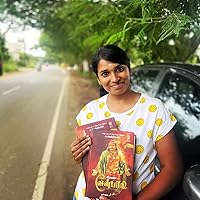
A story of survival set in a small fishing villlage near Bombay. Lila and Hari, aged 13 and 12, struggle to keep the family, including two young sisters, going when their mother is ill and their father usually the worse for drink. When Hari goes to Bombay to find work, Lila seems to be responsible for everything. Although the book paints a picture of extreme poverty, it demonstrates the strength of the family even in the most extreme circumstances and offers a powerful picture of another culture.
Anita Desai was born in 1937. Her published works include adult novels, children's books and short stories. She is a member of the Advisory Board for English of the National Academy of Letters in Delhi and a Fellow of the Royal Society of Literature in London. Anita Mazumdar Desai is an Indian novelist and Emeritus John E. Burchard Professor of Humanities at the Massachusetts Institute of Technology. She has been shortlisted for the Booker prize three times. Her daughter, the author Kiran Desai, is the winner of the 2006 Booker prize.
Overall I thought this book was good but there were quite a few issues I had with it.
I would have loved if the characters were more fleshed out. I didn't feel like I had full access to Hari or Lila's mindset. Maybe it was the writing but I felt like I was quite distanced from them. Obviously I sympathised with them but I think Anita Desai could have done a better job with making her characters more authentic. All of the characters felt very watered-down and that was disappointing.
The story was good. On the outer layer, there doesn't really appear to be much happening but when you get to the core you realise just how much is happening and changing in Thul (and other places). Again, I felt quite distanced from the story because of the writing but I did enjoy it.
The writing was simple and it was really easy to read. I didn't like how it distanced me from the story and from the characters though. Anita Desai's descriptions were okay but not great. There was a lot of colourful imagery in the book and that was great. I did like how women were represented in this book. They were represented as the ones who kept families running.
The ending kind of annoyed me. I felt like Anita Desai just waved a magic wand over the family and made everything better. What about the other families in Thul or Bombay? What happens to the families unable to adapt? Anita Desai didn't even touch on other people at the end. It just felt like a bit of a cop-out. I don't know if I would recommend this to other people or not. I probably would read another book by Anita Desai in the future.
“He felt like a new person, like someone who had emerged from a tightly shut box and now saw the light and felt the breeze for the first time.”
The writing. It’s so beautiful. It’s lyrical, gets a bit flowery at times. But it progresses as the story advances.
First of all, the story is told from the perspectives of young children. And things become quite clear when you go on reading.
I have heard and seen cases of people in my country going through poverty and hunger. It’s just not about the slums, the faraway rural areas or the families living in worst conditions in villages. It’s also about families everywhere even in glamorous cities with everyone looking like having the best lifestyle.
The portrayal of a poor family with an ailing mother, having many siblings who are still very young, a drunkard father is quite accurate and I can say there are families in my locality and neighbourhood similarly.
The representation is quite genuine.
Trying to survive in this fast pace world is difficult. However, it’s stories like this which give us hope and make us better human beings.
As adults, we have become quite sceptical even when there are situations we can easily extend help.
This book is one which made me reflect on so many things including the smallest everyday decisions. One of the best middle grade fiction I have ever read.
What would you do if you had a permanently bed-ridden mother and a drunkard for a father,with three siblings to look after.
Lila lives with her mother, father and three siblings – Hari, her brother, and Bela and Kamal, her sisters – in the fishing village of Thul, fourteen kilometres from the Metro city of Mumbai, or Bombay as it was called then. Hari, the only son, works everyday to pay off his father’s debts.
Disturbed and agitated by the conditions at his place, Hari runs away to Bombay, leaving behind Lila to take care of their parents and sisters.
Anita Desai beautifully, and in a very simple language, describes the events that follow.
The Village by the Sea is the story of evolution of Lila and Hari into ‘adults’ as they face their family’s predicament. The story has a gentle voice and is very impressive. Desai brilliantly portrays the issues in the village of Thul, doomed for destruction b the advance of industrialisation.
I would recommend this book to everyone who is looking for a simple story of how children become mature before age and take up their family’s responsibilities. It beautifully shows the typical village life in India. It is an Indian fairytale. I give this book 4 stars out of 5.
Honestly, the beauty of the nature- the sea, the sun... and everything- were described so vividly and wonderfully, but the overall story was so boring... just my perspective.
This is the only book I have read by Anita Desai. The thought of putting the book down came to my mind quite frequently.
But if you are not Indian, I would suggest that you should read this book. You'll fall in love with the picturesque beauty of India through this one!!!❤️❤️❤️
Anita Desai writes about things she knows and things she does not, in the book, 'The Village by the sea'. Things she knows, Mumbai, wealth, how to sell Indian culture and the colors of India. What she does not know (among other things), poverty, what people who have no money are thinking, daily life.
Her characters feel distant (she is distant from them and her writing is unable to bridge that gap). We all know about the poverty in India. We all know about the village 'dream'. Go to the city, make money, come back and live in the village. Replace village with city or town, it is the story of a lot of Indians. The migration in search of wealth.
I've never been a fan of this Desai. She's peddled India to the west and succeeded immensely, an early pioneer after all. Purple sarees, worship of rocks, village awe, drunken father, ill mother. I'm not saying this could not be true. But Desai's writing makes it look far from it. A poorly put up amateur skit, that's how the writing feels.
Explanation of Rating: The Village By The Sea is the story of the evolution of Lila and Hari into adults as they face their family’s predicaments. The story has a gentle voice of the author and it is an impressive book. I have realized again that there are people who have a tougher life than me. Moreover, it made me embarassed that I have thought I am poor at times. I love the book because it tells about a life style and love of a poor family who live in Thul, which is fourteen kilometers away from Bombay. Recommendation: I strongly recommend this book to people who may have thought they are poor and something they do not have enough to live. Also, to foreigners especially who want to know more about India and about how the people live in India. I really appreciated about author’s writing style. She has a beautiful writhing skill, which is smooth and dainty. Thus, I felt I became Lila, and I felt all the feelings which Lila would felt about her family’s predicaments while I was reading. Summary: Lila is the eldest sister who has taken the role of a mother for her family. She takes care of her brother, younger two sisters and her ill mother, and her drunkard father. Hari is the eldest boy in his family and works everyday to pay for his father’s debt, and to take care of his family. One day, Lila and Hari meet a rich family, the DeSilva’s. Lila and Hari get a lot of help from this family thus they could live little better, but for them it was not enough to live a better quality of life. One day, Hari decided to leave Thul to go to Bombay, where dreams come true, to earn money for his family. Although Hari left, the rich family continued to give a job to Lila, thus she could manage her sisters, and her mother. By the way, Hari was alone in Bombay. He met Jagu who is a restaurant proprietor. Jagu felt pity for him so he decided to help Hari as much as he can help Hari. Hari could work in his restaurant. Hari made a friend, Mr. Panwallah, who is a watch repairer and he works just beside Jagu’s restaurant. Through some experiences with Mr. Panwallah and Jagu, Hari realized that he has to go back to his village, Thul, in order to help his family. Meanwhile, in the small village, Lila, Bela, and Kamal were looking after their sick mother in a hospital through the help of the DeSilva family. When their mother became very sick and ill, their father realized that he was wrong and changed to be a better husband for his wife. He took care of his wife’s treatment for seven months without going into debt and drinking alcohol. After Hari came back to the village, Lila and Hari decided to bring their mother home to celebrate Diwali together. When Hari went to the hospital to pick up his mother, she looks much better than before. The family met altogether at their house, in the small village by the sea, and they celebrated Diwali together.
The book is about the challenges a family and the people of their village face as a result of development seeping in, although desirable it is irreversible. What stands out in Anita Desai’s writing is the ethereal picture she creates with her descriptions. The children are the real heroes in this story. I loved the confidence in her characters, their fighting spirit and eagerness to explore and adapt to new situations or surroundings. Some parts of the plot did not really seem important to the storyline, nevertheless it clearly depicted rural India.
There are many such families and happenings in this part of the world. We empathize with them but there is more that we could do in terms of rehabilitation and support. Reading about them is an eye opener especially for those who live in the larger towns and cities.
Interestingly I picked this book in a bookstore at Manipal, a coastal town by the Arabian Sea located in Dakshina Kannada of Karnataka. It was once a barren hill with trees and now known to have a globally recognized University with more than 25,000 students from 60 countries. It's a legacy by itself and I am glad I was a part of it as a student. One has to visit this village by the Arabian Sea to know how one can embrace development and yet stay rooted. I am glad I read this book.
Picked this up in a charity shop a while back (call me a cheapskate if you want) but have only just got round to reading it. It's a great story of survival and family love, (how Soppy do I sound?) and I learnt a lot about the life of people who are less fortunate than me and most people I know, which I think is important, because a wise person once said,
"Most children are so selfish all they think about is themselves: Me, Me, Me and Me. They just don’t seem to realise that there are other people about that should receive the utmost consideration. Mothers even. How many times do children think that their poor mothers work for them all the time? Probably never. After a long day of getting breakfast, packing lunches, making beds, cooking and cleaning, at last they get their children to bed and prepare to have a well earned rest and what do children do? They call down and ask mothers to bring them up a glass of water. What selfishness! What thoughtlessness!”
Which is probably more true, in some sense, than many people allow themselves to admit, even to themselves.
Heart-wrenching, steeped in emotion and pain, but at the same time magical and surreal, with a profound beauty that still lives in my memories.
It is not only the story of Lila and Hari that I found myself worrying over, but also the overall fate of the region. The questions that arise are hard to answer... globalization is inevitable, and with it comes salvation of sorts. Yet at the same time something is lost... I realize of course that the simplicity that brings the beauty in the village also brings with it much grief and pain. But could there not be a compromise of sorts? But that is not the way the world works, and Anita Desai is harsh in writing things exactly how they are, people exactly as they are. Yet she never lets up the hope flitting at the edges of how things SHOULD be, and this suffuses the reader with melancholia and nostalgia throughout the read. A beautiful work.
This was a recommendation from a dear old friend, and I finally picked it up. Recently, I’ve been ransacking my shelf trying to find action-packed books that I would completely adore. I missed out on this one, but thank goodness I finally read it!
This is a heartwarming yet heartbreaking story at the same time. I adore the relationship between Hari and Lila — their patience, their endurance, and the quiet strength they share. The story shows how cruel the world can be, but also how happiness lies in the little moments we have with our loved ones. This book definitely tugged at my heartstrings.
The author’s vivid descriptions pulled me into the story and kept me engaged. I went into the book blind and managed to finish it in one sitting. I would give this book a solid 3.5 ⭐️.
“The village by the Sea” by Anita Desai was my introduction to the much debated - Indian Writing in English [IWE]. Since then, each time I have picked up this book [Yes, I am one of those people who likes to read & re-read the same book over and over again] I have found something new to admire about it and over the last few years I have accumulated quite a few ‘points’ that I like about this book.
First, as a work of fiction it is not short of exquisite. The setting, the characters and the plot -- all fall together and fit beautifully. Be it Hari, a twelve year old or Jaggu, the food stall owner, everybody has a role to play and a lesson to teach. Be it the village of Thul or the big city of Mumbai, the vivid description of the places helps the reader to transport from one place to the other along with the characters in play. Personally, I found that there was something delicate in the author’s style of storytelling that grabbed my attention from the very beginning. She is skillful in depicting the world as it is; the characters are very true to life and she has managed to weave in the many facets of the society, politics and religion into a single work.
This book also imparts quite a few ‘messages’, the most prominent one being that of ‘change’. Change is inevitable in life and in society. All one can do to prosper is to adapt to it. When the government decided to set up a factory, the villagers resisted the change fearing the repercussions of it. But a twelve year old Hari learnt to adapt. His plans of a small poultry plan and a watch repair shop displayed his awareness of the changes that would soon take place in his small village and his willingness to adapt. Also, a thirteen year old Lila adapts to life throughout – whether be it taking up the responsibilities of her family or accepting the DeSilvas’ or finally agreeing with Hari’s plan – adapting according to the situation has always been Lila’s way of life.
Then there is that ever present message of ‘Hope’. You would think that kids like that - growing up in extreme poverty, with an alcoholic father and practically non-existing mother, with no supervision or guidance - would end up as a bad lot. But no, even in such a situation, it is possible for a ‘Hari’ to emerge and a ‘Lila’ to thrive. Even at the worst situations the young ones never lost hope. May be it was their innocence or maybe it’s just who they were. Help is always there for those who really need it – be it in form of a Jaggu or a Panwallah or the DeSilva family.
The reflection of the society, painted through the book is not a pretty one. Yet it stands true till date. The author has managed to capture the very essence of a village life in India. Extreme poverty, poor health care system and below average education rate is not really encouraging, rather it was pretty depressing. Child labour, represented through Hari while he worked at the restaurant in Mumbai alongside other boys, is another harsh truth of our country. The difference between Urban India and Rural India and between the rich and the poor is accentuated at various points. Also the attitude of the city people and the villagers, towards each other, felt so completely appalling even though somewhere in my heart I knew it was true.
Also, I have to admit that a huge amount of credit should go to the author for venturing towards a path few had trodden upon. This book was published in 1982 when ‘Indian Writing in English’ was not such a common thing. Sure, there had been the likes of R.K.Narayan who had already published a few of his works, and Salman Rushdie’s ‘Midnight’s Children’ had already been out, but it was not as common as it is now. Very few people were actually aware and even those aware would criticize the authors for not writing in their native language. It was in the 80’s that few prominent authors gave the push that Indian English Literature needed – Anita Desai being one of them.
I feel that this book never got the recognition it deserves.
Definitely one of the most poorly written books I've read, verging on poverty porn and with an ending that is so naively optimistic that you are astonished the author is actually a seasoned writer. The village by the sea has no memorable characters, most of them flatter than a repeatedly-driven-over roadkill, with the emotional range (as Hermione Granger would put it) of a teaspoon. What's worse, and most insufferable to me, is the fact that the author insists on treating its readers as brain-dead zombies who lack the capacity to appreciate to subtlety.
This was the worst book I have ever read, this book made me suffer through all of the floweriness and it wanted me to puke. The similes are BS and they make we want to die.
Hari along with his sisters Bela, Kamal and Lila, endure the hardships which come with poverty. They along with their ill mother and permanently drunk father live in a small village of Thul. The main occupation of the people of the village is fishing and some people own land for farming. Hari, however does not farm and neither does he fish. He sells coconut and makes a meager living. As days pass by, news of an upcoming factory in their village comes to picture. Hari is perplexed and his mind is preoccupied with the thoughts of how to earn more money so that his family can make ends meet.During the summer months a wealthy family (the De Silva family) comes to the bungalow- Mon Repos in Thul.During that time Lila along with the two other girls - Bela and Kamal, run chores for the family and a few more rupees is added to their daily income. This unstable nature of income, makes Hari think that probably if he escapes to the city he could earn a few more bucks.He escapes to Bombay along with the party of farmers who also travel to Bombay with the intention of voicing their opinion, that they do not want a factory to be built in their village cause it will destroy their fields and kill the fish in the sea. Unlike the rest of the people who had come to Bombay to protest and leave , Hari stays back and endures the ups and downs of city life which is brand new to him. In Bombay , he learns the craft of repairing watches from Mr Panwallah, and with his advice he hopes to use his craft, once the factory came up in the village and rich people stayed there and he will have their watches to mend. This gives him a new hope in life. He returns to Thul the day before Diwali and his sisters are thrilled to see him. In the time that Hari was in Bombay, his sisters earned money from Sayyid Ali who was bird watcher and was always preoccupied with his interest of bird-watching. He had come to live at Mon Repos towards the end of the De Silva's stay. During the De Silva's stay at Mon Repos, Mr De Silva had admitted Hari's mother to a hospital and she was being looked after by the doctors.Lila was relieved that their sick mother was finally being looked after. Meanwhile their father on learning that their mother was admitted to hospital, created a chaos at home and proceeded for the hospital at night. Since that day, their father stopped drinking and stayed at the hospital so that he could be of any help in case his wife needed him. The story ends in a joyful and hopeful note where the entire family is reunited , Hari is full of hopes and ideas of new ways to earn money and their mother is recovered if not completely from her illness. She along with few other women go to the rocks on the beach to offer her prayers and Hari wants Lila to see this view and cries out her name.
The first time i read this book was at school. It was our literature book in Grade 8. I thought oh no heres another boring literature book and i started reading it. But i was wrong. :) This book was moving, funny and informative. It was in short almost 5 stars good. The book gives us an insight on how difficult the life of people living in small villages can be. It basically starts off with the daily life of this family in the village Thul : The characters: Lila as a hard working young girl who has to do all the house work plus cooking and getting her younger sisters ready for school. Hari a very restless boy. He plucks and sells coconuts and sometimes works in a small plot of land where they grow vegetables and uses a net to catch fish sometimes. He's easily influenced by the people around him. The two younger girls who are schooling. And a drunk father and sick mother. The medicine man who sing Hari Om Hari Om and makes peculiar medicines Pinto their dog The De Silvas a family from Bombay who come to enjoy the seaside once a year.
The story revolves around their life in the village until one day they find out about the new contruction project going to happen which would destroy their village. Some villagers join in a protest that they were going to take the Bombay governor. Hari tired of the same old work with nothing changing for the better decides to run away to Bombay a big city to find work, by joining the protest. The story portrays the city, as seen though the eyes of a small village boy, as frightening, noisy and dirty, and some parts as huge and glimmering with the lights of massive buildings. He finds work in a small eating house and lives in terrible conditions. He befriends a watchmaker and learns from him about watches all the time saving his meager earnings to take home back to his family.
Meanwhile back home Lila struggles through her mothers illness and the heavy load of responsibilty on her shoulders. The financial situation was alleviated by the yearly arrival of the De Silva family who paid her for cleaning their house and then after that the bird man who paid them throughout the monsoon season for cooking and cleaning.
The story ends on a happy note where their mother who had been admitted into hospital by the De Silvas gets better and their father stops drinking after the shock of their mother nearly dying due to her illness. Then Hari returns home with all new plans on how to go forward and adapt to the future changes in their lives.
I really struggled to finish this book. In fact, it's the first book this year (nine months and thirteen books later) that I felt the need to skimp through. that In my opinion, it picks up a very simple story and then goes on to write at length about it. The story doesn't have enough meat in it to warrant a 300+ page book.
I am a big fan of long books and have read plenty of 600+ page books, so this isn't a review by someone who is inexperienced at reading and ranting about a book because he found it long. On the contrary, it was pretty short, but for a story of this calibre, it could have been wrapped up in less than 150 pages.
Now that I have this out of the way, let's get back to the book. It's a story of a poor family living in a small village in India and portrays their journey through a change coming to their village. I believe the characters are not very well built and you don't feel an attachment to any of the characters. The book revolves mostly around two characters, but they have no gravity to keep you interested in their lives.
The descriptions of the village are colorful and lively. But, in my opinion, they too get very repetitive over the book with the author deciding to describe either very mundane things or things already described before in details. Some people, not Indians, might enjoy seeing the poor side of India in this story, but for me, it quickly got frustrating to read through the elaborated imagery in the book.
The story and the ending, in particular, don't have much going on for them. The life, as the author describes, goes on, with some twists and turns of course. In the end, I didn't enjoy reading this at all and don't recommend it unless you really want to read about poor old India.
I really loved the way the book was written. The nature descriptions and the contrast between the busy city and the peaceful coastal village were very nicely done. The author also did a great job writing the characters in a simple and beautiful way.
But in the end, it left me feeling a little empty. I felt like I didn’t fully understand the characters, and I just wished the author had shown a bit more about them.
The Village by The Sea is the (true) story of siblings Hari and Lila, along with their younger sisters Kamal and Bella, as they struggle in a quickly changing India. Living in a small village by the sea, the children have to adapt to difficult circumstances that include a drunken father, a terribly ill mother, and extreme poverty. It's not a story of overcoming adversity but one of resilience.
Desai's writing is simple and fitting for the book, but not remarkable. Her descriptions of natural locations and of the busy city Bombay are the best aspects of the book, and do her credit. The plot, however, was not well developed. There were many subplots that proved to be irrelevant to the story, and they were presented with details that only served in adding the total number of pages.
Given, however, that this book was written for young adults, I can honestly say that it serves its purpose well, and that today its message is deeply needed to help us remember what it's like to survive under truly harsh conditions.
i had to read it for my english assignment. i thought i wouldnt like it, but then, i found out that i enjoyed reading it. it taught me a lot about life and how we should be grateful for everything that we have. i always thought that my life was suck, but this book, in a way, made me realized that i should be grateful that my life is nt as bad?(well, i dont knw hw to dscribe their lives) as hari's family's. glad that my teacher chose this book for me, (though its nt one of my favorites, still worth it)
This story is about the village named Thul.The undeveloped area and full of ignorance villagers where the husbands are abusive while the children will looking for a job. In this story line, Lila,Bela,Kamal and Hari are the main characters. Hari and Lila are struggling to survive.from this story of Anita Desai, we can concluded that no matter where we go or how far we reach.we have to learn so that we can grow more mature and life will be better with knowledge.
Such a nice, breezy story narrated in the simplest form of English. It was all about hope and how life kept going. I'm glad that the plot moved towards a positive destination. :)
It is true that the only way to survive life is to ADAPT. Hari's life in the city and his struggles were the proofs.
I enjoyed this read. I can narrate it to my niece as it's easy with good life lessons. 3.5 stars rounded off to 4.
Wonderful book. Anita Desai's writing is marvelous! Simple yet with a touch of intricacy, delicacy. :) I love the way she uses/poses questions when writing. This book depicts our Indian life beautifully, more than that...it teaches us a lot. A book with numerous morals, I truly loved it! Beautiful, absolutely beautiful. :)
I love Anita Desai's writing. She completely transports you to the Indian landscape (something her daughter does well, too). Her writing is simple and vivid. This story is all about change-- on a macro as well as a personal level. Leaning to cope with change, changing with the times, etc-- it's all in there. The characters are interesting and relatable. Enjoyable read.
i learnt the hardship and struggle experienced by a 14 year old girl and her brother how they had to fend for thier drunk father,thier bad ridden ma and thier siblings,it was a really good book.
The book has been in my TBR pile for nearly two years now. I did not know about this before I got this book as a very thoughtful gift. But the moment I saw the cover, I fell in love with it. Yes, I did judge a book by the cover, guilty as charged. But as I read the summary, a late 1980s, 1990s feeling crept over me. I was transported back in time to the books and movies that spoke of families, of hope and love, a deep familial bond. This was before I knew the original publication date of the book. Knowing it only increased my eagerness to read.
The additional interest generated was due to the glowing reviews it got from those who saw this book displayed proudly on my bookshelf. I do not have any idea how I went two years without reading it. But with the right type of prodding, I took the book up again and boy, am I glad I did it. This is the kind of soul nourishment I needed at this moment.
REVIEW:
It is incredibly hard to write a book about such deep topics as poverty and the hope of life, especially with children as main characters. Village By The Sea is an amazing read for many reasons, but mainly for the perfect blend of description and narrative that it manages to be. The subject matter itself is quite normal. A small family of six lives in a little village called Thul a few kilometers from Bombay. Lila and Hari are aged 13 and 12 respectively but the burden of looking after the household is placed on their tender shoulders because their father is a drunkard and their mother is seriously ill. Their fortunes might turn when there is a huge factory being built in the village. But things take a different turn and soon, the frustrated Hari decides to seek his fortune in the city of Bombay to lift his family up from poverty.
Lila is left to fend for the ill mother and manage despite the drunkard father who frequents the toddy shop every night and spends the little money he manages to get his hands on. In Bombay, Hari meets the people who will change his life and give him the hope. The perfect portrayal of Bombay as the city of dreams and how it has all sorts of people in its folds is one of the strongest parts of the novel. As the son of the family, Hari wants to make his fortune in this city and runs away in search of the DeSilvas who have come to Thul. But despite that he meets certain kind-hearted people there who show him that Bombay is a welcoming city where hope runs side by side with hard work. Hari meets Jagu, the man who takes pity on his and is the reason he eats his first full meal in Bombay and befriends Mr. Panwallah, a watchmaker who shows him the tricks of repairing the machines that show time. Hari realises that he has to go back to his house where his family will be suffering in their state. His sisters had been looking after their mother with the help of the kind DeSilvas and this affects their father in a positive way. What happens after this is the climax of the story.
The book begins incredibly slowly, the excitement does not seep in until after the halfway mark, when Bombay comes into picture and changes things. The narrative though, is very vivid. Desai makes it so beautiful that we can smell the salty tang in the air, feel the sea breeze on our faces, and also feel the pain of the hunger and poverty and the hope and dispair of a little family in the village. Desai brings the scene alive in our minds and engages us with little responsible Lila who wears her special pink saree to the village market and of small determind Hari who wants to go to Bombay so his family will have good lives. It is this speciality of the author that makes the book work for me. I have read many books that were claimed literary masterpieces but I feel this book is better than some of them.
While the descriptive narrative is a huge plus, the story needs the reader to be engaged. The pace is uneven and picks up only at the second half. I loved the language and the writing style but had a few places in the story where I felt it could have been written better. The ordinary story line is made extraordinary by a captivating narrative but sans that, the story and the climax left the reader in me wanting more. There was a hurried 'happily ever after' closure for the main protagonists but the focus dims when others are concerned. The story had a lot it could do, especially considering where it started. There are some unanswered questions left at the end of the book that would break the full rating this book would otherwise get. The ending seemed tailor made for perfection and was not exactly to my liking, though it left a sweet aftertaste.
Village By The Sea is the perfect book for the lazy afternoons. It is a unique blend of descriptions and a good story of hope, despair, poverty and how life can change with the simplest of things. The narrative was believable because none of the changes were really drastic or magical but it left the reader with a positive feeling. The story shall remain etched for long in my mind because of the way it connected. I will give it a near perfect rating despite the flaws I have pointed out because ultimately it won my heart in the poignant way it brought to life a little village called Thul, much like how Malgudi once captured my heart. There is no comparison between the geniuses of both but Desai's characters Lila, Hari, Bela, Kamal, Mr. Panwallah are similar to people I have met in life, who seem like people I know personally because her words brought them to life. And for that, she receives my wholehearted applause.
WHAT I LIKED: The narrative worked perfectly for me. Brilliance. The characters, especially those from Bombay are multidimensional and very relatable. The feelings of hope and love are the novel's strong points. And reasons why the novel will remain special for me.
WHAT COULD HAVE BEEN BETTER: The pace is uneven. The book would have worked better if the pace were faster in the crucial first few chapters The ending left a lot to be desired, despite bringing a form of closure in its own way. The book had a lot of potential to branch out into descriptions but narrowed its focus on only one family, leaving many questions unanswered.
VERDICT:
A book I will treasure forever, and one I will read again and quote from.
The Village by the Sea by Anita Desai – for mature 4th graders and up – Realistic Fiction- quite the powerful book, I couldn’t stop reading this one. I just loved reading the perspectives of children living on a quiet island where development of their area is inevitable with a fertilizer company moving in and how desolate a situation can feel. Additionally, the helpless feeling conveyed in the story with two parents barely helping the family survive was quite heart wrenching. The character development within the story and cultural perspective naturally integrated in was incredible. I think this book is an ideal story to read for children developing their international perspective. Thrilled that this is one of the books my Year 6 students are reading for our Flipped Reading project. Here are two portions that were my favorite in the book: p. 214: … Hari said, ‘Mr. Panwallah, you celebrate Coconut Day and Diwali and yet you are not a Hindu, are you? I thought you are a Parsee that celebrate only the Parsee festivals.’ ‘Oh no, no, no, boy,’ cried Mr. Panwallah comically. ‘What would be the fun of that? And why should I miss the fun of all the Hindu and Muslim festivals? No, no, I believe in sharing everything, enjoying everything. That is why I have so much fun, eh? No gloom for me, eh?” p. 240: … Hari was silent and listened to Ramu as he went on shouting in his usual fashion: ‘Everything has to change over here – everything is going to be different.’ ‘But, Ramu,’ interrupted Hari at last, ‘we have to change too, we shall have to become different as well.’ Those two portions resonated for me. They were perfect examples of being internationally minded.
Reviewlet of Dec/15/2020 অক্টোবর-এর প্রথমদিকে অনীতা দেশাই-এর 'a village by the sea ' পড়লাম। আহামরি কিছু লাগে নি। লেখিকার ভাষা সাংঘাতিক সুন্দর - মহারাষ্ট্রের উপকূলবর্তী ধীবর-সম্প্রদায়ের জীবনযাত্রার এতো চমৎকার বিবরণ দুর্লভ। কিন্তু চরিত্রদের গভীরতা খুব একটা খুঁজে পেলাম না - গল্পের মধ্যে তাৎপর্যকর কোনো উপলব্ধি নেই। ভাইবোন হরি আর লীলার চরিত্রগুলোকে যেন ঠিক পুরো বুঝে উঠতে পারলাম না। লীলাকে তাও কিছুমাত্রায় বুঝতে পারি - হরিকে একটুও না। উপন্যাসটি হয়তো কিশোর-উপন্যাস হিসাবে কিছুমাত্রায় চলতে পারে। কিন্তু মনে খুব সাংঘাতিক দাগ কাটলো না। পড়া যায়, যদিও। লেখিকার ভাষা সাবলীল, সংযত । ..................................................................................................... Reviewlet of Oct/12/2020
Beautiful, mesmerizing writing. Mixed feelings about the story. This is essentially a 'children's story', thus the 3/5 and not lower.
Will articulate my thoughts and write a proper review later.
A stray thought: This was part of the ICSE (tenth-standard) syllabus - not mine, we had Julius Caesar, poems and short stories. I do not think the story is deep or complex enough for a 16-year-old's school-final exam syllabus. Is it, though? Will have to re-read parts of this to understand better. Comments?
This book 'fell' into my hands when I was snooping through my mother's possessions as a small child. The book was written in 1982, the year I was born. The copy my mother had, was already tearing, however I remember the beautiful watercolor on the front page was what attracted me. I was only 9 years old when I read this book :)I have it safe with me even now as it brings back beautiful memories. 13 years old Lila and her brother, 12 year old Hari live with their younger siblings Bela and Kamal and their parents in the village of Thul near Bombay. Their mother is anaemic and malnourished and therefore bed-ridden, their father is an alcoholic who frequents the local toddy shops. Fed up with their financial woes Hari goes to Bombay and Lila finds work as a maid. The rest is about how these two children hold their family together.
Anita's descriptions are always refreshingly picturesque and lyrical, without ever being over the top. Her writing of the women worshipping the rock, the monsoon, the seas are still fresh in my mind after all these years. Her daughter displays the same beauty in her writings.
Hari, the protagonist, is torn between going to Bombay in search for a job and staying with his three innocent sisters whose lives revolved around him. To make matter even worse, his mother has fallen sick and his drunkard father doesn't bat an eye. Anita Desai has done a wonderful job in depicting the struggles that young children have to deal with when facing the adult world. The main problem that I had with 'The Village by the Sea' is with the ineffective character development. Even though it is easy to sympathize with the characters, we aren't given much insight on what is going on in their minds. I'm glad that I got a chance to read this book. Although the book is intended for young children, it manages to touch on sensitive topics like alcoholism, women empowerment, environment pollution, etc. providing a depth to it.
I don't know why I read it in the first place, well, it was a gift and maybe that's why. Not head over heels on it, not at all.
I wasn't struck by the writing or the story. Drunk dad, sick mom, poverty stricken family and the children. A typical Indian village life and how they struggle in a village and how they adapt to the changes. It's not a bad concept but wasn't written in the best way to get into one's heart.
The one thing I liked about is the description of the Village by the sea. It was a really pretty picture. One can actually travel to the seaside with that description. I think that's the only part I really loved in this book.
I am not familiar with her other works and I'm not going to judge everything by this one book. But I doubt I'll find out myself cos I'm not really keen on reading more of her, not after this.