

What do you think?

Στην άκρη του γκρεμού
Ο Εστέμπαν αναγκάζεται να κλείσει το ξυλουργείο του στη μικρή ισπανική πόλη Όλμπα, αφήνοντας στο δρόμο τους υπαλλήλους του. Οι τύψεις τον αναγκάζουν να αναζητήσει τα αίτια που τον οδήγησαν σ' αυτή την επιλογή και να διερευνήσει τον διττό ρόλο του ως θύτη και θύματος. Κοιτάζοντας το είδωλό του στον καθρέφτη -έναν άνθρωπο χωρίς ιδιαίτερα χαρίσματα-, ανακαλύπτει μια εικόνα φτιαγμένη από γκρεμισμένα όνειρα και χαμένα ιδανικά. Γύρω από τον Εστέμπαν ξεδιπλώνεται ένας θίασος εξιλαστήριων θυμάτων, άπληστων απατεώνων και ανελέητων κυνηγών του εύκολου κέρδους.
Την ίδια ώρα ο Αχμέτ, μετανάστης από το Μαρόκο, ανακαλύπτει δύο πτώματα στις όχθες του βάλτου της Όλμπα. Ίσως στο βάλτο να υπάρχουν περισσότερα πτώματα, αλλά ο Αχμέτ, τρομοκρατημένος στη σκέψη ότι θα μπορούσε να κατηγορηθεί για τους φόνους, το βάζει στα πόδια. Ο βάλτος, που σταδιακά αποκτά αυξανόμενο συμβολικό βάρος, είναι συγχρόνως μια άβυσσος που καταπίνει τις αποδείξεις των εγκλημάτων και ξεπλένει τις διεφθαρμένες συνειδήσεις...
Το βιβλίο του Ραφαέλ Τσίρμπες περιγράφει μια κοινωνία που έχει περιέλθει σε αποσύνθεση, όπως και ολόκληρη η χώρα που βιώνει σκληρή κρίση και έχει καταληφθεί από πανικό.
Το καλύτερο ισπανικό μυθιστόρημα των τελευταίων είκοσι πέντε χρόνων σύμφωνα με σχετική ψηφοφορία της εφημερίδας El Mundo.
Την ίδια ώρα ο Αχμέτ, μετανάστης από το Μαρόκο, ανακαλύπτει δύο πτώματα στις όχθες του βάλτου της Όλμπα. Ίσως στο βάλτο να υπάρχουν περισσότερα πτώματα, αλλά ο Αχμέτ, τρομοκρατημένος στη σκέψη ότι θα μπορούσε να κατηγορηθεί για τους φόνους, το βάζει στα πόδια. Ο βάλτος, που σταδιακά αποκτά αυξανόμενο συμβολικό βάρος, είναι συγχρόνως μια άβυσσος που καταπίνει τις αποδείξεις των εγκλημάτων και ξεπλένει τις διεφθαρμένες συνειδήσεις...
Το βιβλίο του Ραφαέλ Τσίρμπες περιγράφει μια κοινωνία που έχει περιέλθει σε αποσύνθεση, όπως και ολόκληρη η χώρα που βιώνει σκληρή κρίση και έχει καταληφθεί από πανικό.
Το καλύτερο ισπανικό μυθιστόρημα των τελευταίων είκοσι πέντε χρόνων σύμφωνα με σχετική ψηφοφορία της εφημερίδας El Mundo.
440 pages, Paperback
First published March 5, 2013
About the author
Rafael Chirbes
29 books189 followersRafael Chirbes (Tabernes de Valldigna, Valencia, 27 de junio de 1949 - 15 de agosto de 2015) fue un escritor y crítico literario español, ganador del Premio Nacional de la Crítica en 2007 y en 2014.
Desde los ocho años estudió en colegios de huérfanos de ferroviarios. A los 16 se fue a Madrid, donde estudió Historia Moderna y Contemporánea. Vivió en Marruecos (donde fue profesor de español), París, Barcelona, La Coruña, Extremadura, y en el año 2000 regresó a Valencia. Se dedicó a la crítica literaria durante algún tiempo y posteriormente a otras actividades periodísticas, como las reseñas gastronómicas (en la revista Sobremesa) y los relatos de viajes.
Su primera novela, Mimoun (1988), quedó finalista del Premio Herralde y su obra La larga marcha (1996) fue galardonada en Alemania con el Premio SWR-Bestenliste. Con esta novela inició una trilogía sobre la sociedad española que abarca desde la posguerra hasta la Transición, que se completa con La caída de Madrid (2000) y Los viejos amigos (2003). Con Crematorio (2007), un retrato de la especulación inmobiliaria, recibió el Premio Nacional de la Crítica y el Premio Dulce Chacón. Con la aparición de la novela En la orilla (2013), confirma su trayectoria ascendente. La novela se construye entorno al hallazgo de un cadáver en el borde de un pantano y conforme aborda la biografía del muerto y de aquellas personas con las que se relacionó al final termina construyendo un gran fresco que retrata una sociedad en crisis. También recibió el Premio Nacional de la Crítica, en el año 2014.
La precipitada muerte de Rafael Chirbes, ocurrida el 15 de Agosto de 2015, convirtió ésa obra en su último libro publicado en vida. En 2016 se espera el lanzamiento de París - Austerlitz, novela que Chirbes tenía ya finalizada.
Adaptación televisiva
Crematorio ha sido llevada a la pequeña pantalla en 2011 en una miniserie de ocho capítulos de Canal Plus, con Pepe Sancho como protagonista: el constructor «Rubén Bertomeu». Ha cosechado excelentes críticas.
Obras
Novelas
Mimoun (1988)
En la lucha final (1991)
La buena letra (1992)
Los disparos del cazador (1994)
La larga marcha (1996)
La caída de Madrid (2000)
Los viejos amigos (2003)
Crematorio (2007)
En la orilla (2013)
Ensayos
Mediterráneos (1997)
El novelista perplejo (2002)
El viajero sedentario (2004)
Por cuenta propia (2010)
Premios
1988: Finalista del Premio Herralde con Mimoun
1999: Premio alemán SWR-Bestenliste por La larga marcha
2003: Premio Cálamo "Libro del Año 2003" por Los viejos amigos
2007: Premio Cálamo "Libro del Año 2007" por Crematorio
2007: Premio Nacional de la Crítica por Crematorio
2008: Premio Dulce Chacón por Crematorio
Desde los ocho años estudió en colegios de huérfanos de ferroviarios. A los 16 se fue a Madrid, donde estudió Historia Moderna y Contemporánea. Vivió en Marruecos (donde fue profesor de español), París, Barcelona, La Coruña, Extremadura, y en el año 2000 regresó a Valencia. Se dedicó a la crítica literaria durante algún tiempo y posteriormente a otras actividades periodísticas, como las reseñas gastronómicas (en la revista Sobremesa) y los relatos de viajes.
Su primera novela, Mimoun (1988), quedó finalista del Premio Herralde y su obra La larga marcha (1996) fue galardonada en Alemania con el Premio SWR-Bestenliste. Con esta novela inició una trilogía sobre la sociedad española que abarca desde la posguerra hasta la Transición, que se completa con La caída de Madrid (2000) y Los viejos amigos (2003). Con Crematorio (2007), un retrato de la especulación inmobiliaria, recibió el Premio Nacional de la Crítica y el Premio Dulce Chacón. Con la aparición de la novela En la orilla (2013), confirma su trayectoria ascendente. La novela se construye entorno al hallazgo de un cadáver en el borde de un pantano y conforme aborda la biografía del muerto y de aquellas personas con las que se relacionó al final termina construyendo un gran fresco que retrata una sociedad en crisis. También recibió el Premio Nacional de la Crítica, en el año 2014.
La precipitada muerte de Rafael Chirbes, ocurrida el 15 de Agosto de 2015, convirtió ésa obra en su último libro publicado en vida. En 2016 se espera el lanzamiento de París - Austerlitz, novela que Chirbes tenía ya finalizada.
Adaptación televisiva
Crematorio ha sido llevada a la pequeña pantalla en 2011 en una miniserie de ocho capítulos de Canal Plus, con Pepe Sancho como protagonista: el constructor «Rubén Bertomeu». Ha cosechado excelentes críticas.
Obras
Novelas
Mimoun (1988)
En la lucha final (1991)
La buena letra (1992)
Los disparos del cazador (1994)
La larga marcha (1996)
La caída de Madrid (2000)
Los viejos amigos (2003)
Crematorio (2007)
En la orilla (2013)
Ensayos
Mediterráneos (1997)
El novelista perplejo (2002)
El viajero sedentario (2004)
Por cuenta propia (2010)
Premios
1988: Finalista del Premio Herralde con Mimoun
1999: Premio alemán SWR-Bestenliste por La larga marcha
2003: Premio Cálamo "Libro del Año 2003" por Los viejos amigos
2007: Premio Cálamo "Libro del Año 2007" por Crematorio
2007: Premio Nacional de la Crítica por Crematorio
2008: Premio Dulce Chacón por Crematorio
Ratings & Reviews
Friends & Following
Create a free account to discover what your friends think of this book!
Community Reviews
Displaying 1 - 30 of 199 reviews

March 8, 2018
Si en “Crematorio” Chirbes nos contaba cómo se fue acercando a la orilla aquel tsunami económico que supuso el estallido de la burbuja inmobiliaria, en esta otra orilla veremos lo que quedó tras su paso, un escenario propicio para que el autor de rienda suelta a su punto de vista tremendamente pesimista sobre el ser humano.
Chirbes es el Lobo Antunes patrio, sobre todo en esta obra en la que predomina la narración en primera persona, la misma verborrea incontenible (no es peyorativo), ese derroche narrativo que ambos comparten, esa literatura chorro, imparable, sin apenas pausas que conforman esas páginas que parecen impenetrables muros de palabras que son una delicia penetrar a pesar de la tristeza que destilan. Como es habitual en el autor portugués, también aquí se combinan pasado y presente, e incluso el futuro, en este collage de imágenes que, sin ningún orden (aparente), componen la obra.
Porque eso es la novela, un gran collage de imágenes inconclusas que vuelven una y otra vez para perfilar detalles que quedaron sin rematar y afinar el dibujo de los personajes, su carácter, su historia, su paisaje. Imágenes de cielos llenos de plumas y grúas inmóviles y abandonadas, de esqueletos de edificios, de montañas de escombros, de aguas contaminadas y pestilentes, de hombres heridos sentados ante el televisor día tras día, de mujeres dejando en la caja del supermercado ese lápiz de labios que no se pueden permitir. Imágenes que componen la derrota colectiva que han sido estos años y que es el escenario de este relato, y donde se abren agujeros negros que, como en esos libros infantiles donde la ilustración a doble página está plagada de múltiples ventanitas que pueden abrirse gracias a unas pequeñas pestañas, asistimos a muchas otras situaciones, otros muchos cuadros que nos enseñan aquello que surge más fácilmente en los momentos difíciles pero que siempre estuvo ahí, aquello que nos conforma independientemente del contexto que nos toque vivir. Un mundo en el que no existen ventanas a la esperanza.
No existe el equilibrio en el universo de Chirbes, en el que la familia, que te condiciona en tus inicios, se convierte en una pesada cadena que te sujeta y te detiene después; en el que el amor es fuente de sufrimiento; un mundo en el que te persiguen los anhelos juveniles no alcanzados ("te persigue lo que no alcanzas"); en el que pronto se malogra la ilusión de ese sucedáneo de inmortalidad que son los hijos; un mundo que acaba en la desesperanza senil ("Como si la vejez no fuera un estúpido epílogo y tuviera algo que ver con la vida propiamente dicha"). Todo es degeneración, toda la vida es una caída, el deterioro físico, el avinagramiento del carácter que nos invade tras la acumulación de decepciones, de amores malogrados, de metas no cumplidas, de errores e injusticias cometidas y soportadas, de amistades corrompidas. Pobres, ricos, explotados y explotadores se unen en esa tremenda concepción del ser humano. Muchos pierden, otros saben caer de pie... los peores de todos.
Chirbes es el Lobo Antunes patrio, sobre todo en esta obra en la que predomina la narración en primera persona, la misma verborrea incontenible (no es peyorativo), ese derroche narrativo que ambos comparten, esa literatura chorro, imparable, sin apenas pausas que conforman esas páginas que parecen impenetrables muros de palabras que son una delicia penetrar a pesar de la tristeza que destilan. Como es habitual en el autor portugués, también aquí se combinan pasado y presente, e incluso el futuro, en este collage de imágenes que, sin ningún orden (aparente), componen la obra.
Porque eso es la novela, un gran collage de imágenes inconclusas que vuelven una y otra vez para perfilar detalles que quedaron sin rematar y afinar el dibujo de los personajes, su carácter, su historia, su paisaje. Imágenes de cielos llenos de plumas y grúas inmóviles y abandonadas, de esqueletos de edificios, de montañas de escombros, de aguas contaminadas y pestilentes, de hombres heridos sentados ante el televisor día tras día, de mujeres dejando en la caja del supermercado ese lápiz de labios que no se pueden permitir. Imágenes que componen la derrota colectiva que han sido estos años y que es el escenario de este relato, y donde se abren agujeros negros que, como en esos libros infantiles donde la ilustración a doble página está plagada de múltiples ventanitas que pueden abrirse gracias a unas pequeñas pestañas, asistimos a muchas otras situaciones, otros muchos cuadros que nos enseñan aquello que surge más fácilmente en los momentos difíciles pero que siempre estuvo ahí, aquello que nos conforma independientemente del contexto que nos toque vivir. Un mundo en el que no existen ventanas a la esperanza.
No existe el equilibrio en el universo de Chirbes, en el que la familia, que te condiciona en tus inicios, se convierte en una pesada cadena que te sujeta y te detiene después; en el que el amor es fuente de sufrimiento; un mundo en el que te persiguen los anhelos juveniles no alcanzados ("te persigue lo que no alcanzas"); en el que pronto se malogra la ilusión de ese sucedáneo de inmortalidad que son los hijos; un mundo que acaba en la desesperanza senil ("Como si la vejez no fuera un estúpido epílogo y tuviera algo que ver con la vida propiamente dicha"). Todo es degeneración, toda la vida es una caída, el deterioro físico, el avinagramiento del carácter que nos invade tras la acumulación de decepciones, de amores malogrados, de metas no cumplidas, de errores e injusticias cometidas y soportadas, de amistades corrompidas. Pobres, ricos, explotados y explotadores se unen en esa tremenda concepción del ser humano. Muchos pierden, otros saben caer de pie... los peores de todos.

August 21, 2014
Rafael Chirbes (1949-2015), en su última obra completa, En la orilla (2013), vuelve a diseccionar la sociedad española con gran precisión. A través de la vida del septuagenario Esteban y las personas que compartieron y comparten su vida en un pequeño pueblo de la costa mediterránea, nos arroja, con un realismo digno de maestro, otro retrato demoledor: especulación, corrupción, enriquecimiento rápido, inmigración, explotación..., componentes principales de una época inmediatamente anterior a la tratada en la novela, ahora ya en plena decadencia.
Asistimos aquí a las consecuencias lógicas del mundo de la “burbuja” económica que tan bien describía el autor en su obra Crematorio (2007). Acudiendo al siempre sabio refranero: de aquellos polvos vienen estos lodos. Se trata de consecuencias ejemplificadas en las profundas marcas que deja en las personas implicadas: fracaso, soledad, desesperación, dolor, envidia, traición, ruina… en las cuales (como suele ser la tónica de Chirbes) no se permite ni un atisbo de esperanza, de recuperación. La sensación global es de un pesimismo casi nihilista.
Para lograr convencernos de esta visión, el autor recurre a una estructura que a algunos le puede resultar lenta y agotadora, monólogos interiores, repetición casi exacta de descripciones e, incluso, de acciones, escasez de diálogos y otros efectos recurrentes que, sin embargo, pueden conseguir también que crezca el interés y que se disfrute una y otra vez con variaciones sobre el mismo tema.
En mi opinión, otra novela de Rafael Chirbes digna de ser leída e imprescindible para los interesados en esa época de España, porque sin duda consigue convencernos del mundo que describe.
Asistimos aquí a las consecuencias lógicas del mundo de la “burbuja” económica que tan bien describía el autor en su obra Crematorio (2007). Acudiendo al siempre sabio refranero: de aquellos polvos vienen estos lodos. Se trata de consecuencias ejemplificadas en las profundas marcas que deja en las personas implicadas: fracaso, soledad, desesperación, dolor, envidia, traición, ruina… en las cuales (como suele ser la tónica de Chirbes) no se permite ni un atisbo de esperanza, de recuperación. La sensación global es de un pesimismo casi nihilista.
Para lograr convencernos de esta visión, el autor recurre a una estructura que a algunos le puede resultar lenta y agotadora, monólogos interiores, repetición casi exacta de descripciones e, incluso, de acciones, escasez de diálogos y otros efectos recurrentes que, sin embargo, pueden conseguir también que crezca el interés y que se disfrute una y otra vez con variaciones sobre el mismo tema.
En mi opinión, otra novela de Rafael Chirbes digna de ser leída e imprescindible para los interesados en esa época de España, porque sin duda consigue convencernos del mundo que describe.

October 28, 2014
A pesar de que no es una novela sencilla, sus monólogos atrapan y nos descubren quiénes somos, qué ha pasado, por qué estamos donde estamos. Trata de la crisis económica y, lo que es más importante, la moral. Habla de la corrupción (si en Crematorio encontrábamos el pelotazo de los de arriba, aquí es protagonista el trapicheo de los de abajo), pero también de la vejez, de la soledad, del egoísmo y de la derrota, con personajes que son víctimas y verdugos, y con una precisión narrativa que no deja títere con cabeza. Es un libro que duele, detalladísimo en su localismo, pero con un alcance universal en el análisis.
"Y yo no sé quién soy, dónde estoy, no tengo claro si me paro a saludar o si registro en el contenedor, porque si alguien ha sido explotado en este puto taller ése soy yo".
"Y yo no sé quién soy, dónde estoy, no tengo claro si me paro a saludar o si registro en el contenedor, porque si alguien ha sido explotado en este puto taller ése soy yo".

Read
January 13, 2017
Rafael Chirbes (1949–2015)
Human life is nature's biggest waste of time and energy: just when it seems that you are beginning to make the most of what you know, you die, and those who come after you have to start all over again from scratch.
The son of a Republican railroad worker, Rafael Chirbes was effectively orphaned when his father committed suicide and his mother turned him over to an orphanage because she could not maintain him. Nonetheless, he became a highly regarded literary critic and novelist, publishing nine novels before his rather early death from lung cancer. The last of these, En la orilla (On the Edge, 2013), is a dense, overflowing view of Spain during the most recent economic crisis(*) with flashbacks all the way to the Civil War, and the view is that seen from the bottom, by immigrants, migrant workers, prostitutes, the unemployed and the criminal (who are the only persons doing well for themselves). The narrator, Esteban, is an aged son and grandson of carpenters made cynical by the many disappointments in his life, not the least of which is the loss of his investment in a dishonest friend's construction company, for which he hocked himself to the eyeballs at the most inopportune time, mortgaging everything he owned in his greed. His carpentry shop closed (for "renovations"), his former employees drawing a minimal unemployment compensation, his ninety year old father speechless and helpless, Esteban is in a bad place.
Esteban's father, like Chirbes', was on the losing side of the Civil War and had to pay and pay and pay for it with prison and, after his release, seemingly unending injuries to his pride and economic well being by the victors. Through the father we are shown a postwar Spain full of opportunists, hypocrites and self-inflated windbags. Chirbes is harsher with Spain than Heinrich Böll and Günter Grass are with postwar Germany!
In what is often a headlong, urgent stream of consciousness - and not only Esteban's - Spain in the guise of a nothing little town on the edge of a lagoon and swamps near the Mediterranean coast staggers across the field of vision in her least appealing garb. It is a Spain of the resignedly desperate and of the impenitently hustling. Though one can well believe much of what is shown to the reader, Esteban's view (shared with his father) that "all men are nothing but a bag of shit tied up in the middle" transforms all of his relatives into hypocrites waiting for an inheritance, all of the townspeople into hypocrites trying to hide their Schadenfreude at his situation, and all economically successful Spaniards as greedy hypocrites ready to sell their mothers for an advantage. Only his relation with Liliana, the Columbian home nursing aide, contains some real warmth.

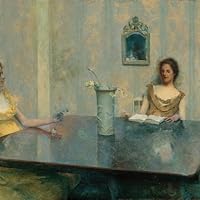
Manolo Valdés, Retrato con fondo naranja, 2007
But the ventriloquist moving the dummy's mouth becomes intrusive when the relatively uneducated carpenter gives us passages like the one beginning
We all know that the world is divided between what I am and what others are. The great existential chasm. The whole history of philosophy turns on that divide, and it's something we take for granted as soon as we begin to form our own first perceptions.
Is this a lack of authorial control? No. Consider these lines straight from Esteban's SoC, in no way exceptional:
Nevertheless, on this luminous winter morning, I - one of the innocuous ones - am the person looking for a stage on which to recreate the natural order, at least in part, with an intimate little drama, a chamber work, offering to restore what history destroyed.
So, verisimilitude is not important to Chirbes in this text, truth is - his truth. I assume. But then the disillusioned cynic of a character(**) in my mind transformed into the disillusioned cynic of an author, and I was thrown, once again, out of the story, wondering: Did Chirbes spend the last years of his life with such a view of his fellows?
Whatever the answer to that question may be, Chirbes' swan song(***), dark as it is, is engaging, often interesting and sometimes moving. Enough to motivate me to find another of his books, perhaps one a bit less relentlessly morose.(4*)
(*) We can damn well expect another as a consequence of the Trump presidency as his billionaire
(**) This describes both Esteban and his father.
(***) Apparently a text Chirbes had essentially finished before his death has been published posthumously.
(4*) I'm somewhat apprehensive, though, since in the Afterword to On the Edge I find the following quote from Chirbes' first novel, Mimoun: "No human is anything more than a badly stitched sack of muck." It appears also that Francis Bacon and Lucien Freud are favorites of his. So I'm thinking maybe a less morose Chirbes text might not exist...

June 14, 2024
Konusu, anlatımı, kurgusu, kısacası her şeyiyle müthiş bir roman Bıçak Sırtında! İspanyol yazar Rafael Chirbes, 2008 Küresel Ekonomik Krizi’nin İspanya’daki etkilerini, modern dünya düzenine eleştirileriyle beraber muazzam bir kurgu ve farklı sesleri büyük başarıyla bir araya getiren kendine has anlatımıyla işlemiş.
Arap bir göçmenin İspanya’nın küçük bir şehrinde bataklık kenarında bir ceset bulmasıyla açılıyor roman. Sonrasında bunun iki hafta öncesine dönüyoruz ve büyük ekonomik kriz sonrasında patlayan inşaat sektörü balonu sonucunda iflas eden bir marangozhane sahibi ve onun işten çıkarmak zorunda kaldığı çalışanlarının hikayesini okuyoruz. Ancak salt krize değinmemiş yazar; a’dan z’ye sistemi ele almış. Kaçak göçmenlerden doğaya ve hayvanlara verdiğimiz tahribata, toplumda artan şiddetten ahlaki yozlaşmaya kadar kapitalist düzenin tüm çarklarını, açmazlarını masaya yatırmış. Dinden ölüme, modern dünyanın ikiyüzlü ve kendisiyle çelişen kurallarından insan ilişkilerine kadar pek çok konuda oldukça derinlikli ve bütünlüklü argümanları da yine kurguya başarıyla yedirmiş. Bunun yanında, yirmi birinci yüzyılla da sınırlandırmamış bu meseleleri, karakterin aile hikayesi ekseninde de İspanya’nın iç savaş yıllarından Franco dönemini ve ardından demokrasiye geçişi de çok güzel yansıtmış.
Chirbes’e özellikle hayran kalmamın iki sebebi var: Birincisi, yazarın anlatımından çok etkilendim. Arap bir göçmen tarafından bir cesedin bulunmasının anlatıldığı kısa girişten sonra, ana karakterin bilinç akışıyla ilerliyor roman genel olarak. Ama bunu o kadar başarılı yapıyor ki yazar, bize zamanın farklı dilimlerinden olayları karışık bir sırada anlatmasına ve karakterlerleri okura alışılagelmiş bir şekilde tanıtmamasına rağmen, anlattıklarına kapılıp gidiyor insan okurken. Yine araya italikle yazılan kısımlarda farklı karakterlerin bilincinde dolaşması da olağanüstü; ilk etapta afallatsa da ilerledikçe karakterleri tanımak, yavaş yavaş hangi sesin kime ait olduğunu keşfetmek inanılmaz keyifliydi benim için. Yazarın bilinç akışının bu kadar ustalıklı olmasının sırlarından biri bana göre ne zaman neyin ne kadarını anlatacağının dozunu çok iyi ayarlamış olması. Bayılıyorum böyle anlattıklarını okurun gözüne sokmadan, çoğu zaman ona hissettirerek, kimi zaman onun hayal gücüne de yer verecek şekilde ama her şeyi de havada bırakmadan anlatan, kısacası bu hassas dengeyi kurmayı başarabilen metinlere. Basit gibi görünse de büyük başarı bu bence. Bu bağlamda kitabın sonu da ayrı etkileyici. İkincisi ise yazarın hem toplumsal ve siyasi hem de kişisel meseleleri aynı ustalıkla irdelemekteki başarısı. Dünya düzenine bir manifesto niteliğinde başlayan romanın kendini gerçekleştirememiş bir karakterin hezeyanlarını, baba-oğul ilişkisini, kardeş olmayı, dostlar arası rekabeti ve nicelerini aynı etkileyicilikle işlemesi harikaydı.
Kısacası, siyasi ve toplumsal kurgudan hoşlananları da güçlü bir edebi metin okumak isteyenleri de fazlasıyla tatmin edecek çok, çok iyi bir roman Bıçak Sırtında. Israrla tavsiye ederim.
Arap bir göçmenin İspanya’nın küçük bir şehrinde bataklık kenarında bir ceset bulmasıyla açılıyor roman. Sonrasında bunun iki hafta öncesine dönüyoruz ve büyük ekonomik kriz sonrasında patlayan inşaat sektörü balonu sonucunda iflas eden bir marangozhane sahibi ve onun işten çıkarmak zorunda kaldığı çalışanlarının hikayesini okuyoruz. Ancak salt krize değinmemiş yazar; a’dan z’ye sistemi ele almış. Kaçak göçmenlerden doğaya ve hayvanlara verdiğimiz tahribata, toplumda artan şiddetten ahlaki yozlaşmaya kadar kapitalist düzenin tüm çarklarını, açmazlarını masaya yatırmış. Dinden ölüme, modern dünyanın ikiyüzlü ve kendisiyle çelişen kurallarından insan ilişkilerine kadar pek çok konuda oldukça derinlikli ve bütünlüklü argümanları da yine kurguya başarıyla yedirmiş. Bunun yanında, yirmi birinci yüzyılla da sınırlandırmamış bu meseleleri, karakterin aile hikayesi ekseninde de İspanya’nın iç savaş yıllarından Franco dönemini ve ardından demokrasiye geçişi de çok güzel yansıtmış.
Chirbes’e özellikle hayran kalmamın iki sebebi var: Birincisi, yazarın anlatımından çok etkilendim. Arap bir göçmen tarafından bir cesedin bulunmasının anlatıldığı kısa girişten sonra, ana karakterin bilinç akışıyla ilerliyor roman genel olarak. Ama bunu o kadar başarılı yapıyor ki yazar, bize zamanın farklı dilimlerinden olayları karışık bir sırada anlatmasına ve karakterlerleri okura alışılagelmiş bir şekilde tanıtmamasına rağmen, anlattıklarına kapılıp gidiyor insan okurken. Yine araya italikle yazılan kısımlarda farklı karakterlerin bilincinde dolaşması da olağanüstü; ilk etapta afallatsa da ilerledikçe karakterleri tanımak, yavaş yavaş hangi sesin kime ait olduğunu keşfetmek inanılmaz keyifliydi benim için. Yazarın bilinç akışının bu kadar ustalıklı olmasının sırlarından biri bana göre ne zaman neyin ne kadarını anlatacağının dozunu çok iyi ayarlamış olması. Bayılıyorum böyle anlattıklarını okurun gözüne sokmadan, çoğu zaman ona hissettirerek, kimi zaman onun hayal gücüne de yer verecek şekilde ama her şeyi de havada bırakmadan anlatan, kısacası bu hassas dengeyi kurmayı başarabilen metinlere. Basit gibi görünse de büyük başarı bu bence. Bu bağlamda kitabın sonu da ayrı etkileyici. İkincisi ise yazarın hem toplumsal ve siyasi hem de kişisel meseleleri aynı ustalıkla irdelemekteki başarısı. Dünya düzenine bir manifesto niteliğinde başlayan romanın kendini gerçekleştirememiş bir karakterin hezeyanlarını, baba-oğul ilişkisini, kardeş olmayı, dostlar arası rekabeti ve nicelerini aynı etkileyicilikle işlemesi harikaydı.
Kısacası, siyasi ve toplumsal kurgudan hoşlananları da güçlü bir edebi metin okumak isteyenleri de fazlasıyla tatmin edecek çok, çok iyi bir roman Bıçak Sırtında. Israrla tavsiye ederim.

August 19, 2020
 Rafael Chirbes (1949 – 2015)
”NA MARGEM” é um romance multipremiado do escritor espanhol Rafael Chirbes (1949 – 2015) - o terceiro livro publicado em Portugal. Uma obra literária surpreendente; escrita numa prosa notável, que se prolonga por impressionantes paisagens agrestes; em que se misturam os monólogos e os pensamentos das personagens, com as memórias do passado e os acontecimentos do presente. A narrativa engloba vários registos, sendo eficiente no estilo e na caracterização das diferentes personagens.
Rafael Chirbes não facilita o leitor, as histórias não são contadas de uma forma linear; antes são desenvolvidas por meio de inúmeros monólogos que se vão cruzando e interligando, exigindo uma leitura atenta. Pouco a pouco o escritor amplia e acrescenta novas cambiantes, enriquecendo cada uma das histórias, inserindo inúmeras considerações sociais e políticas. Apesar da localização – costa espanhola da zona de Valência – a narrativa transcende o cenário geográfico.
A história de Esteban, um dos principais narradores, não é mais do que um homem que vê as suas ilusões abandonadas, a resignação de morrer sem herdeiros, numa relação eternamente conflituosa com o pai, agora doente terminal de quem tem que cuidar; confrontado na actualidade no duplo papel de vítima e carrasco, sobretudo, para os seus trabalhadores.
Considero que o início de ”NA MARGEM” com o primeiro capítulo - I. Achado - começando num registo de livro policial não se enquadra na estrutura narrativa do romance.
”NA MARGEM” é um relato dramático sobre a denominada crise espanhola do “ladrillo” (2008 – 2014), sobre o declínio da sociedade, sobre a degradação ambiental, mas igualmente, sobre a complexidade e sobre a ambiguidade das relações familiares e amorosas. A crise económica na construção civil obrigou ao encerramento de pequenas e de grandes empresas, convertendo personagens que antes eram prósperos e dinâmicos empreendedores, talvez, excessivamente ambiciosos; em seres humanos derrotados, arruinados financeiramente e psicologicamente.
”NA MARGEM” é sem dúvida um excelente romance de leitura nem sempre acessível.
"A nossa história não tem florestas sombrias, o esplendor das caducifólias, almas solitárias que vagueiam em sofrimento, nada dessa poética penumbrosa. Tem, isso sim, árvores mais retorcidas do que frondosas, com mais tronco do que folhas, mais cinzentas do que verdes. Há que evitar a todo o custo a exposição dos sentimentos, que desbotam sob esta luz despudorada. Não estou a dizer novidade nenhuma." (Pág. 380)

April 8, 2016
"Money amongst its many other virtues, has a detergent quality ... [It] allows you to sit in an armchair, stretch out your legs and read the newspaper. It gives you those immaculate hands that emerge from starched white shift cuffs. It's no longer you prowling the night. You employ assistants and servants to trap, skin and kill the creates from which one obtains the vital ingredients for the Sunday stew.
[...]
It has taken only a few years for us to acquire that privileged status, the illusion that we are all lords and ladies of the manor, while in remote factories, working kill and skin and carve and package the animals we eat once they've become acceptably aseptic."
"On the Edge" was translated by the incomparable Margaret Jull Costa. I have more books written (because the translator writes the words we the non-native reader read) by her on my shelves than anyone else, more than 30, books translated from originals by such greats as Saramago, Marías, Pessoa, Lobo Antunes, Tabucchi, Atxaga,de Queirós, Giralt Torrente ... and errrrrhhh.... Paulho Coelho (presumably to pay the bills!).
Set in Olba, in Spain, in late 2010 after the property-boom led economic bubble had burst, "On the Edge" focuses on those on the fringes of society - socio-economically and geographically: Olba is on the coast, 60km from Valencia, where much of the frenzied property development took place, and indeed the Spanish title "En la Orilla" could be translated as on the shore or river bank.
The story centres on Estaban, 70 years old, proprietor of the family carpentry business ("a carpenter is expected to be a peaceful fellow, a cuckolded St Joseph"), forced into bankruptcy after he had sunk funds into a friend's property empire (said "friend" now having fled from his creditors, including Estaban).
The story is told in first-person monologues, mainly by Estaban, although he has an interlocutor who occasionally interjects, Liliana, who, until recently, cared for his father. Her thoughts, largely on the unfavourable comparison of Spain to her native Columbia, often interrupt his, without any marker in the text, mid paragraph, sometimes mid sentence, and given he has had to let her go, one suspects are imagined on his behalf from past conversations.
Other characters voices also interrupt the story, notably those of Estaban's workers, in even direr straits than he. Indeed their voices, and his account of him having to tell them the firm was bankrupt adds depth to Estaban's account - he is both downtrodden victim and yet part of the problem. An interwoven tale of his one true love, who eventually eloped with his more successful and rich friend also adds some personal poignancy to his otherwise rather sordid tale.
And the story is deliberately cynical and sordid - the focus is on immigrant workers, prostitutes ("the only bulge in your trousers she's interested in is the one made by your wallet") and illegal drugs, their pimps and traffickers ("Gypsies, Romanians, Colombians, Italian mafia, Russians.") and on crippling debts, bankruptcy ("what else is a bankrupt business but a transmissible disease that has never given pleasure to anyone?"), environmental degradation and endemic corruption, and on cynical marriages ("they used each other - economically, socially, eugenically").
It all makes for an effectively powerful but somewhat unpleasant read. The stream-of-thoughts style of the novel means it is best read in long sittings, but the subject matter and indeed length (400 pages) makes that difficult.
One interesting theme is how the aftermath of the Spanish civil war continues to corrupt into the present day, both at a personal and business level.
Estaban has a troubled relationship with his elderly father, a Civil war veteran who spent several years afterwards in jail. He is now suffering from dementia and, after an operation on his trachea, mute, and the target of many of Estaban's monologues.
"He always spoke harshly (spare the rod and spoil the child: always the threat of cruelty), drawing attention to my lack of skill and, above all, crushing any ambition I might have, just as life had crushed his. What the victors of the civil war did to him, he did to me, the only son he had handy."
And at a wider level, the book posits a strong link between those responsible for the boom and subsequent bust, and the victors from the Falangist era. For example, the remote lagoons where fugitive Republican soldiers hid were redeveloped in part to flush them out
"It wasn't all about repressions though. There was a business aspect too. On the excuse that they had to hunt down the poor wretches, the authorities encouraged the draining of the lagoos, promoted the idea of filling them in, giving swathes of land to a few friends and ex-combatants, granting them authority to drain and cultivate it. Greed was enough of an incentive to mobilise the volunteers for the hunts. Properties like Dalmau and La Citricola were born out of those re-distributions."
Another key theme for Estaban is how man is really nothing more than an animal and an unimpressive one at that, "all men are nothing but a bag of shit tied in the middle. I think it's this idea that makes my postcoital depression even worse: the sense that I'm drawn to that filth, that I've clasped one of those putrid bags of shit to me and released part of my own filth into it".
Estaban writes in honest but visceral prose about the ageing process:
"The worst of it is that the men who [once] sported necklaces with shark's teeth and shells or wore Mao collars are all dead - they were killed or they're past retirement age, they have grandchildren and great-grandchildren, hyperglycemia, triglycerides, high cholesterol, triple bypasses, pacemakers, varicose veins, prostate problems and osteoarthritis. Or else they're lying awake in the early hours wondering if they'll survive the chemotherapy for their colon cancer. They're old men like me - moon-faced, over-stuffed sausages - or doubles for a B-movie Dracula, thin and gray, sallow-complexioned, with deep lines crisscrossing their face, a profusion of bald heads, toothless mouths, huge dentures and white hair. Ruined prostates, with the proof of their radiotherapy sessions there in their dull gaze and in their sharp, frightened little eyes glancing cautiously about in case they should stumble into death."
It's the "detergent" effect of money - see the opening quote to my review - that enables the rich to convince themselves they have risen above this and avoid getting their hands dirty. Contrasting the squalor of illegal immigrant labourers with the nearby luxury estates they are constructing, Estaban opines that the the latter "don't care as long as the marauders don't throw their garbage over the wall and the smell of putrefaction doesn't reach their private terrace, the whole world can sink in the shit for all they care"
But as the opening quote also implies, in reality this illusion permeates much deeper into society's social classes.
The novel is perhaps on least safe ground when it enters into direct political views. The impassioned prose spills over into polemic and inaccuracies even emerge. For example, Estaban talks about the "Japanese" car company Hyundai - not clear if this is a deliberate error meant to expose the narrator's ignorance or an error of the authors.
The "villians" of the piece, the corrupt property developers and people traffickers, sometimes descend into caricature versus the worthy long-suffering workers. Of his card-playing companion Justino, Estaban observes that after he has had a few drinks:
"You do get a glimpse of the cannibal, our very own Hannibal Lecter. The predator. In Olba, he has continued to do more or less the same thing, just variants of slave-trading: taking vanloads of workmen to jobs he finds for them in exchange for keeping twenty or twenty-five per cent of what they earn. That’s just an example. He’s a protean being who has a finger in every pie: agriculture, construction, import-export, banking. And he dabbles in all the professions too: teams of orange-pickers, groups of bricklayers, electricians, plumbers, whole brigades of drivers. Not to mention the white-collar sector: customs men and port agents, superintendents, lawyers, notaries, town councillors, mayors. He makes them all employees in his service company which, of course, has no legal existence. He could be seen as a champion in the struggle against unemployment: he has all kinds of ways to keep other people working.
[But...] he moves amongst the shadows of the night, where evil lurks and where his succubi have their beds, the labourers who stoke our nightmares with filthy coal."
Plot-wise, the offering is thin indeed. The brief opening chapter has Ahmed, a Moroccan and one of Estaban's now redundant workers, stumble across a human body in the lagoon. This is followed by Estaban's monologues, set two days earlier and which span 370 of the book's 400 pages. Occasionally interspersed with this are ominous hints of something to do with his future "the future that is fast approaching and no longer includes me", (e.g. "that would be the final irony if I were to end up in jail, in clink. Although I'm pretty sure they won't arrive in time") and his father ("I'm fulfilling my anonymous role in the chain of history, I'm going with him so that in the final act he will lack for nothing, it's a decisive role, and one that he himself cannot undertake.") But what actually happens in the following days is left to the reader's imagination.
Overall, a powerful work but one that I felt went past realism into exaggerated realism, and, not a comment I often make on books, perhaps overstayed its welcome.
"On the Edge" was translated by the incomparable Margaret Jull Costa. I have more books written (because the translator writes the words we read) by her on my shelves than anyone else, more than 30, books translated from originals by such greats as Saramago, Marías, Pessoa, Lobo Antunes, Tabucchi, Atxaga,de Queirós, Giralt Torrente ... and Paulho Coelho (presumably to pay the bills!).
[...]
It has taken only a few years for us to acquire that privileged status, the illusion that we are all lords and ladies of the manor, while in remote factories, working kill and skin and carve and package the animals we eat once they've become acceptably aseptic."
"On the Edge" was translated by the incomparable Margaret Jull Costa. I have more books written (because the translator writes the words we the non-native reader read) by her on my shelves than anyone else, more than 30, books translated from originals by such greats as Saramago, Marías, Pessoa, Lobo Antunes, Tabucchi, Atxaga,de Queirós, Giralt Torrente ... and errrrrhhh.... Paulho Coelho (presumably to pay the bills!).
Set in Olba, in Spain, in late 2010 after the property-boom led economic bubble had burst, "On the Edge" focuses on those on the fringes of society - socio-economically and geographically: Olba is on the coast, 60km from Valencia, where much of the frenzied property development took place, and indeed the Spanish title "En la Orilla" could be translated as on the shore or river bank.
The story centres on Estaban, 70 years old, proprietor of the family carpentry business ("a carpenter is expected to be a peaceful fellow, a cuckolded St Joseph"), forced into bankruptcy after he had sunk funds into a friend's property empire (said "friend" now having fled from his creditors, including Estaban).
The story is told in first-person monologues, mainly by Estaban, although he has an interlocutor who occasionally interjects, Liliana, who, until recently, cared for his father. Her thoughts, largely on the unfavourable comparison of Spain to her native Columbia, often interrupt his, without any marker in the text, mid paragraph, sometimes mid sentence, and given he has had to let her go, one suspects are imagined on his behalf from past conversations.
Other characters voices also interrupt the story, notably those of Estaban's workers, in even direr straits than he. Indeed their voices, and his account of him having to tell them the firm was bankrupt adds depth to Estaban's account - he is both downtrodden victim and yet part of the problem. An interwoven tale of his one true love, who eventually eloped with his more successful and rich friend also adds some personal poignancy to his otherwise rather sordid tale.
And the story is deliberately cynical and sordid - the focus is on immigrant workers, prostitutes ("the only bulge in your trousers she's interested in is the one made by your wallet") and illegal drugs, their pimps and traffickers ("Gypsies, Romanians, Colombians, Italian mafia, Russians.") and on crippling debts, bankruptcy ("what else is a bankrupt business but a transmissible disease that has never given pleasure to anyone?"), environmental degradation and endemic corruption, and on cynical marriages ("they used each other - economically, socially, eugenically").
It all makes for an effectively powerful but somewhat unpleasant read. The stream-of-thoughts style of the novel means it is best read in long sittings, but the subject matter and indeed length (400 pages) makes that difficult.
One interesting theme is how the aftermath of the Spanish civil war continues to corrupt into the present day, both at a personal and business level.
Estaban has a troubled relationship with his elderly father, a Civil war veteran who spent several years afterwards in jail. He is now suffering from dementia and, after an operation on his trachea, mute, and the target of many of Estaban's monologues.
"He always spoke harshly (spare the rod and spoil the child: always the threat of cruelty), drawing attention to my lack of skill and, above all, crushing any ambition I might have, just as life had crushed his. What the victors of the civil war did to him, he did to me, the only son he had handy."
And at a wider level, the book posits a strong link between those responsible for the boom and subsequent bust, and the victors from the Falangist era. For example, the remote lagoons where fugitive Republican soldiers hid were redeveloped in part to flush them out
"It wasn't all about repressions though. There was a business aspect too. On the excuse that they had to hunt down the poor wretches, the authorities encouraged the draining of the lagoos, promoted the idea of filling them in, giving swathes of land to a few friends and ex-combatants, granting them authority to drain and cultivate it. Greed was enough of an incentive to mobilise the volunteers for the hunts. Properties like Dalmau and La Citricola were born out of those re-distributions."
Another key theme for Estaban is how man is really nothing more than an animal and an unimpressive one at that, "all men are nothing but a bag of shit tied in the middle. I think it's this idea that makes my postcoital depression even worse: the sense that I'm drawn to that filth, that I've clasped one of those putrid bags of shit to me and released part of my own filth into it".
Estaban writes in honest but visceral prose about the ageing process:
"The worst of it is that the men who [once] sported necklaces with shark's teeth and shells or wore Mao collars are all dead - they were killed or they're past retirement age, they have grandchildren and great-grandchildren, hyperglycemia, triglycerides, high cholesterol, triple bypasses, pacemakers, varicose veins, prostate problems and osteoarthritis. Or else they're lying awake in the early hours wondering if they'll survive the chemotherapy for their colon cancer. They're old men like me - moon-faced, over-stuffed sausages - or doubles for a B-movie Dracula, thin and gray, sallow-complexioned, with deep lines crisscrossing their face, a profusion of bald heads, toothless mouths, huge dentures and white hair. Ruined prostates, with the proof of their radiotherapy sessions there in their dull gaze and in their sharp, frightened little eyes glancing cautiously about in case they should stumble into death."
It's the "detergent" effect of money - see the opening quote to my review - that enables the rich to convince themselves they have risen above this and avoid getting their hands dirty. Contrasting the squalor of illegal immigrant labourers with the nearby luxury estates they are constructing, Estaban opines that the the latter "don't care as long as the marauders don't throw their garbage over the wall and the smell of putrefaction doesn't reach their private terrace, the whole world can sink in the shit for all they care"
But as the opening quote also implies, in reality this illusion permeates much deeper into society's social classes.
The novel is perhaps on least safe ground when it enters into direct political views. The impassioned prose spills over into polemic and inaccuracies even emerge. For example, Estaban talks about the "Japanese" car company Hyundai - not clear if this is a deliberate error meant to expose the narrator's ignorance or an error of the authors.
The "villians" of the piece, the corrupt property developers and people traffickers, sometimes descend into caricature versus the worthy long-suffering workers. Of his card-playing companion Justino, Estaban observes that after he has had a few drinks:
"You do get a glimpse of the cannibal, our very own Hannibal Lecter. The predator. In Olba, he has continued to do more or less the same thing, just variants of slave-trading: taking vanloads of workmen to jobs he finds for them in exchange for keeping twenty or twenty-five per cent of what they earn. That’s just an example. He’s a protean being who has a finger in every pie: agriculture, construction, import-export, banking. And he dabbles in all the professions too: teams of orange-pickers, groups of bricklayers, electricians, plumbers, whole brigades of drivers. Not to mention the white-collar sector: customs men and port agents, superintendents, lawyers, notaries, town councillors, mayors. He makes them all employees in his service company which, of course, has no legal existence. He could be seen as a champion in the struggle against unemployment: he has all kinds of ways to keep other people working.
[But...] he moves amongst the shadows of the night, where evil lurks and where his succubi have their beds, the labourers who stoke our nightmares with filthy coal."
Plot-wise, the offering is thin indeed. The brief opening chapter has Ahmed, a Moroccan and one of Estaban's now redundant workers, stumble across a human body in the lagoon. This is followed by Estaban's monologues, set two days earlier and which span 370 of the book's 400 pages. Occasionally interspersed with this are ominous hints of something to do with his future "the future that is fast approaching and no longer includes me", (e.g. "that would be the final irony if I were to end up in jail, in clink. Although I'm pretty sure they won't arrive in time") and his father ("I'm fulfilling my anonymous role in the chain of history, I'm going with him so that in the final act he will lack for nothing, it's a decisive role, and one that he himself cannot undertake.") But what actually happens in the following days is left to the reader's imagination.
Overall, a powerful work but one that I felt went past realism into exaggerated realism, and, not a comment I often make on books, perhaps overstayed its welcome.
"On the Edge" was translated by the incomparable Margaret Jull Costa. I have more books written (because the translator writes the words we read) by her on my shelves than anyone else, more than 30, books translated from originals by such greats as Saramago, Marías, Pessoa, Lobo Antunes, Tabucchi, Atxaga,de Queirós, Giralt Torrente ... and Paulho Coelho (presumably to pay the bills!).

March 13, 2025
Decía Delibes que una buena novela exige un personaje, un paisaje y una pasión.
He aquí el personaje: Esteban, hombre sin ambiciones llegando a los setenta, hoy pequeño empresario carpintero arruinado, condenado a narrar y desahogarse en los oídos de Liliana, asistenta colombiana que le ayuda en el cuidado de su padre, un perdedor de la guerra civil dominado por la bilis, que acaba sus años como un vegetal. Y como antagonista principal, el amigo de la infancia Francisco, hijo del bando ganador, el triunfador en la élite, el crítico gastronómico exitoso que le ha robado a Leonor.
Esta es una historia indisolublemente unida al paisaje lacustre de un pantano, núcleo de pervivencia de un mundo sin tiempo, que se sostiene a la vez frágil y energético, en el centro del tapiz menguante –verde piel de zapa– que forman los campos de naranjos y pomelos... Se siente como nunca el ruido del marjal, con las aves, los carrizos, los cañaverales, el agua estancada. Los alrededores habían sido en su tiempo escondite de maquis, luego fueron las traseras de la costa especulativa retratada en Crematorio y ahora, luego de la crisis del 2008, refugio de los afectados.
Y una pasión: la amargura, un odio hacia la sociedad en general y al padre y a la vejez en particular, el odio universal u omnímodo, que se sirve del dinero, ya sea por ausencia o por exceso, para contaminar las relaciones familiares; el resentimiento hacia las amistades, compañeras de partidas de cartas y dominó; la envidia hacia el amigo del alma; el desamor.
Entonces, ¿es o no es una buena novela? Buenísima, estilísticamente inmejorable, pero entre tantos narradores, monólogos interiores y diálogos de bar he tenido que ir reconciliándome con ella poco a poco, tal era el nivel de mala leche que todo lo impregnaba. Hay que llegar a la página 302 para intuir un mínimo hilillo de esperanza, pero ni con esas. Se tiene por una gran novela realista, pero más pareciera una distopía presentista dado el nivel de colapso de la sociedad que expone. Codicia, codicia y más codicia.
He aquí el personaje: Esteban, hombre sin ambiciones llegando a los setenta, hoy pequeño empresario carpintero arruinado, condenado a narrar y desahogarse en los oídos de Liliana, asistenta colombiana que le ayuda en el cuidado de su padre, un perdedor de la guerra civil dominado por la bilis, que acaba sus años como un vegetal. Y como antagonista principal, el amigo de la infancia Francisco, hijo del bando ganador, el triunfador en la élite, el crítico gastronómico exitoso que le ha robado a Leonor.
Esta es una historia indisolublemente unida al paisaje lacustre de un pantano, núcleo de pervivencia de un mundo sin tiempo, que se sostiene a la vez frágil y energético, en el centro del tapiz menguante –verde piel de zapa– que forman los campos de naranjos y pomelos... Se siente como nunca el ruido del marjal, con las aves, los carrizos, los cañaverales, el agua estancada. Los alrededores habían sido en su tiempo escondite de maquis, luego fueron las traseras de la costa especulativa retratada en Crematorio y ahora, luego de la crisis del 2008, refugio de los afectados.
Y una pasión: la amargura, un odio hacia la sociedad en general y al padre y a la vejez en particular, el odio universal u omnímodo, que se sirve del dinero, ya sea por ausencia o por exceso, para contaminar las relaciones familiares; el resentimiento hacia las amistades, compañeras de partidas de cartas y dominó; la envidia hacia el amigo del alma; el desamor.
Entonces, ¿es o no es una buena novela? Buenísima, estilísticamente inmejorable, pero entre tantos narradores, monólogos interiores y diálogos de bar he tenido que ir reconciliándome con ella poco a poco, tal era el nivel de mala leche que todo lo impregnaba. Hay que llegar a la página 302 para intuir un mínimo hilillo de esperanza, pero ni con esas. Se tiene por una gran novela realista, pero más pareciera una distopía presentista dado el nivel de colapso de la sociedad que expone. Codicia, codicia y más codicia.

November 9, 2020
“Spain was a country in Europe where you could make the most amount of money in the least amount of time.”
Let’s be frank. This is a book about money, or rather the effect of money. In the 1990s investment flowed freely into Spain. Michelin-starred restaurants, award winning wines and fancy houses were in demand as the money rolled in. A good carpenter made great money. A high end chef was as important as an engineer or doctor. Life was amazing in these years. It seemed like it would never end.
Also, a dark side floated in. Human trafficking of peoples from nearby poorer Africa. Immigrants flocked to Spain to work as maids, day labourers, prostitutes, and whatever. And don’t forget the money laundering and the drugs.
Then came the financial crisis in 2008. Investment has been wiped out, loans called in and cheap credit was gone. Life had a new challenge in 2010.
The main character, Esteban, now seventy years old, had to close his carpentry shop and lay off his employees. He also takes care of his aging father. Esteban wanted to be a sculptor but followed his father and became a carpenter. Estevan’s father was not a great father figure, lost in his time of the Spanish Civil war. His best friend Francisco epitomizes the absolute wealth and snobbery of Spain; what money could buy, he indulged. The woman he loved left him for his best friend and becomes a star chef. Estaban’s life never seem to pan out. He reflects on his life, talking about his friends, his career and love.
Symbolism is everywhere in this book. The main focus is the location of the fictional town of Olba, set near Chirbes’ hometown of Valencia. The town is located near a swamp, that developers have been trying to develop into a bustling tourist destination, complete with a marina on the Mediterranean Sea. But you see, a swamp is where things decay. Mother Nature takes care of vegetation and dead animals. Add to this humans trash and even humans, who go missing. And it becomes a symbol for collapse.
This is my first book by Rafael Chirbes. His language is very fluid and candid. It can be very beautiful at times; and very disturbing, at the very least. Paragraphs are pages long; conversations inserted right inside. The story is told in reverse order. We get snippets of the past, present and possibly the future alongside. If you thought you knew Spain’s modern history, think again. This is from a darker side.
At its heart is a story about love, families and their connections. One of the most hauntingly beautiful scenes is when Esteban has to give his 90-plus father a shower, having lost his faculties. His empathy is unforgettable.
This is a truly great and challenging read. Perhaps Joycean in scope. The title translated has a double meaning. It can mean “on the bank” (of the swamp) or as it was translated into English, On the Edge. You will be on edge reading this book.
A special thanks to Nikos for his most enthusiastic review of this book. Sadly it took me a long time to find this book (5 years), and most ironically, I found it in my local library in its original Spanish.
Giving this a 4.5
Let’s be frank. This is a book about money, or rather the effect of money. In the 1990s investment flowed freely into Spain. Michelin-starred restaurants, award winning wines and fancy houses were in demand as the money rolled in. A good carpenter made great money. A high end chef was as important as an engineer or doctor. Life was amazing in these years. It seemed like it would never end.
Also, a dark side floated in. Human trafficking of peoples from nearby poorer Africa. Immigrants flocked to Spain to work as maids, day labourers, prostitutes, and whatever. And don’t forget the money laundering and the drugs.
Then came the financial crisis in 2008. Investment has been wiped out, loans called in and cheap credit was gone. Life had a new challenge in 2010.
The main character, Esteban, now seventy years old, had to close his carpentry shop and lay off his employees. He also takes care of his aging father. Esteban wanted to be a sculptor but followed his father and became a carpenter. Estevan’s father was not a great father figure, lost in his time of the Spanish Civil war. His best friend Francisco epitomizes the absolute wealth and snobbery of Spain; what money could buy, he indulged. The woman he loved left him for his best friend and becomes a star chef. Estaban’s life never seem to pan out. He reflects on his life, talking about his friends, his career and love.
Symbolism is everywhere in this book. The main focus is the location of the fictional town of Olba, set near Chirbes’ hometown of Valencia. The town is located near a swamp, that developers have been trying to develop into a bustling tourist destination, complete with a marina on the Mediterranean Sea. But you see, a swamp is where things decay. Mother Nature takes care of vegetation and dead animals. Add to this humans trash and even humans, who go missing. And it becomes a symbol for collapse.
This is my first book by Rafael Chirbes. His language is very fluid and candid. It can be very beautiful at times; and very disturbing, at the very least. Paragraphs are pages long; conversations inserted right inside. The story is told in reverse order. We get snippets of the past, present and possibly the future alongside. If you thought you knew Spain’s modern history, think again. This is from a darker side.
At its heart is a story about love, families and their connections. One of the most hauntingly beautiful scenes is when Esteban has to give his 90-plus father a shower, having lost his faculties. His empathy is unforgettable.
This is a truly great and challenging read. Perhaps Joycean in scope. The title translated has a double meaning. It can mean “on the bank” (of the swamp) or as it was translated into English, On the Edge. You will be on edge reading this book.
A special thanks to Nikos for his most enthusiastic review of this book. Sadly it took me a long time to find this book (5 years), and most ironically, I found it in my local library in its original Spanish.
Giving this a 4.5

October 6, 2013
Esta «novela de la crisis», como se le ha llamado en España (aunque el autor lo ha desmentido), es el regreso de Chirbes después de seis años de haber publicado Crematorio, novela celebradísima, ganadora del Premio Nacional de la Crítica. «La vida humana es el mayor derroche económico de la naturaleza», dice el narrador de esta historia como pocas, con potente y excepcional lenguaje, punzante, obsesivo, que destella y que no se guarda nada. Todo arranca en un hallazgo, y sin embargo, lo fabuloso es la interioridad del mundo representado por Chirbes. La relación padre/hijo es el marco novelístico. El padre es un hombre enfermo, muerto en vida, que ya no puede valerse por sí mismo: representa el pasado estancado pero también es una especie de alegoría del presente, de la realidad, que vive justamente en el pasado, que ha saciado sus logros –la carpintería, el negocio familiar–; así el hijo –Esteban, un hombre de tercera edad, sin mujer, sin hijos– no puede desprenderse del fracaso que ahora lo inunda, por ende se siente ligado, presa de una España también minusválida, en una localidad –Olba– que pareciera transfigurarse en un marjal, acompañado de los amigos, de Liliana, la colombiana, y Pedrós, el burgués estafador, entre otros personajes que componen un coral, en intensos y fruitivos monólogos.
Chirbes retrata a la perfección el pensamiento de Esteban –calles, problemas sociales, políticos, culturales, económicos, costumbres, prejuicios, etc., que lo enajenan, que lo abisman–, estructurados en párrafos largos, acumulando una trama por momentos densa, pero sin duda perspicaz, inteligente, que sumerge al lector de principio a fin. «No nos engañemos, un hombre no es gran cosa», piensa Esteban, y agrega: «Solo sobreviven quienes consiguen creerse que son lo que no son». Entonces la crisis aparece como un recuento de toda una vida, un punto de fuga que no viene a llenar vacíos, sino a abrirlos, a encarnizarlos. La crisis hace volver la cara a un existencialismo –no solo como persona, sino también como sociedad, como mundo, como Humanidad– inadvertido, cómodo, en un primer momento, que luego se torna eje, un compás inevitable, y por qué no, desesperante. Chirbes lo demuestra, convirtiendo su novela no en un asunto de pocos, ni de un país, sino en un asunto universal. Como la literatura
René Llatas Trejo
*Reseña aparecida en el número 7 de la revista de literatura Buen Salvaje
http://renellatastrejo.tumblr.com/pos...
Chirbes retrata a la perfección el pensamiento de Esteban –calles, problemas sociales, políticos, culturales, económicos, costumbres, prejuicios, etc., que lo enajenan, que lo abisman–, estructurados en párrafos largos, acumulando una trama por momentos densa, pero sin duda perspicaz, inteligente, que sumerge al lector de principio a fin. «No nos engañemos, un hombre no es gran cosa», piensa Esteban, y agrega: «Solo sobreviven quienes consiguen creerse que son lo que no son». Entonces la crisis aparece como un recuento de toda una vida, un punto de fuga que no viene a llenar vacíos, sino a abrirlos, a encarnizarlos. La crisis hace volver la cara a un existencialismo –no solo como persona, sino también como sociedad, como mundo, como Humanidad– inadvertido, cómodo, en un primer momento, que luego se torna eje, un compás inevitable, y por qué no, desesperante. Chirbes lo demuestra, convirtiendo su novela no en un asunto de pocos, ni de un país, sino en un asunto universal. Como la literatura
René Llatas Trejo
*Reseña aparecida en el número 7 de la revista de literatura Buen Salvaje
http://renellatastrejo.tumblr.com/pos...

July 10, 2016
La novela "En la orilla" es una oda a la desesperanza, una mirada amarga y desconcertante al futuro. El autor describe con crudeza, honestidad y maestría el recorrido por una vida marcada por dificultades, pobreza económica pero también espiritual y ante todo de una profunda soledad. ¿A dónde vamos? ¿Qué sentido tiene la vida? Este es el mundo derrotado de una sociedad triste donde reina la sed por el poder, el sexo y el dinero.
Esteban, el protagonista, es un carpintero que vive una vida mediocre, quizá por inercia o por pereza. Un ser conformista con una gran capacidad reflexiva y de iluminado entendimiento para verbalizar lo que es la naturaleza del ser humano en decadencia. Ante todo es un pesimista que no tuvo agallas para hacer nada diferente que observar el declive de todos, y en especial el suyo. El odio por el padre, el desprecio por los amigos, la falta de talento y el vacío que le dejó la historia de un amor malogrado son todos elementos que conforman su esencia.
También me pareció muy interesante la inclusión de los inmigrantes en la trama de la desilusión. En particular el de Liliana, quien escapa de una vida de violencia en Colombia para llegar a España a encontrarse con el fracaso y el desconsuelo. La pobreza es pobreza en todas partes y el destino fatal nos persigue a donde quiera que vamos.
No sólo son evidentes los cuestionamientos existenciales sobre la motivación para vivir, sino el desprecio por la condición humana y el cuerpo al que estamos subyugados: destinado al deterioro, la podredumbre. La injusticia social y las consecuencias de las guerras o conflictos están latentes como causa y a la vez prueba de que somos seres despreciables. Despertó en mí la misma pesadumbre y desaliento tras leer “La colmena”. Épocas de desequilibrio en España. Tiempos oscuros de posguerra, poscrisis (la burbuja inmobiliaria).
El escritor se vale de la prosa escrita en primera y tercera persona y utiliza el monólogo y diversas voces para pintarnos con destreza una sociedad en crisis y la irreversibilidad del tiempo. En general me pareció algo denso y sombrío con destellos brillantes por sus reflexiones profundas, pesimistas quizá, pero ante todo basadas en la observación de una cruda realidad.
Esteban, el protagonista, es un carpintero que vive una vida mediocre, quizá por inercia o por pereza. Un ser conformista con una gran capacidad reflexiva y de iluminado entendimiento para verbalizar lo que es la naturaleza del ser humano en decadencia. Ante todo es un pesimista que no tuvo agallas para hacer nada diferente que observar el declive de todos, y en especial el suyo. El odio por el padre, el desprecio por los amigos, la falta de talento y el vacío que le dejó la historia de un amor malogrado son todos elementos que conforman su esencia.
También me pareció muy interesante la inclusión de los inmigrantes en la trama de la desilusión. En particular el de Liliana, quien escapa de una vida de violencia en Colombia para llegar a España a encontrarse con el fracaso y el desconsuelo. La pobreza es pobreza en todas partes y el destino fatal nos persigue a donde quiera que vamos.
No sólo son evidentes los cuestionamientos existenciales sobre la motivación para vivir, sino el desprecio por la condición humana y el cuerpo al que estamos subyugados: destinado al deterioro, la podredumbre. La injusticia social y las consecuencias de las guerras o conflictos están latentes como causa y a la vez prueba de que somos seres despreciables. Despertó en mí la misma pesadumbre y desaliento tras leer “La colmena”. Épocas de desequilibrio en España. Tiempos oscuros de posguerra, poscrisis (la burbuja inmobiliaria).
El escritor se vale de la prosa escrita en primera y tercera persona y utiliza el monólogo y diversas voces para pintarnos con destreza una sociedad en crisis y la irreversibilidad del tiempo. En general me pareció algo denso y sombrío con destellos brillantes por sus reflexiones profundas, pesimistas quizá, pero ante todo basadas en la observación de una cruda realidad.
October 21, 2016
This book is a little too perfect for me, and I really doubt my objectivity. Grumpy old man narrator? Yes. Syntactical complexity? Yes. Translated by the simply amazing Margaret Jull Costa? Yes. Criticism of greed, capitalism, and exploitation? Yes. Recognition that most social injustice has deep, historical roots? Of course.
Chirbes is as dark as Bernhard, but takes it all far more seriously. There is no way you could read this, as you can read Thomas B, as a joke, as just a wild exaggeration that might point to something important, or might not. This book is really serious. The prose is wonderful, and had an interesting effect on me; I don't think any book I've ever read has made me *feel* as this book made me feel (an emotion or mood that I can't actually name; perhaps it's just "the Chirbean"?). And it made me think, too, in deeply unpleasant, uncomfortable ways. But mostly it leaves me speechless with admiration.
Unless this book is a real outlier, it's an outrage that none of Chirbes' other work is available in English.
Chirbes is as dark as Bernhard, but takes it all far more seriously. There is no way you could read this, as you can read Thomas B, as a joke, as just a wild exaggeration that might point to something important, or might not. This book is really serious. The prose is wonderful, and had an interesting effect on me; I don't think any book I've ever read has made me *feel* as this book made me feel (an emotion or mood that I can't actually name; perhaps it's just "the Chirbean"?). And it made me think, too, in deeply unpleasant, uncomfortable ways. But mostly it leaves me speechless with admiration.
Unless this book is a real outlier, it's an outrage that none of Chirbes' other work is available in English.

May 31, 2014
Un gran retrato de la España de la crisis y aledaños en el que no se salva ni el apuntador. Aunque la voz del narrador (¿y del escritor?) es tan pesimista que a veces resulta claustrofóbica, se lee bien.
Más amargo que clarividente, pero librazo.
Más amargo que clarividente, pero librazo.

July 23, 2024
Qué bueno eras joder

April 17, 2024
Tremendo repaso a la vida después de la crisis inmobiliaria. Se me ha hecho un poco pesado a ratos, pero me ha gustado mucho.
April 3, 2021
Por quedarme con una frase...
“Y bebo el agua salada del pozo que guarda mi sudor.”
Pero como esta, muchas.
En la orilla es una lectura dura, densa, pero también necesaria. A pesar de haber leído esta novela hace muchos años, aún recuerdo la sensación de tristeza y frustración, de rabia constante, de vacío, que me produjo durante y después de leerla. La atmósfera es agónica, casi lúgubre, desde las primeras líneas. La narración va sin rodeos. Cada frase, casi cada palabra, es como un puñetazo en el estómago. Es un libro directo, polémico, hiperrealista, que narra las experiencias y pensamientos de varios personajes afectados por la crisis de 2008. Desde luego, no es fácil de digerir, no es para todo el mundo. A veces tenía que parar la lectura y reflexionar, tomar aliento para seguir leyendo.
Abstenerse lectores que estén pasando por un mal momento o tengan depresión. Tras leerlo, estuve varios días mal, sin dejar de darle vueltas a todos los temas que abarca: el miedo a la incertidumbre que supone el desempleo a una cierta edad, vejez y el paso del tiempo cómo obstáculo, el rechazo, la envidia, el abandono.
Sin duda, uno de los libros más deprimentes e impactantes que he leído.
“Y bebo el agua salada del pozo que guarda mi sudor.”
Pero como esta, muchas.
En la orilla es una lectura dura, densa, pero también necesaria. A pesar de haber leído esta novela hace muchos años, aún recuerdo la sensación de tristeza y frustración, de rabia constante, de vacío, que me produjo durante y después de leerla. La atmósfera es agónica, casi lúgubre, desde las primeras líneas. La narración va sin rodeos. Cada frase, casi cada palabra, es como un puñetazo en el estómago. Es un libro directo, polémico, hiperrealista, que narra las experiencias y pensamientos de varios personajes afectados por la crisis de 2008. Desde luego, no es fácil de digerir, no es para todo el mundo. A veces tenía que parar la lectura y reflexionar, tomar aliento para seguir leyendo.
Abstenerse lectores que estén pasando por un mal momento o tengan depresión. Tras leerlo, estuve varios días mal, sin dejar de darle vueltas a todos los temas que abarca: el miedo a la incertidumbre que supone el desempleo a una cierta edad, vejez y el paso del tiempo cómo obstáculo, el rechazo, la envidia, el abandono.
Sin duda, uno de los libros más deprimentes e impactantes que he leído.

August 2, 2026
el cabrón escribía de una manera loca… este libro me va a perseguir durante mucho tiempo

August 25, 2015
let's not deceive ourselves, man is nothing very special. in fact, there are so many of us that our governments don't know what to do with us at all. six billion humans on the planet and only six or seven thousand bengal tigers: tell me—who needs protecting most? yes, you decide who needs most care. a dying african, chinaman, or scotsman or a beautiful tiger killed by a hunter. a tiger with its pelt of matchless colours and its flashing eyes is far more beautiful than a varicose-veined old git like me. what a difference in the way it carries itself. how elegant the one and how clumsy the other. look how they move. put them next to each other in a cage in the zoo. the children gather round the old man's cage and laugh as they watch him delousing himself or crouching down to defecate; outside the tiger's cage, though, they open their eyes wide with admiration. the sleight of hand that made man the centre of the universe no longer convinces.devastating, desolate, and disquieting, rafael chirbes's on the edge (en la orilla) ought to rank as one of the decade's finest novels. first published in its original spanish in 2013, on the edge was awarded both spain's national prize for literature and the critics prize the following year. the spanish novelist (who passed away earlier this month at the age of 66) is the author of nine published novels — with a tenth due out posthumously. while billed as his english language debut, on the edge was actually preceded in translation by mimoun, chirbes's first novel, published some 22 years ago by serpent's tail (and out of print since).
set in late 2010, following the economic crisis that ravaged the spanish economy (as well as many others around the world), on the edge offers an unflinching glimpse of a nation despoiled and reeling. an unemployment rate of 20% (and rising), poverty, prostitution, xenophoboia, islamophobia, immigration fears, human trafficking, violence, corruption, and environmental decay are the real-life milieu upon which chirbes situates his unforgiving tale. septuagenarian esteban, tasked with end-of-life care for his terminally ill father and burdened with the stresses of his recently bankrupted carpentry workshop (and impending legal charges resulting therefrom), recounts his life, as well as his myriad failures, disappointments, and betrayals, through an unrelenting series of recollections and dirge-like soliloquies.
taking life is easy, anyone can do that. they do it every day all over the world. just read the newspaper and you'll see. even you could do it, take someone's life i mean, obviously, you'd have to improve your aim a little (and then he did smile teasingly, the corners of his lively grey eyes etched with a web of delicate lines). mankind may have constructed vast buildings, destroyed whole mountains, built canals and bridges, but we've never yet succeeded in opening the eyes of a child who has just died. sometimes it's the biggest, heaviest things that are easiest to move. huge stones in the back of a truck, vans laden with heavy metals. and yet everything that's inside you—what you think, what you want—all of which apparently weighs nothing—no strong man can life that onto his shoulder and move it somewhere else. no truck can transport it. loving someone you despise or don't really care for is a lot harder than flooring him with a punch. men hit each other out of a sense of powerlessness. they think that by using force they can get what they can't get by using tenderness or intelligence.with shifting narratives and a chorus of other voices (including those of esteban's equally-ravished employees, business partners, barmates, and his father's one-time palliative nurse), on the edge teems with fear, frustration, anxiety, and despair. esteban, challenged (and nearly defeated) not only by the plundering economic state, but also by decades of personal degradation (failed romance, compromised loyalties, allegiances upended, and the legacy of his father's generations' attitudes following the war), is forced to confront perdition — familial, social, financial, physical, emotional, and even spiritual.
chirbes, perhaps like a detached reporter chronicling horrors and atrocities espied from the front lines, infuses an abundance of feeling into characters and setting — despite each being startlingly paralyzed by an unyielding torpor. with gifted prose and a confident style, chirbes deftly (re)creates a world teetering on ruin and irreconcilability (however hopeful certain characters remain). like the fetid, rancid lagoon which figures so prominently into the story, on the edge brilliantly captures the collapse of a system once-thriving and supportive, but left in wreckage resulting from avarice, disregard, and myopia.
rafael chirbes, called "the best writer of the twenty-first century in spain" by the spanish newspaper abc, tears asunder whatever illusions may have endured after the global economic collapse. without didacticism or a moralizing tone, chirbes stands amidst the debris and destruction, and, with an unflinching gaze, attests to and confirms the harrowing aftermath wrought in the wake of international recession and crises. a remarkable portrait of one man's struggle to make sense of an encompassing personal, economic, and social decay, on the edge breathes life into an otherwise asphyxiating scene. chirbes's on the edge may lack in redemption (and propelling plot) what it makes up for in cautionary storytelling, but pillaged lives and economies both have never seemed so imaginatively conceived nor richly executed. even the barrenest of wastelands may lay forlorn and neglected, but, if nothing else, chirbe's incomparable novel assures that great art may one day rise from even the most polluted locale.
of course times have changed, francisco. life is constantly changing, it is change. it has no other purpose but to change and to keep changing, the greeks knew this and i imagine even their ancestors knew it too, you never bathe twice in the same stream, you don't even bathe the same body, today there's a pimple that didn't exist yesterday, nor did this varicose vein which, for long hours, has been making its way to the surface, or this ulcer in my groin or on the sole of my foot, and which my hyperglycemia won't allow to heal; they are all lying, those utopians who say that this troubled life of avarice and lust will be succeeded by a peaceful world in which we will all be brothers, and where, as in the golden age don quijote described, we will, in a spirit of fraternal love, dine on a shared meal of acorns. there is no heavenly peace possible beneath the sheltering sky, only a permanent state of war in which everyone is pitched against everyone and everything against everything. the problem is that with so much change, everything somehow ends up pretty much the same.
*translated from the spanish by margaret jull costa (saramago, pessoa, marías, de queirós, et al.), officer of the order of the british empire

September 21, 2019
A realizmus visszatér, amikor baj van a valósággal… Például becsületes kétkezi emberek tisztességes vállalkozásai mennek tönkre. Elúsznak az eurók, és velük minden… És amúgyis sok a baj.
Hát, csalódtam. Mást vártam. Nekem nem volt túl érdekes ez az egész. Bőven omló, alig is tagolt monológ, amelyben nagyon figyelni kell, hogy mi az, ami megtörtént, és ami megtörténhet, vagy esetleg meg se történhet, csak „el van képzelve”, meglehetős részletességgel… Vállalkozások és életek történetei a szomorúság jegyében — de hát ez van: nem élünk érdekesen (mi, európaiak, mert a fülszöveg azt írja, nagy európai regényről van szó), és a történeteink sem azok így aztán.
Hát, csalódtam. Mást vártam. Nekem nem volt túl érdekes ez az egész. Bőven omló, alig is tagolt monológ, amelyben nagyon figyelni kell, hogy mi az, ami megtörtént, és ami megtörténhet, vagy esetleg meg se történhet, csak „el van képzelve”, meglehetős részletességgel… Vállalkozások és életek történetei a szomorúság jegyében — de hát ez van: nem élünk érdekesen (mi, európaiak, mert a fülszöveg azt írja, nagy európai regényről van szó), és a történeteink sem azok így aztán.
April 10, 2013
Es una lástima que esos personajes (constructores, políticos...) que medraron como langostas durante la búrbuja inmobiliaria, dejando la costa levantina hecha un erial, no lean este libro. Uno siente un cierto placer morboso imaginando cómo verían su imagen reflejada en este libro, que es su espejo. La imagen que les devolvería de sí mismos no es nada halagüeña. Pero hay que descartarlo: no, no es probable que lean esta novela. ¿Qué leeran, si leen?
Se ha comparado a Chirbes con Juan Marsé. A lo mejor es excesivo. A esta novela le falta el hilo narrativo que sí tenían las novelas de Marsé. Pero sí es verdad que comparte con él el añadir sentimiento a un análisis literario de la sociedad de su tiempo. No es un análisis frío; está cargado de adjetivos. La prosa de Chirbes es rica, como la de Marsé, y alcanza momentos sublimes, en los que sabe diseccionar con palabras lo que difícilmente se podría diseccionar con imágenes.
En este caso, el objetivo del análisis despiadado es una sociedad de derrumbe, esta sociedad de la post-burbuja inmobiliaria en la que nos ha tocado vivir. Como en una bajamar horrenda, salen a la luz todos los lodos malolientes, todos los cadáveres enterrados durante una Transición que parecía más gloriosa de lo que resultó ser. 'En la orilla' es la novela de un tiempo y un lugar. No por casualidad está ambientada en la costa valenciana, pero su historia es en mayor o menor medida la de todo un país.
La disposición moral de fondo es el desánimo: "El hombre, digan lo que digan curas, políticos y filosofos, no es portador de luz, es siniestro reproductor de sombras. incapaz de dar vida (...) es capaz de matar a destajo. Ése es el máximo poder que puede desplegar un hombre". Si queréis conocer una encarnación del desánimo, ahí tenéis a Esteban, el protagonista de la novela. Nada en ella es inspirador de cambio.
El objetivo podría ser la remoción de las conciencias. Bien vale así. Aunque bien podría haber habido algún personaje que resultara favorecido a contraluz, alguna guía. Pero la disposición de ánimo de Chirbes no lo encuentra en ese marjal contaminado que es para él la Valencia de este tiempo. Y quien dice Valencia, dice el Levante, la costa o el solar de España. El pesimismo es lo que hay que soportar para gozar hasta el final del agudo análisis de la sociedad española de la Transición que Chirbes lleva a cabo en esta novela.
Se ha comparado a Chirbes con Juan Marsé. A lo mejor es excesivo. A esta novela le falta el hilo narrativo que sí tenían las novelas de Marsé. Pero sí es verdad que comparte con él el añadir sentimiento a un análisis literario de la sociedad de su tiempo. No es un análisis frío; está cargado de adjetivos. La prosa de Chirbes es rica, como la de Marsé, y alcanza momentos sublimes, en los que sabe diseccionar con palabras lo que difícilmente se podría diseccionar con imágenes.
En este caso, el objetivo del análisis despiadado es una sociedad de derrumbe, esta sociedad de la post-burbuja inmobiliaria en la que nos ha tocado vivir. Como en una bajamar horrenda, salen a la luz todos los lodos malolientes, todos los cadáveres enterrados durante una Transición que parecía más gloriosa de lo que resultó ser. 'En la orilla' es la novela de un tiempo y un lugar. No por casualidad está ambientada en la costa valenciana, pero su historia es en mayor o menor medida la de todo un país.
La disposición moral de fondo es el desánimo: "El hombre, digan lo que digan curas, políticos y filosofos, no es portador de luz, es siniestro reproductor de sombras. incapaz de dar vida (...) es capaz de matar a destajo. Ése es el máximo poder que puede desplegar un hombre". Si queréis conocer una encarnación del desánimo, ahí tenéis a Esteban, el protagonista de la novela. Nada en ella es inspirador de cambio.
El objetivo podría ser la remoción de las conciencias. Bien vale así. Aunque bien podría haber habido algún personaje que resultara favorecido a contraluz, alguna guía. Pero la disposición de ánimo de Chirbes no lo encuentra en ese marjal contaminado que es para él la Valencia de este tiempo. Y quien dice Valencia, dice el Levante, la costa o el solar de España. El pesimismo es lo que hay que soportar para gozar hasta el final del agudo análisis de la sociedad española de la Transición que Chirbes lleva a cabo en esta novela.

June 20, 2013
Recuerdo de Rafael Chirbes que en alguna entrevista dijo "Yo he hecho siempre lo que me ha dado la gana". Es curioso también que no se relacione con su entorno cultural.
El libro, puntería pura. Relato muy psicológico, estilo fluido y envolvente. Muestra una realidad cruda y alocada.
El libro, puntería pura. Relato muy psicológico, estilo fluido y envolvente. Muestra una realidad cruda y alocada.

August 29, 2020
Obra cumbre de la narrativa española de este siglo, “En la orilla” (Rafael Chirbes, @anagramaeditor) habla sobre el derrumbe de una generación, el ocaso económico y la debacle moral que ha dejado la mayor crisis monetaria que se recuerda. No es un libro para el verano, es un libro para la historia.
September 15, 2024
M'ha semblat un llibre exigent i fascinant a la vegada. Un llibre cru, desesperançador, de ferides familiars, amoroses, de la guerra; totes engolides per la crisi immobiliària i el pantà. Els monòlegs dels personatges, a estones feixucs i inacabables, els retraten d'una manera espectacular; què fan, què diuen, què pensen, què callen.
"Me desazonaba ser un desertor en potencia, lo que, con el tiempo, descubrí que es cualquier hombre que se ve arrastrado a una guerra; sobre todo, cualquier hombre con dos dedos de frente, con un poco de sentido común. Lo humano es desertar, lo absurdo es quedarte allí a la espera de que la sangre te empape, la tuya o la ajena".
"Me desazonaba ser un desertor en potencia, lo que, con el tiempo, descubrí que es cualquier hombre que se ve arrastrado a una guerra; sobre todo, cualquier hombre con dos dedos de frente, con un poco de sentido común. Lo humano es desertar, lo absurdo es quedarte allí a la espera de que la sangre te empape, la tuya o la ajena".
Read
August 15, 2023El millor relatant la soledat, l'angoixa i les conseqüències de la crisi econòmica

May 9, 2017
Living in Greece of never-ending crisis, the publication of "On the Edge" translated in my language, caught my attention from the first moment. However I didn't get it immediately, Ι read lot of reviews and the impact it had on people who tried it, not so positive in most of them as I have noticed, till the day I decided to give it a try. I must admit that the majority of the readers was right in a thing. The difficulty of this book. I think it is one of the most challenging books I have read so far in my life. Rafael Chirbes shows no interest at all to write a catchy thing, a best seller, a book for everyone, despite he is dealing with one of the most hot topics of recent years. The economical crisis.(in Spain)
Set in 2010, at small town, maybe village, of Olba, Spain, close to Valencia, the author unfolds the story of the narrator, Esteban, owner of a woodworking business, which has gone bankrupted due to general economic crisis of the era, and he has to fire his five employees. Written in first person narrative it is a monologue of Esteban, his thoughts, his memories, his recollection, his view, over his life, his times, his business, on people around him and not only, and in general to what happened in Spain over the last years. The same time we are facing in the text without any warning, many other voices as well, always in first person narrative, of his employees, his friends, some fellow citizens, where they are sharing their personal point of view of what they are living these difficult days.
I wouldn't describe the book as something really complex, but a really, really difficult text. Almost without chapters, huge paragraphs covering many pages, very long sentences, dealing with an uncomfortable, hard to read topic. In my opinion although it is a novel of fiction, the same time it is a kind of essay on economical crisis, on how it affected the lifes of Spanish people, actually destroyed and grew rich a very small minority of them. I take of my hat off to Chirbes' ability to write down his view over all these, and most of all on how successfully he represents the reality, this book is a triumph of realism which I love so much in my readings. His language is chilly, dry, cynic and row some times, as it has to be in my opinion in order to give to a reader what he wants in this reading. Social and economical comment and background is more than obvious, actually the goal of the book, highlighting corruption of state and greed of people too, while there is a political-historical approach of civil war as well, not as main subject though.
For anyone who is interested in trying it, I have to warn that he is going to have a hard time reading it, it needs a lot of patience and concentration. I don't know if I can call it a masterpiece or a monumental piece of fiction, if it will be memorable in the future. Not one of these books I would easily recommend to anyone, not a typical likable book at all, perhaps the opposite, depends always on personal taste. But in my opinion I can call it a great book.
Set in 2010, at small town, maybe village, of Olba, Spain, close to Valencia, the author unfolds the story of the narrator, Esteban, owner of a woodworking business, which has gone bankrupted due to general economic crisis of the era, and he has to fire his five employees. Written in first person narrative it is a monologue of Esteban, his thoughts, his memories, his recollection, his view, over his life, his times, his business, on people around him and not only, and in general to what happened in Spain over the last years. The same time we are facing in the text without any warning, many other voices as well, always in first person narrative, of his employees, his friends, some fellow citizens, where they are sharing their personal point of view of what they are living these difficult days.
I wouldn't describe the book as something really complex, but a really, really difficult text. Almost without chapters, huge paragraphs covering many pages, very long sentences, dealing with an uncomfortable, hard to read topic. In my opinion although it is a novel of fiction, the same time it is a kind of essay on economical crisis, on how it affected the lifes of Spanish people, actually destroyed and grew rich a very small minority of them. I take of my hat off to Chirbes' ability to write down his view over all these, and most of all on how successfully he represents the reality, this book is a triumph of realism which I love so much in my readings. His language is chilly, dry, cynic and row some times, as it has to be in my opinion in order to give to a reader what he wants in this reading. Social and economical comment and background is more than obvious, actually the goal of the book, highlighting corruption of state and greed of people too, while there is a political-historical approach of civil war as well, not as main subject though.
For anyone who is interested in trying it, I have to warn that he is going to have a hard time reading it, it needs a lot of patience and concentration. I don't know if I can call it a masterpiece or a monumental piece of fiction, if it will be memorable in the future. Not one of these books I would easily recommend to anyone, not a typical likable book at all, perhaps the opposite, depends always on personal taste. But in my opinion I can call it a great book.

July 17, 2021
La trama de la novela de sitúa en un pueblo del Mediterráneo y describe de forma certera la época posterior al boom inmobiliario. Es una novela realista que nos muestra las miserias universales de la condición humana y en la que aparecen el fracaso, la soledad, el arrepentimiento, la envidia, la lujuria, los sueños no cumplidos, la desesperanza...
El libro está lleno de frases memorables que muestran la cruda realidad de la vida en un tono más bien pesimista, y este es tal vez el mayor atractivo del libro. Alguna de estas frases: " si sirve para algo el dinero es para comprarles inocencia a tus descendientes. No es poca cosa. Te saca del reino animal y te mete en el reino moral. Te humaniza", " el tiempo nos doméstica a todos, nos seda, nos acuna suavemente hasta que nos duerme", " ese ha sido el modo de trabajar de todo el mundo, encargos para salir del paso y engatusar a clientes que se creen clase media porque no trabajan con pico y pala y son justo la triste clase baja contemporánea"
La novela está muy bien escrita aunque debido a su estructura sin apenas interacciones de personajes, acción muy lenta y casi todo diálogos interiores a veces se puede hacer un poco pesada, por lo que creo que le sobran algunas páginas. Aún así le daré 4 estrellas por la cantidad de frases memorables
El libro está lleno de frases memorables que muestran la cruda realidad de la vida en un tono más bien pesimista, y este es tal vez el mayor atractivo del libro. Alguna de estas frases: " si sirve para algo el dinero es para comprarles inocencia a tus descendientes. No es poca cosa. Te saca del reino animal y te mete en el reino moral. Te humaniza", " el tiempo nos doméstica a todos, nos seda, nos acuna suavemente hasta que nos duerme", " ese ha sido el modo de trabajar de todo el mundo, encargos para salir del paso y engatusar a clientes que se creen clase media porque no trabajan con pico y pala y son justo la triste clase baja contemporánea"
La novela está muy bien escrita aunque debido a su estructura sin apenas interacciones de personajes, acción muy lenta y casi todo diálogos interiores a veces se puede hacer un poco pesada, por lo que creo que le sobran algunas páginas. Aún así le daré 4 estrellas por la cantidad de frases memorables
May 29, 2015
https://www.vintagestories.gr/stin-ak...
Μια κοινωνία σε αποσύνθεση που οδηγείται στην άκρη του γκρεμού.
Μόλις κυκλοφόρησε το βιβλίο Στην άκρη του γκρεμού του Ραφαέλ Τσίρμπες, είχα ενθουσιαστεί από την πολύ ωραία του έκδοση από τις εκδόσεις Κέδρος, με ένα εξώφυλλο με πολύ ιδιαίτερη αισθητική και κοπή. Έτσι το είχα ξεχωρίσει και ήθελα να το διαβάσω όσο πιο σύντομα γινόταν. Τώρα που γράφω αυτές τις γραμμές, μπορώ να πω πως δεν είμαι το ίδιο ενθουσιασμένος με αυτό, στην ουσία νιώθω πως έχω καταβάλει τεράστια προσπάθεια για να το τελειώσω.
Με την ισπανική κρίση ως φόντο.
Στην αρχή σκέφτηκα ότι θα ήταν πολύ ενδιαφέρον ένα βιβλίο για την κρίση που περνάμε όλοι, με τις συνέπειες, τα άγχη της αλλά και ό,τι αυτό συνεπάγεται. Ο ήρωας του βιβλίου, Εστέμπαν θα αναγκαστεί να κλείσει το ξυλουργείο που έχει στην ισπανική πόλη Όλμπα, αφήνοντας στο δρόμο τους υπαλλήλους του. Οι τύψεις τον αναγκάζουν να αναζητήσει τα αίτια που τον οδήγησαν σ΄αυτή την επιλογή και να διερευνήσει τον διττό ρόλο του ως θύτη και θύματος. Παράλληλα, στην αρχή του μυθιστορήματος βρισκόμαστε στη θέση ενός μετανάστη από τη Λατινική Αμερική που βρίσκει ένα πτώμα στον βάλτο της περιοχής αλλά διστάζει να το καταγγείλει από φόβο μήπως μπλέξει.
Στη συνέχεια όμως, όλο αυτό που στην αρχή φάνταζε ενδιαφέρον και ως ένα βαθμό ικανό να με κάνει να δεθώ με τους χαρακτήρες, έγινε μια ανάγνωση πολύ δύσκολη. Ίσως να οφειλόταν στον εξαιρετικά πυκνογραμμένο λόγο του συγγραφέα, που χωρίς παύσεις, χωρίς παραγράφους, έλεγε…κι έλεγε…κι έλεγε, σα να μην τον ένοιαζε αν θα έχει τον αναγνώστη μαζί του. Από ένα σημείο του και μετά ήθελα μόνο να το τελειώσω· με είχε κουράσει πολύ.
Διαβάζοντάς το, στάθηκα όμως σε αρκετά σημεία του, αυτά που μιλούσαν για τον ρατσισμό αυτών που προέρχονται από τη Λατινική Αμερική, για τη διαφορετικότητά τους και το πως τους αντιμετώπιζαν οι Ισπανοί. Αλλά αυτό που με άγγιξε περισσότερο έχει να κάνει με τη ζωή του Εστέμπαν. Σε μια τόσο δύσκολη στιγμή του, που καταστρέφεται στην κυριολεξία επαγγελματικά, προσπαθεί να βρει ένα στήριγμα κάπου αλλού, αλλά δεν υπάρχει τίποτα· νιώθει άδειος γιατί μέχρι εκείνη τη στιγμή ακολουθούσε όνειρα άλλων για τη ζωή του.
Τώρα που το σκέφτομαι, δεν ξέρω τι ακριβώς περίμενα από ένα βιβλίο που έχει ως θέμα του την κρίση… Νομίζω πως τελικά έχω ανάγκη να διαβάσω κάτι που θα με κάνει να αλλάξω, να ονειρευτώ, να πάρω θάρρος, να ξυπνήσω. Αυτό το βιβλίο, δεν μου έκανε τίποτα από αυτά, αντίθετα με βάρυνε πολύ, ίσως επειδή δεν μπορούμε να δούμε από απόσταση ακόμη τα γεγονότα της κρίσης ή γιατί έχουμε κορεστεί.
Συνέχεια στο >> https://www.vintagestories.gr/stin-ak...
Μια κοινωνία σε αποσύνθεση που οδηγείται στην άκρη του γκρεμού.
Μόλις κυκλοφόρησε το βιβλίο Στην άκρη του γκρεμού του Ραφαέλ Τσίρμπες, είχα ενθουσιαστεί από την πολύ ωραία του έκδοση από τις εκδόσεις Κέδρος, με ένα εξώφυλλο με πολύ ιδιαίτερη αισθητική και κοπή. Έτσι το είχα ξεχωρίσει και ήθελα να το διαβάσω όσο πιο σύντομα γινόταν. Τώρα που γράφω αυτές τις γραμμές, μπορώ να πω πως δεν είμαι το ίδιο ενθουσιασμένος με αυτό, στην ουσία νιώθω πως έχω καταβάλει τεράστια προσπάθεια για να το τελειώσω.
Με την ισπανική κρίση ως φόντο.
Στην αρχή σκέφτηκα ότι θα ήταν πολύ ενδιαφέρον ένα βιβλίο για την κρίση που περνάμε όλοι, με τις συνέπειες, τα άγχη της αλλά και ό,τι αυτό συνεπάγεται. Ο ήρωας του βιβλίου, Εστέμπαν θα αναγκαστεί να κλείσει το ξυλουργείο που έχει στην ισπανική πόλη Όλμπα, αφήνοντας στο δρόμο τους υπαλλήλους του. Οι τύψεις τον αναγκάζουν να αναζητήσει τα αίτια που τον οδήγησαν σ΄αυτή την επιλογή και να διερευνήσει τον διττό ρόλο του ως θύτη και θύματος. Παράλληλα, στην αρχή του μυθιστορήματος βρισκόμαστε στη θέση ενός μετανάστη από τη Λατινική Αμερική που βρίσκει ένα πτώμα στον βάλτο της περιοχής αλλά διστάζει να το καταγγείλει από φόβο μήπως μπλέξει.
Στη συνέχεια όμως, όλο αυτό που στην αρχή φάνταζε ενδιαφέρον και ως ένα βαθμό ικανό να με κάνει να δεθώ με τους χαρακτήρες, έγινε μια ανάγνωση πολύ δύσκολη. Ίσως να οφειλόταν στον εξαιρετικά πυκνογραμμένο λόγο του συγγραφέα, που χωρίς παύσεις, χωρίς παραγράφους, έλεγε…κι έλεγε…κι έλεγε, σα να μην τον ένοιαζε αν θα έχει τον αναγνώστη μαζί του. Από ένα σημείο του και μετά ήθελα μόνο να το τελειώσω· με είχε κουράσει πολύ.
Διαβάζοντάς το, στάθηκα όμως σε αρκετά σημεία του, αυτά που μιλούσαν για τον ρατσισμό αυτών που προέρχονται από τη Λατινική Αμερική, για τη διαφορετικότητά τους και το πως τους αντιμετώπιζαν οι Ισπανοί. Αλλά αυτό που με άγγιξε περισσότερο έχει να κάνει με τη ζωή του Εστέμπαν. Σε μια τόσο δύσκολη στιγμή του, που καταστρέφεται στην κυριολεξία επαγγελματικά, προσπαθεί να βρει ένα στήριγμα κάπου αλλού, αλλά δεν υπάρχει τίποτα· νιώθει άδειος γιατί μέχρι εκείνη τη στιγμή ακολουθούσε όνειρα άλλων για τη ζωή του.
Τώρα που το σκέφτομαι, δεν ξέρω τι ακριβώς περίμενα από ένα βιβλίο που έχει ως θέμα του την κρίση… Νομίζω πως τελικά έχω ανάγκη να διαβάσω κάτι που θα με κάνει να αλλάξω, να ονειρευτώ, να πάρω θάρρος, να ξυπνήσω. Αυτό το βιβλίο, δεν μου έκανε τίποτα από αυτά, αντίθετα με βάρυνε πολύ, ίσως επειδή δεν μπορούμε να δούμε από απόσταση ακόμη τα γεγονότα της κρίσης ή γιατί έχουμε κορεστεί.
Συνέχεια στο >> https://www.vintagestories.gr/stin-ak...
April 20, 2014
Una lástima el tiempo que he perdido tratando de leer este libro. Lo siento porque me cae bien el autor, pero es sencillamente insufrible, insoportable, infumable. Un auténtico rollazo. No es ya que carezca de historia o de argumento y, por lo tanto, sea aburrida. Es que aquí sólo hay reflexiones, divagaciones, pensamientos del autor que ni me interesan ni me aportan nada. Una novela no puede ser una excusa para hablar por hablar sobre las tonterias que a uno se le ocurran. Para reflexionar sobre asuntos políticos, sociales, históricos o económicos, existe el ensayo o incluso la filosofía. Pero una novela es otra cosa. Y esto no es una novela. Es un ladrillo. Los críticos de los más importantes suplementos literarios la han elegido la mejor novela de 2013. ¿En qué se basan? ¿He perdido yo el juicio o lo han perdido ellos? Si esta es la mejor novela, ¿cuál será la peor?
August 13, 2025
(Antes que nada: Hola Alvarito, bienvenido al caos)
No tengo palabras que encuadren el desgarro que produce esta novela, descripciones impecables y un retrato brutal, 4 estrellas porque creo que una segunda lectura hará que llegue a las 5 (seguiré con los diarios o con crematorio 😘😘)
“con la edad, aumentan los conocimientos sobre lo desagradable de la vida, y, seguramente como mecanismo para hacerlos soportables, disminuye nuestra sensibilidad”
“el dolor de la pérdida (nunca seré propietario de nada)”
PD: Gracias por este libro Álvaro, eres el mejor 💗
No tengo palabras que encuadren el desgarro que produce esta novela, descripciones impecables y un retrato brutal, 4 estrellas porque creo que una segunda lectura hará que llegue a las 5 (seguiré con los diarios o con crematorio 😘😘)
“con la edad, aumentan los conocimientos sobre lo desagradable de la vida, y, seguramente como mecanismo para hacerlos soportables, disminuye nuestra sensibilidad”
“el dolor de la pérdida (nunca seré propietario de nada)”
PD: Gracias por este libro Álvaro, eres el mejor 💗

June 24, 2019
Jedna od onih,
dobra - stavise vrlo dobra, al nije moja solja caja.
Postoji sansa da cu joj dati jos jednu priliku...nekad kad me ne bude sve smaralo
dobra - stavise vrlo dobra, al nije moja solja caja.
Postoji sansa da cu joj dati jos jednu priliku...nekad kad me ne bude sve smaralo
Displaying 1 - 30 of 199 reviews