Celebrated, international bestselling author Manchán Magan takes readers on a fresh, eye-opening journey as he re-examines old Irish ways, finding links between ancient Irish beliefs and other Indigenous cultures around the world. With a foreword by Robert Macfarlane and a contribution by Merlin Sheldrake.
Ireland may be a modern European country, but its old traditions, folktales, and mythologies reveal a relationship to the natural world that much more closely resemble global indigenous traditions of reciprocity, respect, and reverence.
In Seeing What's Hidden Manchán Magan takes the reader along as he re-examines the old Irish ways, finding many a link between ancient Irish beliefs and other indigenous cultures around the world. Manchán explains that before Ireland was colonized (first by the Vikings, and later by England) it was an island shrouded in fog and mystery, bordered by coastline and covered in green, damp forest.
In this book, Manchán returns to that pre-colonial Ireland. From the inherent reciprocity of the Irish language to retellings of ancient Irish folktales, Manchán reminds readers that Ireland was once a culture with a deeply spiritual relationship to the Earth and the sea and its people are still connected to the old ways and stories. By remembering what they once knew, the Irish—and all of us—can create a renewed relationship to land, tradition, and each other.
Seeing What's Hidden is Manchán’s last book. In October of 2025 he passed away at age 55 of cancer while working on these pages. The project was completed by his close friends and colleagues.
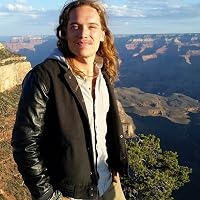
Manchán Magan was a writer, traveller and television presenter. He grew up in Donnybrook, Dublin 4 and was the great-grandnephew of Mícheál Seosamh Ó Rathaille (aka: The O'Rahilly) He has made over 30 travel documentaries focusing on issues of world culture and globalization, 12 of them packaged under the Global Nomad series with his brother Ruán Magan. He presented No Béarla, a documentary series about traveling around Ireland speaking only Irish. He wrote a travel column for the Irish Times and his show The Big Adventure, on RTÉ Radio One explored adventure holidays. He has written two books in Irish, 'Baba-ji agus TnaG' (Coiscéim 2005) and 'Manchán ar Seachrán' (Coiscéím 1998), and his English travel books include ‘Angels & Rabies: a journey through the Americas’ (Brandon, 2006), ‘Manchán’s Travels: a journey through India’ (Brandon, 2007) and ‘Truck Fever: a journey through Africa’ (Brandon, 2008).
While I wish Manchán had been able to finish this book during the time he was still with us, the essays in Seeing What’s Hidden are a beautiful extension of the ecologically focused meditations in Thirty-Two Words for Field and Listen to the Land Speak. This final book in the trilogy covers everything from the influence of trees on the Irish language to the symbolic power of shapeshifting deer and birds, the wisdom of mad hermits, and much more.
Drawing on lesser-known parts of Irish mythology, as well as current events and issues in environmentalism, Seeing What’s Hidden reveals a landscape of ideas that provide readers with more questions than answers. The additional reflections from Manchán’s friends and colleagues at the end of the book provide not so much of an ending, but a starting point for further study. Instead of thinking of Seeing What’s Hidden as unfinished, I encourage any reader of Manchán’s work to consider the questions he left us with as an ongoing invitation to reconsider how language and mythology are intertwined with our ecosystem.